Joint Filing Agreement
Understanding this form
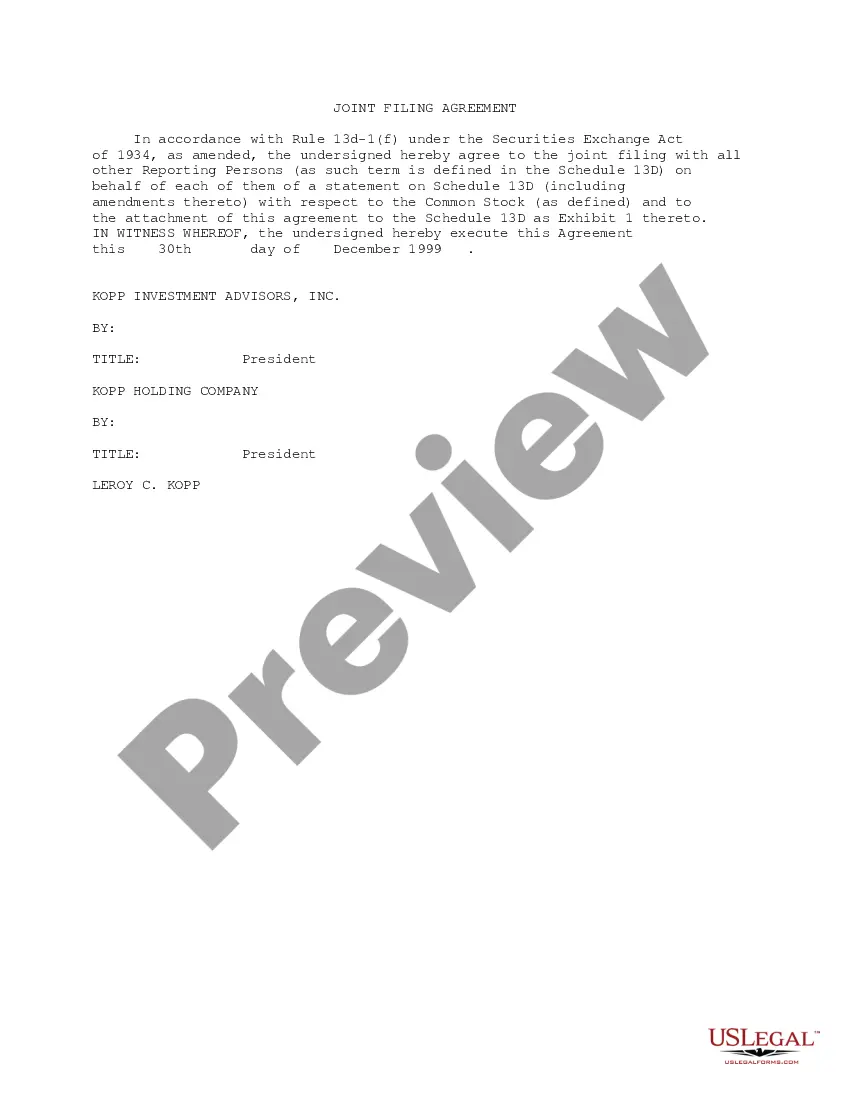
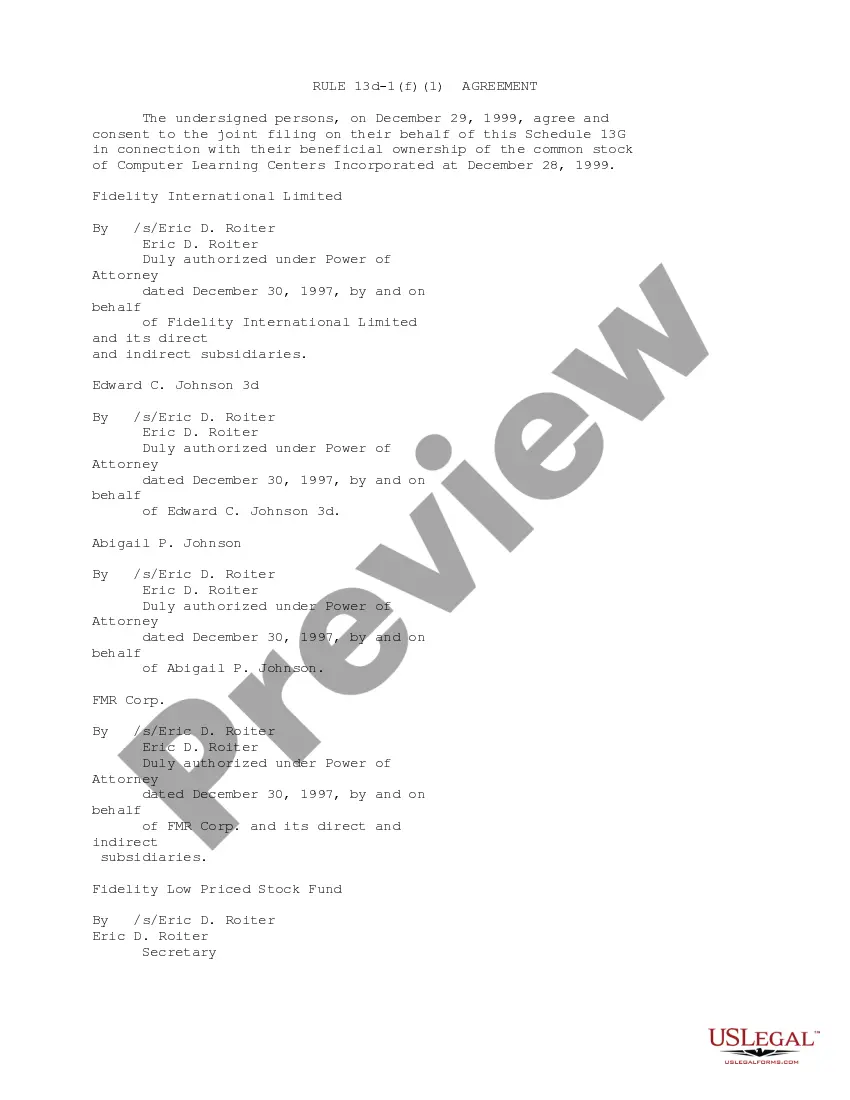
The Joint Filing Agreement is a legal document used to allow multiple parties to jointly file a Schedule 13D, which discloses ownership of securities under the Securities Exchange Act of 1934. This agreement establishes consent among the involved parties to share the filing responsibilities and details regarding their ownership of the common stock. It helps streamline the reporting process and ensures compliance with regulatory requirements, differentiating it from other financing or tacking agreements.
Main sections of this form
- Identification of the parties involved in the joint filing.
- Consent clause for joint filing with additional Reporting Persons.
- References to the Schedule 13D and its amendments.
- Signature lines for authorized representatives from each party.
- Date of execution to validate the agreement.
Common use cases
This form is essential when two or more entities wish to disclose their shared ownership in a company's securities. It is typically used in scenarios such as mergers and acquisitions, joint ventures, or when investors collaborate to acquire significant equity stakes in a company. It ensures that all parties comply with the legal requirements for disclosure of beneficial ownership, promoting transparency in securities transactions.
Who should use this form
- Investment firms and funds jointly holding securities.
- Companies engaging in mergers or joint acquisitions.
- Individuals or entities partnering for significant equity investment.
- Anyone required to file a Schedule 13D under the Securities Exchange Act.
Steps to complete this form
- Identify each party involved in the joint filing and their roles.
- Confirm consent among all parties regarding the joint filing.
- Attach this agreement as Exhibit 1 to the Schedule 13D filing.
- Provide the necessary signatures, including titles of the signatories.
- Enter the execution date to finalize the agreement.
Notarization guidance
In most cases, this form does not require notarization. However, some jurisdictions or signing circumstances might. US Legal Forms offers online notarization powered by Notarize, accessible 24/7 for a quick, remote process.
Get your form ready online
Our built-in tools help you complete, sign, share, and store your documents in one place.
Make edits, fill in missing information, and update formatting in US Legal Forms—just like you would in MS Word.
Download a copy, print it, send it by email, or mail it via USPS—whatever works best for your next step.
Sign and collect signatures with our SignNow integration. Send to multiple recipients, set reminders, and more. Go Premium to unlock E-Sign.
If this form requires notarization, complete it online through a secure video call—no need to meet a notary in person or wait for an appointment.
We protect your documents and personal data by following strict security and privacy standards.

Make edits, fill in missing information, and update formatting in US Legal Forms—just like you would in MS Word.

Download a copy, print it, send it by email, or mail it via USPS—whatever works best for your next step.

Sign and collect signatures with our SignNow integration. Send to multiple recipients, set reminders, and more. Go Premium to unlock E-Sign.

If this form requires notarization, complete it online through a secure video call—no need to meet a notary in person or wait for an appointment.

We protect your documents and personal data by following strict security and privacy standards.
Mistakes to watch out for
- Failing to obtain signatures from all parties involved.
- Not attaching the agreement to the Schedule 13D as required.
- Incomplete identification of parties or their roles.
- Incorrectly specifying the execution date.
Advantages of online completion
- Convenient access to the form at any time without the need for in-person visits.
- Editability allows users to customize the form as required.
- Reliable templates drafted by licensed attorneys ensure legal compliance.
- Quick downloads facilitate timely submissions of legal documents.
Legal use & context
- This form is crucial for compliance with the SEC regulations regarding joint filings.
- Violations of the filing requirements can lead to penalties.
- The agreement helps to clearly establish the ownership structure among reporting persons.
What to keep in mind
- The Joint Filing Agreement facilitates joint disclosures under federal securities law.
- It is essential for parties collaborating in securities ownership to ensure compliance.
- Proper completion involves clear identification of parties and consent to file jointly.
Looking for another form?
Form popularity
FAQ
The IRS strongly encourages most couples to file joint tax returns by extending several tax breaks to those who file together. In the vast majority of cases, it's best for married couples to file jointly, but there may be a few instances when it's better to submit separate returns.
Form 1040 provides space for signatures of both spouses and states: If a joint return, both must sign. Instructions for the Form 1040 include the same requirement and unequivocally warn that a Form 1040 is not considered a valid tax return unless signed by a taxpayer.
When filing jointly, you prepare only one tax return. You include the income and deductions for both of you in the one tax return.
(Beneficial Ownership Under Section 13) Summary. This form Joint Filing Agreement is intended for use by reporting persons who are considered a "group" and are required to file beneficial ownership reports under Regulation 13D-G of the Securities Exchange Act of 1934, as amended.
The IRS strongly encourages most couples to file joint tax returns by extending several tax breaks to those who file together. In the vast majority of cases, it's best for married couples to file jointly, but there may be a few instances when it's better to submit separate returns.
Married filing jointly is an income tax filing status available to any couple that has wed as of Dec. 31 of the tax year.It allows a couple to use only one tax return, but both spouses are equally responsible for the return and any taxes and penalties owed.
Gather tax documents for both you and your spouse. Decide whether you'll claim the standard deduction or itemize. Choose a filing method. File your taxes. Start preparing for next year.
If you are married, you and your spouse can agree to file a joint tax return. You can file a joint tax return with your spouse even if one of you had no income. You can use the Married Filing Jointly filing status if BOTH of the following statements are true: You were married on the last day of the tax year.