501(c)(1) Non-Profit Charter School Consent to Leave Campus (applies to students under 16 years of age)
Overview of this form
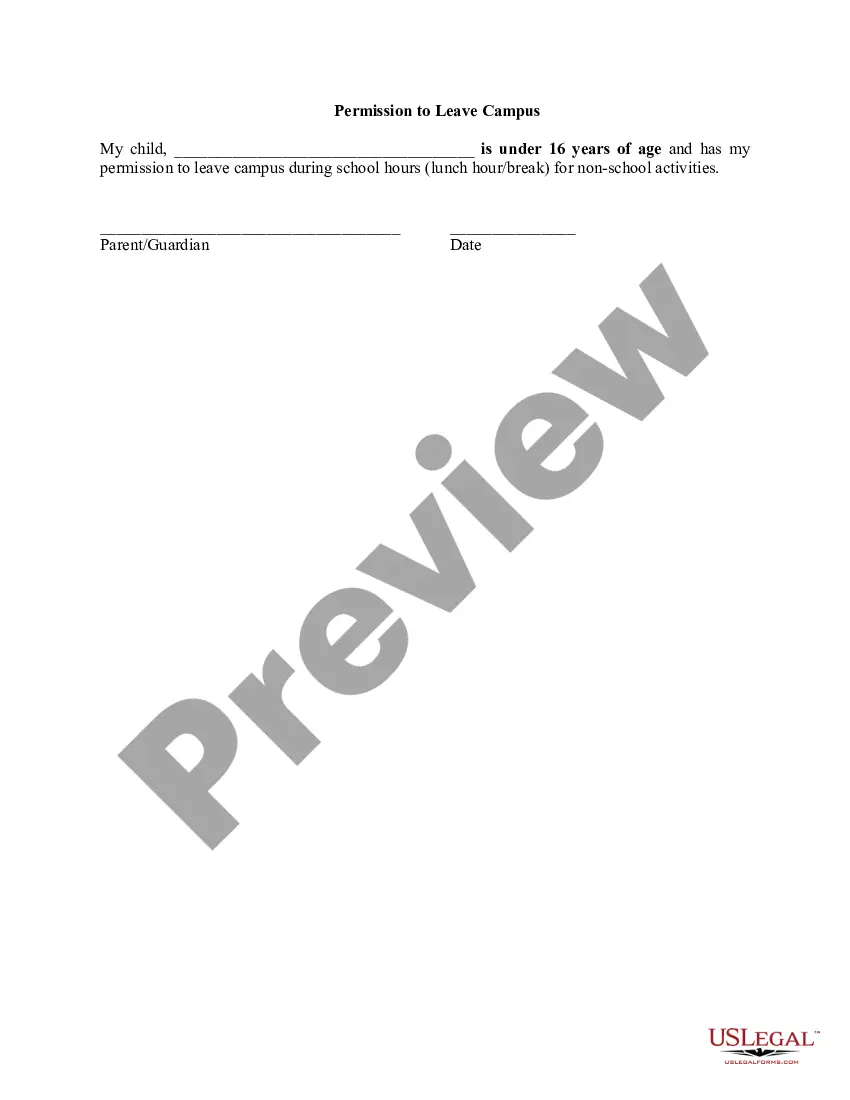
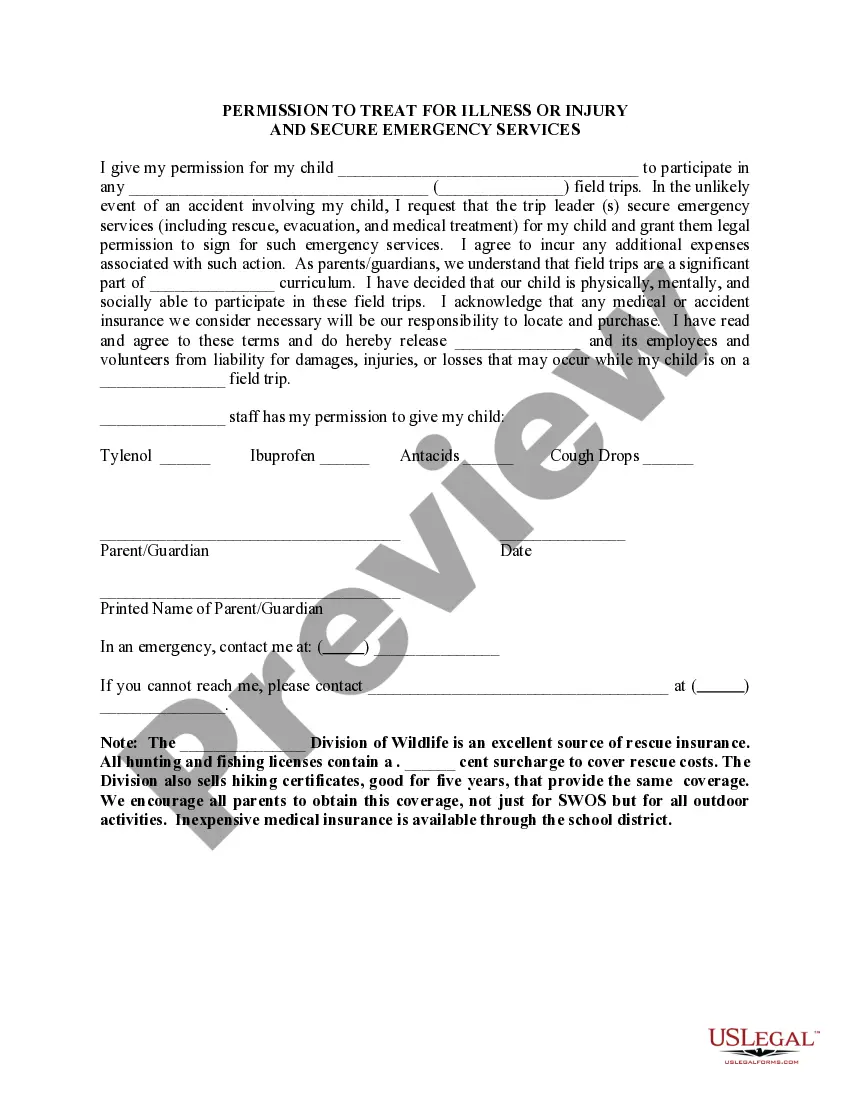
The 501(c)(1) Non-Profit Charter School Consent to Leave Campus is a permission form that allows parents or guardians of students under 16 years old to grant their child permission to leave campus during school hours for non-school activities. This form is specific to non-profit charter schools and serves as a safeguard for both parents and schools, ensuring clear communication about student whereabouts and responsibilities, differentiating it from general permission slips used in other educational contexts.
Main sections of this form
- Child's name: The full name of the student needing permission.
- Parent or guardian's signature: Indicates consent from the responsible adult.
- Date: Document the date when permission is granted.
- Activity description: Optional section to specify the non-school activities for clarity.
When to use this form
This form should be used when a parent or guardian wants to officially allow their child, aged under 16, to leave school grounds during designated breaks or lunch hours for activities not related to school. It is particularly useful for situations where a student needs to attend appointments, visit friends, or participate in extracurricular activities that require them to leave the campus.
Who needs this form
- Parents or guardians of students under 16 years of age attending a 501(c)(1) non-profit charter school.
- School administrators or staff who require formal consent for students to leave campus.
- Guardians seeking to ensure their child's safety and legal compliance while off-campus.
How to complete this form
- Provide your child's full name in the designated field.
- Indicate that your child is under 16 years of age.
- Sign the form to indicate your permission as a parent or guardian.
- Enter the date on which you are giving this permission.
- Review the completed form for accuracy before submission.
Does this document require notarization?
This form does not typically require notarization unless specified by local law.
Get your form ready online
Our built-in tools help you complete, sign, share, and store your documents in one place.
Make edits, fill in missing information, and update formatting in US Legal Forms—just like you would in MS Word.
Download a copy, print it, send it by email, or mail it via USPS—whatever works best for your next step.
Sign and collect signatures with our SignNow integration. Send to multiple recipients, set reminders, and more. Go Premium to unlock E-Sign.
If this form requires notarization, complete it online through a secure video call—no need to meet a notary in person or wait for an appointment.
We protect your documents and personal data by following strict security and privacy standards.

Make edits, fill in missing information, and update formatting in US Legal Forms—just like you would in MS Word.

Download a copy, print it, send it by email, or mail it via USPS—whatever works best for your next step.

Sign and collect signatures with our SignNow integration. Send to multiple recipients, set reminders, and more. Go Premium to unlock E-Sign.

If this form requires notarization, complete it online through a secure video call—no need to meet a notary in person or wait for an appointment.

We protect your documents and personal data by following strict security and privacy standards.
Common mistakes to avoid
- Failing to include the child's full name.
- Not signing the form or using an incorrect signature.
- Leaving the date blank or adding an incorrect date.
- Neglecting to provide any specific details about intended activities.
Why complete this form online
- Convenience: Accessible for download anytime, allowing quick completion.
- Editability: Users can customize the form easily to suit their needs.
- Reliability: Forms are drafted by licensed attorneys to ensure they meet legal standards.
What to keep in mind
- The form is essential for parents of students under 16 at non-profit charter schools to grant permission for off-campus activities.
- Complete the form accurately to avoid common mistakes, ensuring all parties are informed and comply with school policies.
- This form can be customized and downloaded easily for convenience and accessibility.
Looking for another form?
Form popularity
FAQ
In the state of Texas charter schools are public schools that operate via contracts with an authorizer such as local school district authorizers or the state authorizing office. The Texas Charter School Authorizing and Administration Division oversees the state's charter portfolio.
A charter school is a public school, and in many ways very similar to a traditional ISD school as you might think of one. Charter schools do not charge tuition or application fees. Charter schools accept every student who applies, as long as the school or grade level has not reached its enrollment capacity.
All charter schools are public schools. Arizona and California are the only states to currently allow for-profit management organizations to hold a public charter school's charter.
Yes. While the vast majority of EC sections apply only to public schools, certain sections do apply to private education and private schools. Selected EC sections that pertain to private schools are listed below and on the CDE Selected California Education Codes web page.
This includes, but is not limited to, the Texas Education Code (TEC) (outside source), Texas Administrative Code (TAC), and federal laws that are applicable to charter schools.
All state requirements concerning referral, assessment, and determination of eligibility are applicable to students placed in private schools by their parents once the students are referred. Texas Administrative Code, Title 19, Part 2, §89.1096.
The Texas Education Code includes all laws and rules passed by the state legislature. It applies to most educational institutions that are supported in whole or part by state tax funds.
Charter schools are not subject to TEC Sections 25.111 and 25.112 that state such guidelines for districts. Instead, the charter for the school sets any student-teacher ratios or class size limitations.
In the state of Texas charter schools are public schools that operate via contracts with an authorizer such as local school district authorizers or the state authorizing office. The Texas Charter School Authorizing and Administration Division oversees the state's charter portfolio.