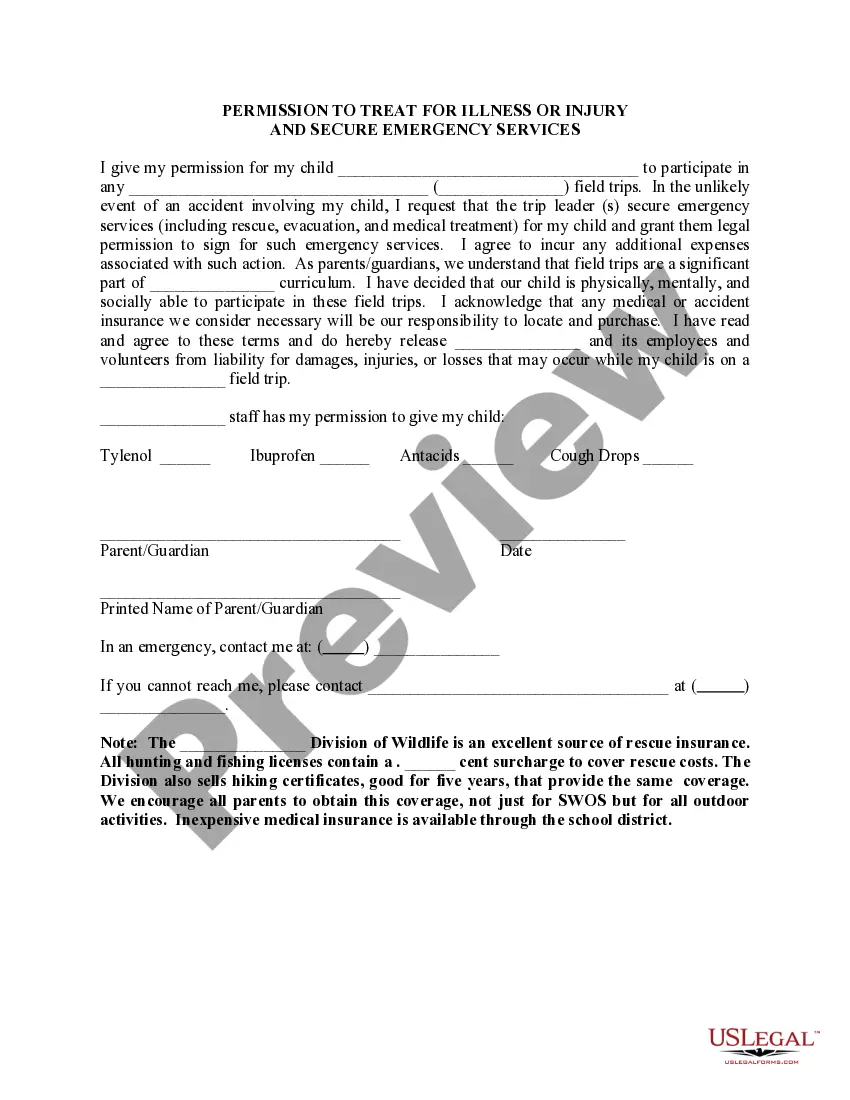
A 501(c)(1) Non-Profit Charter School Permission to Treat Illness or Injury is a special type of exemption from Federal income tax that applies to organizations which are organized and operated exclusively for charitable, religious, or educational purposes. This type of permission allows charter schools to provide medical treatment for illness or injury to their students, without the need for parental consent or permission, as long as the medical treatment is provided by a licensed medical professional. There are two types of 501(c)(1) Non-Profit Charter School Permission to Treat Illness or Injury: 1) Authorization to treat minor injuries and illnesses, such as cuts, scrapes, or minor sprains; and 2) Authorization to treat more serious injuries or illnesses, such as head injuries, broken bones, or illnesses requiring medication or hospitalization. In either case, the charter school must have a written permission from the student’s parent or legal guardian before proceeding with the treatment.
501(c)(1) Non-Profit Charter School Permission to treat Illness or Injury
Description
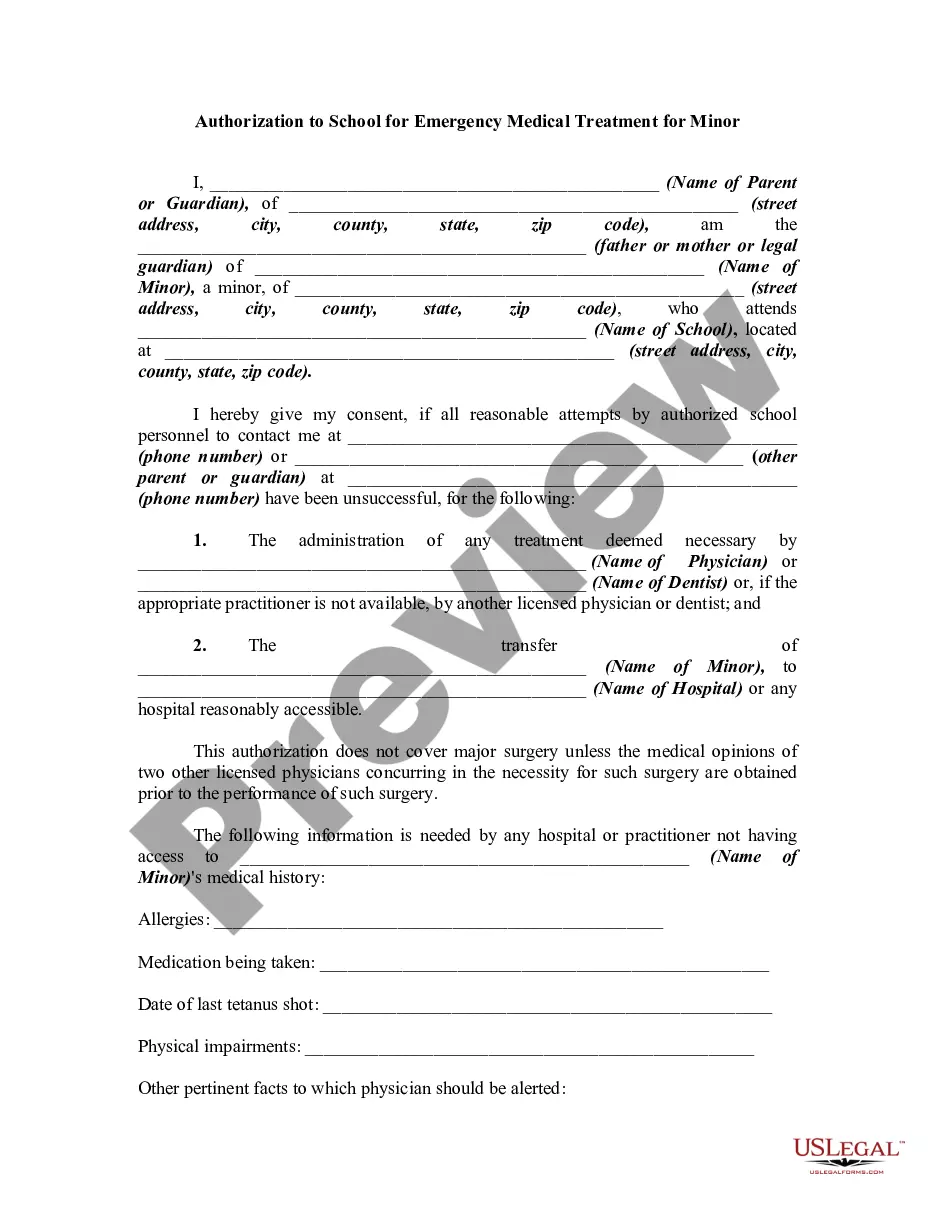
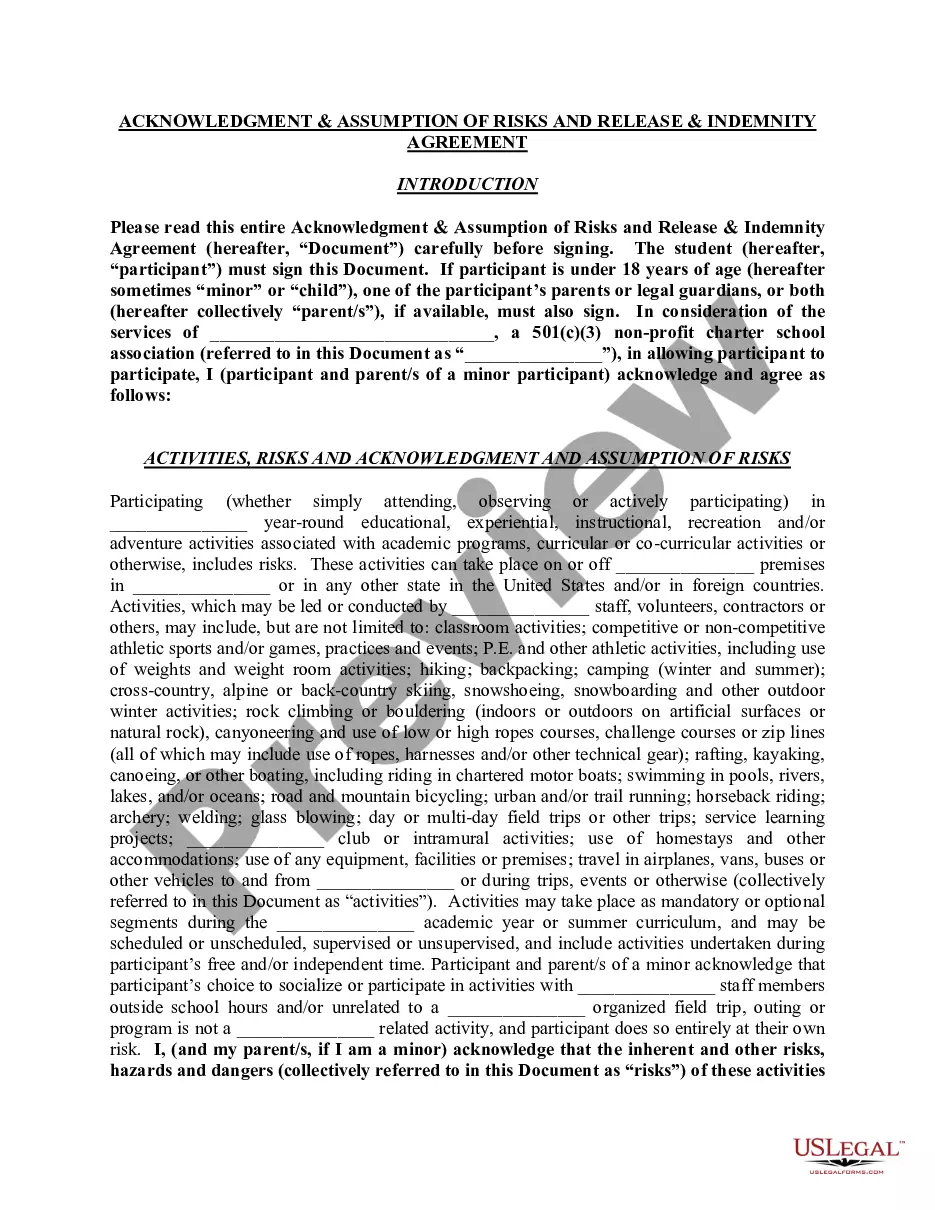
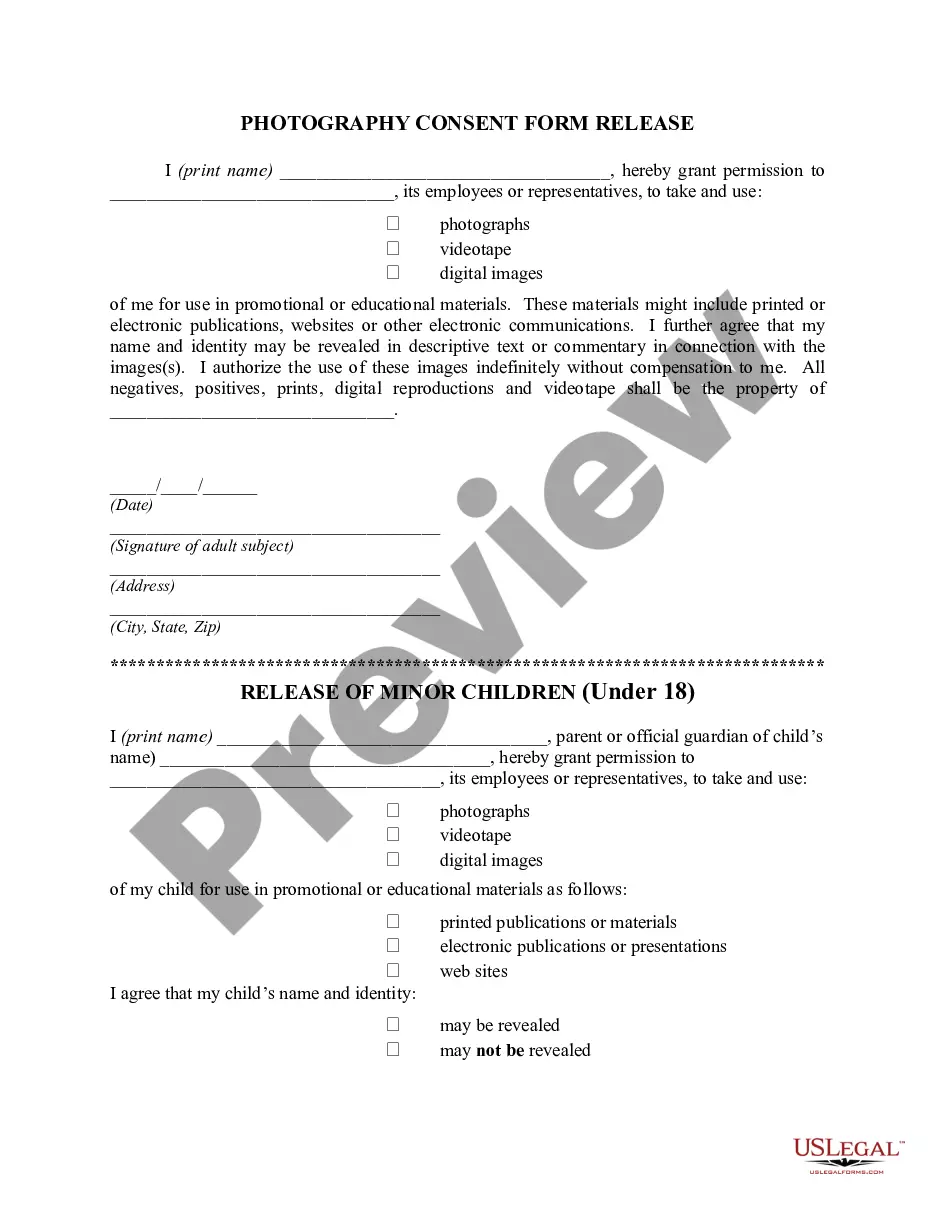
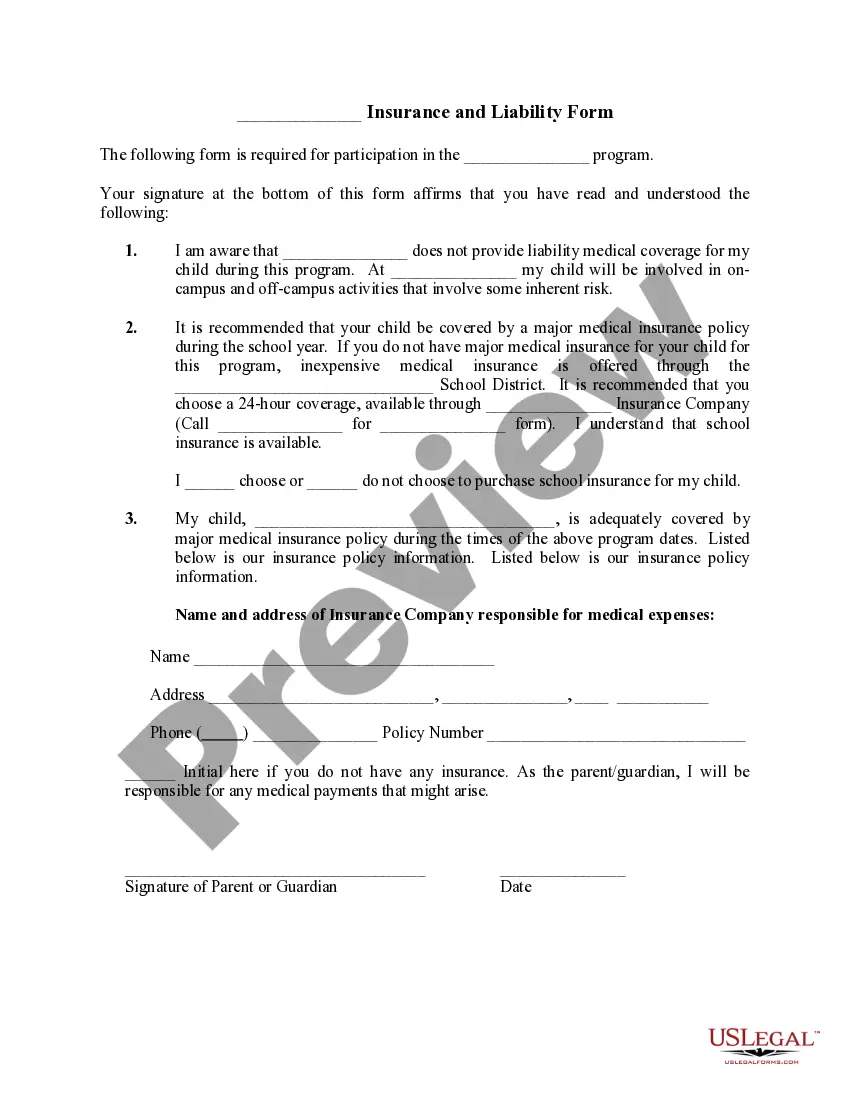
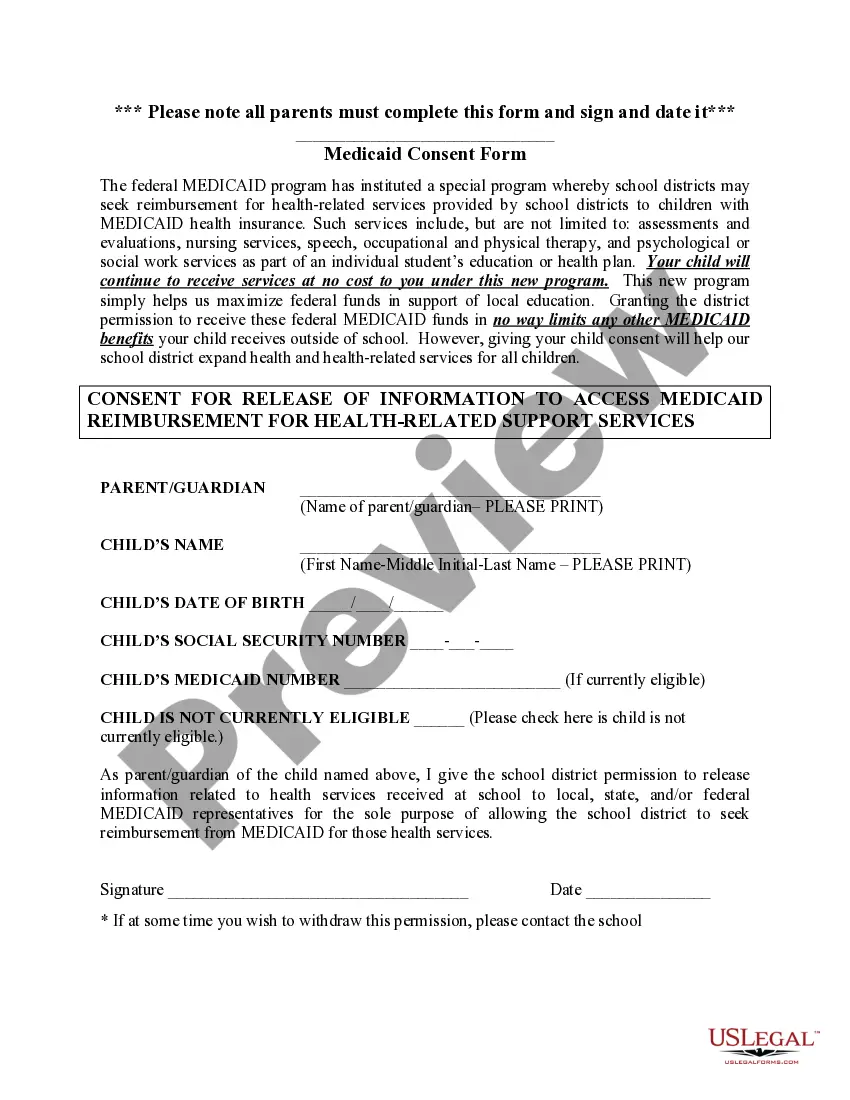
How to fill out 501(c)(1) Non-Profit Charter School Permission To Treat Illness Or Injury?
Coping with legal paperwork requires attention, accuracy, and using well-drafted templates. US Legal Forms has been helping people countrywide do just that for 25 years, so when you pick your 501(c)(1) Non-Profit Charter School Permission to treat Illness or Injury template from our library, you can be sure it complies with federal and state laws.
Dealing with our service is simple and fast. To obtain the required document, all you’ll need is an account with a valid subscription. Here’s a brief guideline for you to find your 501(c)(1) Non-Profit Charter School Permission to treat Illness or Injury within minutes:
- Make sure to carefully check the form content and its correspondence with general and law requirements by previewing it or reading its description.
- Search for another official template if the previously opened one doesn’t match your situation or state regulations (the tab for that is on the top page corner).
- Log in to your account and save the 501(c)(1) Non-Profit Charter School Permission to treat Illness or Injury in the format you need. If it’s your first time with our service, click Buy now to continue.
- Register for an account, select your subscription plan, and pay with your credit card or PayPal account.
- Decide in what format you want to save your form and click Download. Print the blank or upload it to a professional PDF editor to submit it paper-free.
All documents are created for multi-usage, like the 501(c)(1) Non-Profit Charter School Permission to treat Illness or Injury you see on this page. If you need them one more time, you can fill them out without re-payment - simply open the My Forms tab in your profile and complete your document any time you need it. Try US Legal Forms and accomplish your business and personal paperwork quickly and in total legal compliance!
Form popularity
FAQ
Difference Between 501c and 501c3 A 501(c) organization and a 501(c)3 organization are similar in designation, however they differ slightly in their tax benefits. Both types of organization are exempt from federal income tax, however a 501(c)3 may allow its donors to write off donations whereas a 501(c) does not.
Organizations described in section 501(c)(3) are commonly referred to as charitable organizations. Organizations described in section 501(c)(3), other than testing for public safety organizations, are eligible to receive tax-deductible contributions in ance with Code section 170.
The Internal Revenue Service encourages charities to establish and review regularly the organization's mission. A clearly articulated mission, adopted by the board of directors, serves to explain and popularize the charity's purpose and guide its work.
The exempt purposes set forth in Internal Revenue Code section 501(c)(3) are charitable, religious, educational, scientific, literary, testing for public safety, fostering national or international amateur sports competition, and the prevention of cruelty to children or animals.
Thus, a section 501(c)(4) social welfare organization may further its exempt purposes through lobbying as its primary activity without jeopardizing its exempt status.
Basic Eligibility Requirements for the 1023-EZ gross income under $50,000 in the past 3 years. estimated gross income less than $50,00 for the next 3 years. fair market assets under $250,000. formed in the United States.
Form 1023-EZ is used to apply for recognition as a tax-exempt organization under Section 501(c)(3).
Rules relating to the political campaign and lobbying activities of IRC 501(c)(6) organizations are the subject of a separate article.