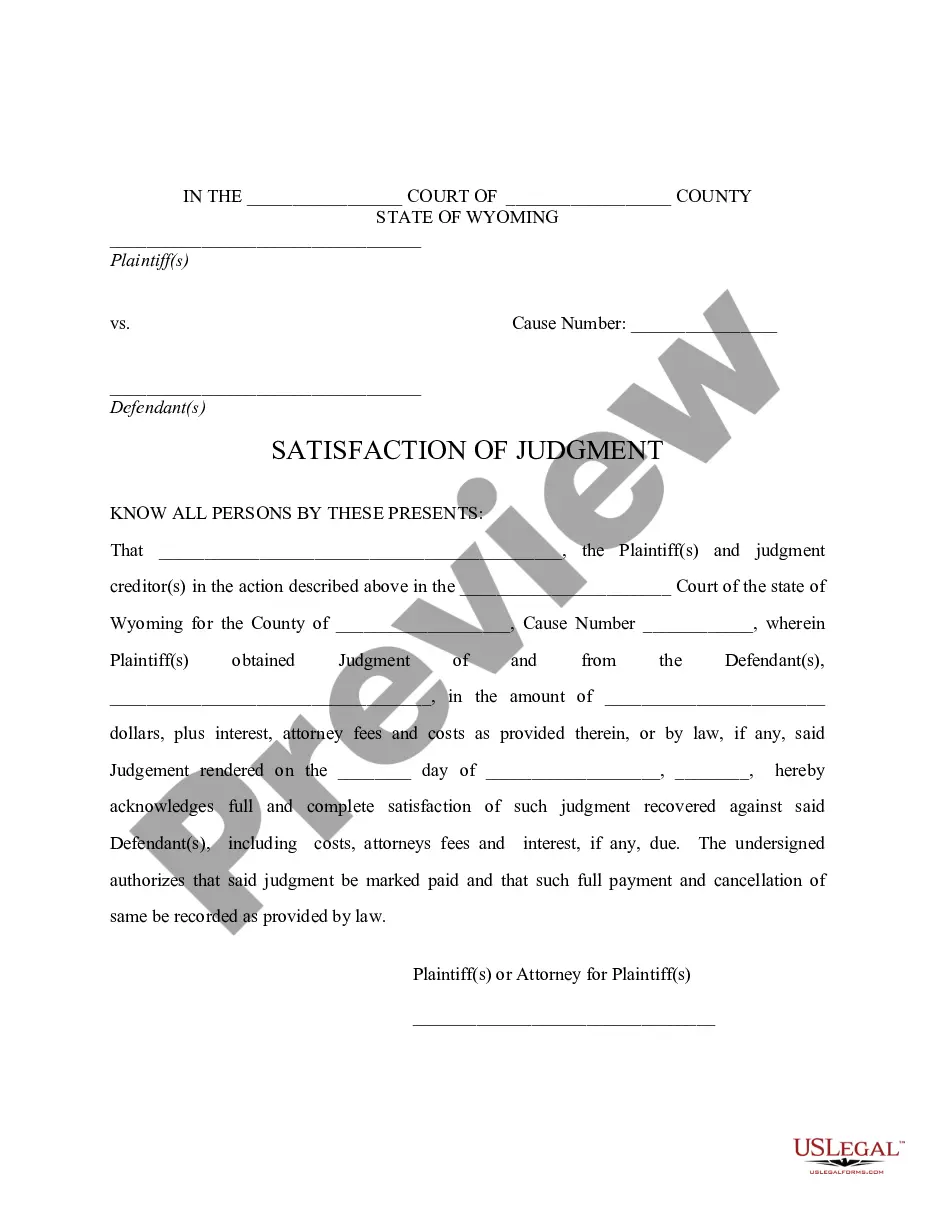
Safety Advisory Right-of-Way Worker Protection Checklist
About this form
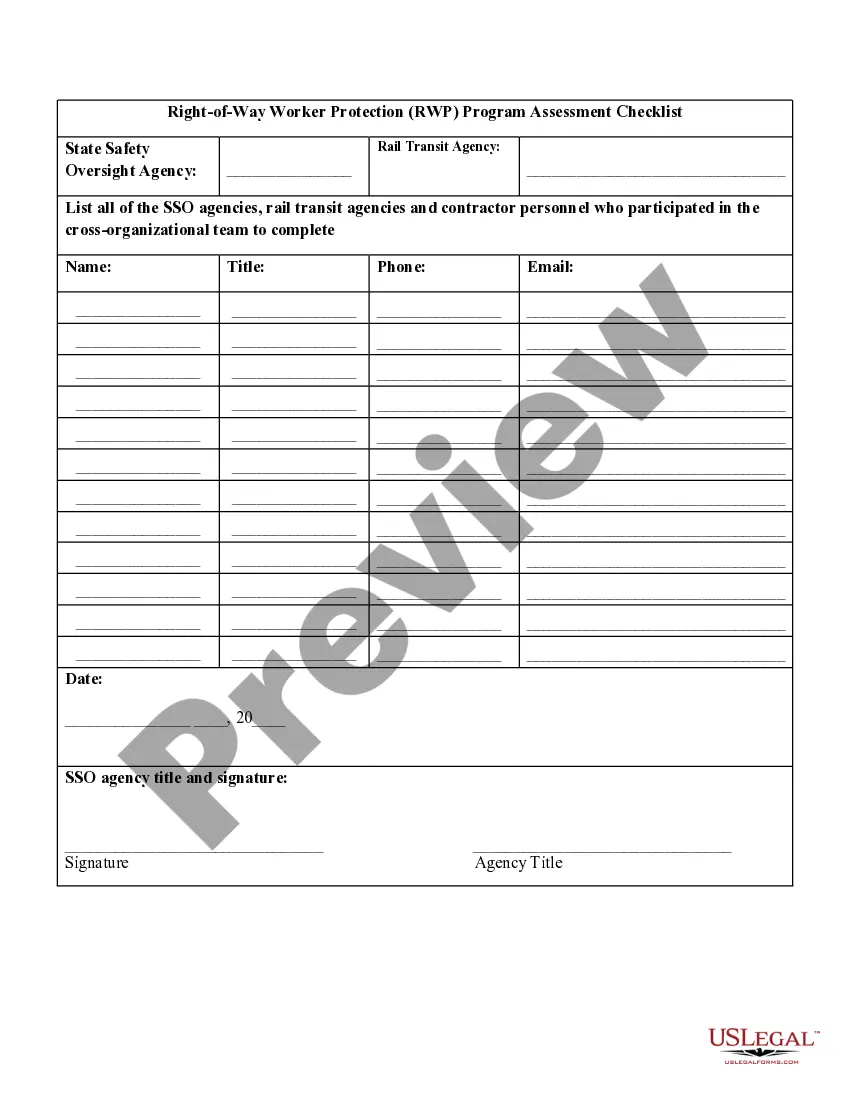
The Safety Advisory Right-of-Way Worker Protection Checklist is a comprehensive tool designed for organizations and agencies involved in rail transit. This form ensures compliance with safety regulations set forth by the National Transportation Safety Board (NTSB) regarding the protection of workers in right-of-way areas. By utilizing this checklist, you can systematically assess safety measures and improve workplace conditions, differentiating it from other safety compliance forms that may not specifically address right-of-way concerns.
Main sections of this form
- Identification of participating State Safety Oversight (SSO) and rail transit agencies.
- Contact information for team members involved in the safety assessment.
- Signature fields for official authorizations from SSO agency representatives.
- Space for documenting the assessment date and agency title.

When this form is needed
This checklist should be used when assessing safety measures for workers who operate in right-of-way environments, particularly in rail transit settings. It is applicable during safety audits, training sessions for new employees, or when implementing new policies to enhance worker protection. Utilizing this form can help ensure that all necessary precautions are reviewed and documented accurately.
Who can use this document
- State Safety Oversight agencies responsible for monitoring rail transit safety.
- Rail transit agencies seeking to comply with NTSB safety regulations.
- Contractor personnel involved in right-of-way operations.
- Safety officers and team leaders overseeing worker protection protocols.
Completing this form step by step
- Identify the State Safety Oversight Agency and the Rail Transit Agency involved.
- List all participants by entering their names, titles, phones, and email addresses in the designated fields.
- Complete the date of the assessment clearly in the provided area.
- Ensure all participants sign the document, capturing their agency titles for official recognition.
- Maintain a copy for your records and distribute as necessary to align with jurisdictional requirements.
Does this document require notarization?
This form does not typically require notarization unless specified by local law. Ensure to check state-specific regulations that may apply.
Get your form ready online
Our built-in tools help you complete, sign, share, and store your documents in one place.
Make edits, fill in missing information, and update formatting in US Legal Forms—just like you would in MS Word.
Download a copy, print it, send it by email, or mail it via USPS—whatever works best for your next step.
Sign and collect signatures with our SignNow integration. Send to multiple recipients, set reminders, and more. Go Premium to unlock E-Sign.
If this form requires notarization, complete it online through a secure video call—no need to meet a notary in person or wait for an appointment.
We protect your documents and personal data by following strict security and privacy standards.

Make edits, fill in missing information, and update formatting in US Legal Forms—just like you would in MS Word.

Download a copy, print it, send it by email, or mail it via USPS—whatever works best for your next step.

Sign and collect signatures with our SignNow integration. Send to multiple recipients, set reminders, and more. Go Premium to unlock E-Sign.

If this form requires notarization, complete it online through a secure video call—no need to meet a notary in person or wait for an appointment.

We protect your documents and personal data by following strict security and privacy standards.
Common mistakes
- Failing to include all relevant participants in the checklist.
- Not obtaining signatures from designated agency representatives.
- Leaving dates and agency titles blank, which can affect the validity of the form.
Why complete this form online
- Immediate access to the latest version of the checklist, ensuring compliance with current regulations.
- Easy editing options to customize the form as needed for your specific agency.
- Secure storage of completed forms for future audits and reference.
What to keep in mind
- The Safety Advisory Right-of-Way Worker Protection Checklist is essential for ensuring safety compliance for rail workers.
- Properly completing this form helps in documenting safety measures and participant involvement.
- It is a multi-state tool adaptable to various jurisdictional needs, maintaining consistency in safety assessments.
Looking for another form?
Form popularity
FAQ
The track within working limits shall be placed under the control of one roadway worker by: ? Authority issued to the QPE by the train dispatcher or control operator who controls train or other on-track equipment movements on that track; or ? Flagpersons stationed at each entrance to the track within working limits and
§ 214.313 Responsibility of individual roadway workers. (b) A roadway worker shall not foul a track except when necessary for the performance of duty. (c) Each roadway worker is responsible to ascertain that on-track safety is being provided before fouling a track.
The Roadway Worker Protection course must be completed annually by all roadway workers. Patriot Rail courses are now availble.
RWIC Duties. Before roadway workers foul a track, the designated person must inform each roadway worker in the group of the on-track safety methods to be used at that time and location. Essentially, the designated person must conduct an on-track safety briefing prior to the beginning of work on or near the track.
(a) Train approach warning shall be given in sufficient time to enable each roadway worker to move to and occupy a previously arranged place of safety not less than 15 seconds before a train moving at the maximum authorized speed on that track can pass the location of the roadway worker.
Responsibilities of the EIC include: Insure proper On-Track Safety is provided prior to fouling track. Must conduct a job briefing before allowing fouling of the track. Insure all members of the work group acknowledge understanding of job briefing.
The Roadway Worker Protection Rule requires railroads and contractors to railroads to develop and adopt procedures to protect their roadway worker employees from being struck by trains and other on-track machinery.