Assessment Form for Psychology Trainee Competency Evaluation
About this form
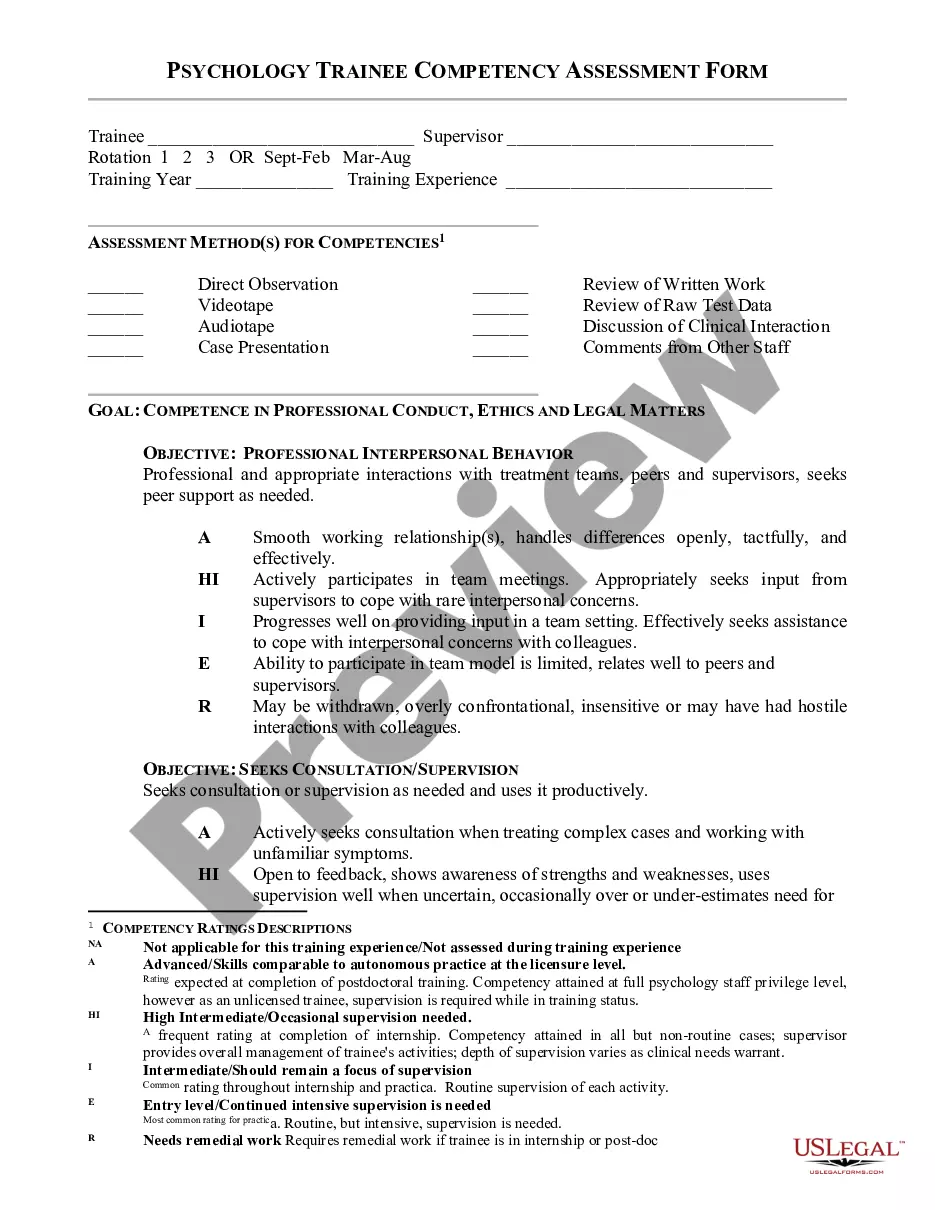
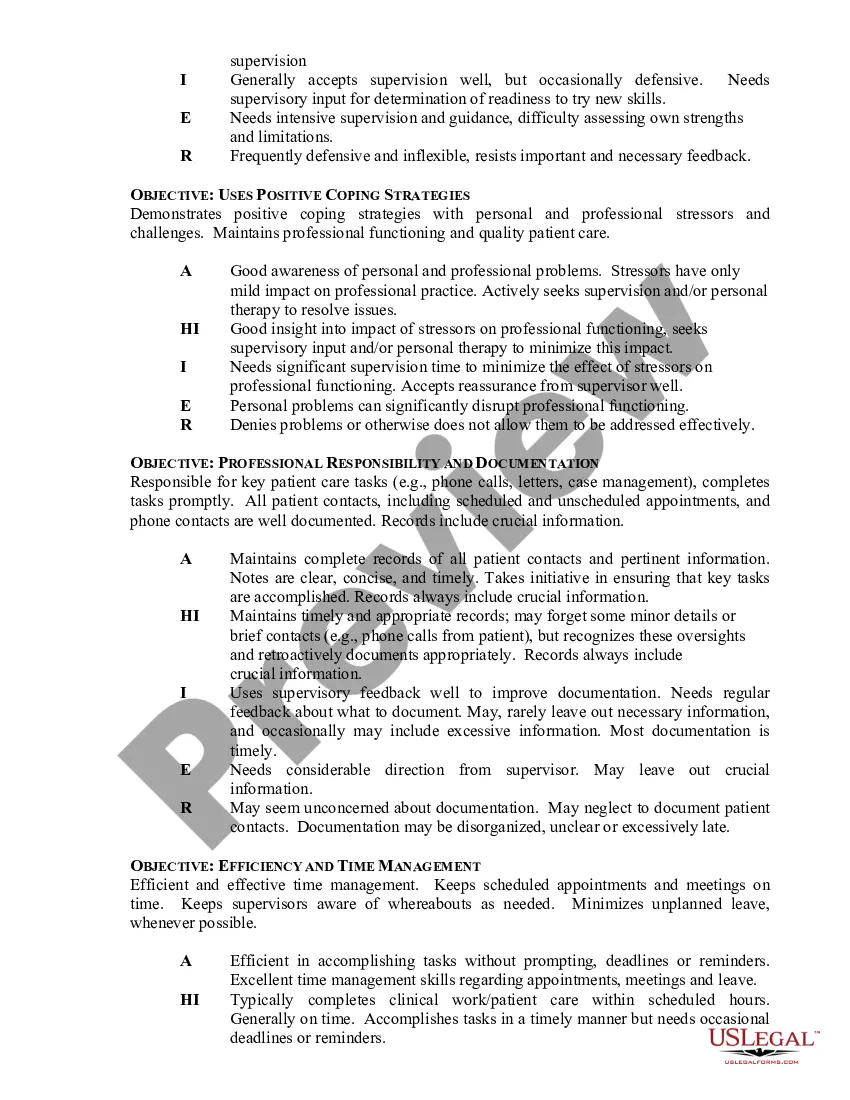
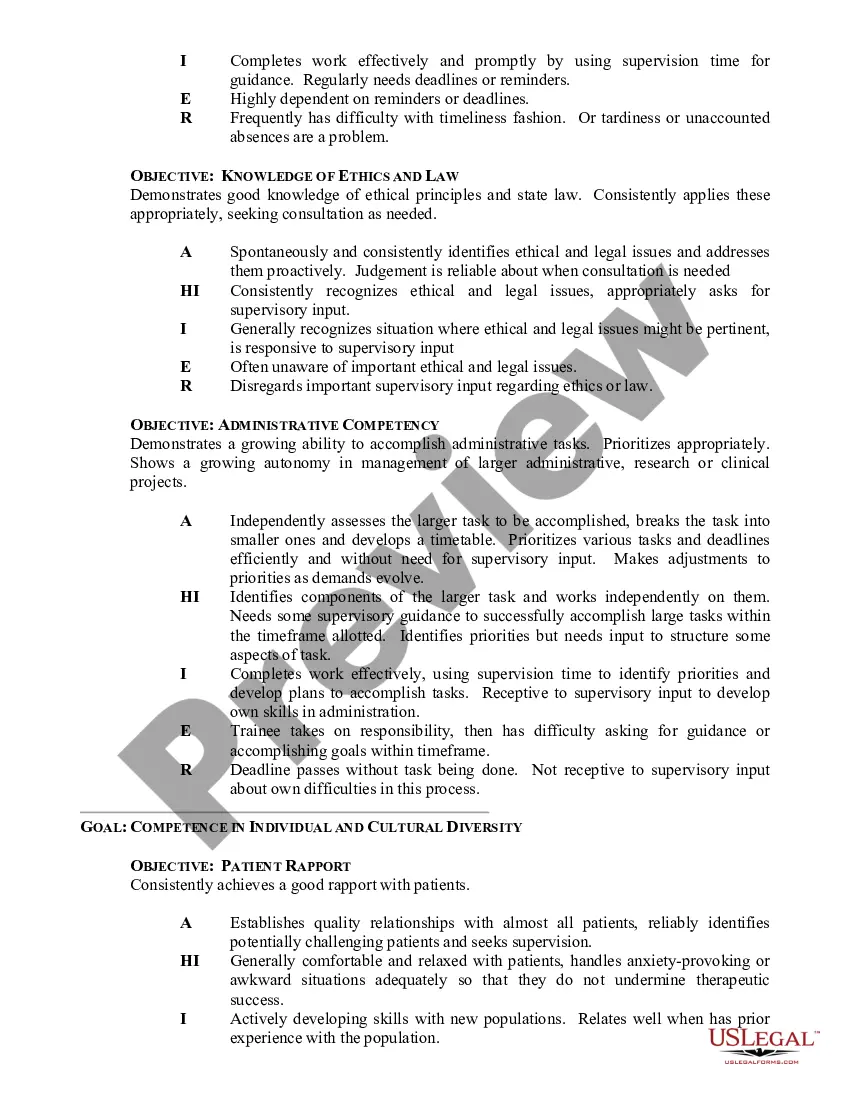
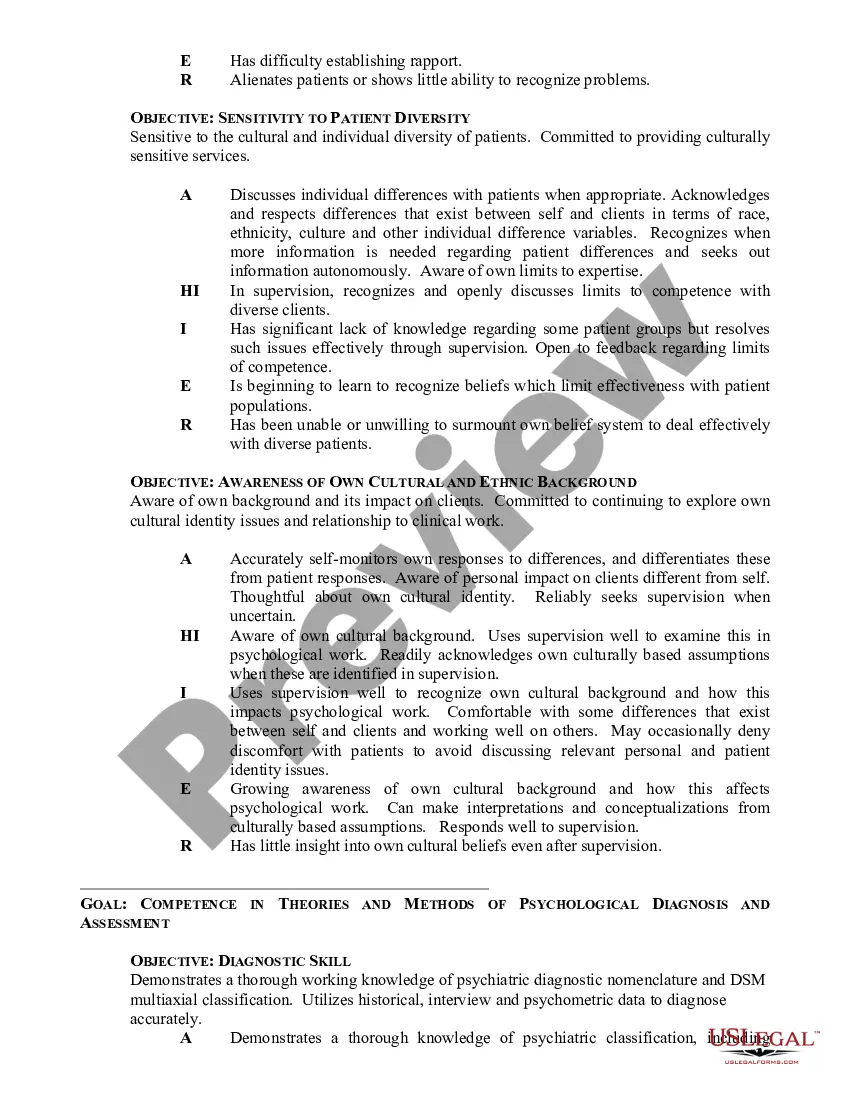
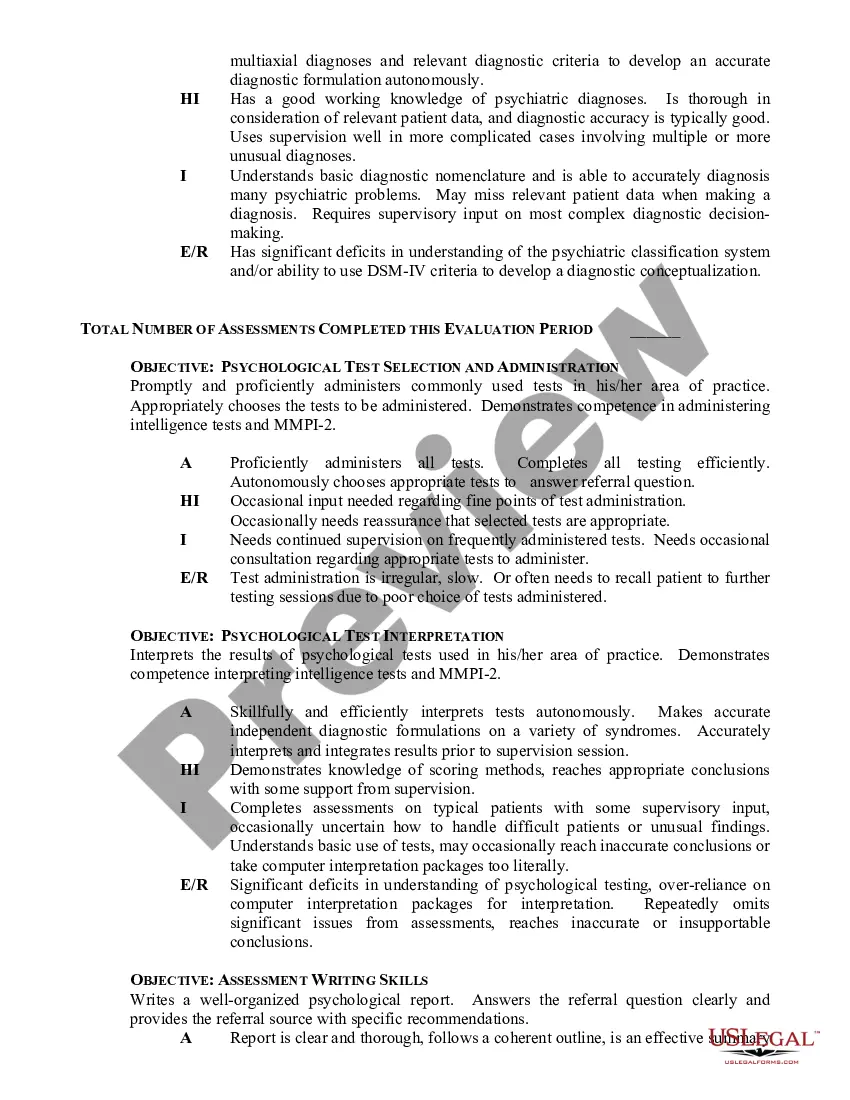
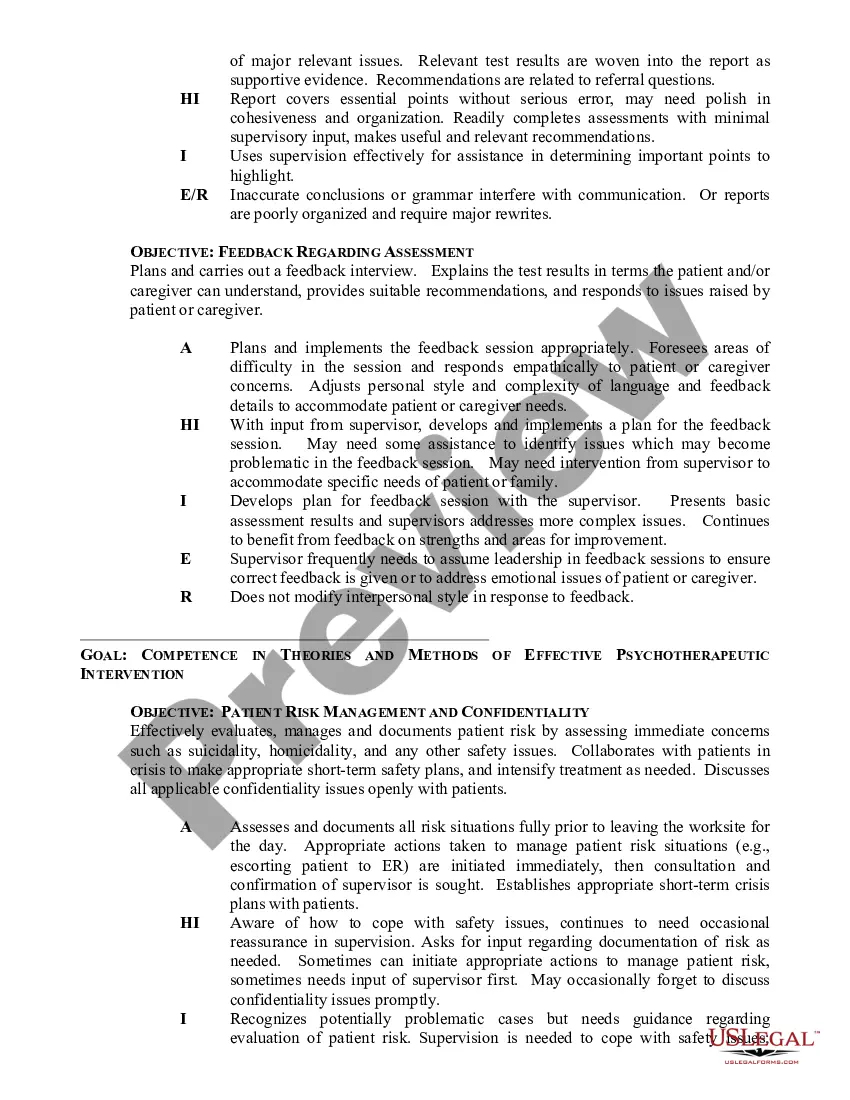
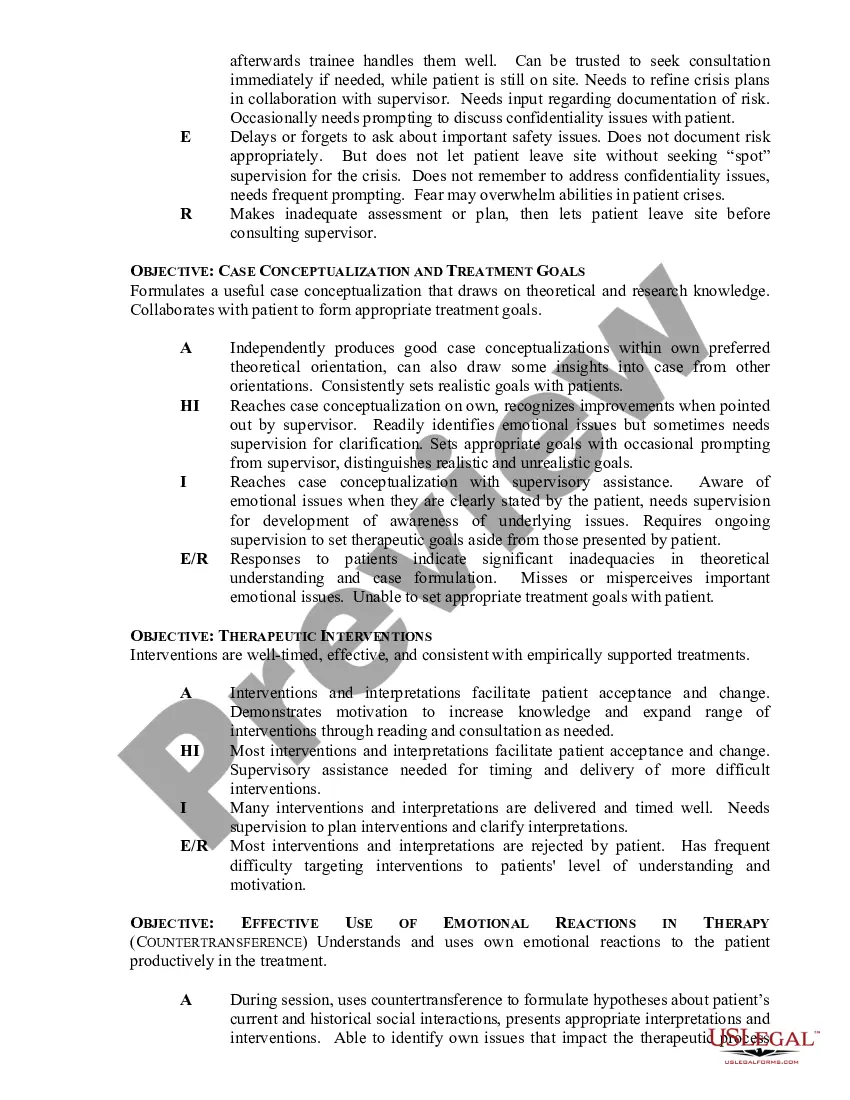
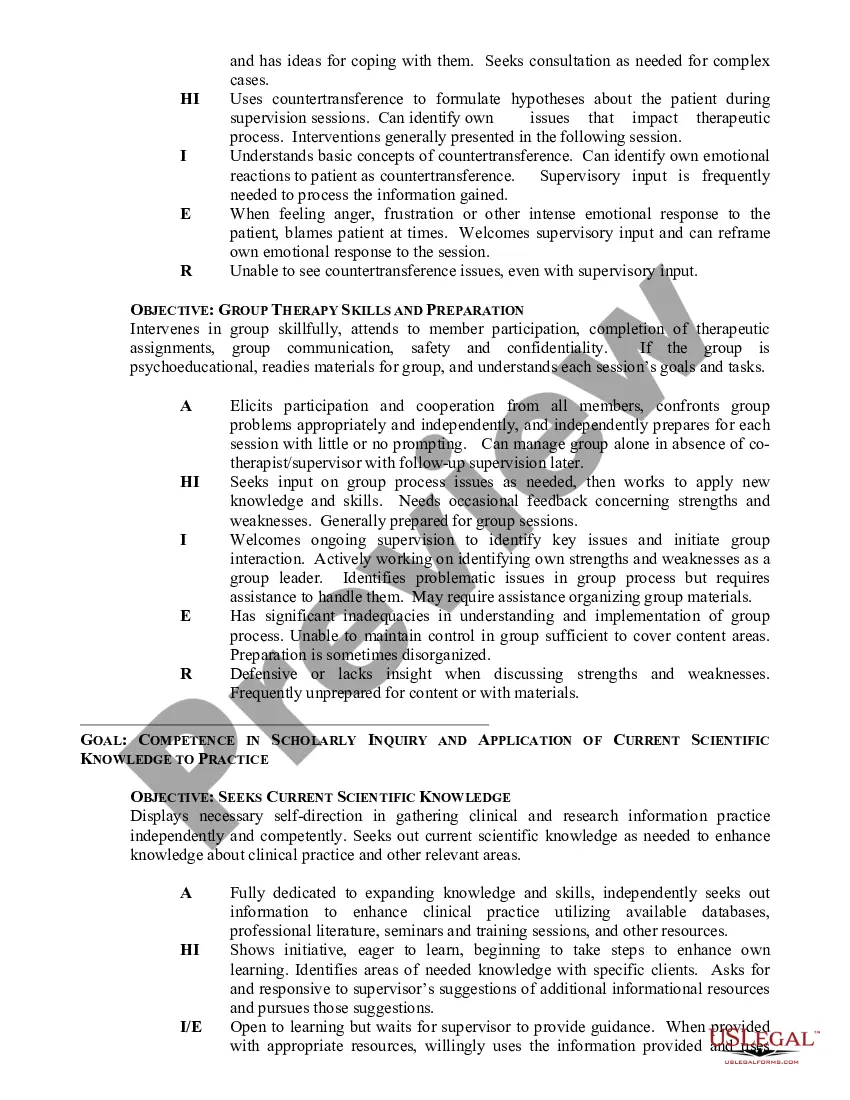
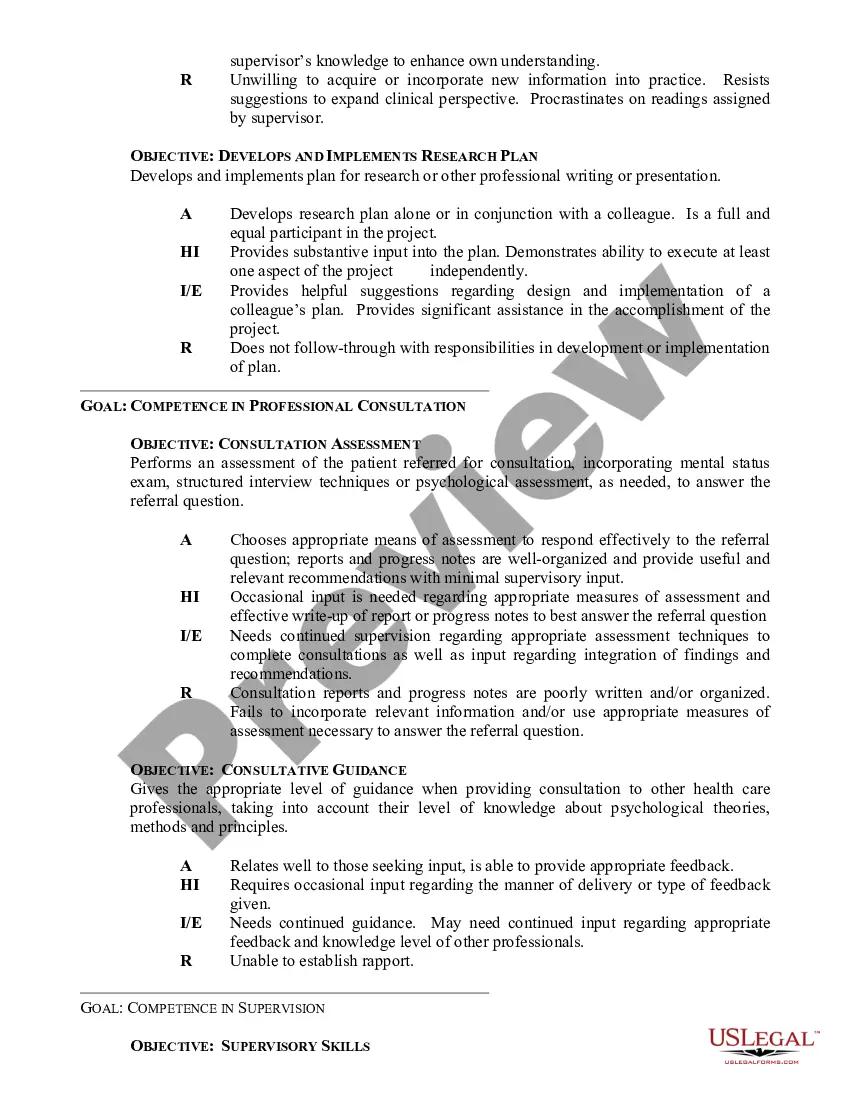
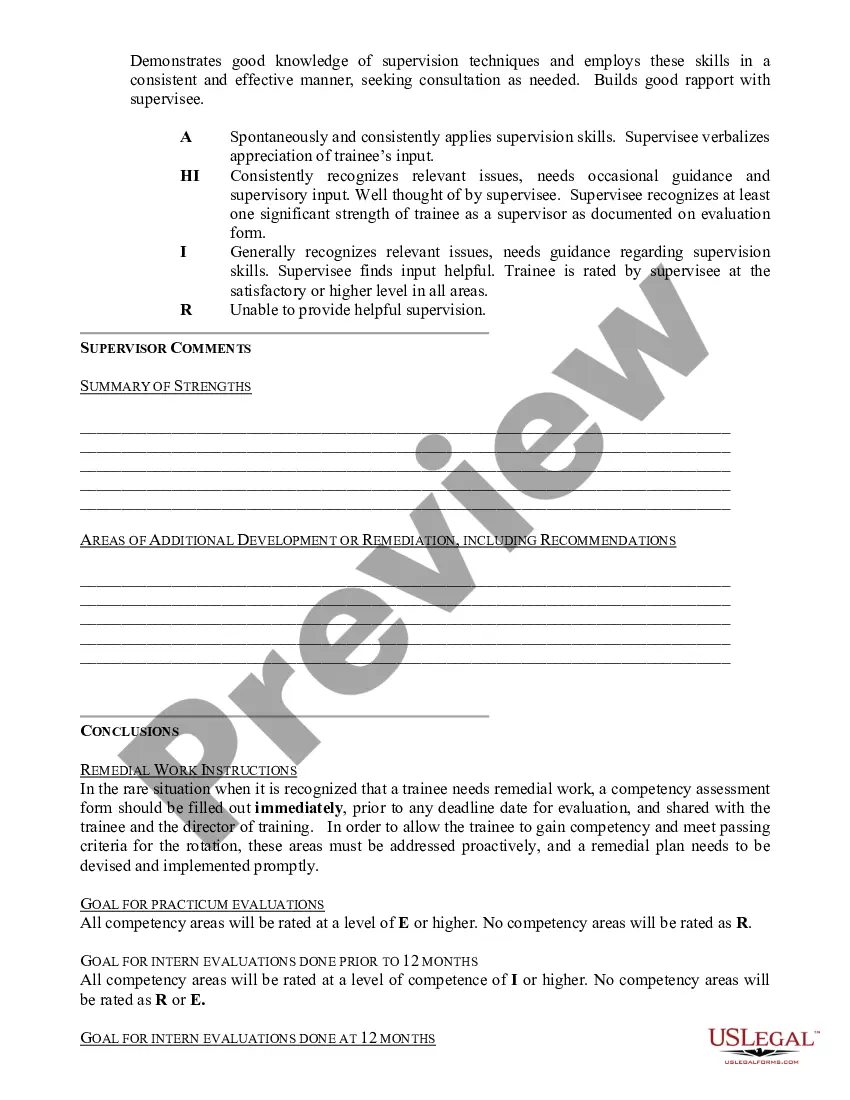
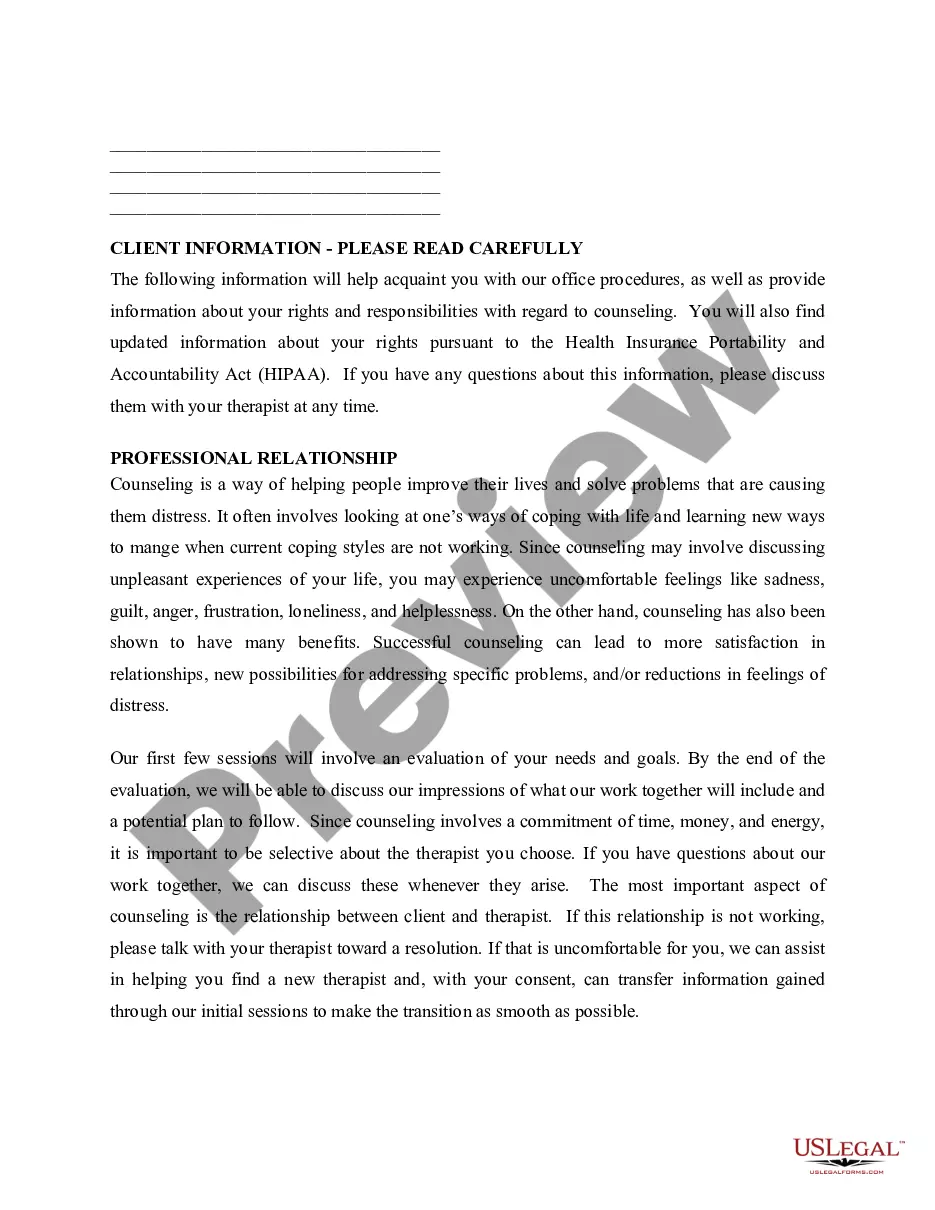
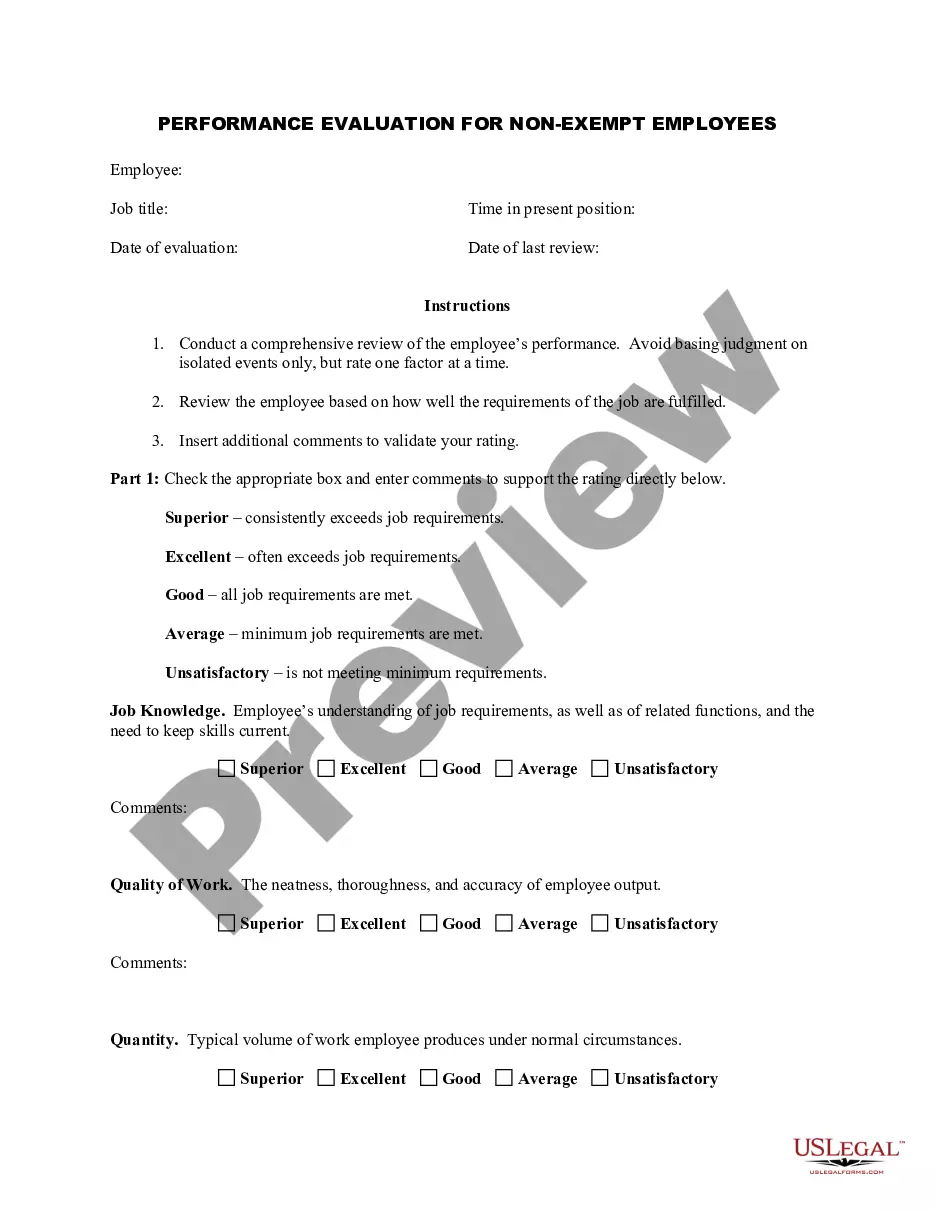
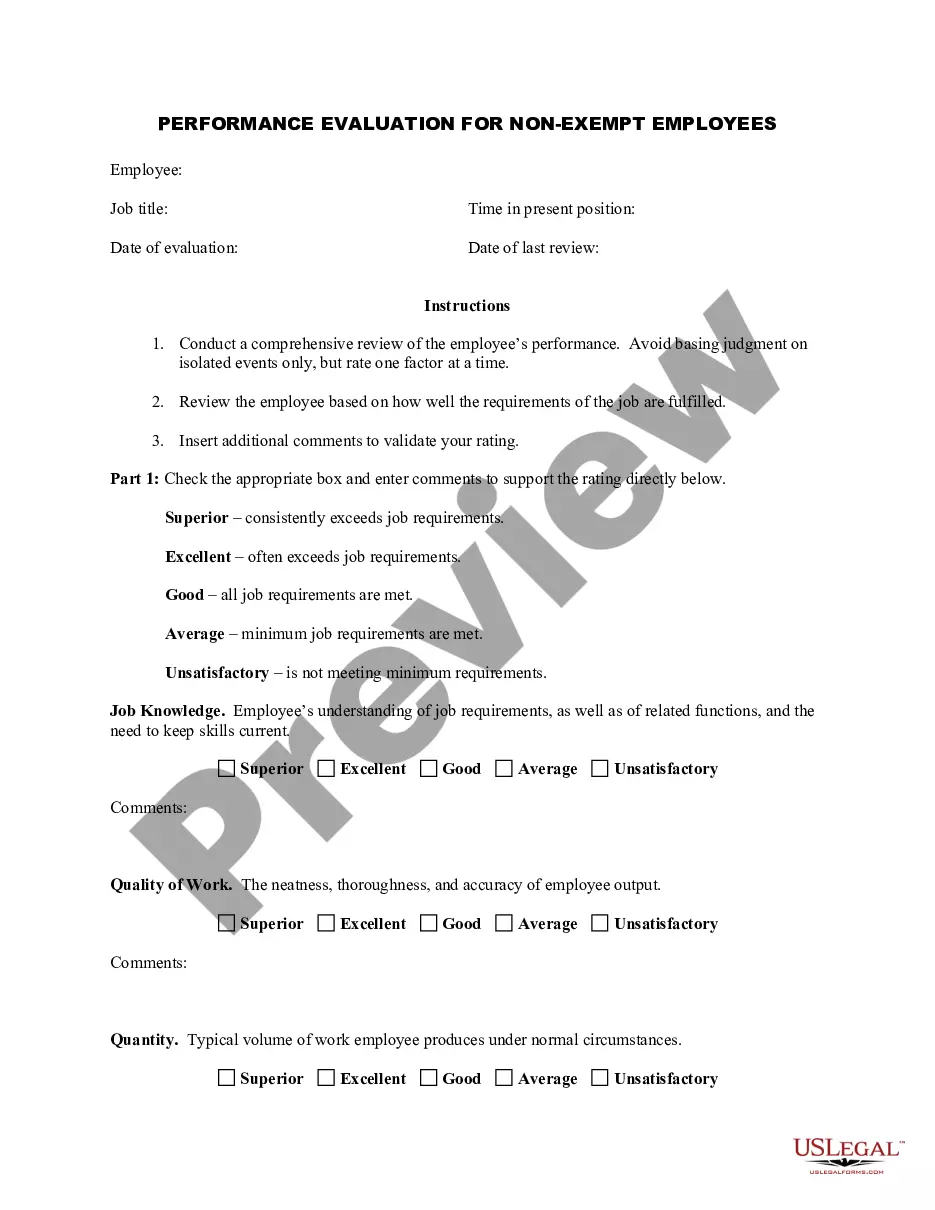
The Assessment Form for Psychology Trainee Competency Evaluation is a comprehensive tool designed to evaluate the competency of psychology trainees during their training rotations. This form facilitates the systematic assessment of various professional skills required in psychology, including ethical behavior, interpersonal skills, and understanding of psychological theories. Unlike simpler forms, which may focus on specific aspects, this form encompasses a broad range of competencies necessary for effective practice.
Key components of this form
- Trainee and supervisor identification fields
- Assessment rotation and training year details
- Various assessment methods including direct observation and review of written work
- Competencies related to professional conduct, ethics, and legal matters
- Sections for supervisor comments, areas for development, and competency evaluations

Common use cases
This form should be used during each training rotation of psychology trainees to assess their competencies. It is essential when evaluating their progression in professional skills, understanding of ethical practices, and readiness to handle complex clinical situations. Supervisors should utilize this form at regular intervals to ensure that trainees meet the required competency levels for successful completion of their program.
Who this form is for
- Psychology supervisors responsible for evaluating trainees
- Training directors overseeing psychology training programs
- Psychology trainees seeking assessment of their competencies
How to prepare this document
- Enter the trainee's name and supervisor's name at the top of the form.
- Select the training rotation number and specify the training year.
- Choose the assessment methods that will be used for evaluating competencies.
- Rate the trainee's competencies based on the provided evaluation criteria.
- Write comments summarizing strengths and areas for development.
- Ensure both trainee and supervisor sign and date the form upon completion.
Is notarization required?
In most cases, this form does not require notarization. However, some jurisdictions or signing circumstances might. US Legal Forms offers online notarization powered by Notarize, accessible 24/7 for a quick, remote process.
Get your form ready online
Our built-in tools help you complete, sign, share, and store your documents in one place.
Make edits, fill in missing information, and update formatting in US Legal Forms—just like you would in MS Word.
Download a copy, print it, send it by email, or mail it via USPS—whatever works best for your next step.
Sign and collect signatures with our SignNow integration. Send to multiple recipients, set reminders, and more. Go Premium to unlock E-Sign.
If this form requires notarization, complete it online through a secure video call—no need to meet a notary in person or wait for an appointment.
We protect your documents and personal data by following strict security and privacy standards.

Make edits, fill in missing information, and update formatting in US Legal Forms—just like you would in MS Word.

Download a copy, print it, send it by email, or mail it via USPS—whatever works best for your next step.

Sign and collect signatures with our SignNow integration. Send to multiple recipients, set reminders, and more. Go Premium to unlock E-Sign.

If this form requires notarization, complete it online through a secure video call—no need to meet a notary in person or wait for an appointment.

We protect your documents and personal data by following strict security and privacy standards.
Common mistakes to avoid
- Failing to select the appropriate assessment methods
- Not providing specific examples or comments to support ratings
- Incomplete signatures from either the trainee or supervisor
Benefits of completing this form online
- Convenient access and download options for immediate use
- Editability to customize according to specific training needs
- Reliability from templates drafted by licensed attorneys ensuring legal compliance
Quick recap
- The form evaluates various competencies for psychology trainees.
- Supervisors are crucial in utilizing the form for effective trainee assessment.
- This form meets broad training requirements across multiple states.
Looking for another form?

Form popularity
FAQ
Competencies have been defined as ?a measurable pattern of knowledge, skill, abilities, behaviors, and other characteristics that an individual needs to perform work roles or occupational functions successfully? (Rodriguez et al., 2002, p. 310).
Core Competencies of a Clinical Psychologist Interpersonal Relationships. Assessment and Evaluation. Intervention. Research. Ethics and Standards. Supervision.
List of key competencies Business awareness. Knows what we do and how we do it.Customer orientation. Identifies and prioritises customer needs and recognises constraints.Analysis/problem solving.Quick thinking/learning.Team work.Communication.Self confidence/resilience.Judgement/decision making.
: the quality or state of having sufficient knowledge, judgment, skill, or strength (as for a particular duty or in a particular respect) No one denies her competence as a leader. They have demonstrated their competence in their specialty or subspecialty by passing a comprehensive exam ? Rachael Migler.
There are several basic parts of a psychological report: reasons for referral, the procedures used, background information, behavioral observations, test results, interpretations/conclusions, and recommendations.
People may refer to competencies as actions because they're referring to the skills or performance of someone in a particular situation. For example, a childcare worker may be competent in caregiving techniques. This means they have the knowledge and skills required to perform their jobs and take care of children.
For example, if a psychologist is racist against African-Americans, they could refer an African-American client to another psychologist saying they are not competent to work with African-Americans because they do not know enough about their culture.
The six processes that make up psychological assessment are: Conducting a clinical interview. Choosing a battery of tests. Administering, scoring, and interpreting tests. Integrating and conceptualizing information gathered from test results, the clinical interview, behavioural observations, and other sources.