Informed Consent for Counseling Services with an Intern
Understanding this form
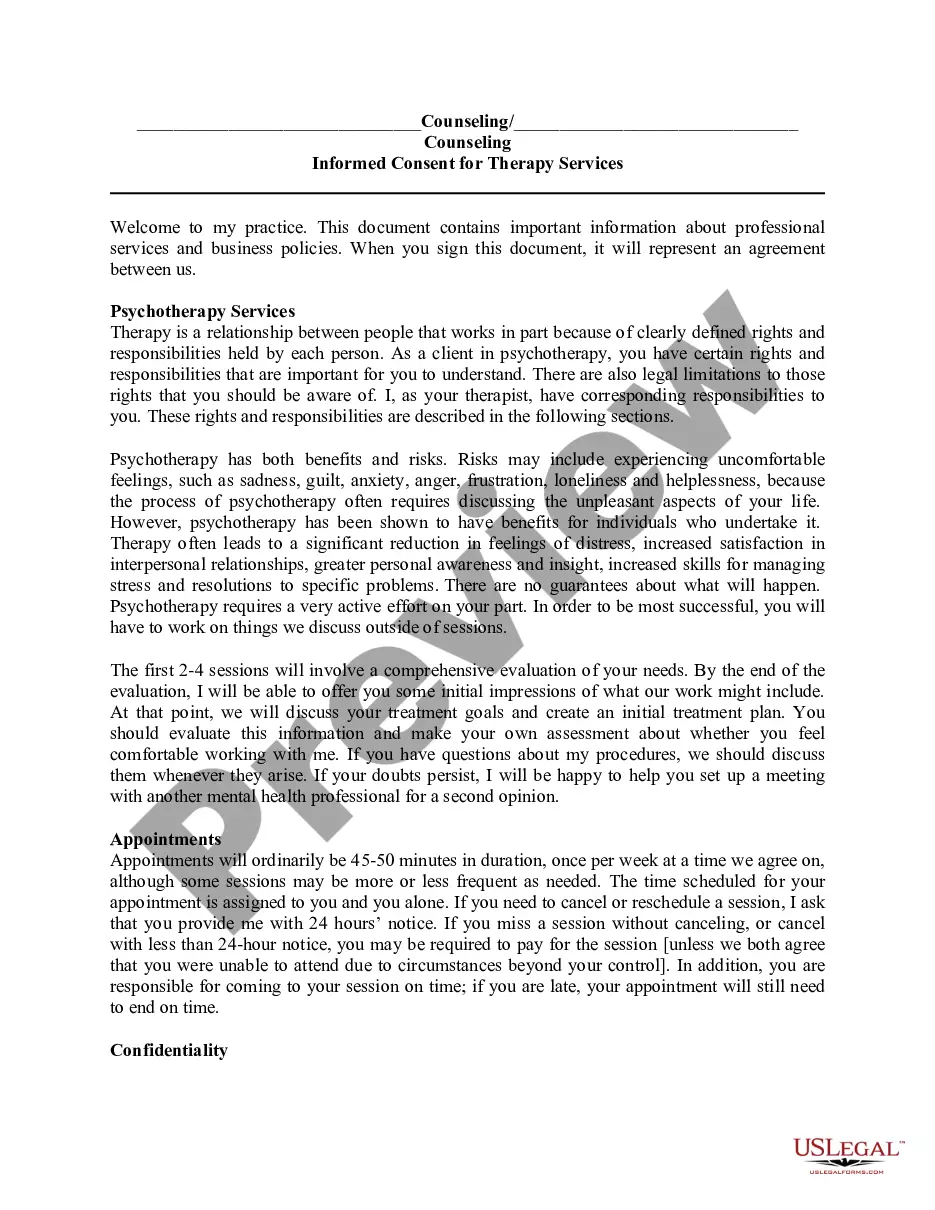
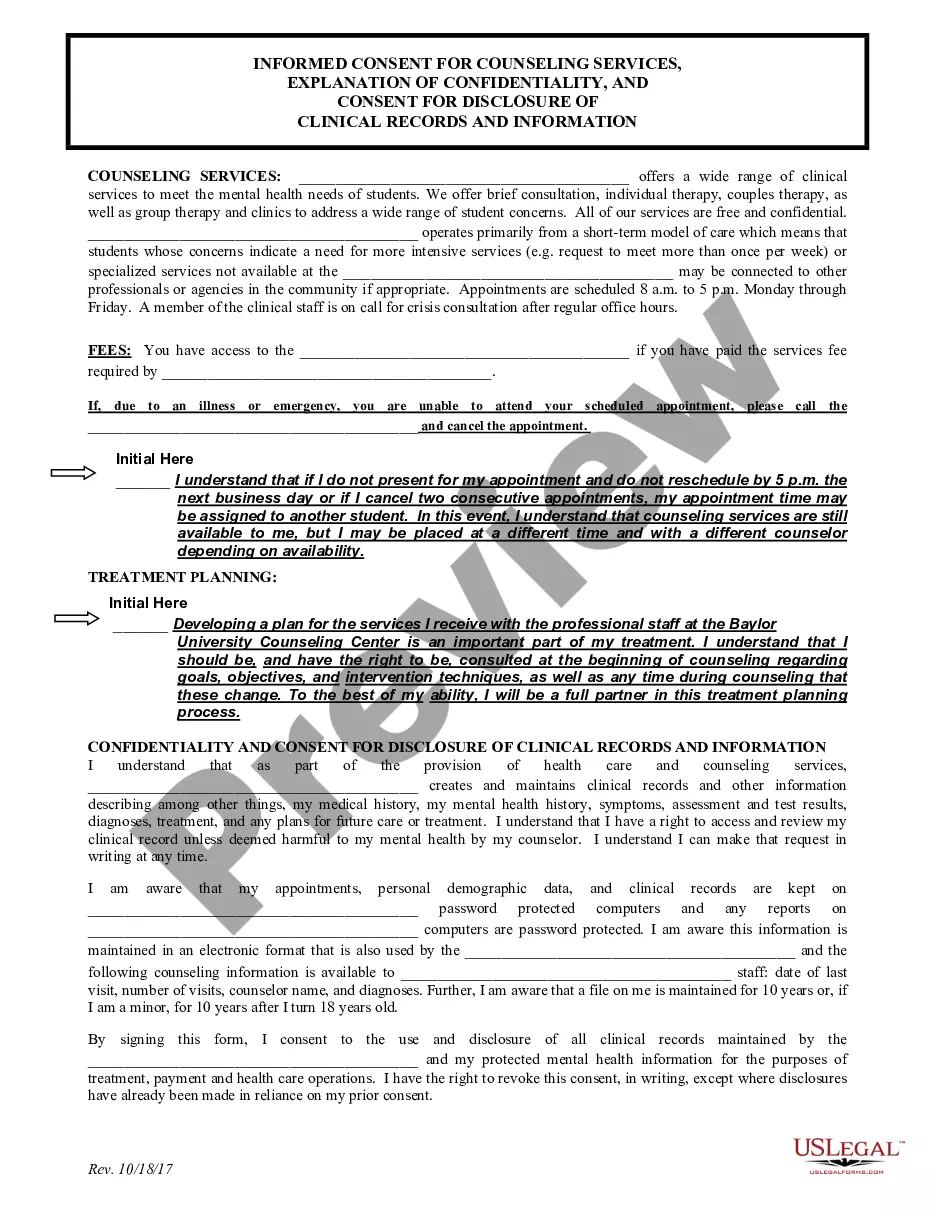
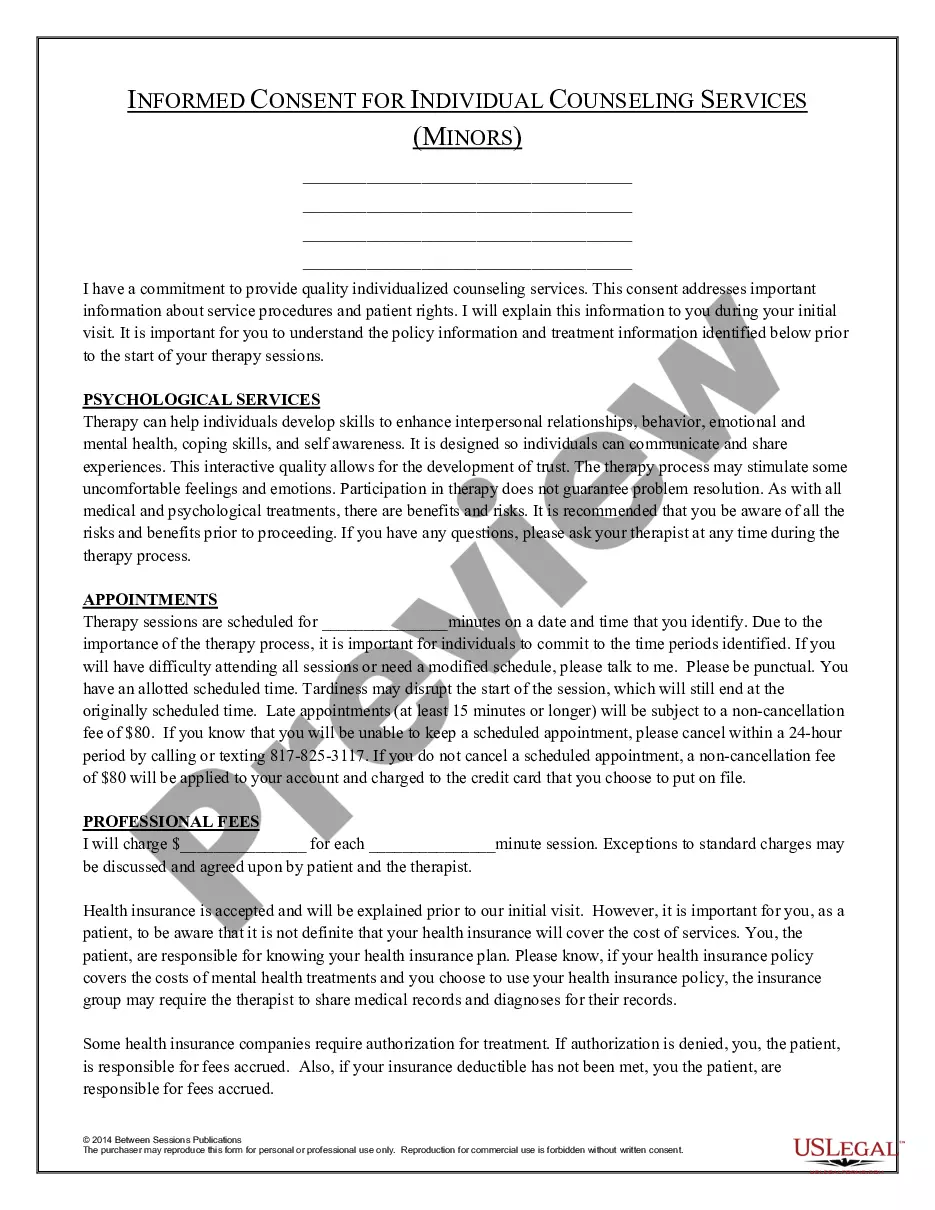
The Informed Consent for Counseling Services with an Intern is a legal document that outlines the rights and responsibilities of both the client and the intern counselor. This form is essential for establishing a therapeutic relationship while ensuring that clients understand the nature of the services being provided by the intern, who operates under the supervision of a licensed professional. Unlike standard consent forms, this document specifically addresses the involvement of an intern and the necessary supervision required during counseling sessions.
Form components explained
- Introduction: Background information about the practice and services offered.
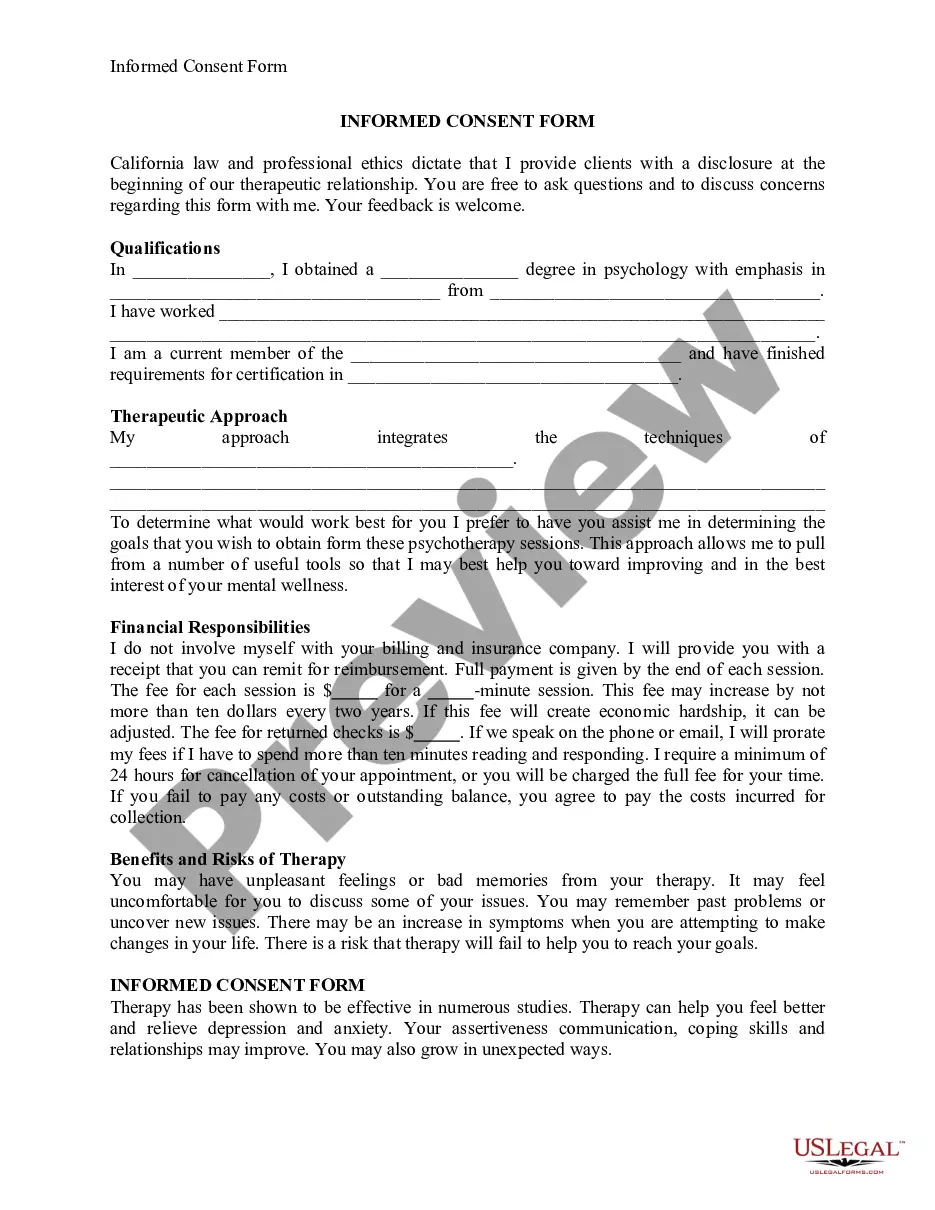
- Psychotherapy Services: Explanation of the therapeutic process, including rights, responsibilities, and potential risks.
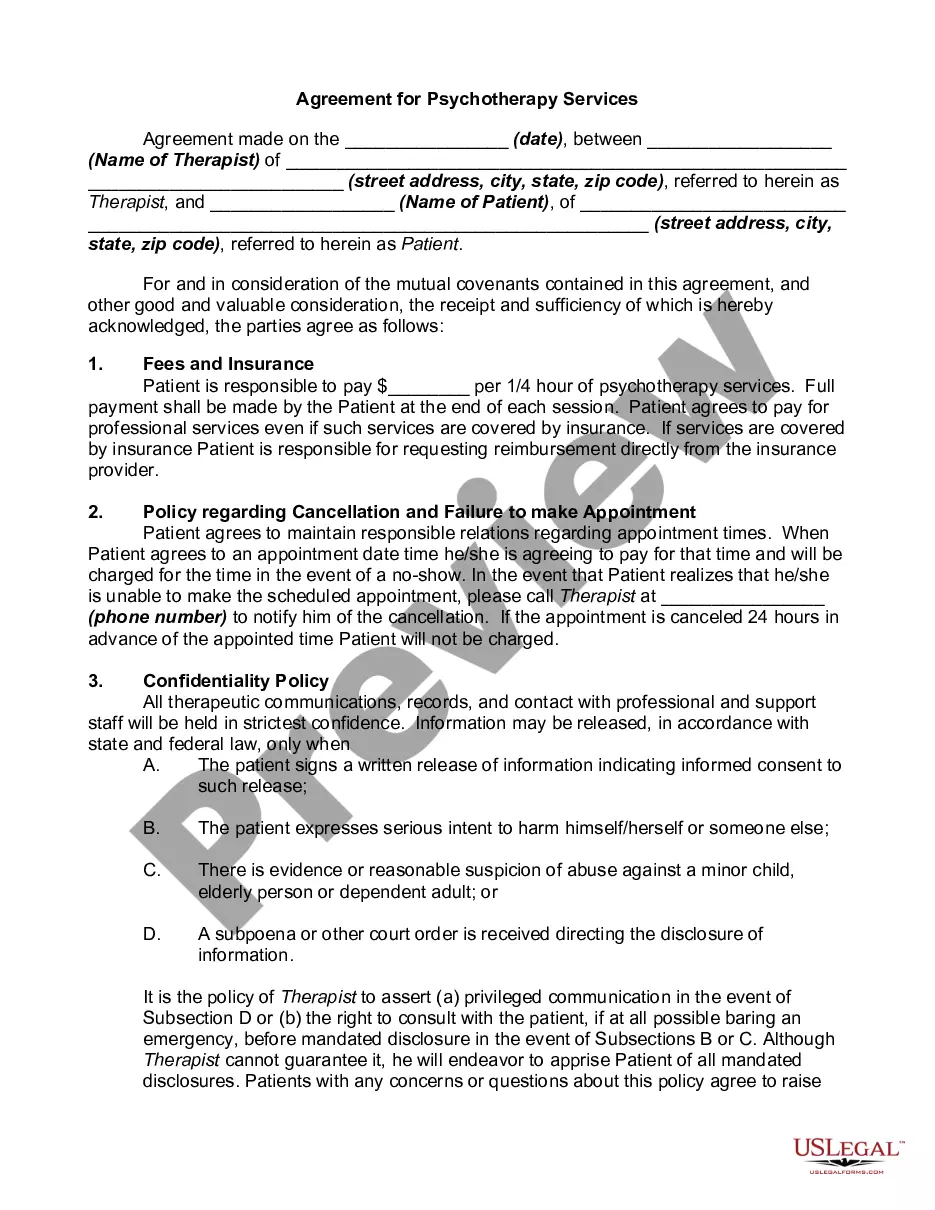
- Appointments: Details relating to appointment scheduling, cancellation policies, and fees.
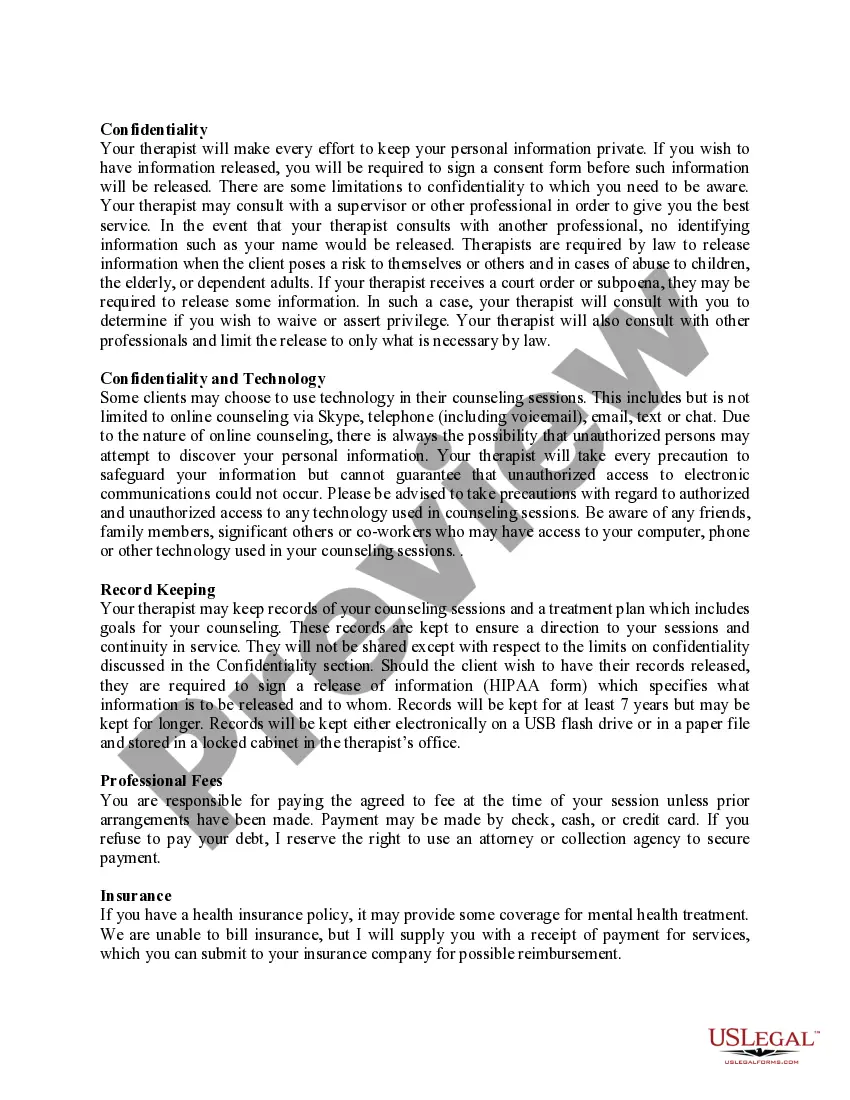
- Confidentiality: Information on privacy practices, limitations to confidentiality, and how technology may impact confidentiality.
- Record Keeping: Explanation of how client records are maintained and the process for requesting release of information.
- Professional Fees: Outline of payment responsibilities and insurance reimbursement process.
When this form is needed
This form is needed when a client enters into counseling services with an intern counselor. It is particularly important for establishing clear expectations regarding the therapeutic relationship, understanding potential risks, and the supervision under which the intern operates. This form should be signed prior to the commencement of therapy sessions to ensure that both parties have a mutual understanding of the terms.
Who this form is for
- Clients seeking therapy services with an intern counselor.
- Intern counselors providing therapy under the supervision of licensed professionals.
- Licensed counselors or therapists overseeing interns who are providing therapy services.
Steps to complete this form
- Read the entire form carefully to understand the contents and implications.
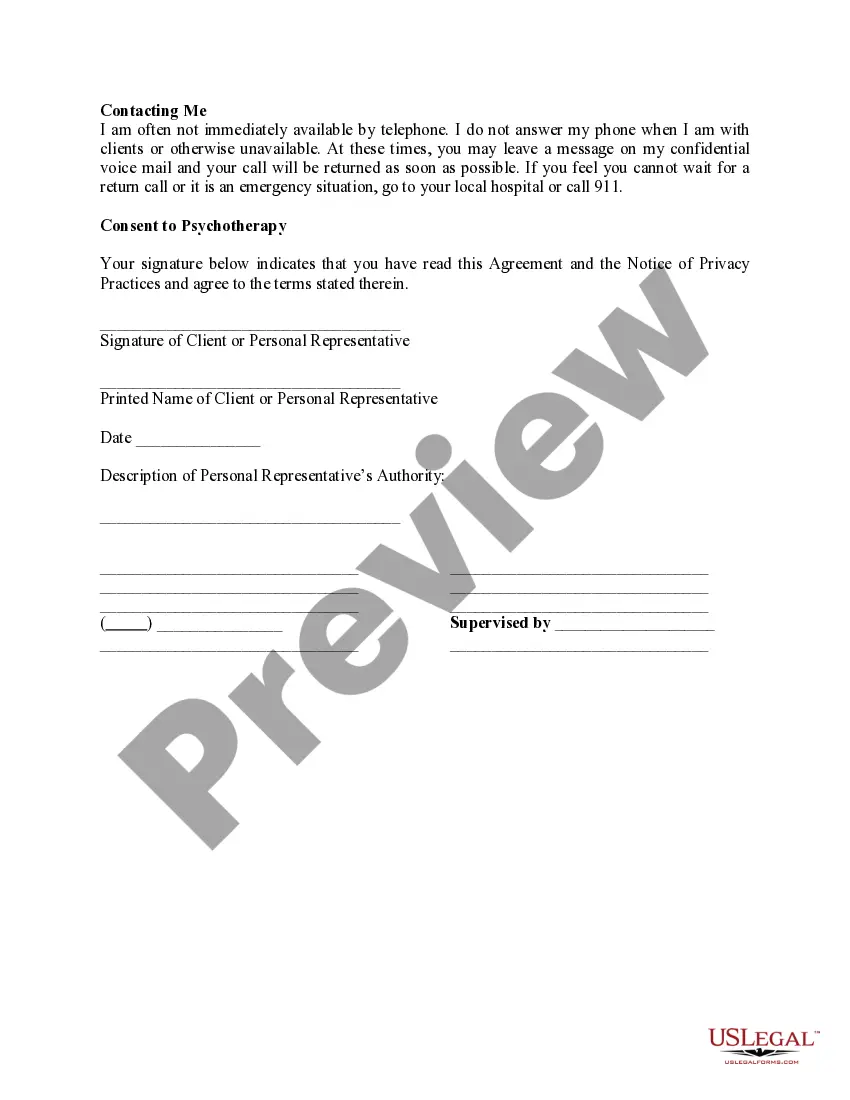
- Fill in your personal information in the designated fields, including your name and the name of the intern counselor.
- Provide information about the authority of personal representatives, if applicable.
- Sign and date the form to indicate your consent and understanding of the terms.
- Discuss any questions or concerns regarding the contents with your counselor before finalizing your signature.
Does this document require notarization?
This form does not typically require notarization unless specified by local law. Ensure that you are aware of any specific regulations that may apply in your jurisdiction.
Get your form ready online
Our built-in tools help you complete, sign, share, and store your documents in one place.
Make edits, fill in missing information, and update formatting in US Legal Forms—just like you would in MS Word.
Download a copy, print it, send it by email, or mail it via USPS—whatever works best for your next step.
Sign and collect signatures with our SignNow integration. Send to multiple recipients, set reminders, and more. Go Premium to unlock E-Sign.
If this form requires notarization, complete it online through a secure video call—no need to meet a notary in person or wait for an appointment.
We protect your documents and personal data by following strict security and privacy standards.

Make edits, fill in missing information, and update formatting in US Legal Forms—just like you would in MS Word.

Download a copy, print it, send it by email, or mail it via USPS—whatever works best for your next step.

Sign and collect signatures with our SignNow integration. Send to multiple recipients, set reminders, and more. Go Premium to unlock E-Sign.

If this form requires notarization, complete it online through a secure video call—no need to meet a notary in person or wait for an appointment.

We protect your documents and personal data by following strict security and privacy standards.
Common mistakes
- Not thoroughly reading the entire document before signing.
- Failing to ask questions about any unclear sections.
- Assuming that verbal consent suffices without a written agreement.
- Overlooking sections on confidentiality and its limitations.
Benefits of using this form online
- Convenience of accessing and completing the form from anywhere.
- Editability allows for adjustments and personal input before finalizing.
- Reliable storage of documents can be accomplished through digital means.
Legal use & context
- This form is legally recognized as an agreement between the client and the counseling service.
- It establishes the terms of the professional relationship, including the involvement of an intern.
- Understanding the document's content ensures informed consent is obtained in compliance with ethical standards.
Key takeaways
- The Informed Consent for Counseling Services with an Intern is essential for establishing a clear therapeutic relationship.
- Understanding your rights and responsibilities as a client is crucial before beginning therapy.
- Always communicate openly with your therapist about any concerns before signing.
Looking for another form?



Form popularity
FAQ
Informed consent is the process in which a health care provider educates a patient about the risks, benefits, and alternatives of a given procedure or intervention. The patient must be competent to make a voluntary decision about whether to undergo the procedure or intervention.
At a minimum, a counseling informed consent form should include: Limitations and guidelines regarding confidentiality. Purpose and description of the group. Suggested length of the group.
I have read and I understand the provided information and have had the opportunity to ask questions. I understand that my participation is voluntary and that I am free to withdraw at any time, without giving a reason and without cost. I understand that I will be given a copy of this consent form.
Informed Consent Essentials Consent must be given voluntarily. The client must be competent (legally as well as cognitively/emotionally) to give consent. We must actively ensure the client's understanding of what she or he is agreeing to. The information shared and all that is agreed to must be documented.
I will make every attempt to inform you in advance of planned absences, and provide you with the name and phone number of the mental health professional covering my practice. If you are unhappy with what is happening in therapy, I hope you will will talk with me so that I can respond to your concerns.
Informed Consent Essentials Consent must be given voluntarily. The client must be competent (legally as well as cognitively/emotionally) to give consent. We must actively ensure the client's understanding of what she or he is agreeing to. The information shared and all that is agreed to must be documented.
The informed consent process involves three key features: (1) disclosing to potential research subjects information needed to make an informed decision; (2) facilitating the understanding of what has been disclosed; and (3) promoting the voluntariness of the decision about whether or not to participate in the research.