Right of Way-Stop Intersection
About this form
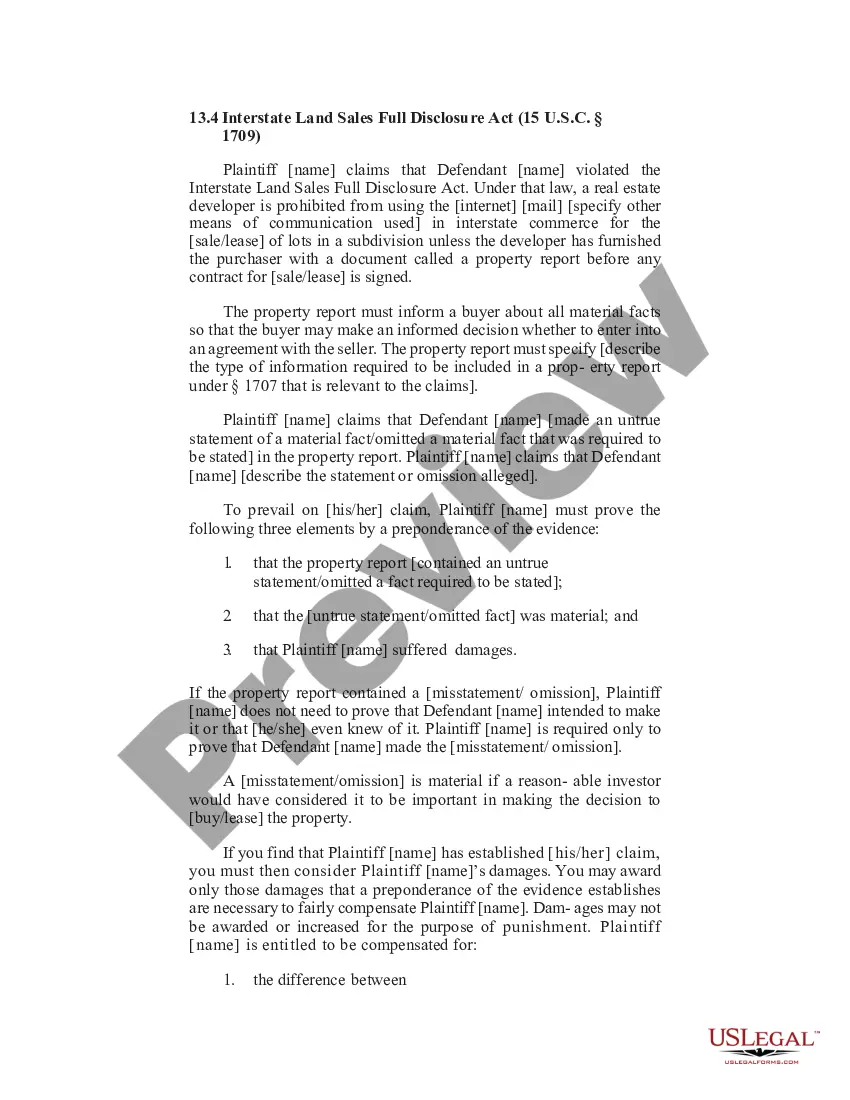
The Right of Way-Stop Intersection form is a legal document used to assert claims under the Interstate Land Sales Full Disclosure Act. This form helps parties address violations related to real estate transactions in subdivisions, specifically concerning the requirement for accurate property reports. Unlike other real estate forms, this one focuses on ensuring transparent communication between developers and purchasers, promoting informed decision-making.
Main sections of this form
- Claim Identification: Identifies the plaintiff and the defendant involved in the legal matter.
- Disclosure Requirements: Details the obligations of the real estate developer regarding property report provision.
- Material Facts: Lists required material facts that should be included in the property report.
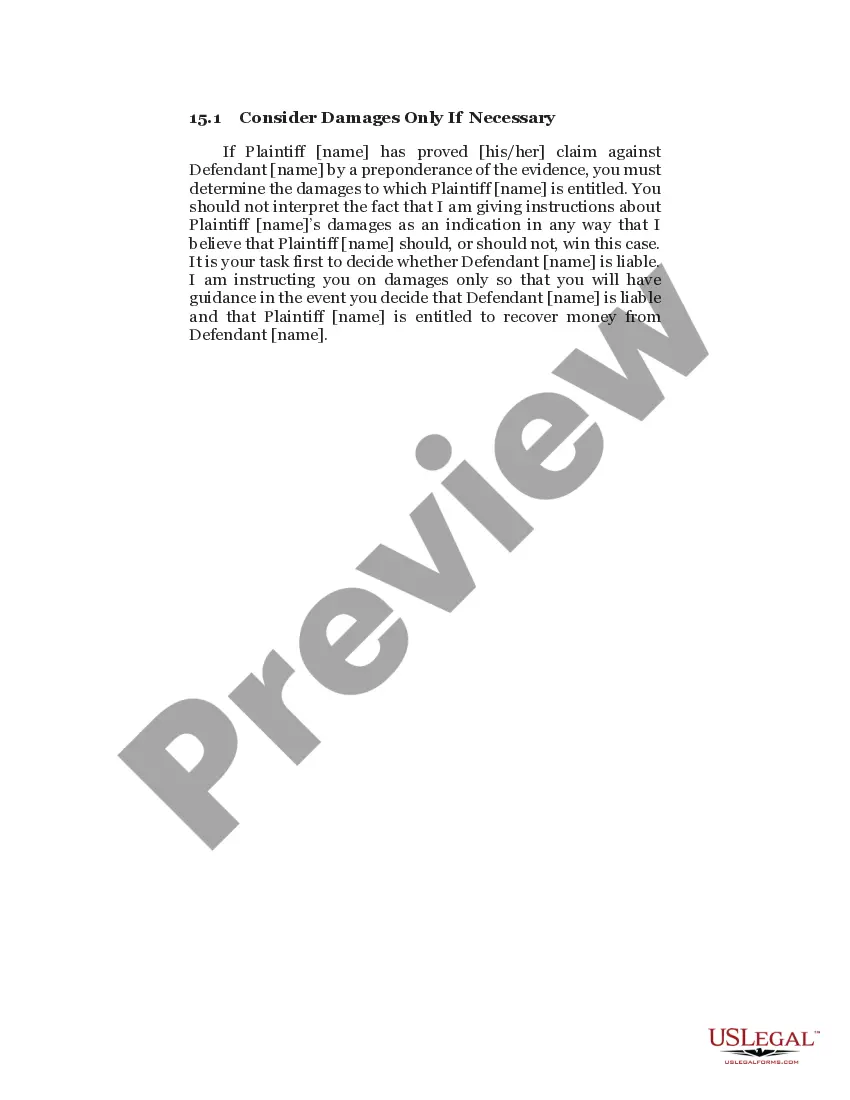
- Proof of Elements: Specifies the elements the plaintiff must prove to establish a claim.
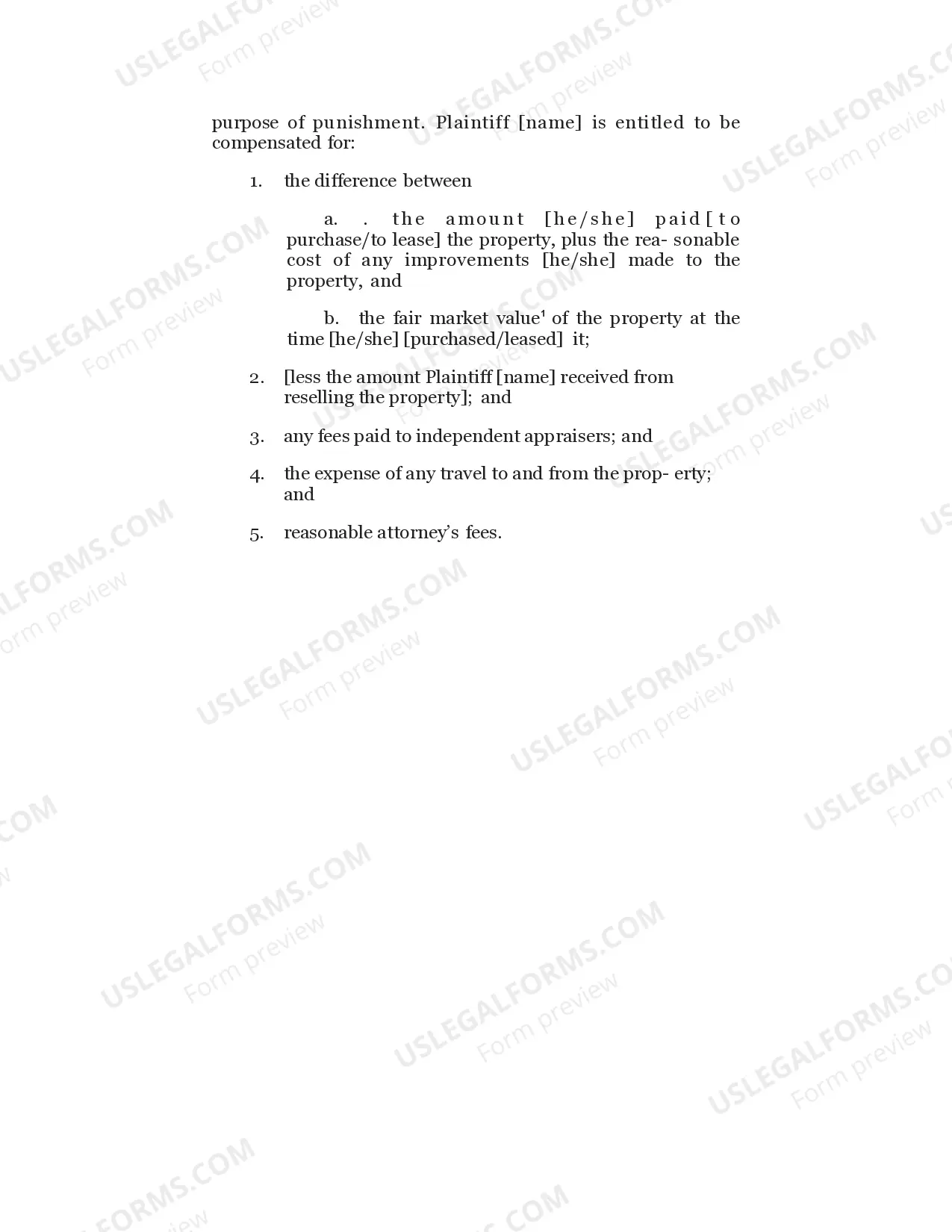
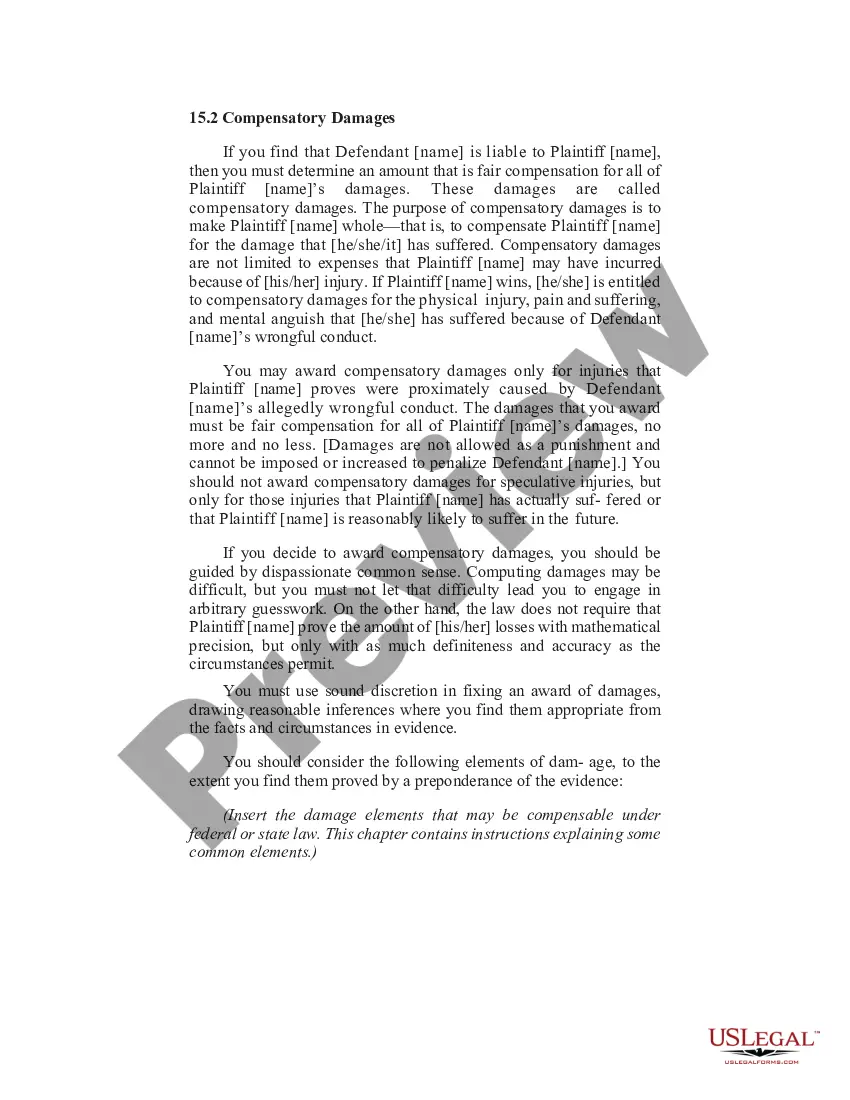
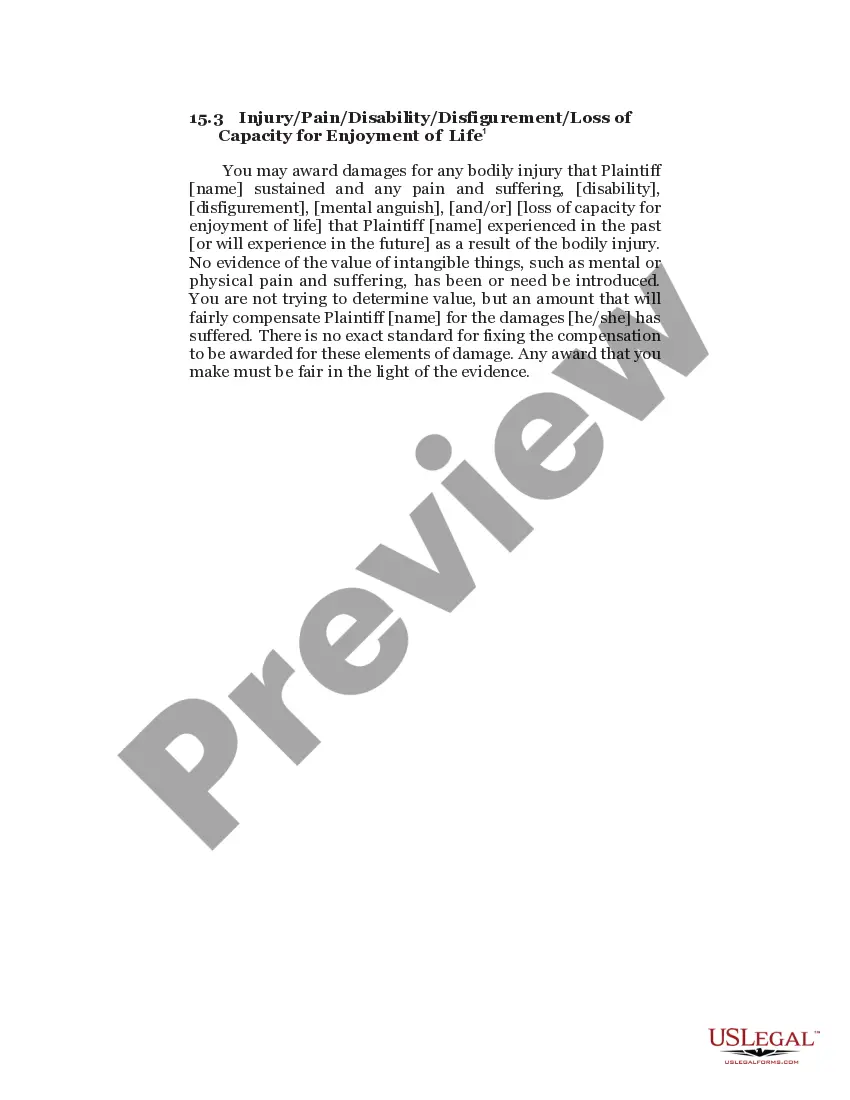
- Damages: Outlines the types of compensation the plaintiff may be entitled to receive.
Common use cases
This form should be used when a buyer believes that a real estate developer has violated the Interstate Land Sales Full Disclosure Act. It is applicable in scenarios where a property report was inaccurate or did not include essential information that influenced the buyer's decision to purchase or lease a property. Using this form can help facilitate the resolution of disputes related to real estate transactions and ensure buyers are informed of their rights and potential damages.
Intended users of this form
- Buyers of real estate properties in subdivisions who suspect violations of disclosure laws.
- Real estate attorneys representing clients in disputes involving property reports.
- Developers who need to respond to claims made under the Interstate Land Sales Full Disclosure Act.
- Individuals seeking compensation for damages related to misleading property reports.
How to complete this form
- Identify the parties: Fill in the names of the plaintiff and defendant accurately.
- Specify the communication methods: Indicate how the property report was provided (internet, mail, etc.).
- Describe the alleged violations: Clearly outline any untrue statements or omissions in the property report.
- Prove materiality: Include evidence on how the untrue statement or omission affected the buyer's decision.
- Calculate damages: Detail the damages suffered, including any costs related to the transaction.
Is notarization required?
This form needs to be notarized to ensure legal validity. US Legal Forms provides secure online notarization powered by Notarize, allowing you to complete the process through a verified video call, available anytime.
Get your form ready online
Our built-in tools help you complete, sign, share, and store your documents in one place.
Make edits, fill in missing information, and update formatting in US Legal Forms—just like you would in MS Word.
Download a copy, print it, send it by email, or mail it via USPS—whatever works best for your next step.
Sign and collect signatures with our SignNow integration. Send to multiple recipients, set reminders, and more. Go Premium to unlock E-Sign.
If this form requires notarization, complete it online through a secure video call—no need to meet a notary in person or wait for an appointment.
We protect your documents and personal data by following strict security and privacy standards.

Make edits, fill in missing information, and update formatting in US Legal Forms—just like you would in MS Word.

Download a copy, print it, send it by email, or mail it via USPS—whatever works best for your next step.

Sign and collect signatures with our SignNow integration. Send to multiple recipients, set reminders, and more. Go Premium to unlock E-Sign.

If this form requires notarization, complete it online through a secure video call—no need to meet a notary in person or wait for an appointment.

We protect your documents and personal data by following strict security and privacy standards.
Mistakes to watch out for
- Failing to provide complete and accurate information about the parties involved.
- Not adequately specifying the means of communication used for the property report.
- Neglecting to clearly describe the untrue statement or omission relevant to the claim.
- Overlooking the requirement to prove the materiality of the misstatement or omission.
- Miscalculating damages owed, which can lead to legal complications.
Benefits of using this form online
- Convenient access: Users can download the form anytime, streamlining the preparation process.
- Editability: The form can be tailored to individual circumstances before completion.
- Legal assurance: Access to templates drafted by licensed attorneys ensures compliance with applicable laws.
- Cost-effective: Online forms often reduce the need for expensive legal consultations.
Legal use & context
- This form is used to uphold rights under the Interstate Land Sales Full Disclosure Act.
- It helps protect buyers from misleading practices by real estate developers.
- The enforcement of this form can lead to compensation for damages suffered due to inaccurate property information.
Summary of main points
- The Right of Way-Stop Intersection form addresses specific claims under real estate disclosure laws.
- Completing the form accurately is crucial for establishing a valid claim.
- Buyers have the right to transparent information and can seek damages for violations.
Definitions you should know
- Interstate Land Sales Full Disclosure Act: A federal law aimed at protecting buyers in certain real estate transactions.
- Property report: A document containing essential information about a property that must be provided before a sale or lease.
- Material fact: Any information that is significant enough to influence a buyer's decision.
- Damages: Compensation that a plaintiff may seek in a legal action for losses incurred.
Looking for another form?

Form popularity
FAQ
Right of Way at Intersections However, if two cars arrive at the intersection at the same time, the vehicle on the right has the right of way. If you are turning left at an intersection, you must yield the right of way to oncoming vehicles and to any pedestrians crossing the street.
Without STOP or YIELD signs: The vehicle that arrives to the intersection first has the right-of-way. However, if a vehicle, pedestrian, or bicyclist gets to the intersection at the same time as you, give the right-of-way to the vehicle, pedestrian, or bicyclist on your right.
You must yield to those who have already arrived at the intersection and proceed cautiously. If another vehicle arrives at the same time, the right-most vehicle has the right of way.
Drivers turning left must yield to oncoming vehicles going straight. At a four-way stop, the driver reaching the intersection first may proceed before the other drivers (after coming to a complete stop). Drivers entering a road from a driveway, alley, or roadside must yield to vehicles already on the main road.
Uncontrolled intersections. At an intersection where there are no stop signs, yield signs, traffic lights or police directing traffic, and two vehicles arrive at the intersection at approximately the same time, the driver of the vehicle on the left must yield the right of way to the driver of the vehicle on the right.
346.19, 346.20, 346.215, or 346.46 (1), when 2 vehicles approach or enter an intersection at approximately the same time, the operator of the vehicle on the left shall yield the right-of-way to the vehicle on the right.
At a 4-way stop, the first car to arrive at the intersection receives the right of way. It doesn't matter where the vehicle is located or what direction it is traveling, this rule will always apply when someone has clearly arrived at the stop sign first.
Wisconsin law provides the "rules of the road" for proper highway etiquette. Any time you encounter another vehicle, bicyclist or pedestrian, one of you must yield the right of way. If you disobey these rules, you're not only driving aggressively, you're breaking the law.