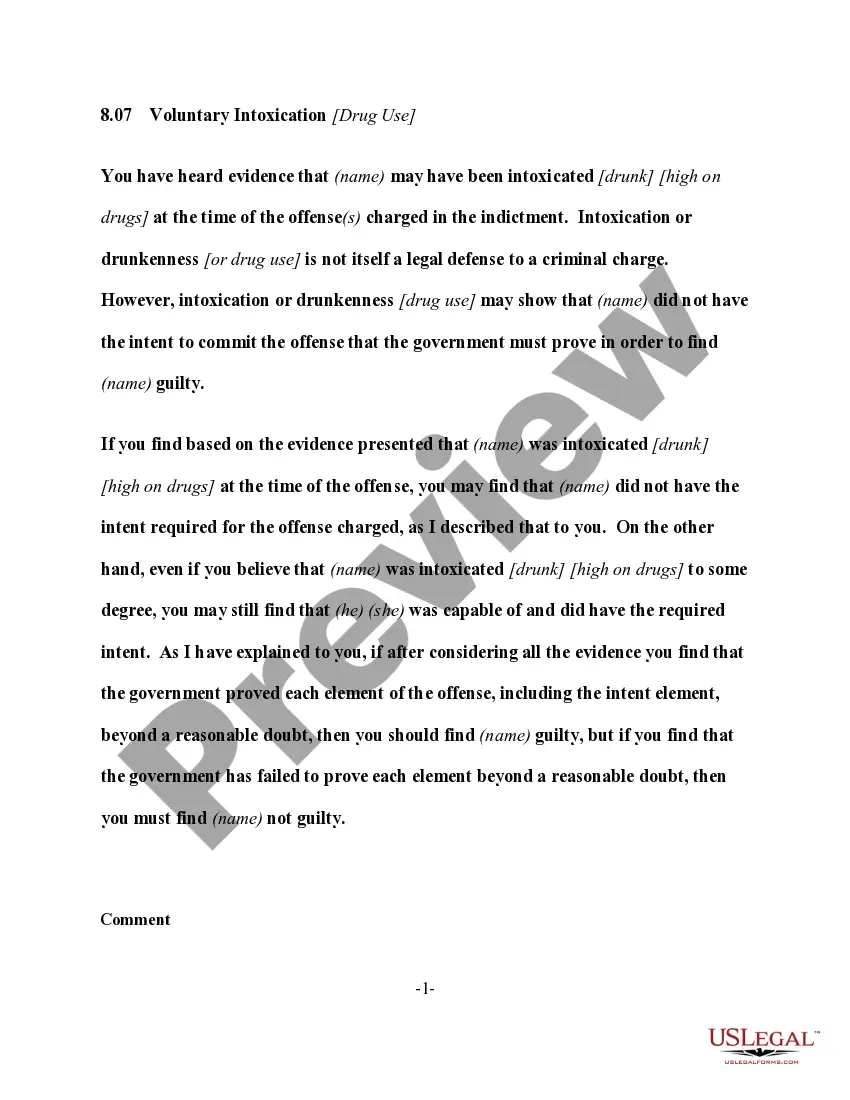
Voluntary Intoxication (Drug Use)
Overview of this form
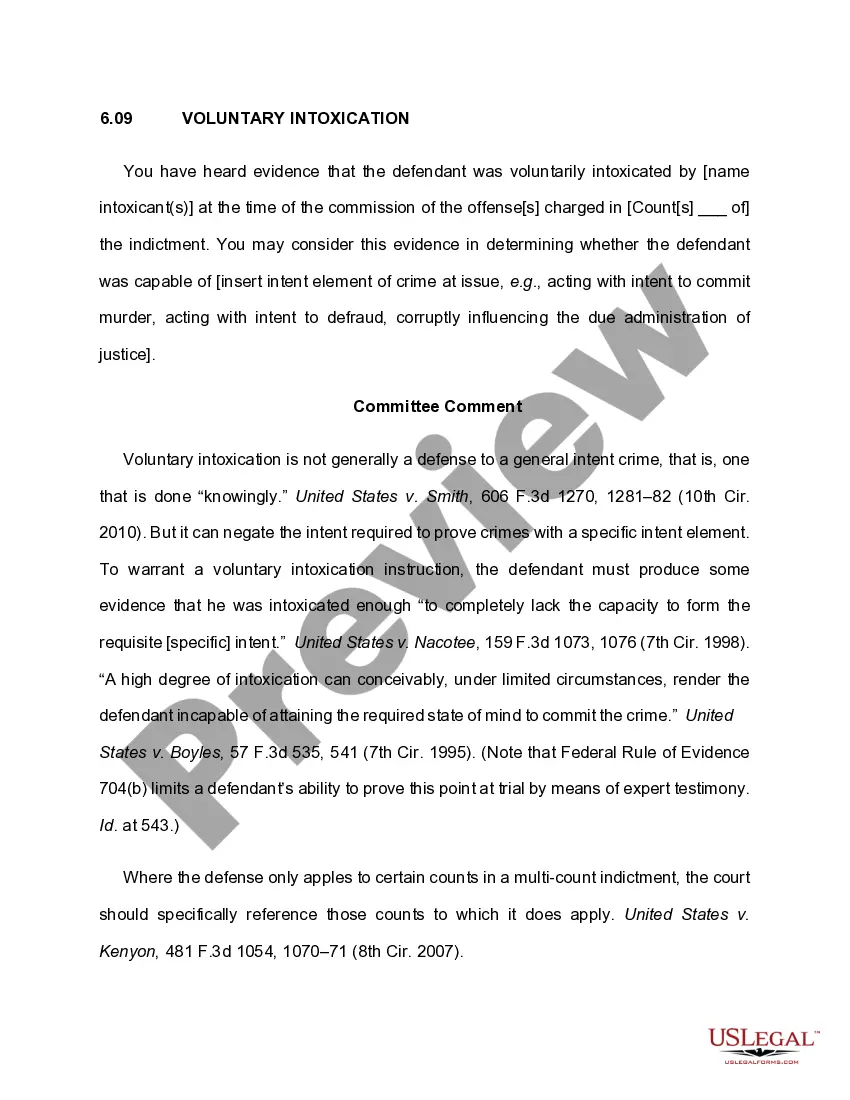
The Voluntary Intoxication (Drug Use) form is a legal document used in criminal cases to address the implications of a defendant being under the influence of drugs at the time of an alleged offense. Unlike intoxication as a standalone defense, this form helps establish whether the defendant possessed the necessary intent to commit the crime. It is particularly relevant for offenses where the mental state required is categorized as specific intent.
What’s included in this form
- Evidence of intoxication detailing the defendant's state during the alleged offense
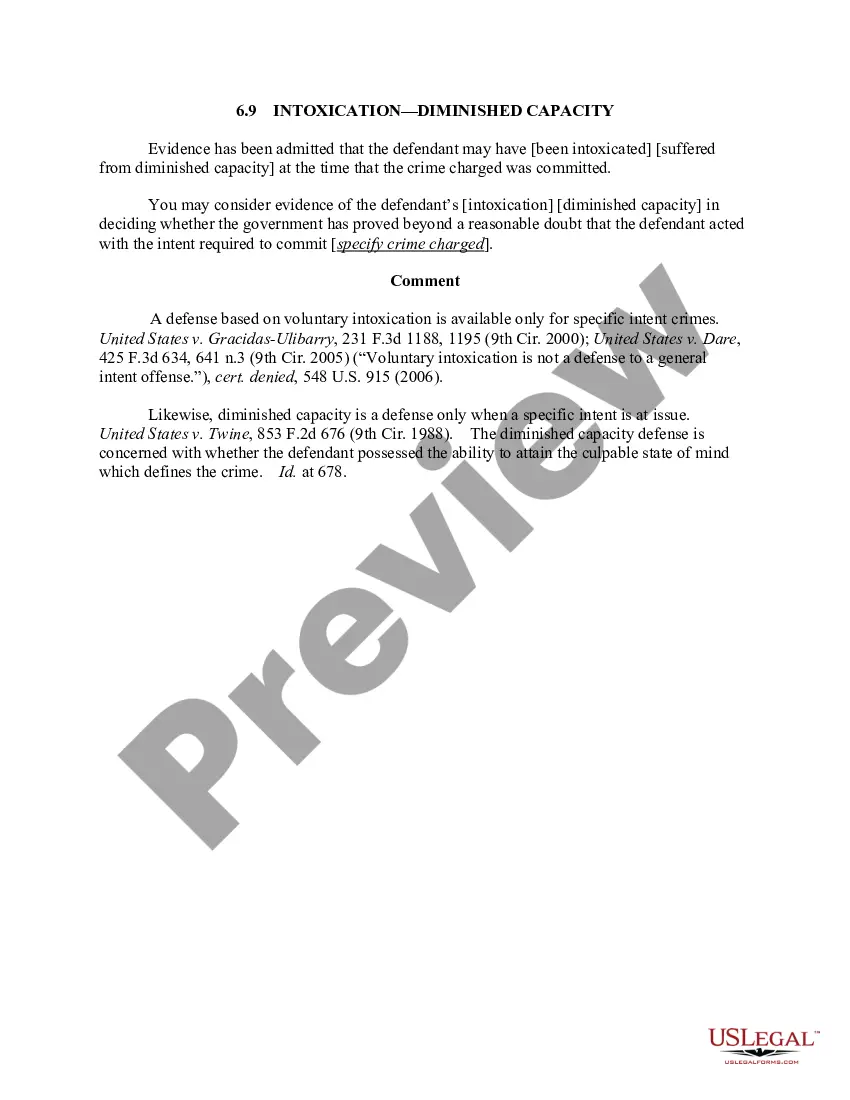
- Clarification that intoxication is not a legal defense but may affect intent
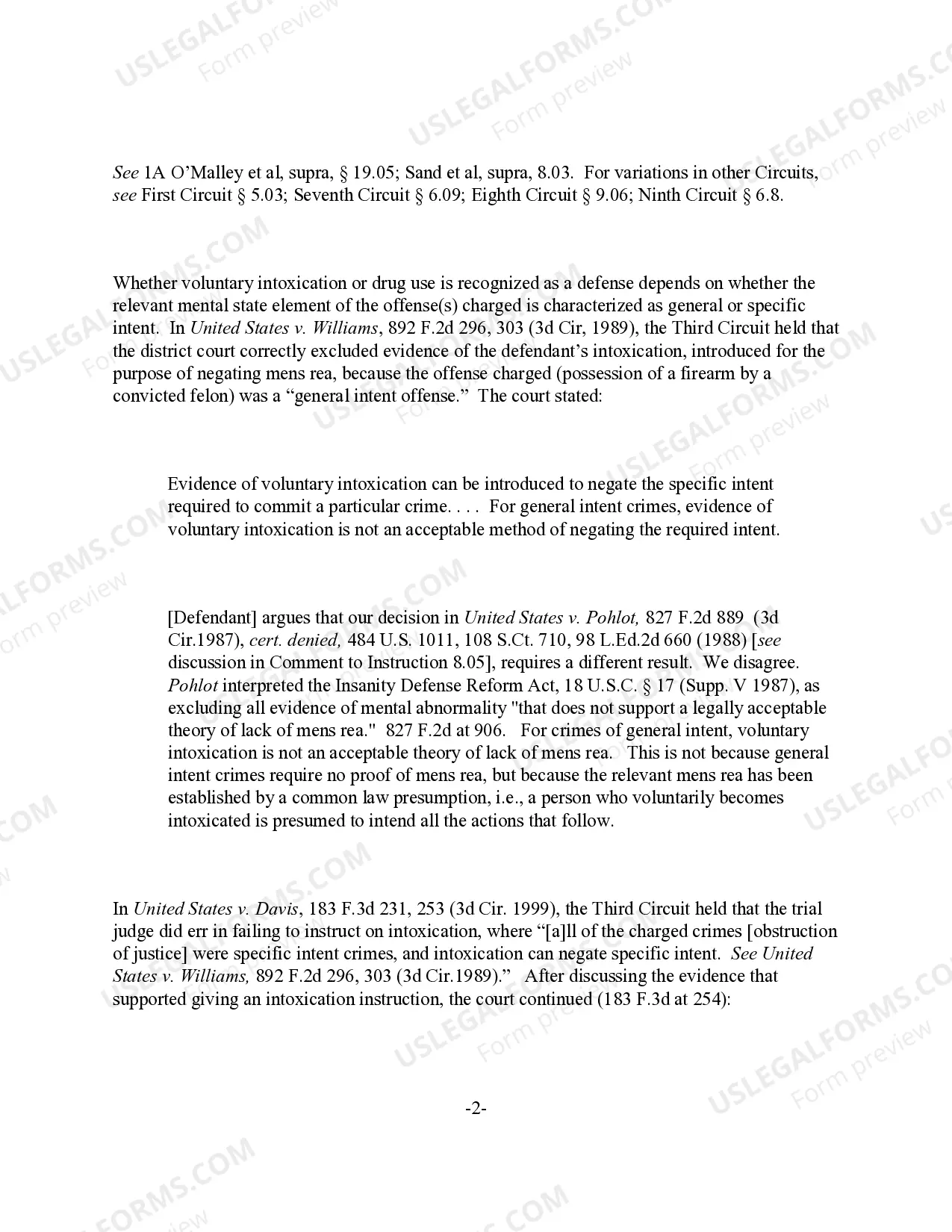
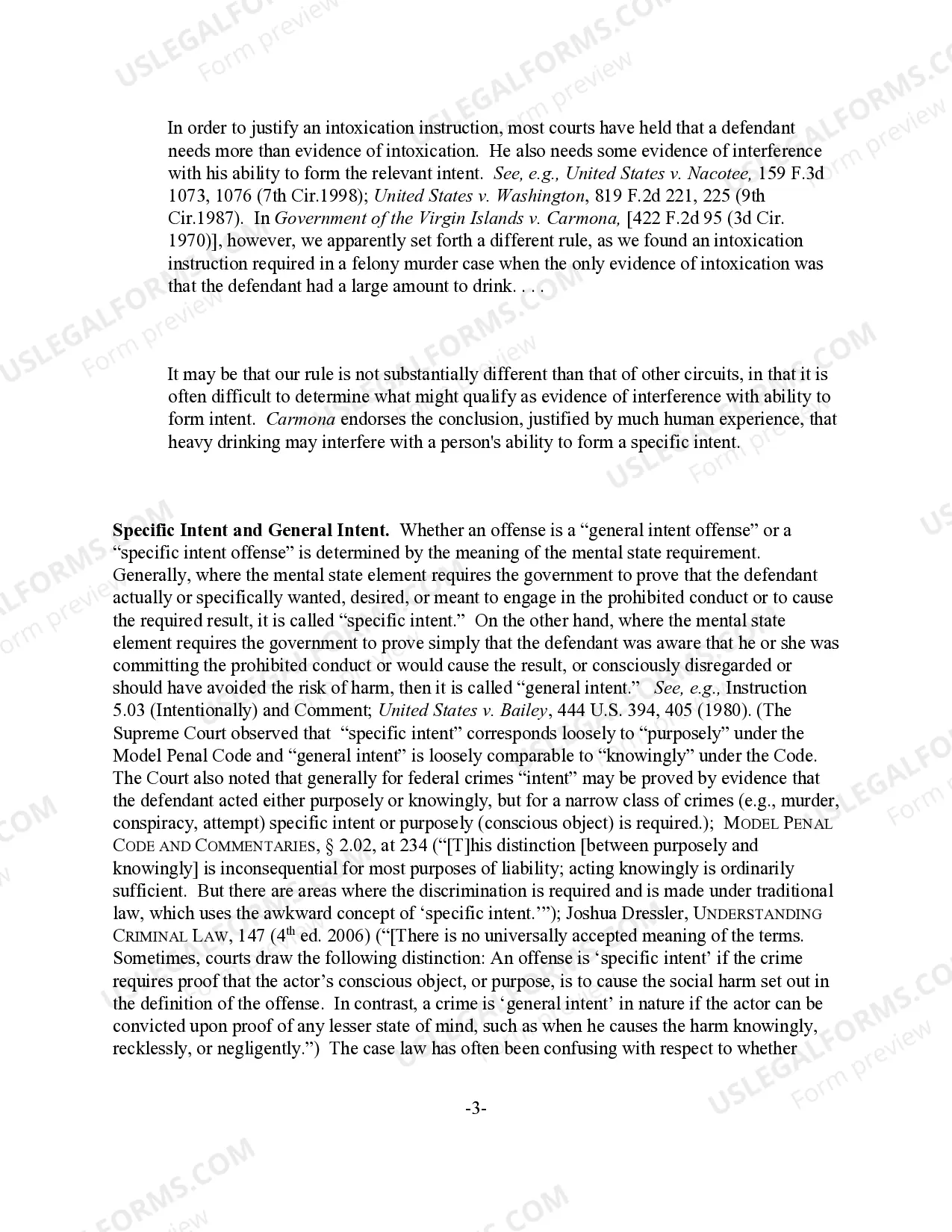
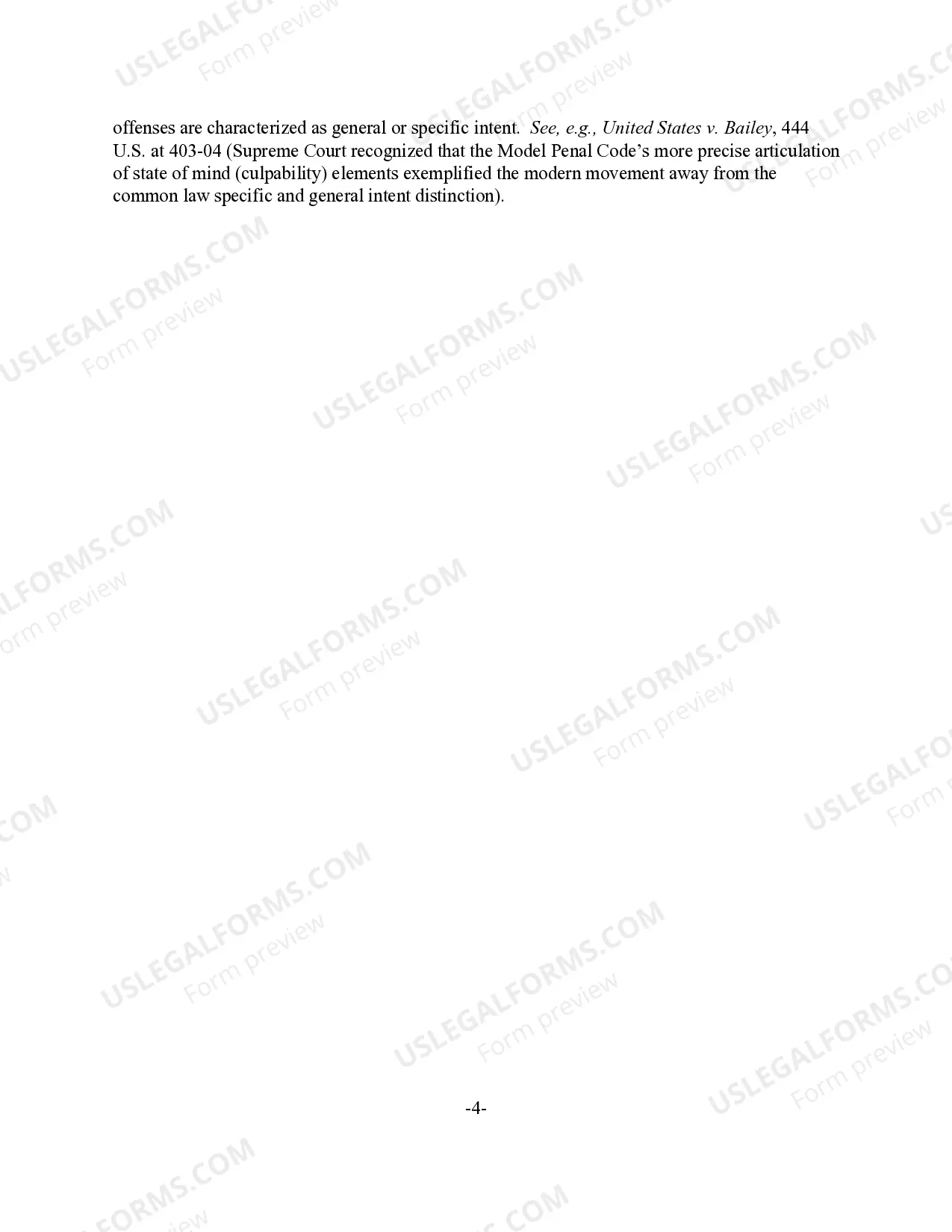
- Guidance on the distinction between general intent and specific intent offenses
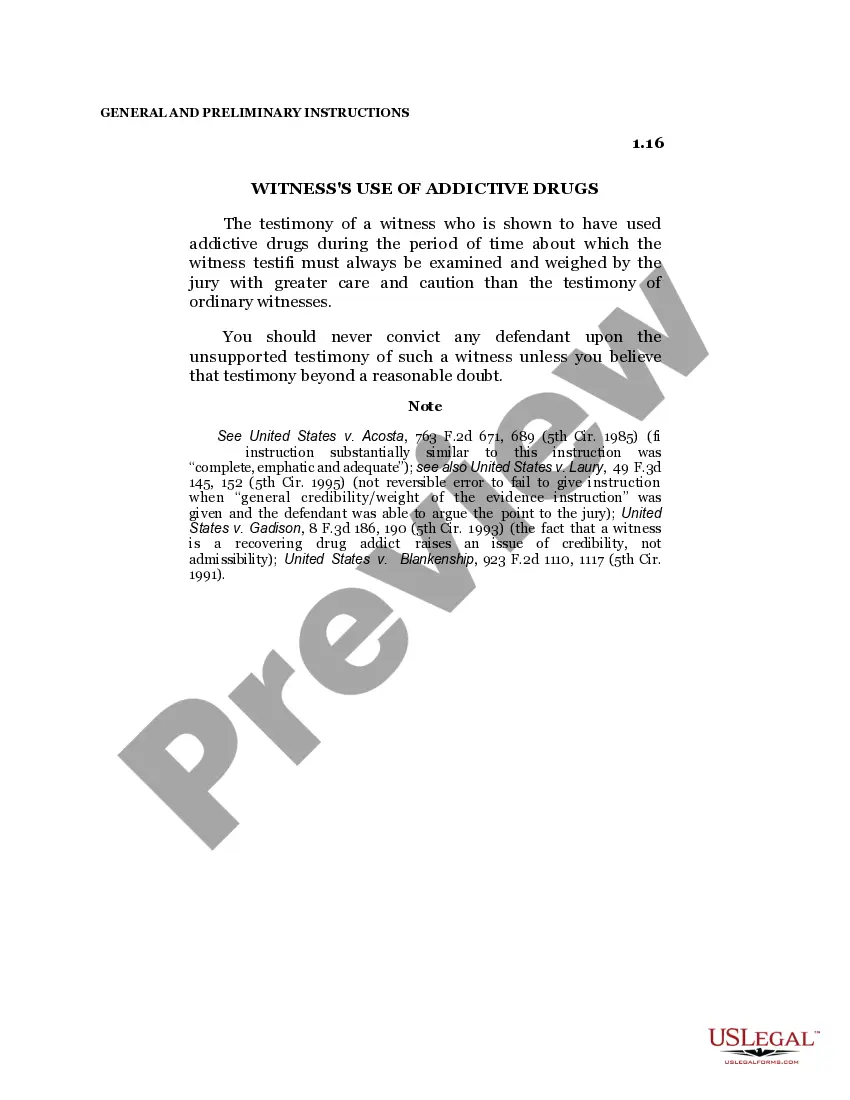
- Instructions for the jury on evaluating intent based on evidence of intoxication
When to use this form
This form is typically used in criminal proceedings where a defendant's intoxication at the time of the alleged offense is a factor. It is applicable in situations where the defense aims to argue that the defendant lacked the intent necessary to be found guilty due to their impaired state from drug use.
Who needs this form
- Defendants in criminal cases involving charges where intent is a critical element
- Attorneys representing clients who were under the influence at the time of the offense
- Judges or juries evaluating cases involving drug-related charges
Completing this form step by step
- Identify the defendant by name and the specific offense charged.
- Gather evidence regarding the level of intoxication and its effects on the defendant's intent.
- Provide clear instructions for the jury on how to assess the relevance of intoxication.
- Clarify whether the intent required falls under general or specific categories.
Is notarization required?
This form usually doesn’t need to be notarized. However, local laws or specific transactions may require it. Our online notarization service, powered by Notarize, lets you complete it remotely through a secure video session, available 24/7.
Get your form ready online
Our built-in tools help you complete, sign, share, and store your documents in one place.
Make edits, fill in missing information, and update formatting in US Legal Forms—just like you would in MS Word.
Download a copy, print it, send it by email, or mail it via USPS—whatever works best for your next step.
Sign and collect signatures with our SignNow integration. Send to multiple recipients, set reminders, and more. Go Premium to unlock E-Sign.
If this form requires notarization, complete it online through a secure video call—no need to meet a notary in person or wait for an appointment.
We protect your documents and personal data by following strict security and privacy standards.

Make edits, fill in missing information, and update formatting in US Legal Forms—just like you would in MS Word.

Download a copy, print it, send it by email, or mail it via USPS—whatever works best for your next step.

Sign and collect signatures with our SignNow integration. Send to multiple recipients, set reminders, and more. Go Premium to unlock E-Sign.

If this form requires notarization, complete it online through a secure video call—no need to meet a notary in person or wait for an appointment.

We protect your documents and personal data by following strict security and privacy standards.
Mistakes to watch out for
- Failing to properly distinguish between general and specific intent when presenting intoxication evidence.
- Assuming intoxication alone is sufficient to negate intent without related evidence.
- Neglecting to provide clear jury instructions regarding the implications of the intoxication defense.
Benefits of using this form online
- Convenient access to legal forms that can be downloaded anytime.
- Editability allows users to tailor the document to specific case needs.
- Reliable guidance from legal professionals ensures accuracy and compliance.
Legal use & context
- This form serves as a framework for addressing voluntary intoxication in criminal proceedings.
- It clarifies how intoxication relates to intent and guilt as defined by various legal standards.
- Understanding the nuances of this form can aid in effectively navigating related legal defenses.
Key takeaways
- The Voluntary Intoxication (Drug Use) form is essential in cases where intent is contentious due to intoxication.
- Intoxication cannot solely excuse criminal behavior but can affect the court's assessment of intent.
- Using this form can help ensure that appropriate legal standards and instructions are considered in relevant cases.
Looking for another form?


Form popularity
FAQ
Voluntary intoxication is, therefore, primarily a mitigating defense; i.e., it prevents conviction for certain crimes but does not entirely exculpate the defendant from criminal liability. Insanity, by contrast, is an exculpating defense.
Voluntary intoxication is available as a defense only when the crime with which the defendant is charged has as its mens rea element a specific criminal intent.
2. When can involuntary intoxication work as a defense? Under California criminal law, involuntary intoxication is a complete defense to a crime. This means that an accused cannot be found guilty of any crime that he/she committed while involuntarily intoxicated.
Voluntary intoxication means that a person voluntarily decided to get intoxicated. For example, if a person goes into a bar and consumes enough alcohol to be intoxicated, that person can be said to be voluntarily intoxicated. When it comes to criminal law, voluntary intoxication can be a defense to a crime.
The basic precept of criminal law is that voluntary intoxication does not excuse criminal behavior. The most common rationale for this rule is that an intoxication defense can be easily simulated, thus making prosecutions too difficult.
Voluntary intoxication is when the accused person willingly uses intoxicating drugs or alcohol. For that reason, for criminal charges where the prosecution must prove specific intent to commit the crime, intoxication may be a valid defense.
Unlike involuntary intoxication, voluntary intoxication is never a defense to a general intent crime. However, voluntary intoxication may be used as a defense to specific intent crimes if, as with involuntary intoxication, it prevents the defendant from forming the criminal intent necessary to commit the crime.
Excuse defenses include insanity, diminished capacity, duress, mistake, infancy and entrapment.