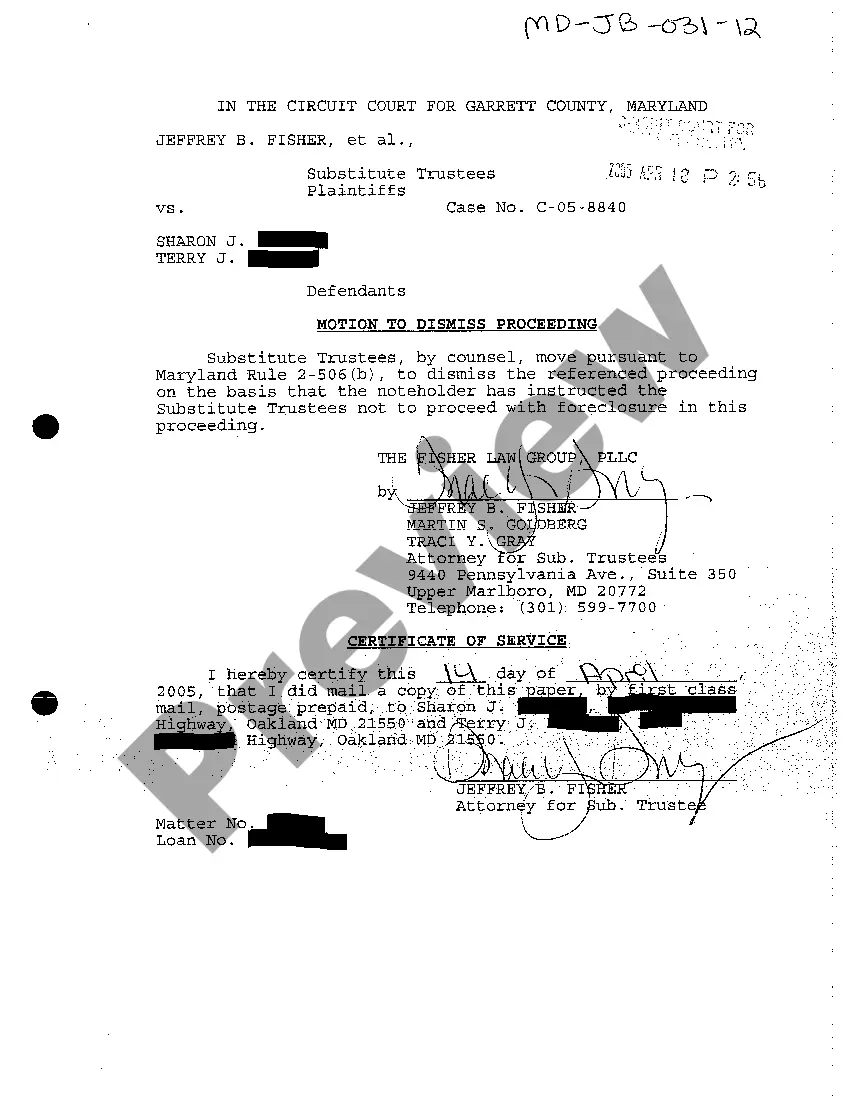
Prior Statement of Defendant - Single Defendant on Trial
What this document covers
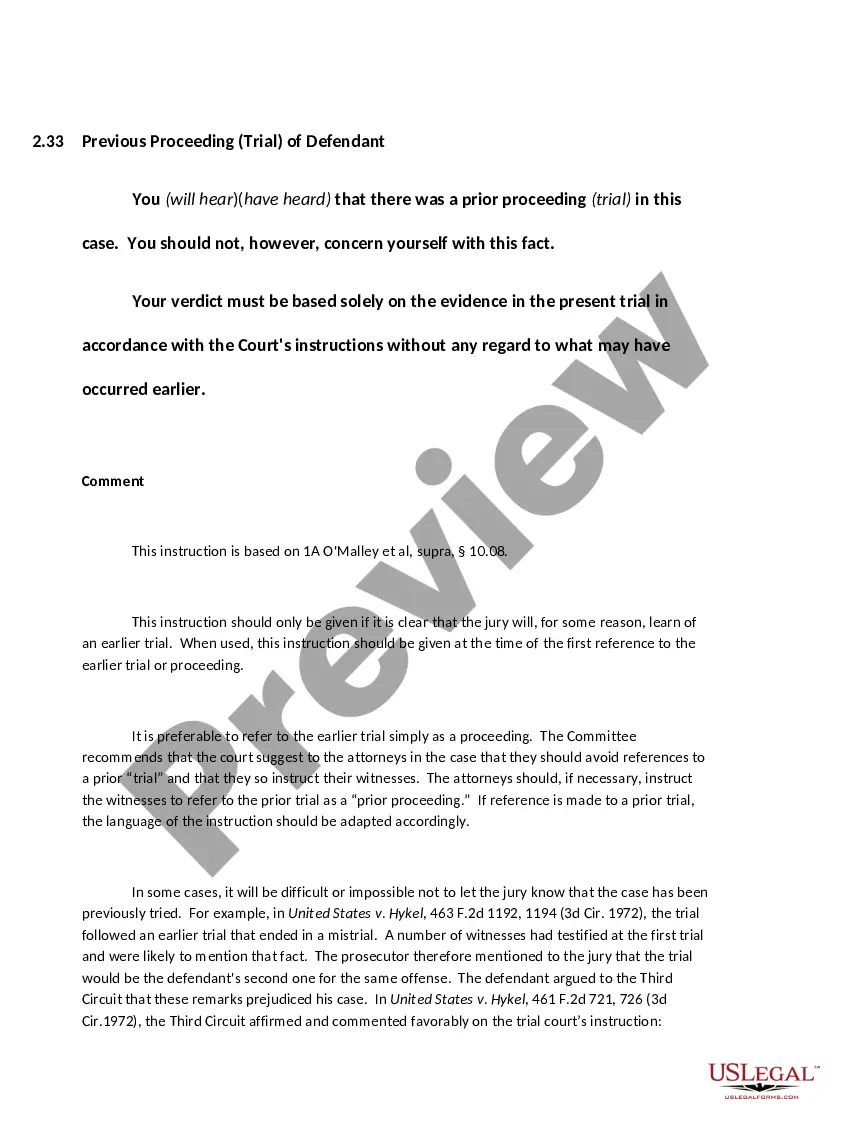
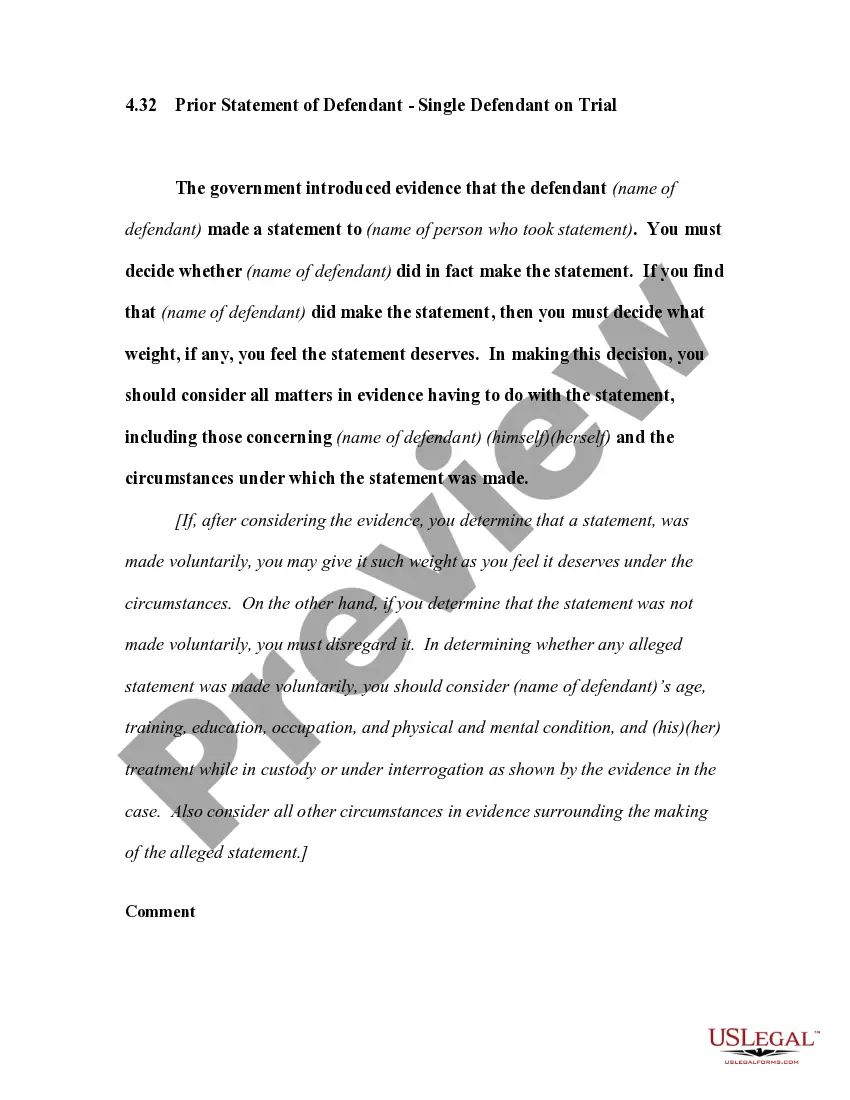
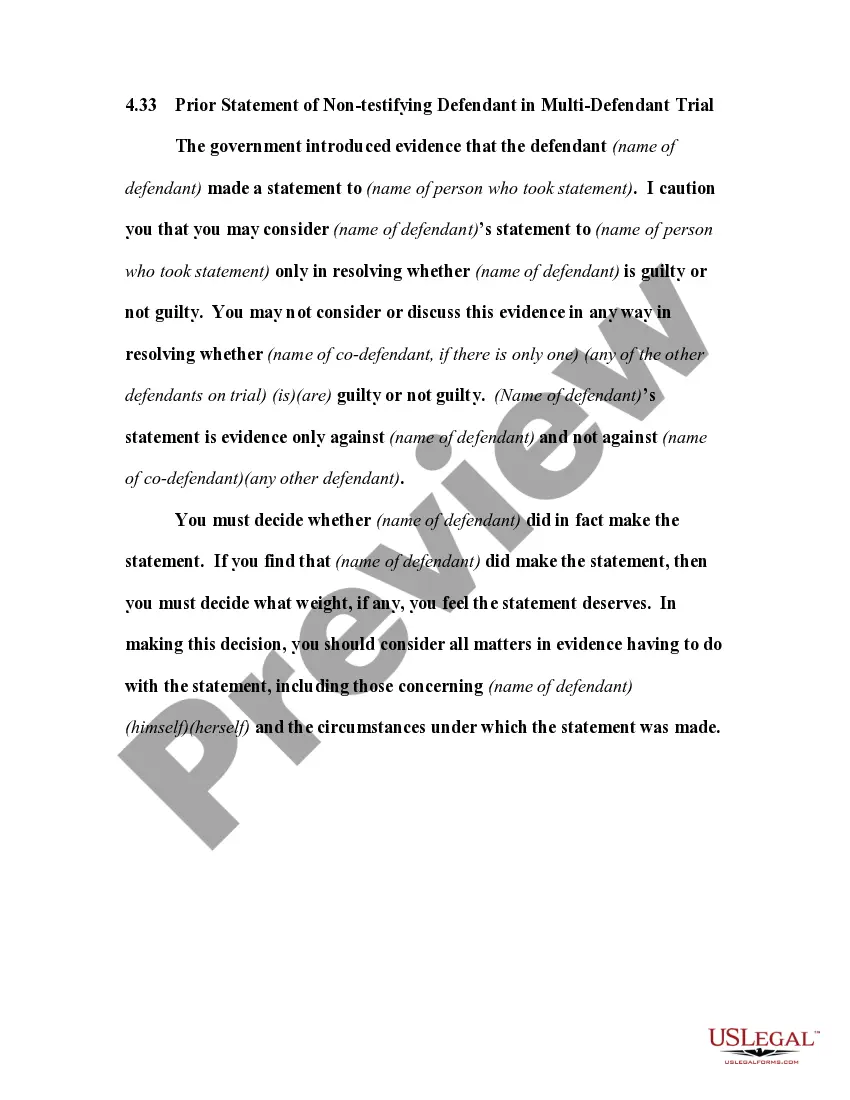
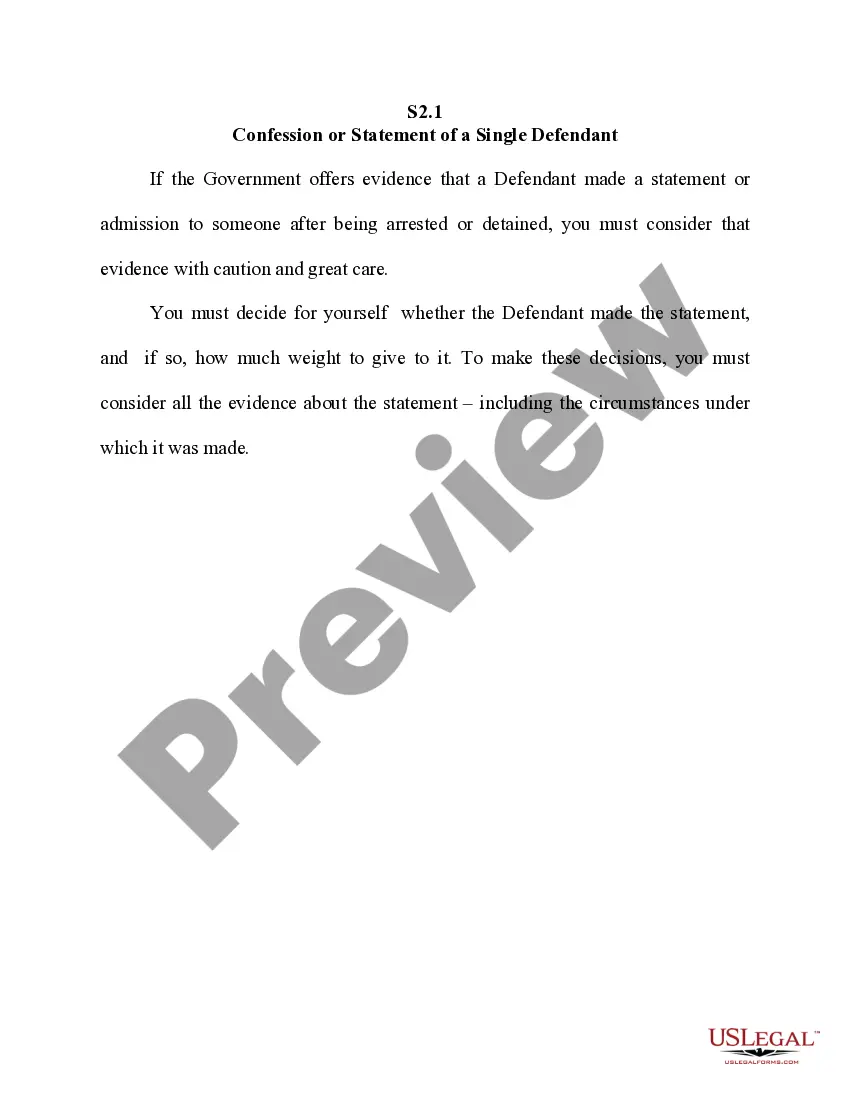
The Prior Statement of Defendant - Single Defendant on Trial is a legal form used in criminal trials. This document is important when the government presents evidence of a statement made by the defendant and guides the jury in assessing the credibility and weight of that statement. Unlike other forms that simply collect information, this form outlines the jury's responsibilities regarding the evaluation of the defendant's statement and its implications for the trial's outcome.
What’s included in this form
- The identity of the defendant and the individual who recorded the statement.
- The jury's task of determining if the statement was made and its voluntariness.
- Consideration of various factors, such as the defendant's age, education, and treatment during custody.
- Instructions regarding the disregard of involuntary statements.
- The requirement for jury deliberation on the statement's credibility based on surrounding circumstances.

When this form is needed
This form is typically used during a criminal trial when the prosecution introduces a statement made by the defendant. It is relevant in situations where the voluntariness and credibility of that statement are questioned. This may occur in cases where a defendant's confession is challenged or when there are concerns about coercive interrogation practices.
Who should use this form
- Judges presiding over criminal trials involving a single defendant.
- Attorneys representing the defendant or the government.
- Juries responsible for evaluating the admissibility and weight of the defendant's statement.
- Legal professionals involved in pretrial motions regarding the status of the defendant's statements.
How to prepare this document
- Identify the defendant and the person who took the statement.
- Determine if the statement was made by the defendant.
- Evaluate the context of the statement, including how it was obtained.
- Assess any factors impacting the voluntariness of the statement.
- Instruct the jury to consider the weight of the statement based on all gathered evidence.
Notarization requirements for this form
In most cases, this form does not require notarization. However, some jurisdictions or signing circumstances might. US Legal Forms offers online notarization powered by Notarize, accessible 24/7 for a quick, remote process.
Get your form ready online
Our built-in tools help you complete, sign, share, and store your documents in one place.
Make edits, fill in missing information, and update formatting in US Legal Forms—just like you would in MS Word.
Download a copy, print it, send it by email, or mail it via USPS—whatever works best for your next step.
Sign and collect signatures with our SignNow integration. Send to multiple recipients, set reminders, and more. Go Premium to unlock E-Sign.
If this form requires notarization, complete it online through a secure video call—no need to meet a notary in person or wait for an appointment.
We protect your documents and personal data by following strict security and privacy standards.

Make edits, fill in missing information, and update formatting in US Legal Forms—just like you would in MS Word.

Download a copy, print it, send it by email, or mail it via USPS—whatever works best for your next step.

Sign and collect signatures with our SignNow integration. Send to multiple recipients, set reminders, and more. Go Premium to unlock E-Sign.

If this form requires notarization, complete it online through a secure video call—no need to meet a notary in person or wait for an appointment.

We protect your documents and personal data by following strict security and privacy standards.
Avoid these common issues
- Failing to thoroughly assess all circumstances surrounding the statement's making.
- Overlooking relevant factors such as the defendant's mental state at the time of the statement.
- Neglecting to provide proper jury instructions on assessing the statement's admissibility.
Benefits of using this form online
- Convenient access to legal forms from anywhere at any time.
- Editable templates allow for easy customization based on specific case details.
- Reliability of documents prepared by licensed attorneys ensures compliance with legal standards.
Looking for another form?
Form popularity
FAQ
A statement of a witness made prior to his or her testimony and consistent with that testimony is admissible when offered to rebut an express or implied claim of recent fabrication and when the statement was made prior to the circumstances supporting that claim.
The general rule1 is that a witness may not state, nor may evidence be given to prove, that he has previously made a statement consistent with his evidence2. This rule does not apply to witness statements served for use at the trial since they stand as the witness's evidence in chief3.
613(b) in that extrinsic evidence of a prior inconsistent statement is not admissible unless the statement is shown or disclosed to the witness during the witness's examination. Paragraph (b) is intended to give the witness and the party a fair opportunity to explain or deny the allegation.
Rule 801 defines what is and what is not hearsay for the purpose of admitting a prior statement as substantive evidence. A prior statement of a witness at a trial or hearing which is inconsistent with his testimony is, of course, always admissible for the purpose of impeaching the witness' credibility.
Impeachment by prior inconsistent statement is used when a witness remembers a fact, but previously made a different statement about that fact.
Coleman, 72 M.J. 184 (a prior consistent statement is not hearsay if it is offered to rebut an express or implied charge against the declarant of recent fabrication or improper influence or motive; the rule requires that a prior statement, admitted as substantive evidence, precede any motive to fabricate or improper
Appellant was accusing Jonathan of lying when Jonathan testified that he told Knoch it was his stepdad who shot his mother, not his dad. This alleged fabrication was necessarily recent because it happened during the trial. Third, Jonathan's statement to Pitts was consistent with his testimony at trial.
A statement of a witness made prior to his or her testimony and consistent with that testimony is admissible when offered to rebut an express or implied claim of recent fabrication and when the statement was made prior to the circumstances supporting that claim.