Prior Statement of a Defendant - Multi-Defendant Trial (revised 2016)
Understanding this form
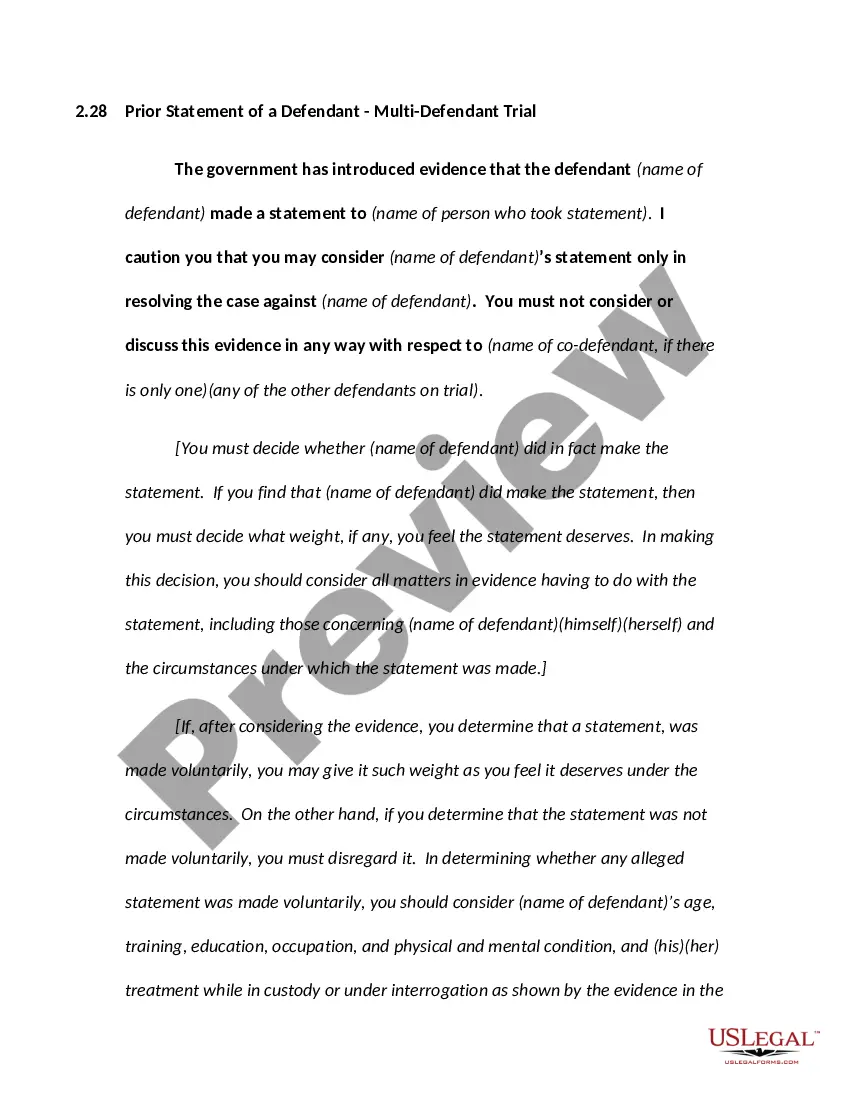
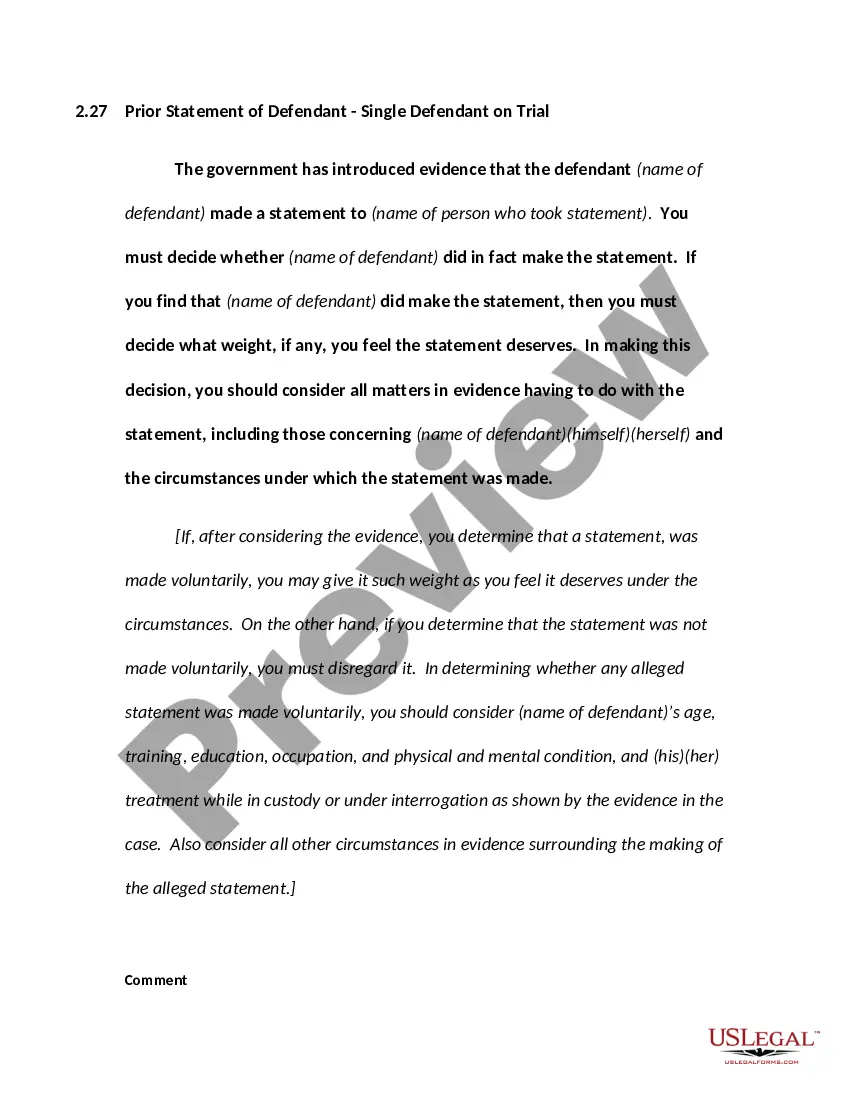
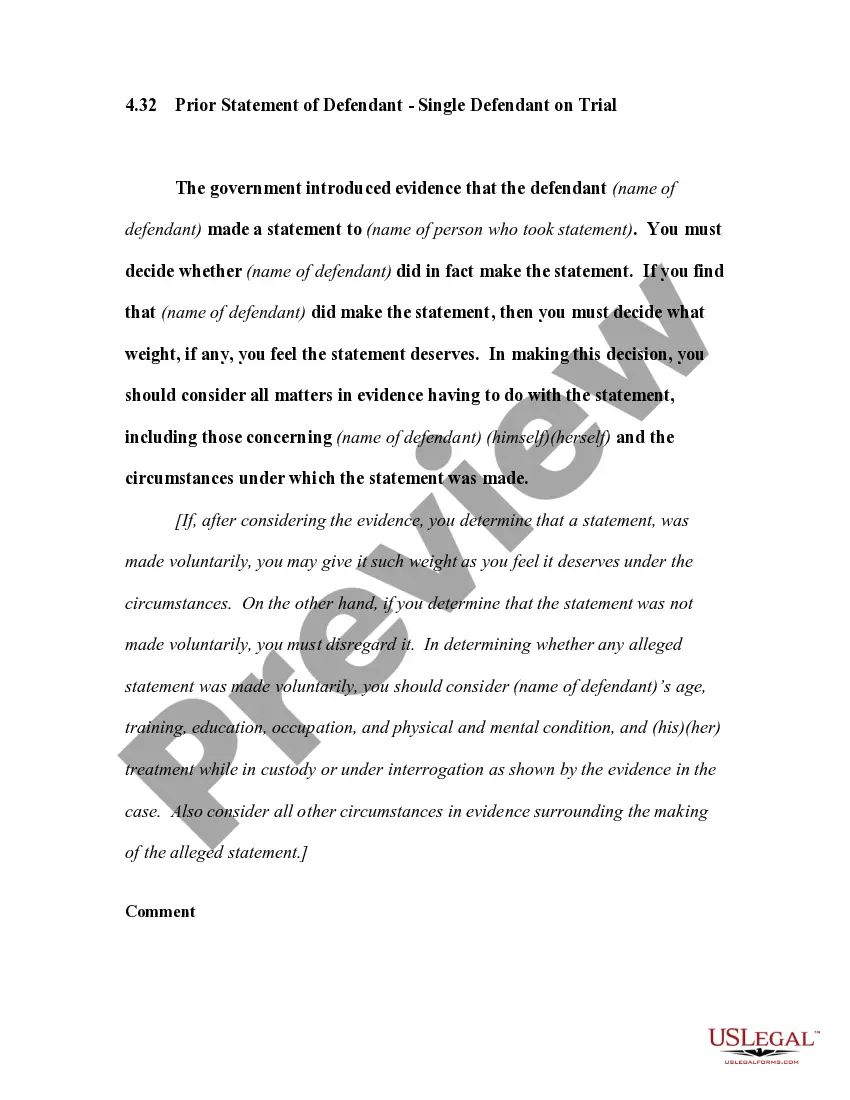
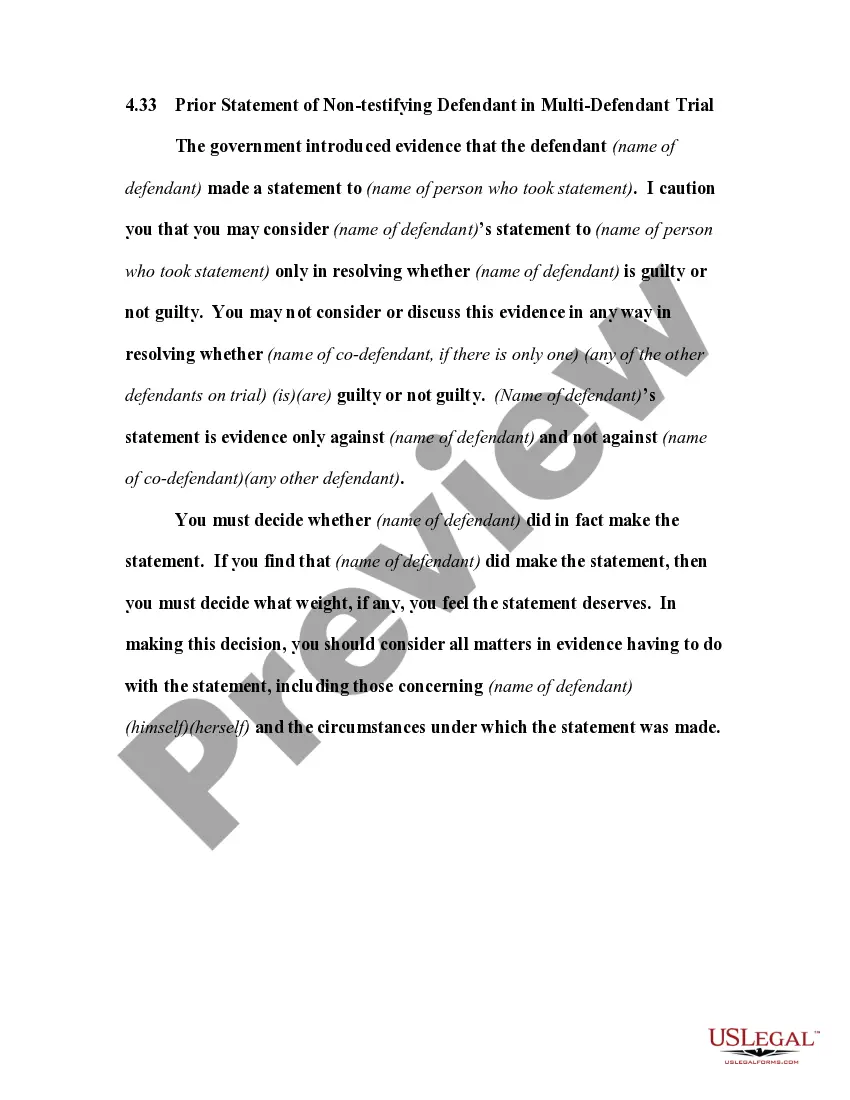
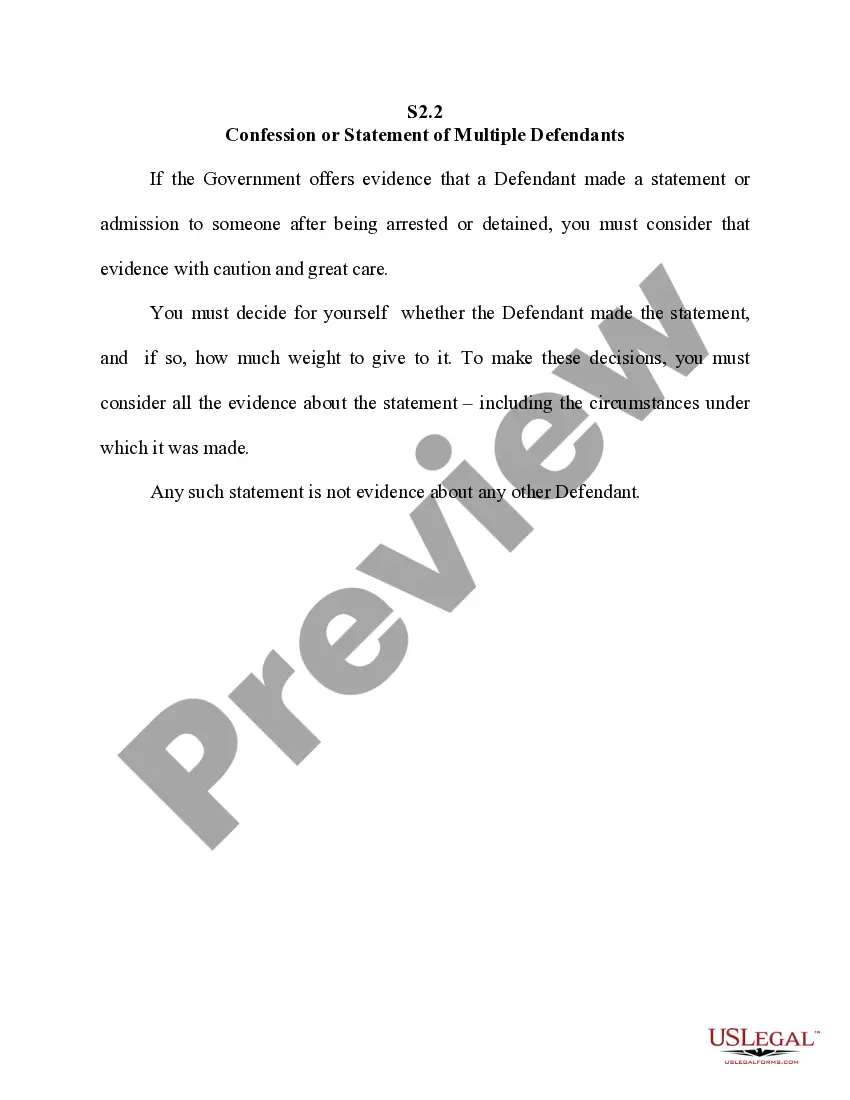
The Prior Statement of a Defendant - Multi-Defendant Trial is a legal document used in criminal trials involving multiple defendants. This form specifically addresses the situation when a statement made by one defendant is introduced as evidence against that defendant, while limits are placed on how the jury may consider that statement in relation to co-defendants. It helps ensure that each defendant's rights are protected under the Confrontation Clause, particularly when statements could implicate others in a joint trial.
Main sections of this form
- Identification of the defendant whose statement is in question.
- Clarification on the use of the statement strictly for the associated defendant's case.
- Instructions on determining the voluntary nature of the statement.
- Consideration of various personal factors that may affect the weight of the statement.
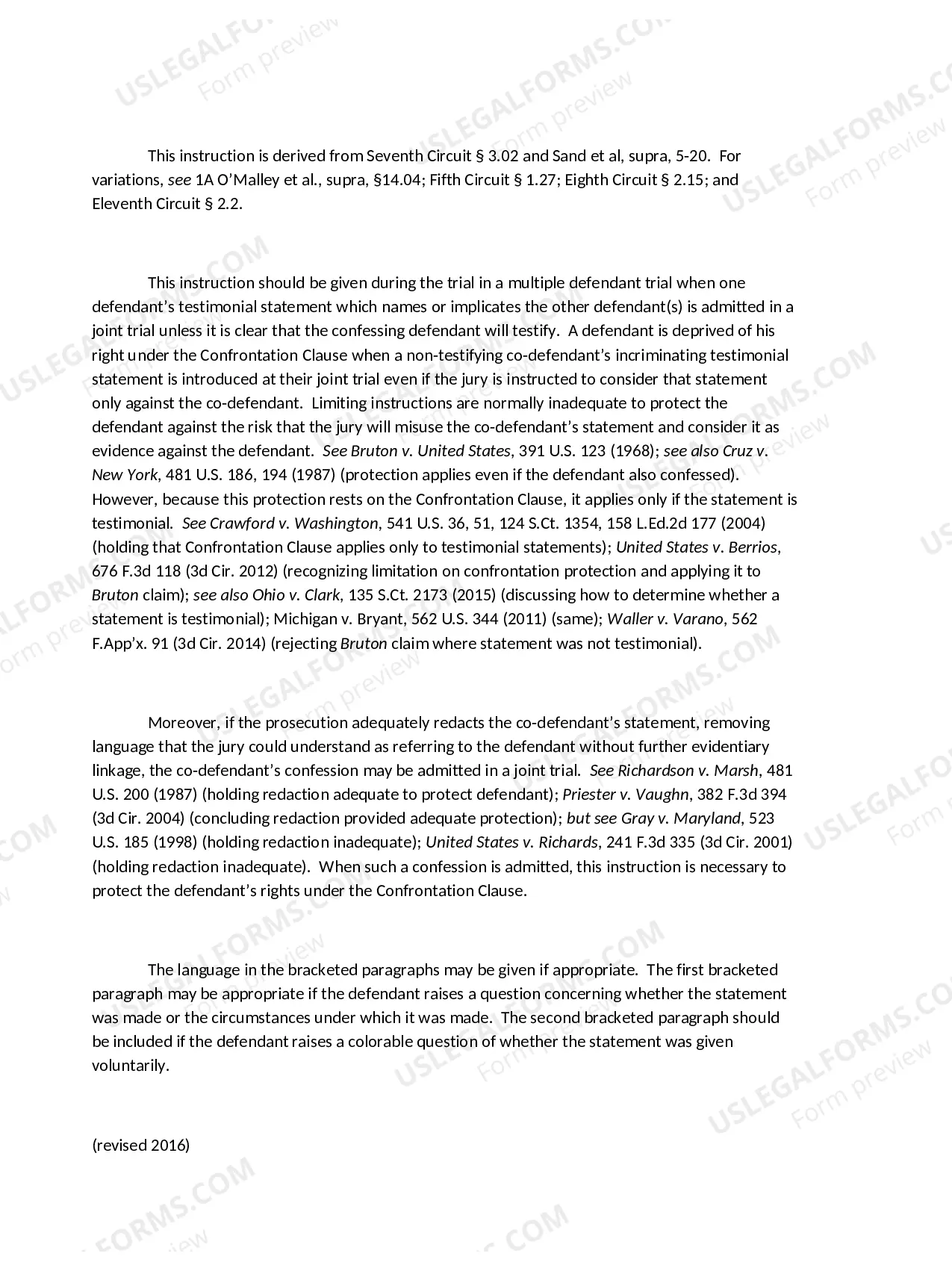
- Guidance on the admissibility of statements in joint trials.
Common use cases
This form should be used in situations involving a multi-defendant trial where one defendant's statement is presented as evidence. It is particularly relevant if the statement implicates one or more co-defendants, and there is a risk of jurors misusing that information. This form serves as a guideline to ensure that the jury only considers the statement against the correct defendant.
Intended users of this form
- Defendants in multi-defendant criminal trials.
- Defense attorneys representing individuals in joint trials.
- Prosecutors who need to understand how to properly present statements made by defendants.
Steps to complete this form
- Identify the name of the defendant whose statement is being considered.
- Provide the name of the individual who took the statement.
- Assess whether the statement was made voluntarily, considering personal circumstances of the defendant.
- Document all evidence surrounding the statement for jury consideration.
- Ensure that instructions are clear for the jury regarding the limitations of the statement's use.
Is notarization required?
This form usually doesn’t need to be notarized. However, local laws or specific transactions may require it. Our online notarization service, powered by Notarize, lets you complete it remotely through a secure video session, available 24/7.
Get your form ready online
Our built-in tools help you complete, sign, share, and store your documents in one place.
Make edits, fill in missing information, and update formatting in US Legal Forms—just like you would in MS Word.
Download a copy, print it, send it by email, or mail it via USPS—whatever works best for your next step.
Sign and collect signatures with our SignNow integration. Send to multiple recipients, set reminders, and more. Go Premium to unlock E-Sign.
If this form requires notarization, complete it online through a secure video call—no need to meet a notary in person or wait for an appointment.
We protect your documents and personal data by following strict security and privacy standards.

Make edits, fill in missing information, and update formatting in US Legal Forms—just like you would in MS Word.

Download a copy, print it, send it by email, or mail it via USPS—whatever works best for your next step.

Sign and collect signatures with our SignNow integration. Send to multiple recipients, set reminders, and more. Go Premium to unlock E-Sign.

If this form requires notarization, complete it online through a secure video call—no need to meet a notary in person or wait for an appointment.

We protect your documents and personal data by following strict security and privacy standards.
Common mistakes
- Failing to properly clarify the scope of the statement's admissibility related to co-defendants.
- Neglecting to address the voluntary nature of the statement appropriately.
- Not including necessary background information that affects the statement's credibility.
Why complete this form online
- Immediate access to professionally drafted content created by licensed attorneys.
- Easy to download and fill out, facilitating quick use in legal proceedings.
- Adaptability for various multi-defendant trial scenarios, ensuring relevance.
Legal use & context
- The statement must be consistent with the Confrontation Clause to protect defendants' rights.
- It provides essential guidelines for juries on how to appropriately weigh evidence in multi-defendant cases.
- Misuse of statements can lead to legal challenges, hence the importance of this instruction in trials.
Looking for another form?
Form popularity
FAQ
Impeachment by prior inconsistent statement is used when a witness remembers a fact, but previously made a different statement about that fact.
613(b) in that extrinsic evidence of a prior inconsistent statement is not admissible unless the statement is shown or disclosed to the witness during the witness's examination. Paragraph (b) is intended to give the witness and the party a fair opportunity to explain or deny the allegation.
Under Federal Rule 801(d)(1)(A), prior inconsistent statements may be used for impeachment purposes, as well as substantive evidence, as long as the requirements of the rule have been satisfied: the statement was inconsistent with declarant's testimony and the statement was given under oath.
A statement of a witness made prior to his or her testimony and consistent with that testimony is admissible when offered to rebut an express or implied claim of recent fabrication and when the statement was made prior to the circumstances supporting that claim.
(b) Extrinsic Evidence of a Prior Inconsistent Statement. Extrinsic evidence of a witness's prior inconsistent statement is admissible only if the witness is given an opportunity to explain or deny the statement and an adverse party is given an opportunity to examine the witness about it, or if justice so requires.
What is Prior Inconsistent Statements? Prior statements made by the witness that contradict statements made on the witness stand, may be introduced to impeach the witness' credibility; such statements cannot be admitted to prove the truth of the matter asserted but only for impeachment.
There are logical inconsistencies in which the very meaning of the words requires one of the claims to be false. Example: {Everyone left the room. She is someone who is still in the room.} There are inconsistencies with our expectations as in Mark Twain's joke about approving of the funeral.