Subcontract for Construction of Portion of Materials to go into Building with Extensive Indemnification Provisions
About this form
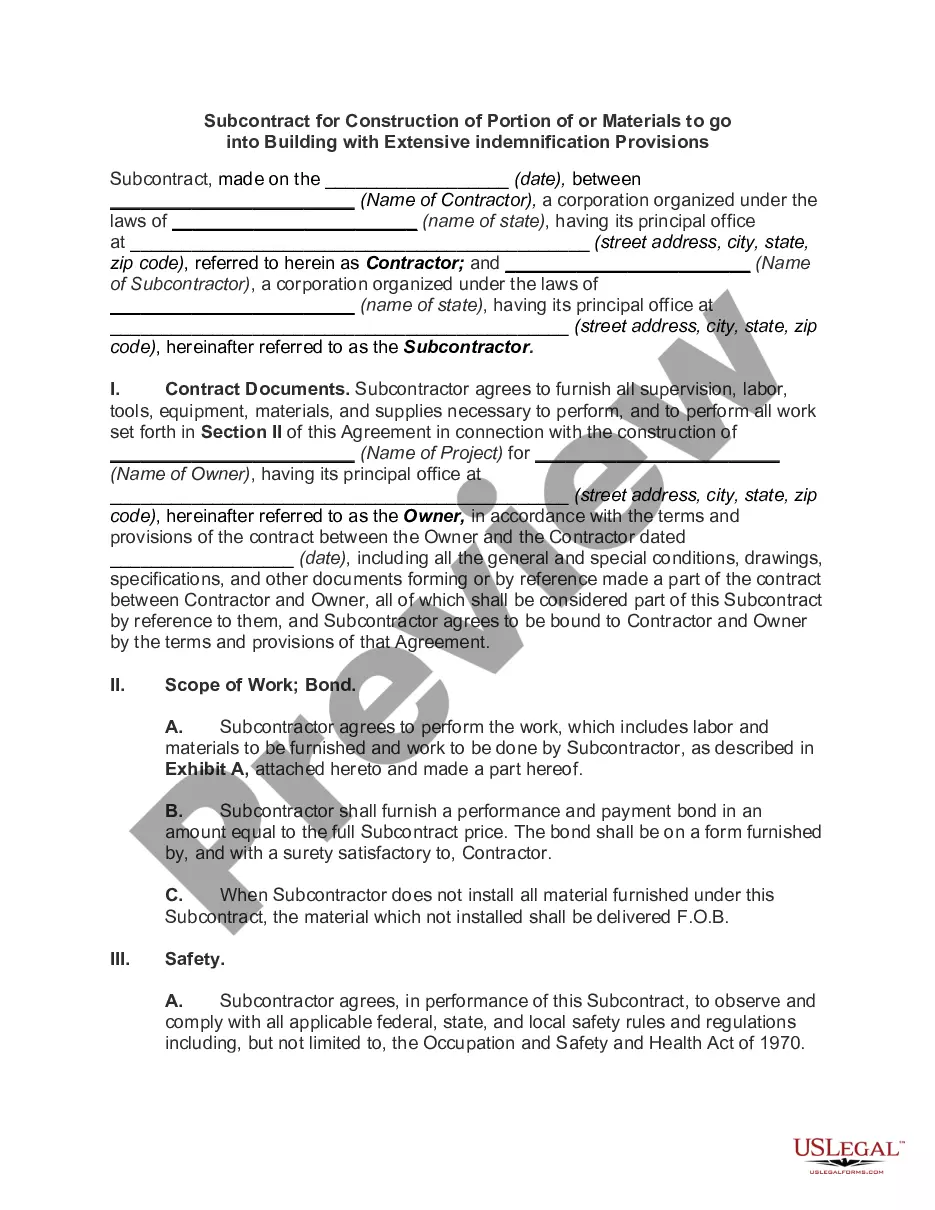
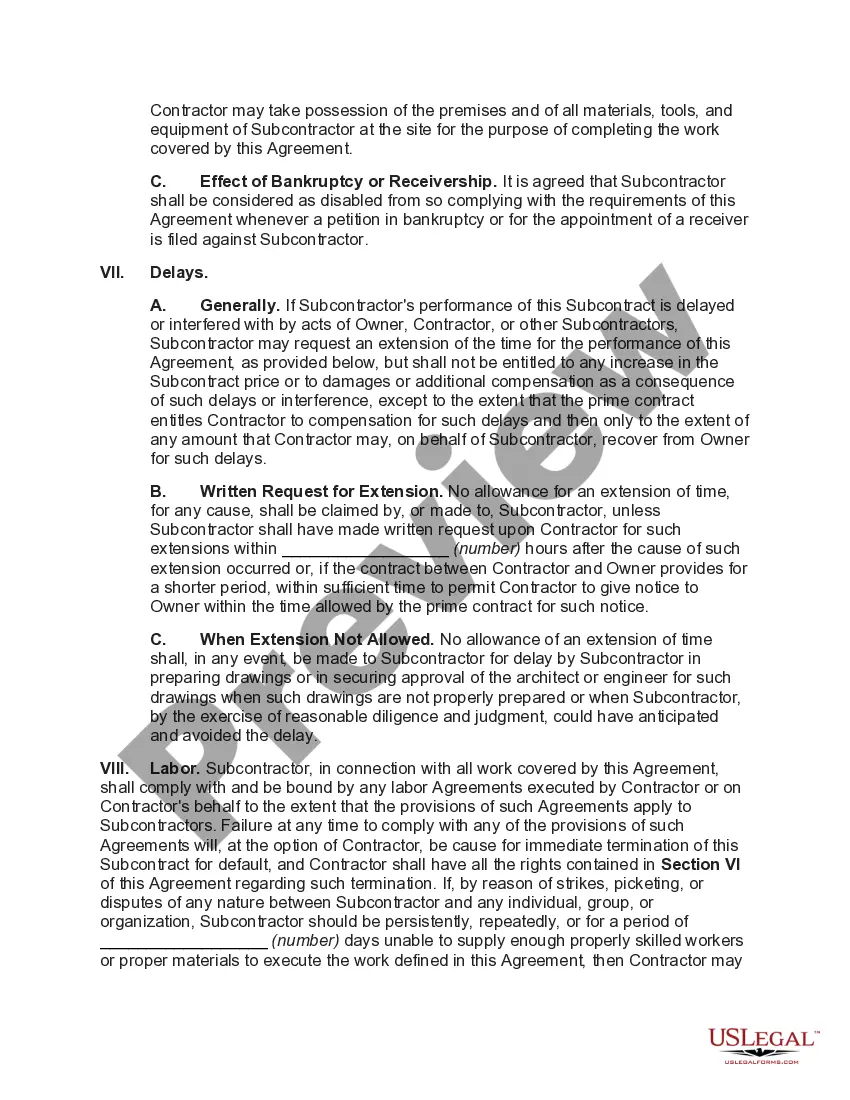
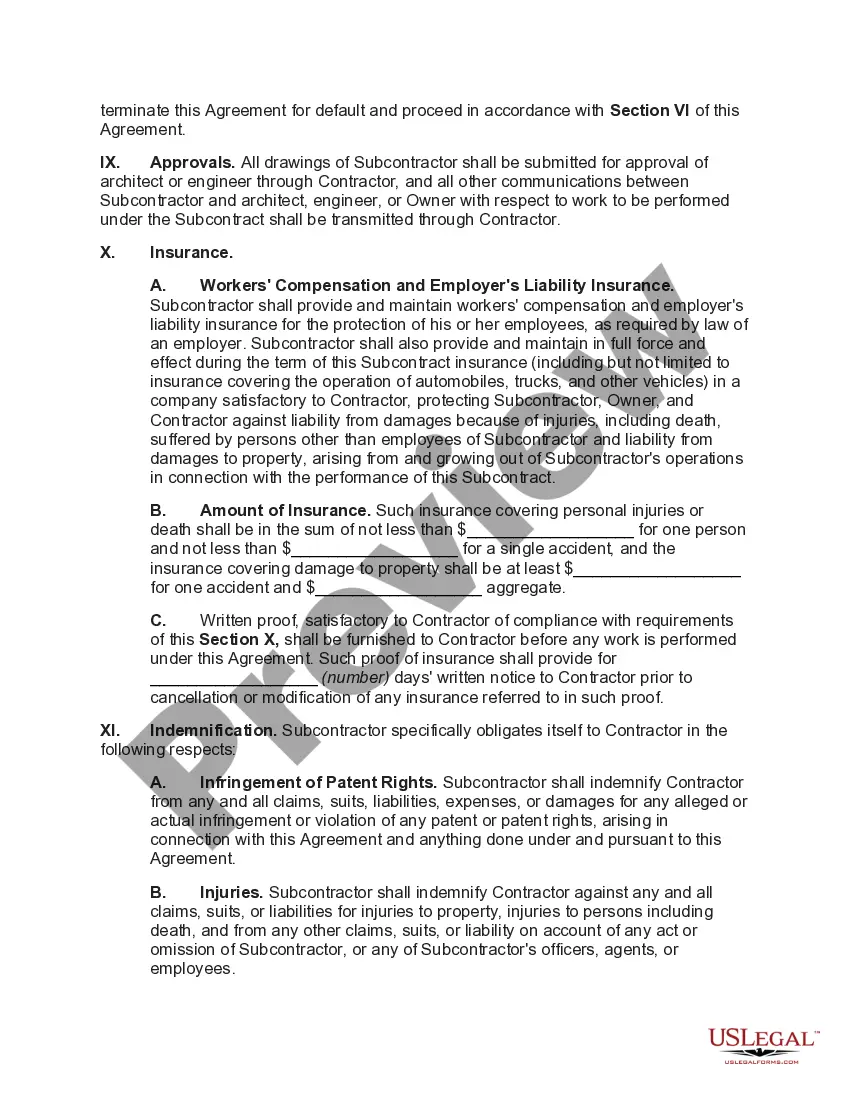
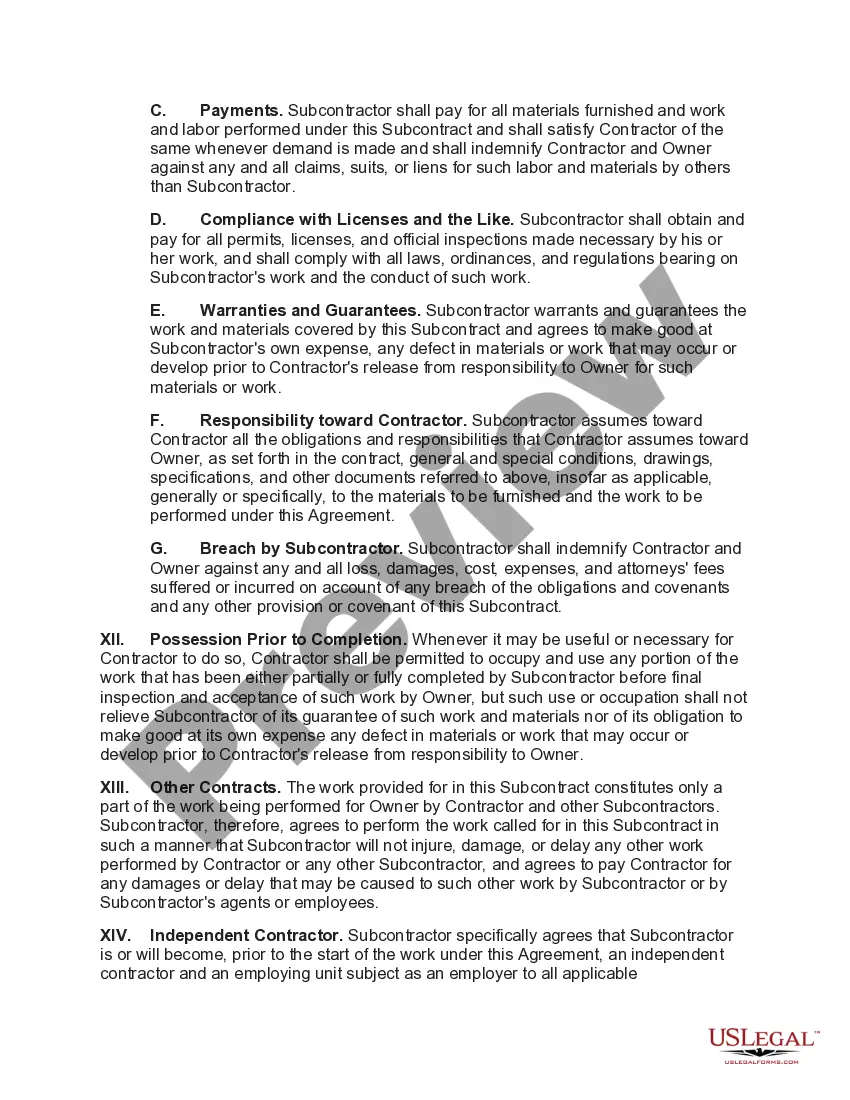
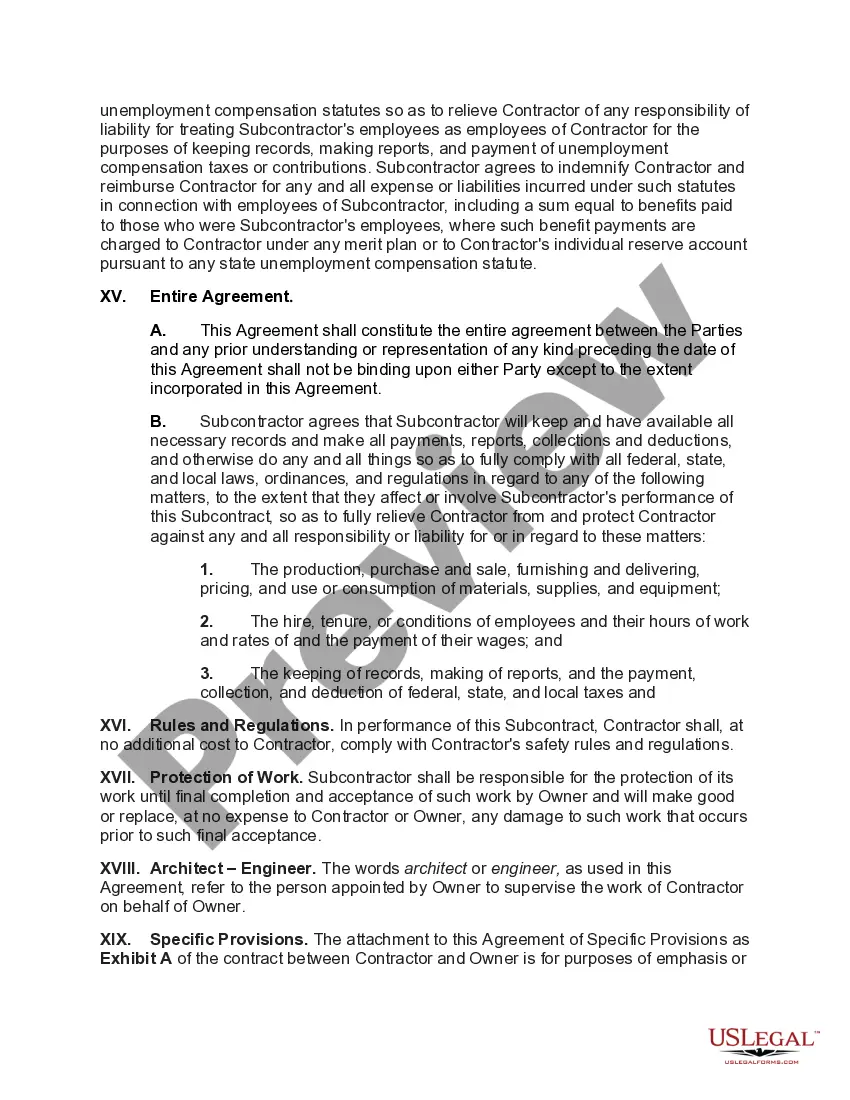
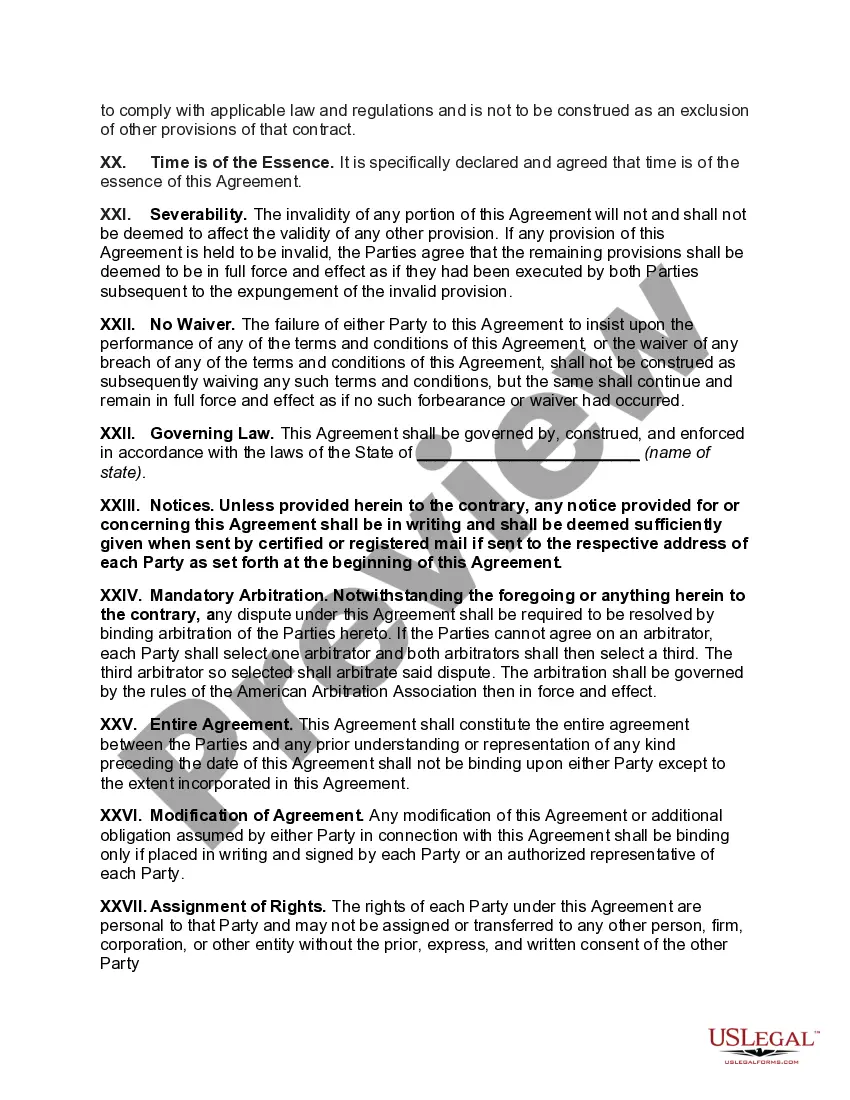
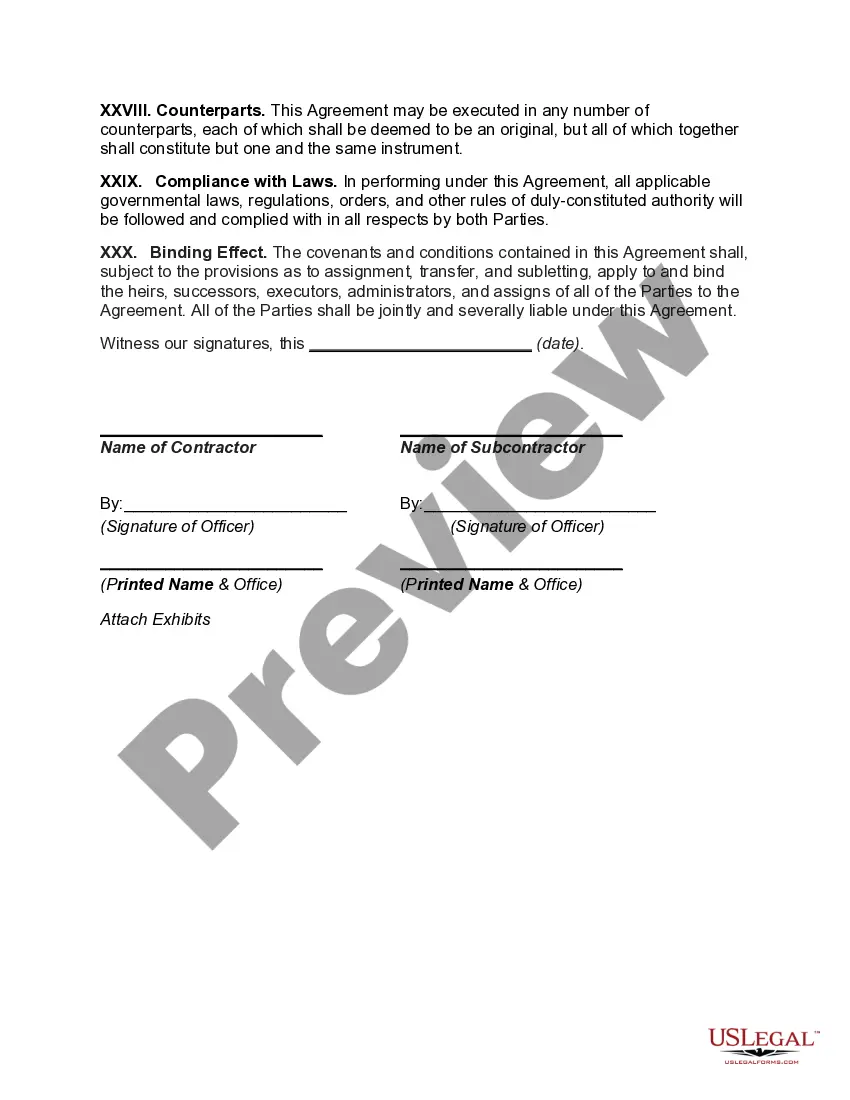
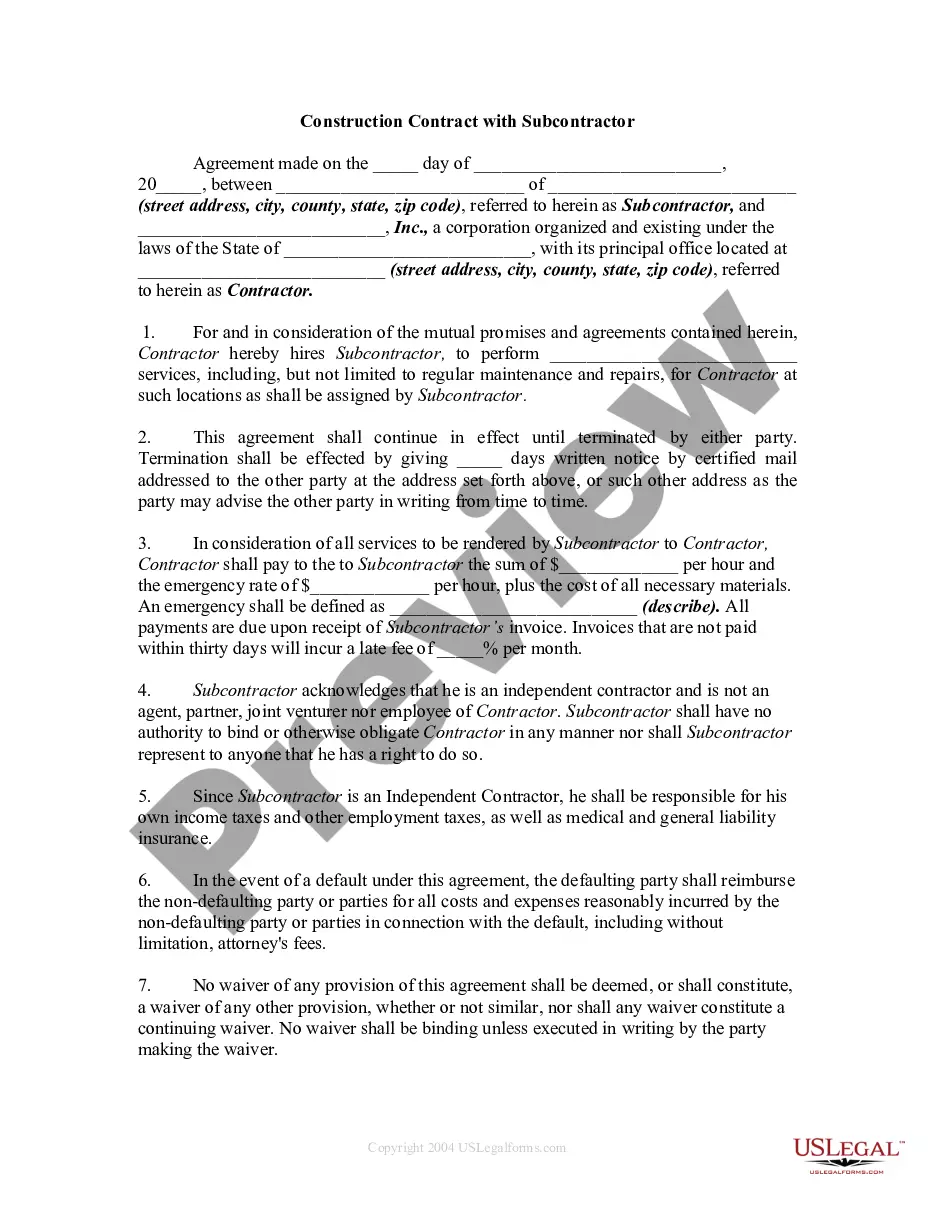
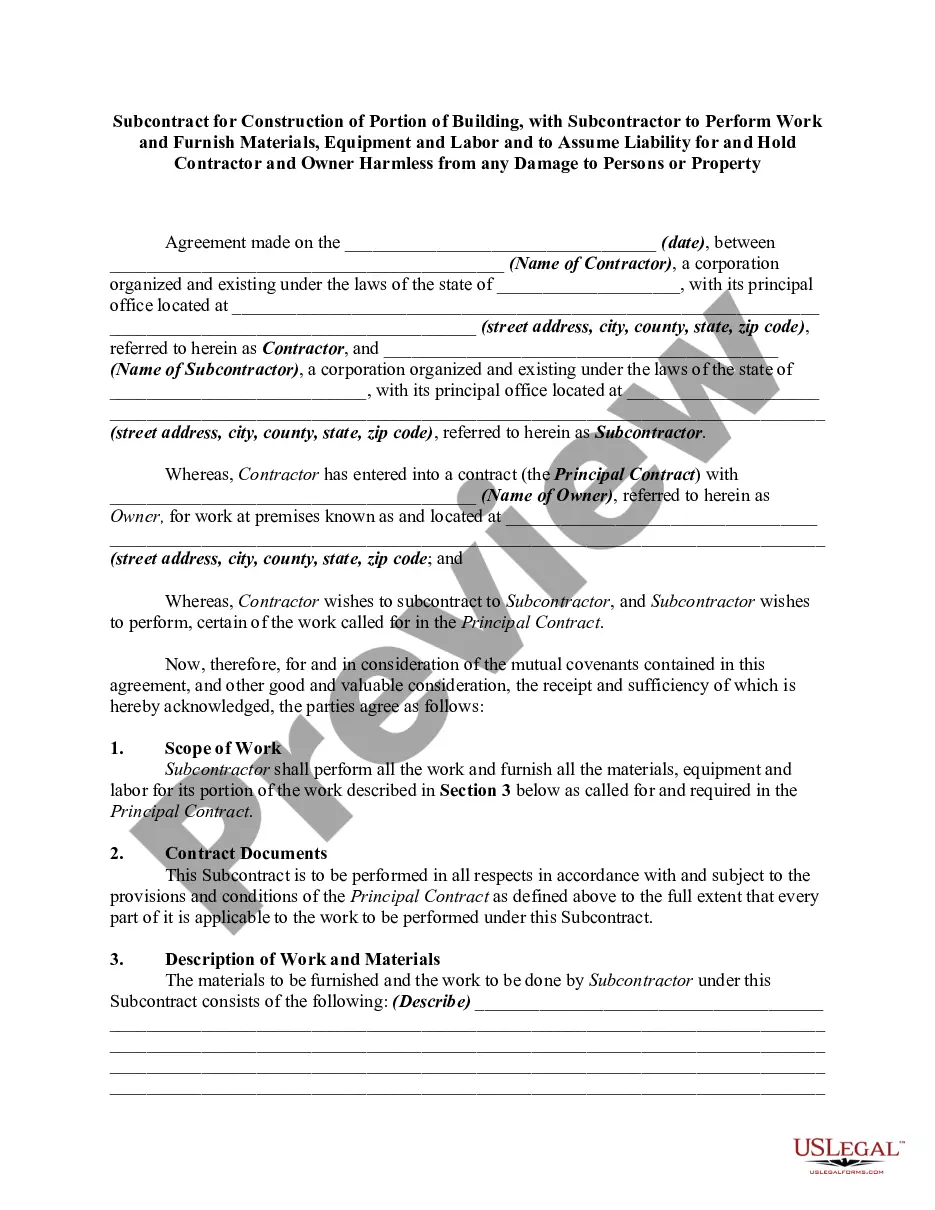
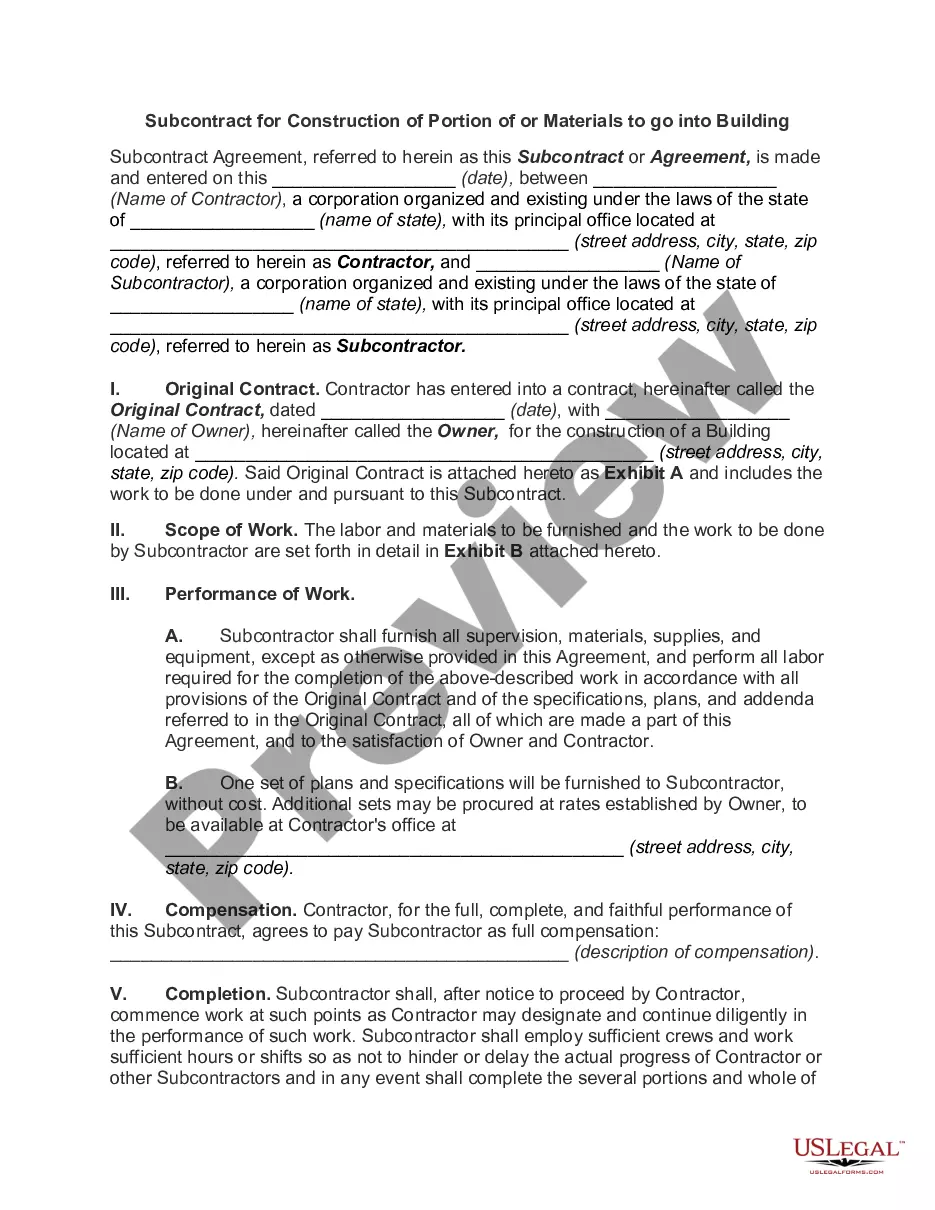
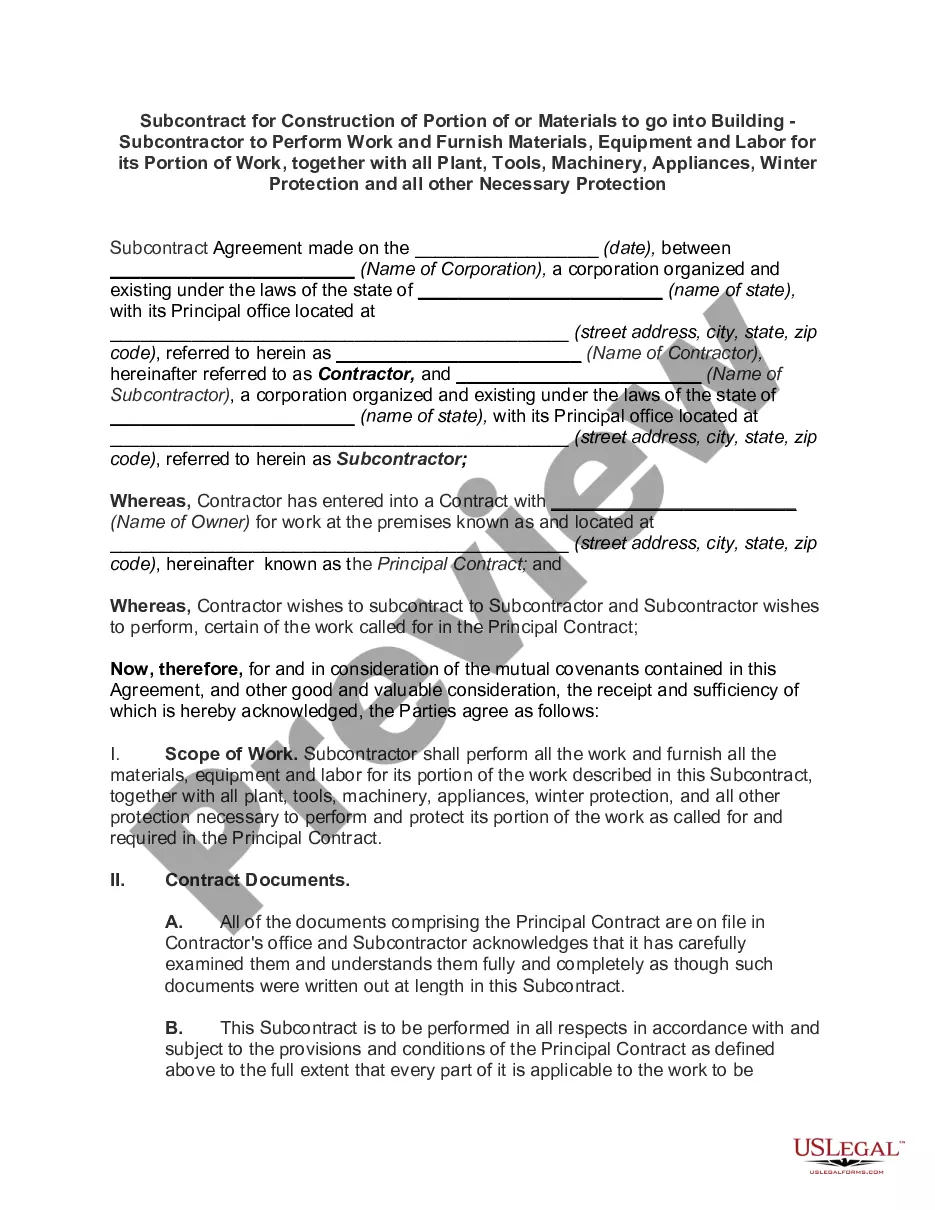
The Subcontract for Construction of Portion of Materials to go into Building with Extensive Indemnification Provisions is a legal document that outlines the agreement between a contractor and a subcontractor. This form specifies the responsibilities of the subcontractor in relation to a specific project, detailing the work to be performed, payment terms, and extensive indemnification provisions. It is tailored for use in construction and protects the interests of both parties by clearly defining their obligations and liabilities, differentiating it from standard subcontract agreements by its focus on indemnification and liability management.
What’s included in this form
- Parties involved: identifies the Contractor and Subcontractor, including their legal status and addresses.
- Scope of work: specifies the labor and materials the subcontractor will provide, detailed in an attached Exhibit A.
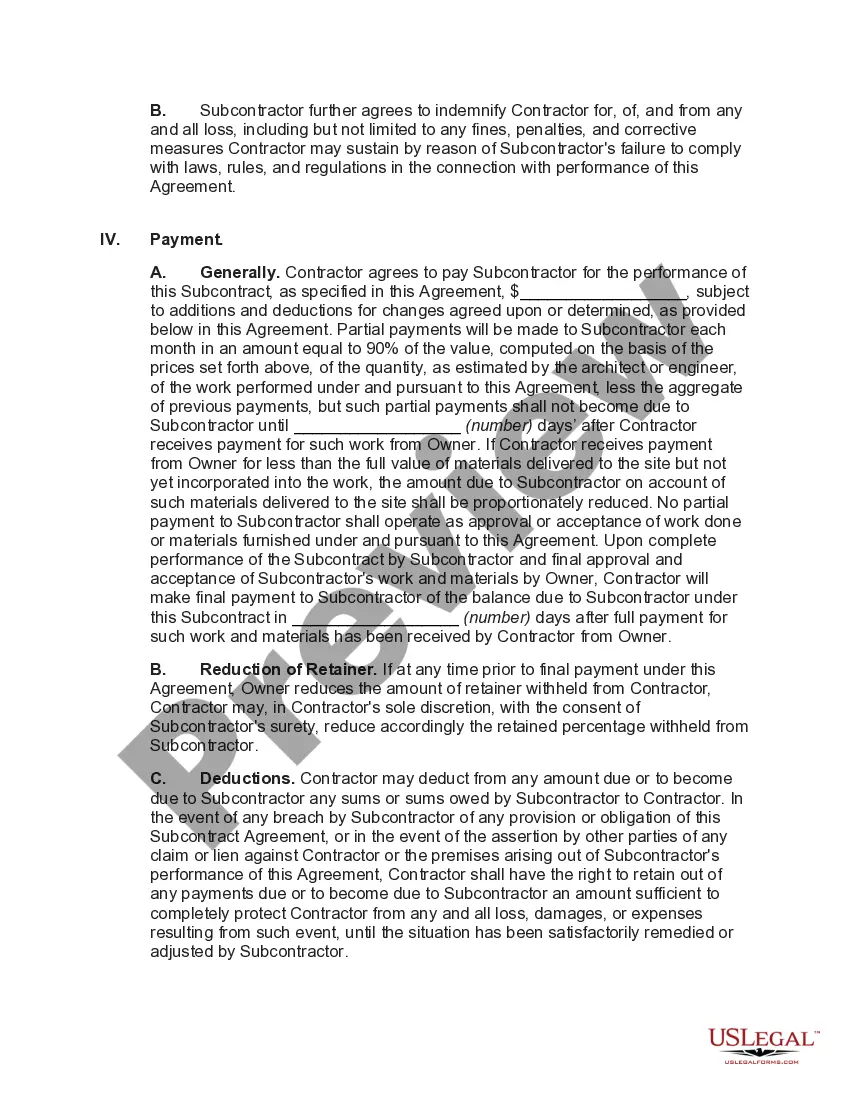
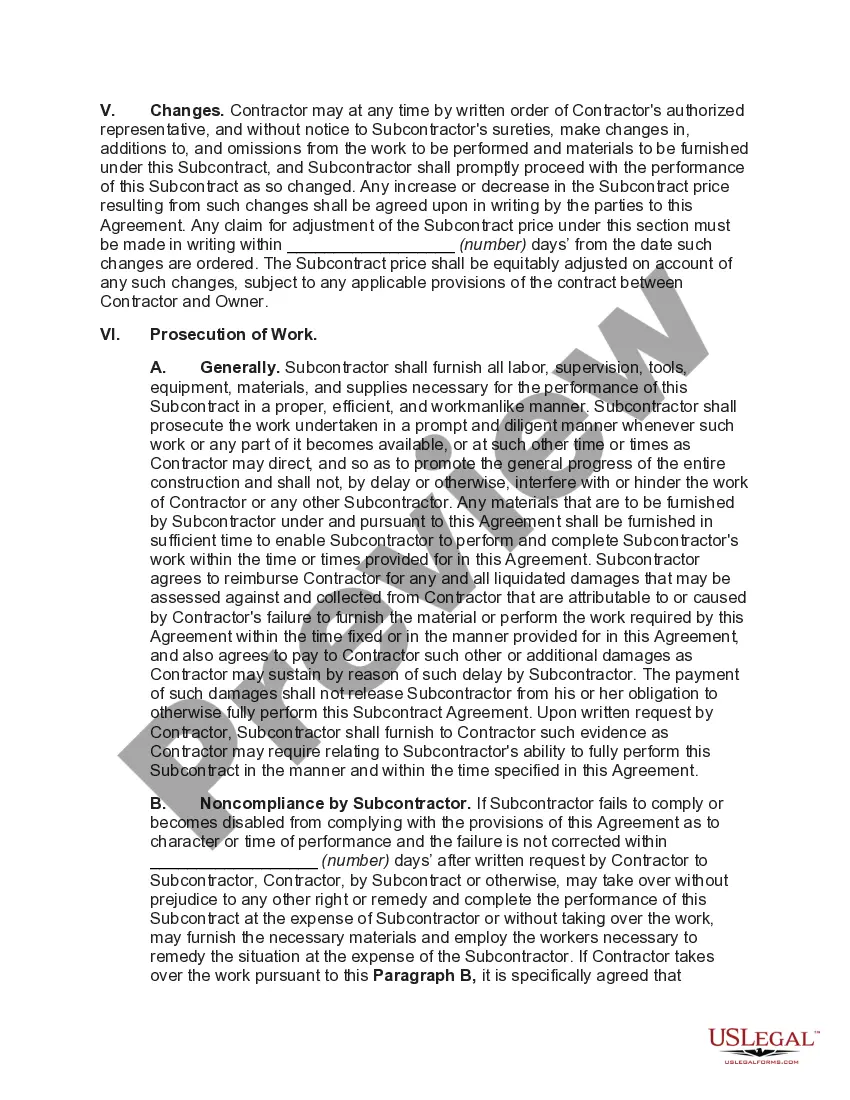
- Payment terms: outlines how and when the subcontractor will be paid for their work.
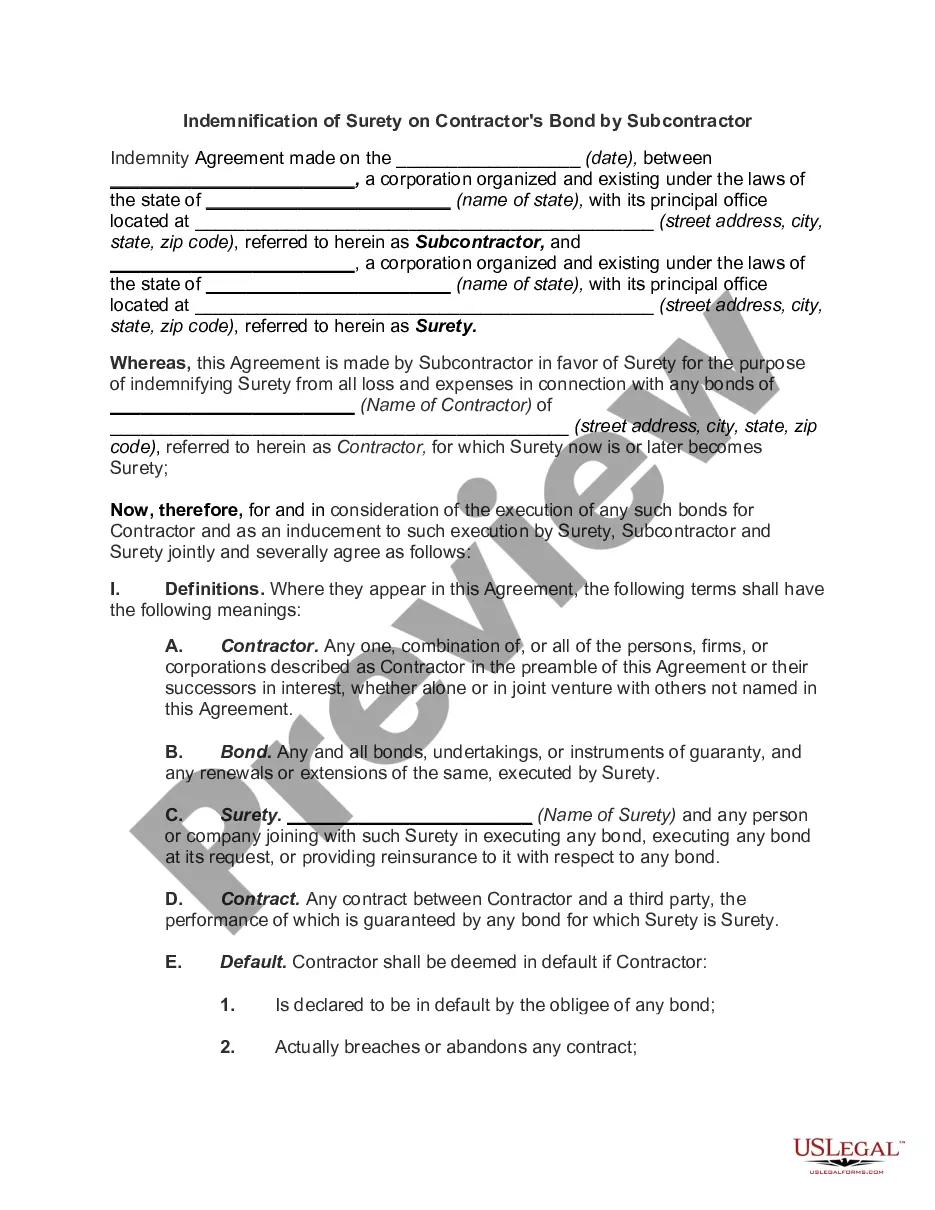
- Indemnification clauses: sets forth the subcontractor's responsibility to indemnify the contractor against potential claims or damages.
- Safety compliance: requires the subcontractor to adhere to relevant safety regulations and laws.
- Insurance requirements: mandates the subcontractor to have specific insurance coverage in place.
When to use this document
This subcontract should be used when a general contractor wants to hire a subcontractor for a specific portion of a construction project. It is appropriate for large construction projects that involve multiple contractors and require delegating tasks to reduce costs or solve complex logistical issues. The extensive indemnification provisions make it especially suitable for projects where potential liabilities might arise from subcontractor actions.
Who can use this document
- General contractors who need to hire subcontractors for specific tasks in their projects.
- Subcontractors who provide construction-related services and materials.
- Owners of construction projects wishing to formalize agreements with contractors and subcontractors involved in the project.
- Lenders or financial institutions wanting to ensure proper documentation of contractor-subcontractor relationships.
Instructions for completing this form
- Identify the parties: Fill in the names, states of incorporation, and addresses of both the contractor and subcontractor.
- Specify the project: Clearly define the name and details of the construction project.
- Outline the scope of work: Attach and refer to Exhibit A to describe the specific work and materials the subcontractor will provide.
- Enter payment terms: Detail the compensation structure, including amounts and payment timelines.
- Sign and date the agreement: Ensure both parties sign and date the document to validate the agreement.
Notarization requirements for this form
This form does not typically require notarization unless specified by local law. Ensure to check state requirements as they may vary.
Get your form ready online
Our built-in tools help you complete, sign, share, and store your documents in one place.
Make edits, fill in missing information, and update formatting in US Legal Forms—just like you would in MS Word.
Download a copy, print it, send it by email, or mail it via USPS—whatever works best for your next step.
Sign and collect signatures with our SignNow integration. Send to multiple recipients, set reminders, and more. Go Premium to unlock E-Sign.
If this form requires notarization, complete it online through a secure video call—no need to meet a notary in person or wait for an appointment.
We protect your documents and personal data by following strict security and privacy standards.

Make edits, fill in missing information, and update formatting in US Legal Forms—just like you would in MS Word.

Download a copy, print it, send it by email, or mail it via USPS—whatever works best for your next step.

Sign and collect signatures with our SignNow integration. Send to multiple recipients, set reminders, and more. Go Premium to unlock E-Sign.

If this form requires notarization, complete it online through a secure video call—no need to meet a notary in person or wait for an appointment.

We protect your documents and personal data by following strict security and privacy standards.
Common mistakes
- Failing to specify the project scope clearly, leading to disputes over work expectations.
- Not including necessary details in Exhibit A, which can result in misunderstandings about the subcontractor's responsibilities.
- Neglecting to outline payment terms, leading to confusion about financial obligations.
- Omitting signatures, which can invalidate the agreement.
Advantages of online completion
- Easy to download and print, allowing for immediate use.
- Edit and customize the form to fit specific project needs, ensuring tailored agreements.
- Access to templates drafted by licensed attorneys, ensuring legal compliance and protection.
- Time-saving convenience of filling out forms that are ready to use.
Looking for another form?

Form popularity
FAQ
An indemnification clause, or hold harmless agreement as it is otherwise known, is essentially an agreement wherein the subcontractor accepts the obligation to pay the contractor (or anyone else named in the clause) for any future liability that might arise.
Subcontractor shall indemnify Contractor and hold Contractor harmless against any and all liability, claims, judgments, losses, or demands, of every kind and nature arising directly or indirectly out of the work, or arising from performance by or obligations of Subcontractor herein, or arising from operations conducted
If an indemnification agreement exists between the owners/contractor and you, you can expect the claim to be tendered to you for defense and indemnification. How will your insurance respond? Your insurance coverage is equally important to the indemnification clause in the subcontractor agreement.
Indemnification clauses are contractual provisions that require one party (the ?Indemnitor?) to indemnify another party (the ?Indemnitee?) for losses that the Indemnitee may suffer. In prime contracts, the owner usually is the Indemnitee and the contractor is the Indemnitor.
An indemnification clause, or hold harmless agreement as it is otherwise known, is essentially an agreement wherein the subcontractor accepts the obligation to pay the contractor (or anyone else named in the clause) for any future liability that might arise.
Every independent contractor agreement should feature an indemnity clause. The purpose of this clause is to ensure that the independent contractor will be held liable for any damage or injury resulting from the independent contractor's work performed under the contract.
A contractor's right to seek indemnification from a subcontractor is subject to the following limitations: The contractor must be entirely without fault. The contractor must have an obligation to pay someone else because of some type of derivative or vicarious liability for the actions of the subcontractor.