Lease of Machinery
About this form
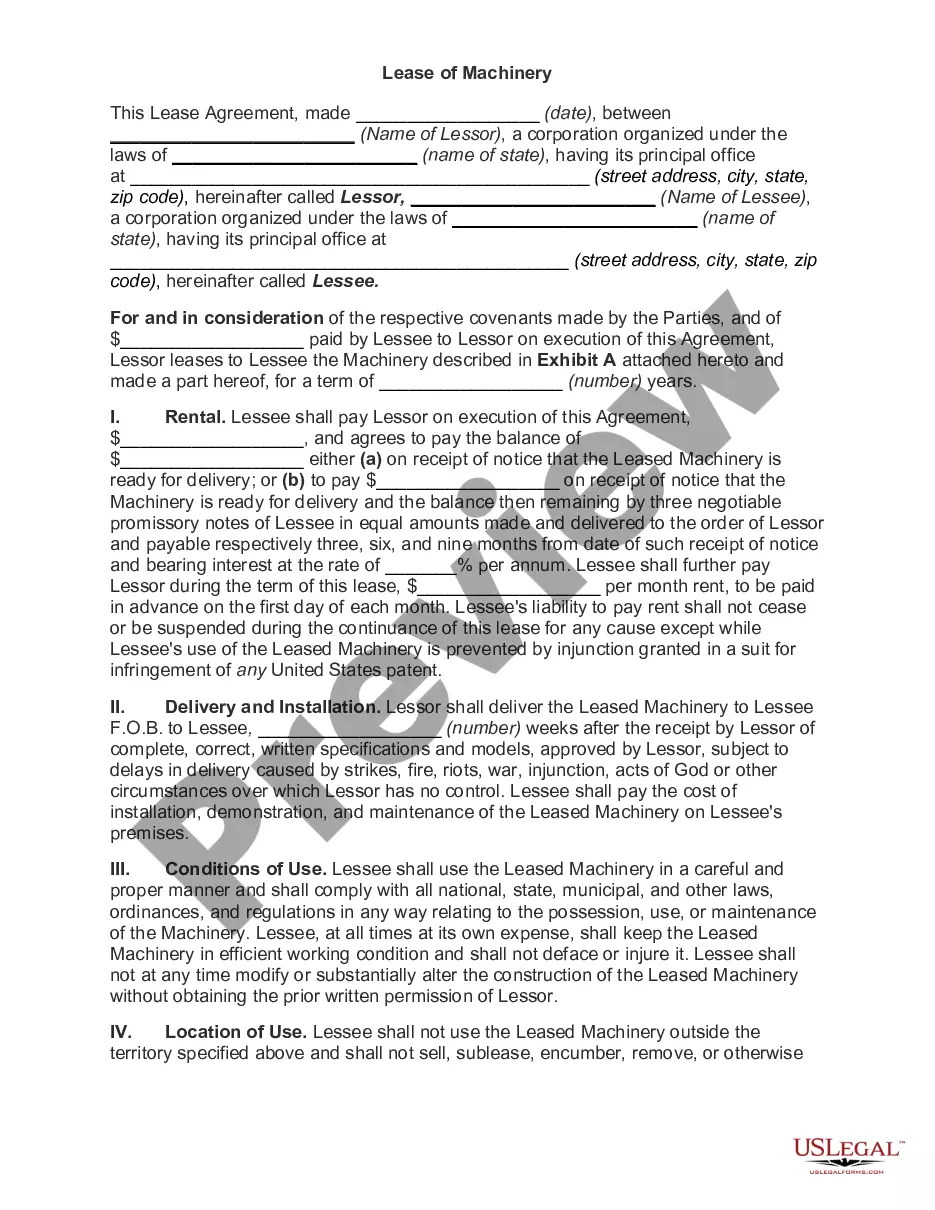
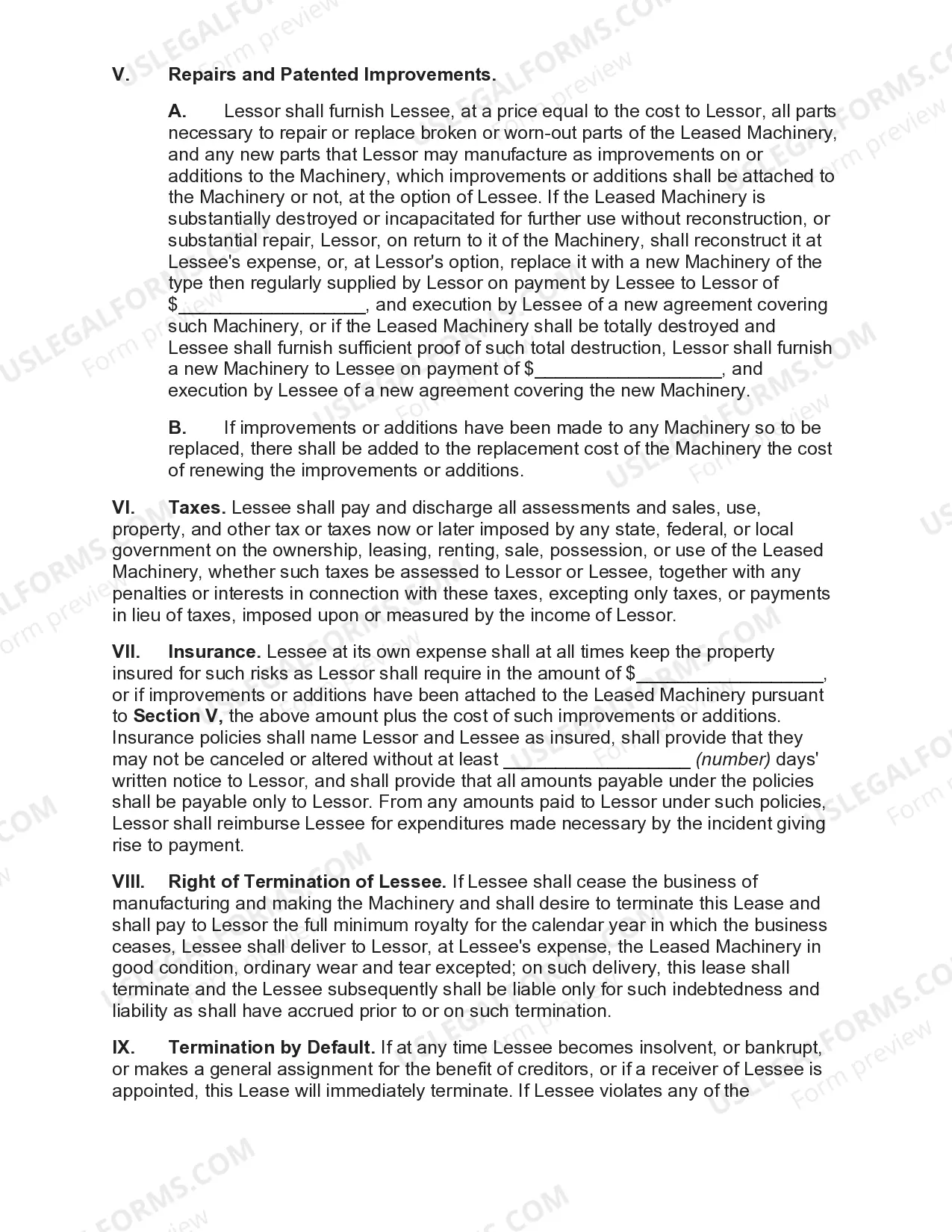
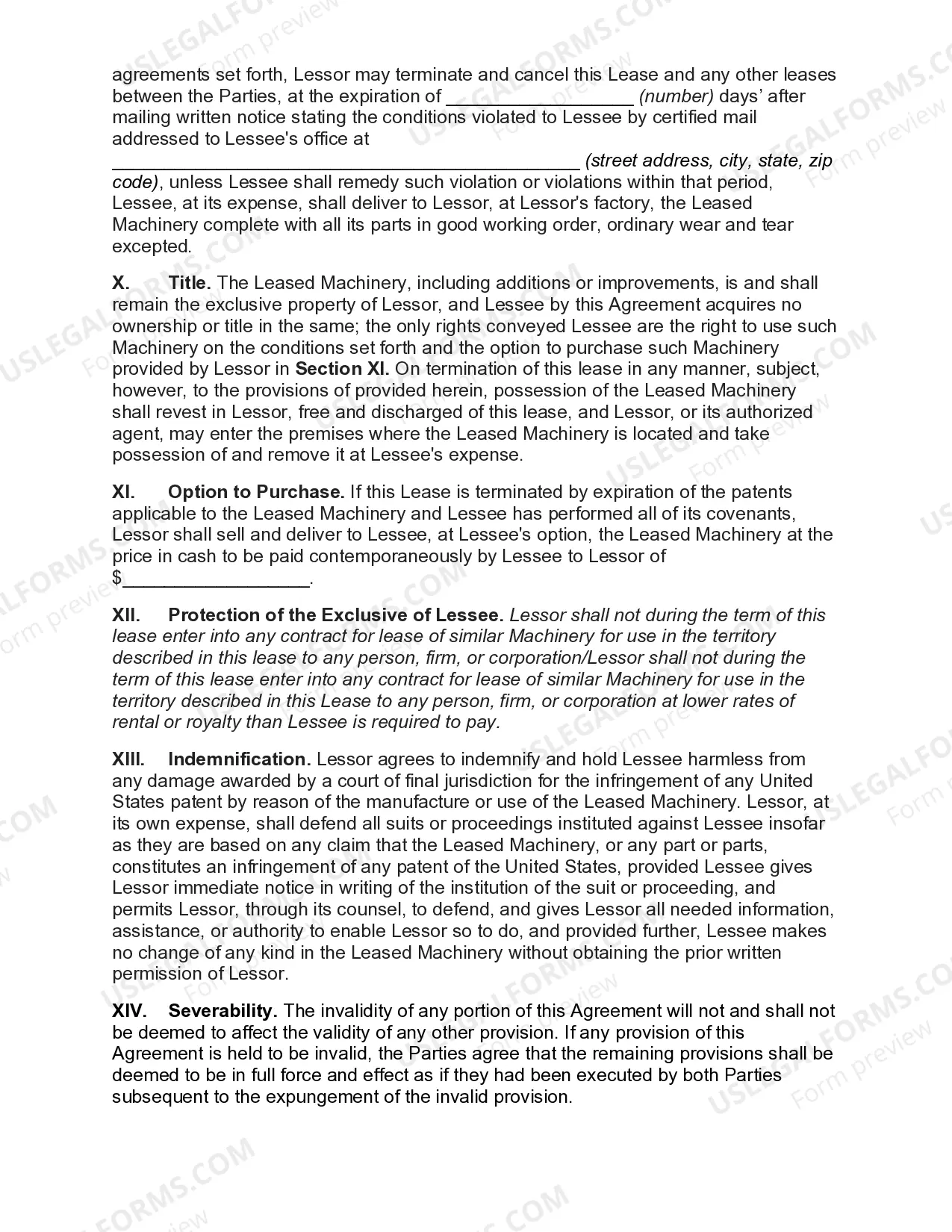
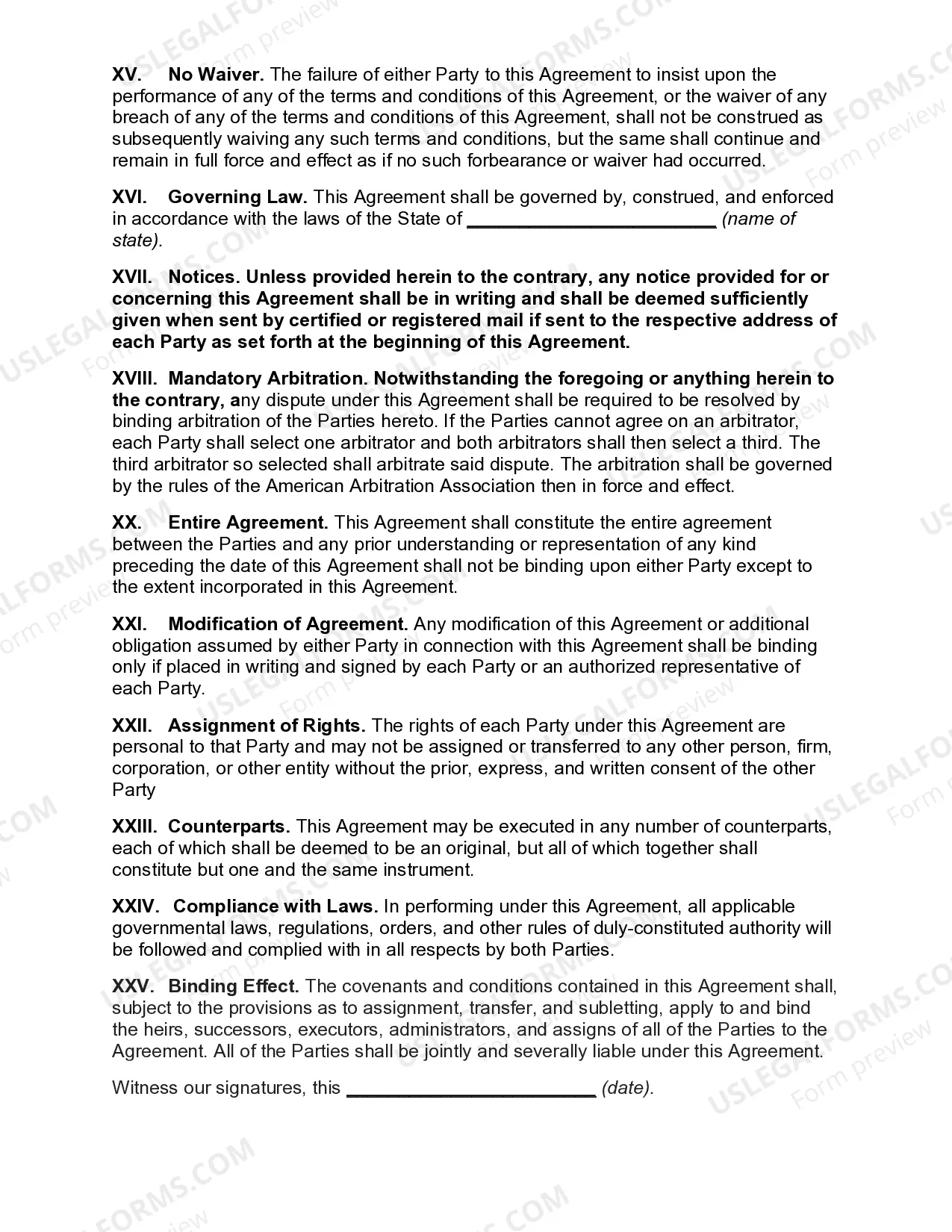
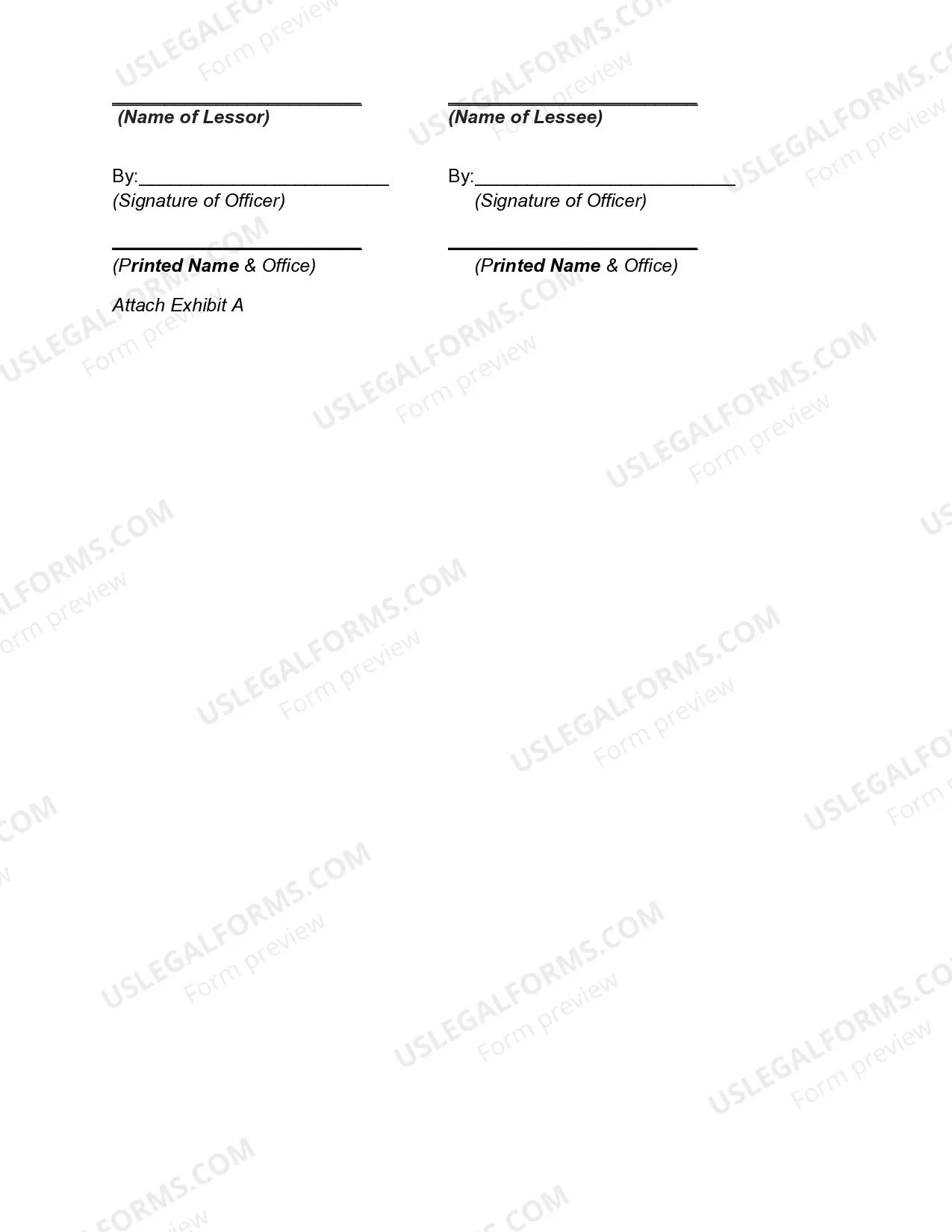
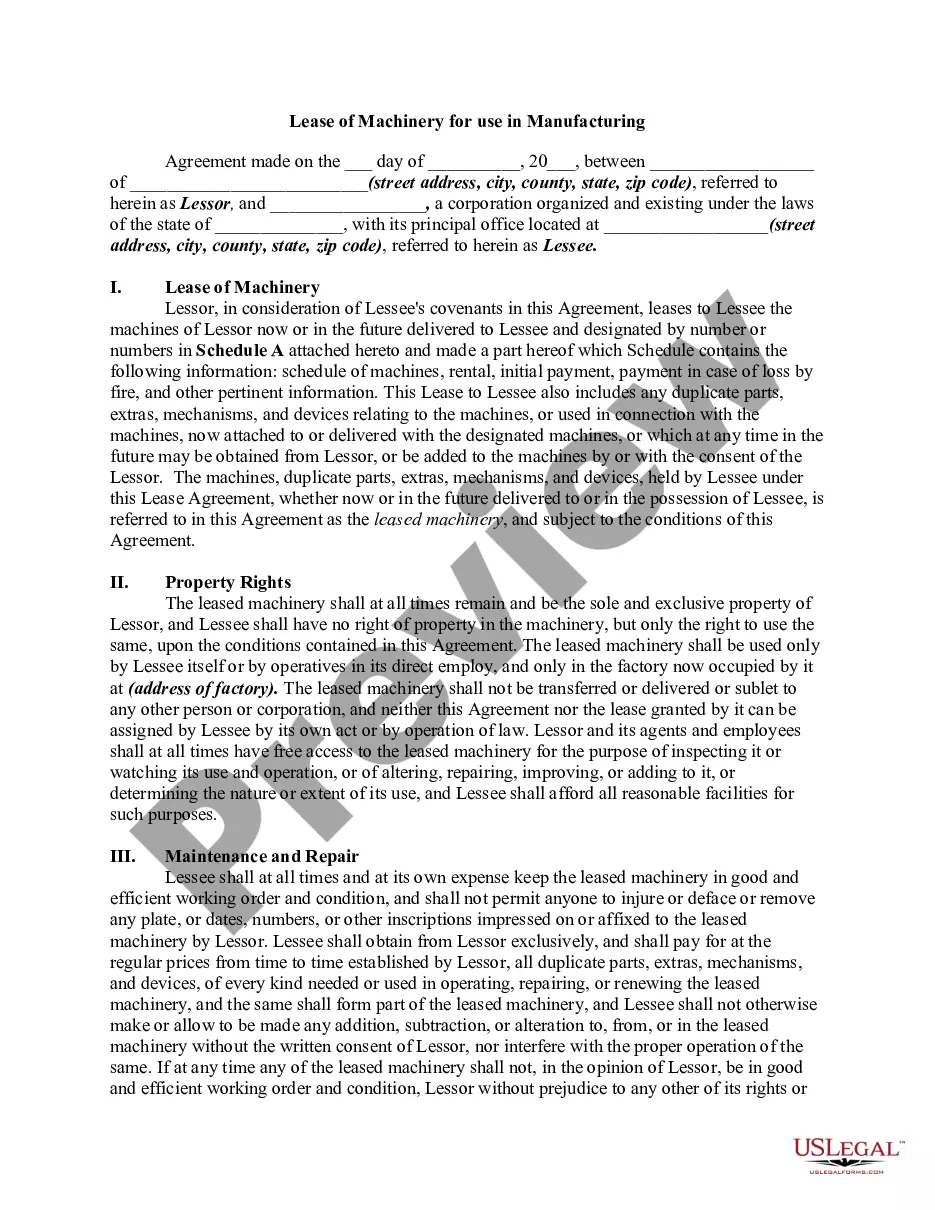
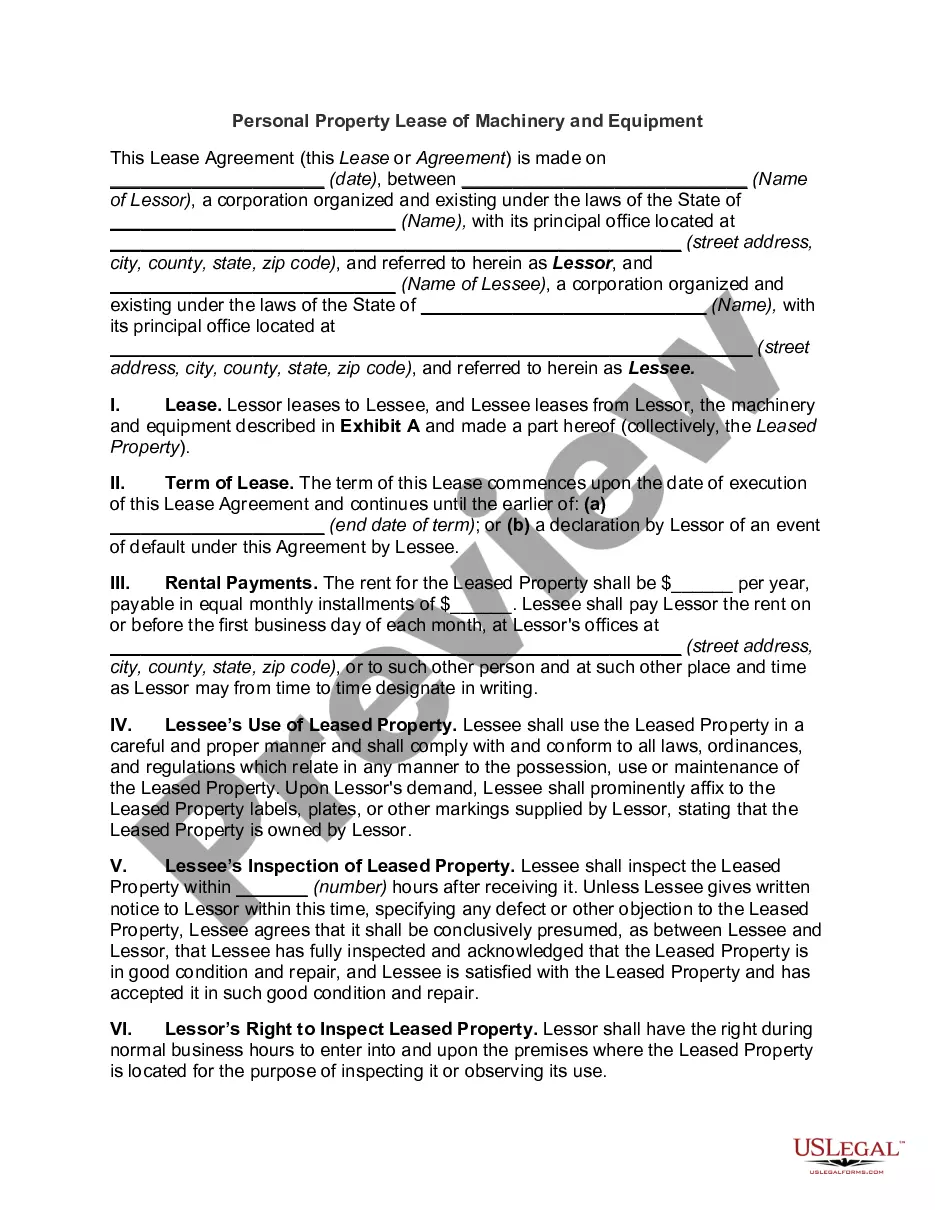
The Lease of Machinery is a legal document that outlines the terms under which a lessor leases machinery to a lessee. This form serves to protect both parties' interests by clearly defining the responsibilities and rights relating to the usage, maintenance, and financial aspects of the leased machinery. It is distinct from similar documents, such as rental agreements, by specifically relating to machinery leasing, which may involve more complex terms given the nature of machinery and its use in various industries.
Form components explained
- Parties involved: Identification of the lessor and lessee, including their corporate details.
- Lease term: Duration of the lease agreement and related conditions for renewals.
- Rental payments: Detailed schedule of rental payments and any additional costs.
- Conditions for use: Obligations of lessee related to maintenance, repairs, and lawful use.
- Insurance requirements: Specifies the insurance obligations of the lessee for the leased machinery.
- Termination clauses: Conditions under which the lease can be terminated by either party.
Situations where this form applies
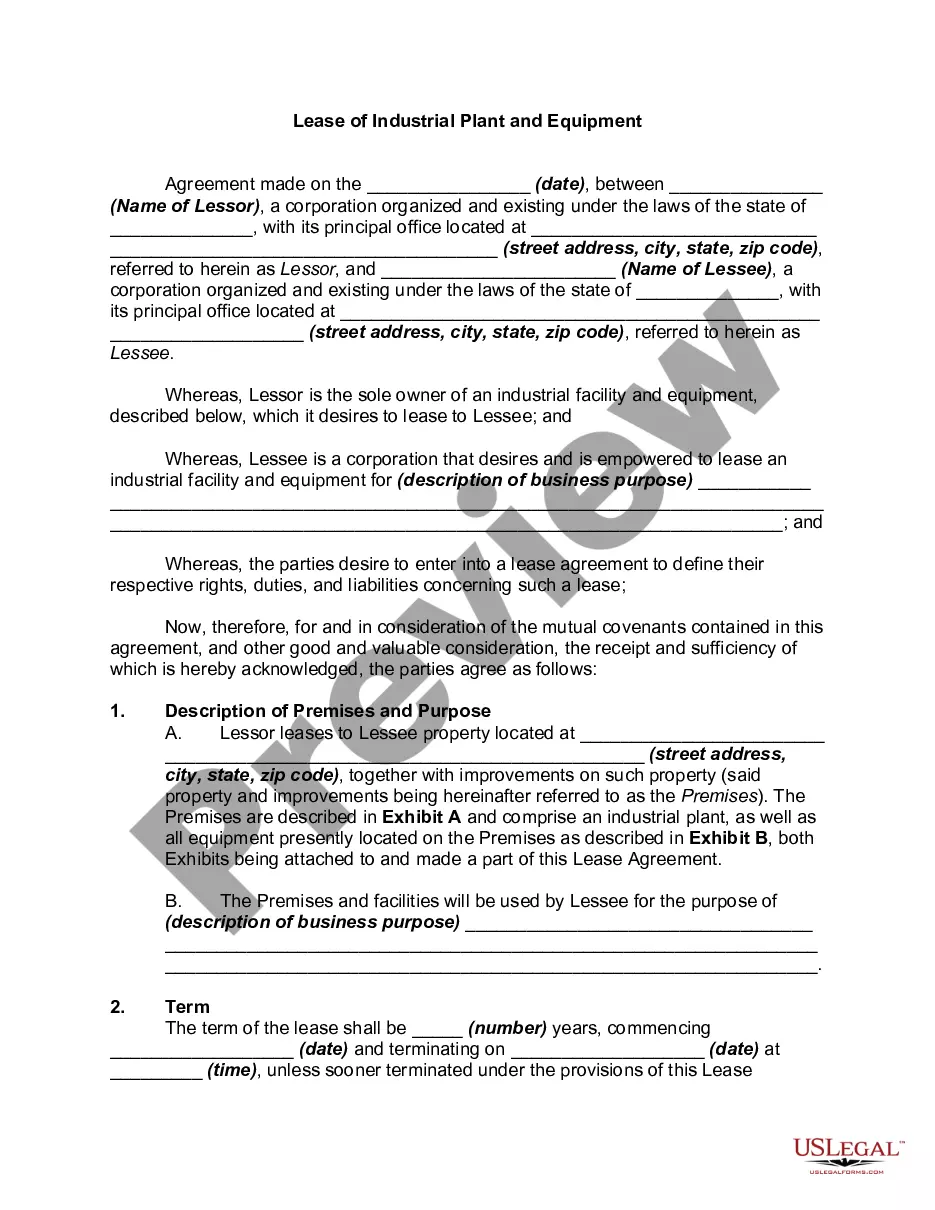
This form is used when a business or individual wishes to lease machinery for operations instead of purchasing it outright. It is applicable in various scenarios such as manufacturing, construction, or any situation where specialized equipment is needed temporarily. If your business requires machinery for a specific project or season and you prefer not to incur the full cost of purchase, utilizing a lease can be a cost-effective solution.
Who should use this form
The following individuals or entities may find this form beneficial:
- Businesses looking to lease machinery for temporary projects.
- Contractors needing specialized equipment without the high costs of purchase.
- Startups seeking to minimize capital expenditure while gaining access to necessary machinery.
- Manufacturers interested in upgrading machinery without long-term commitment.
Instructions for completing this form
- Identify the parties: Fill in the names and addresses of the lessor and lessee.
- Specify the lease term: Enter the duration for which the machinery will be leased.
- Detail the rental payment structure: Provide payment amounts, due dates, and any installment options.
- Outline delivery and installation: Include timelines and responsibilities for the delivery and setup of the machinery.
- Add insurance information: State the required coverage and amounts for protecting the leased machinery.
Notarization requirements for this form
This form does not typically require notarization unless specified by local law. It is advisable to check state-specific requirements to ensure that all legal standards are met.
Get your form ready online
Our built-in tools help you complete, sign, share, and store your documents in one place.
Make edits, fill in missing information, and update formatting in US Legal Forms—just like you would in MS Word.
Download a copy, print it, send it by email, or mail it via USPS—whatever works best for your next step.
Sign and collect signatures with our SignNow integration. Send to multiple recipients, set reminders, and more. Go Premium to unlock E-Sign.
If this form requires notarization, complete it online through a secure video call—no need to meet a notary in person or wait for an appointment.
We protect your documents and personal data by following strict security and privacy standards.

Make edits, fill in missing information, and update formatting in US Legal Forms—just like you would in MS Word.

Download a copy, print it, send it by email, or mail it via USPS—whatever works best for your next step.

Sign and collect signatures with our SignNow integration. Send to multiple recipients, set reminders, and more. Go Premium to unlock E-Sign.

If this form requires notarization, complete it online through a secure video call—no need to meet a notary in person or wait for an appointment.

We protect your documents and personal data by following strict security and privacy standards.
Avoid these common issues
- Failing to specify the terms of delivery and installation can lead to disputes.
- Not detailing the responsibilities for maintenance and repairs increases liability risks.
- Omitting payment schedules or amounts may cause confusion around rent obligations.
- Neglecting to address insurance requirements can leave parties financially exposed.
- Improperly defining termination conditions may result in undesired lease continuity.
Advantages of online completion
- Convenience: Download the form instantly and complete it at your convenience.
- Editability: Customize the form to fit your specific leasing situation easily.
- Reliability: Forms are drafted by licensed attorneys, ensuring legal compliance.
- Time-saving: Streamlined access to required fields and legal clauses saves valuable time.
- Accessibility: Available anytime, allowing quick adjustments as needed.
Looking for another form?
Form popularity
FAQ
If you use what's called a capital or finance lease, you report the leased property on your balance sheet as if it were an asset you own. If you have an operating lease, you record it as a liability.
Hard assets: The equipment you lease must be considered a hard asset ? anything that could be listed as personal property and not permanently attached to real estate.
Disadvantages of Equipment Leasing The equipment is not owned by the business. Interest is being paid by the business. Accessibility of equipment leasing is restricted for new businesses. Limited range of products to lease. Penalties.
A lease will be recorded on the balance sheet as a right-of-use (ROU) asset and lease liability.
Leases are capitalized when the business first obtains the right to control or use a leased asset. This is done by crediting the lease liability account for an amount equal to the present value of all remaining lease payments and debiting an ROU asset account for a corresponding amount.
The lessee records the leased right as an item of property, plant, and equipment, which is then depreciated over its useful life to the lessee. The lessee must also record a liability reflecting the obligation to make continuing payments under the lease agreement, similar to the accounting for a note payable.
Typical interest rates for equipment leases range from 7% to 16%.
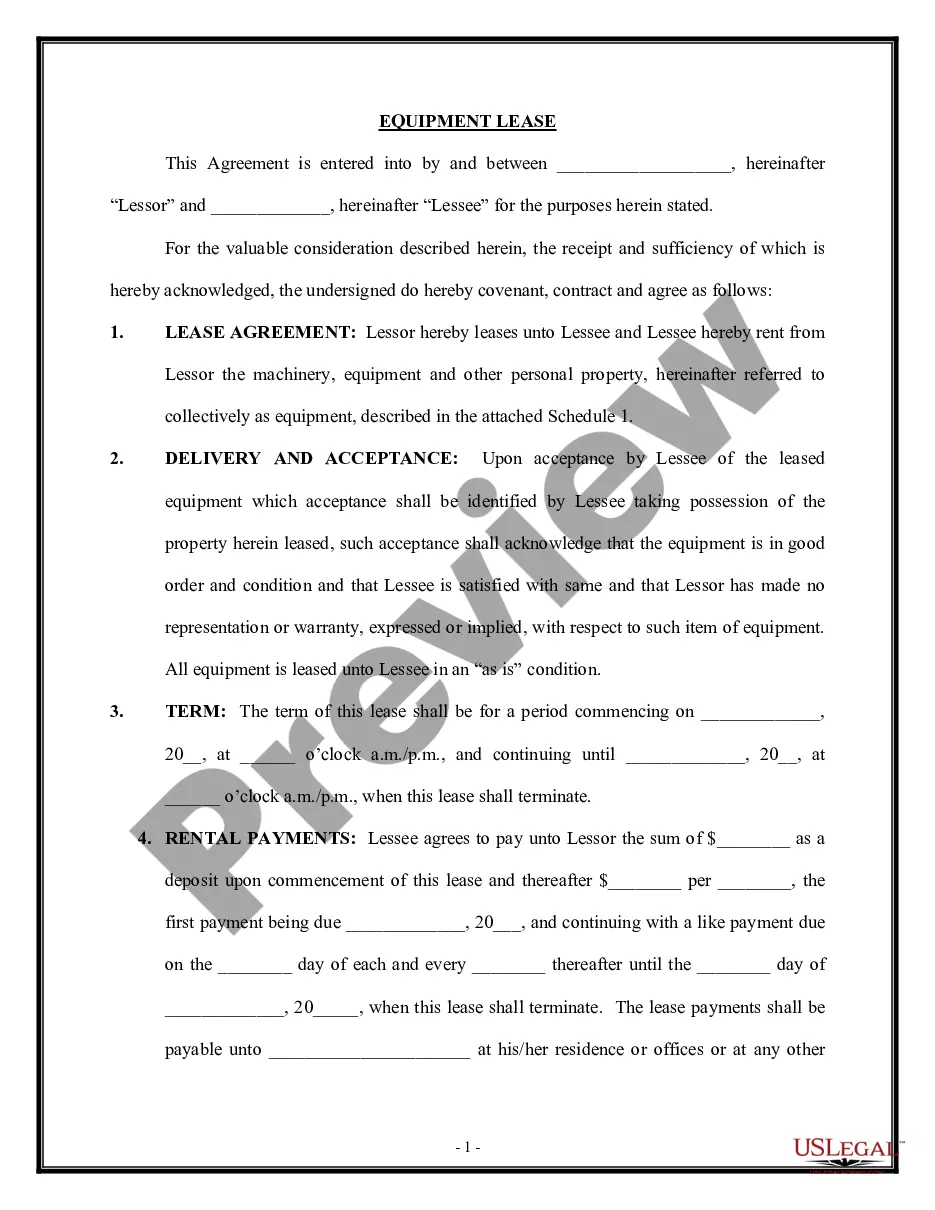
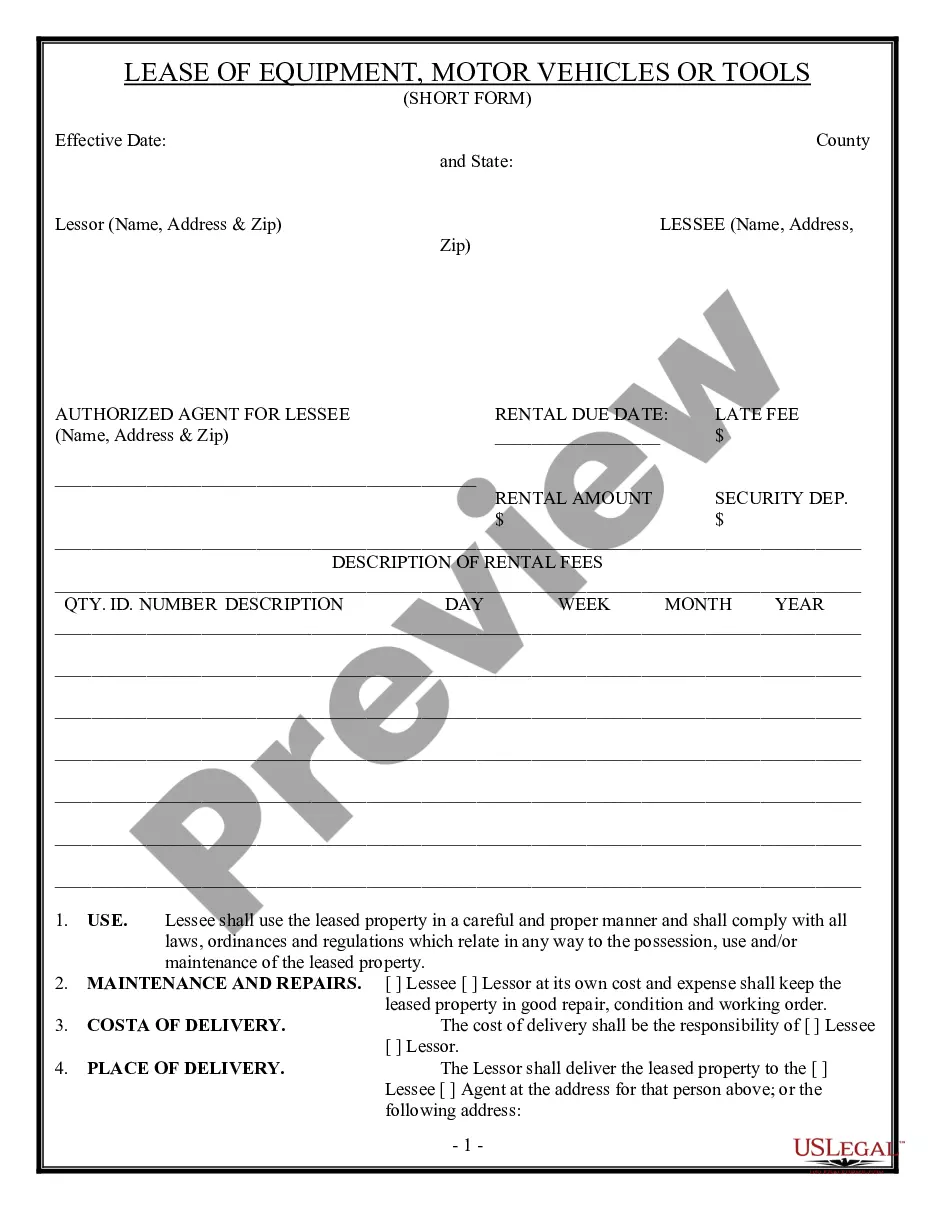
An equipment lease is an extended rental agreement under which the equipment may be used and operated by the lessee from the lessor for periodic payments. Essentially, it involves renting equipment for a fee.