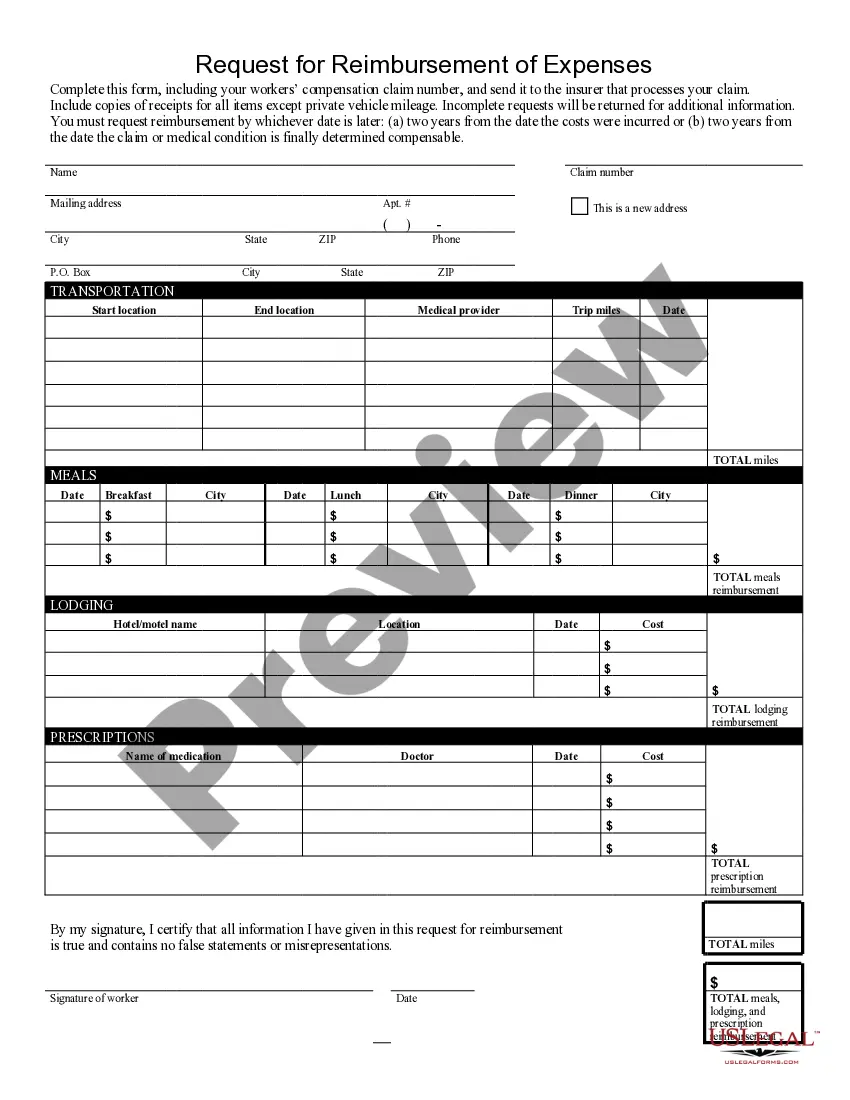
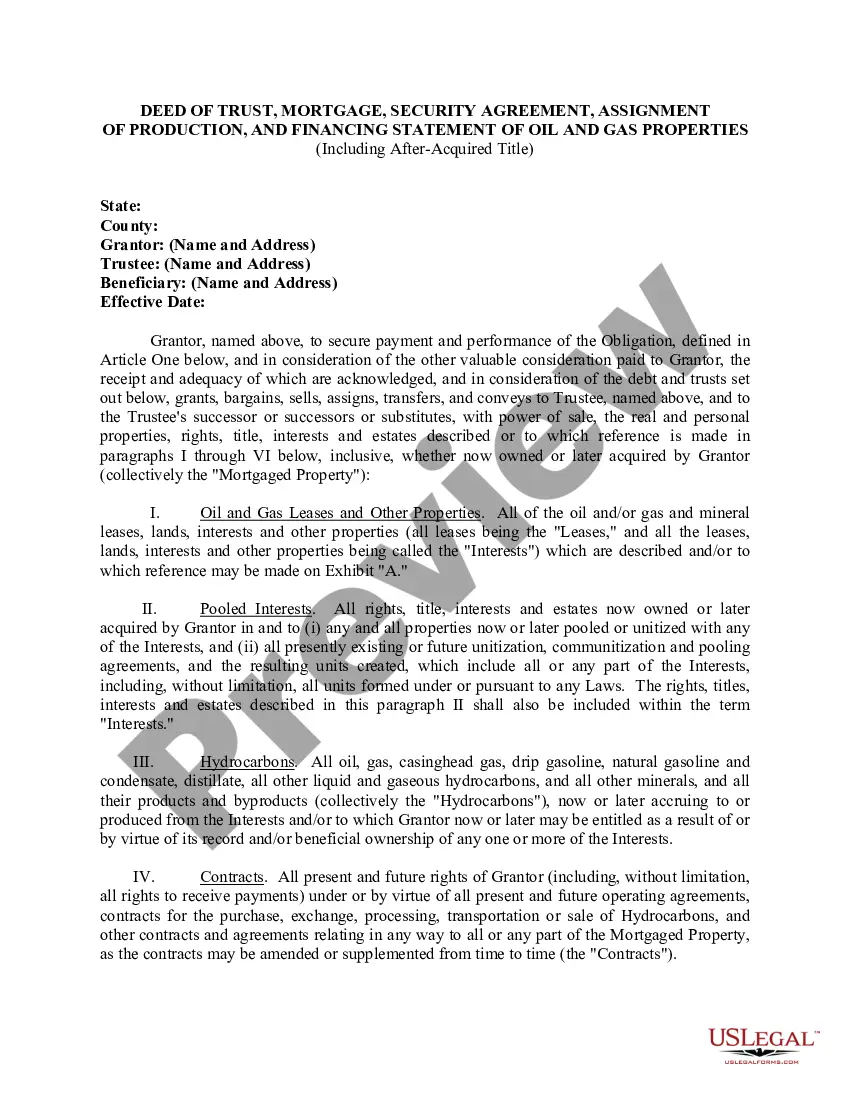
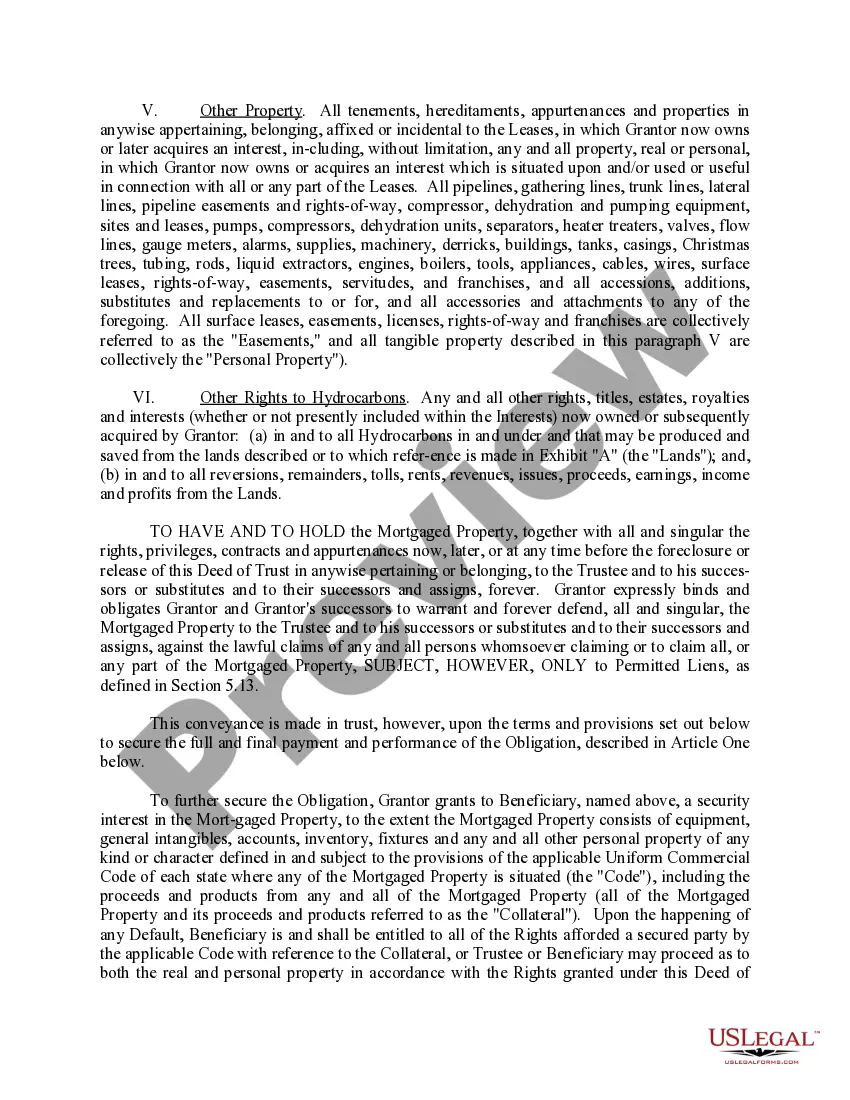
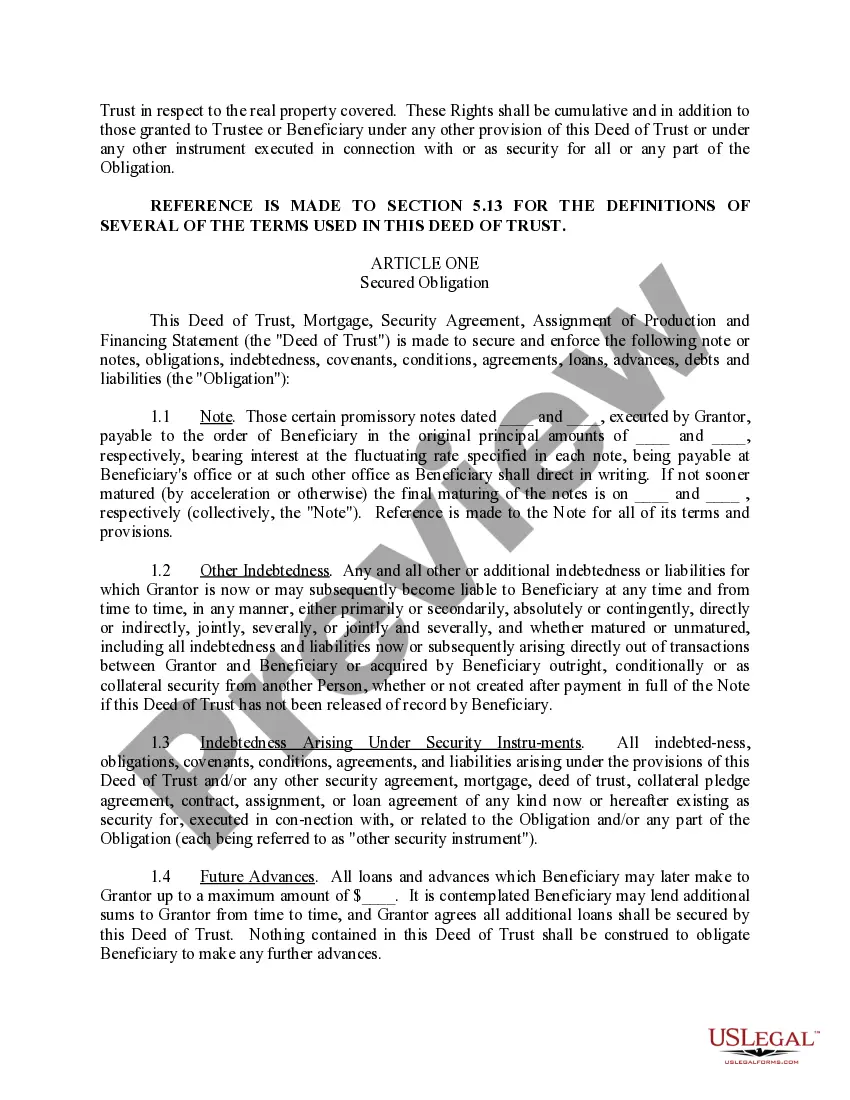
Deed of Trust, Mortgage, Security Agreement, Assignment of Production, and Financing Statement of Oil and Gas Properties including After - Acquired Title
Overview of this form
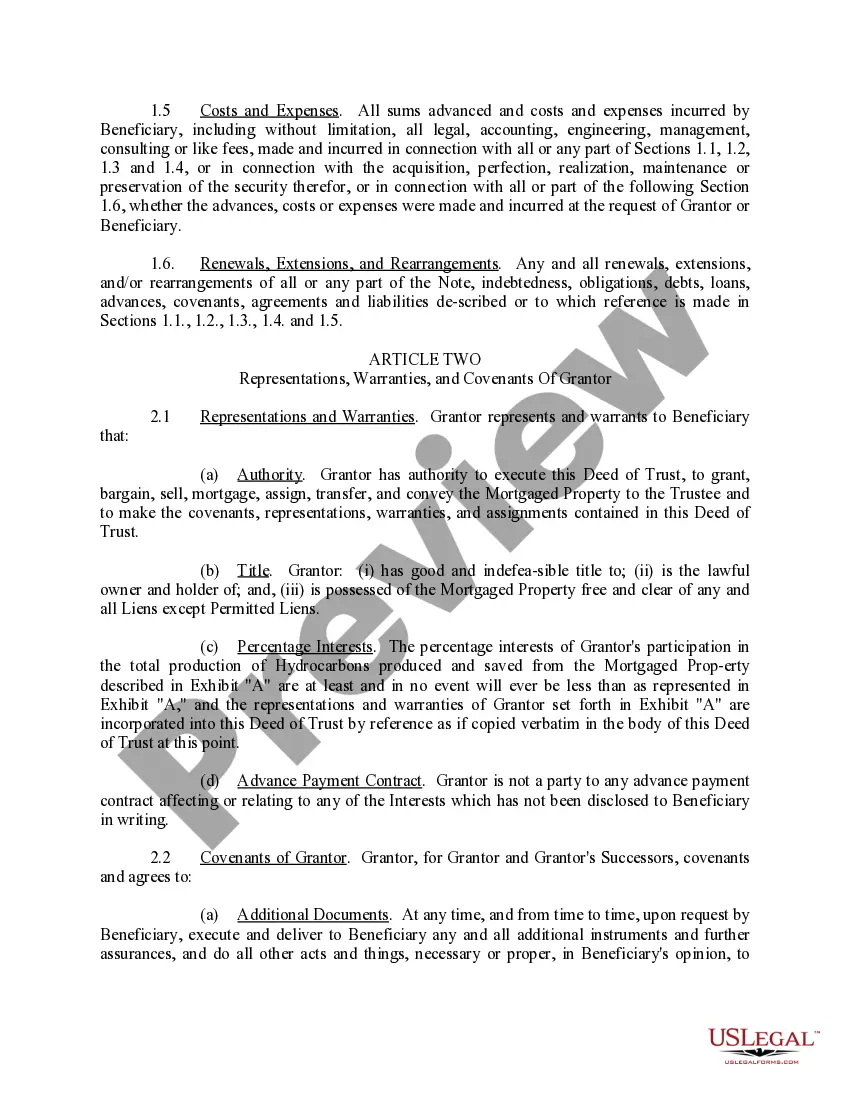
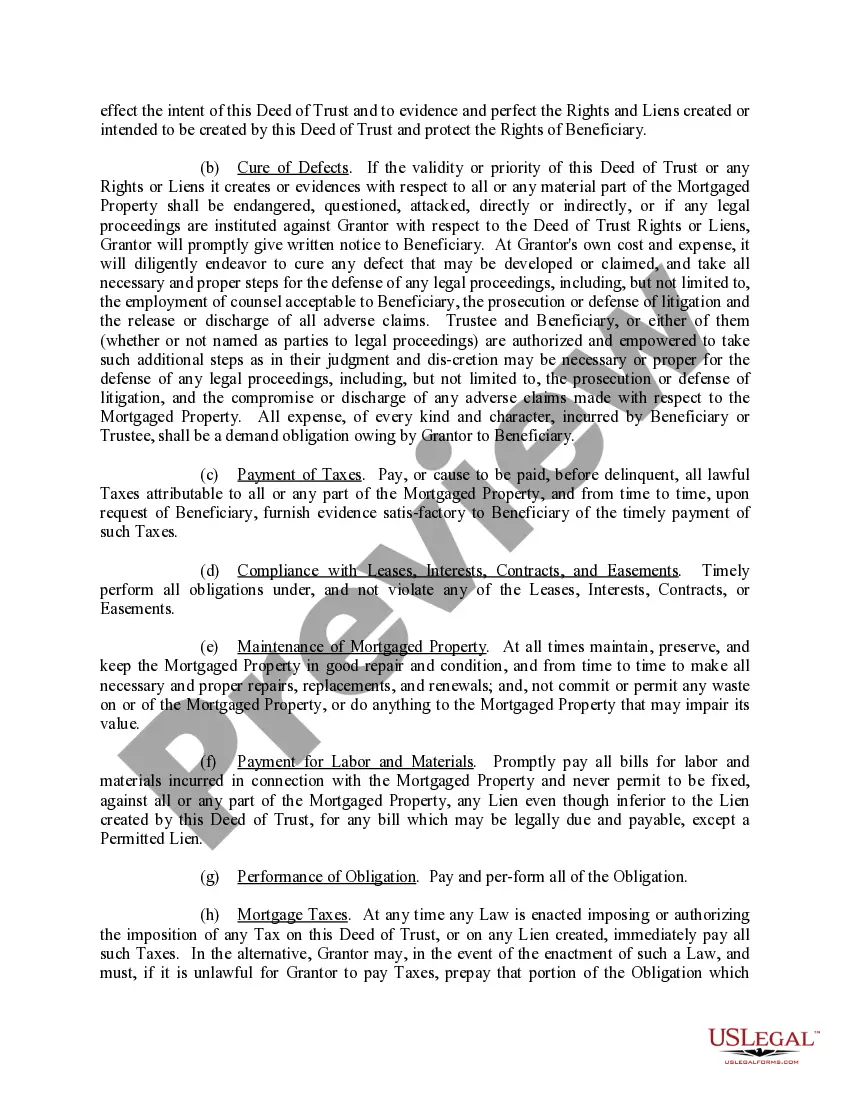
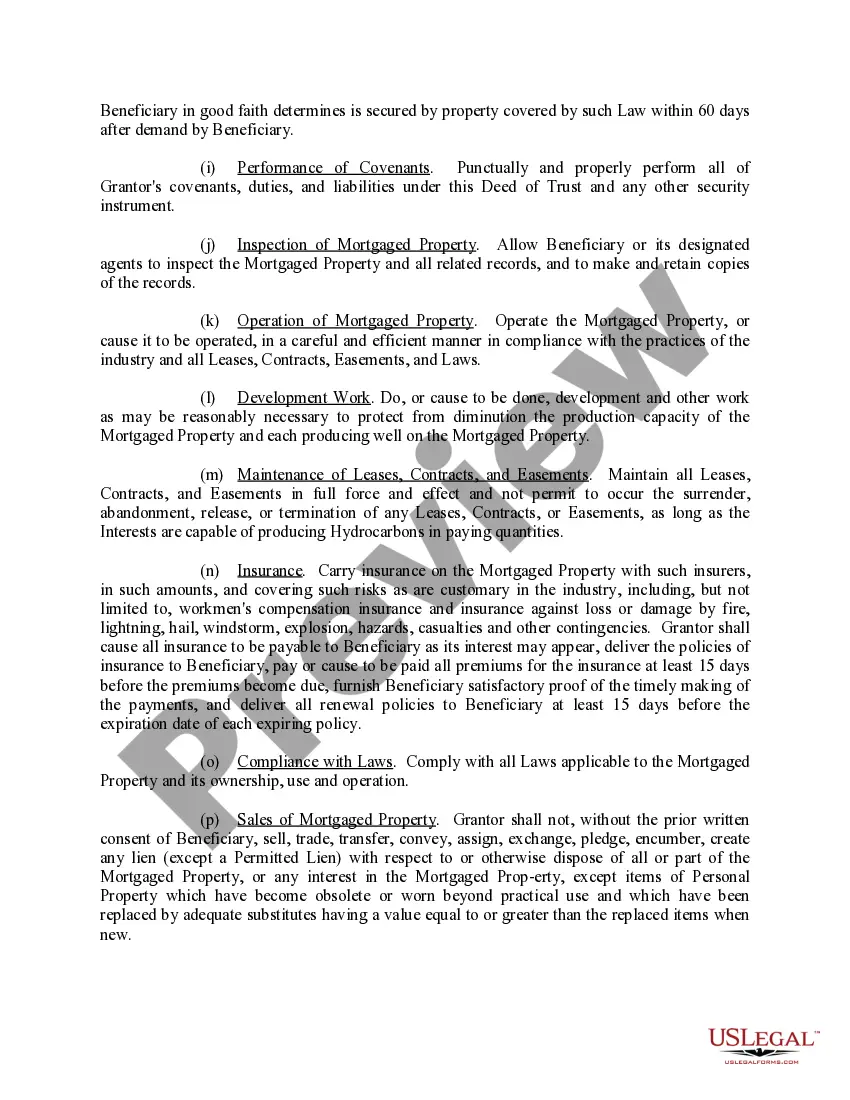
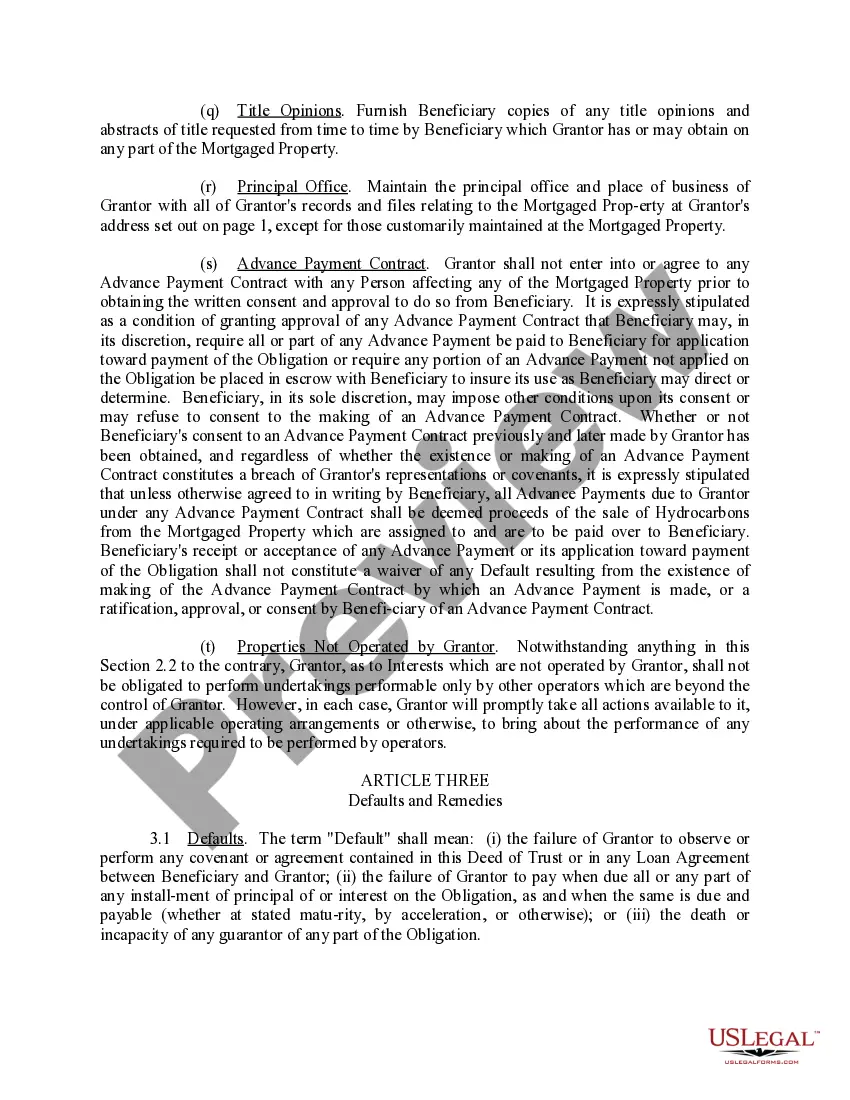
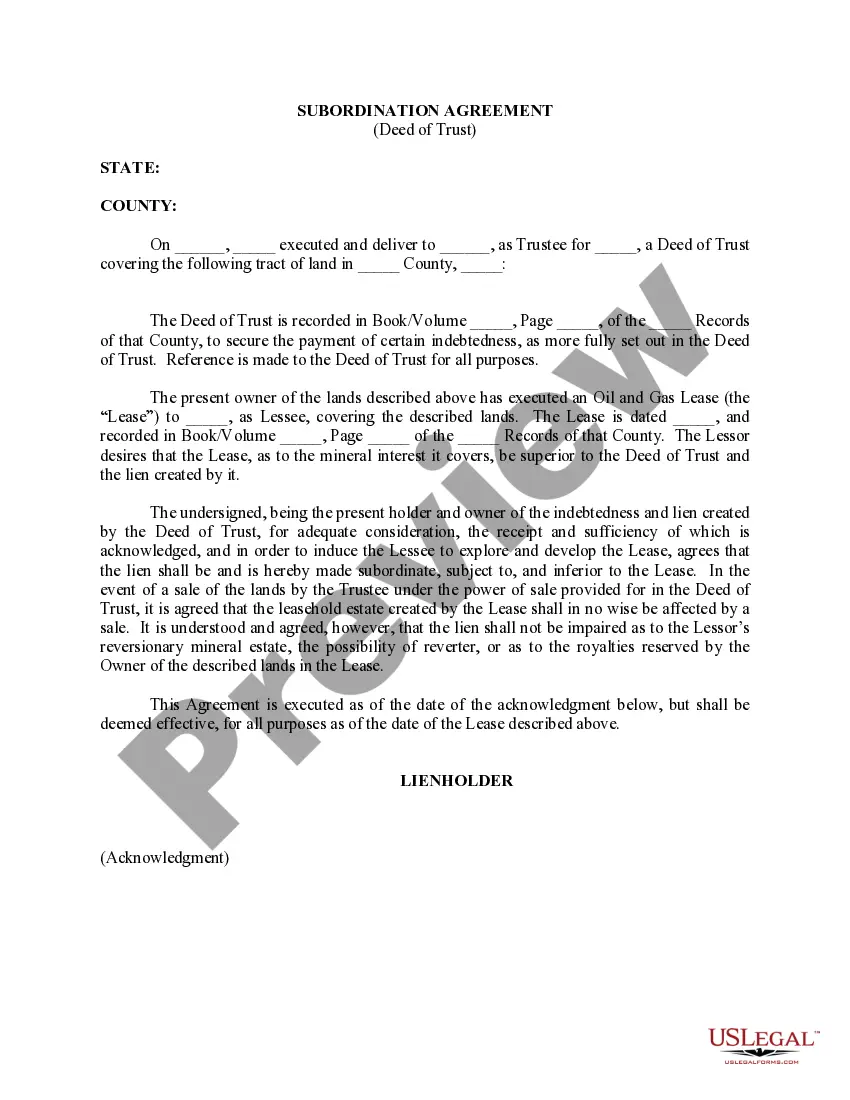
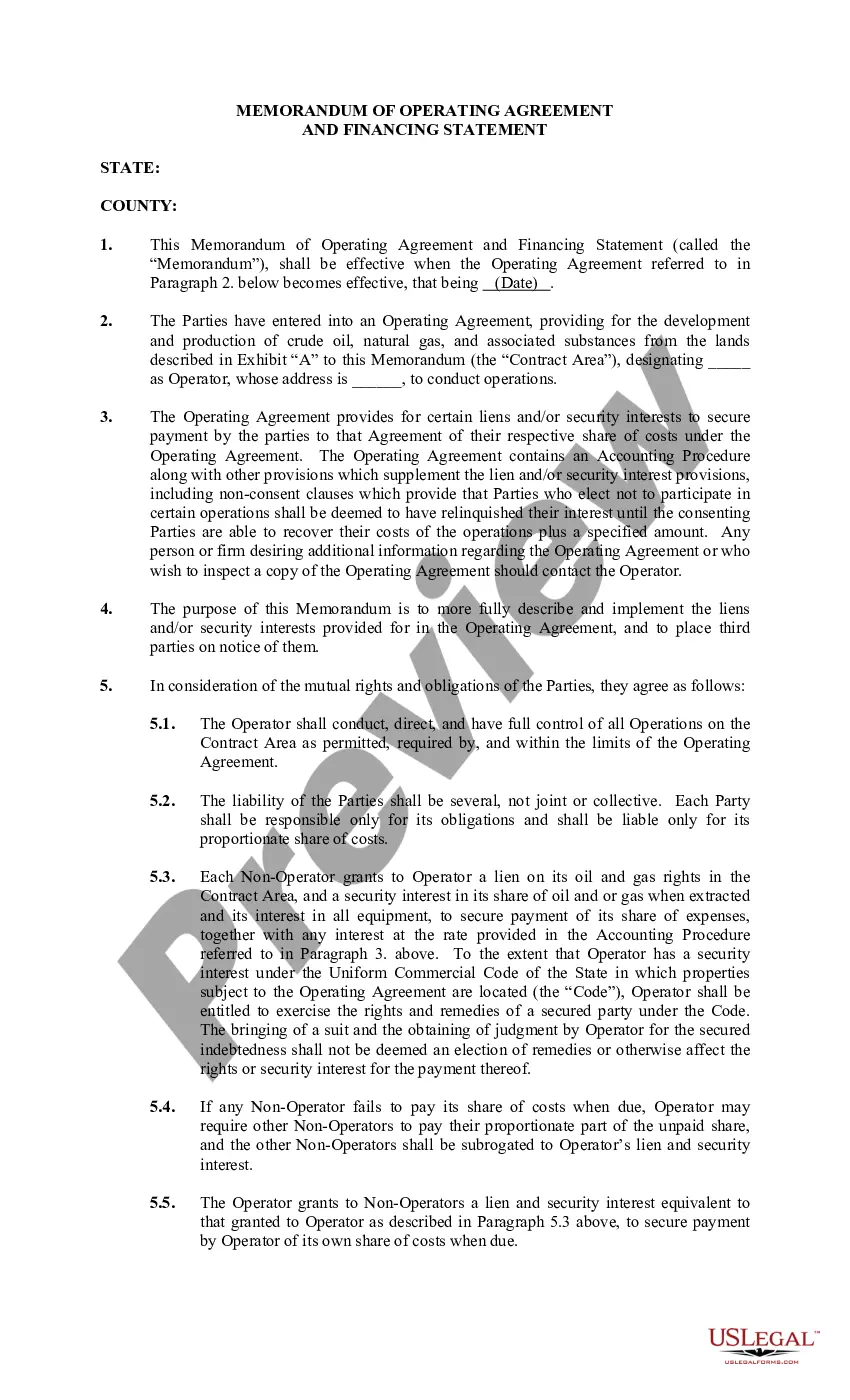
The Deed of Trust, Mortgage, Security Agreement, Assignment of Production, and Financing Statement of Oil and Gas Properties including After-Acquired Title is a legal document used to secure a loan with oil and gas properties as collateral. This form is unique because it combines multiple legal instruments, ensuring comprehensive coverage for the lender in transactions involving oil and gas interests, unlike standard mortgage agreements.
Form components explained
- Grantor, Trustee, and Beneficiary details
- Description of the Mortgaged Property including oil and gas leases
- Secured Obligation, specifying promissory notes and debt clauses
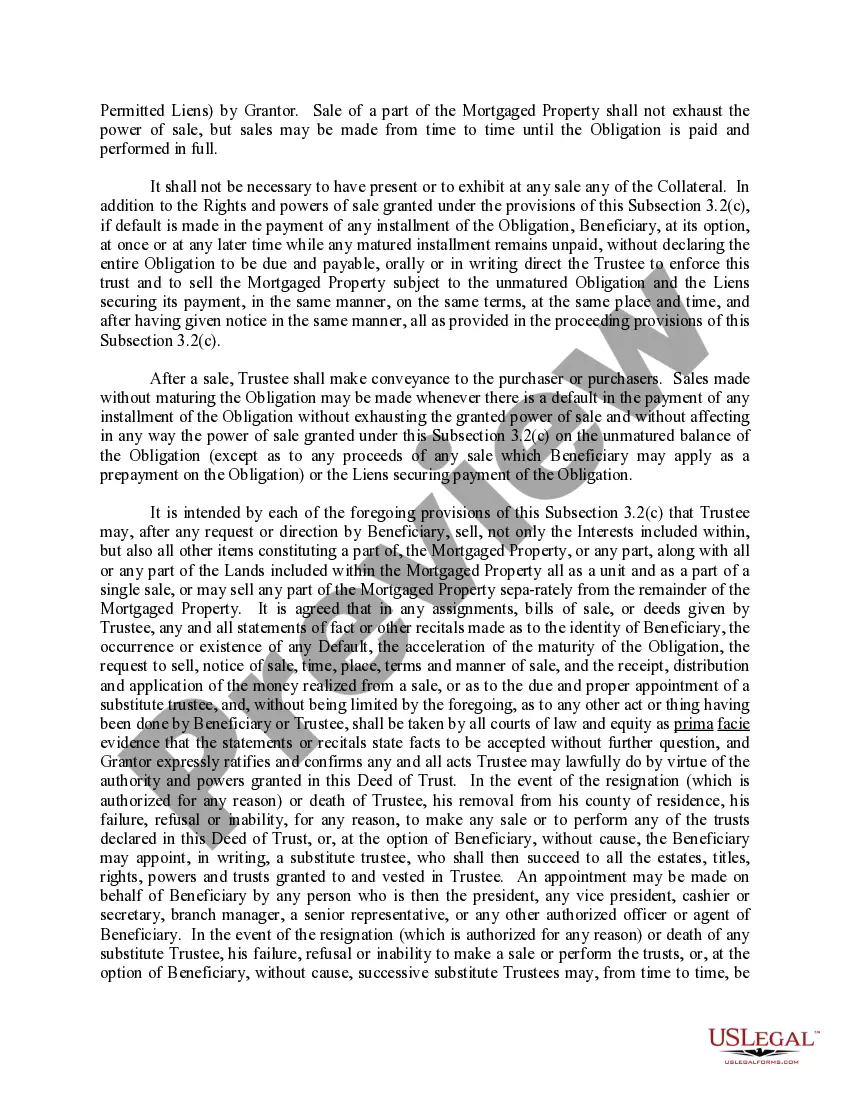
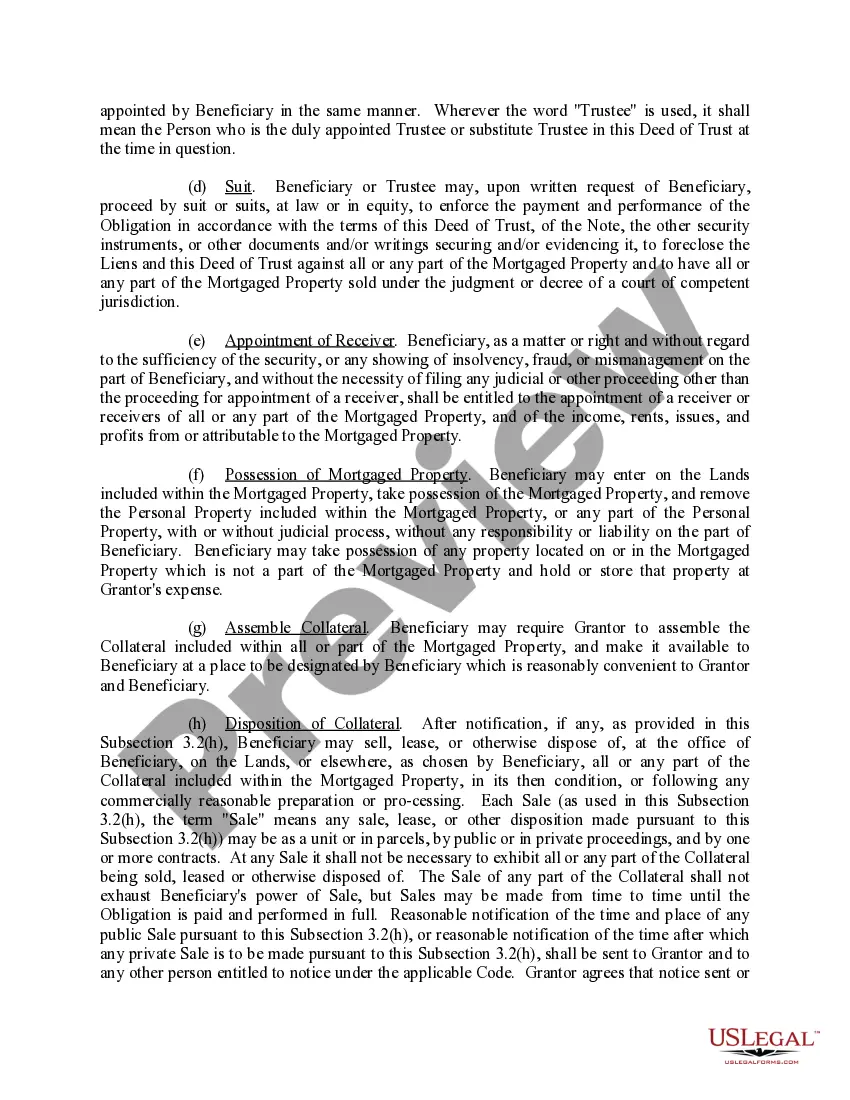
- Rights and powers granted to the Trustee
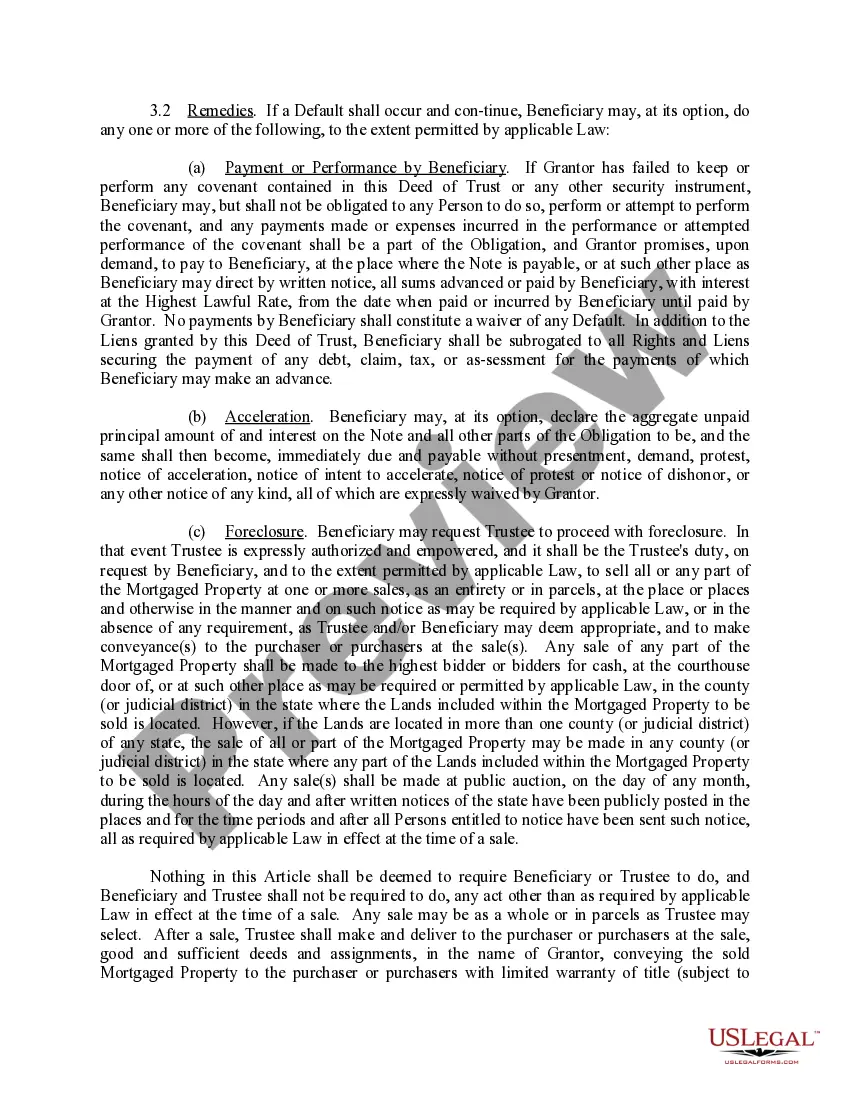
- Default and Remedies section outlining actions upon non-compliance

When to use this form
This form should be used when a property owner (Grantor) wants to secure a loan with their oil and gas properties, ensuring lenders have legal rights to the collateral. It is particularly relevant for financing in the oil and gas sector, providing protection to lenders against defaults on the loan.
Who needs this form
- Property owners seeking financing secured by oil and gas interests
- Lenders or financial institutions providing loans for oil and gas development
- Individuals or entities involved in the oil and gas industry
How to complete this form
- Identify the parties: Enter the names and addresses of the Grantor, Trustee, and Beneficiary.
- Specify the property: Clearly describe the oil and gas properties being offered as collateral.
- Detail the secured obligation: Include specific information about the financial obligation secured by the Deed of Trust.
- Enter dates and signatures: Ensure all parties sign the document, providing the effective date of the agreement.
- Review for legal compliance: Confirm adherence to relevant state laws and regulations before finalizing the form.
Does this document require notarization?
This form must be notarized to be legally valid. US Legal Forms provides secure online notarization powered by Notarize, allowing you to complete the process through a verified video call.
Get your form ready online
Our built-in tools help you complete, sign, share, and store your documents in one place.
Make edits, fill in missing information, and update formatting in US Legal Forms—just like you would in MS Word.
Download a copy, print it, send it by email, or mail it via USPS—whatever works best for your next step.
Sign and collect signatures with our SignNow integration. Send to multiple recipients, set reminders, and more. Go Premium to unlock E-Sign.
If this form requires notarization, complete it online through a secure video call—no need to meet a notary in person or wait for an appointment.
We protect your documents and personal data by following strict security and privacy standards.

Make edits, fill in missing information, and update formatting in US Legal Forms—just like you would in MS Word.

Download a copy, print it, send it by email, or mail it via USPS—whatever works best for your next step.

Sign and collect signatures with our SignNow integration. Send to multiple recipients, set reminders, and more. Go Premium to unlock E-Sign.

If this form requires notarization, complete it online through a secure video call—no need to meet a notary in person or wait for an appointment.

We protect your documents and personal data by following strict security and privacy standards.
Avoid these common issues
- Failing to accurately describe the properties involved.
- Not including all necessary parties in the agreement.
- Failure to understand the implications of default outlined in the form.
- Neglecting to have the document reviewed for compliance with state-specific regulations.
Benefits of completing this form online
- Convenient access to legal documents anytime, without the need for physical visits to an attorney.
- Editability allows users to customize the form to their specific situation easily.
- Guarantees that the form is drafted by licensed attorneys, ensuring legality and compliance.
Legal use & context
- This form operates as both a mortgage and security interest, providing legal backing to the lender.
- Enforcement might vary based on state laws governing oil and gas properties.
- Proper completion and filing are essential to ensuring the enforceability of the claims attached to the properties.
Looking for another form?
Form popularity
FAQ
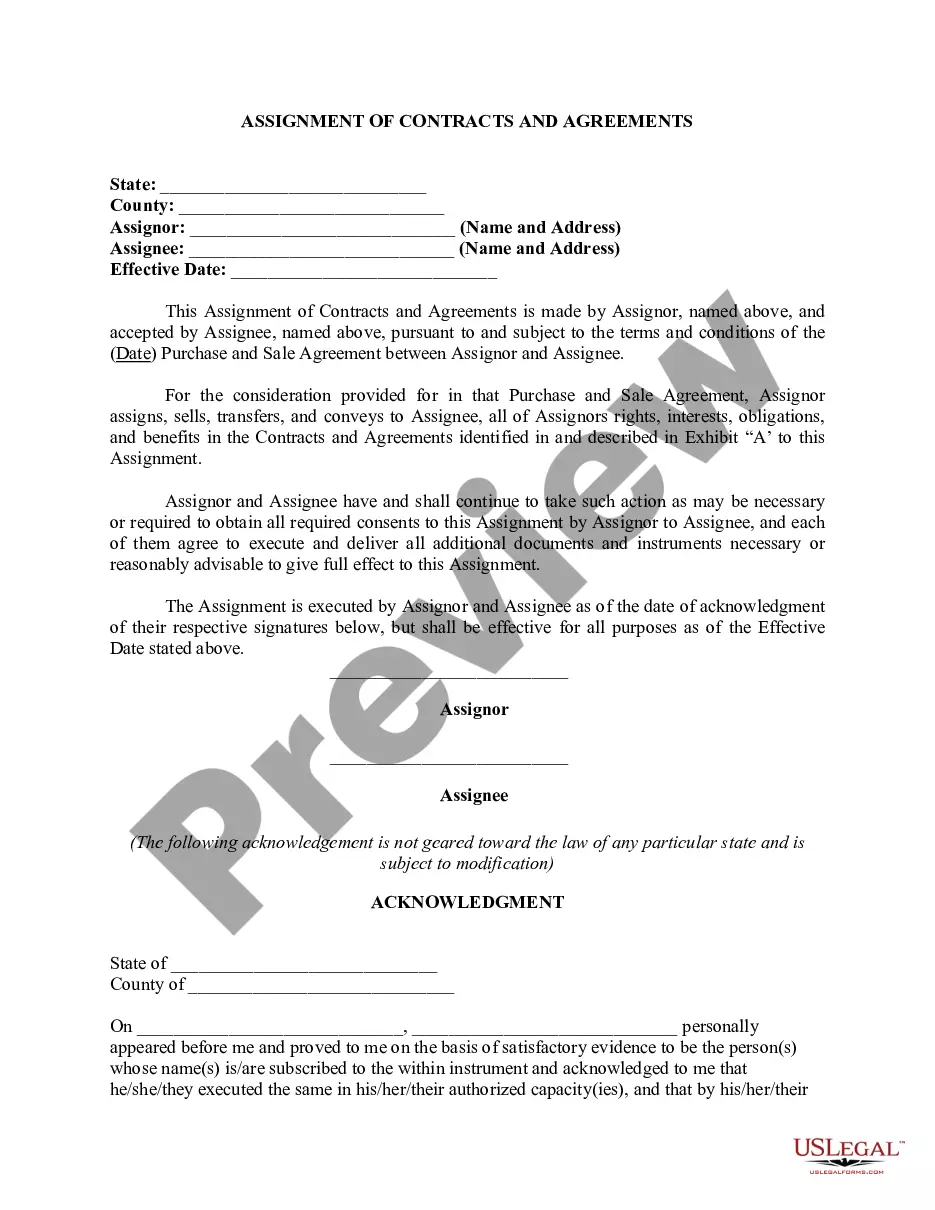
Once the note is assigned, the person to whom it is assigned, the assignee, can collect payment under the note. Assignment of the mortgage agreement occurs when the mortgagee (the bank or lender) transfers its rights under the agreement to another party.
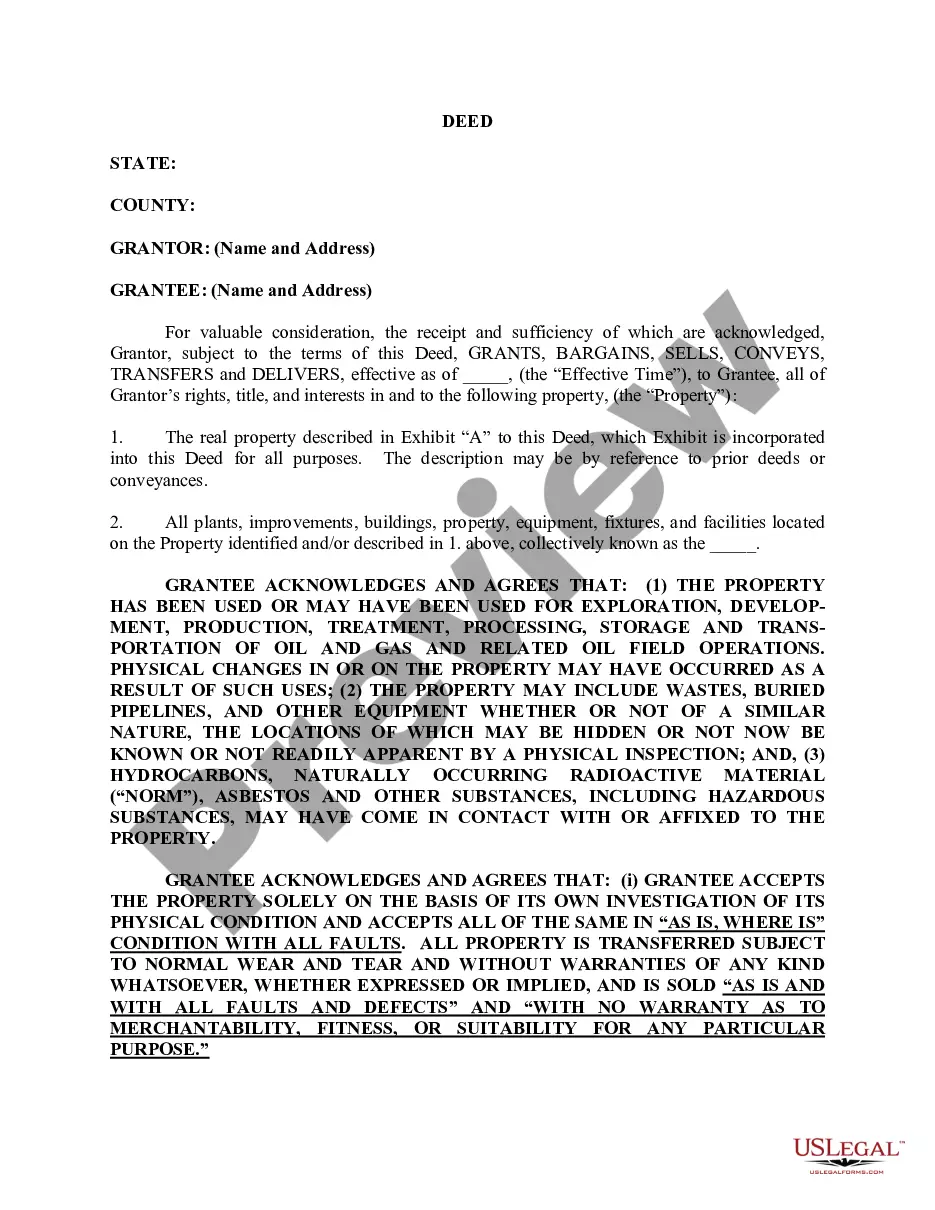
Yes, there are key differences between the two. With a deed, you transfer the ownership of the property to one party. In contrast, a deed of trust does not mean the holder owns the property. In an arrangement involving a deed of trust, the borrower signs a contract with the lender with details regarding the loan.
Party information: names and addresses of the trustor(s), trustee(s), beneficiary(ies), and guarantor(s) (if applicable) Property details: full address of the property and its legal description (which can be obtained from the County Recorder's Office)
When your mortgage lender decides he wants to sell your mortgage loan to another lender, your mortgage lender will sign an assignment of deed of trust in favor of the new lender. This assignment gives the new lender the same lien on your property that your original lender had under the mortgage loan.
Some owners are put off using solicitors duke to the deed of trust cost. Individuals can write out their own, and use someone else as a witness. However, this may have errors or not be a legally binding document. The investment of getting a deed of trust when buying a property is often worth it in the long term.
The person who owns the property usually signs a promissory note and a deed of trust. The deed of trust does not have to be recorded to be valid.
When you buy a rental property, you'll sign an equivalent document called a "deed of trust with assignment of rents." This deed puts teeth in the lender's security interest by giving it the right to collect rents directly from the tenant if you default on the mortgage payments.
An assignment of mortgage gives the loan seller's rights under the mortgage, including the right to foreclose if the borrower doesn't make payments, to the new owner of the loan.