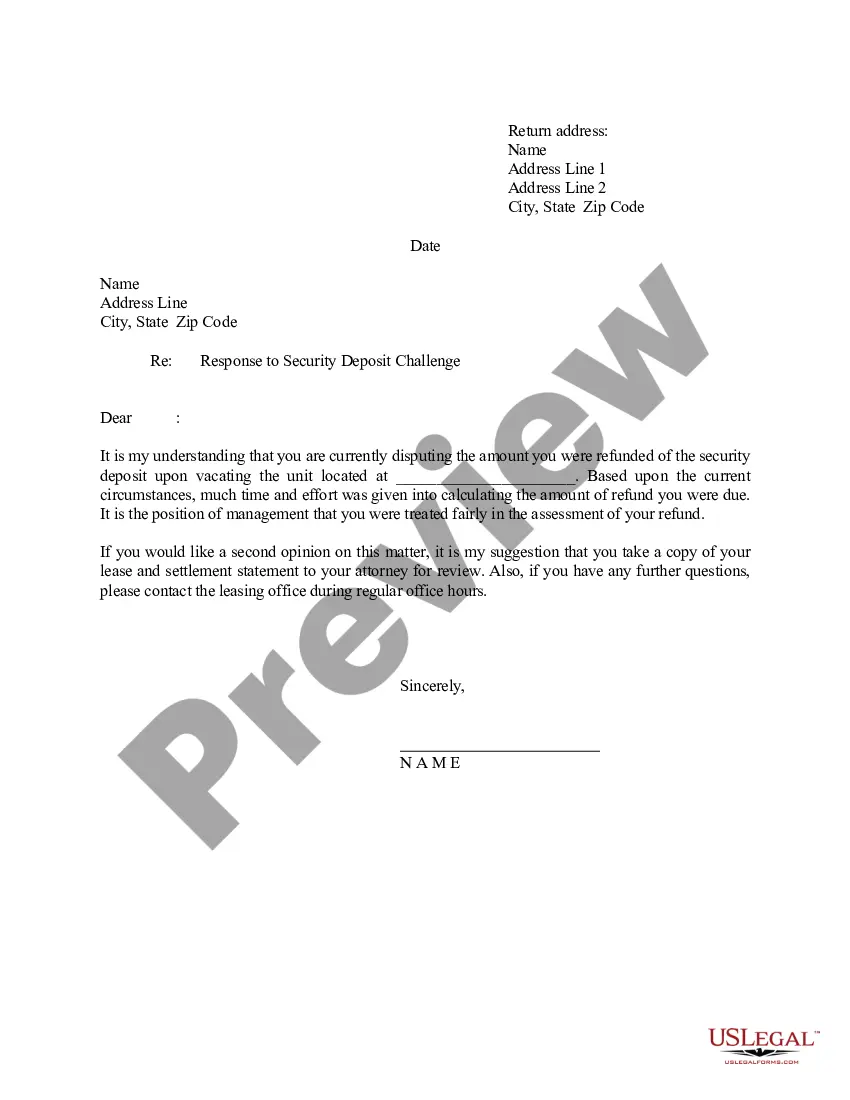
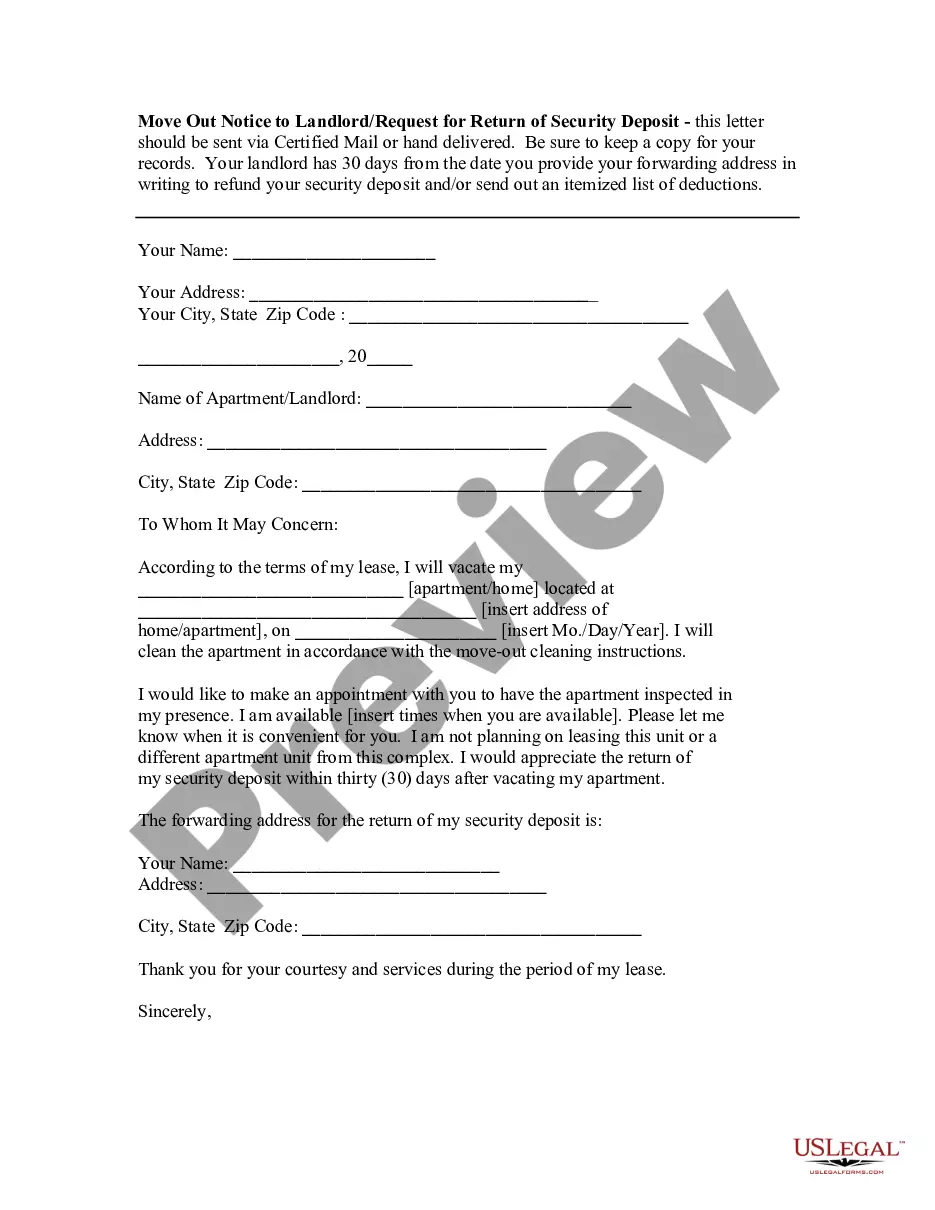
District of Columbia Letter from Tenant to Landlord for Failure of Landlord to return all prepaid and unearned rent and security recoverable by Tenant
What this document covers
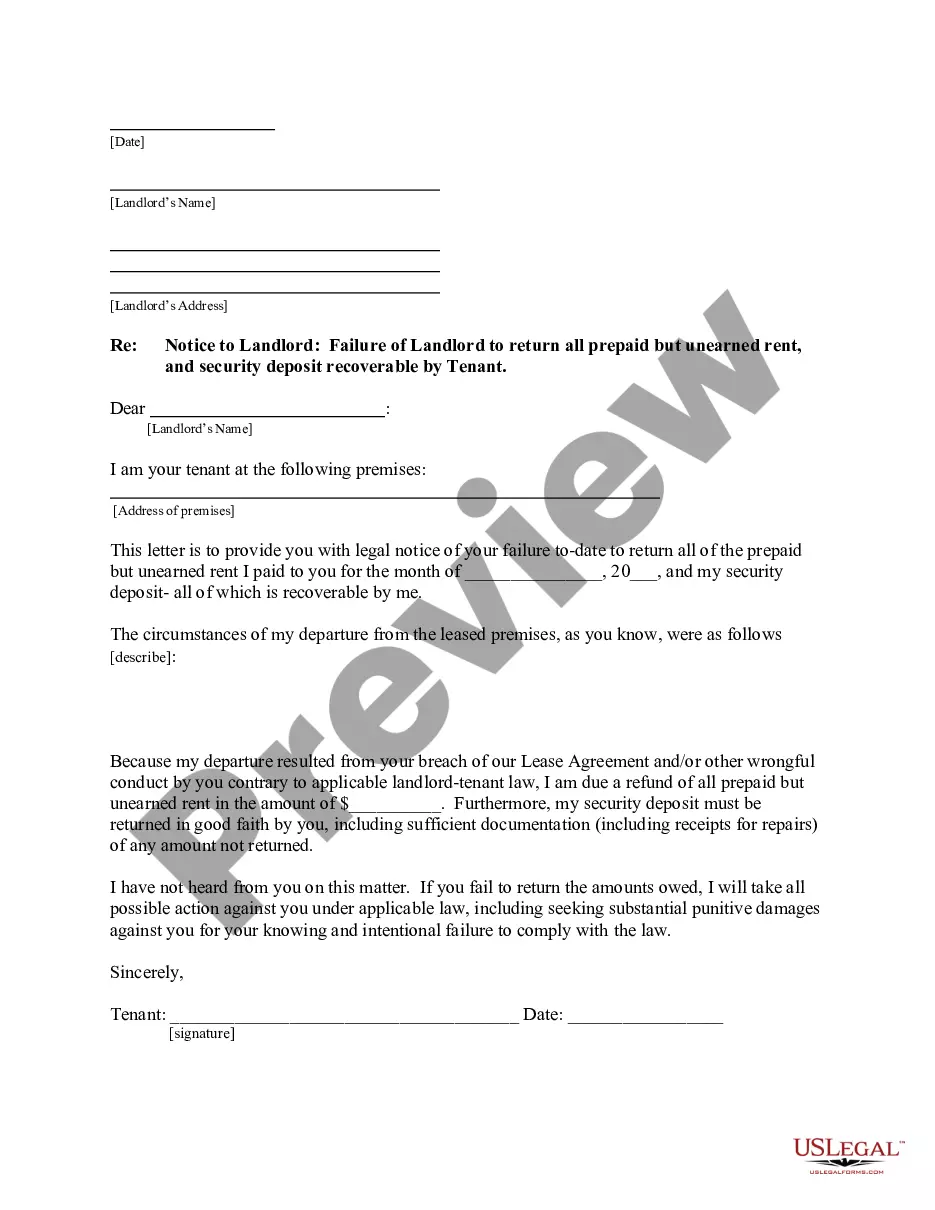
This form is a notice letter from a tenant to a landlord, addressing the landlord's failure to return all prepaid but unearned rent and security deposits. It serves as a formal demand for reimbursement, especially when the tenant's move-out was due to the landlord's breach of the lease agreement or other unlawful conduct. This letter is crucial for tenants who want to legally document their claim and initiate the recovery process.
Main sections of this form
- The tenantâs account of the circumstances leading to their departure from the leased premises.
- A statement indicating the landlord's failure to respond regarding the owed amounts.
- A warning of potential legal action if payment is not made.
- Signature lines for the tenant and the date of the correspondence.
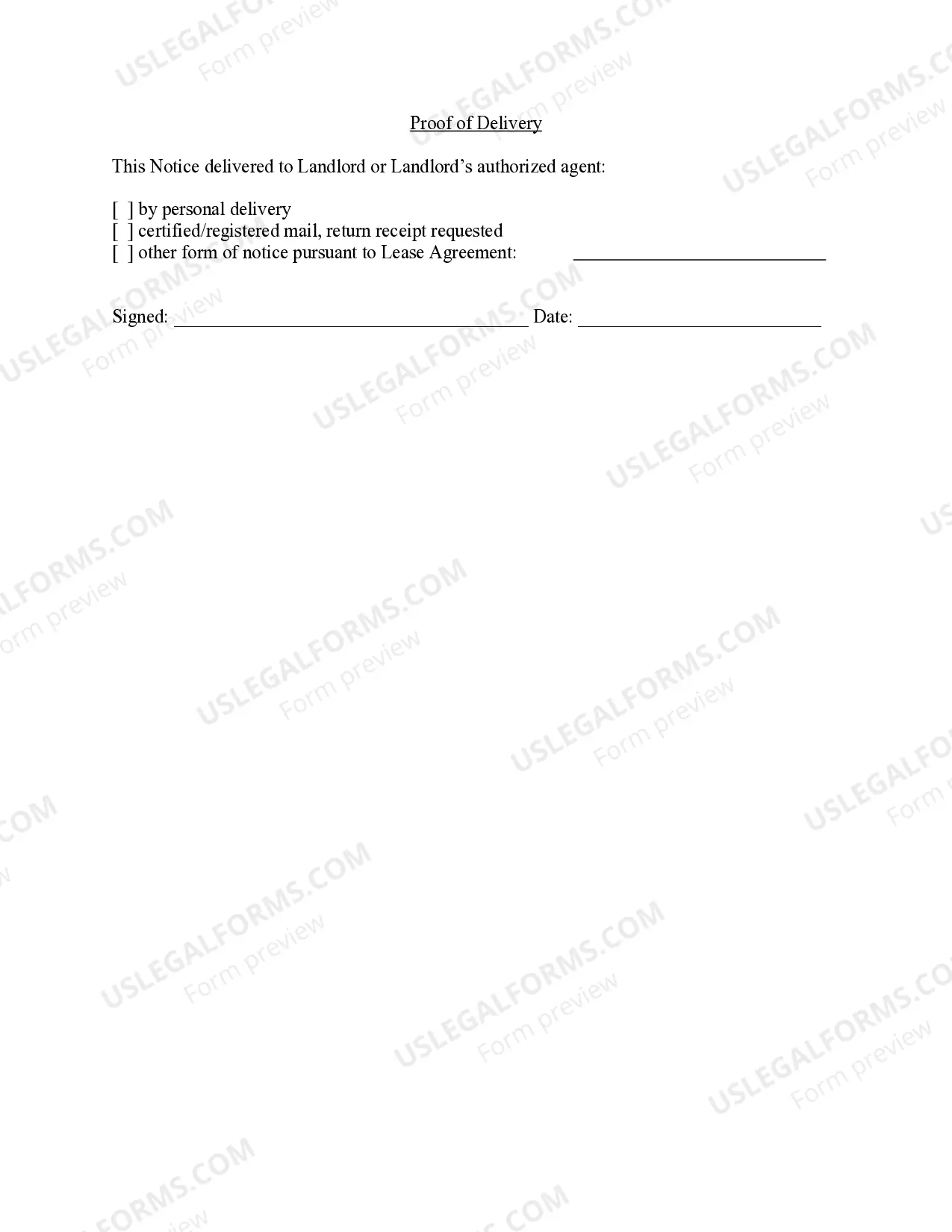
- Proof of delivery options, including methods to ensure proper notification of the landlord.


Situations where this form applies
This form should be used when a tenant moves out of a rental property and notices that their landlord has not returned all prepaid rent and security deposits. It is particularly relevant if the tenant believes their departure was justified due to the landlord's breach of contract or illegal practices. Sending this letter can initiate the formal request for repayment and establish a record of communication regarding the issue.
Who should use this form
- Tenants who have vacated a rental property and are seeking to reclaim their prepaid but unearned rent.
- Individuals who have experienced a breach of lease agreement by their landlord and need to document the issue.
- Renters who want to formally notify their landlord before potentially pursuing legal action.
Steps to complete this form
- Identify the parties involved by clearly stating your name and the landlord's name.
- Describe the circumstances of your departure from the rental property.
- State the amount of prepaid rent and security deposit that should be returned.
- Include a demand for payment and a deadline for the landlord to respond.
- Sign and date the letter to validate your request.
- Choose a method of delivery, such as personal delivery or certified mail, to ensure it reaches the landlord.
Does this form need to be notarized?
This form does not typically require notarization unless specified by local law.
Get your form ready online
Our built-in tools help you complete, sign, share, and store your documents in one place.
Make edits, fill in missing information, and update formatting in US Legal Forms—just like you would in MS Word.
Download a copy, print it, send it by email, or mail it via USPS—whatever works best for your next step.
Sign and collect signatures with our SignNow integration. Send to multiple recipients, set reminders, and more. Go Premium to unlock E-Sign.
If this form requires notarization, complete it online through a secure video call—no need to meet a notary in person or wait for an appointment.
We protect your documents and personal data by following strict security and privacy standards.

Make edits, fill in missing information, and update formatting in US Legal Forms—just like you would in MS Word.

Download a copy, print it, send it by email, or mail it via USPS—whatever works best for your next step.

Sign and collect signatures with our SignNow integration. Send to multiple recipients, set reminders, and more. Go Premium to unlock E-Sign.

If this form requires notarization, complete it online through a secure video call—no need to meet a notary in person or wait for an appointment.

We protect your documents and personal data by following strict security and privacy standards.
Common mistakes to avoid
- Failing to include specific amounts owed, which may weaken the claim.
- Not providing a clear deadline for the landlord to respond, which can cause delays.
- Using vague language instead of specific details about the lease violation.
- Neglecting to keep a copy of the letter for personal records.
Advantages of online completion
- Convenience of downloading and filling out the form at your own pace.
- Editability allows for customization to fit your unique situation.
- Access to resources drafted by licensed attorneys ensures legal reliability.
- Immediate availability without needing to visit a lawyer's office.
Legal use & context
- This form is legally binding once delivered to the landlord and can serve as evidence in future legal disputes.
- Understanding local laws can affect the enforceability of claims for returned funds.
- The letter may be used in conjunction with other legal actions if the landlord fails to comply.
Summary of main points
- This letter serves as a formal demand for the return of prepaid rent and security deposits.
- A well-documented notice can help in asserting your rights as a tenant.
- Proper completion and delivery of this form are critical for legal efficacy.
Looking for another form?

Form popularity
FAQ
In Washington, DC, landlords are mandated to return security deposits within 45 days of tenants vacating. They must also provide an itemized statement of any deductions for repairs or unpaid rent. If you face delays or issues, referencing a District of Columbia Letter from Tenant to Landlord for Failure of Landlord to return all prepaid and unearned rent and security recoverable by Tenant can be a powerful tool in advocating for your rights.
If you need to report a landlord in Washington, DC, contact the Department of Consumer and Regulatory Affairs. You can submit complaints online or by phone, detailing the issues you are experiencing. It’s helpful to have documentation ready, such as a District of Columbia Letter from Tenant to Landlord for Failure of Landlord to return all prepaid and unearned rent and security recoverable by Tenant, to support your claims.
In DC, a landlord can hold an apartment with a deposit for up to 30 days while finalizing the rental agreement. After this period, the landlord is required to return the deposit unless a lease is signed. Ensure you know your rights, and consider using a District of Columbia Letter from Tenant to Landlord for Failure of Landlord to return all prepaid and unearned rent and security recoverable by Tenant to express any concerns you may have.
In Washington, DC, landlords must return a security deposit within 45 days after the tenant vacates the property. If the landlord deducts amounts for damages or unpaid rent, they must provide an itemized list of these deductions. Understanding your rights in these situations is essential, and using a District of Columbia Letter from Tenant to Landlord for Failure of Landlord to return all prepaid and unearned rent and security recoverable by Tenant can facilitate communication with your landlord.
To request a rent abatement letter, start by drafting a clear and concise message to your landlord. Explain the circumstances that justify your request, such as maintenance issues or rent discrepancies. Utilizing a District of Columbia Letter from Tenant to Landlord for Failure of Landlord to return all prepaid and unearned rent and security recoverable by Tenant can help you structure your request professionally.
Obtaining a landlord letter is a straightforward process. You need to communicate clearly with your landlord about your request, specifying the details required in the letter. You can use a template for a District of Columbia Letter from Tenant to Landlord for Failure of Landlord to return all prepaid and unearned rent and security recoverable by Tenant, available on platforms like USLegalForms, to ensure you include all necessary information.
A rental demand letter is a formal request from the landlord to the tenant for unpaid rent. It usually specifies the amount owed and the consequences if the payment is not made by a given date. Understanding how to respond to such letters is essential in protecting your rights, and crafting a District of Columbia Letter from Tenant to Landlord for Failure of Landlord to return all prepaid and unearned rent and security recoverable by Tenant can be beneficial.
Generally, you cannot break your lease just because the landlord decides to sell the property. Your lease remains valid and binding, and new owners take over the responsibilities outlined in it. However, there may be specific situations or lease clauses that allow for a District of Columbia Letter from Tenant to Landlord for Failure of Landlord to return all prepaid and unearned rent and security recoverable by Tenant to address potential issues arising from the sale.
Before selling a rental property, a DC landlord must provide tenants with a written notice of intent to sell and include important details about the impending sale. This notice should inform tenants of their rights under the Topa Act and any other relevant laws. If you feel that your landlord is not following protocol, you can draft a District of Columbia Letter from Tenant to Landlord for Failure of Landlord to return all prepaid and unearned rent and security recoverable by Tenant.
Yes, a demand letter is a serious document that signals the landlord's intention to collect overdue rent or take legal action if the payment is not received. It serves as a formal notification and can establish a case if the dispute escalates. If you receive one, consider your options carefully, and reach out for guidance, including utilizing a District of Columbia Letter from Tenant to Landlord for Failure of Landlord to return all prepaid and unearned rent and security recoverable by Tenant.