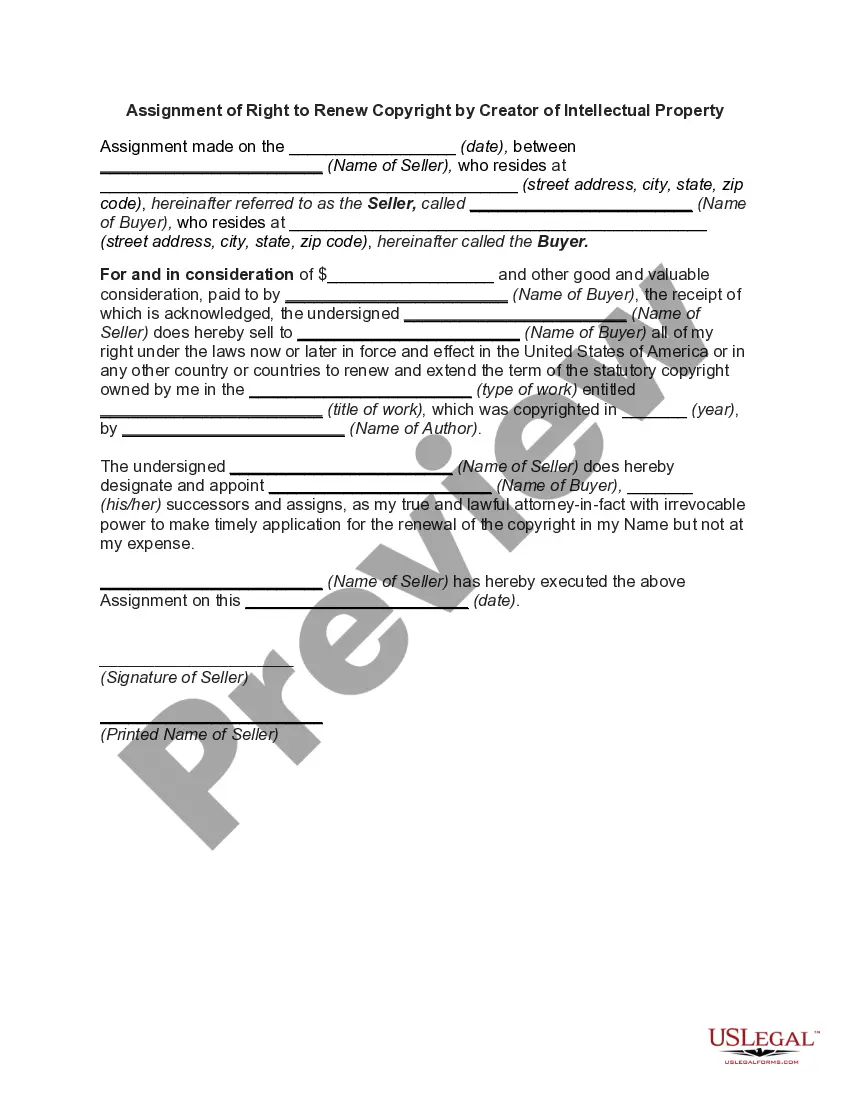
Assignment of Right to Renew Copyright by Creator of Intellectual Property
What is this form?
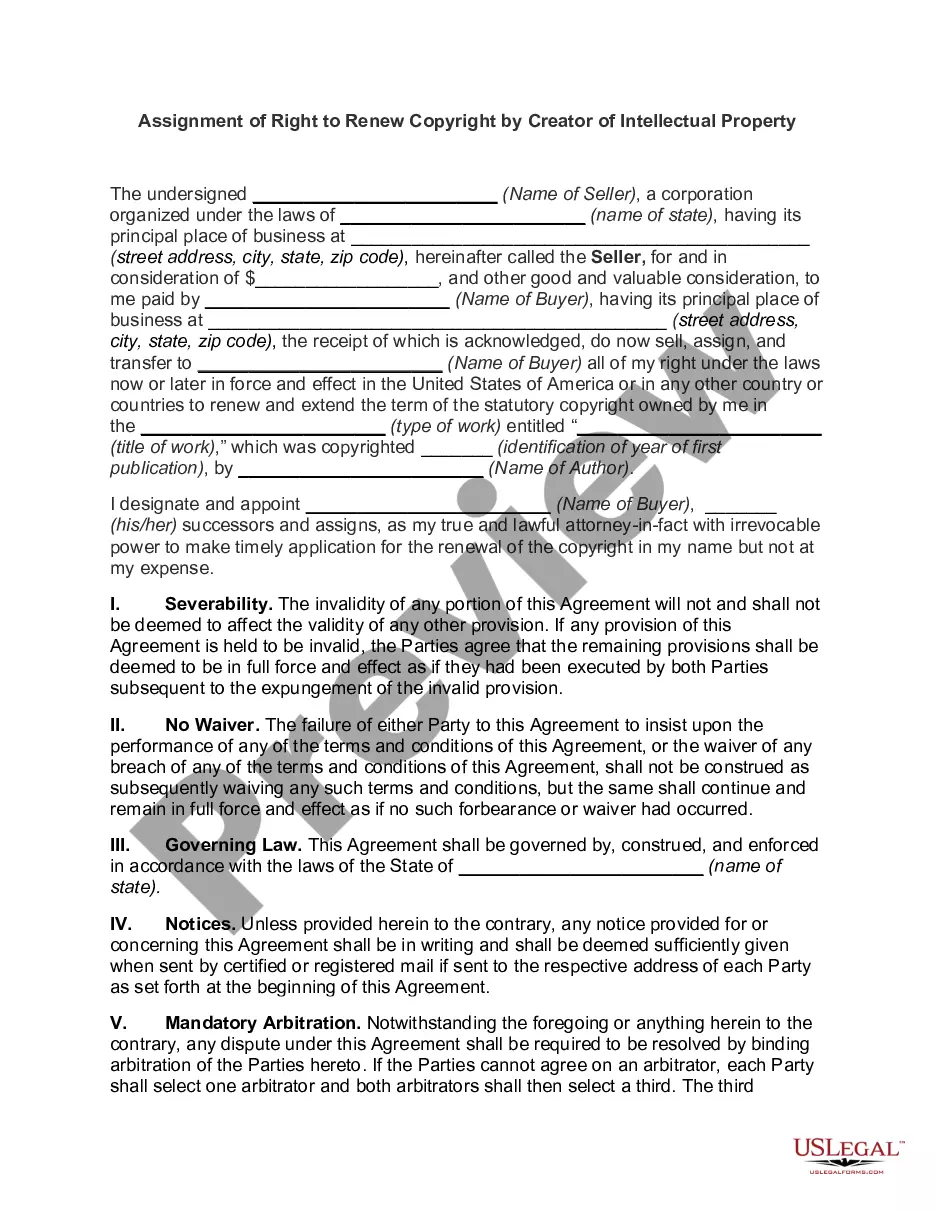
The Assignment of Right to Renew Copyright by Creator of Intellectual Property is a legal document used to transfer the right to renew and extend a statutory copyright from the original creator (the Seller) to another party (the Buyer). This form is essential for individuals who wish to assign their copyright renewal rights to ensure that their intellectual property remains under the control of a designated party. It differs from general copyright assignment forms by specifically focusing on the renewal aspect of copyright ownership, allowing for continued protection after the initial copyright term expires.
Key components of this form
- Date of assignment, indicating when the assignment is made.
- Names and addresses of the Seller and Buyer, establishing the parties involved.
- Consideration amount, which denotes the payment for the assignment.
- Description of the copyright being assigned, including the title and year of copyright.
- Appointment of the Buyer as the Seller's attorney-in-fact for renewal applications.
- Signature line for the Seller, affirming the assignment.

When this form is needed
This form is commonly used when the creator of a copyright wants to transfer their right to renew copyright protection to another party, typically to ensure that their intellectual property can continue to be protected beyond its initial term. It is particularly useful for creators who may not wish to handle the renewal process personally or want to ensure that their work is managed by someone with experience in copyright administration.
Intended users of this form
- Creators of original works, such as authors, musicians, and artists, who hold copyright.
- Individuals or entities looking to acquire renewal rights for copyrighted works.
- Legal representatives managing intellectual property rights on behalf of creators.
How to complete this form
- Identify the date when the assignment is made.
- Fill in the names and addresses of both the Seller and Buyer.
- Specify the amount of consideration being paid for the assignment.
- Provide a complete description of the work, including its title and the year it was copyrighted.
- Include the Seller's signature and printed name, confirming the assignment of rights.
Notarization guidance
This form does not typically require notarization unless specified by local law. It is recommended to check state requirements or consult with legal counsel if unsure about the specific needs for executing copyright assignments.
Get your form ready online
Our built-in tools help you complete, sign, share, and store your documents in one place.
Make edits, fill in missing information, and update formatting in US Legal Forms—just like you would in MS Word.
Download a copy, print it, send it by email, or mail it via USPS—whatever works best for your next step.
Sign and collect signatures with our SignNow integration. Send to multiple recipients, set reminders, and more. Go Premium to unlock E-Sign.
If this form requires notarization, complete it online through a secure video call—no need to meet a notary in person or wait for an appointment.
We protect your documents and personal data by following strict security and privacy standards.

Make edits, fill in missing information, and update formatting in US Legal Forms—just like you would in MS Word.

Download a copy, print it, send it by email, or mail it via USPS—whatever works best for your next step.

Sign and collect signatures with our SignNow integration. Send to multiple recipients, set reminders, and more. Go Premium to unlock E-Sign.

If this form requires notarization, complete it online through a secure video call—no need to meet a notary in person or wait for an appointment.

We protect your documents and personal data by following strict security and privacy standards.
Typical mistakes to avoid
- Failing to include the correct date of assignment.
- Omitting any party's name or address from the form.
- Not properly describing the copyright work, which can lead to misunderstandings about what rights are being assigned.
- Neglecting to sign the form, which makes it legally invalid.
Why complete this form online
- The convenience of downloading the form anytime, from anywhere.
- Editable fields that allow personalization before printing.
- Access to reliable legal templates drafted by licensed attorneys.
- Time-saving compared to drafting a new document from scratch.
Quick recap
- This form is crucial for transferring renewal rights of copyright from a creator to another party.
- Select the right parties and flexibly modify the fields to suit your needs.
- Ensure all information is complete and accurate to avoid any legal disputes.
Looking for another form?

Form popularity
FAQ
First, there are only certain people who can claim copyright renewal: the author or, if the author is dead, the surviving spouse and/or the author's children.
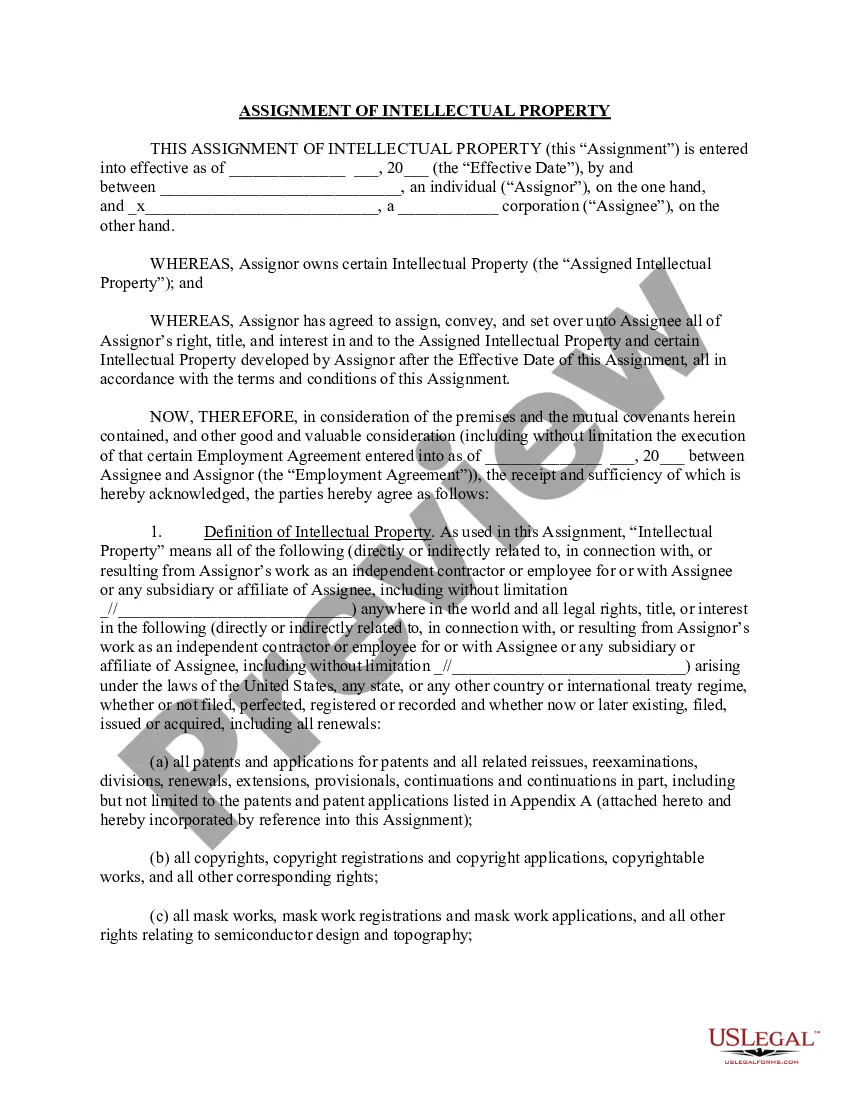
An IP assignment is a transfer of ownership of an intellectual property right, such as a patent, trade mark or copyright, from one party (the assignor) to another party (the assignee). This infographic adds together the benefits, risks and the key elements of assignment agreements.
The assignment of intellectual property (IP) refers to the process by which ownership of work product created for an entity by an employee or consultant is transferred to the entity.
A Founder's IP Assignment or Assignment of Intellectual Property Rights sets out the transfer of ownership between the seller and the buyer of a company's intellectual property. An Assignment of Intellectual Property Rights grants the buyer ownership and consequently the right to use the intellectual property.
The key difference between a license and an assignment is that an assignment transfers rights away from the original copyright or patent holder. Whereas the licensor retains ownership of the intellectual property rights, the assignor gives up the rights entirely.
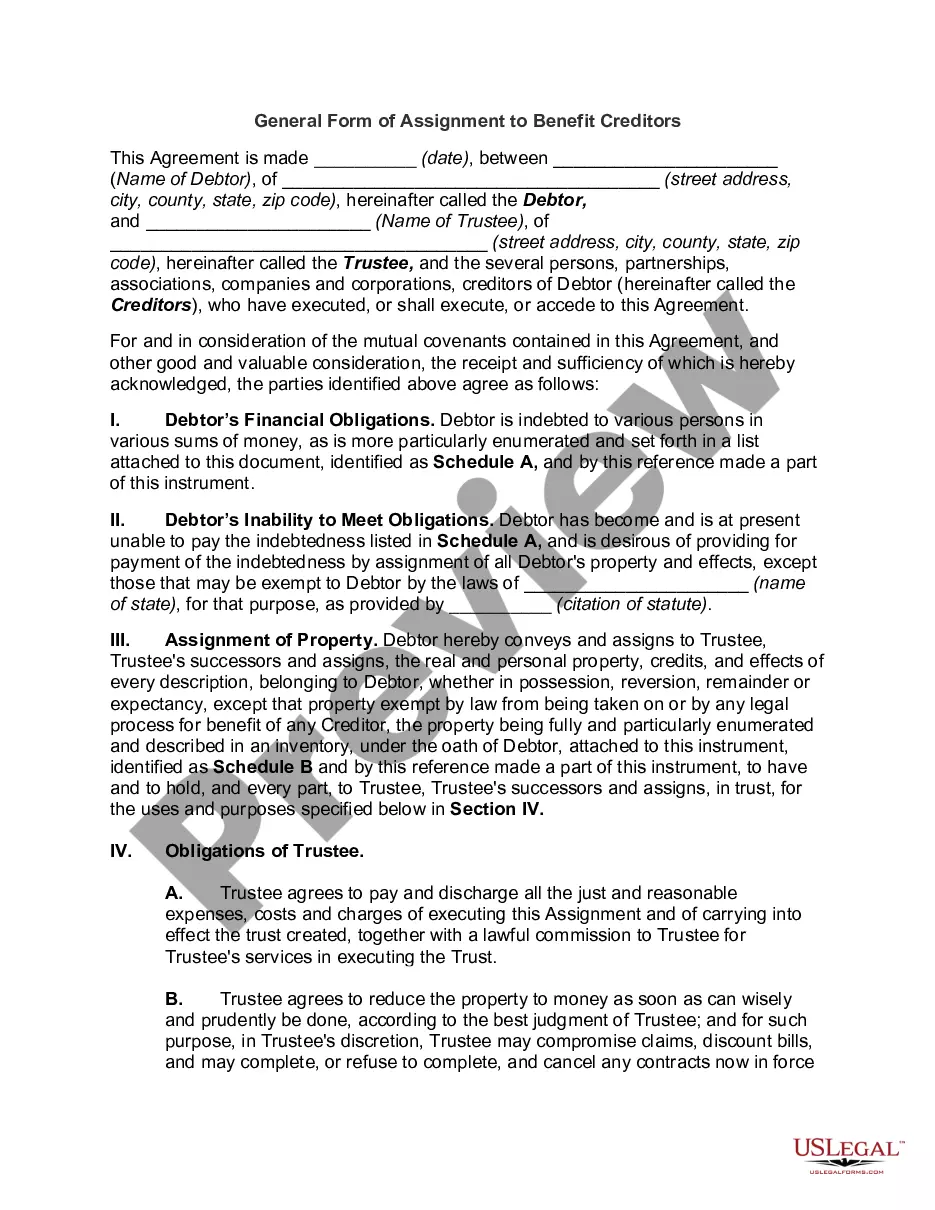
Under contract law, assignment of a contract is both: (1) an assignment of rights; and (2) a delegation of duties, in the absence of evidence otherwise. For example, if A contracts with B to teach B guitar for $50, A can assign this contract to C.
As a general rule, for works created after January 1, 1978, copyright protection lasts for the life of the author plus an additional 70 years.
The assignor is the party giving up its ownership interest and the assignee is the party receiving it. Recitals offer up key background information about the parties involved. This section is known as the whereas clause because it explains the intent to transfer intellectual property rights.