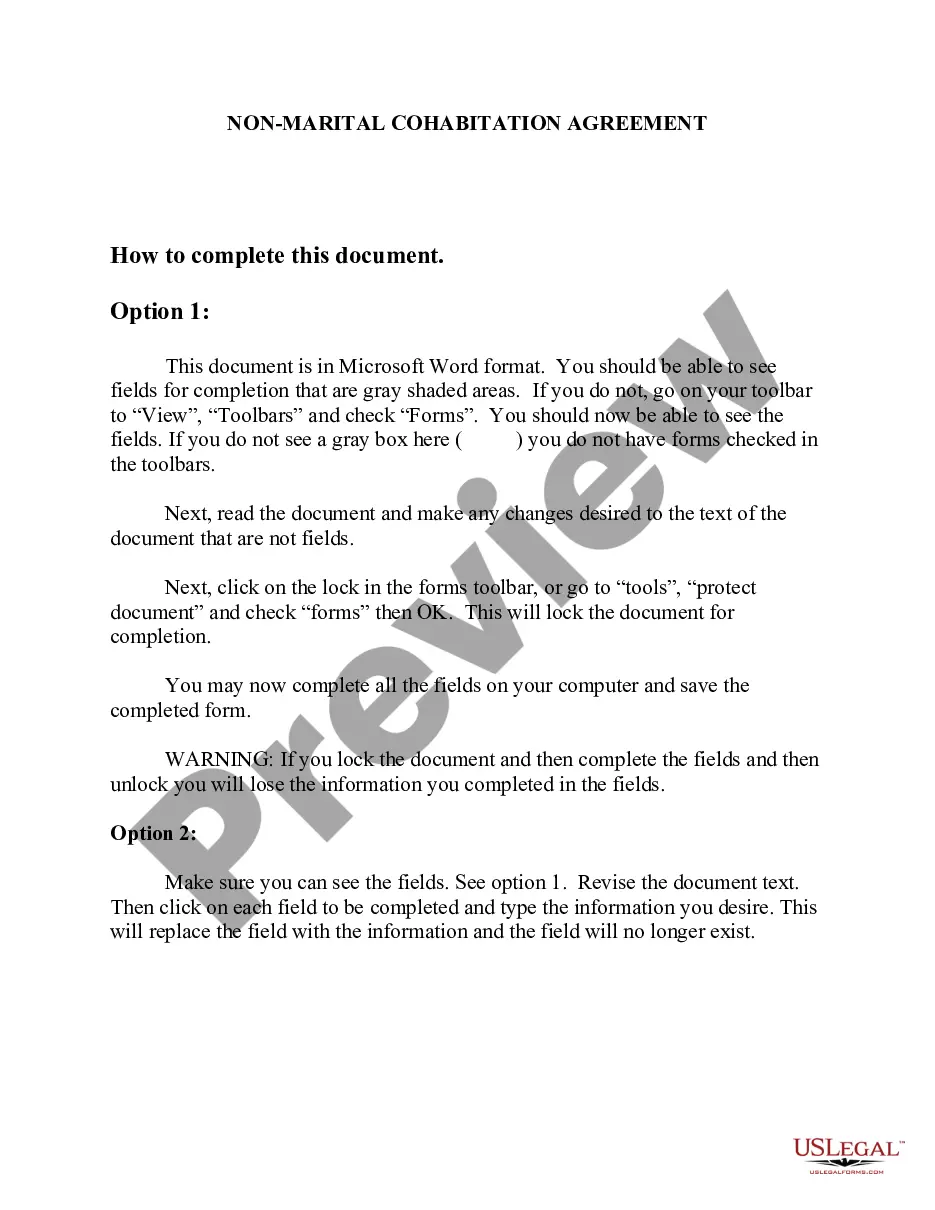
Checklist for Protecting Trade Secret Information
Overview of this form
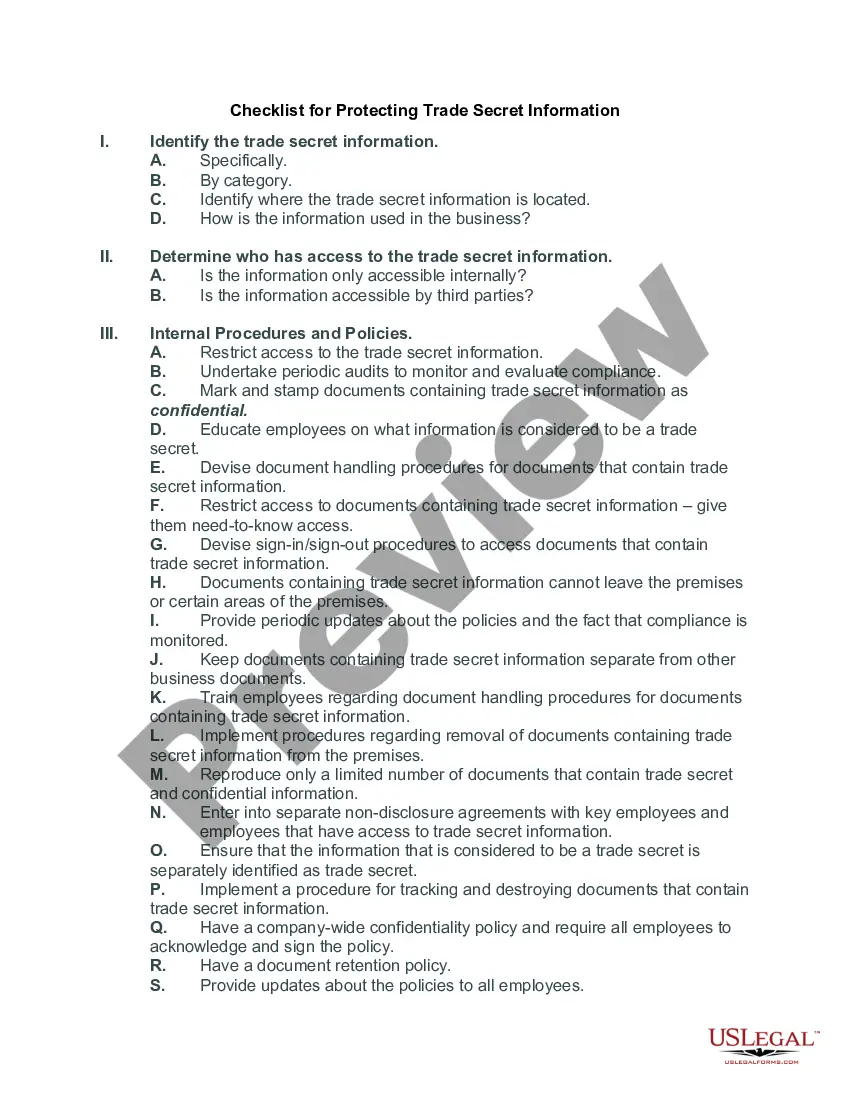
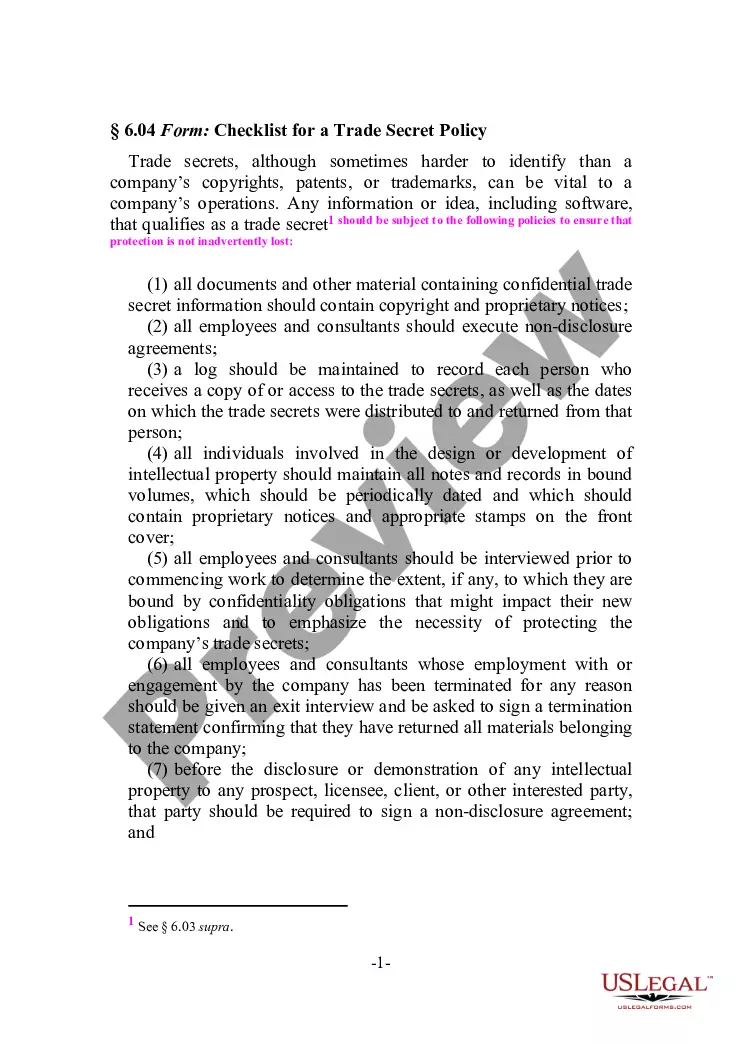
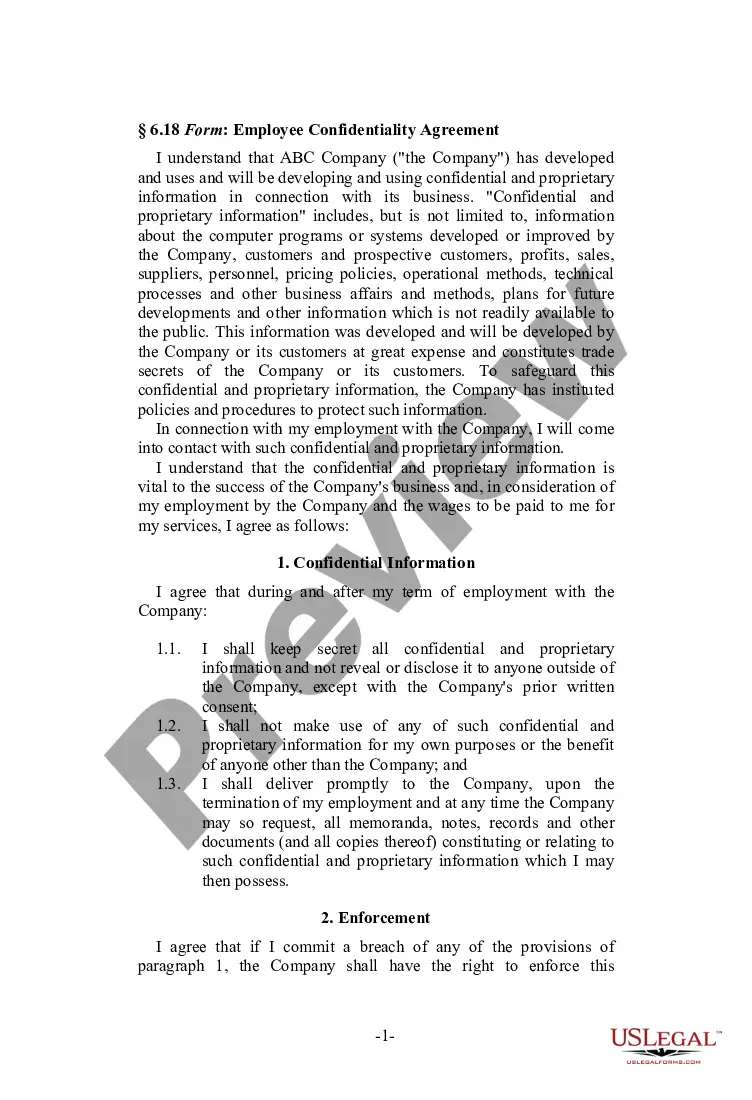
The Checklist for Protecting Trade Secret Information is a detailed guide that helps businesses identify and safeguard their trade secrets. This form provides a comprehensive approach to ensuring that critical proprietary information remains confidential and is not misused. By following this checklist, businesses can establish robust protections surrounding sensitive information, distinguishing it from standard business practices.
Key parts of this document
- Identification of trade secret information, including how it is categorized and where it is stored.
- Access determination to trade secrets, noting whether the information is shared internally or with third parties.
- Internal procedures to restrict access, audit compliance, and educate employees about trade secrets.
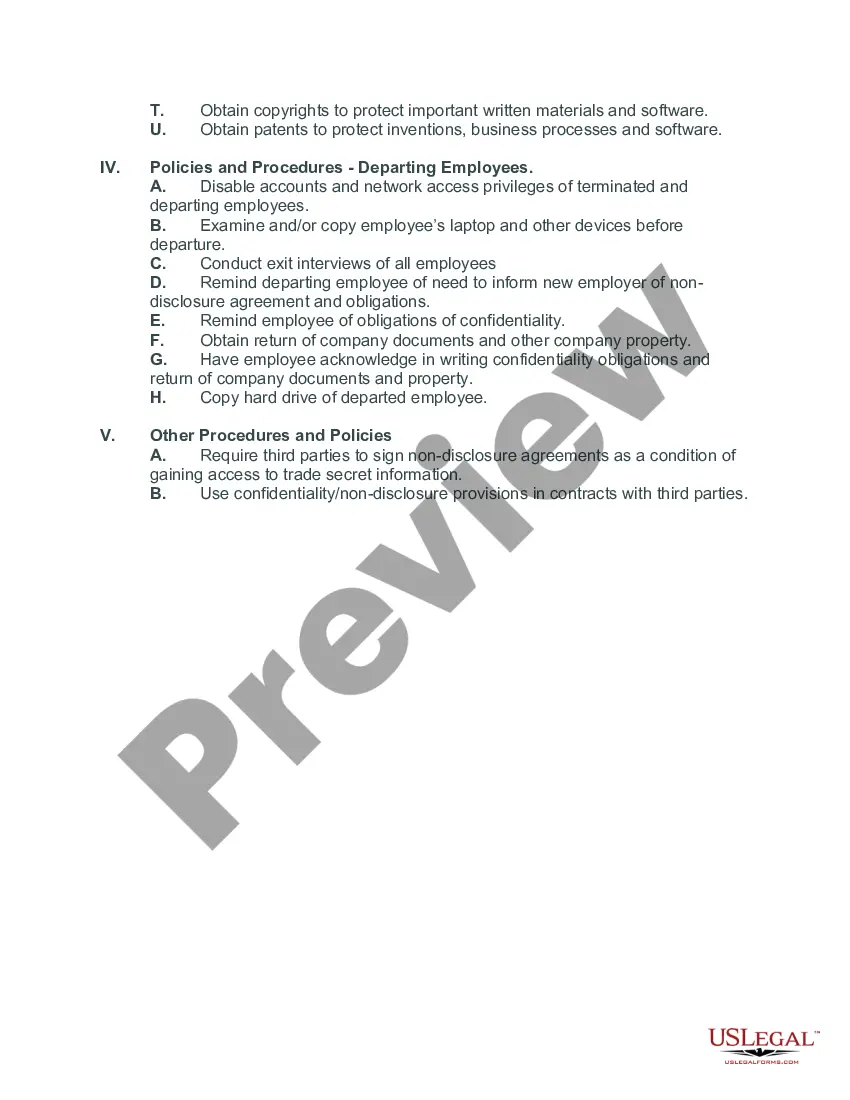
- Policies regarding departing employees, ensuring that access is revoked and confidential obligations are reiterated.
- Requirements for third parties to sign non-disclosure agreements to protect company secrets.

When to use this document
This form is useful when a business needs to protect confidential information that gives it a competitive advantage. Common scenarios include when developing new products, processes, or strategies, or when hiring employees who will have access to sensitive information. It is also essential when entering agreements with vendors or partners who may need to know trade secrets to provide services.
Who should use this form
- Business owners looking to safeguard their intellectual property.
- Human resources professionals ensuring compliance with confidentiality protocols.
- Managers responsible for handling sensitive business information.
- Legal professionals advising companies on trade secret protection.
Instructions for completing this form
- Identify the specific trade secret information and categorize it appropriately.
- Determine who in your organization has access to the trade secrets.
- Establish internal policies for document handling and employee education regarding trade secrets.
- Implement procedures for transitioning departing employees, focusing on confidentiality and the return of company property.
- Require third parties to acknowledge confidentiality agreements before sharing trade secret information.
Is notarization required?
This form does not typically require notarization unless specified by local law. Users should check local regulations to confirm any additional requirements.
Get your form ready online
Our built-in tools help you complete, sign, share, and store your documents in one place.
Make edits, fill in missing information, and update formatting in US Legal Forms—just like you would in MS Word.
Download a copy, print it, send it by email, or mail it via USPS—whatever works best for your next step.
Sign and collect signatures with our SignNow integration. Send to multiple recipients, set reminders, and more. Go Premium to unlock E-Sign.
If this form requires notarization, complete it online through a secure video call—no need to meet a notary in person or wait for an appointment.
We protect your documents and personal data by following strict security and privacy standards.

Make edits, fill in missing information, and update formatting in US Legal Forms—just like you would in MS Word.

Download a copy, print it, send it by email, or mail it via USPS—whatever works best for your next step.

Sign and collect signatures with our SignNow integration. Send to multiple recipients, set reminders, and more. Go Premium to unlock E-Sign.

If this form requires notarization, complete it online through a secure video call—no need to meet a notary in person or wait for an appointment.

We protect your documents and personal data by following strict security and privacy standards.
Common mistakes
- Failing to maintain up-to-date records of who has access to trade secrets.
- Not conducting regular audits of trade secret compliance.
- Neglecting to educate employees about what constitutes trade secret information.
- Omitting to create non-disclosure agreements with relevant third parties.
Why use this form online
- Convenient access to a comprehensive checklist that can be downloaded and modified easily.
- Reliable guidance drafted by licensed attorneys, ensuring legal compliance.
- Streamlined process to help businesses implement effective protections for their intellectual property.
Looking for another form?
Form popularity
FAQ
How to Protect Them. A Trade secret is information that is useful in the industry and that is kept confidential. It is information that imparts value to its holder and one that provides a competitive edge over its competitors.
Contrary to patents, trade secrets are protected without registration, that is, trade secrets require no procedural formalities for their protection. A trade secret can be protected for an unlimited period of time, unless it is discovered or legally acquired by others and disclosed to the public.
There are essentially four elements to the existence of a trade secret: (1) It must be original. (2) It must be commercially valuable information. (3) Not in the public area. (4) The subject of reasonable efforts to maintain it confidential.
No specific law protects trade secrets and confidential information in India.Action of misappropriation under common law can broadly protect trade secrets. Breach of obligation of confidence as well as third party accessing confidential information in an unauthorized manner can misappropriate trade secrets.
All trade secrets are confidential information but business information that may not rise to the level of a trade secret may also be deemed confidential within the company.
Your company's trade secrets in paper or electronic format should be accompanied by a confidentiality notice. Each page should be stamped Confidential. The notice should notify all parties that the document includes trade secrets and that access to the information is limited by your business.
Trade secrets are intellectual property (IP) rights on confidential information which may be sold or licensed.be subject to reasonable steps taken by the rightful holder of the information to keep it secret, including the use of confidentiality agreements for business partners and employees.
Identify What Needs Protection. Label Documents That Contain Protected Information. Monitor Where Information is Stored. Secure Computers. Maintain Secrecy With Outside Vendors. Provide Adequate Security. Limit Public Access to the Company.
Under U.S. law, trade secrets are protected by common law (unwritten judge-made law), state civil statutes and federal and state criminal statutes. Trade secret protection differs significantly from patent protection. Patent protection is available only for certain types of unique inventions, processes and designs.