Jury Instruction - Forfeiture
What is this form?
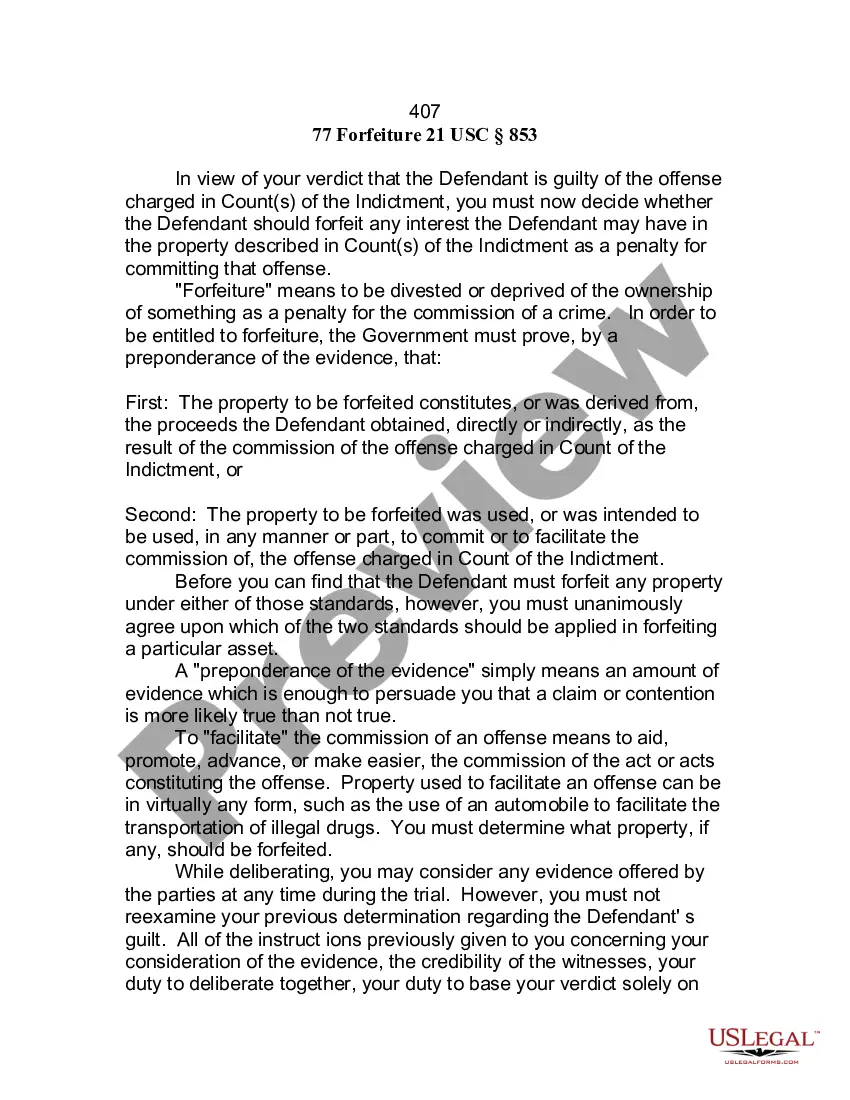
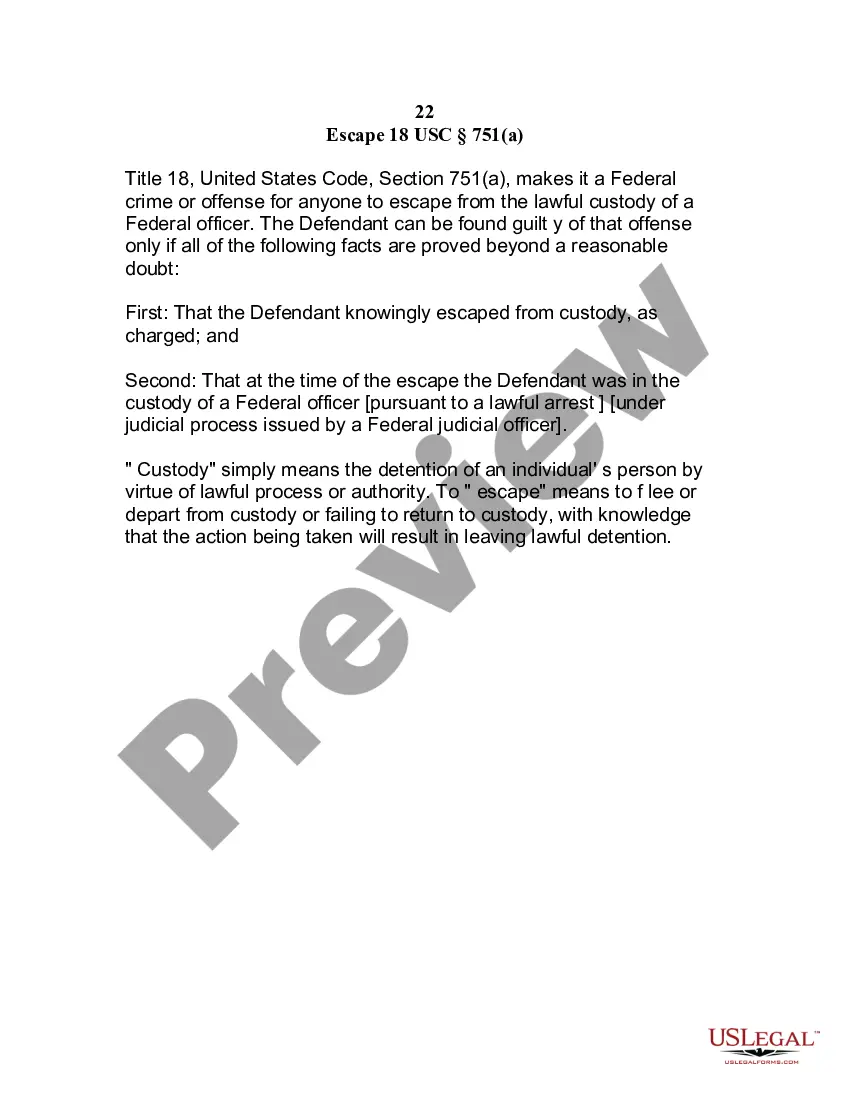
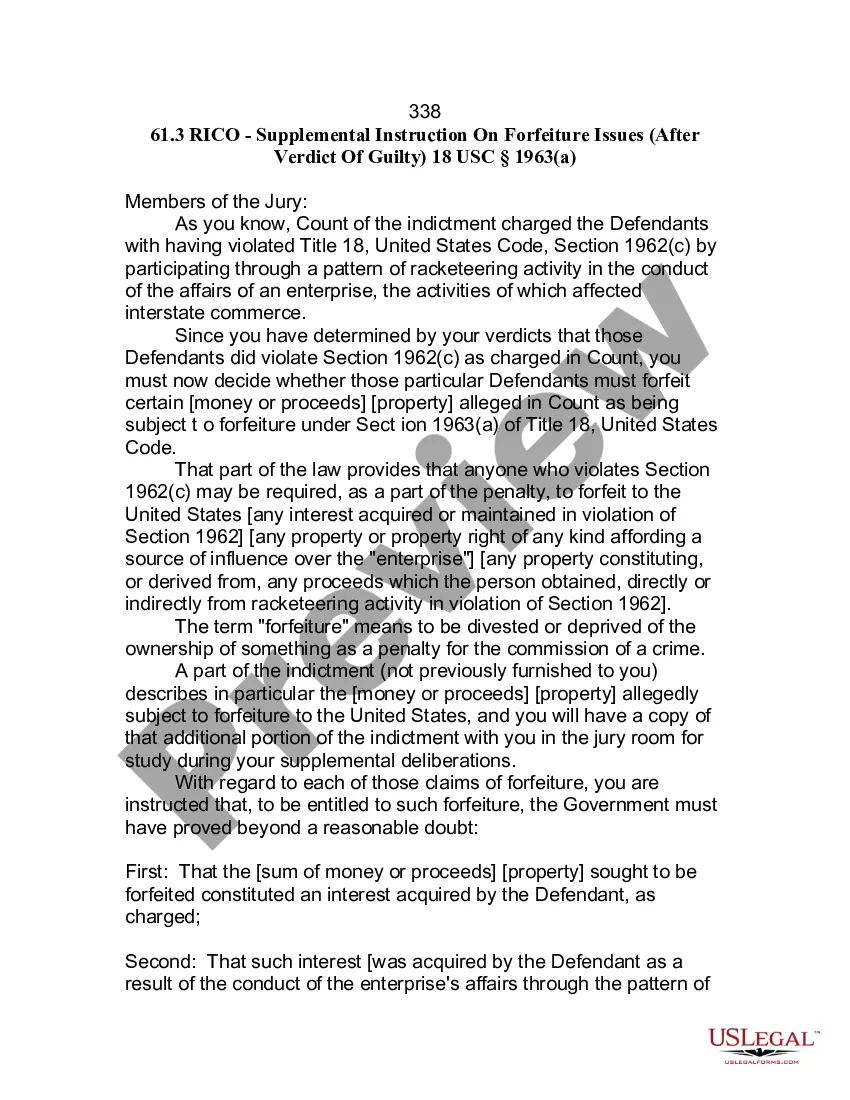
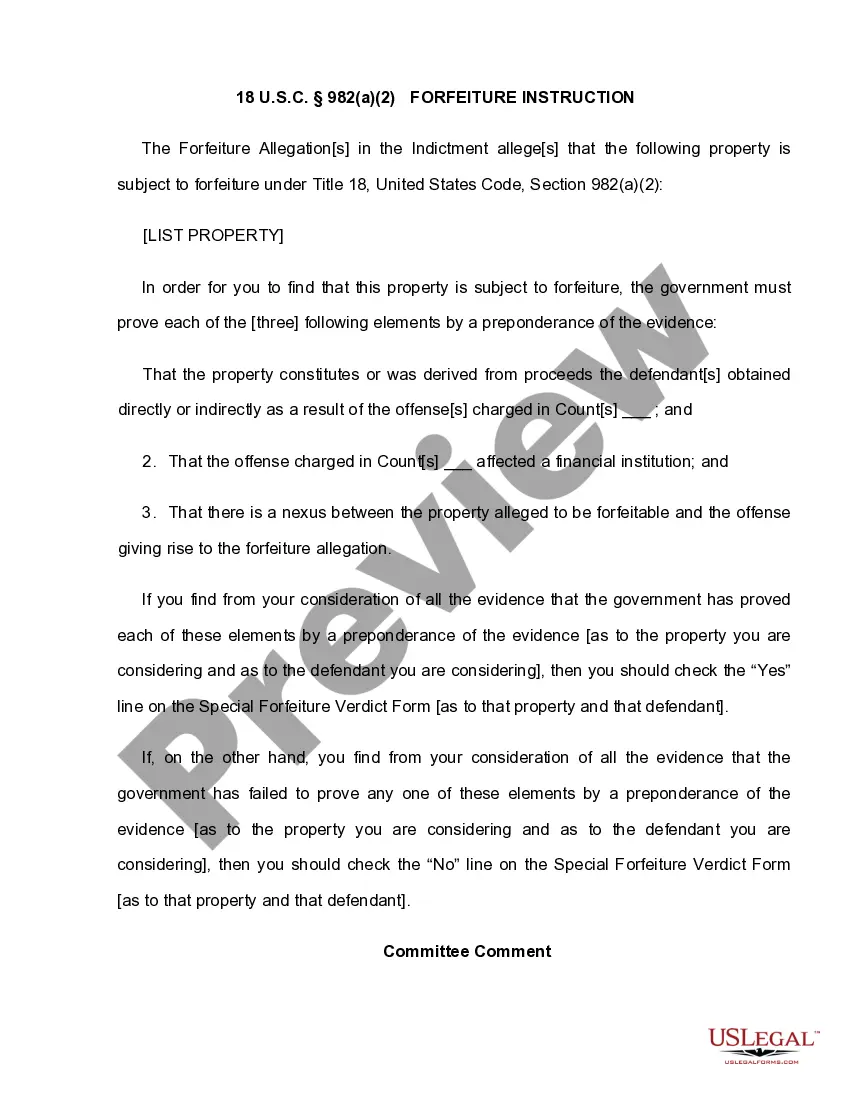
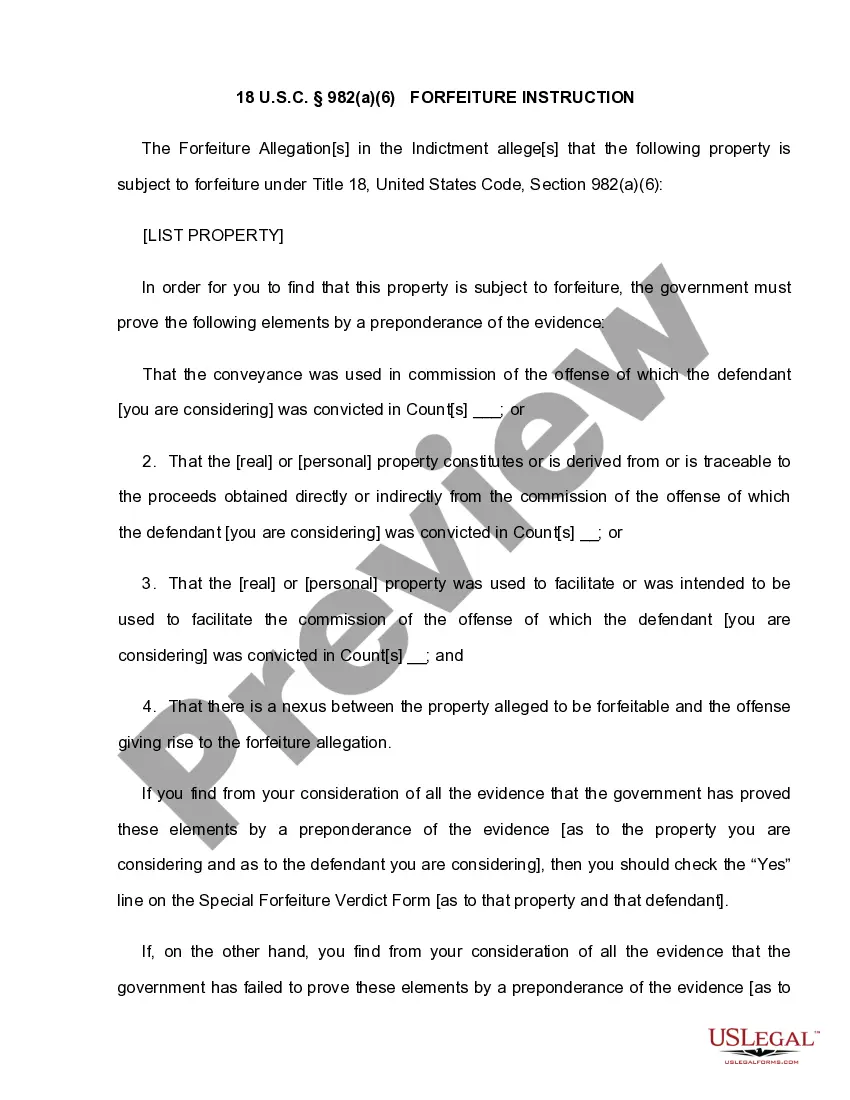
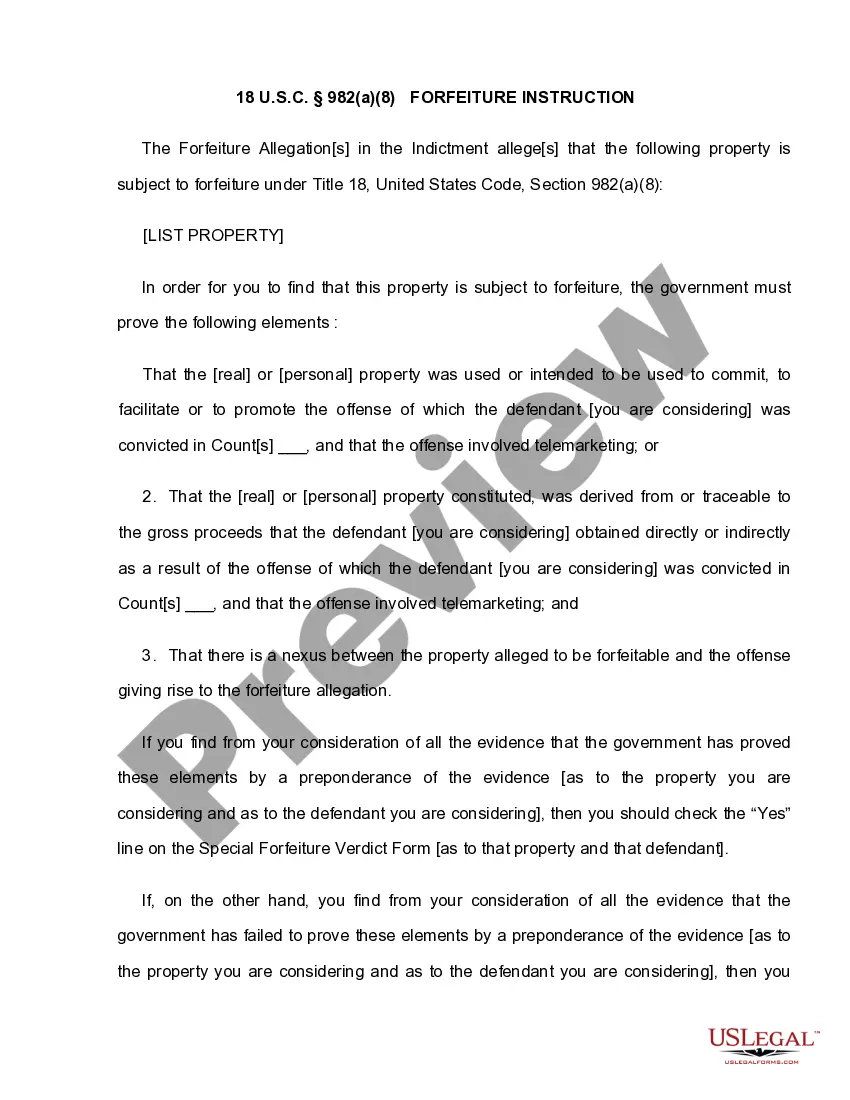
The Jury Instruction - Forfeiture is a legal document designed for jury members in criminal cases to provide guidelines on determining whether a defendant should forfeit property as a penalty for a crime. This form contains sample instructions to be adapted to fit the unique circumstances and evidence of each case, ensuring that the jury understands the legal standards required for forfeiture under 21 USC 853.
Key parts of this document
- Definition of forfeiture, outlining its implications for property ownership.
- Standards that the Government must meet to prove entitlement to forfeiture.
- Procedures for determining which standard to apply in specific cases.
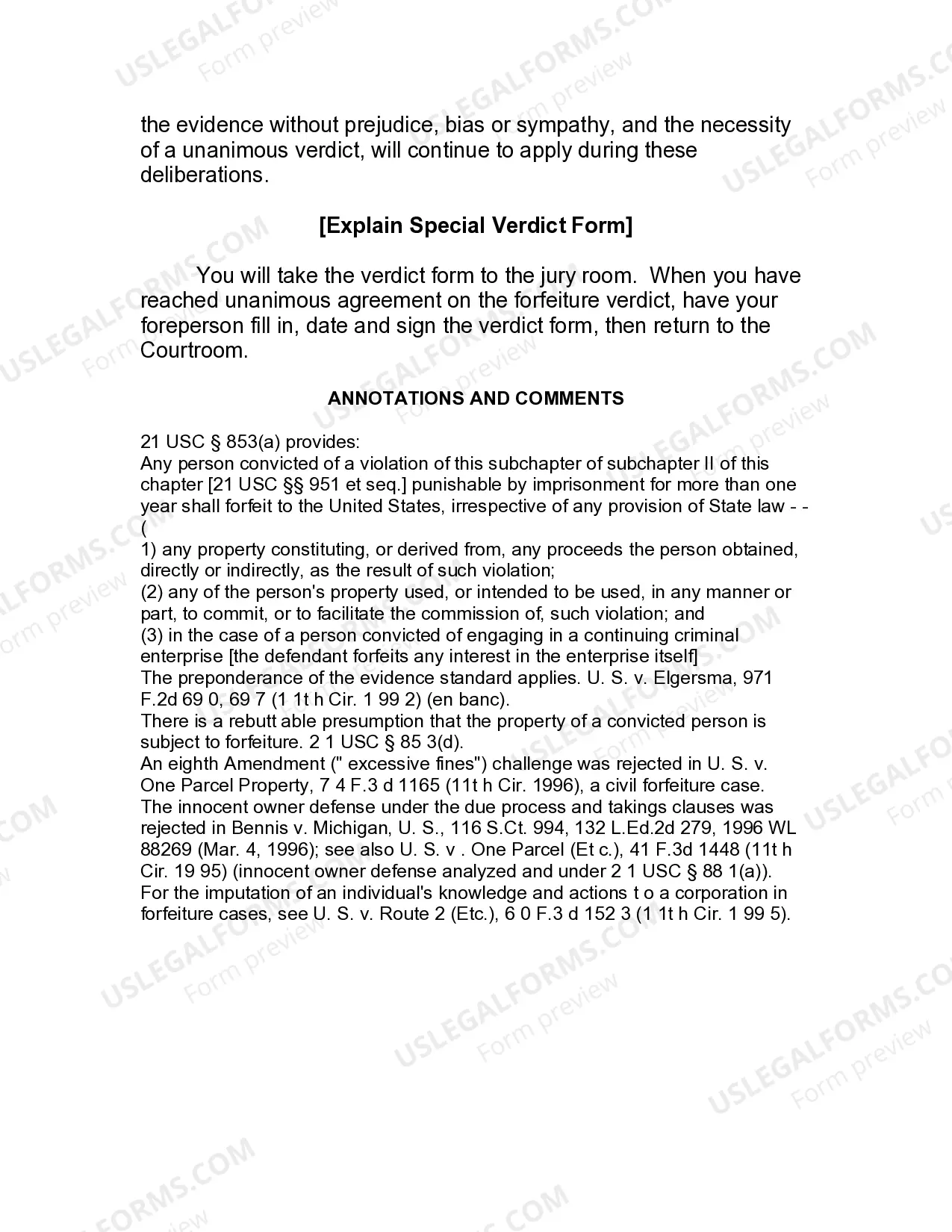
- Instructions for deliberation and the necessity of a unanimous verdict.
- Use of a special verdict form to document the jury's decision.
Situations where this form applies
This form is used during jury trials where the defendant has been found guilty of a crime that may involve property forfeiture. It is necessary when jurors need to determine if specific assets should be forfeited as part of the legal penalties associated with the defendant's conviction.
Who should use this form
- Jury members in criminal trials involving forfeiture issues.
- Attorneys representing clients in cases where property forfeiture may be pursued.
- Legal practitioners seeking a framework for instructing jurors on forfeiture determinations.
How to prepare this document
- Review the charges against the defendant as outlined in the indictment.
- Evaluate evidence presented during the trial regarding property involved.
- Deliberate with fellow jurors to come to a unanimous agreement on the applicable forfeiture standard.
- Complete and sign the special verdict form once a decision is reached.
- Return the signed form to the courtroom to present the forfeiture verdict.
Does this document require notarization?
This form does not typically require notarization to be legally valid. However, some jurisdictions or document types may still require it. US Legal Forms provides secure online notarization powered by Notarize, available 24/7 for added convenience.
Get your form ready online
Our built-in tools help you complete, sign, share, and store your documents in one place.
Make edits, fill in missing information, and update formatting in US Legal Forms—just like you would in MS Word.
Download a copy, print it, send it by email, or mail it via USPS—whatever works best for your next step.
Sign and collect signatures with our SignNow integration. Send to multiple recipients, set reminders, and more. Go Premium to unlock E-Sign.
If this form requires notarization, complete it online through a secure video call—no need to meet a notary in person or wait for an appointment.
We protect your documents and personal data by following strict security and privacy standards.

Make edits, fill in missing information, and update formatting in US Legal Forms—just like you would in MS Word.

Download a copy, print it, send it by email, or mail it via USPS—whatever works best for your next step.

Sign and collect signatures with our SignNow integration. Send to multiple recipients, set reminders, and more. Go Premium to unlock E-Sign.

If this form requires notarization, complete it online through a secure video call—no need to meet a notary in person or wait for an appointment.

We protect your documents and personal data by following strict security and privacy standards.
Common mistakes
- Failing to reach a unanimous decision regarding the forfeiture standard.
- Misunderstanding the definition of "preponderance of the evidence."
- Forgetting to consider all the evidence provided during the trial before making a decision.
Why complete this form online
- Convenience of downloading and accessing the form from anywhere.
- Easy customization to fit specific case details and legal requirements.
- Time-saving compared to drafting original documents from scratch.
Legal use & context
- This form serves as a guideline for jury members to follow in forfeiture cases under federal law.
- It ensures that jurors are properly informed of the rules governing forfeiture to make a legally sound decision.
Quick recap
- The Jury Instruction - Forfeiture form is essential for guiding jurors in forfeiture cases.
- It clarifies the standards for property forfeiture and the jurors' requirement for a unanimous verdict.
- Understanding the distinction between proceeds and facilitation is crucial for appropriate application of the law.
Looking for another form?

Form popularity
FAQ
Forfeiture is the loss of any property without compensation as a result of defaulting on contractual obligations, or as a penalty for illegal conduct.
Forfeiture refers to a loss of any property, money, or assets without consideration or compensation in return. A forfeiture generally occurs due to default in complying with repayment obligations under a contract. It can also be used as a penalty for an illegal way of conducting business.
1 : something forfeited or subject to being forfeited (as for a crime, offense, or neglect of duty) : penalty They were required to pay a forfeit. 2 : forfeiture especially of civil rights. 3a : something deposited (as for making a mistake in a game) and then redeemed on payment of a fine.
Forfeiture is a means for a landlord to terminate a lease, in the event of some default by the tenant.
California Health and Safety Code ? 11469-11495 allow local law enforcement agencies to seize property believed to be connected with controlled substances criminal activity.Your Claim Opposing Forfeiture (MC-200) must be filed in the county where the property was seized.
It is an in personam (against the person) action and requires that the government indict (charge) the property used or derived from the crime along with the defendant. If the jury finds the property forfeitable, the court issues an order of forfeiture.
1 : the loss of a right, money, or especially property because of one's criminal act, default, or failure or neglect to perform a duty compare waiver. 2 : something (as money or property) that is forfeited as a penalty.
Forfeiture is the loss of any property without compensation as a result of defaulting on contractual obligations, or as a penalty for illegal conduct.When mandated by law, as a punishment for illegal activity or prohibited activities, forfeiture proceedings may be either criminal or civil.
Updated October 16, 2020 Asset forfeiture is when the government takes a person's property because it suspects the property was used in committing a crime or was obtained by way of criminal activity. California's asset forfeiture laws can be used to seize most types of property, including: houses, boats, cars, and