Sample Letter for Witness Verification
What this document covers
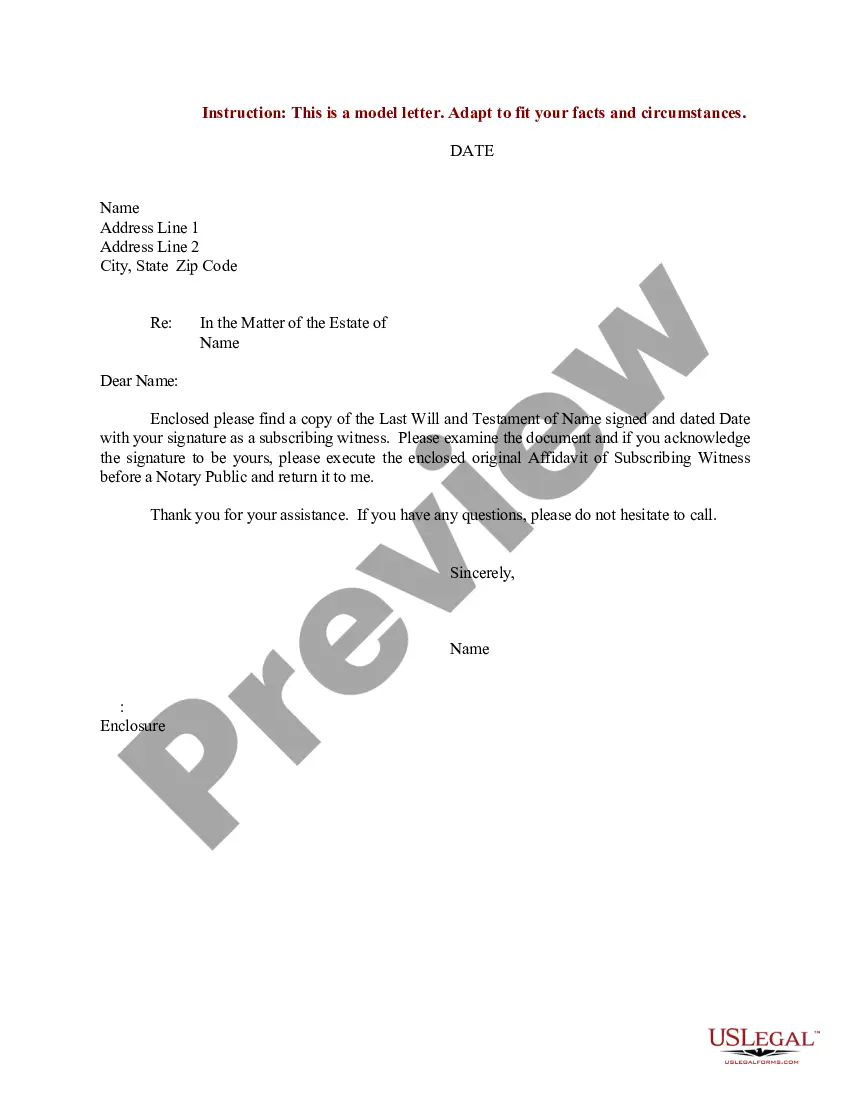
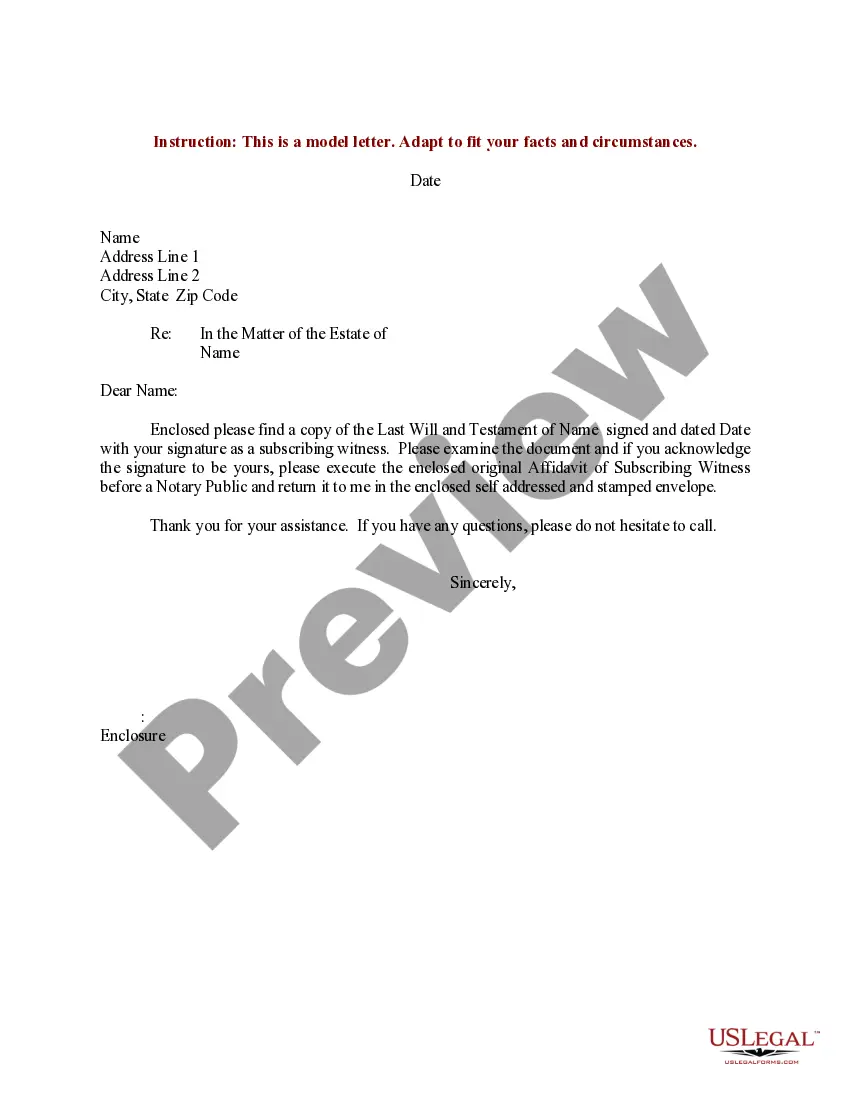
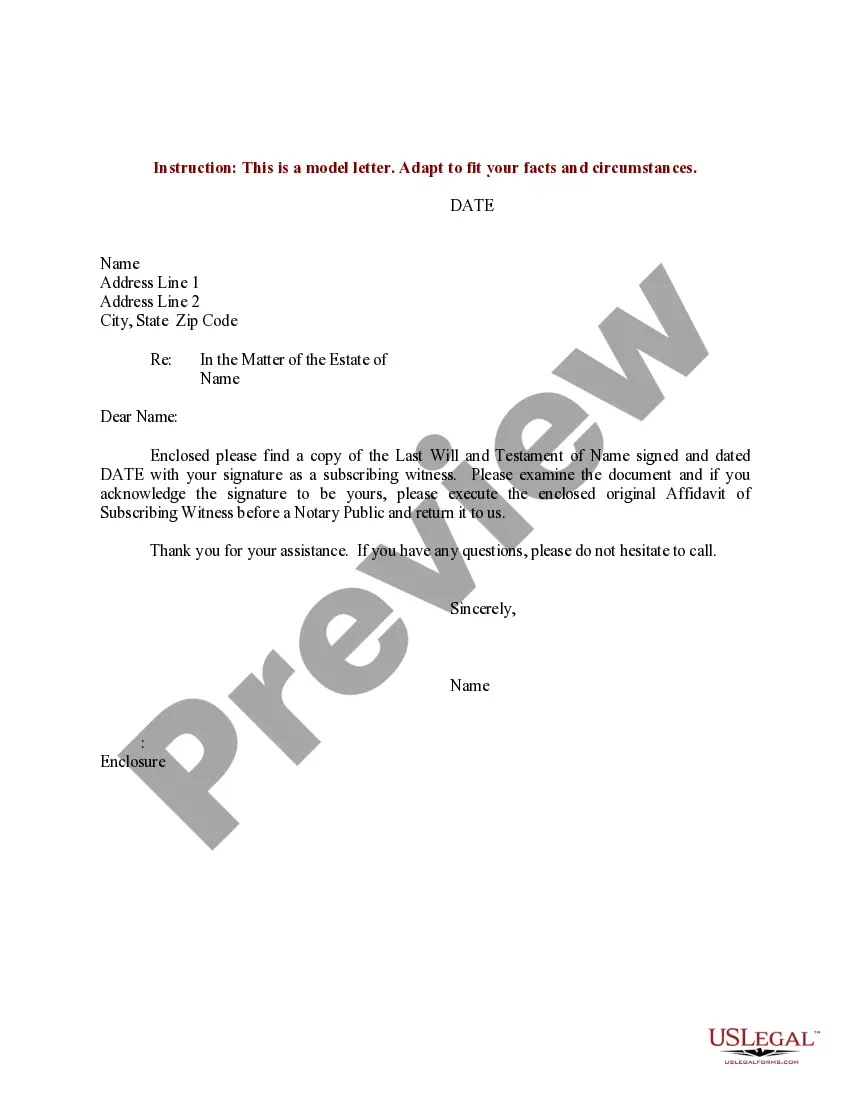
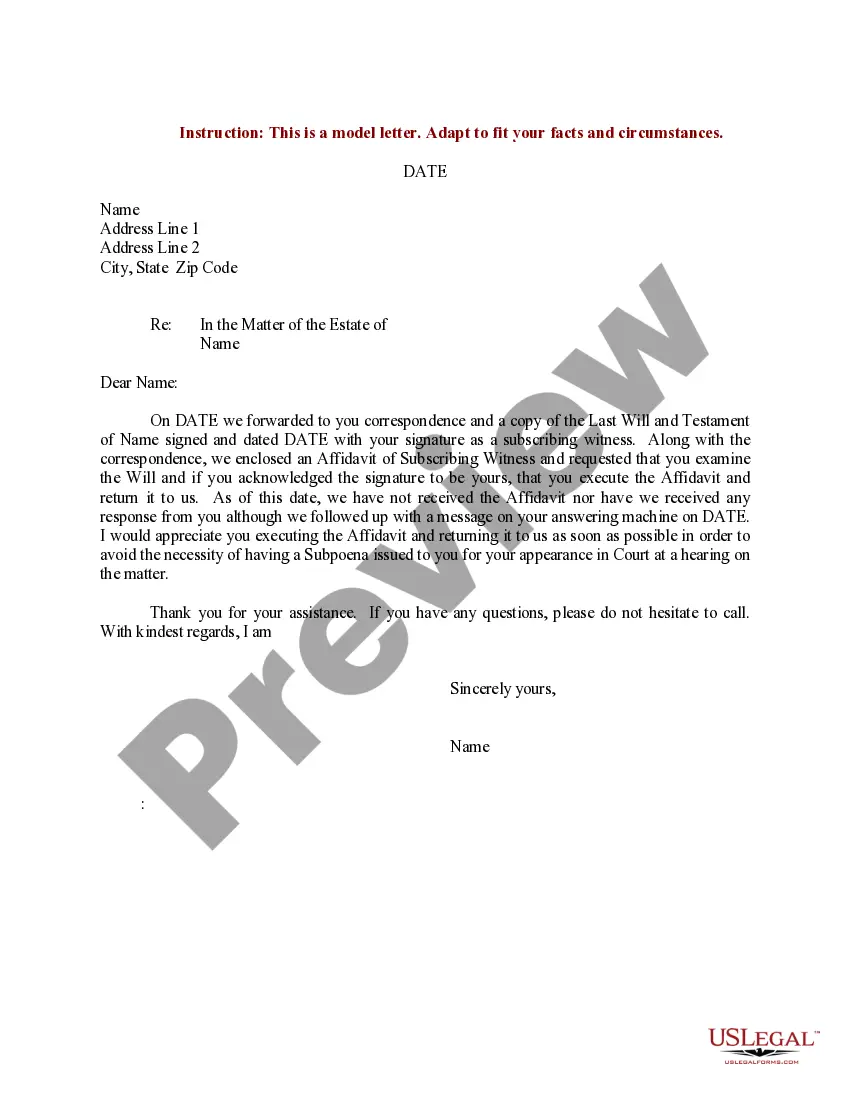
The Sample Letter for Witness Verification is a template designed to assist individuals in formally acknowledging their role as subscribing witnesses to a Last Will and Testament. This letter serves as a clear communication tool to confirm the authenticity of the witness's signature, making it distinct from other legal forms, such as the Last Will and Testament itself or affidavits. It streamlines the verification process, ensuring legal proceedings regarding the estate can continue smoothly.
Key parts of this document
- Date: The date when the letter is written.
- Recipient's name and address: Information about the witness receiving the letter.
- Subject line: Reference to the estate matter.
- Last Will and Testament reference: Details regarding the will being verified.
- Request for acknowledgment: Instructions for the witness to sign the affidavit.
- Contact information: A way for the witness to reach out if they have questions.
Situations where this form applies
This form is particularly useful when there is a need to validate the signature of a witness on a Last Will and Testament. Scenarios may include estate administration, when the deceasedâs wishes need to be confirmed, or when there are disputes regarding the validity of the will. It helps facilitate a smooth transition of the estate by ensuring all parties have acknowledged their roles and responsibilities legally.
Who this form is for
- Executors or administrators of an estate.
- Attorneys involved in estate planning or administration.
- Witnesses who need to verify their signatures on a legal document.
- Individuals handling the affairs of a deceased loved one.
How to complete this form
- Start with the date at the top of the letter.
- Fill in the name and address of the witness receiving the letter.
- Clearly state the subject of the letter, referencing the estate in question.
- Include information about the Last Will and Testament, specifying the names and dates relevant to the document.
- Request the witness to sign the enclosed affidavit before a Notary Public and return it.
- Provide your contact information for any follow-up questions.
Does this document require notarization?
Yes, this form must be notarized to be legally valid. The witnessâs signature on the Affidavit of Subscribing Witness should be executed before a Notary Public to ensure its authenticity. US Legal Forms offers integrated online notarization services, allowing you to complete this process securely via video call at your convenience.
Get your form ready online
Our built-in tools help you complete, sign, share, and store your documents in one place.
Make edits, fill in missing information, and update formatting in US Legal Forms—just like you would in MS Word.
Download a copy, print it, send it by email, or mail it via USPS—whatever works best for your next step.
Sign and collect signatures with our SignNow integration. Send to multiple recipients, set reminders, and more. Go Premium to unlock E-Sign.
If this form requires notarization, complete it online through a secure video call—no need to meet a notary in person or wait for an appointment.
We protect your documents and personal data by following strict security and privacy standards.

Make edits, fill in missing information, and update formatting in US Legal Forms—just like you would in MS Word.

Download a copy, print it, send it by email, or mail it via USPS—whatever works best for your next step.

Sign and collect signatures with our SignNow integration. Send to multiple recipients, set reminders, and more. Go Premium to unlock E-Sign.

If this form requires notarization, complete it online through a secure video call—no need to meet a notary in person or wait for an appointment.

We protect your documents and personal data by following strict security and privacy standards.
Common mistakes to avoid
- Failing to include the correct date of the letter.
- Not providing clear instructions for returning the signed affidavit.
- Omitting the witnessâs full name and address.
- Using vague language that may confuse the witness regarding their role.
Benefits of completing this form online
- Easy access to a professionally crafted legal template at any time.
- Editable format allows for customization to meet specific legal needs.
- Downloadable and print-friendly for convenient use in legal processes.
Legal use & context
- Used to validate a Last Will and Testament by confirming the identity of the witness.
- Helps prevent challenges to the will based on authenticity.
- Ensures compliance with probate requirements in most states.
Key takeaways
- The Sample Letter for Witness Verification is essential for validating a will.
- Ensure all components are accurately filled to avoid potential legal issues.
- It is crucial for witnesses to verify their signatures to uphold the willâs validity.
Looking for another form?


Form popularity
FAQ
Begin the document by writing the full legal name, complete address, and the occupation of the witness giving the statement. Number the paragraphs and make sure that each paragraph has an idea or fact in it. Ask the witness to affix his signature on the last page along with the date he signed the document.
If you are making a witness statements it should: be written in your own words, in the first person. state facts within your personal knowledge, and if not. specify the source of the information or belief is not within your direct knowledge.
It should contain all of the evidence that you want the court to have about the case and the reasons why you want the judge to make certain orders or directions. A witness statement should be factual and state what was seen, heard or felt by the person writing the statement.
Start with the name of the case and the claim number; State the full name and address of the witness; Set out the witness's evidence clearly in numbered paragraphs on numbered pages; End with this paragraph: 'I believe that the facts stated in this witness statement are true. ' and. be signed by the witness and dated.
Your name, address and contact number. The exact time and location where the crime took place. Names and addresses of the people involved, if you know them.
Explain the nature and theory of the case to the witness; Explain the significance of the witness's anticipated testimony in relation to the entire case; Review any evidence the witness will testify to or about; Make certain the witness knows to tell the truth at all times;
First, write down the name of the case and the claim number. Below that, write down your full name and address. Address the letter to Your Honor: or Dear Honorable Judge: In your introduction, you can state some general facts about yourself like name, age, occupation.
Be brief and straightforward, providing only the information requested or required. Information such as company names, job and course titles etc, should be formally noted. Offer to provide further information if required. Sign the letter to further verify the information.