Iowa Commercial Contract for Contractor

What this document covers
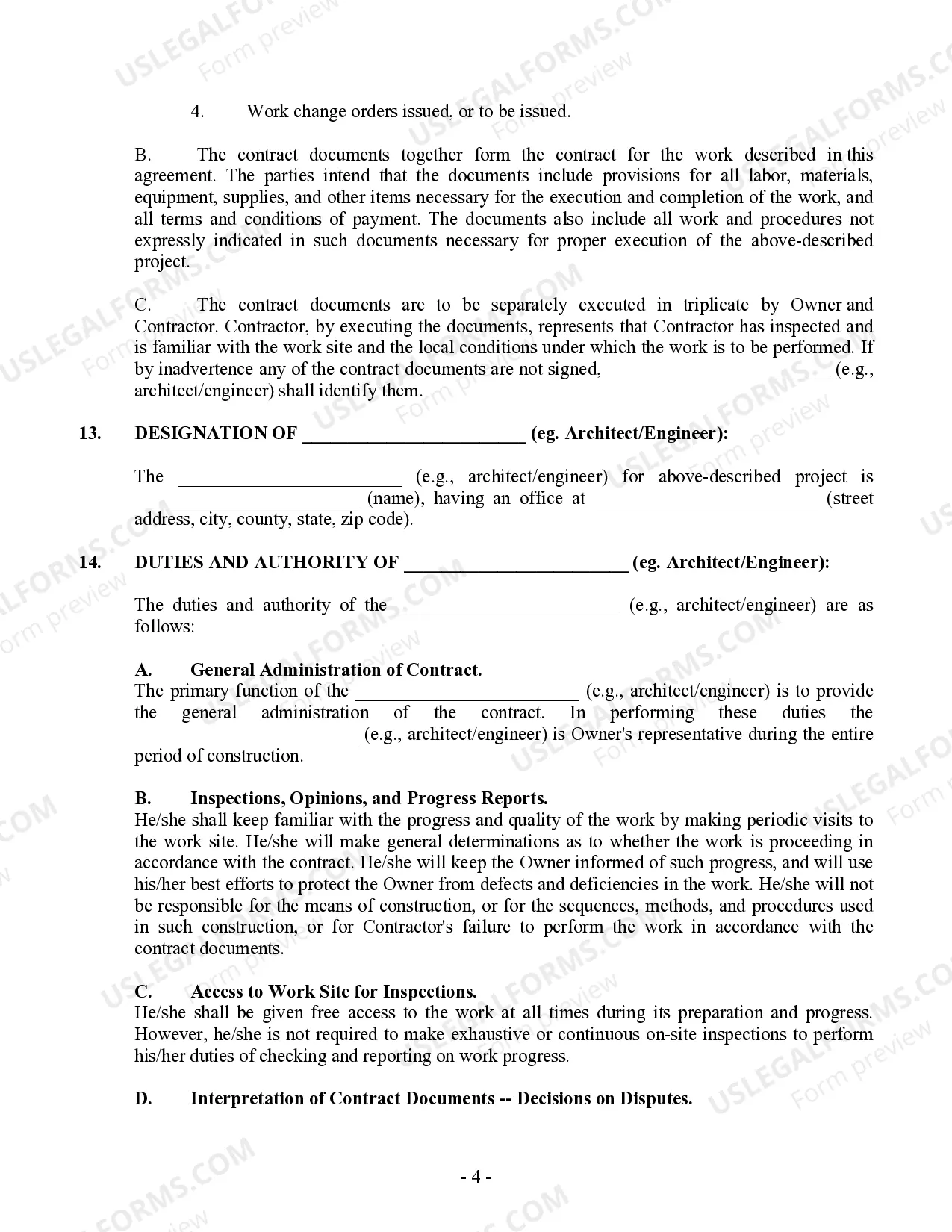
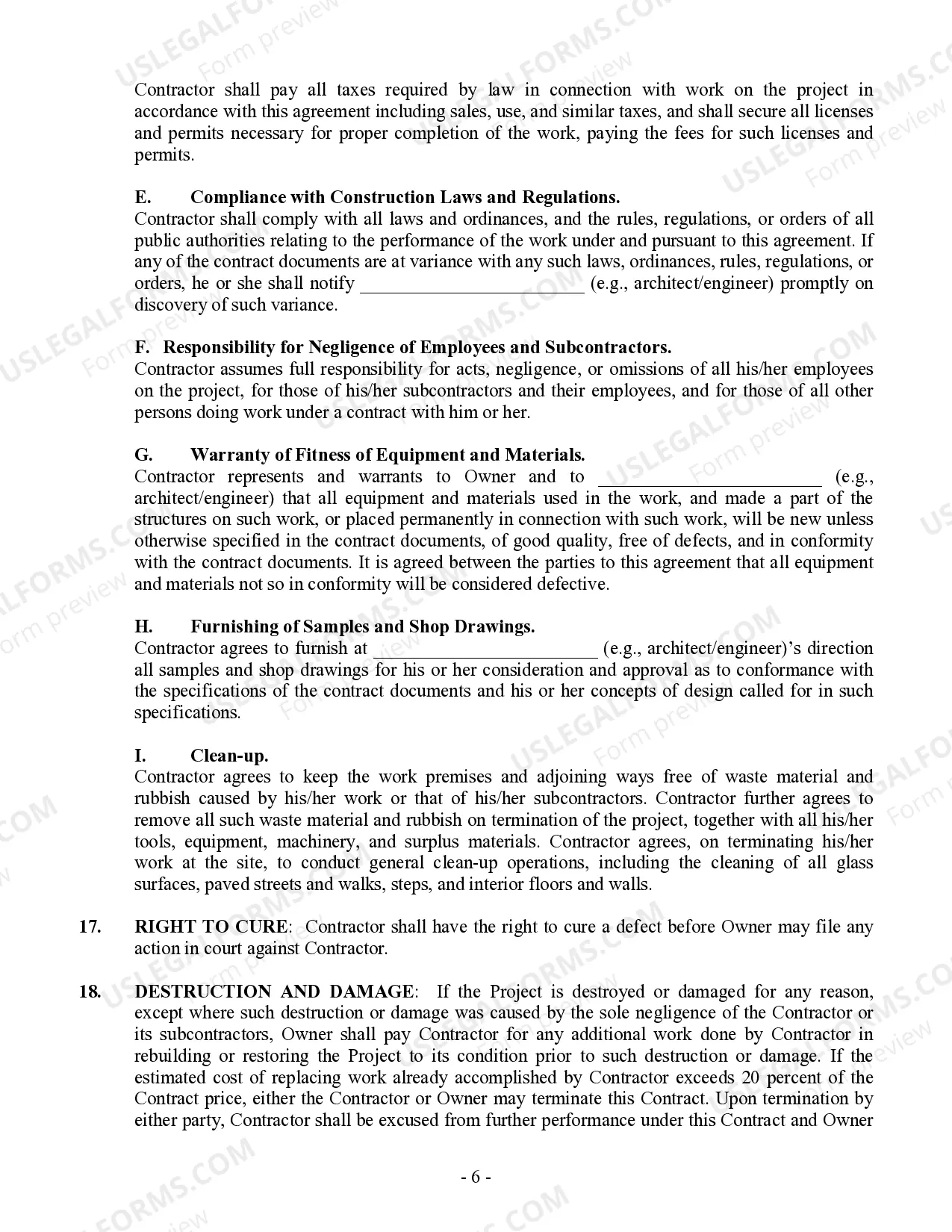
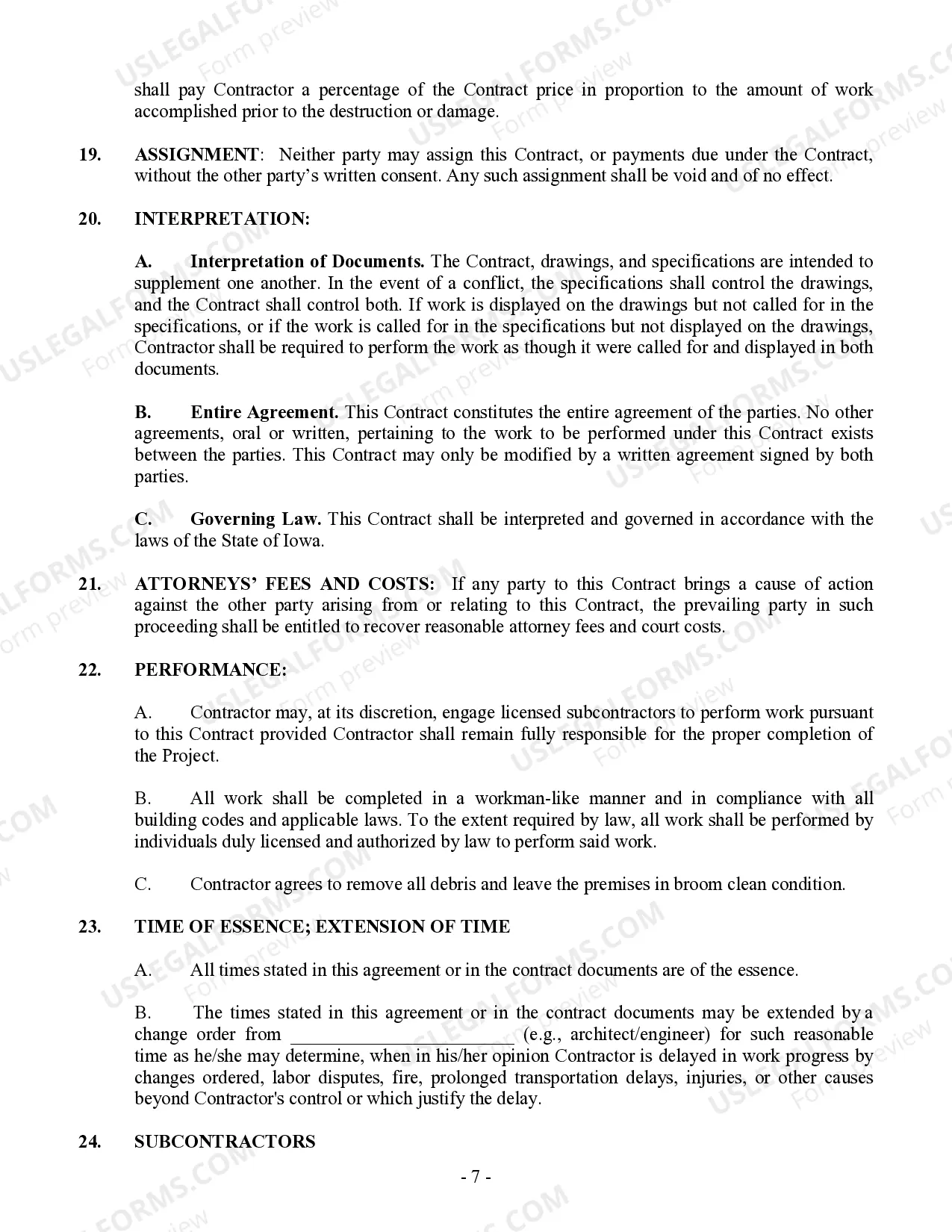
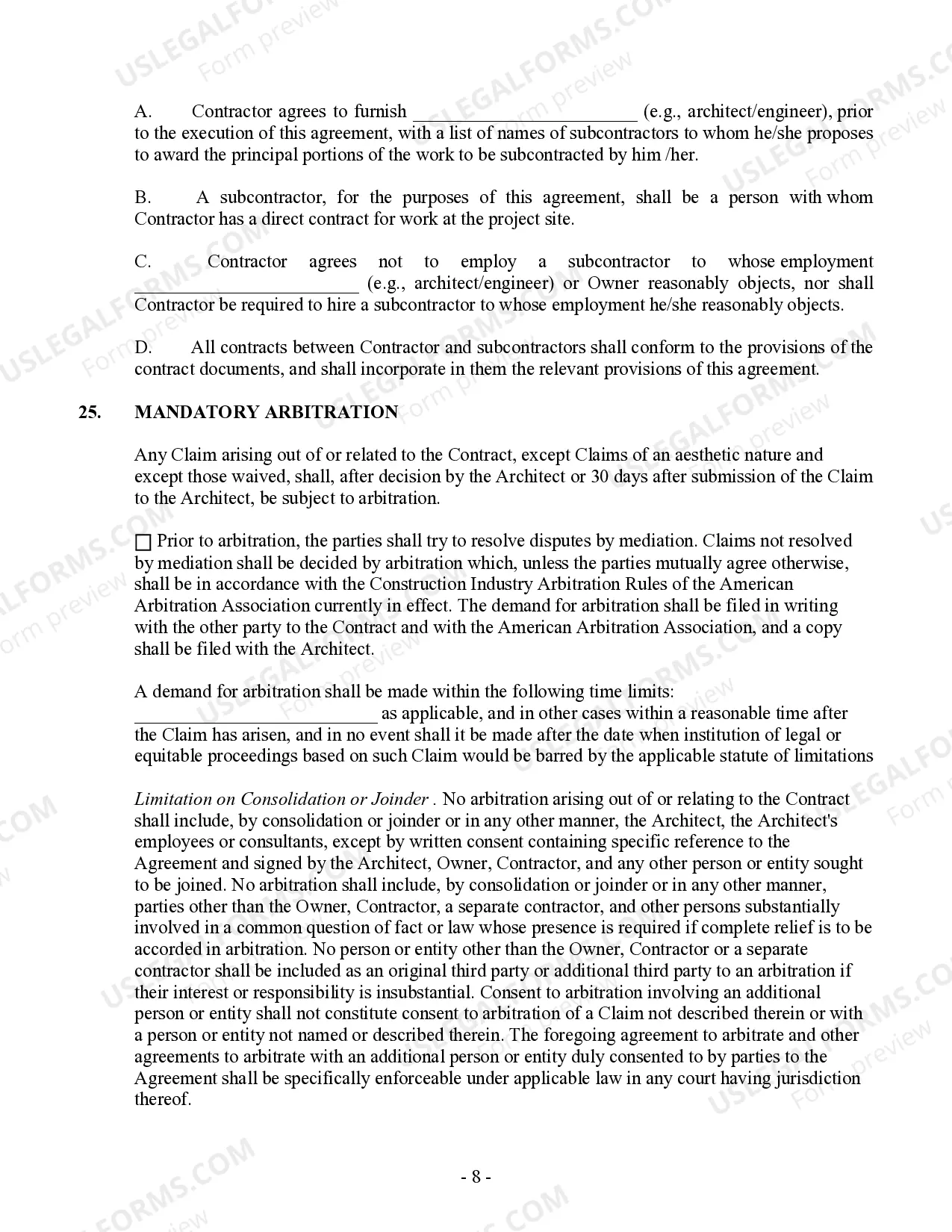
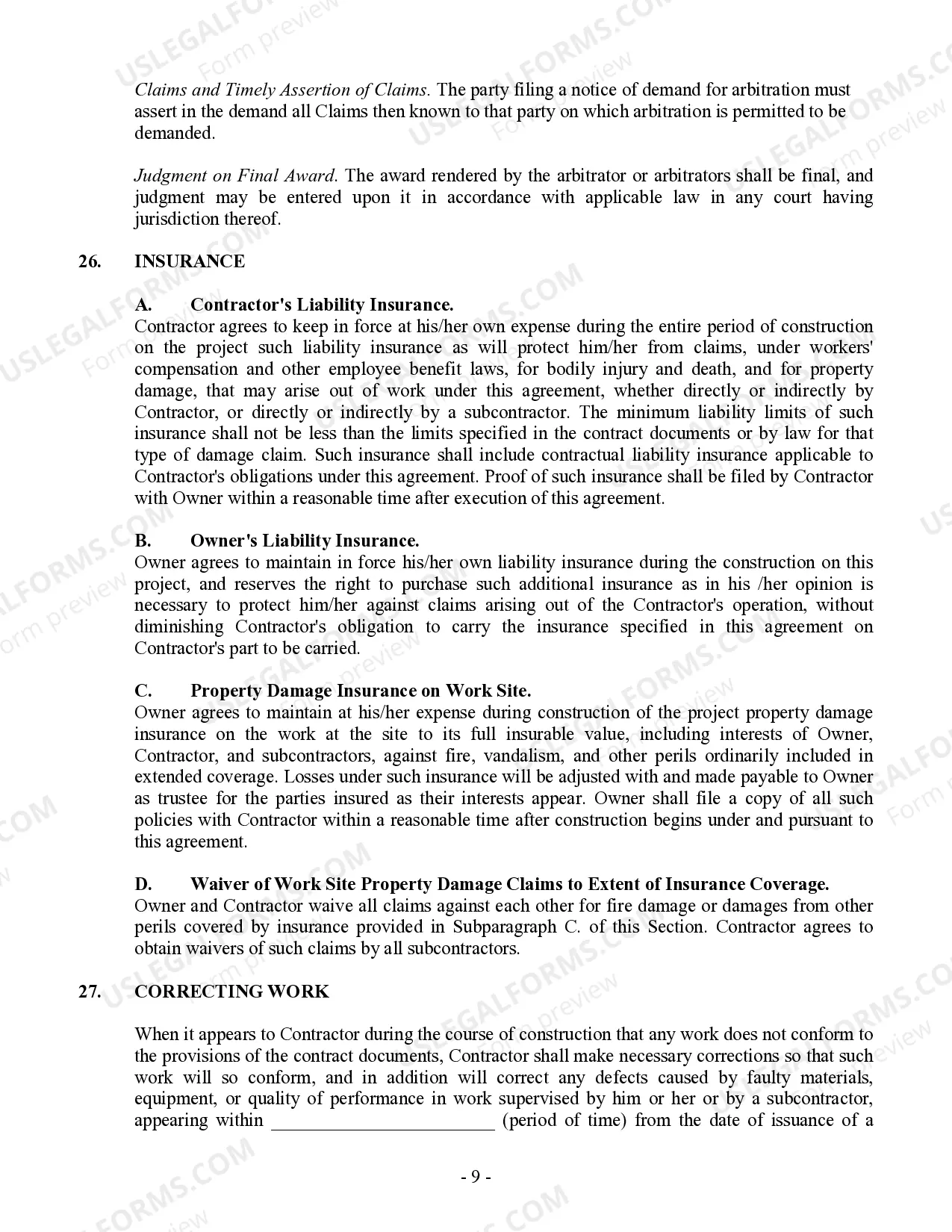
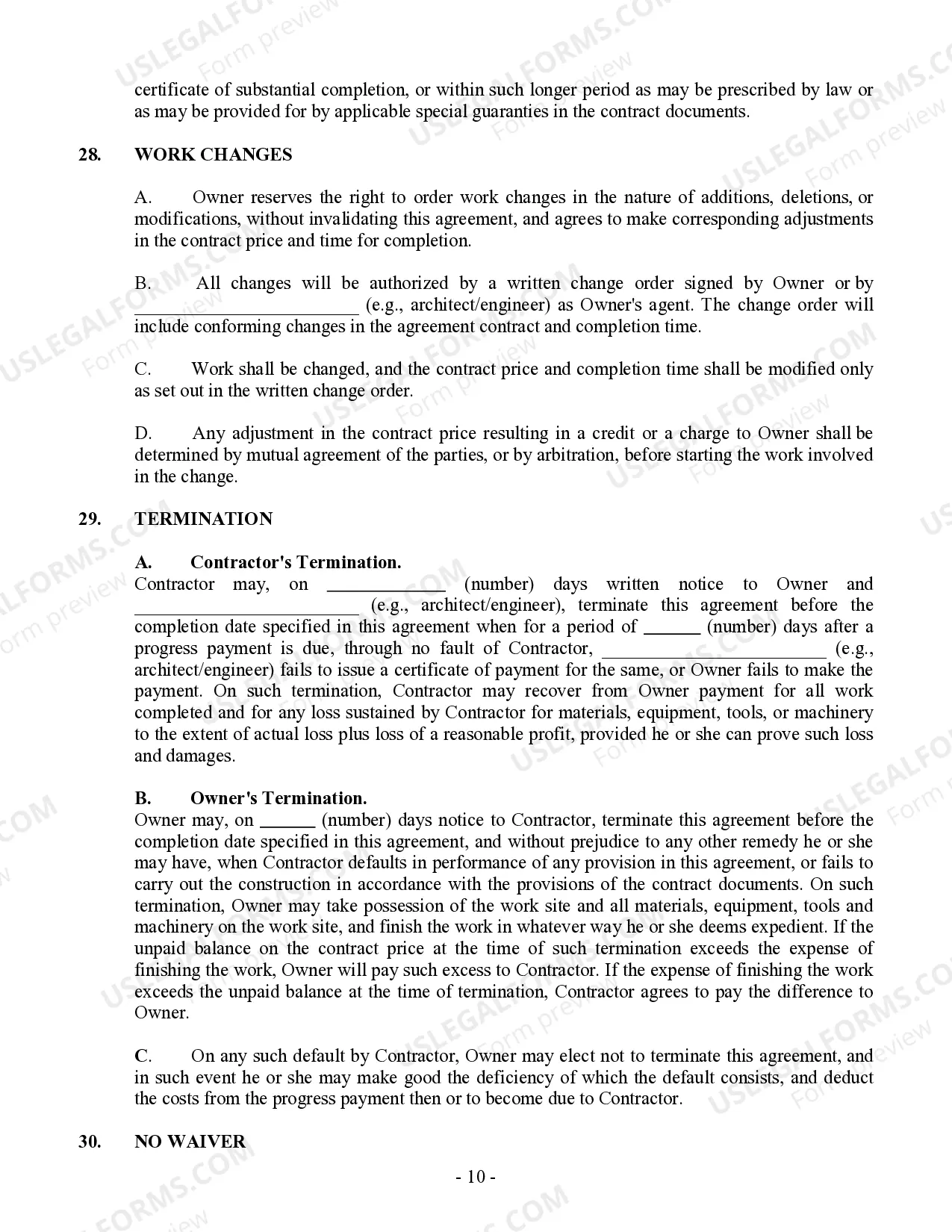
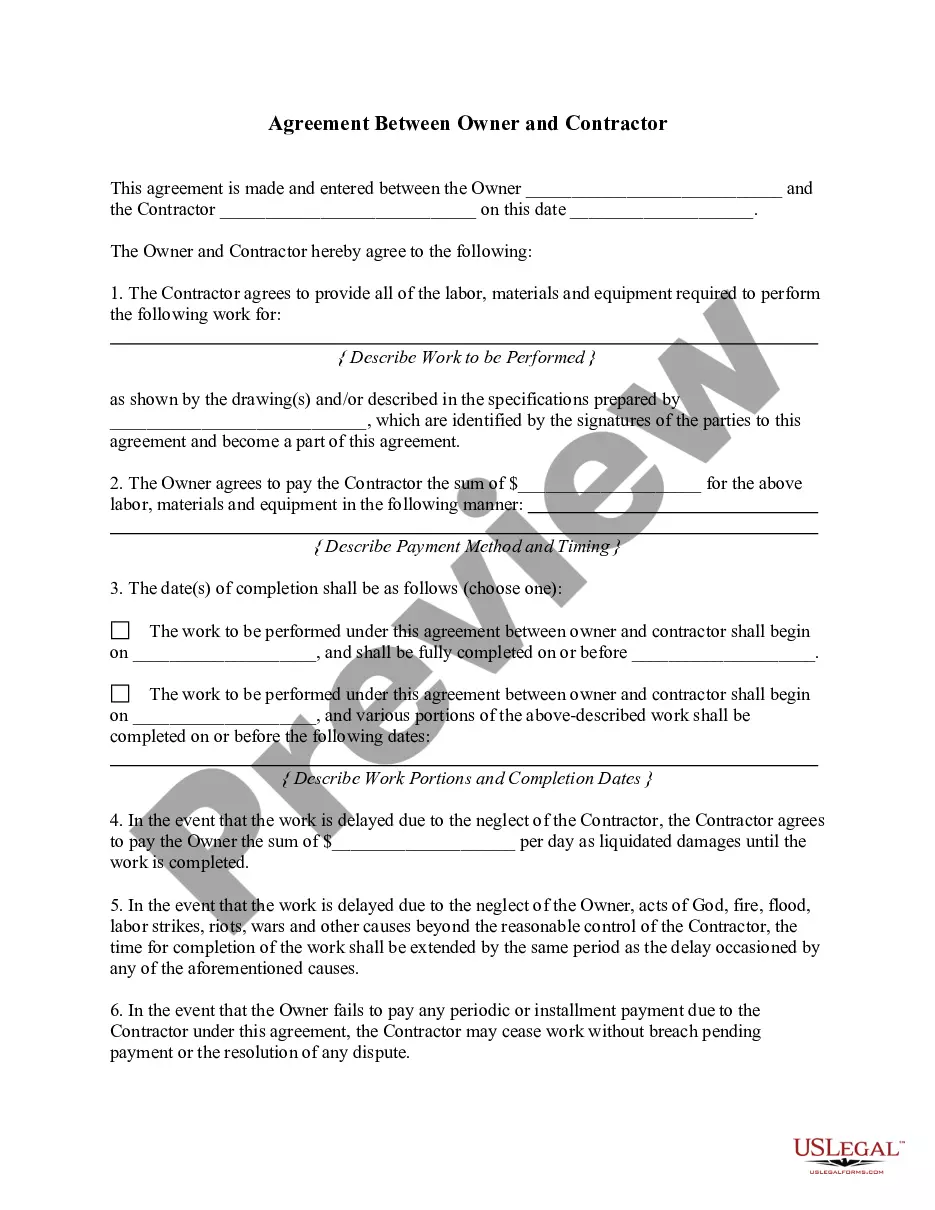
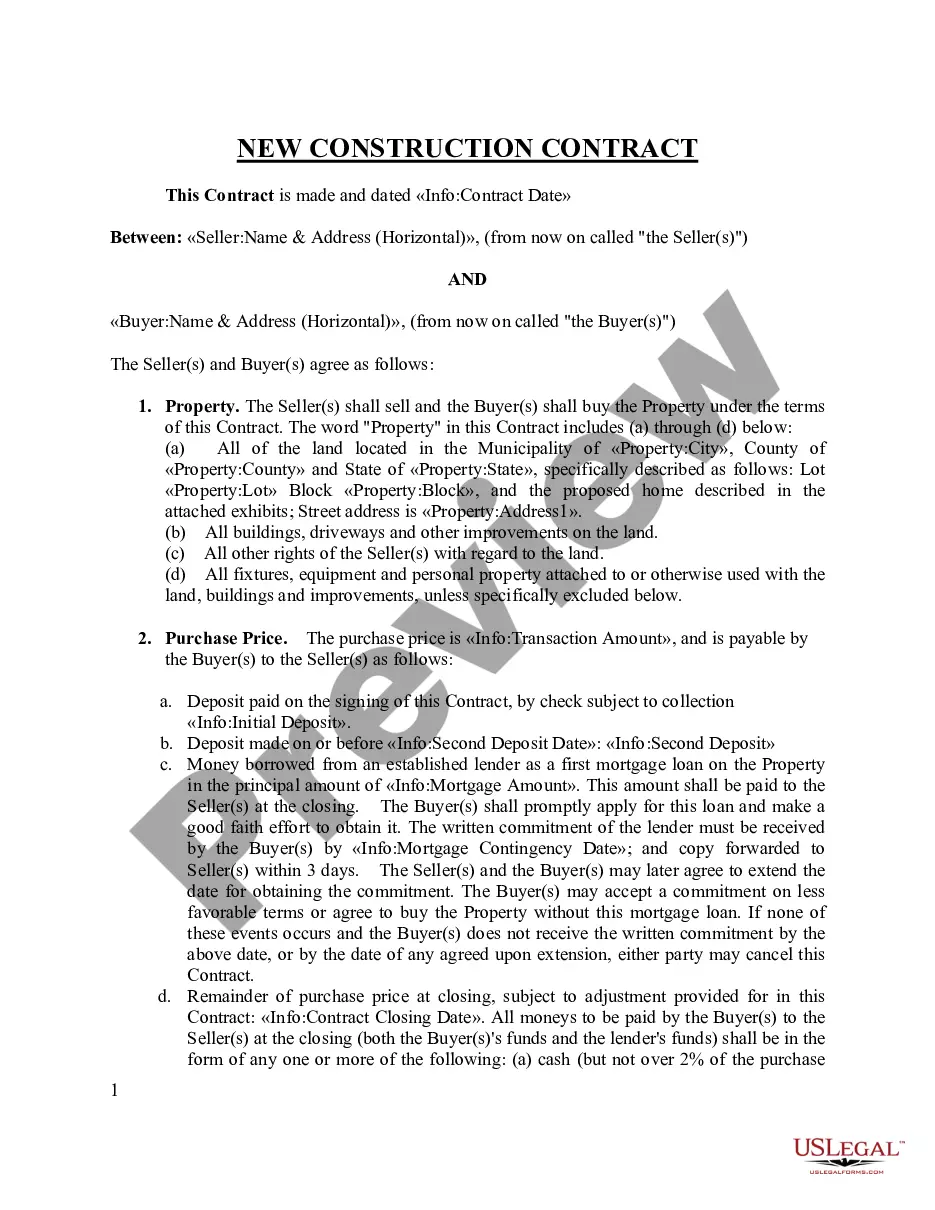
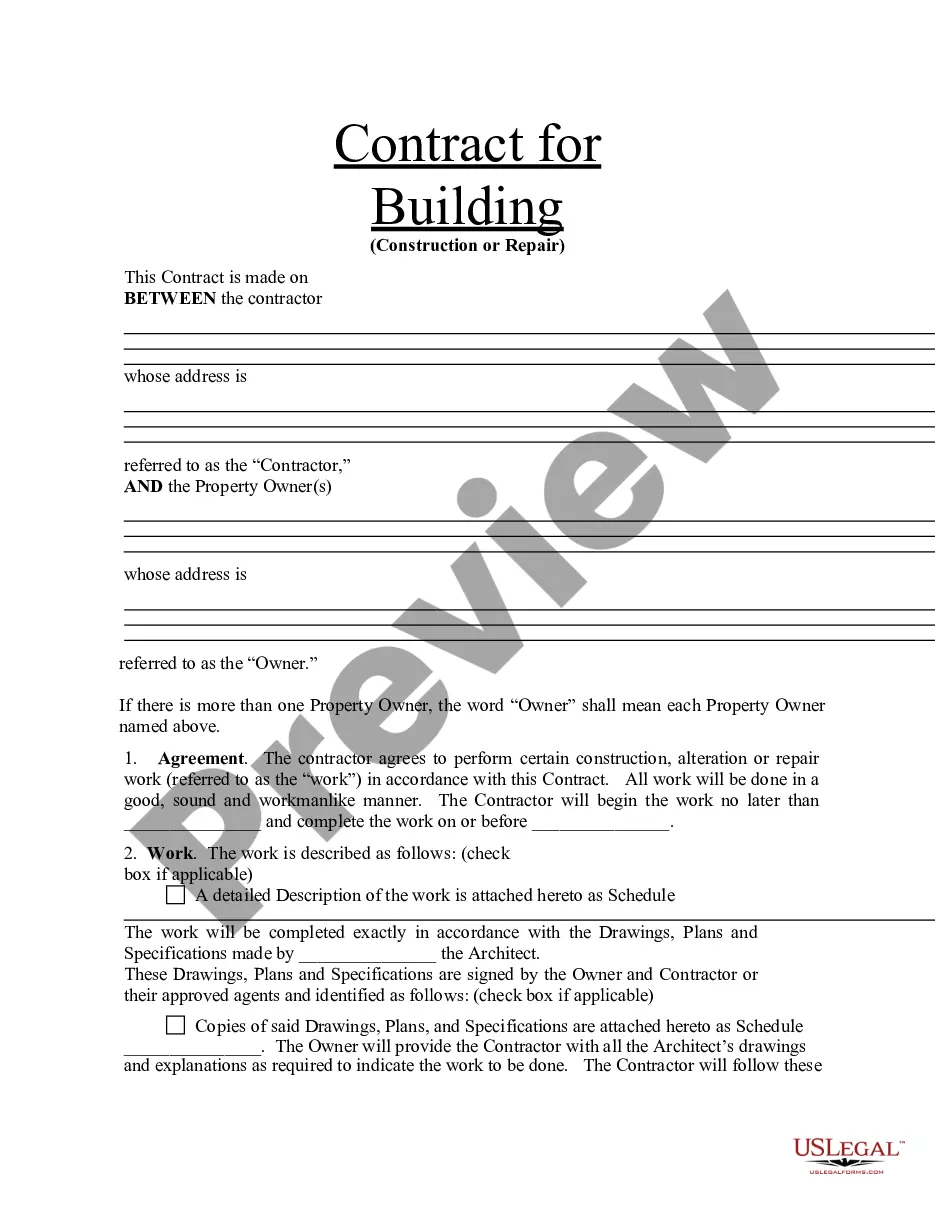
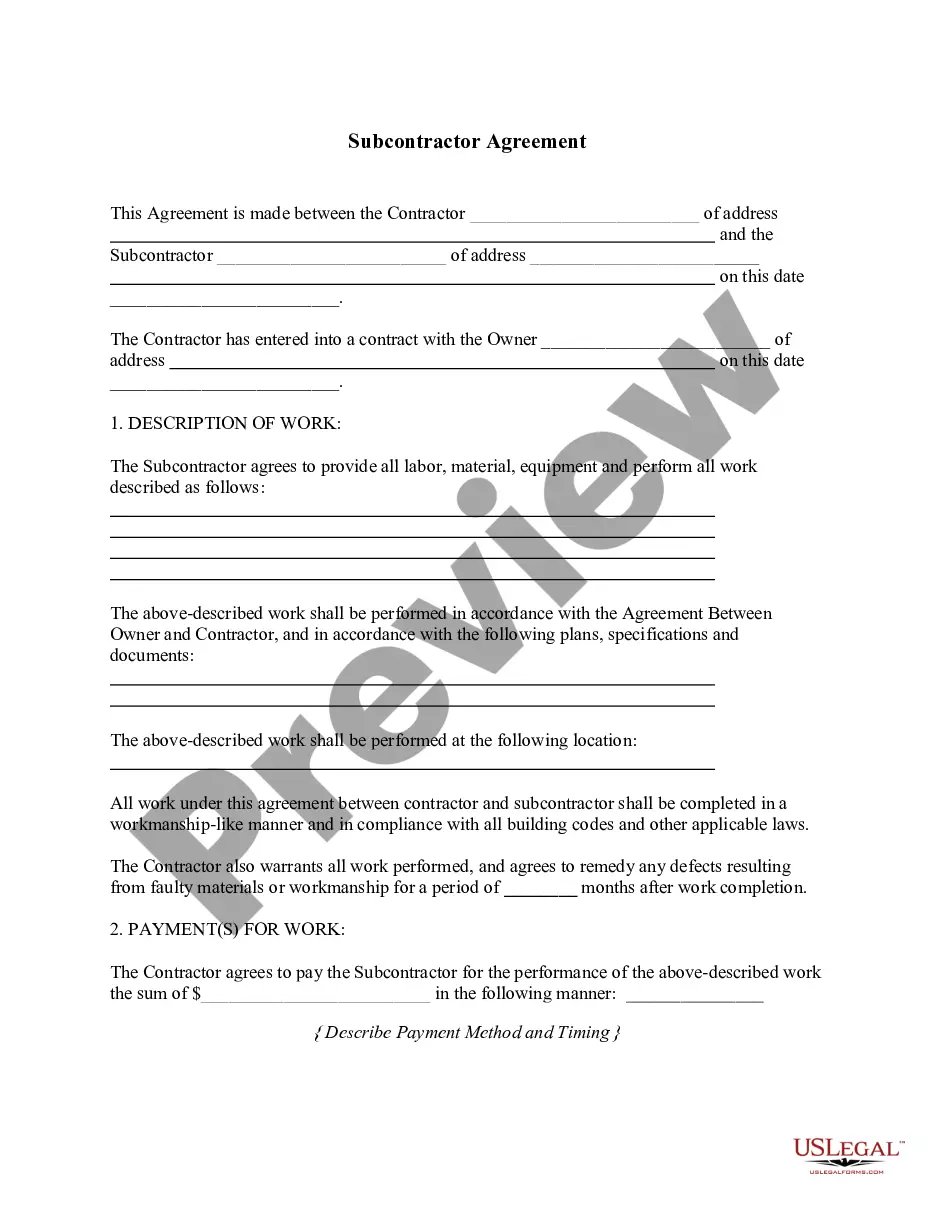
The Commercial Contract for Contractor is a legal document that outlines the agreement between commercial contractors and property owners. This contract can be executed under either a cost plus or fixed fee payment arrangement and addresses key issues such as change orders, work site conditions, warranty, and insurance. It is specifically tailored to comply with the laws of Iowa, ensuring that all parties are protected and aware of their rights and obligations.
What’s included in this form
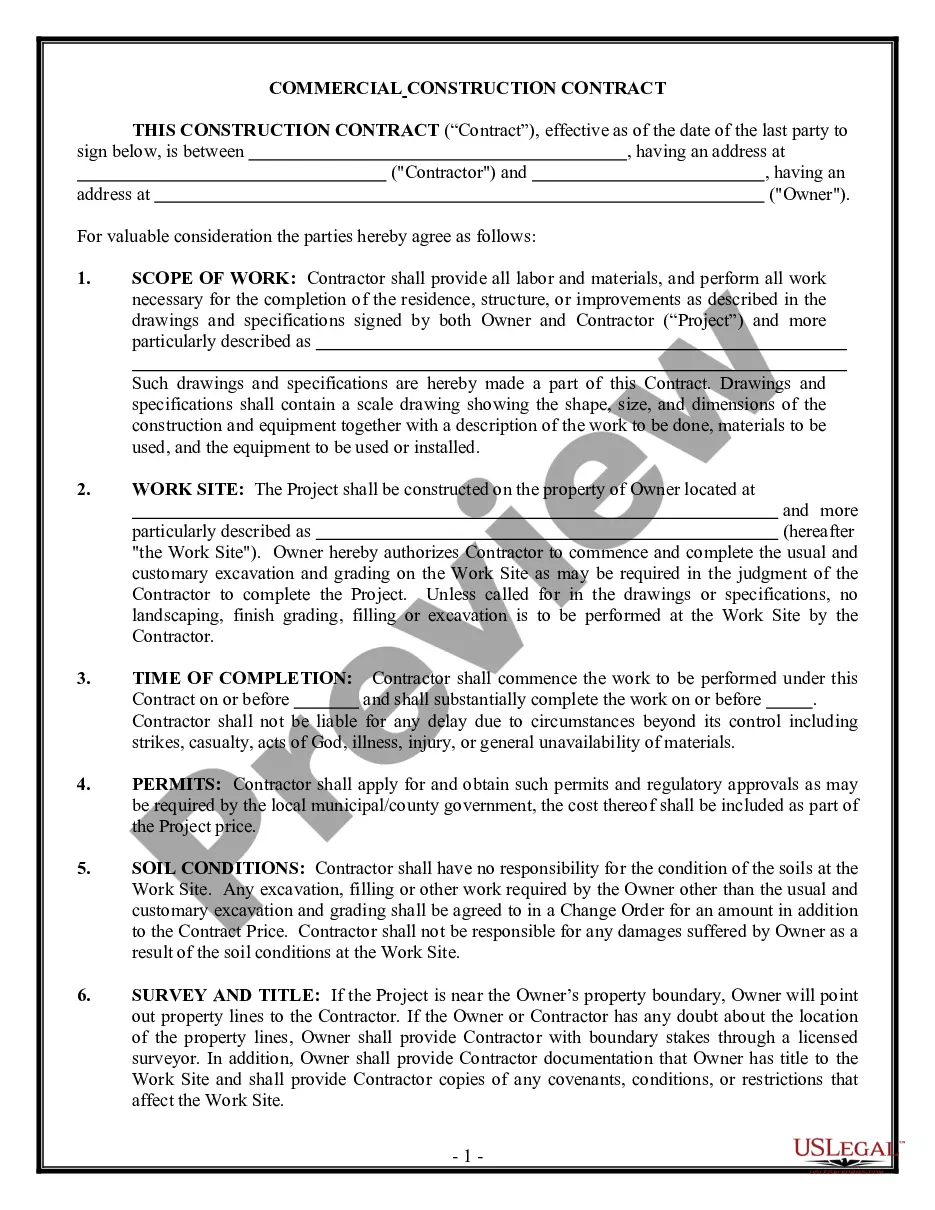
- Work site details: Specifies the exact location of the project and responsibilities regarding land boundaries and permissions.
- Permits: Outlines the contractor's obligation to obtain necessary permits for the project.
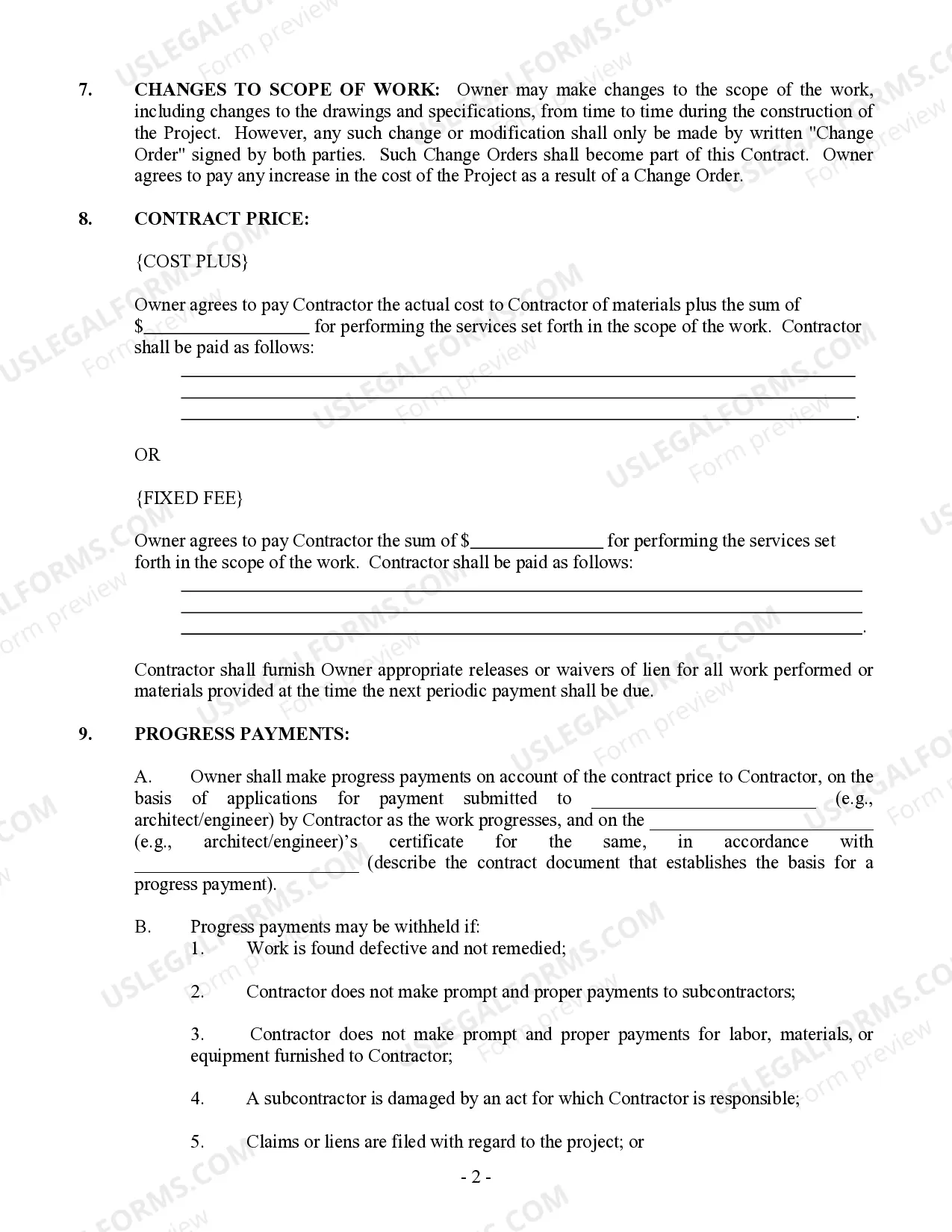
- Progress payments: Defines how payments will be made throughout the construction process, including conditions under which payments may be withheld.
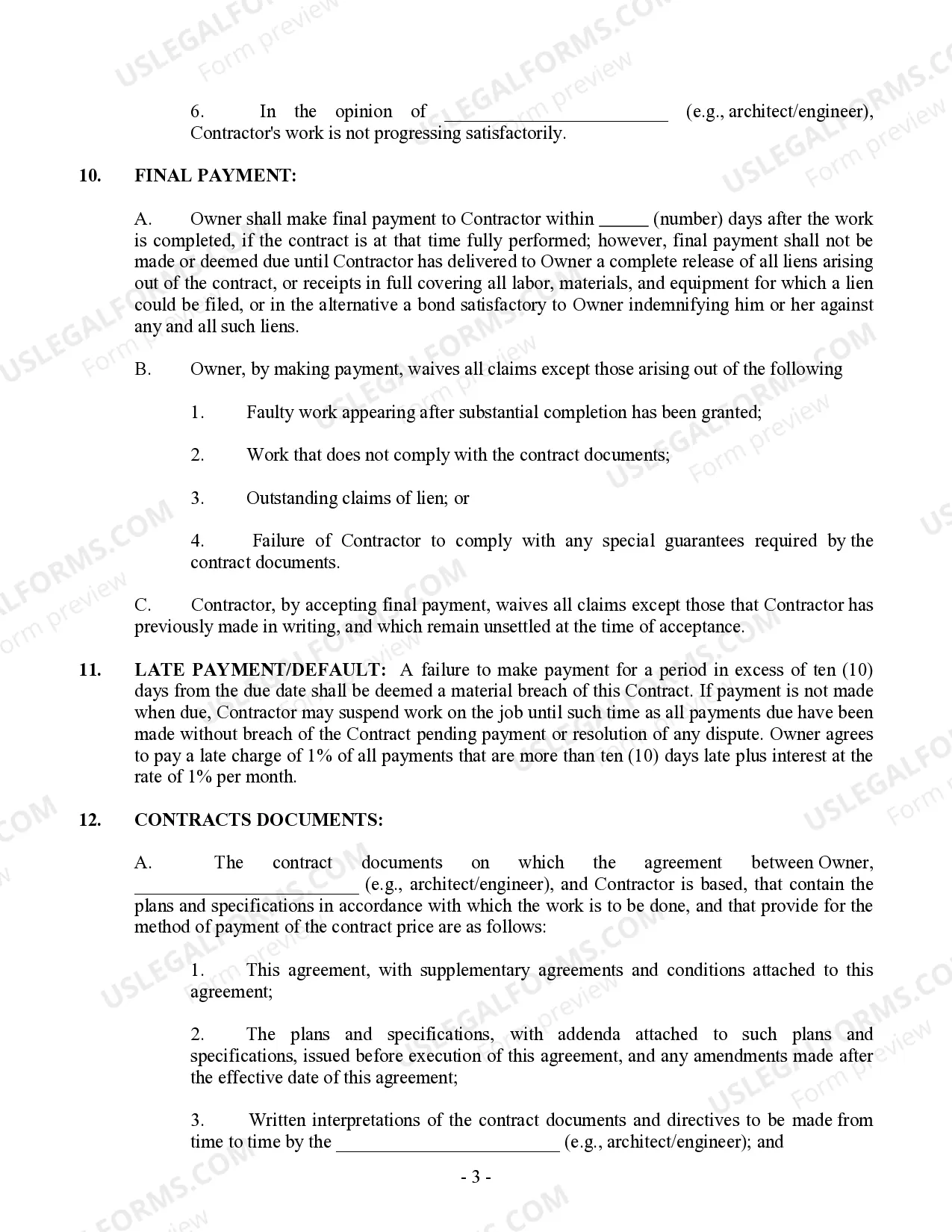
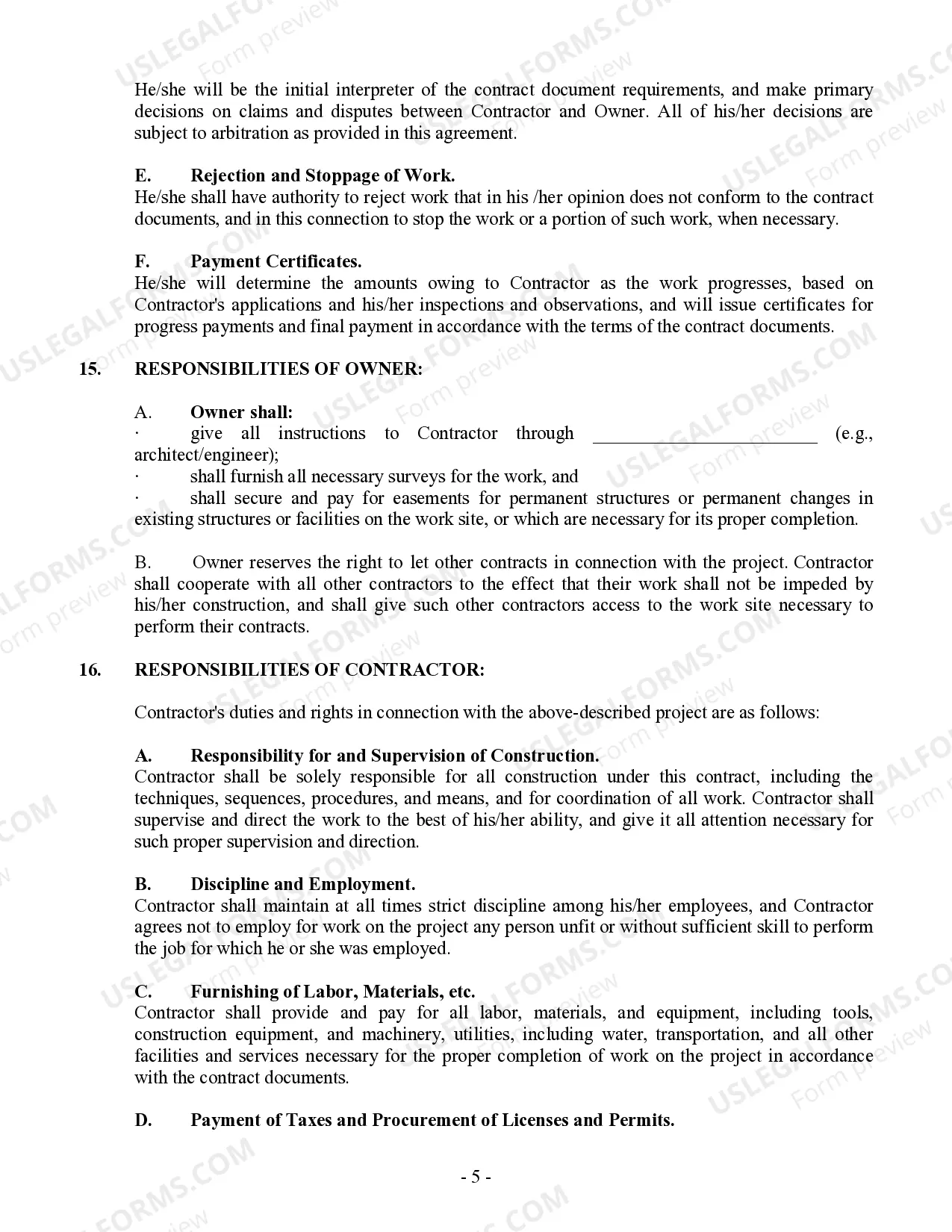
- Responsibilities of the contractor: Details the contractorâs obligations, including supervision of construction and compliance with laws and regulations.
- Warranty: States the warranty for defects in workmanship, lasting one year after completion of the project.


When to use this document
This form should be used when a property owner hires a contractor for a commercial construction project in Iowa. It is particularly useful when there are specific details about the payment structure and the responsibilities of both parties that need to be formalized. The contract is needed to avoid misunderstandings and disputes regarding project scope, payment schedules, and regulatory compliance.
Intended users of this form
- Commercial contractors looking to formalize agreements with property owners.
- Property owners intending to hire contractors for construction or renovation projects.
- Project managers and architects involved in coordinating commercial construction projects.
How to complete this form
- Identify the parties involved: Clearly state the names and contact information of the property owner and the contractor.
- Specify the work site: Provide the address and any relevant details about the project location.
- Determine the payment structure: Choose whether the contract will be on a cost plus or fixed fee basis and fill in the respective terms.
- Outline key responsibilities: Fill in the sections about permits, project oversight, and any warranties applicable to the work being completed.
- Sign and date: Ensure both parties sign the contract and include the date of signing to validate the agreement.
Notarization guidance
This form does not typically require notarization unless specified by local law.
Get your form ready online
Our built-in tools help you complete, sign, share, and store your documents in one place.
Make edits, fill in missing information, and update formatting in US Legal Forms—just like you would in MS Word.
Download a copy, print it, send it by email, or mail it via USPS—whatever works best for your next step.
Sign and collect signatures with our SignNow integration. Send to multiple recipients, set reminders, and more. Go Premium to unlock E-Sign.
If this form requires notarization, complete it online through a secure video call—no need to meet a notary in person or wait for an appointment.
We protect your documents and personal data by following strict security and privacy standards.

Make edits, fill in missing information, and update formatting in US Legal Forms—just like you would in MS Word.

Download a copy, print it, send it by email, or mail it via USPS—whatever works best for your next step.

Sign and collect signatures with our SignNow integration. Send to multiple recipients, set reminders, and more. Go Premium to unlock E-Sign.

If this form requires notarization, complete it online through a secure video call—no need to meet a notary in person or wait for an appointment.

We protect your documents and personal data by following strict security and privacy standards.
Typical mistakes to avoid
- Failing to clearly define the scope of work can lead to disputes.
- Not including specific payment milestones and conditions can cause cash flow issues.
- Neglecting to clarify permit responsibilities may lead to legal complications.
Benefits of completing this form online
- Convenient: Download the form instantly without unnecessary delays.
- Editability: Customize the template to fit specific needs quickly.
- Reliability: Form templates drafted by licensed attorneys ensure legal accuracy.
Legal use & context
The Commercial Contract for Contractor is binding when properly executed by both parties and can be enforced in a court of law in Iowa. It helps establish clear expectations and protects interests in case of disputes.
What to keep in mind
- The Commercial Contract for Contractors is essential for structuring agreements between contractors and property owners.
- Understanding payment terms and conditions prevents disputes throughout the project.
- Clearly defining the work scope reduces potential misunderstandings and liability.
- Compliance with Iowa state laws is crucial to enforceability of this contract.
Looking for another form?

Form popularity
FAQ
Some states do not require contractors to hold licenses for most types of work, including areas like Wyoming, New Hampshire, and Maine. However, even in these states, specific trades may still require licensing, so it's essential to check local regulations. If you are working with a contractor in Iowa, you should create a clear Iowa Commercial Contract for Contractor to establish professional standards, regardless of licensing requirements.
An effective Iowa Commercial Contract for Contractor should include vital elements such as project scope, payment terms, timelines, and responsibilities of both parties. Additionally, it’s wise to incorporate clauses regarding warranties, dispute resolution, and compliance with local building codes. This thorough approach can help prevent misunderstandings and ensure a successful project outcome.
Yes, it is important for a contractor to be licensed, as this demonstrates their professionalism and competency in the field. Licensed contractors have passed relevant exams and adhere to state regulations, which helps protect you as the client. By including a licensed contractor in your Iowa Commercial Contract for Contractor, you can mitigate risks and ensure compliance with local construction laws.
To check if a contractor is licensed in Iowa, visit the Iowa Department of Labor's website, where you can find a license verification tool. This tool allows you to enter the contractor's details and confirm their licensing status. Ensuring your contractor is licensed helps create a solid foundation for your Iowa Commercial Contract for Contractor, providing security for your project.
A commercial contractor is a professional who manages and executes construction projects for businesses rather than residential clients. They handle tasks such as building, remodeling, and renovation of commercial properties, including office buildings, retail spaces, and warehouses. When engaging a commercial contractor, it’s essential to establish an Iowa Commercial Contract for Contractor to ensure clear expectations and legal protection.
To secure commercial construction contracts, build a strong network within your industry and showcase your past projects. Consider bidding on government contracts or using platforms like US Legal Forms to create formal proposals. Properly drafted Iowa Commercial Contract for Contractor can greatly enhance your chances of winning bids by presenting your terms clearly.
Writing a contract for contractors involves clearly outlining the project terms, responsibilities, and payment structure. Begin by detailing the project description, timeline, and costs. Using resources such as US Legal Forms can simplify this process, offering templates for an Iowa Commercial Contract for Contractor that ensure you cover all critical aspects.
To obtain a commercial construction contract, start by understanding the project's scope and requirements. Research potential contractors who specialize in commercial work and evaluate their qualifications. Additionally, platforms like US Legal Forms can help you find and customize an Iowa Commercial Contract for Contractor that fits your specific needs.
The independent contractor agreement in Iowa is a legal document that outlines the relationship between a contractor and the hiring party. It defines the scope of work, payment terms, and other essential conditions. This agreement helps clarify expectations and protects the rights of both parties, making it an integral part of the hiring process.
To write a simple contract agreement, start with a title, date, and names of the parties. Include the main terms of the agreement in straightforward language, focusing on key details such as the services provided and payment arrangements. For convenience, consider using templates available on platforms like USLegalForms to ensure all essential elements are covered.