Partnership Agreement for Professional Practice
What this document covers
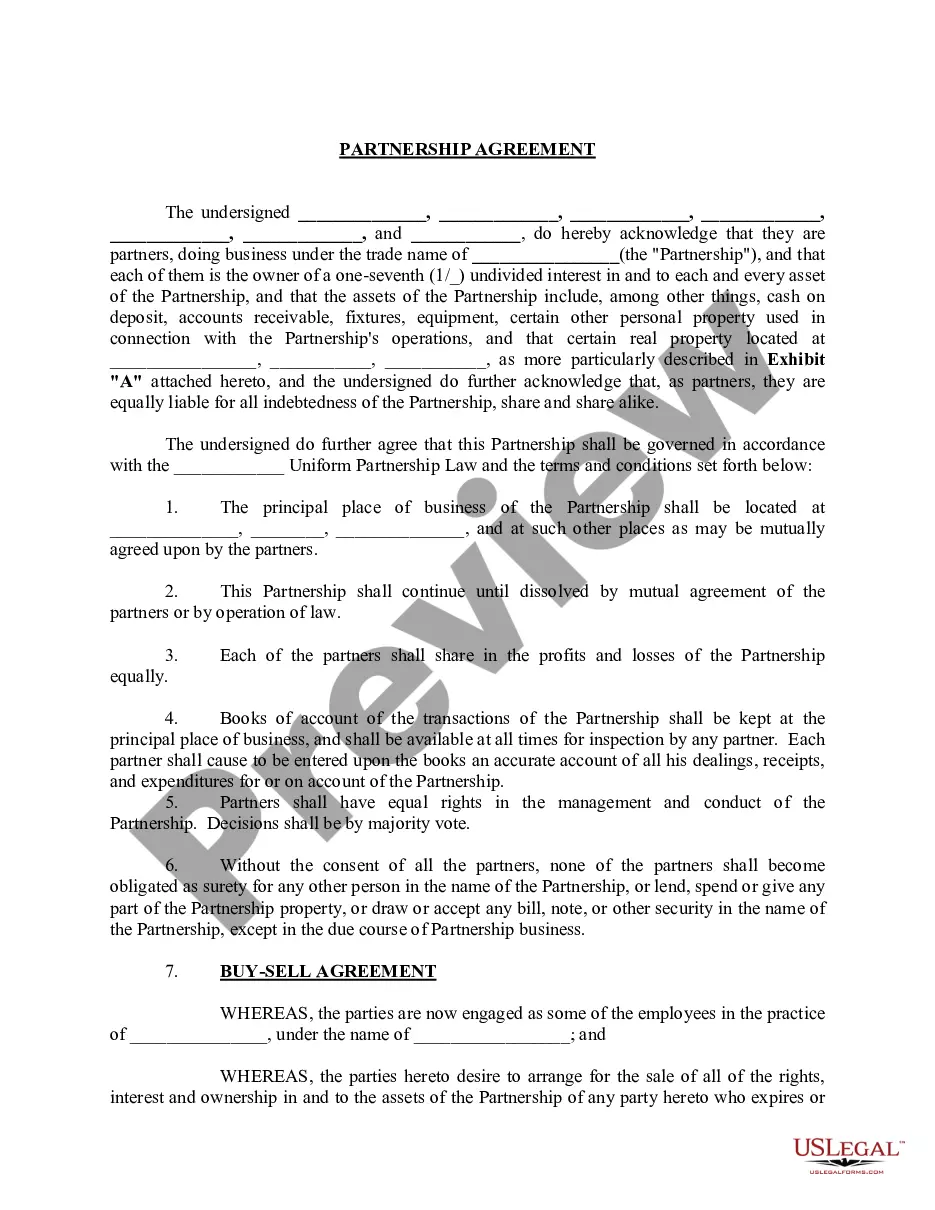
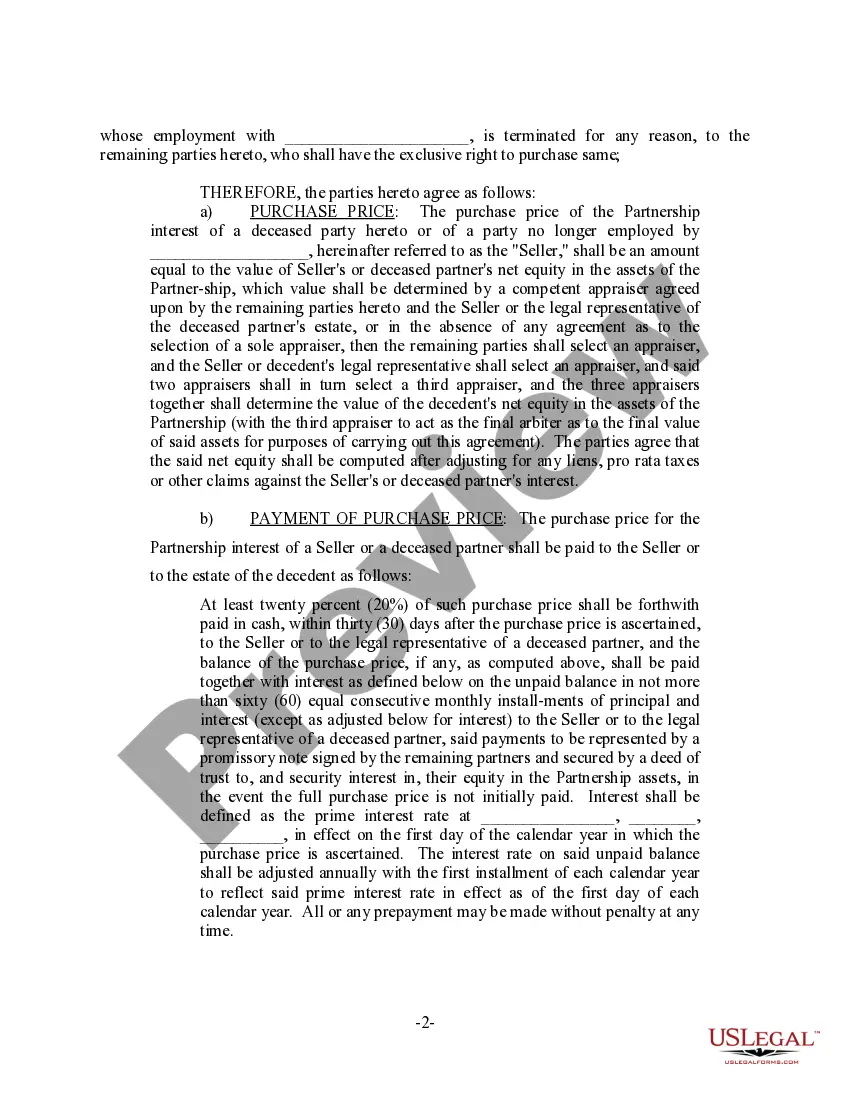
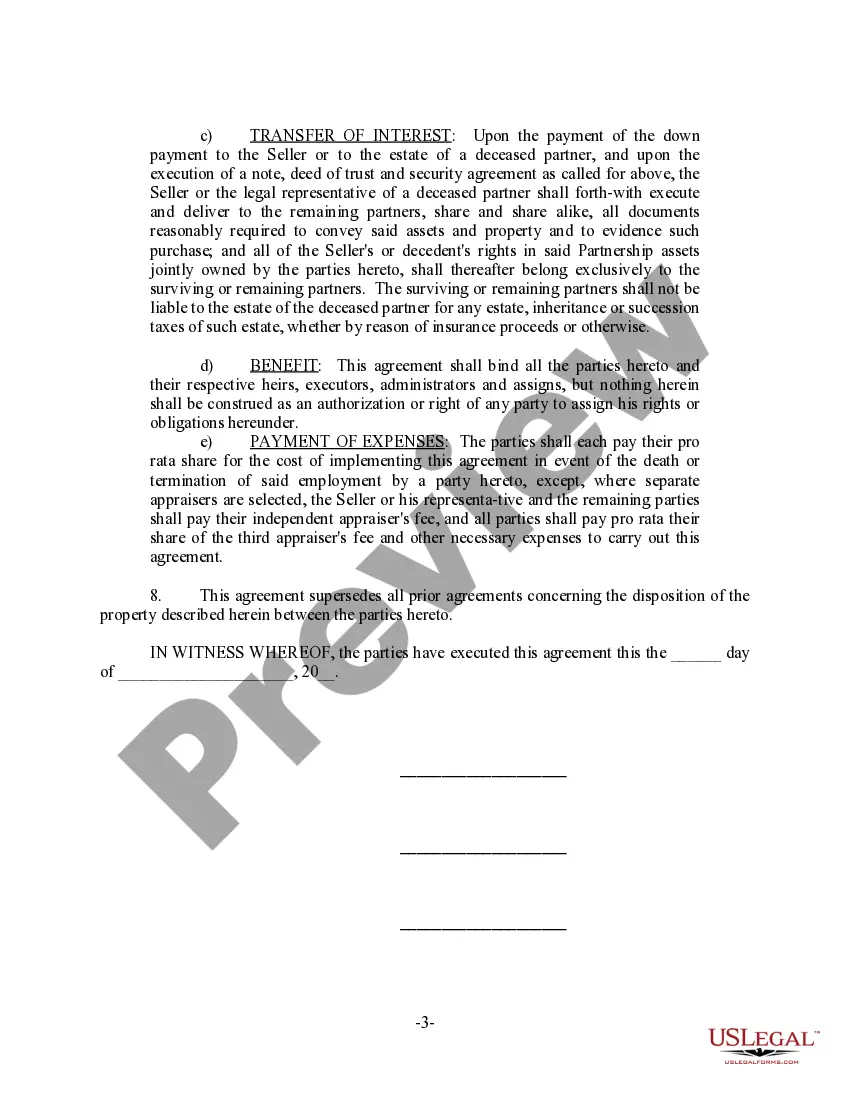
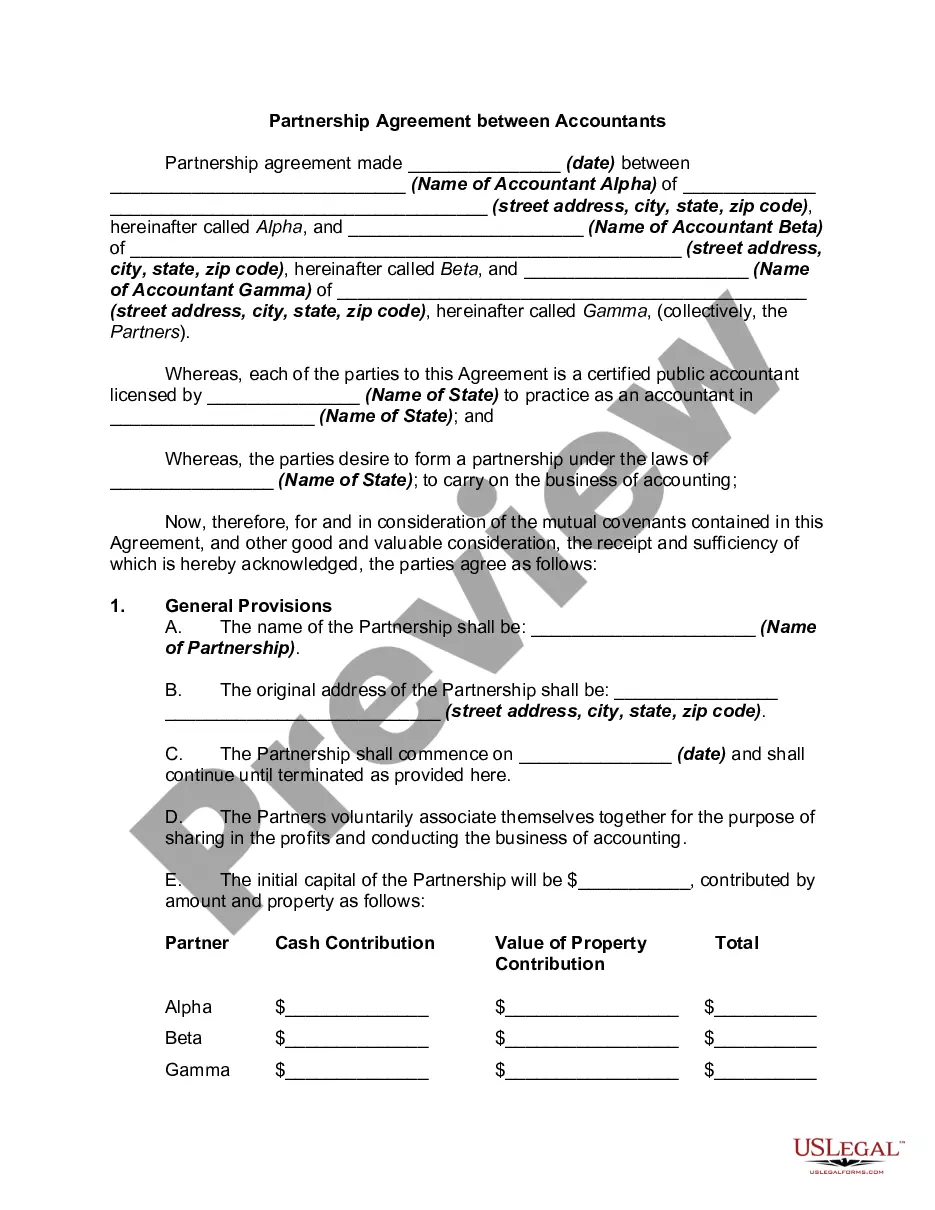
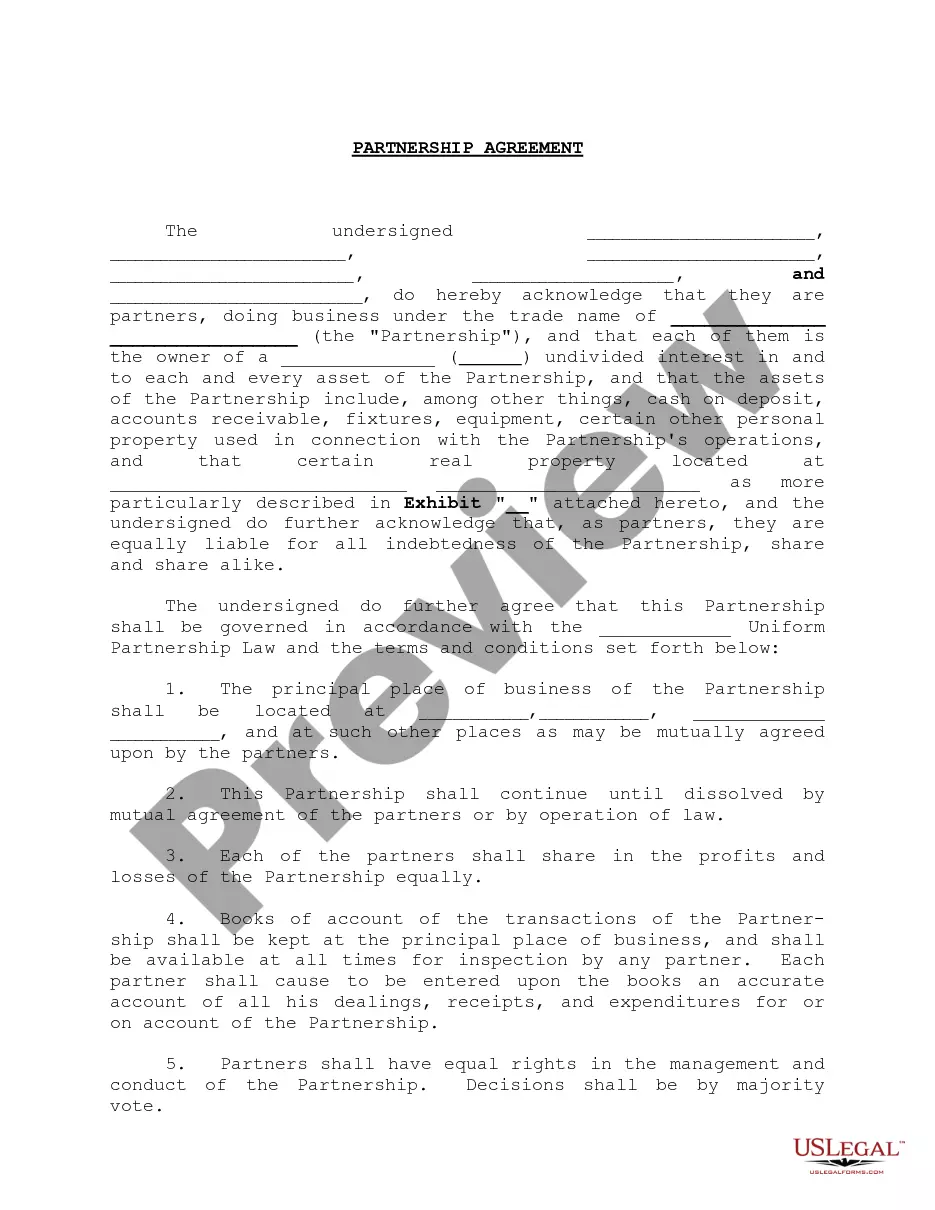
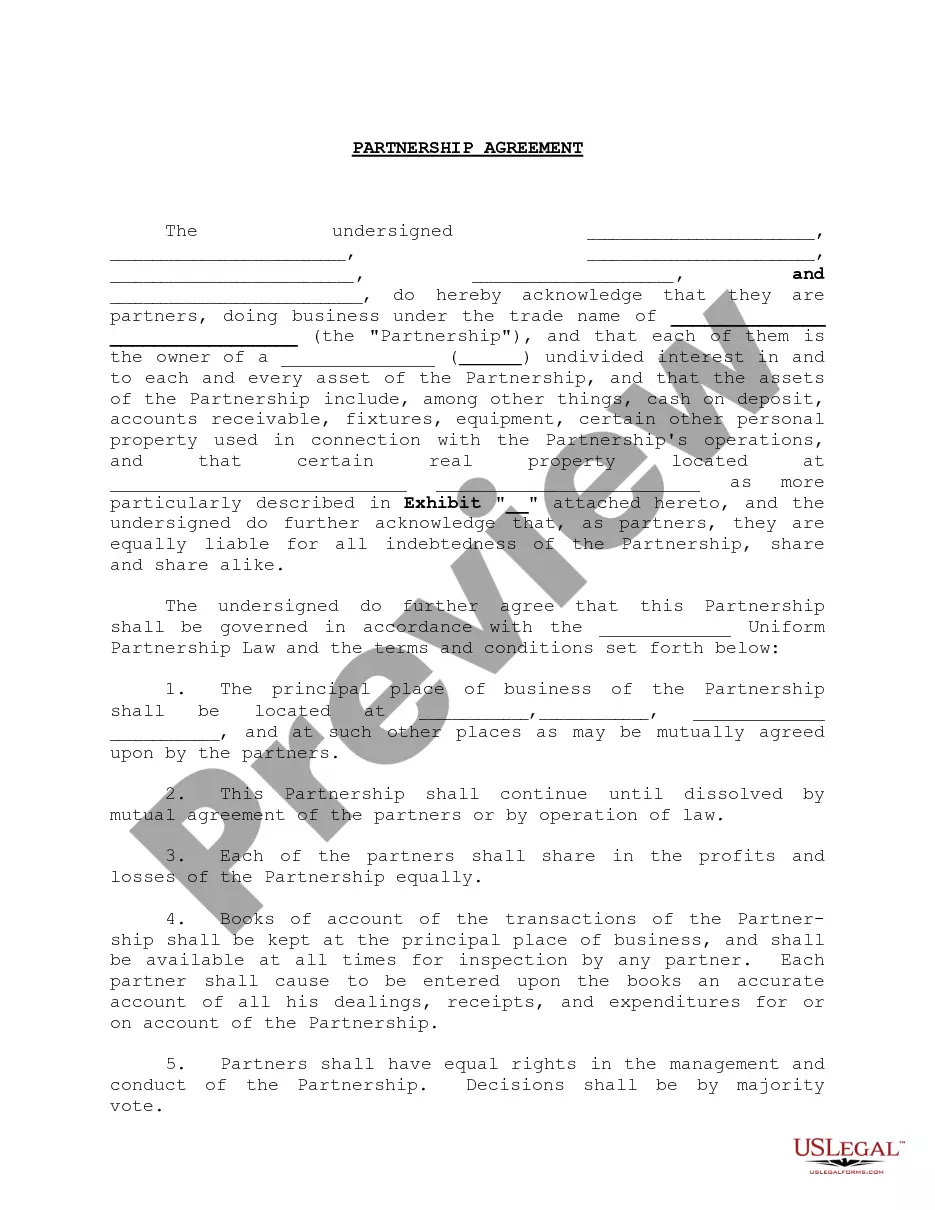
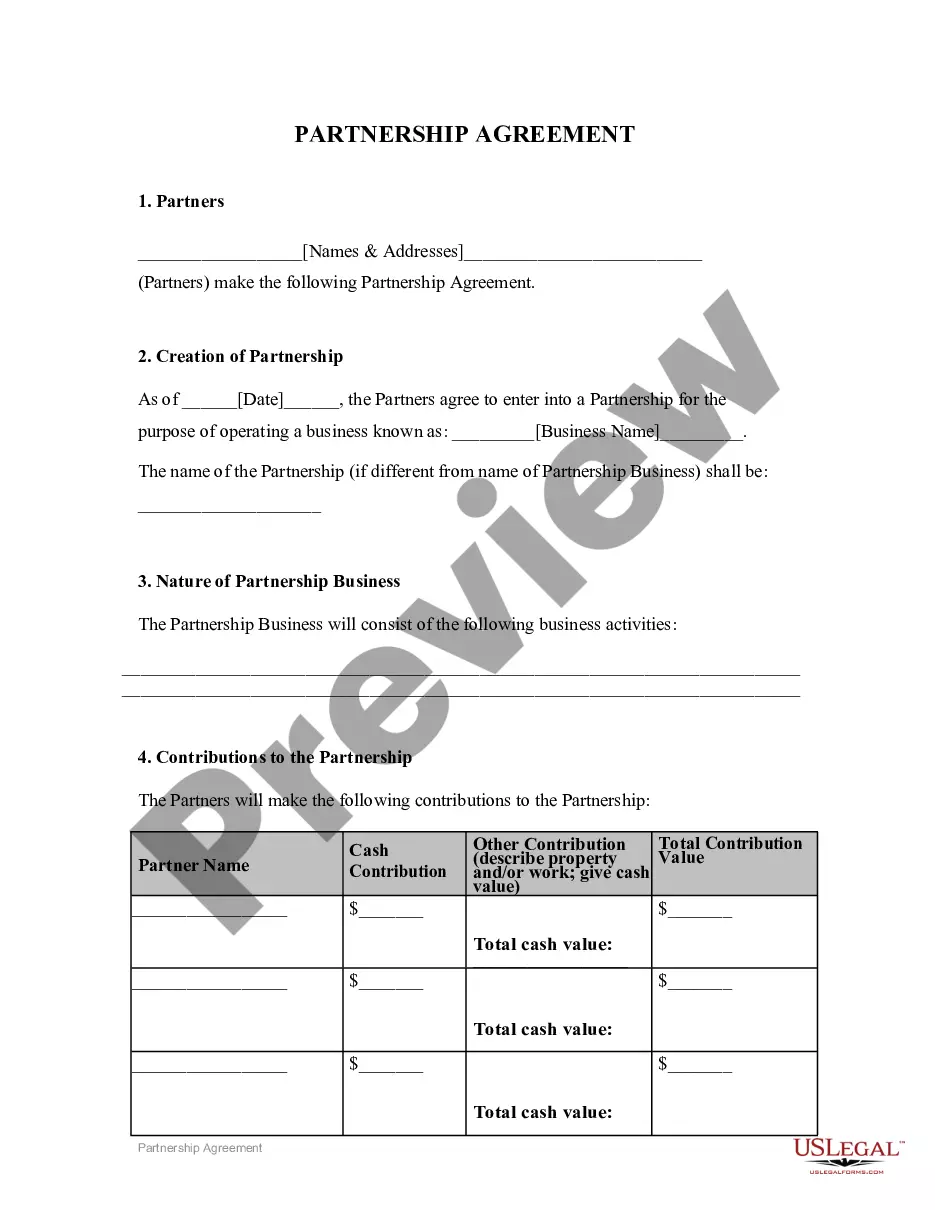
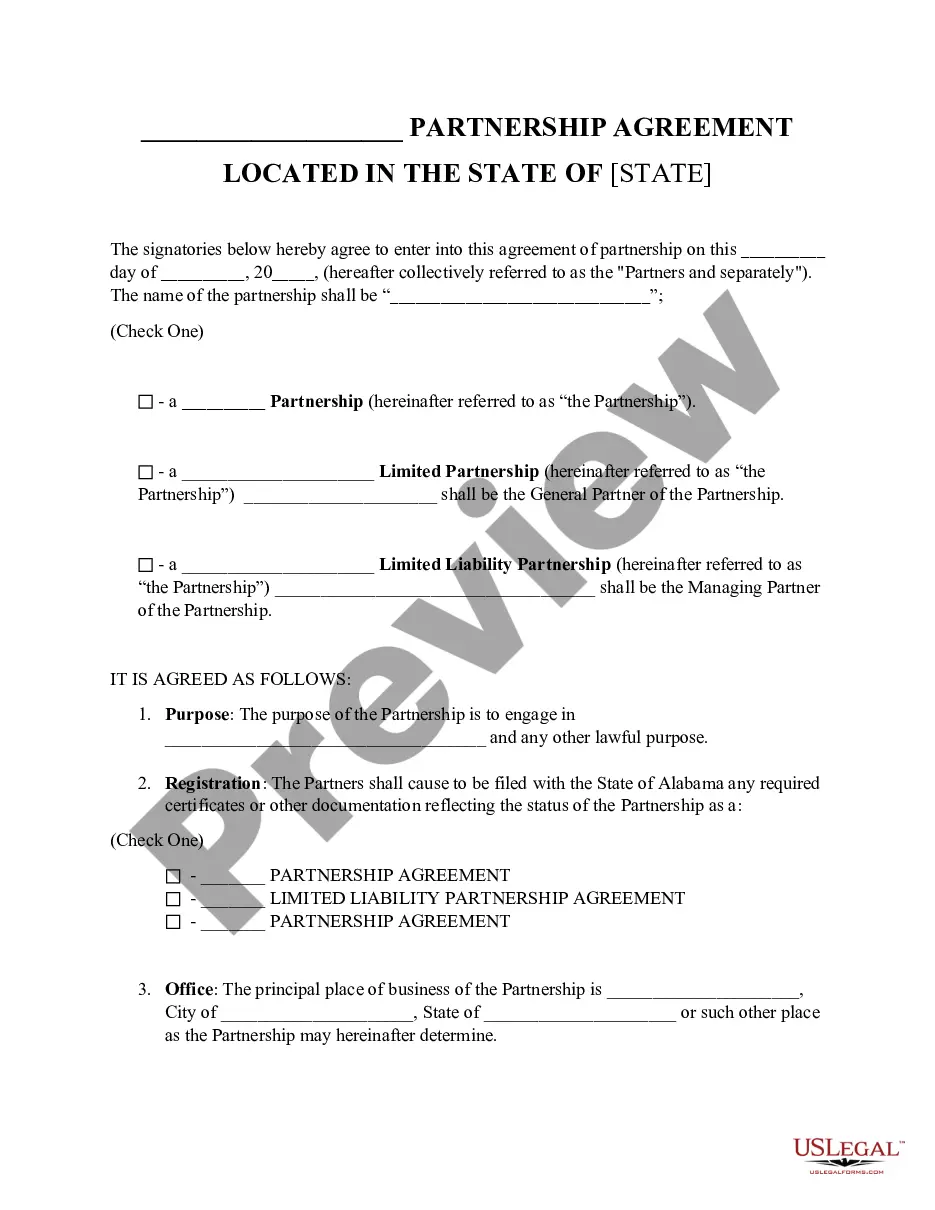
The Partnership Agreement for Professional Practice is a legal document that outlines the terms and conditions under which partners will operate a business together. This form is specifically tailored for professional practices, detailing the rights and responsibilities of each partner, their shared ownership in the practice, and how profits and losses will be managed. It serves as a legally binding agreement, ensuring that all partners are aligned in their operations and obligations, which differs from standard partnership agreements that may not address professional practices specifically.
Form components explained
- Identification of partners and the partnership name
- Details on ownership and distribution of assets
- Management rights and decision-making processes
- Buy-sell agreement clauses for partner exits
- Provisions for equal sharing of profits and losses
- Governing law and principal place of business

When this form is needed
This form should be used when individuals wish to enter into a formal partnership to operate a professional practice, such as a medical, legal, or financial services firm. It is especially relevant when there are multiple partners involved, ensuring clarity in the operational structure, financial arrangements, and the management of the business. This agreement can also facilitate the smooth transition of ownership if a partner leaves or passes away.
Who should use this form
The following individuals should consider using this form:
- Professionals forming a new partnership in fields like law, medicine, or accounting
- Existing partners looking to formalize their business structure
- Partners who want to define specific buy-sell agreements regarding ownership shares
- Individuals seeking clarity in their management rights and profit distributions
How to complete this form
- Identify all partners involved and their respective roles in the business.
- Provide the partnership name and principal place of business address.
- Clearly outline the assets and financial contributions of each partner.
- Specify provisions for profit-sharing and decision-making processes.
- Include clauses regarding the buy-sell agreement and exit strategy for partners.
Notarization requirements for this form
This form does not typically require notarization unless specified by local law. Agreements between partners can often be effective without notarization, but it is advisable to check for any state-specific requirements that may mandate it.
Get your form ready online
Our built-in tools help you complete, sign, share, and store your documents in one place.
Make edits, fill in missing information, and update formatting in US Legal Forms—just like you would in MS Word.
Download a copy, print it, send it by email, or mail it via USPS—whatever works best for your next step.
Sign and collect signatures with our SignNow integration. Send to multiple recipients, set reminders, and more. Go Premium to unlock E-Sign.
If this form requires notarization, complete it online through a secure video call—no need to meet a notary in person or wait for an appointment.
We protect your documents and personal data by following strict security and privacy standards.

Make edits, fill in missing information, and update formatting in US Legal Forms—just like you would in MS Word.

Download a copy, print it, send it by email, or mail it via USPS—whatever works best for your next step.

Sign and collect signatures with our SignNow integration. Send to multiple recipients, set reminders, and more. Go Premium to unlock E-Sign.

If this form requires notarization, complete it online through a secure video call—no need to meet a notary in person or wait for an appointment.

We protect your documents and personal data by following strict security and privacy standards.
Mistakes to watch out for
- Failing to include all partners in the agreement.
- Not detailing specific responsibilities and rights of each partner.
- Neglecting to outline procedures for resolving disputes.
- Leaving out the buy-sell provisions for partner exits.
Why use this form online
- Convenience of completing the agreement from any location.
- Access to legal templates drafted by licensed attorneys.
- Editability allows customization to fit specific partnership needs.
- Quick download option for immediate use.
Key takeaways
- This Partnership Agreement is essential for formalizing a professional relationship among partners.
- Clearly outline roles, responsibilities, and financial obligations to avoid disputes.
- Ensure compliance with state-specific regulations regarding partnerships.
Looking for another form?


Form popularity
FAQ
Percentage of ownership. Allocation of profits and losses. Who can bind the partnership? Making decisions. The death of a partner. Resolving disputes.
Good business plans should include an executive summary, products and services, marketing strategy and analysis, financial planning, and a budget.
Situation Analysis. A situation analysis defines the current situation, and it must be an objective assessment. The Market. Do an in-depth assessment of your competition and their marketing strategy. Positioning Your Product or Service. Setting Objectives. Strategy.
1Mention how you are going to address the challenges you have.2Describe the potential partners.3Mention the goals and advantages of collaboration.4Explain what your business is and how you make money.FREE 11+ Sample Partnership Proposal Letter Templates in PDF\nwww.sampletemplates.com > letter-templates > partnership-proposal-letterss
1Name of your partnership.2Contributions to the partnership and percentage of ownership.3Division of profits, losses and draws.4Partners' authority.5Withdrawal or death of a partner.
A financial plan is a comprehensive picture of your current finances, your financial goals and any strategies you've set to achieve those goals. Good financial planning should include details about your cash flow, savings, debt, investments, insurance and any other elements of your financial life.
Investopedia is an American financial website headquartered in New York City. Founded during the dot-com bubble, Investopedia provides investment dictionaries, advice, reviews, ratings, and comparisons of financial products such as brokerage accounts.
1Share the same values.2Choose a partner with complementary skills.3Have a track record together.4Clearly define each partner's role and responsibilities.5Select the right business structure.6Put it in writing.7Be honest with each other.
1Name of the partnership.2Contributions to the partnership.3Allocation of profits, losses, and draws.4Partners' authority.5Partnership decision-making.6Management duties.7Admitting new partners.8Withdrawal or death of a partner.Creating a Business Partnership Agreement - Bplans Blog\narticles.bplans.com > creating-a-business-partnership-agreement