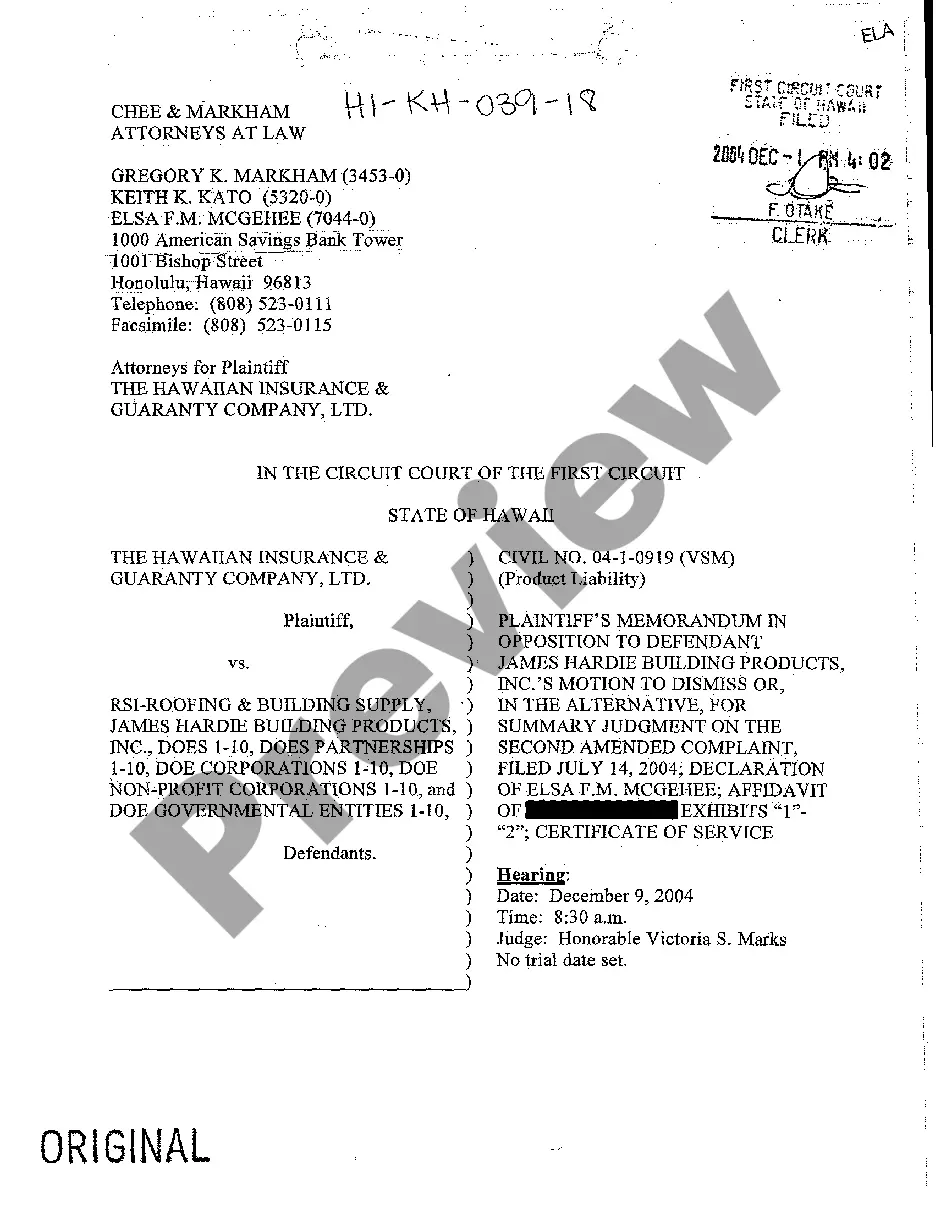
Software Requirements
What is this form?
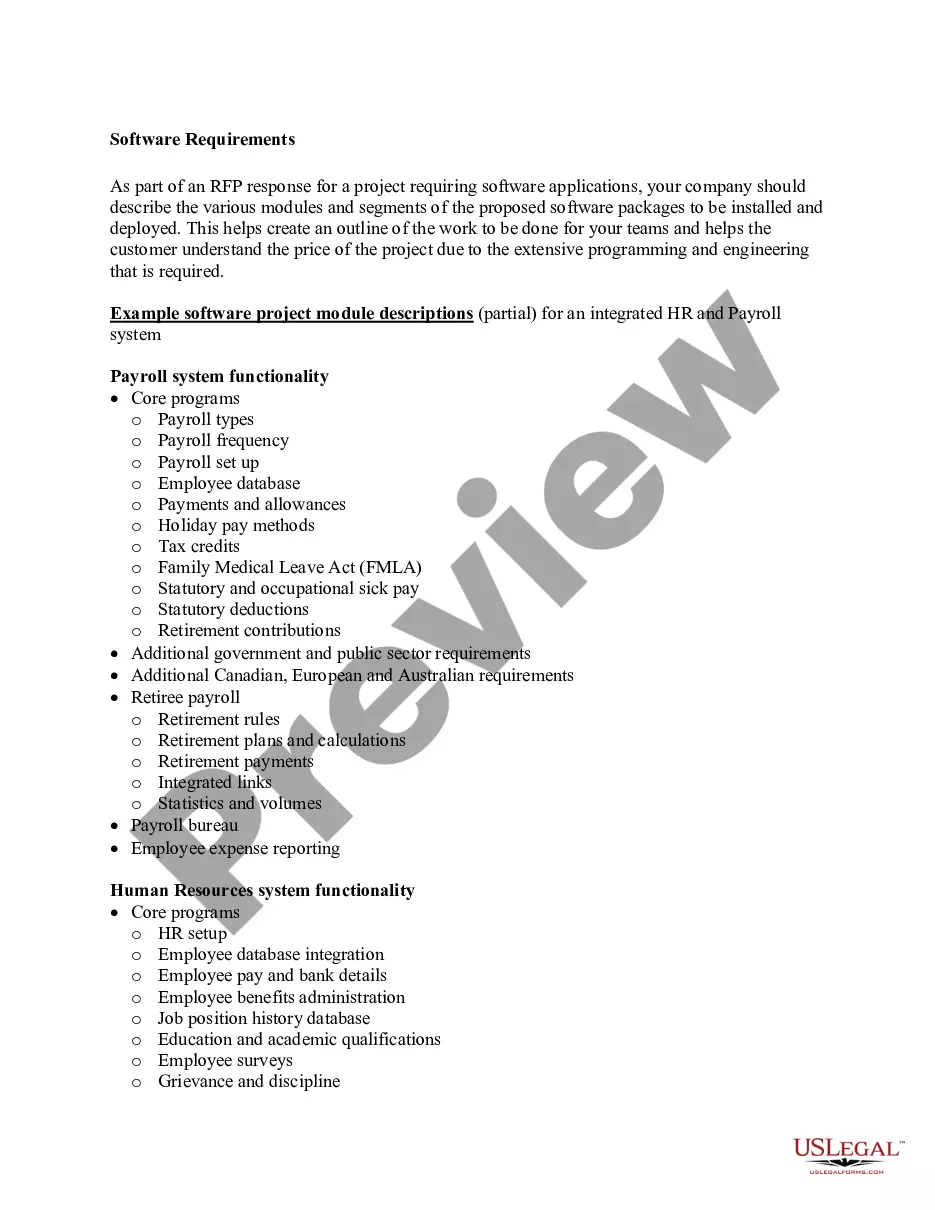
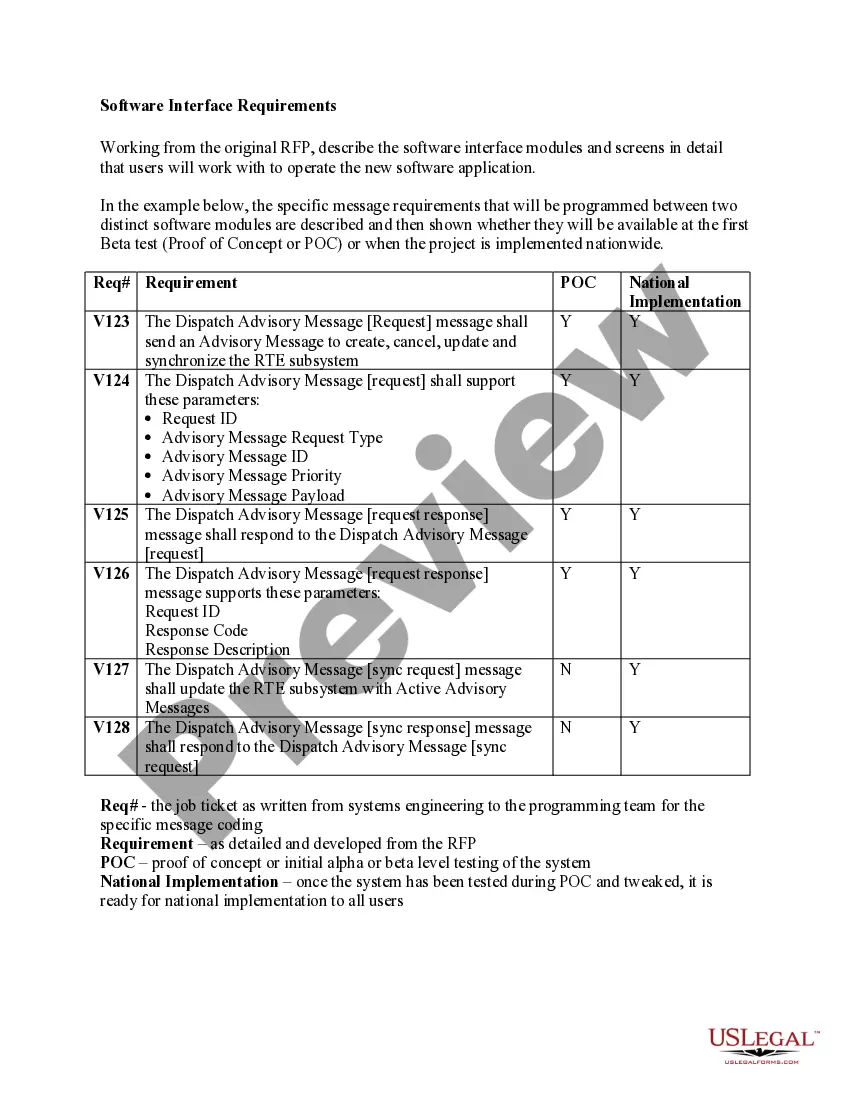
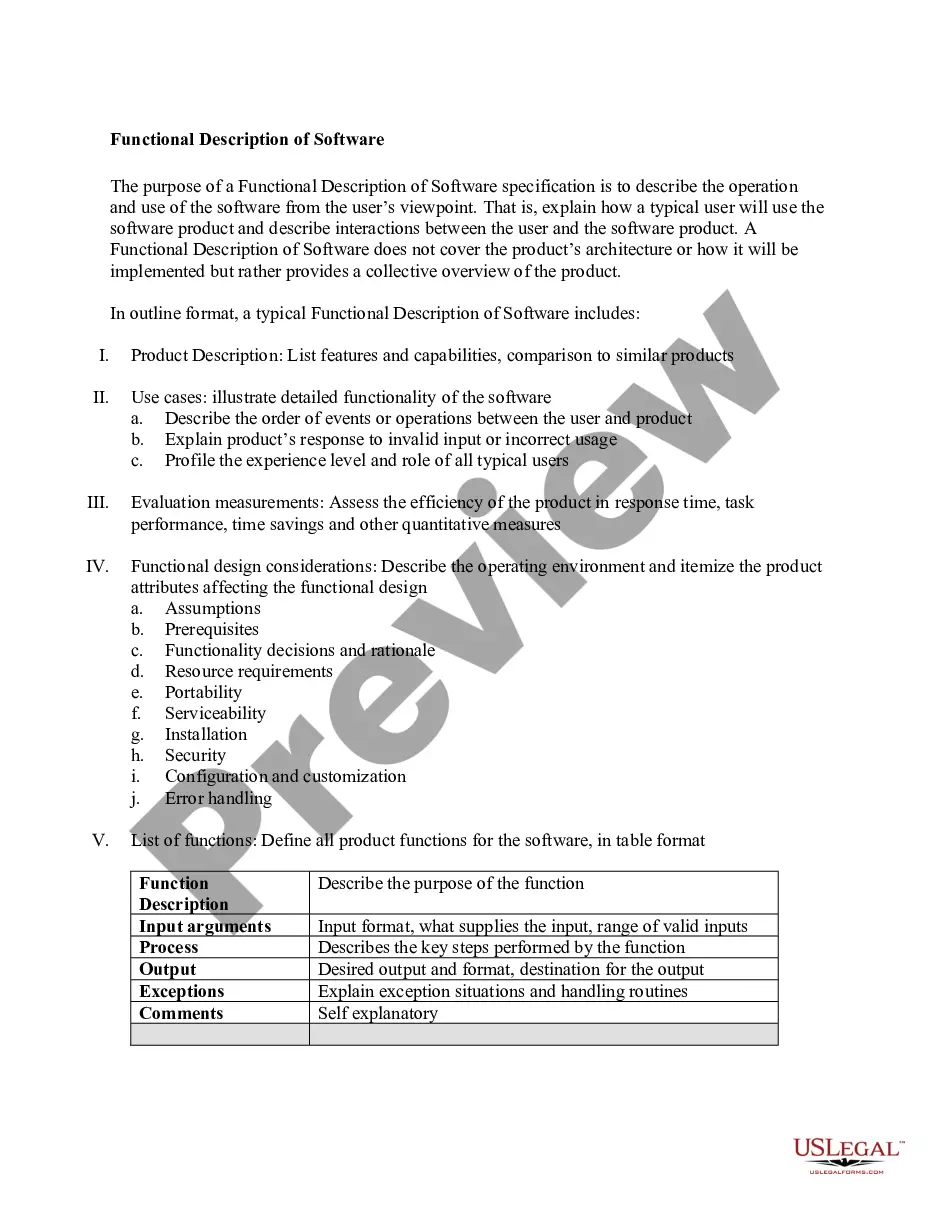
The Software Requirements form is a crucial document used in the Request for Proposal (RFP) process for software projects. It outlines the specific functionalities and components of the proposed software packages, providing clarity on the scope of work and aiding in cost estimation for the client. This form distinguishes itself from other software-related documents by focusing on detailed software module descriptions to ensure all parties have a comprehensive understanding of the project's needs.
What’s included in this form
- Module descriptions for software applications
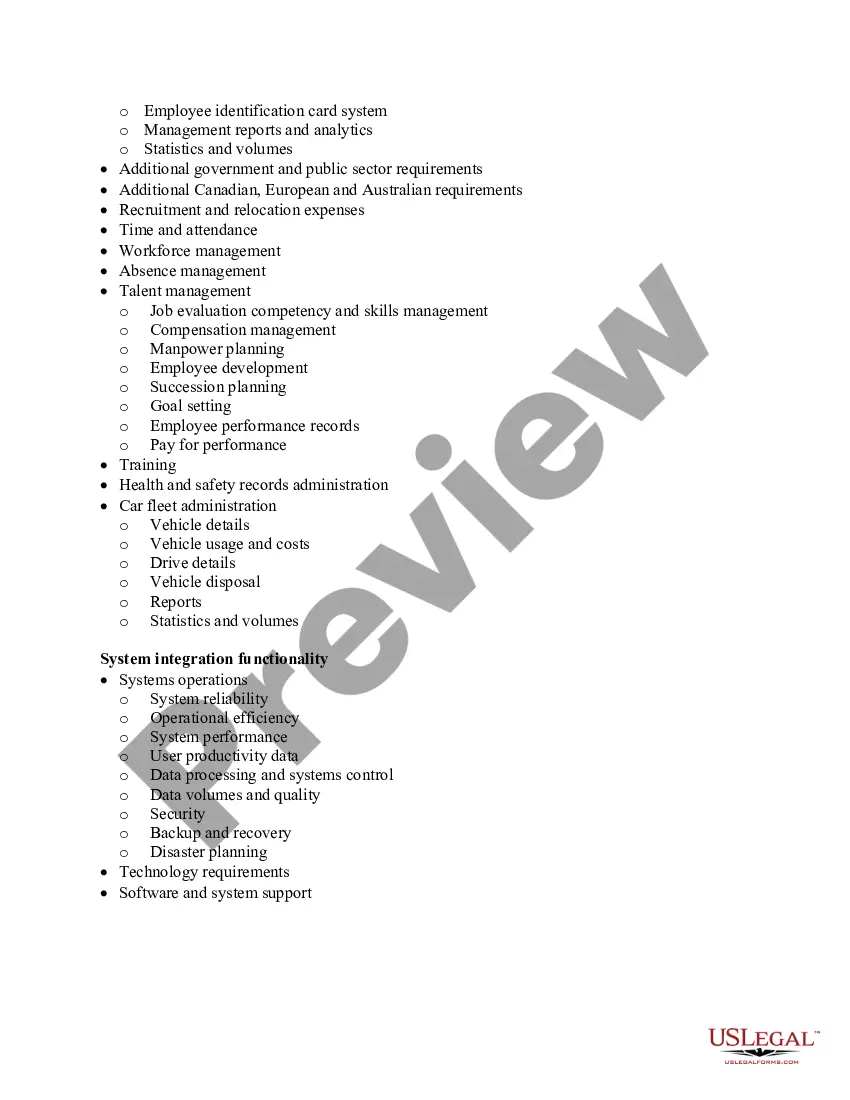
- Functionality overview for core programs, such as payroll and human resources
- Details about employee databases and integrations
- Specifications for payments, allowances, and deductions
- Reports and analytics requirements
- Technology and system support demands
When this form is needed
This form is necessary when responding to an RFP for a software project, particularly those that involve complex systems like HR and payroll management. It's used to clearly communicate your company's proposed software solutions, helping potential clients understand what is being offered and how it meets their needs. If your organization plans to develop or implement software where requirements need to be documented and shared, this form is essential.
Who should use this form
- Software development companies responding to RFPs
- Project managers looking to outline software functionalities
- Consultants involved in software implementation projects
- Organizations seeking to deploy new software applications
Completing this form step by step
- Identify the software modules needed for the project and list them.
- Detail the specific functionalities of each module, including any unique features.
- Include all necessary integration points with other systems.
- Outline any compliance requirements specific to regions (if applicable).
- Specify the technology and support needs for implementation and ongoing maintenance.
Notarization requirements for this form
This form does not typically require notarization unless specified by local law. It is primarily used for internal documentation and proposal purposes. Ensure to check your state's regulations for any unique requirements.
Get your form ready online
Our built-in tools help you complete, sign, share, and store your documents in one place.
Make edits, fill in missing information, and update formatting in US Legal Forms—just like you would in MS Word.
Download a copy, print it, send it by email, or mail it via USPS—whatever works best for your next step.
Sign and collect signatures with our SignNow integration. Send to multiple recipients, set reminders, and more. Go Premium to unlock E-Sign.
If this form requires notarization, complete it online through a secure video call—no need to meet a notary in person or wait for an appointment.
We protect your documents and personal data by following strict security and privacy standards.

Make edits, fill in missing information, and update formatting in US Legal Forms—just like you would in MS Word.

Download a copy, print it, send it by email, or mail it via USPS—whatever works best for your next step.

Sign and collect signatures with our SignNow integration. Send to multiple recipients, set reminders, and more. Go Premium to unlock E-Sign.

If this form requires notarization, complete it online through a secure video call—no need to meet a notary in person or wait for an appointment.

We protect your documents and personal data by following strict security and privacy standards.
Mistakes to watch out for
- Failing to clearly specify all software functionalities.
- Omitting integration details with existing systems.
- Not addressing compliance and regional requirements.
- Underestimating the scope of work leading to inaccurate pricing.
Why use this form online
- Convenience of completing the form at your own pace.
- Easy editing capabilities to ensure all details are accurately captured.
- Access to templates drafted by licensed attorneys for improved quality.
- Reliable document storage and access for future reference.
Legal use & context
- The form is crucial for legally binding proposals and outlines expectations between the parties involved.
- Using this form helps mitigate misunderstandings regarding project scope and deliverables.
- Ensures compliance with software development best practices and legal standards.
What to keep in mind
- The Software Requirements form is essential for RFP responses in software projects.
- It outlines module functionalities, integrations, and compliance needs.
- Completing the form accurately ensures clarity and aids in cost estimation.
Looking for another form?
Form popularity
FAQ
A complete Software Requirement Specifications must be: Clear. Correct. Consistent. Coherent. Comprehensible. Modifiable. Verifiable. Prioritized.
Requirements fall into three categories: business, user and software. See examples of each one, as well as what constitutes functional and nonfunctional kinds of software requirements. A comprehensive set of requirements is crucial for any software project.
There are three types of software requirements:- functional requirements, non-functional requirements, and domain requirements.
The main types of requirements are: Functional Requirements. Performance Requirements. System Technical Requirements. Specifications.
Software requirements: This is the process of gathering the requirements from the clients and documenting them. All the requirements needed for the development and testing of the model are defined in this phase.
Functions offered by the system such as timing constraints, constraints on the development process, standards, etc. e.g. reliability, response time and storage requirements. Constraints are I/ O device capability, system representations, etc.
There are three types of software requirements:- functional requirements, non-functional requirements, and domain requirements.