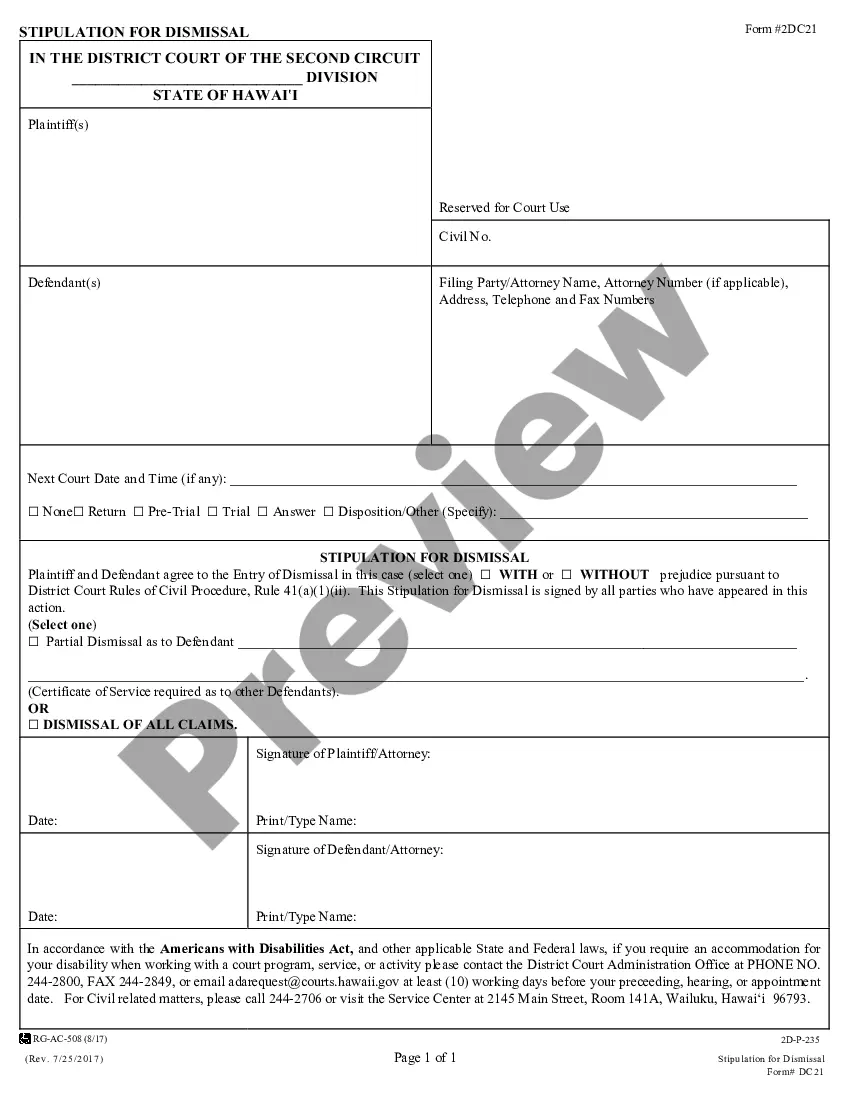
Rules and Regulations for Shopping Center
What is this form?
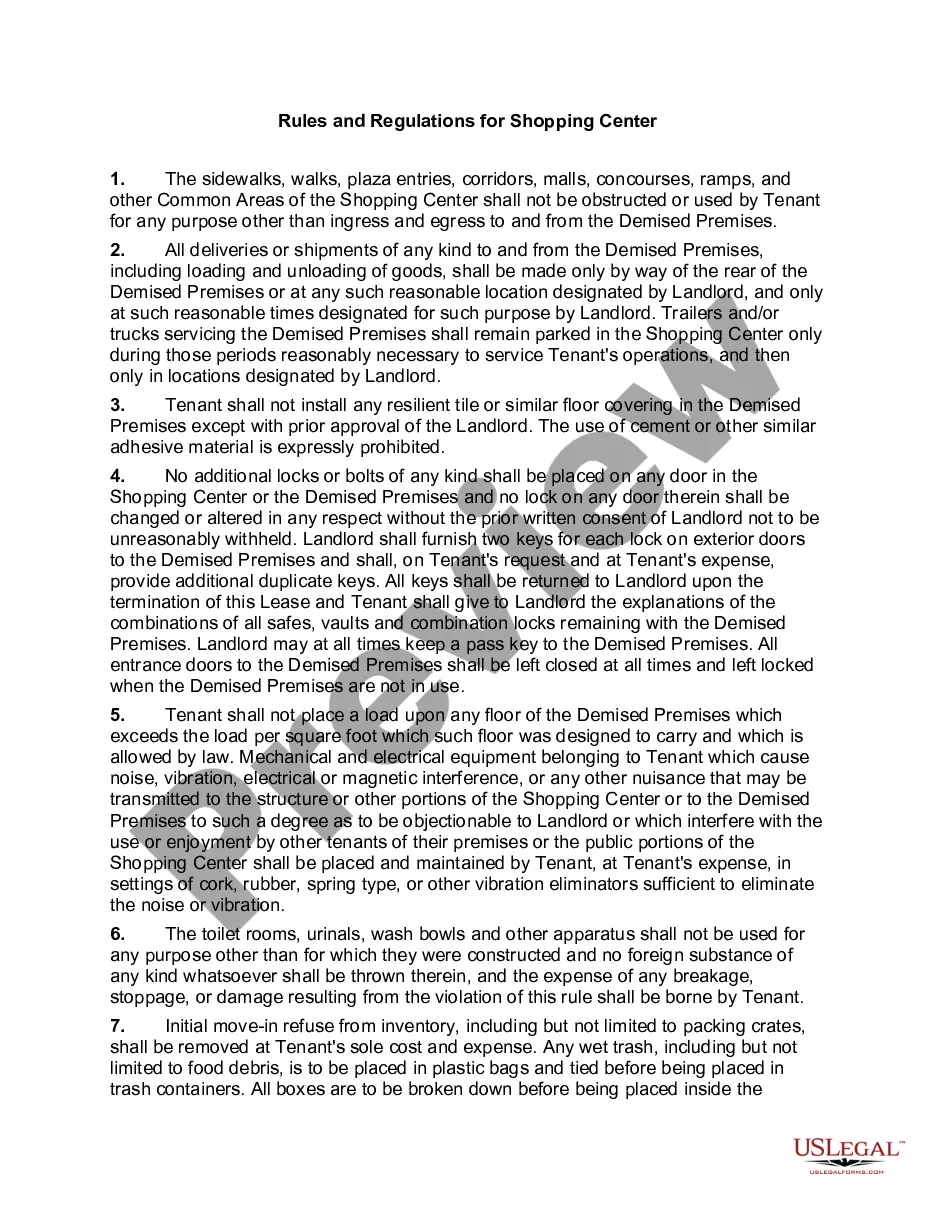
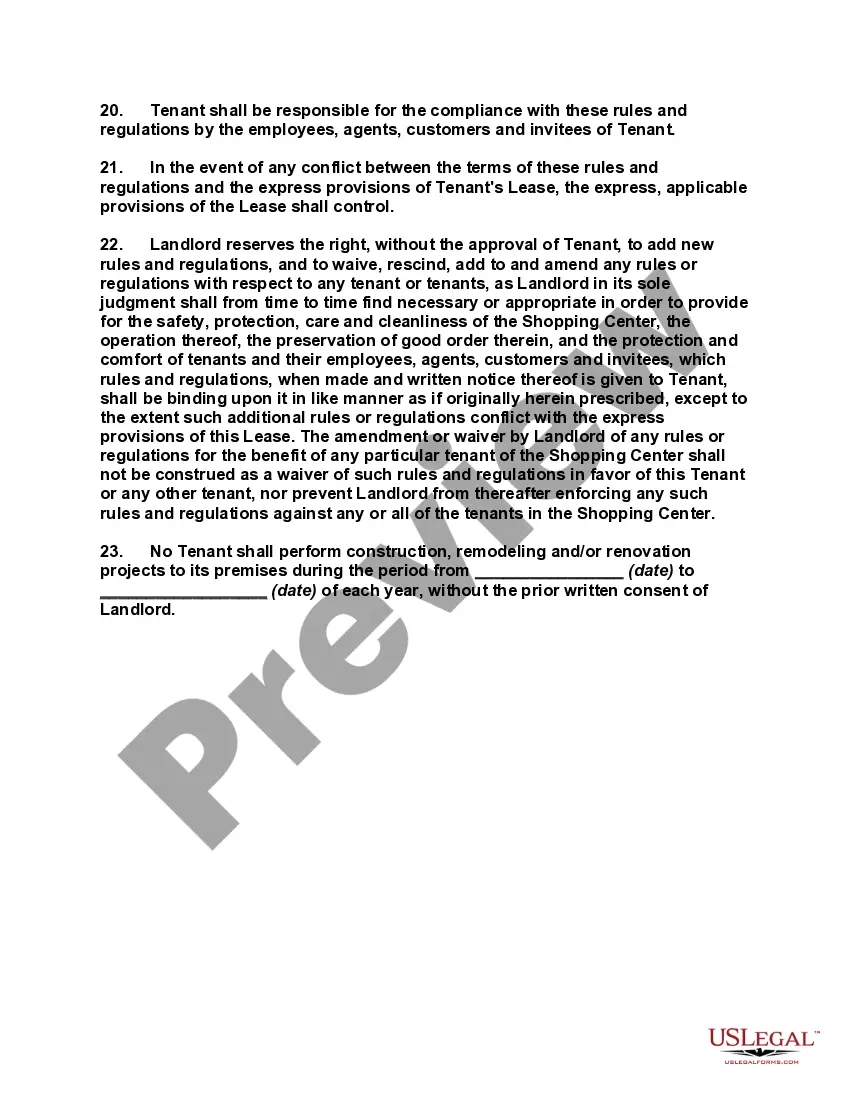
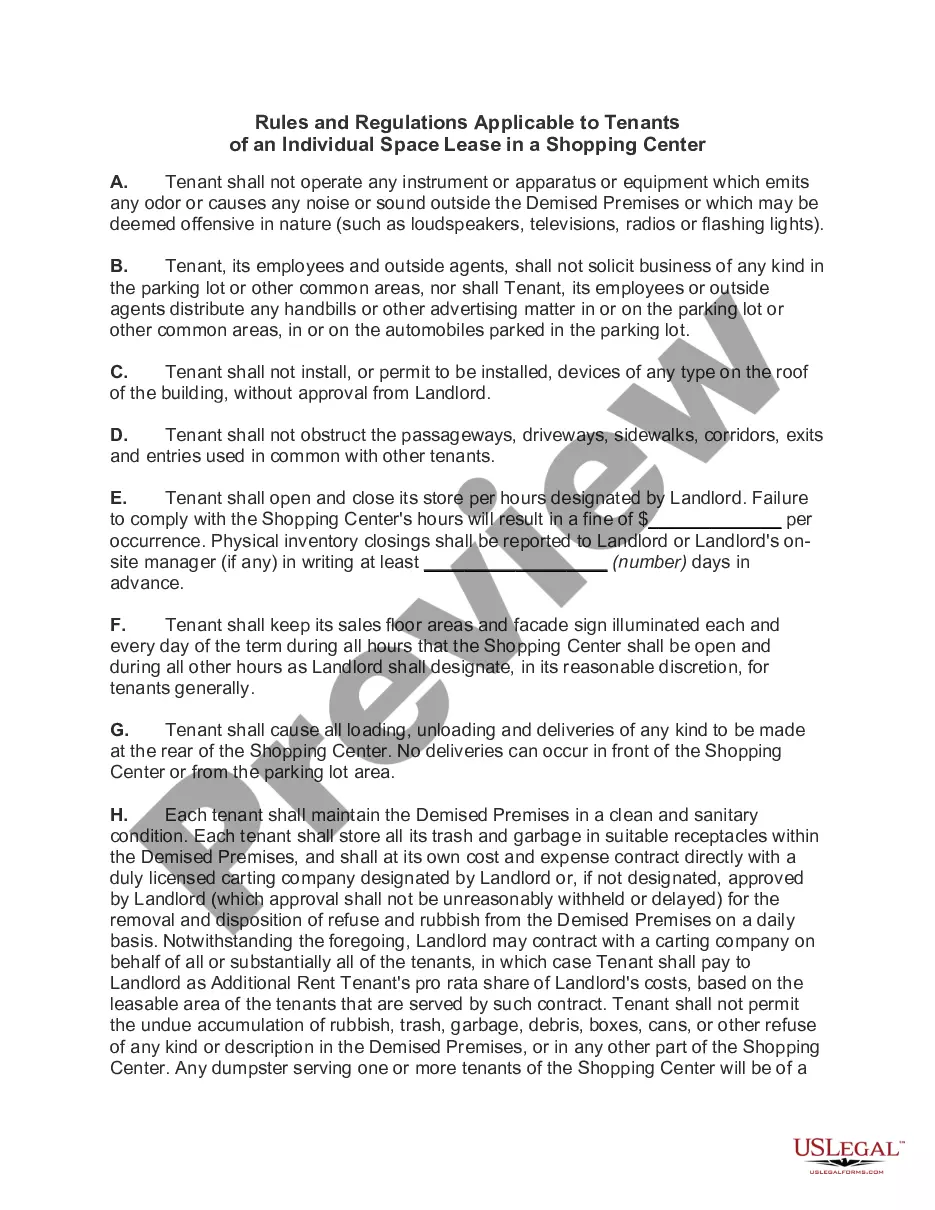
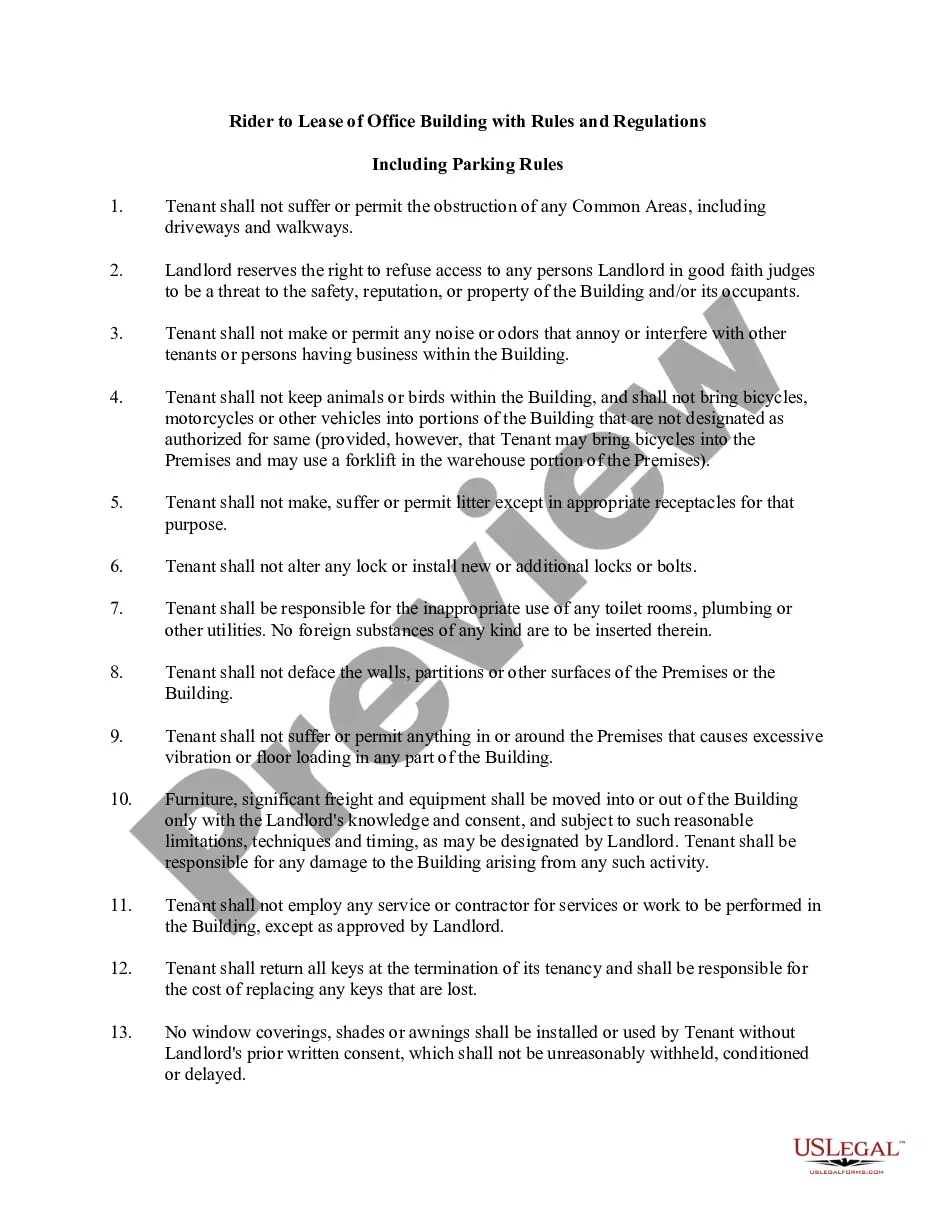
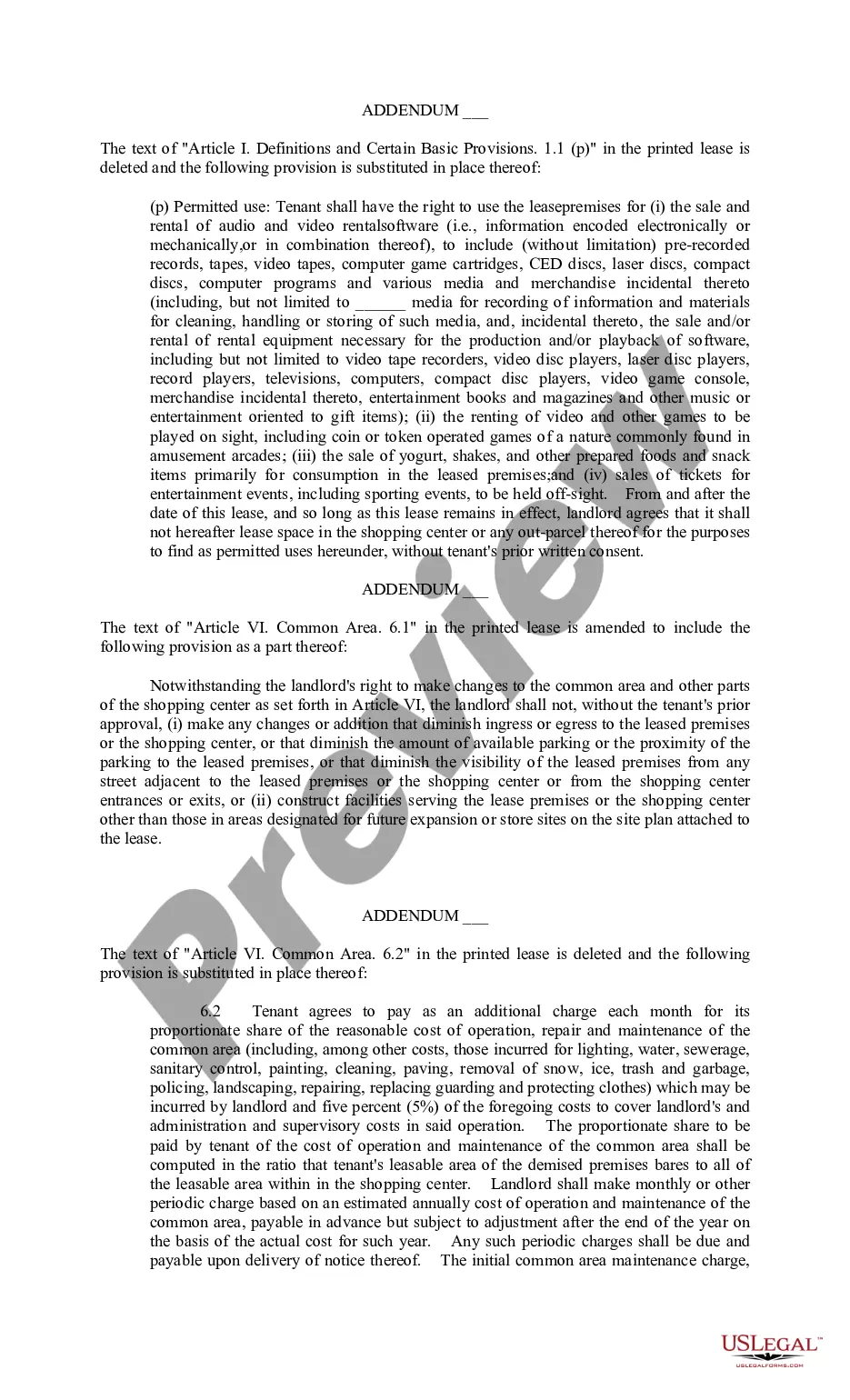
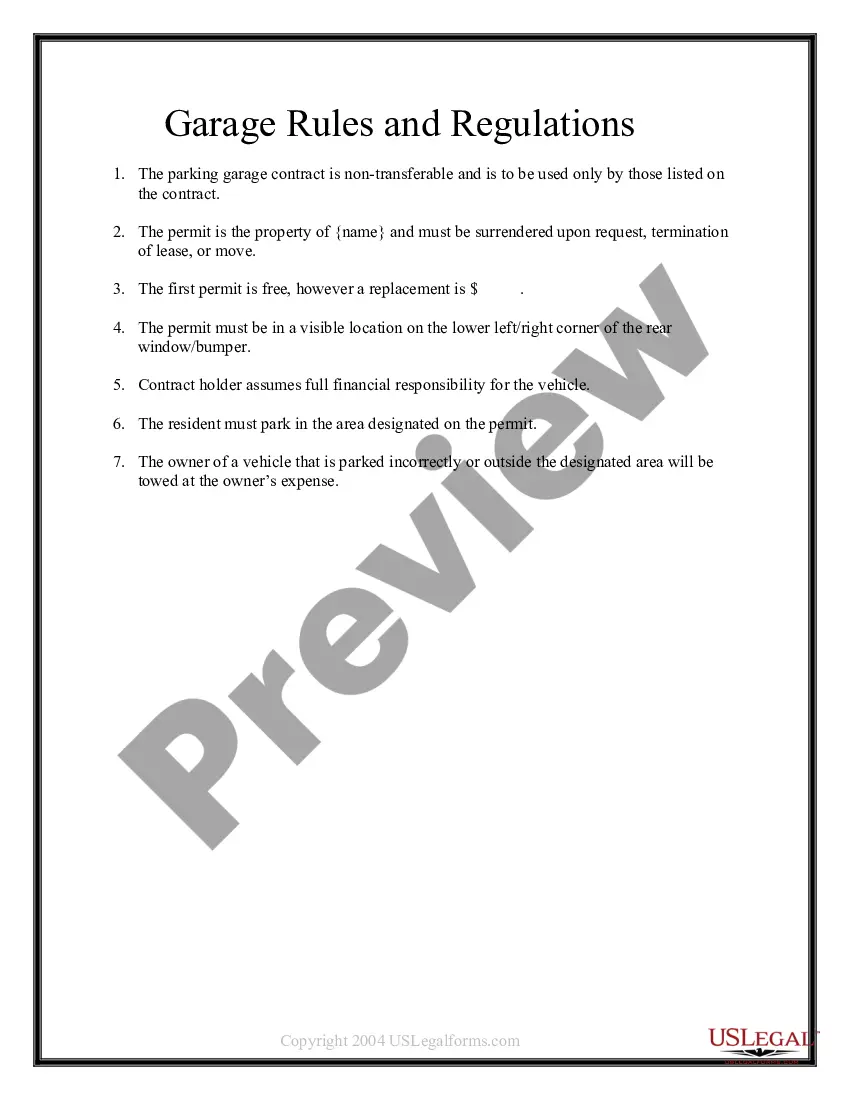
The Rules and Regulations for Shopping Center form serves as an essential legal document that outlines the operational guidelines and expectations for tenants within a shopping center. This form is crucial for establishing a harmonious environment among multiple businesses by detailing specific obligations and restrictions regarding the use of common areas, signage, deliveries, and maintenance. Unlike other lease agreements, this document specifically focuses on the rules governing tenant behavior and property management, ensuring compliance with local standards and the overall integrity of the shopping center.
Form components explained
- Ground rules for the use of common areas and delivery protocols.
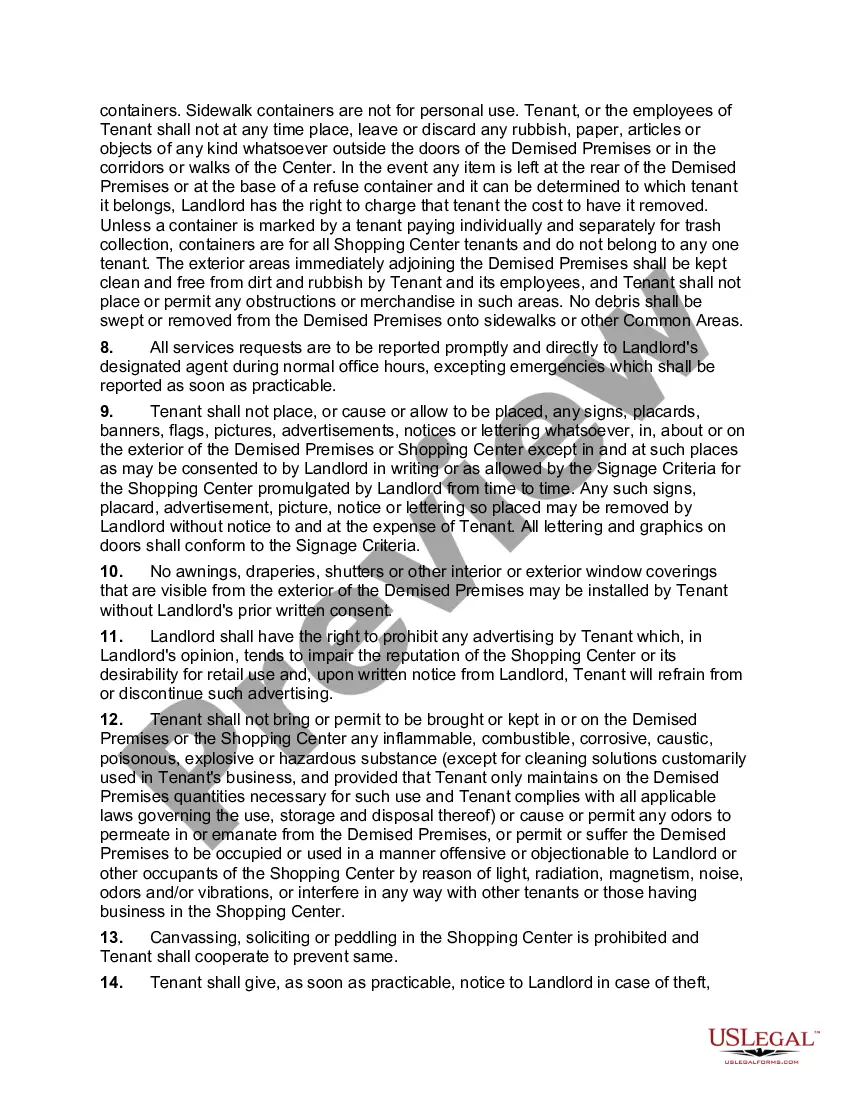
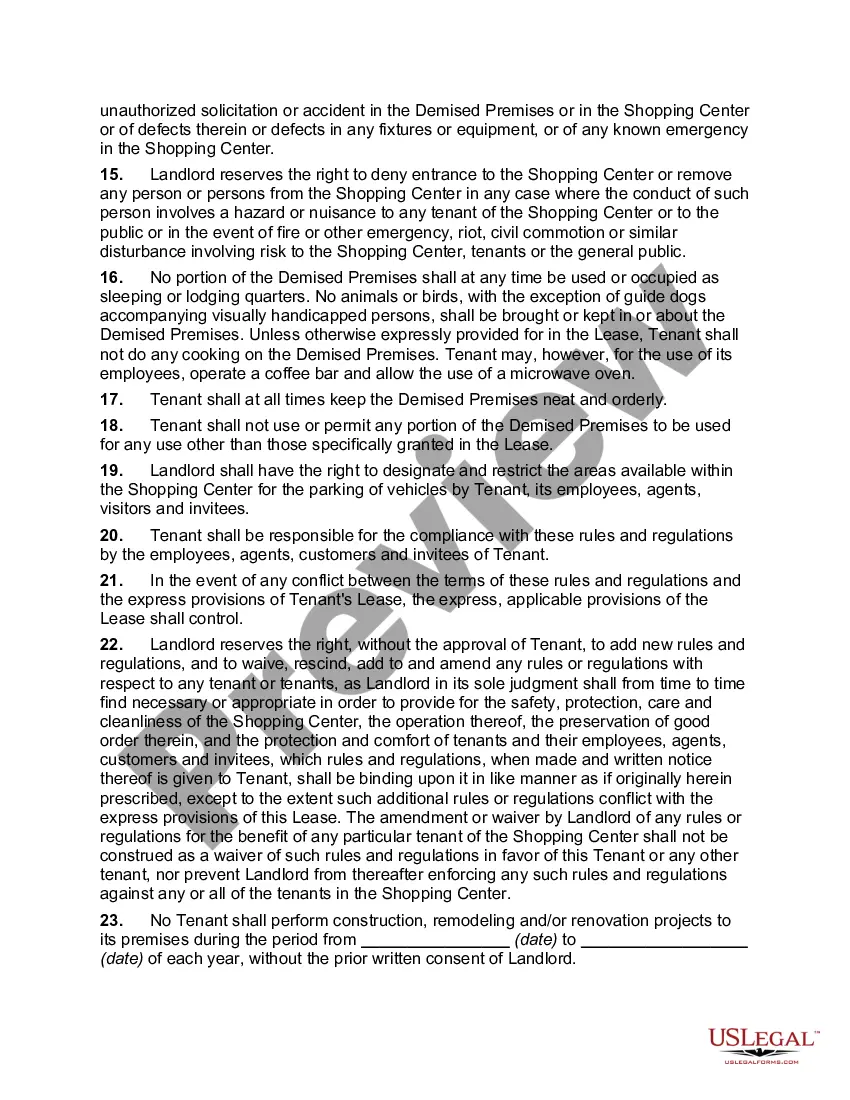
- Regulations regarding modifications and use of the premises, including signage and renovations.
- Responsibilities for maintaining cleanliness and orderliness around leased areas.
- Guidelines on the acceptable use of utilities, hazardous materials, and noise control.
- Provisions for tenant communication regarding incidents or emergencies.
- Specific restrictions on using the premises for inappropriate activities, such as sleeping or cooking.
Situations where this form applies
This form should be used when leasing space in a shopping center to ensure that all tenants are aware of the rules and regulations that govern their tenancy. It is ideal for property owners, landlords, and tenants who seek to create a clear agreement on expected conduct and maintenance responsibilities that promote a positive shopping experience for both businesses and customers.
Who can use this document
This form is recommended for:
- Landlords or property managers operating a shopping center.
- New and current tenants looking to understand their rights and obligations.
- Legal professionals advising clients on shopping center lease agreements.
How to complete this form
To complete the Rules and Regulations for Shopping Center form, follow these steps:
- Review each rule thoroughly to understand your obligations as a tenant.
- Check for any required approvals for modifications such as signage or flooring materials.
- Ensure that you comply with delivery and operational timelines set by the landlord.
- Document any incidents that occur in the premises or shopping center and report them as required.
- Sign and date the form, confirming your understanding and agreement to abide by the rules.
Does this form need to be notarized?
This form does not typically require notarization unless specified by local law.
Get your form ready online
Our built-in tools help you complete, sign, share, and store your documents in one place.
Make edits, fill in missing information, and update formatting in US Legal Forms—just like you would in MS Word.
Download a copy, print it, send it by email, or mail it via USPS—whatever works best for your next step.
Sign and collect signatures with our SignNow integration. Send to multiple recipients, set reminders, and more. Go Premium to unlock E-Sign.
If this form requires notarization, complete it online through a secure video call—no need to meet a notary in person or wait for an appointment.
We protect your documents and personal data by following strict security and privacy standards.

Make edits, fill in missing information, and update formatting in US Legal Forms—just like you would in MS Word.

Download a copy, print it, send it by email, or mail it via USPS—whatever works best for your next step.

Sign and collect signatures with our SignNow integration. Send to multiple recipients, set reminders, and more. Go Premium to unlock E-Sign.

If this form requires notarization, complete it online through a secure video call—no need to meet a notary in person or wait for an appointment.

We protect your documents and personal data by following strict security and privacy standards.
Typical mistakes to avoid
- Failing to review all rules before signing the lease.
- Ignoring specific deadlines for modifications or deliveries.
- Misunderstanding the responsibilities for cleaning and maintenance of common areas.
- Neglecting to report incidents promptly to the landlord.
Advantages of online completion
- Convenient access to comprehensive, lawyer-drafted guidelines.
- Ability to download and customize the form for specific tenant needs.
- Instantly available, ensuring timely compliance with rental agreements.
- Reduces the risk of misunderstandings between landlords and tenants.
- The rules and regulations aid in maintaining order and safety within the shopping center.
- Tenants must comply with all provisions to prevent breaches of lease agreements.
- Clear documentation helps resolve disputes should they arise among tenants or with the landlord.
What to keep in mind
- Understanding and adhering to shopping center regulations is essential for a smooth tenancy.
- This form clarifies responsibilities, promoting cooperation among tenants.
- Complete the form with careful consideration to protect your interests as a tenant.
Looking for another form?
Form popularity
FAQ
This principle was recently affirmed by California's Supreme Court, though the court made it clear that to qualify as a public forum an area within a shopping center must be designed and furnished in a way that induces shoppers to congregate for purposes of entertainment, relaxation, or conversation, and not merely to
In most cases, yes. Most states consider shopping malls to be the private property of the mall owner. Just as with any piece of private property, owners can make rules regarding that property, including what is appropriate attire.
Shopping malls are one of those additions to your investment portfolio that are going to change things up in a massive way. They are going to add a bigger return to your portfolio and ensure things stay on track.This is why shopping malls are great because the investment is quite safe and the returns are still high.
Investing in a retail shopping center has the potential to be a very profitable transaction. If done correctly, it can deliver a stable stream of rental income and steady capital appreciation resulting in a substantial return for the owner upon exit.
Yes. The malls are making profit but not the shops in it. Though it would not be right to say all the shops are in losses.The shopping malls are do make profits through various ways .
The three traditional approaches used to value a shopping center are the cost approach, sales comparison approach and the income capitalization approach. Unless the shopping center was recently constructed, the cost approach is seldom used.
Malls not only serve as the iconic center of city but also provide physical spaces for social activities, as a result shopping malls has replaced every aspects of urban life.There is a presumption of publicness in these privately owned public spaces, but in reality they are in public realm.
Adhere to parking lot rules. Help people with their packages. Hold the door for others. Avoid talking or texting on your cell phone for long periods of time. Be careful when walking with a romantic interest. Never shout or scream inside the mall. Don't stand in front of a shop for too long.
The average time spent in a mall is 135 minutes, ICSC found.