Sample Letter for Directive - Delegate New or Additional Duties
What is this form?
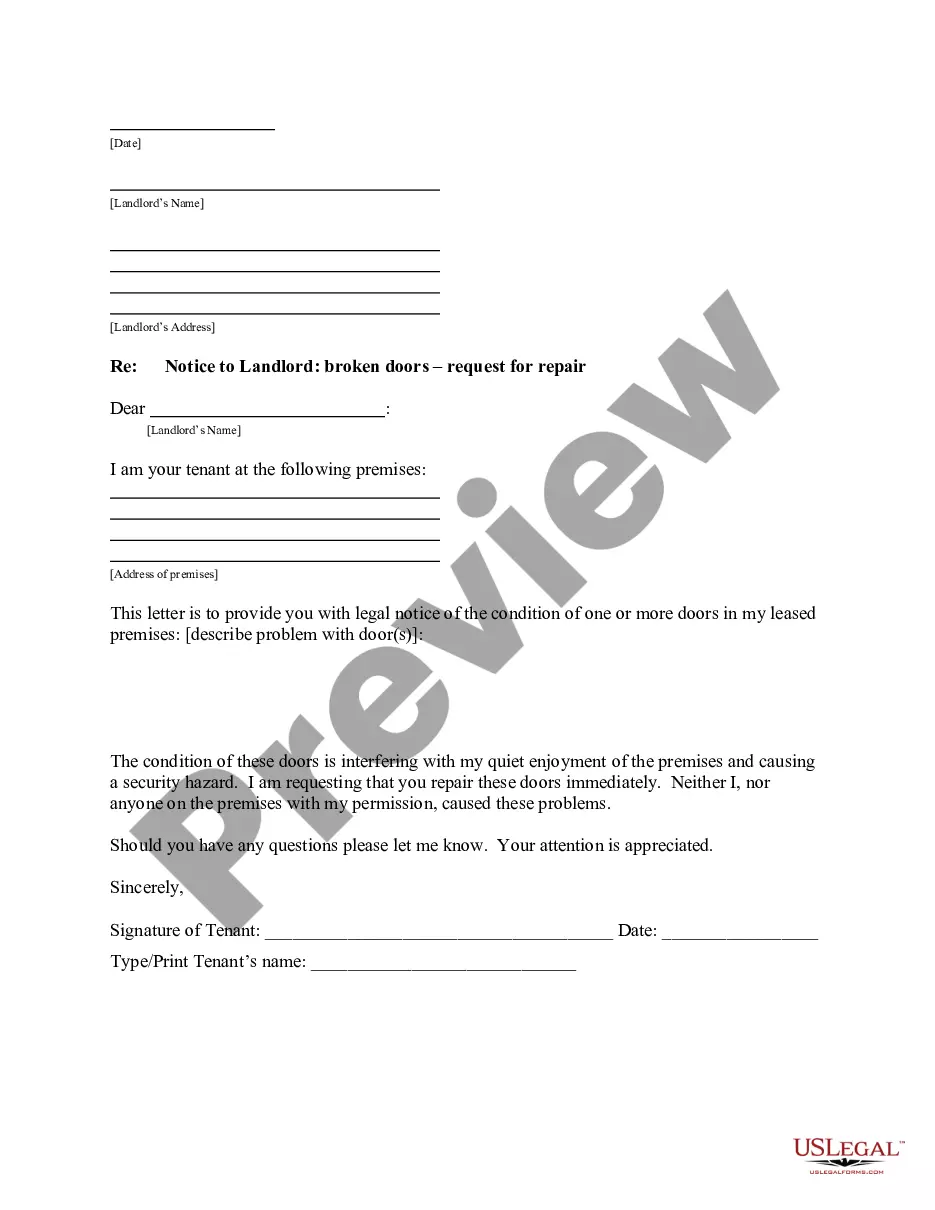
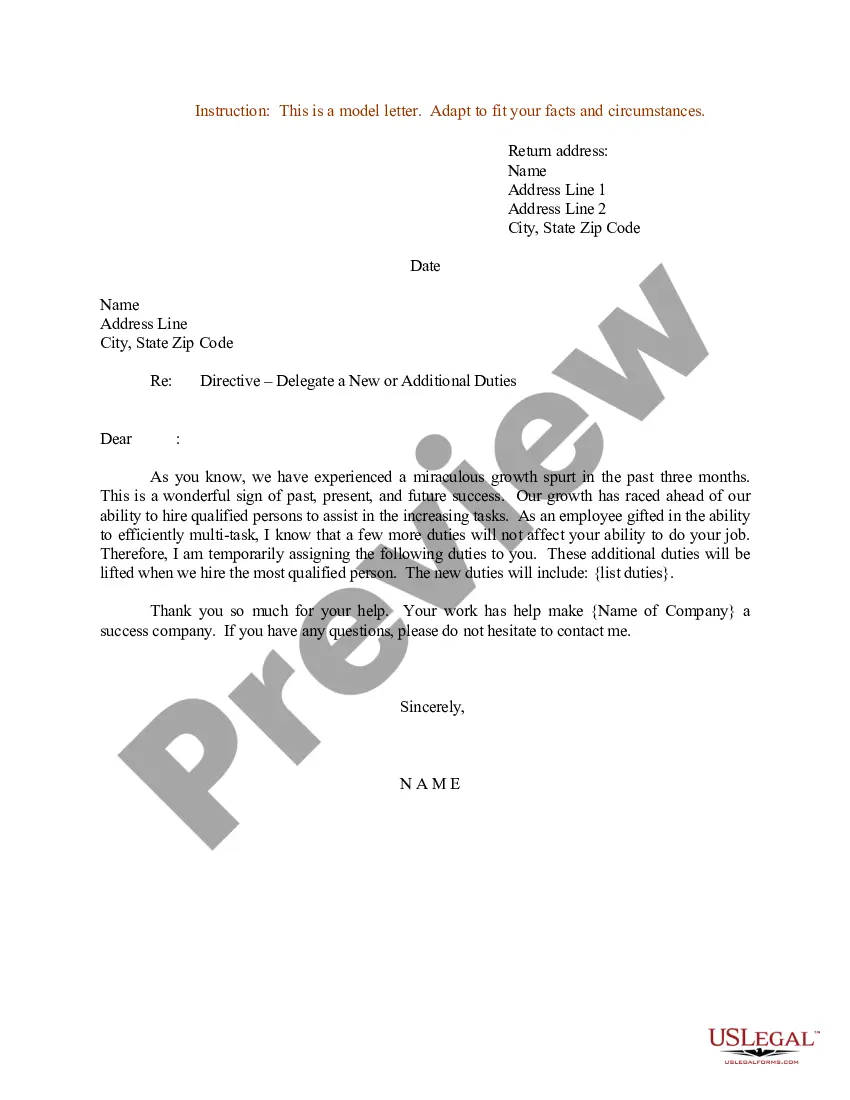
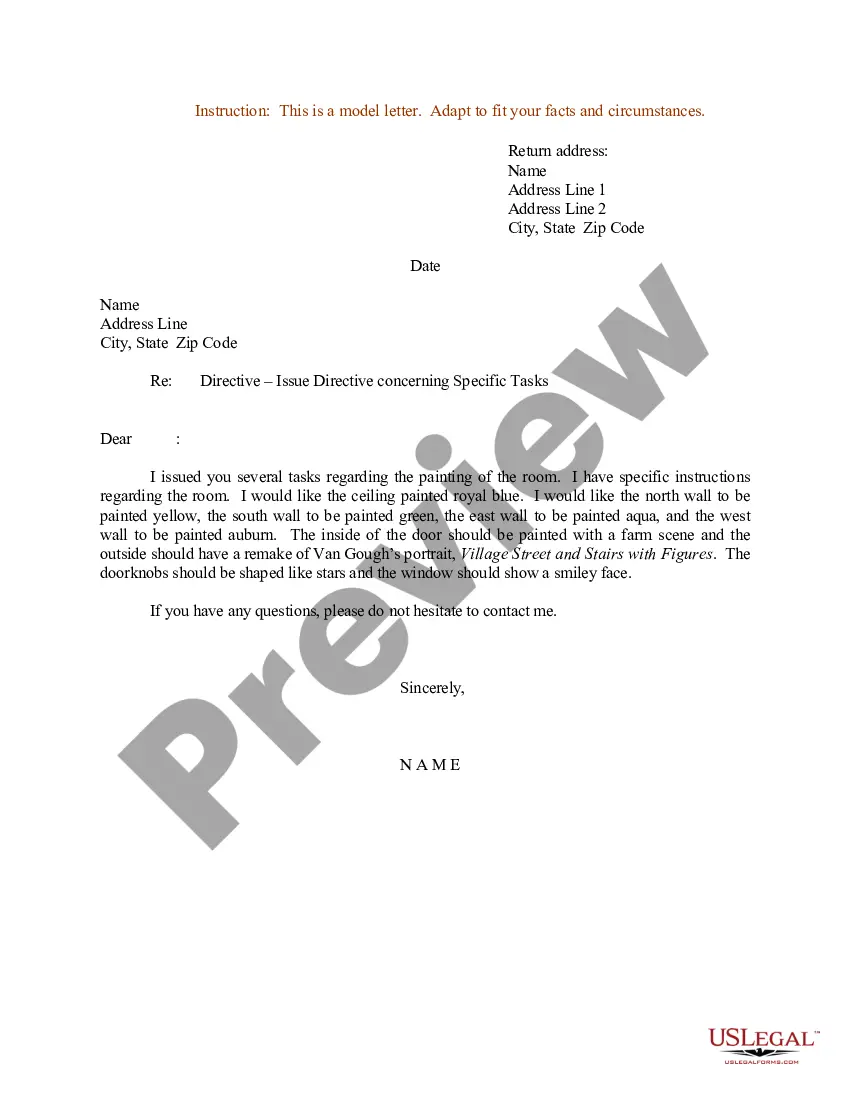
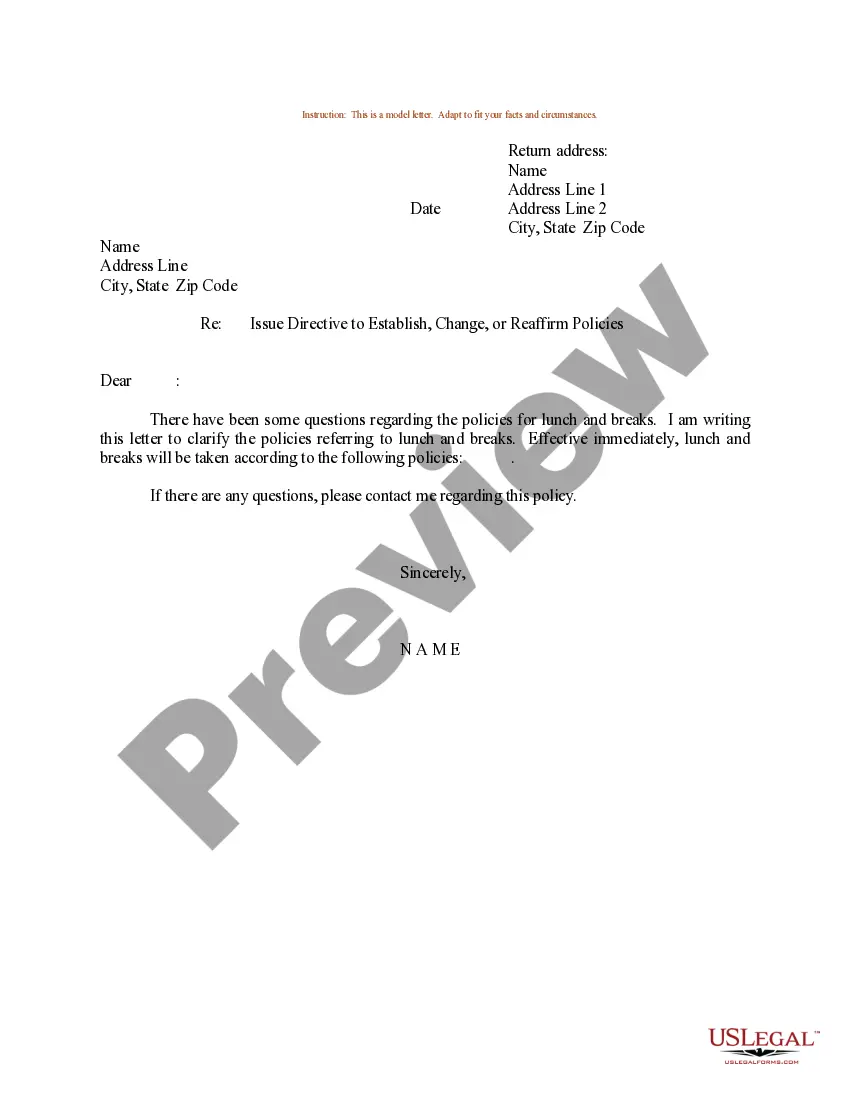
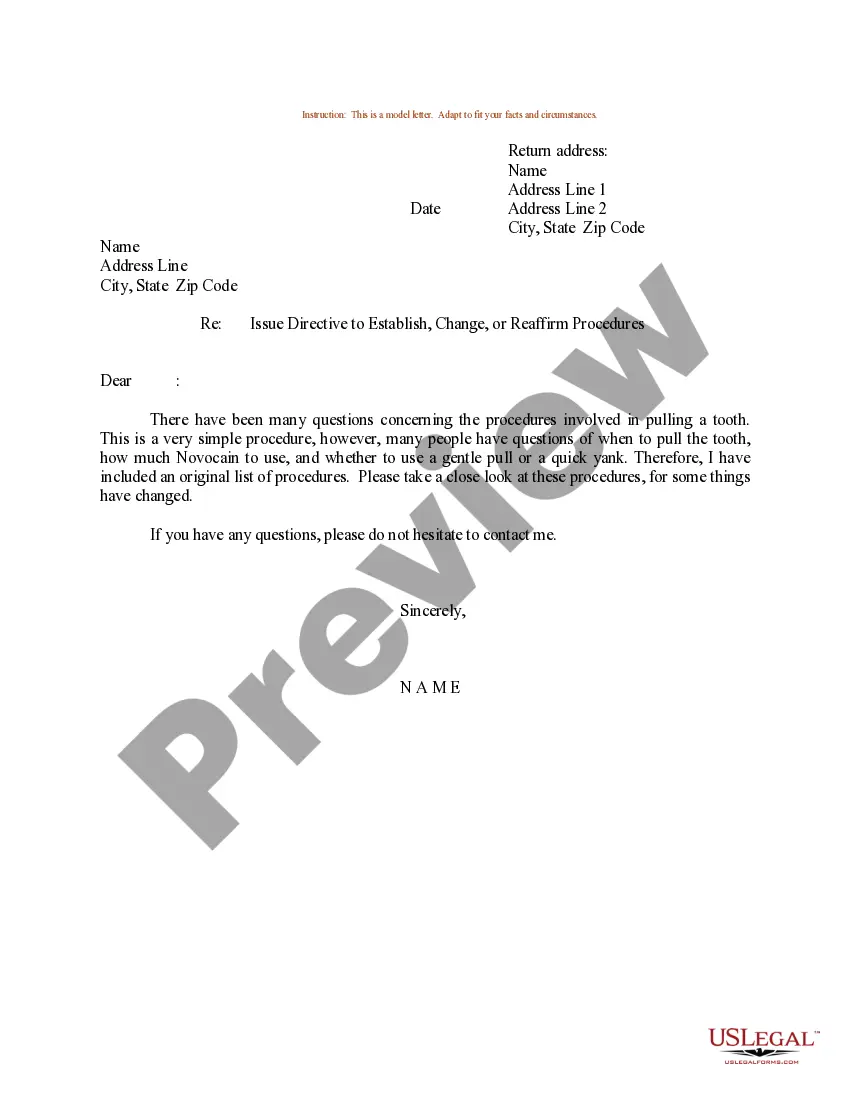
The Sample Letter for Directive - Delegate New or Additional Duties is a formal document used to assign new responsibilities or tasks to an employee or team member within an organization. This letter serves as a clear directive, distinguishing it from informal communications that may lack legal standing. It is especially useful in managing transitions in workload or reassigning duties to ensure business continuity and clarity in operations.
Form components explained
- Return address: Includes the sender's name and address.
- Date: The date the letter is written.
- Recipient address: Contains the name and address of the person receiving the directive.
- Subject line: Clearly states the purpose as "Directive - Delegate New or Additional Duties."
- Body of the letter: Expresses gratitude and details the new or additional duties being assigned.
- Closing: Includes a professional sign-off and the sender's name.
Situations where this form applies
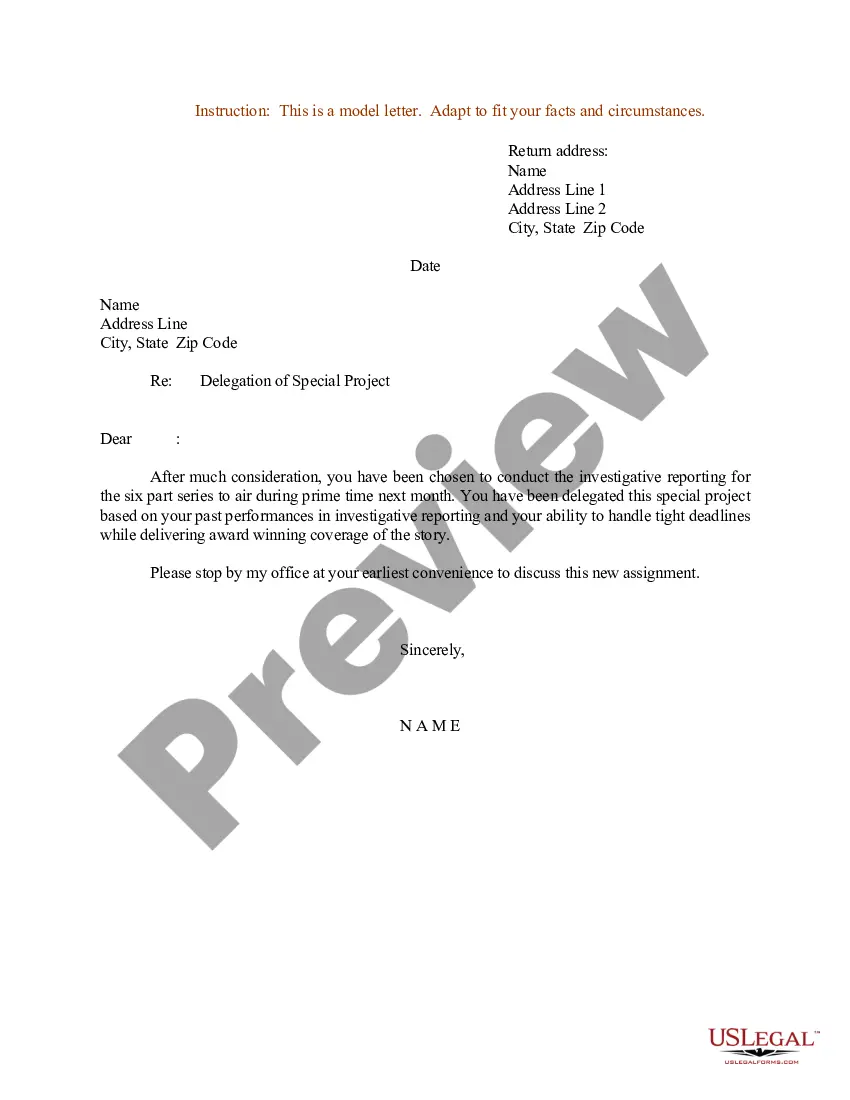
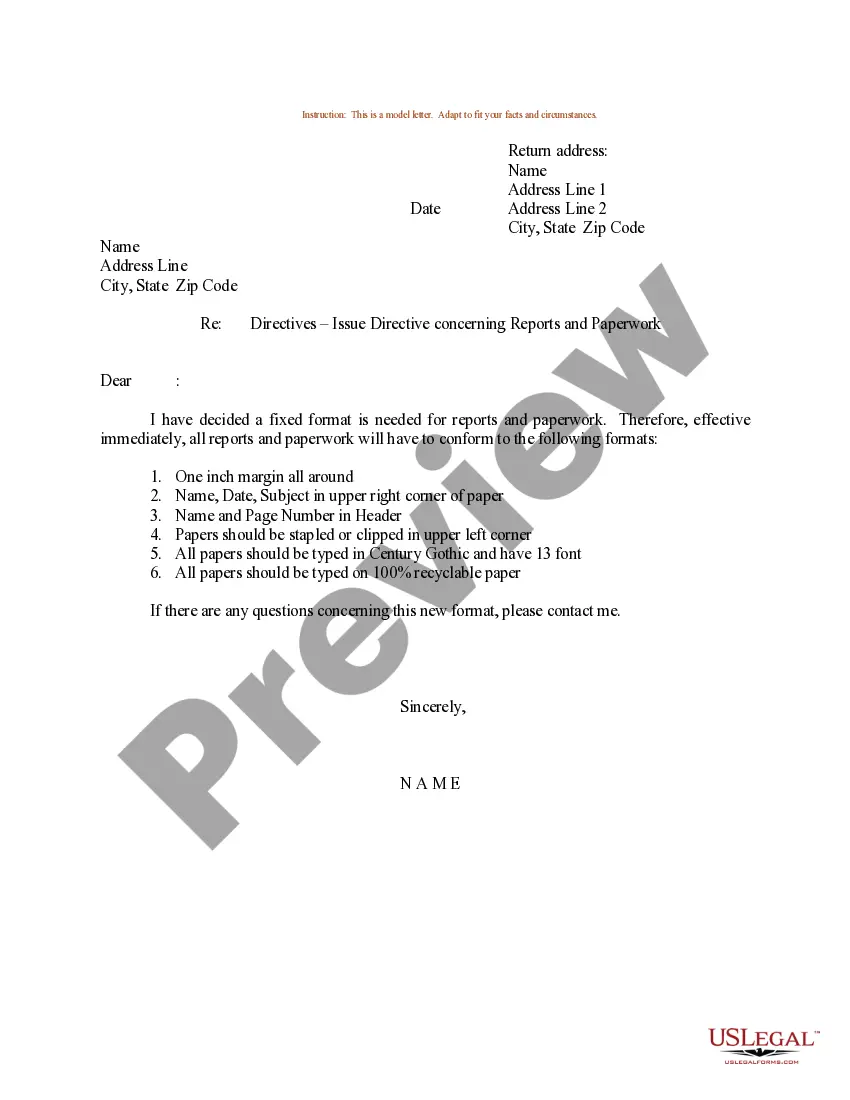
This form is appropriate to use when an organization needs to formally delegate new responsibilities to an employee. Examples include designating a team member to lead a new project, reallocating tasks following a personnel change, or enhancing an employee's role within the company. A written directive helps ensure that all parties understand the new expectations and can refer back to it if needed.
Who should use this form
Individuals or entities that can benefit from this form include:
- Employers wishing to formally assign new tasks to employees.
- Managers implementing changes in team structures or responsibilities.
- Human resources professionals documenting changes in job roles.
- Any organization needing a clear and documented method of delegation.
Instructions for completing this form
- Identify the sender's information by filling in the return address.
- Include the date of writing the letter.
- Enter the recipient's name and address in the designated area.
- Clearly state the directive regarding the new duties being delegated in the letter's body.
- Close the letter with a respectful sign-off and the sender's name.
Notarization guidance
Notarization is generally not required for this form. However, certain states or situations might demand it. You can complete notarization online through US Legal Forms, powered by Notarize, using a verified video call available anytime.
Get your form ready online
Our built-in tools help you complete, sign, share, and store your documents in one place.
Make edits, fill in missing information, and update formatting in US Legal Forms—just like you would in MS Word.
Download a copy, print it, send it by email, or mail it via USPS—whatever works best for your next step.
Sign and collect signatures with our SignNow integration. Send to multiple recipients, set reminders, and more. Go Premium to unlock E-Sign.
If this form requires notarization, complete it online through a secure video call—no need to meet a notary in person or wait for an appointment.
We protect your documents and personal data by following strict security and privacy standards.

Make edits, fill in missing information, and update formatting in US Legal Forms—just like you would in MS Word.

Download a copy, print it, send it by email, or mail it via USPS—whatever works best for your next step.

Sign and collect signatures with our SignNow integration. Send to multiple recipients, set reminders, and more. Go Premium to unlock E-Sign.

If this form requires notarization, complete it online through a secure video call—no need to meet a notary in person or wait for an appointment.

We protect your documents and personal data by following strict security and privacy standards.
Common mistakes to avoid
- Failing to include all necessary addresses.
- Omitting the date, which may create confusion about when the changes take effect.
- Not providing enough detail in the body regarding the new duties assigned.
- Using informal language that may undermine the seriousness of the directive.
Benefits of completing this form online
- Convenience: Quickly download and customize the form as needed.
- Editability: Easily modify the content to reflect specific responsibilities or names.
- Reliability: Access accurately drafted content created by licensed attorneys.
What to keep in mind
- The form serves to officially delegate duties, ensuring clarity and accountability.
- It is useful for various organizational scenarios, especially in transitional periods.
- Clear communication in the letter helps prevent misunderstandings about new responsibilities.
Looking for another form?
Form popularity
FAQ
To Whom it May Concern: By means of this letter, I, name and title, delegate the authority herein described to the position title, on the following terms and conditions: The title may review and execute, on my behalf, contracts in an amount and duration not to exceed dollar limit and period of time.
1. emails written to give command or order to do something.
How to Write a Directive Letter. Clearly state your request or indicate what needs to be done and give as much detail as necessary for the task, project, or other assignment to be accomplished. If a problem needs to be resolved, clearly indicate what the problem is and, if desired, how you would like it to be solved.
A directive is defined as an order or an official instruction. When your boss orders you to call a client, this is an example of a directive.
When a group of steel workers are assigned to represent all steel workers in union talks, this group is an example of a delegation. When a boss assigns tasks to his employees, this is an example of delegation. The act of granting another the power to act on one's behalf in an official capacity; a group of delegates.
Delegation means to empower someone or give authority to someone to perform a task.A delegation letter is a formal letter, but it should be having a lighter tone, it should be pleasant not overbearing.
Provide Clear Instructions. Once you have a clear idea of what you want to achieve write it clearly. Be Concise and to the Point. Create Your Plan Step-by-Step. One Issue Per Directive. When in Doubt, Refer to Your Previous Directives. Use Exact Numbers.
Directive letters are letters written to give official or authoritative instructions. These letters allow individuals or companies to carry out tasks in an efficient way. There are countless scenarios that may require one to write a directive letter.
Choose the right person for the job. Part of being a good leader is understanding your employees' strengths, weaknesses, and preferences. Explain why you're delegating. Provide the right instructions. Provide resources and training. Delegate responsibility and authority. Check the work and provide feedback. Say thank you.