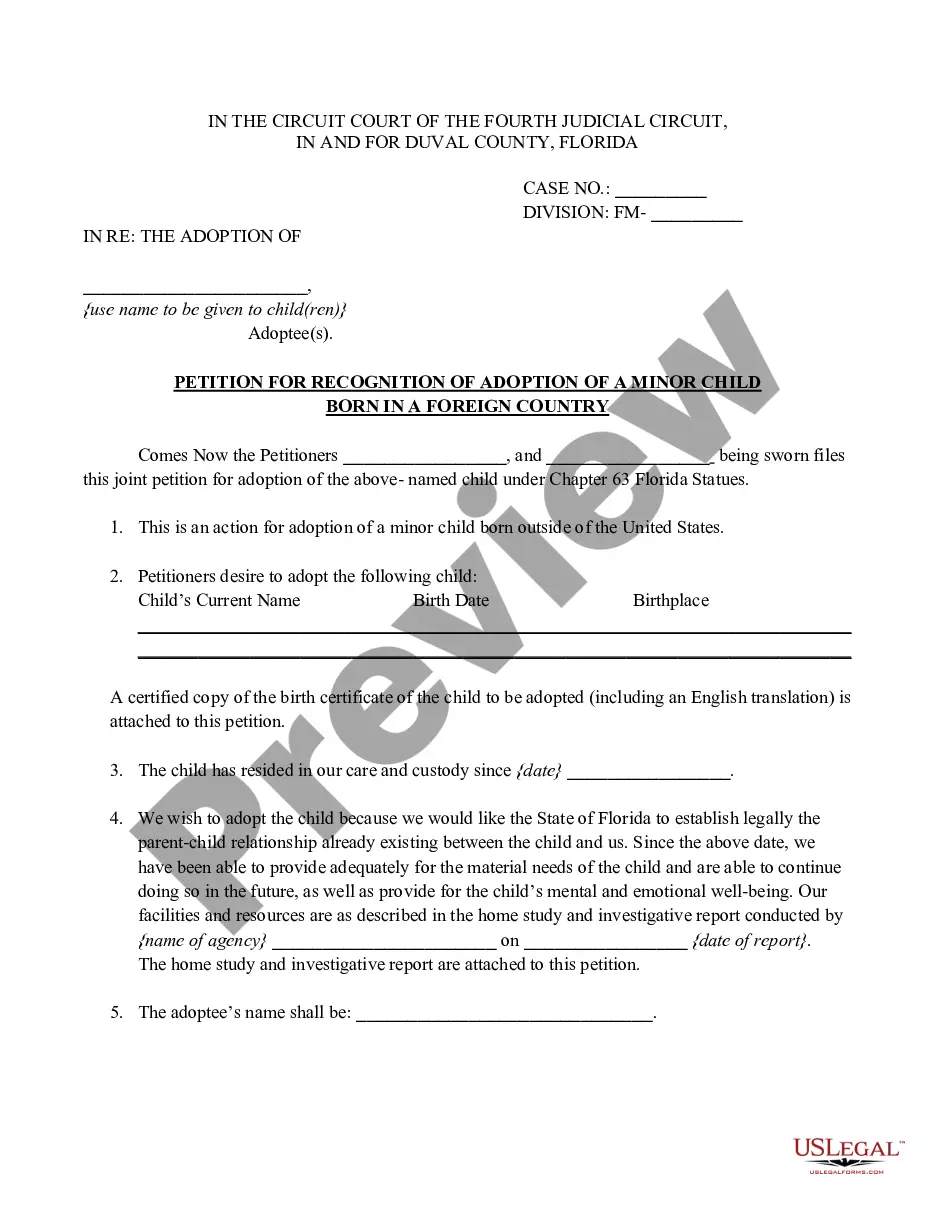
Code of Ethics for Elders of Main Street Presbyterian Church
What this document covers
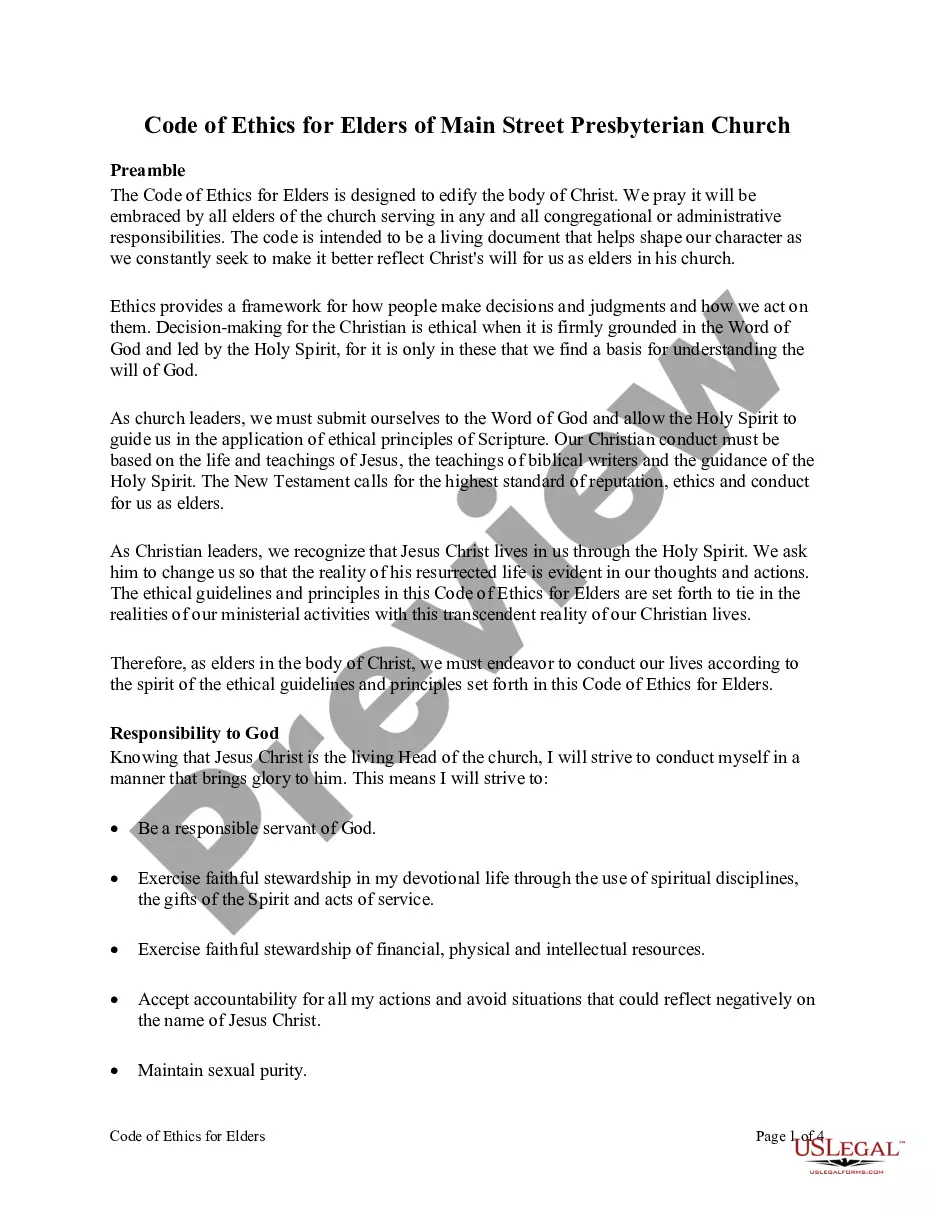
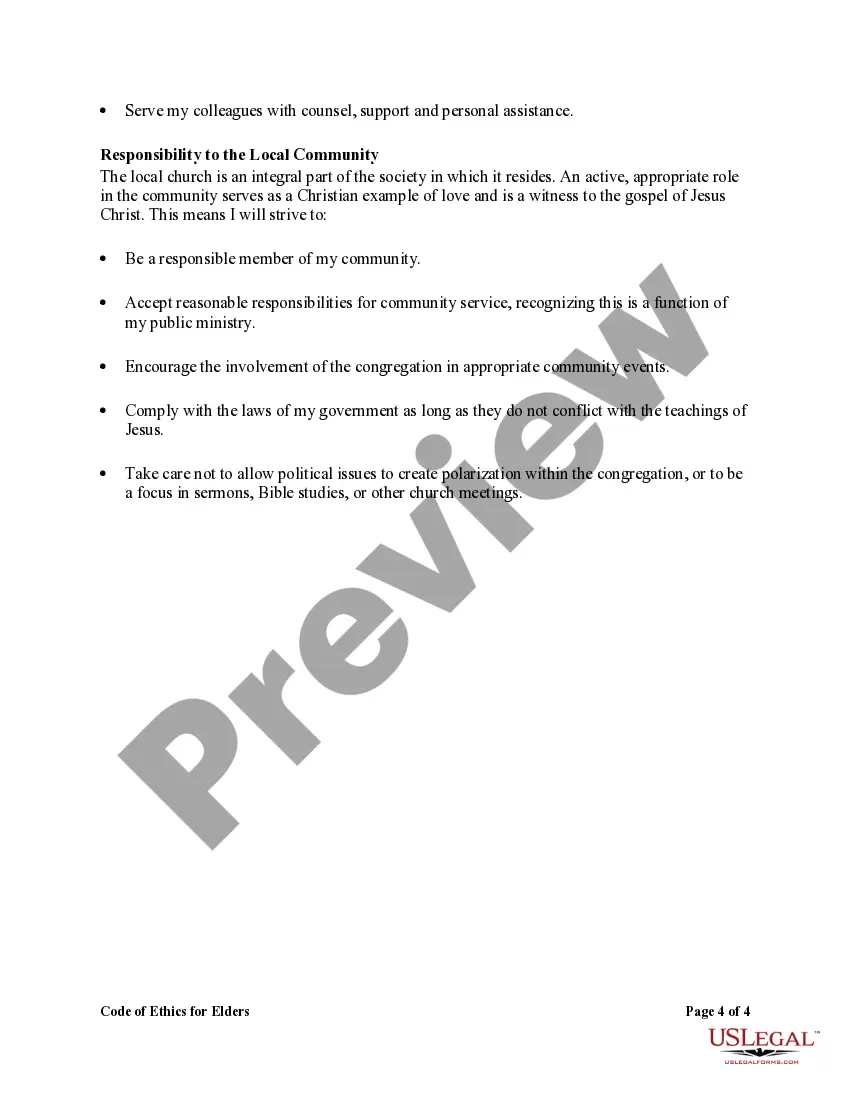
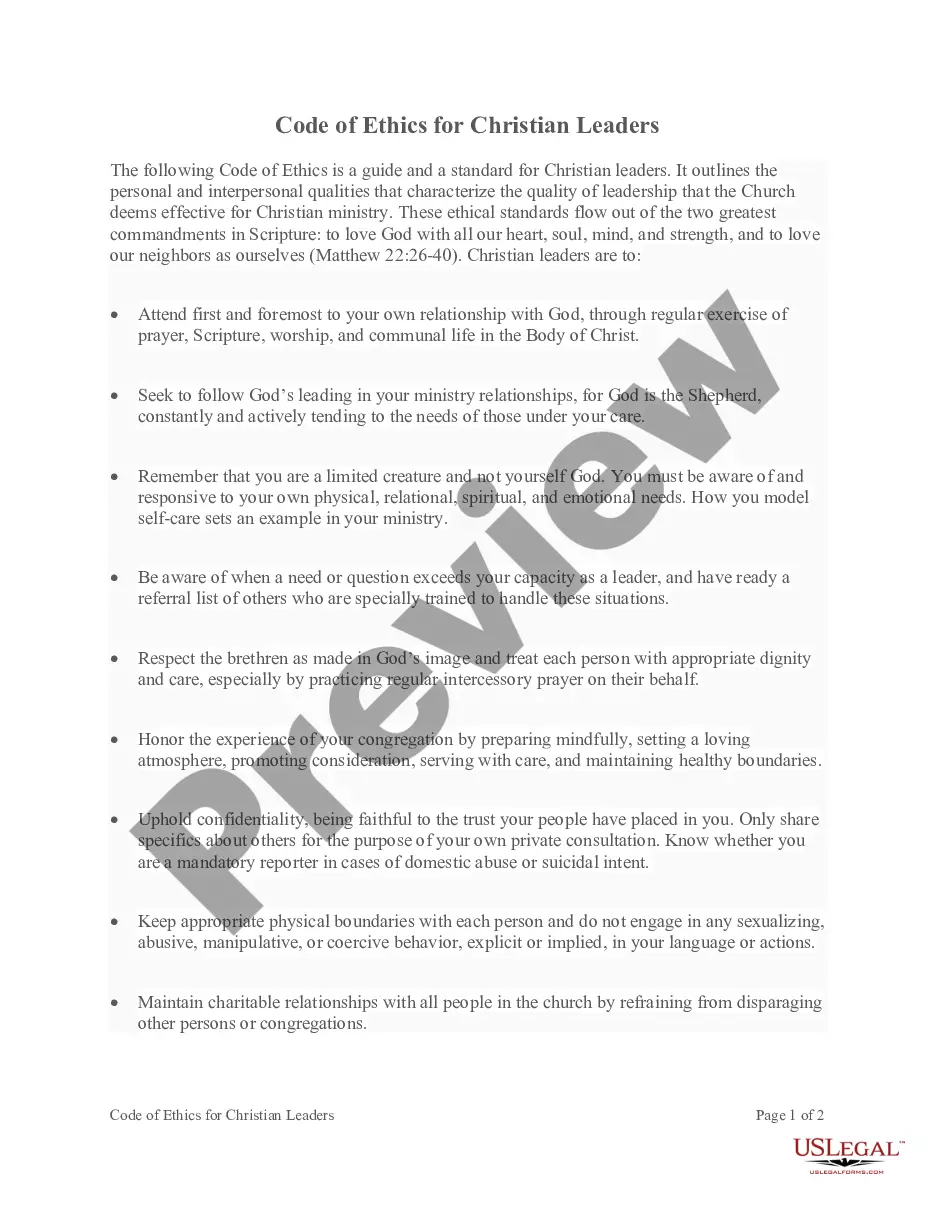
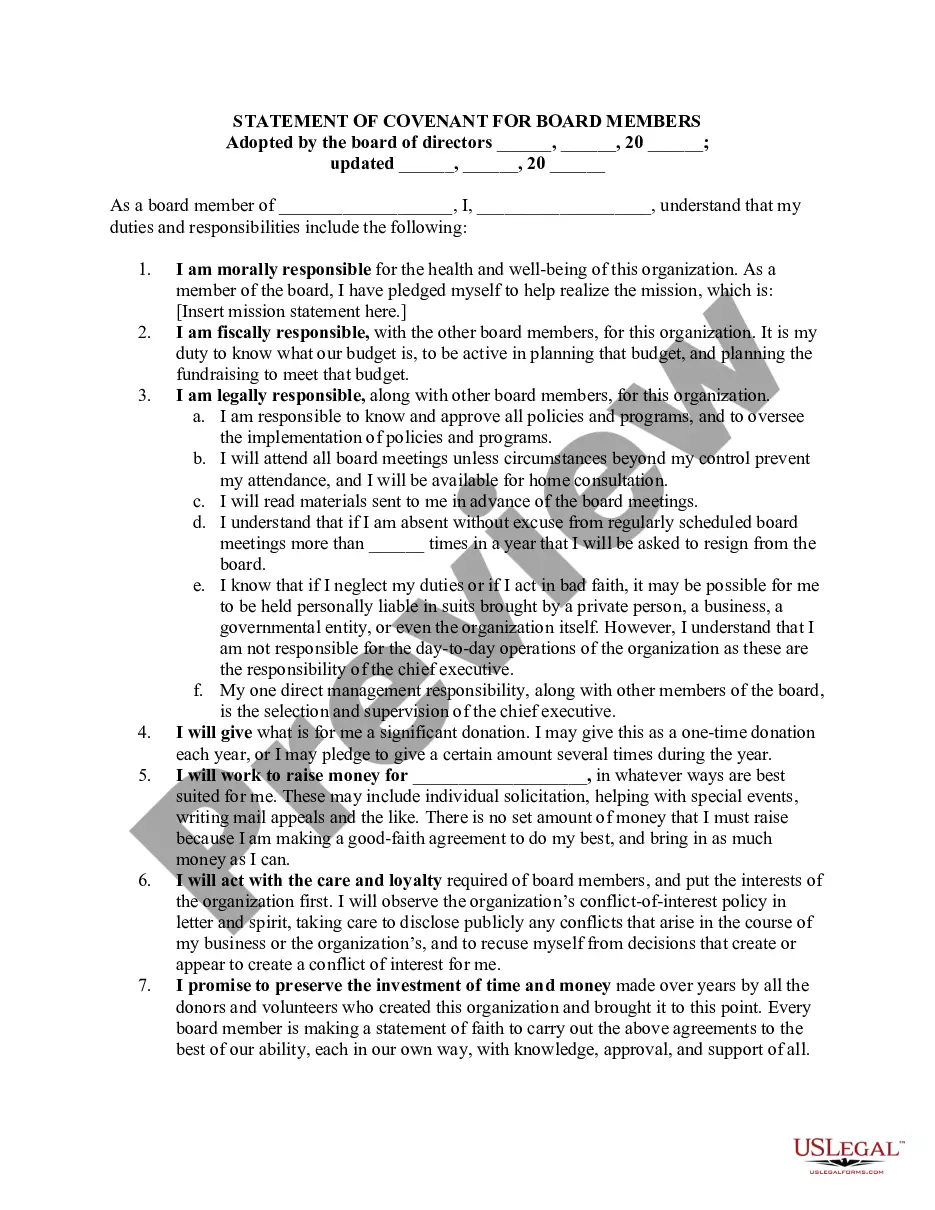
The Code of Ethics for Elders of Main Street Presbyterian Church serves as a guiding document for church leaders, outlining ethical principles and responsibilities. This form is essential for maintaining the integrity and spiritual health of the church community by establishing a framework that aligns decision-making with Christian values. Unlike standard governance forms, this code specifically addresses the unique ethical duties of elders within a church context.
Key parts of this document
- Preamble emphasizing the purpose and intent of the Code of Ethics for Elders.
- Responsibilities to God, outlining key expectations for spiritual conduct.
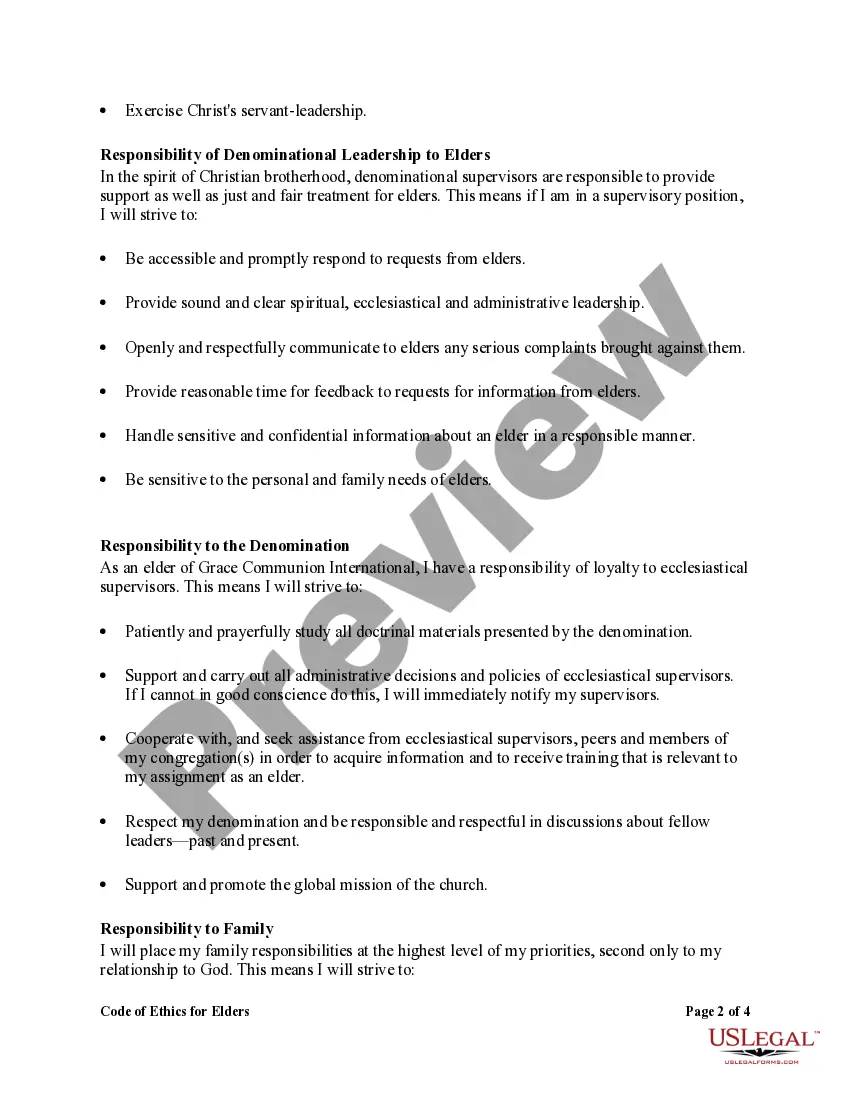
- Obligations of denominational leadership towards elders, emphasizing support and fair treatment.
- Expectations concerning family responsibilities to promote a healthy work-life balance.
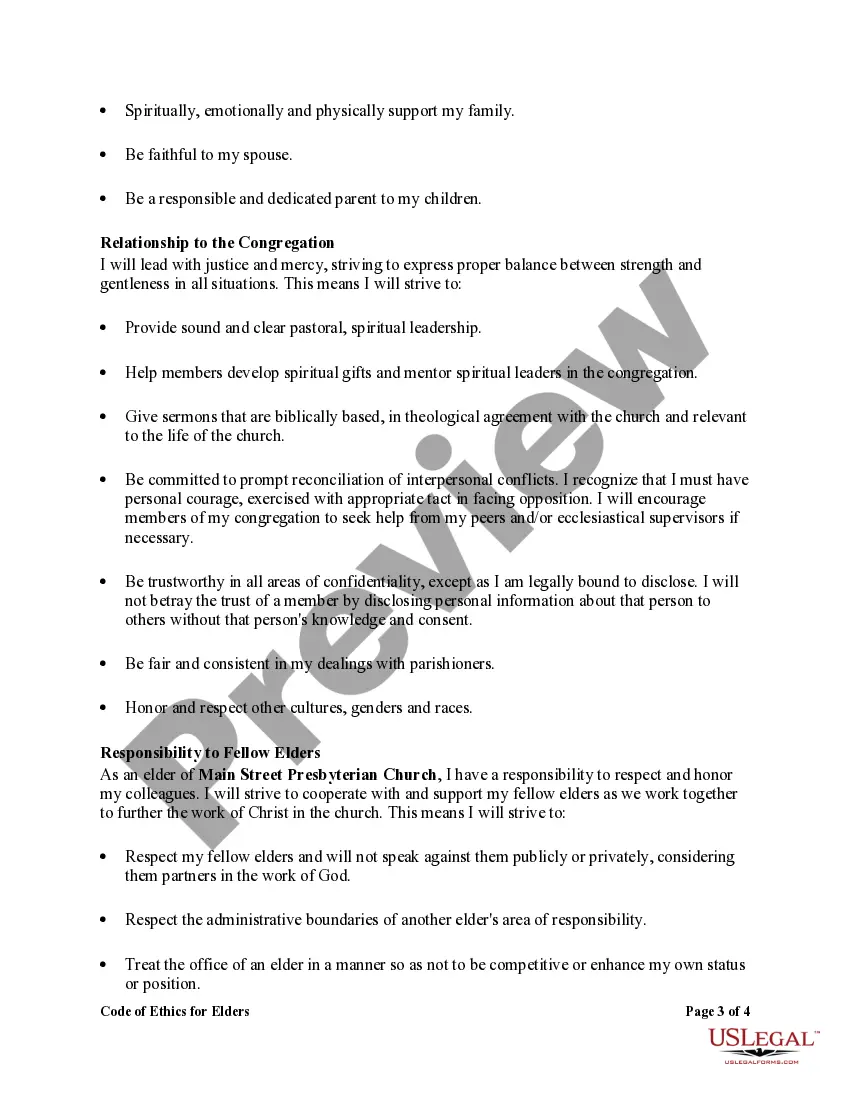
- Guidelines for relationships with the congregation, focusing on justice and mercy.
- Responsibilities towards fellow elders and the local community, encouraging cooperation and example-setting.
Common use cases
This form should be utilized by elders of Main Street Presbyterian Church to clarify their ethical commitments and responsibilities. It is applicable during the ordination process, annual reviews, or when engaging in church leadership activities. The Code of Ethics helps ensure that decisions made by elders align with biblical teachings and uphold the integrity of the church community.
Who this form is for
The following individuals should use the Code of Ethics for Elders:
- Elders serving in any capacity within Main Street Presbyterian Church.
- Church leaders who oversee spiritual, financial, or organizational matters.
- Denominational supervisors responsible for mentoring and supporting elders.
How to prepare this document
- Read through the entire Code of Ethics to understand its principles and responsibilities.
- Reflect on your personal commitment to the outlined ethical guidelines.
- Discuss the Code with fellow elders and the congregation for clarity and support.
- Sign and date the document as an affirmation of your commitment to upholding the code.
- File the signed document as part of your personal records and church governance materials.
Notarization guidance
This form usually doesn’t need to be notarized. However, local laws or specific transactions may require it. Our online notarization service, powered by Notarize, lets you complete it remotely through a secure video session, available 24/7.
Get your form ready online
Our built-in tools help you complete, sign, share, and store your documents in one place.
Make edits, fill in missing information, and update formatting in US Legal Forms—just like you would in MS Word.
Download a copy, print it, send it by email, or mail it via USPS—whatever works best for your next step.
Sign and collect signatures with our SignNow integration. Send to multiple recipients, set reminders, and more. Go Premium to unlock E-Sign.
If this form requires notarization, complete it online through a secure video call—no need to meet a notary in person or wait for an appointment.
We protect your documents and personal data by following strict security and privacy standards.

Make edits, fill in missing information, and update formatting in US Legal Forms—just like you would in MS Word.

Download a copy, print it, send it by email, or mail it via USPS—whatever works best for your next step.

Sign and collect signatures with our SignNow integration. Send to multiple recipients, set reminders, and more. Go Premium to unlock E-Sign.

If this form requires notarization, complete it online through a secure video call—no need to meet a notary in person or wait for an appointment.

We protect your documents and personal data by following strict security and privacy standards.
Mistakes to watch out for
- Failing to read the entire document before signing.
- Not discussing the Code of Ethics with fellow elders for collective understanding.
- Neglecting to revisit and reflect on the Code annually.
Advantages of online completion
- Immediate access to the Code of Ethics for review and completion.
- Editable format to personalize the document's specifics to your church's context.
- Quick download and secure storage options for future reference.
Legal use & context
- The Code of Ethics serves as a vital document guiding elder conduct and is recognized within church governance.
- While not legally enforceable in a court of law, this Code can influence accountability within the church.
- Upholding the Code can enhance the reputation of the church and its leadership in the community.
Summary of main points
- The Code of Ethics for Elders is essential for guiding the spiritual and ethical responsibilities of church leaders.
- Understanding and committing to the code benefits both the individual elder and the church community.
- Regular reflection and discussion about the Code can strengthen church governance and community relations.
Looking for another form?
Form popularity
FAQ
Warren suggests that these purposes are worship, fellowship, discipleship, ministry, and mission, and that they are derived from the Great Commandment (Matthew 40) and the Great Commission (Matthew 20).
Prayer. Discipleship. Mission Minded Focus. Teaching. Leadership. Worship. Communion and Fellowship.
In our modern English Bibles, the word church is supposedly translated from the Greek word ekklesia which simply means: people assembled.Secondly, in Christian use, the word means the Lord's Assembly or, all those who have been called out by God and joined together (assembled) in His family; the body of Christ.
A church (or local church) is a religious organization or congregation that meets in a particular location. Many are formally organized, with constitutions and by-laws, maintain offices, are served by clergy or lay leaders, and, in nations where this is permissible, often seek non-profit corporate status.
Catholic Church In Catholic ecclesiology, Jesus Christ is called the invisible Head or the Heavenly Head, while the Pope is called the visible Head or the Earthly Head. Therefore, the Pope is often called the Vicar of Christ.
Old English cirice, circe "place of assemblage set aside for Christian worship; the body of Christian believers, Christians collectively; ecclesiastical authority or power," from Proto-Germanic kirika (source also of Old Saxon kirika, Old Norse kirkja, Old Frisian zerke, Middle Dutch kerke, Dutch kerk, Old High German
We Are Church is a movement that advocates changing the teachings and the structures of responsibility and authority of the Catholic Church.
1 : a building for public and especially Christian worship. 2 : the clergy or officialdom of a religious body the word church 2026 is put for the persons that are ordained for the ministry of the Gospel, that is to say, the clergy J. Ayliffe. 3 often capitalized : a body or organization of religious believers: such as.
In our modern English Bibles, the word church is supposedly translated from the Greek word ekklesia which simply means: people assembled.Secondly, in Christian use, the word means the Lord's Assembly or, all those who have been called out by God and joined together (assembled) in His family; the body of Christ.
According to the Catechism of the Catholic Church, Catholic ecclesiology professes the Catholic Church to be the "sole Church of Christ" - i.e., the one true church defined as "one, holy, catholic, and apostolic" in the Four Marks of the Church in the Nicene Creed.