Subcontractor Agreement for Cleaning Service
About this form
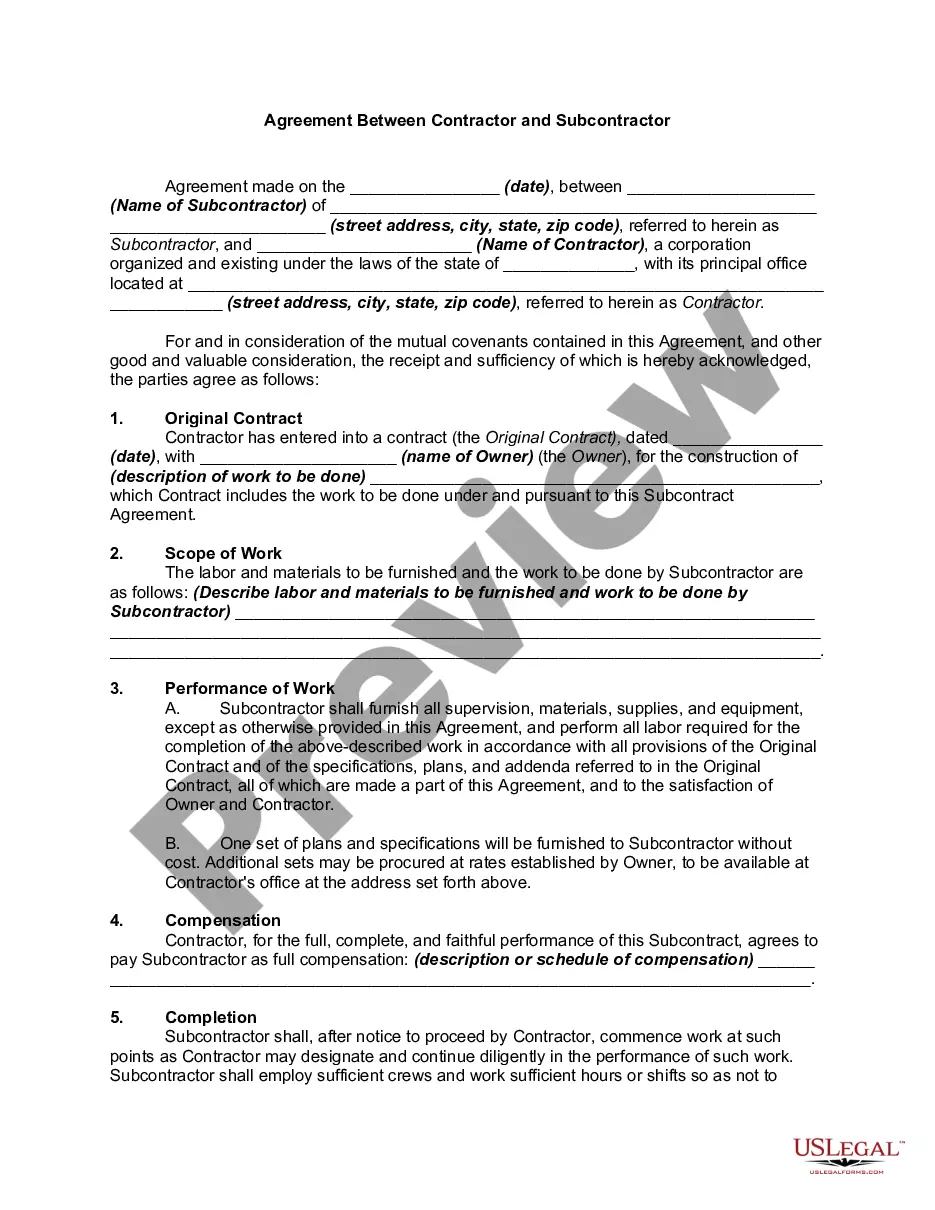
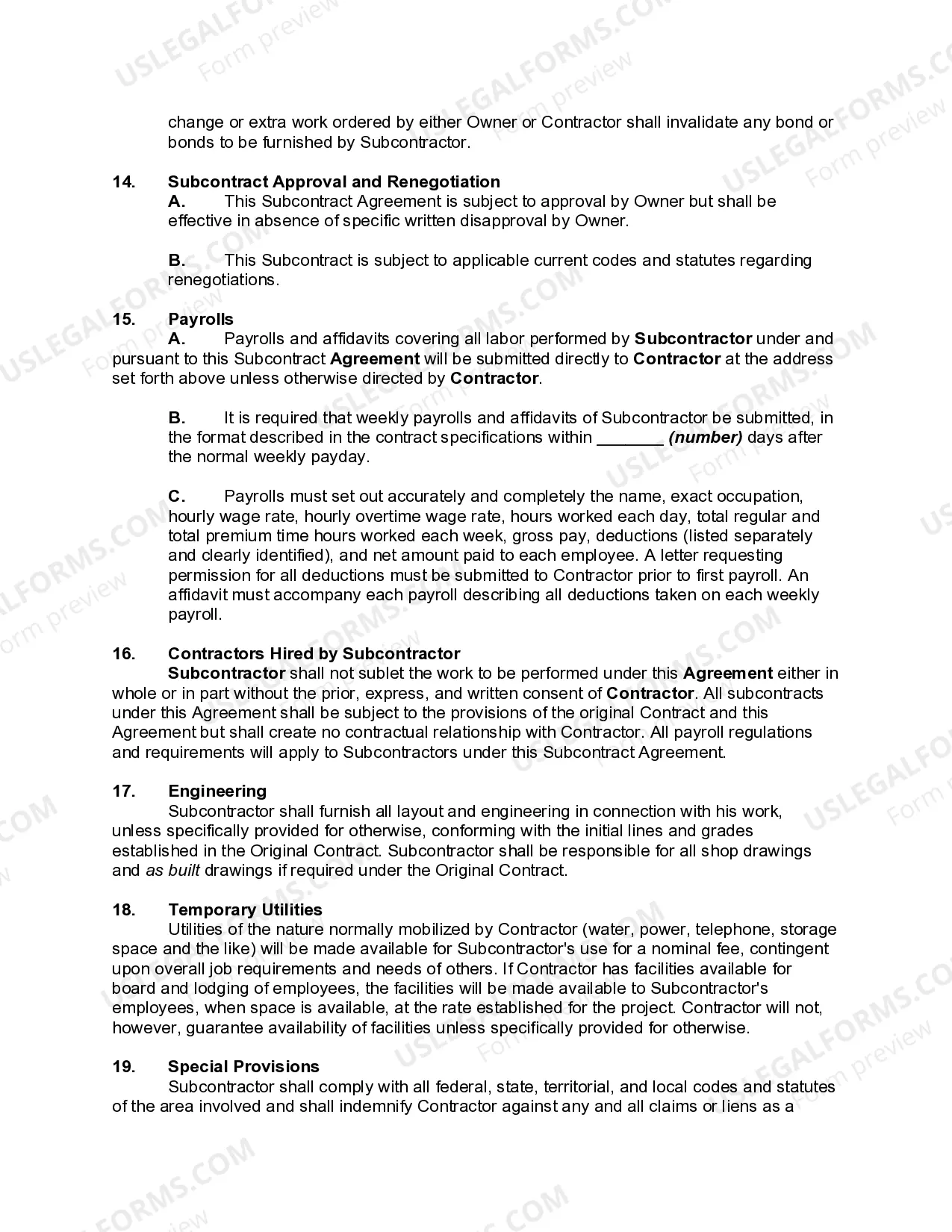
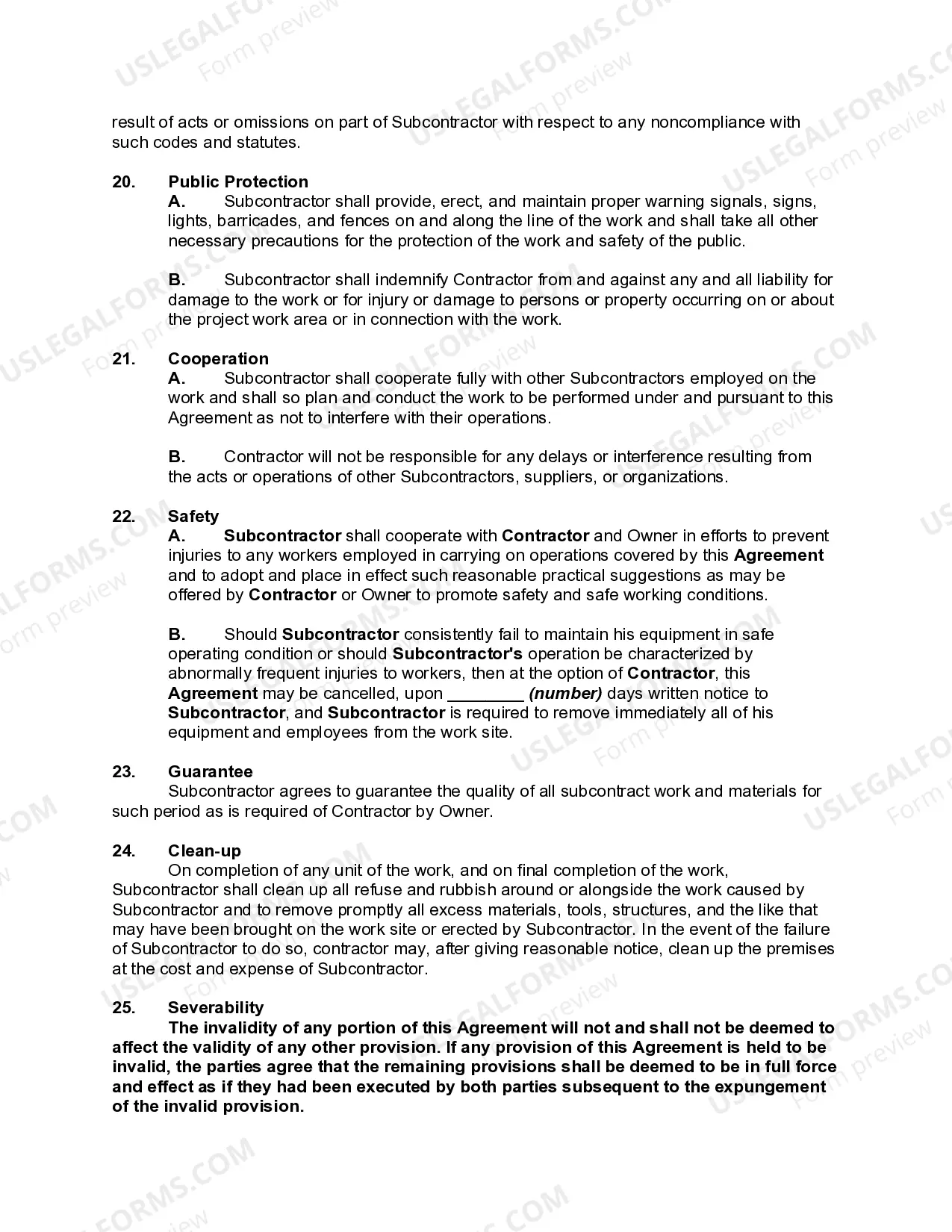
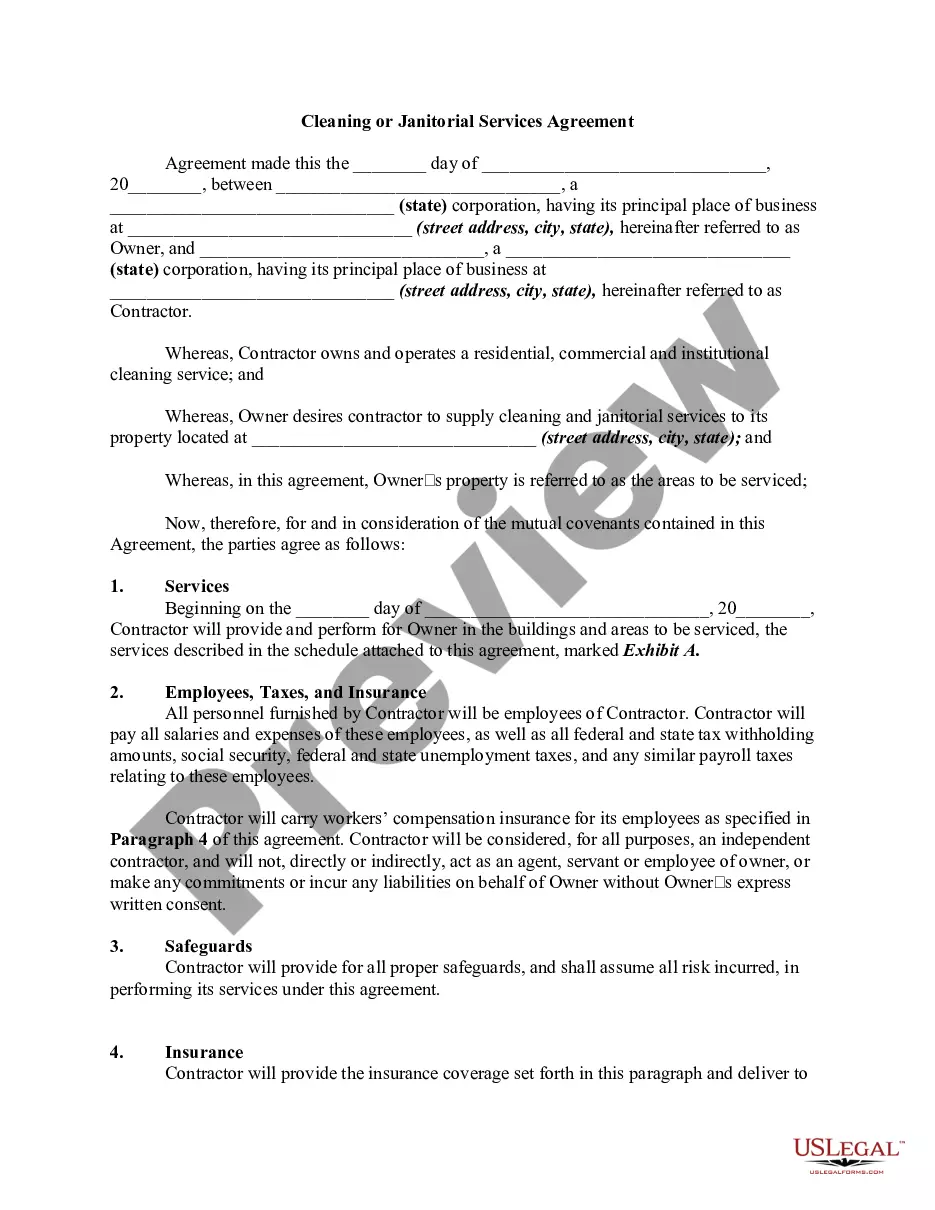
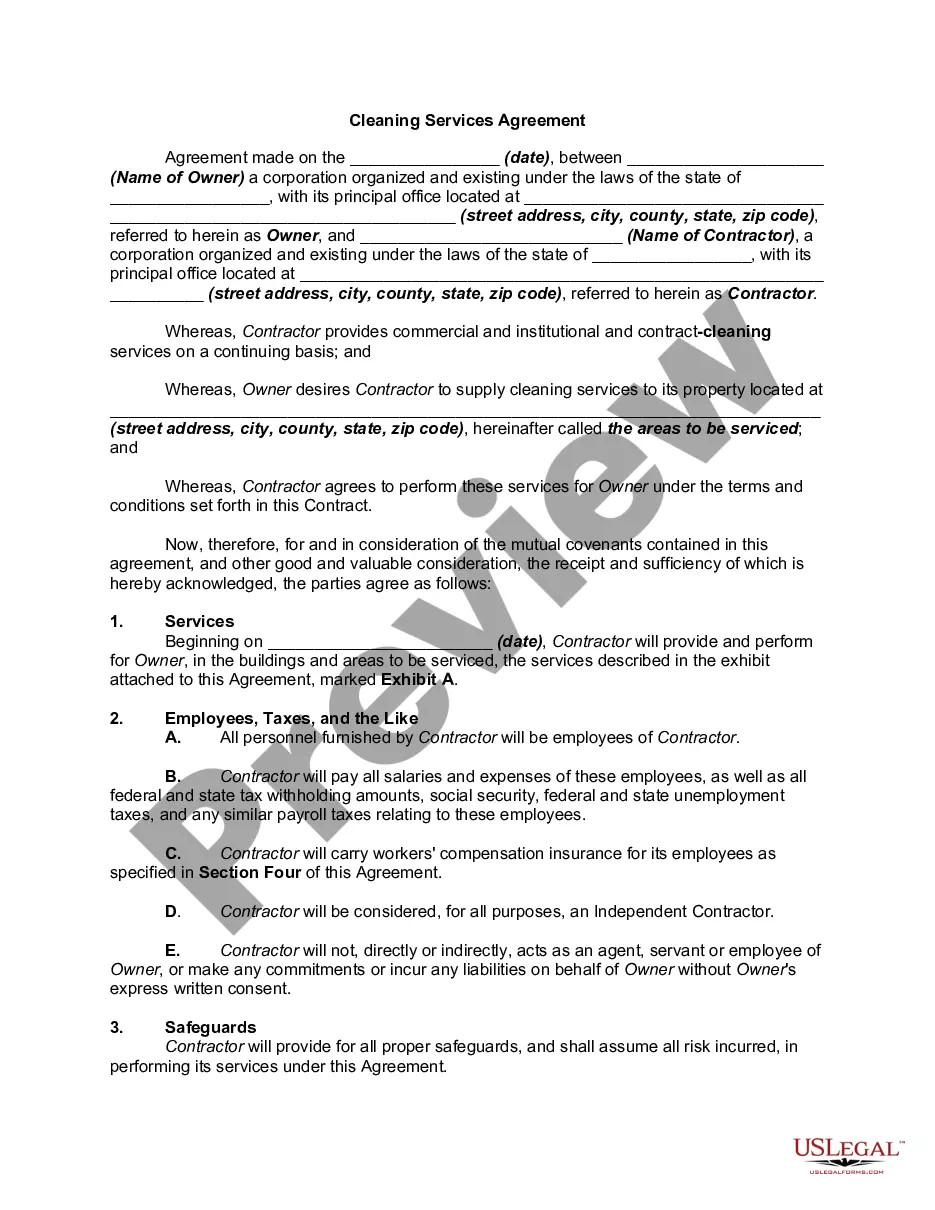
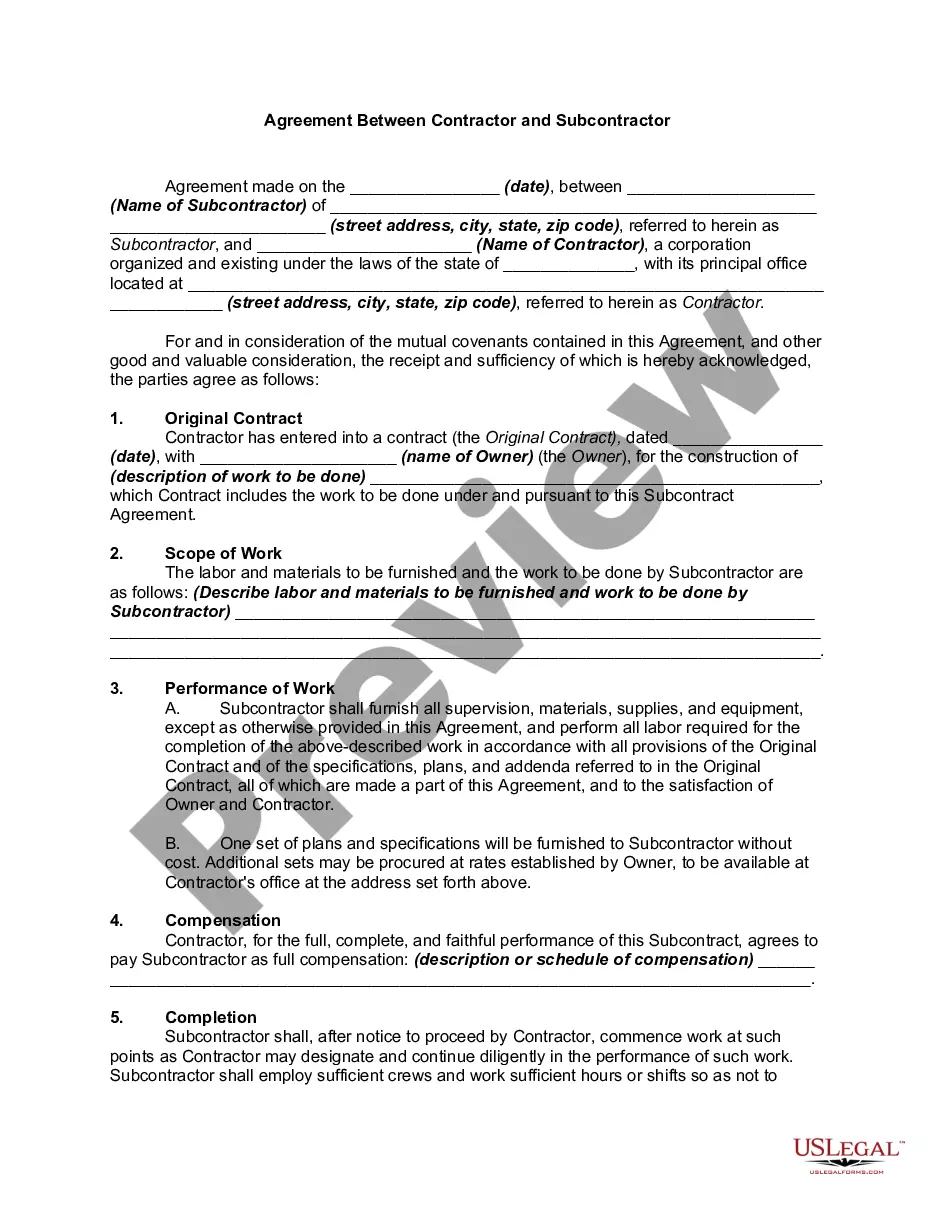
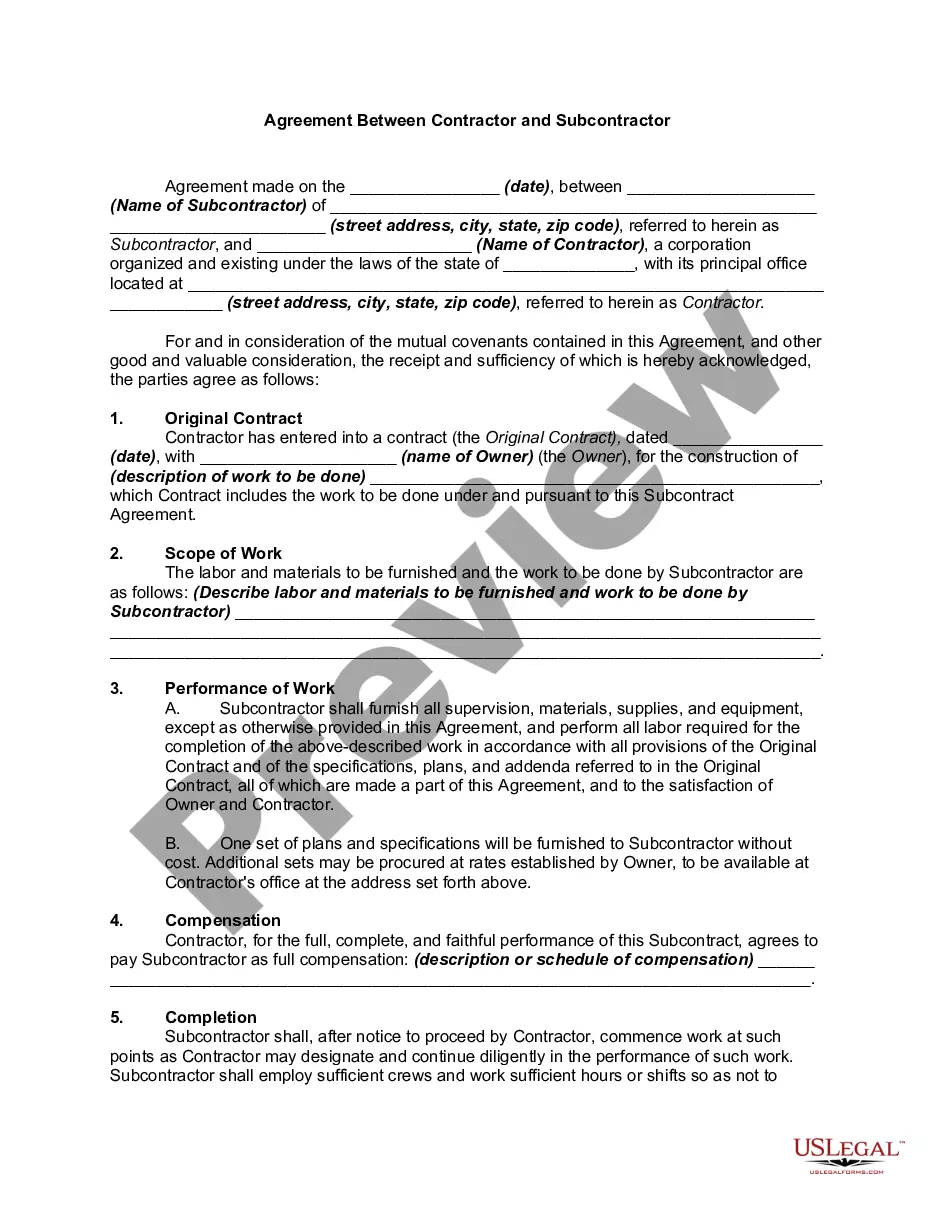
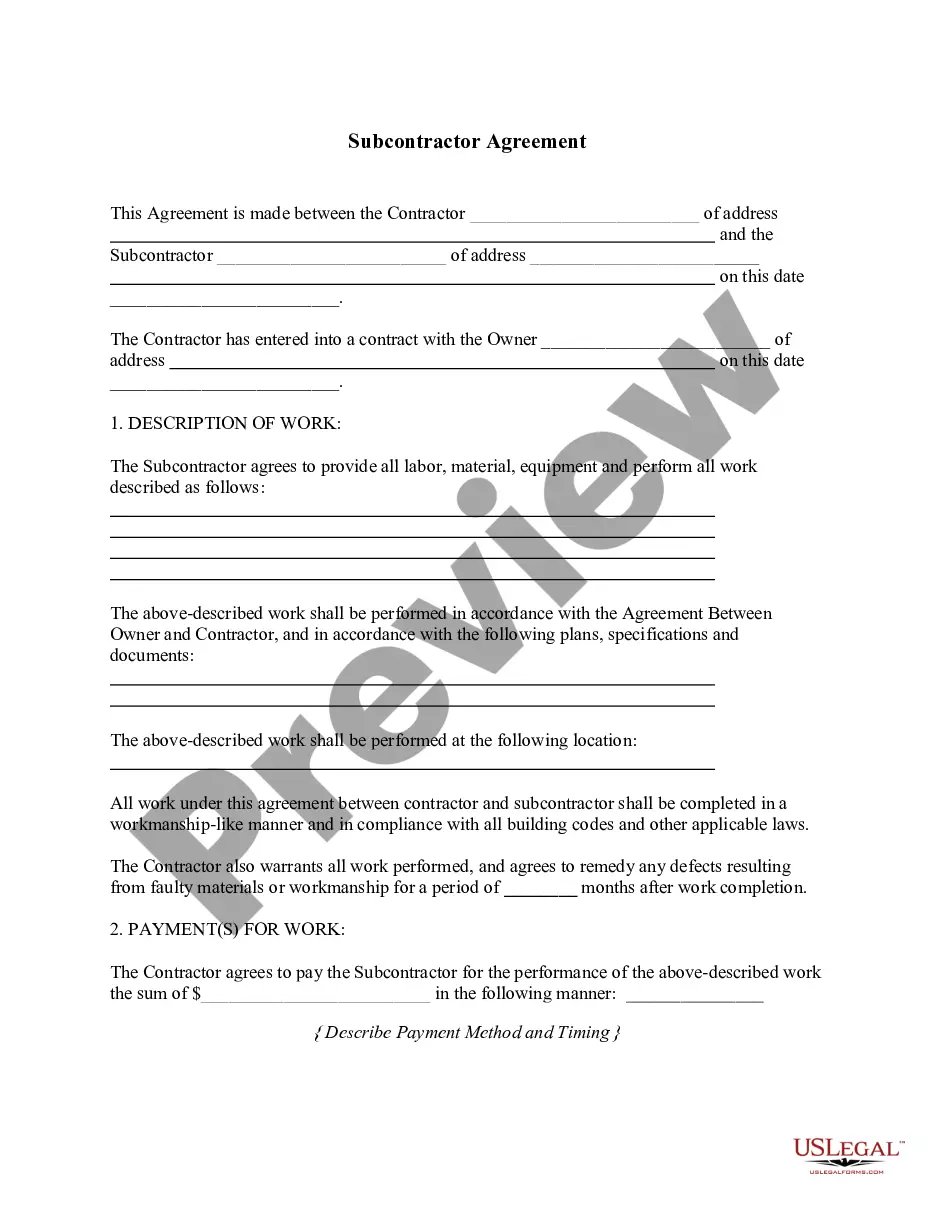
The Subcontractor Agreement for Cleaning Service is a legal document that outlines the terms and conditions between a contractor and a subcontractor hired to perform cleaning services as part of a larger contract. This form specifically addresses the scope of work, payment details, and responsibilities of both parties, differentiating it from other types of subcontractor agreements by its focus on cleaning services. It serves to protect the interests of both the contractor and subcontractor and ensures clarity in the execution of services.
Key parts of this document
- Date of the agreement and parties involved.
- Description of the original contract that the subcontractor's work falls under.
- Detailed scope of work to be performed by the subcontractor.
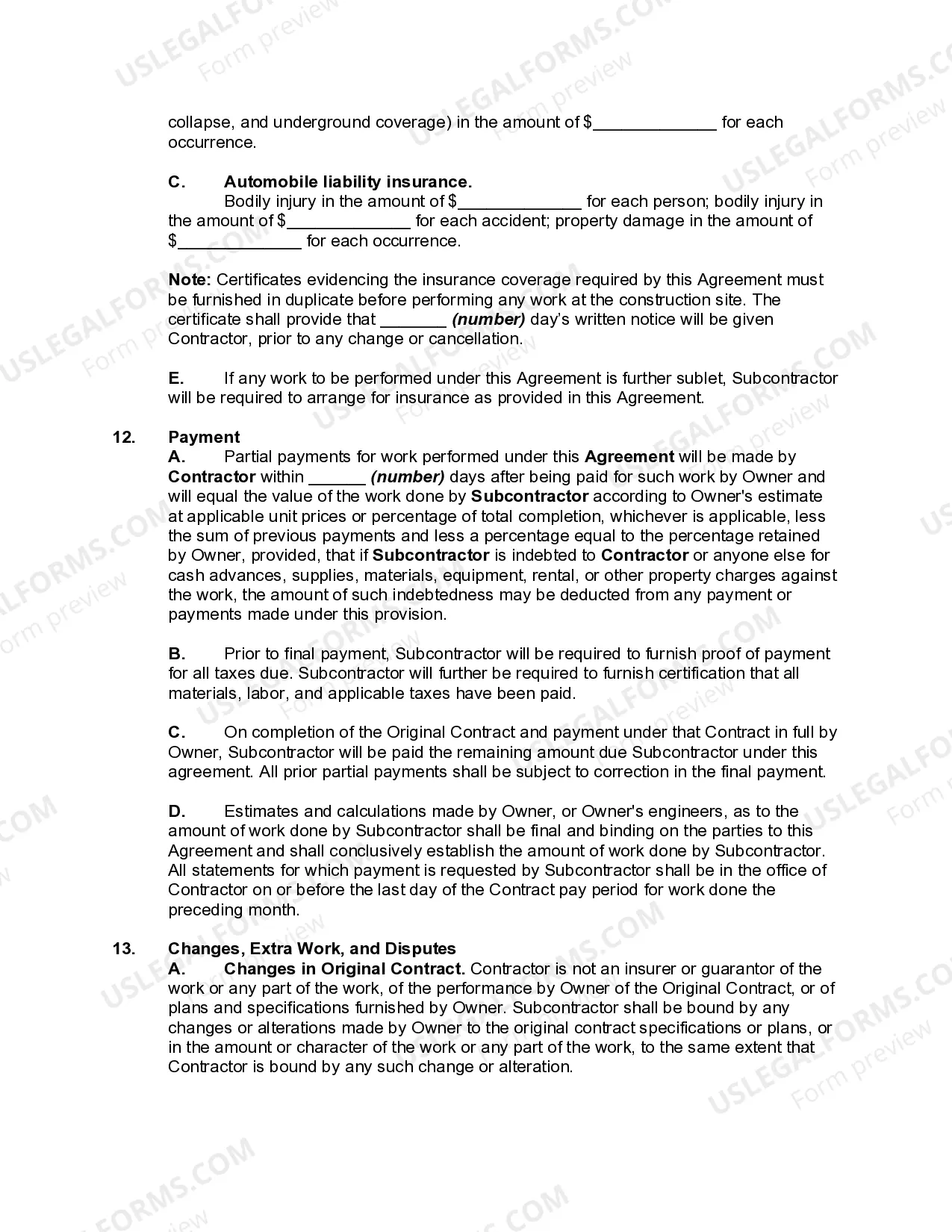
- Provisions regarding compensation and payment schedules.
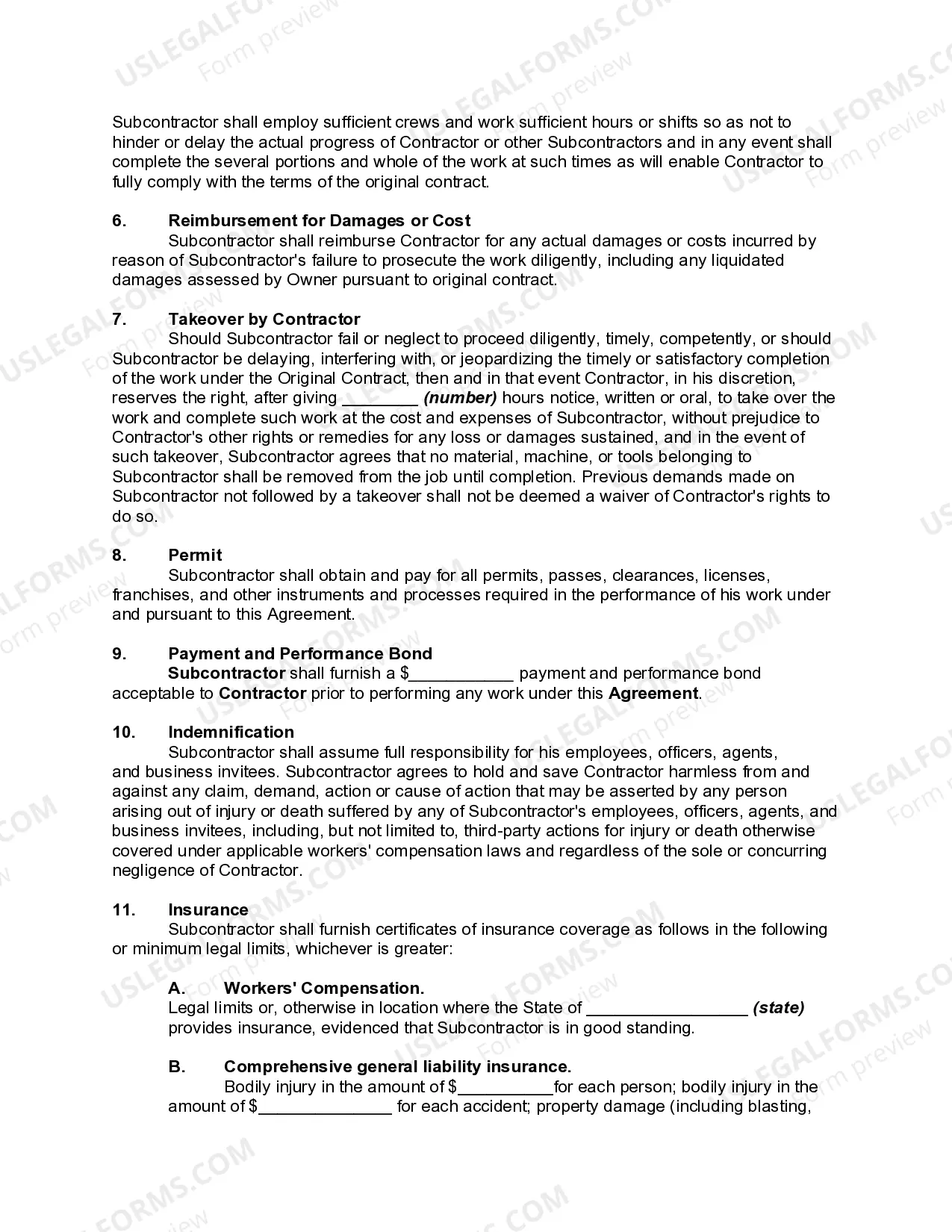
- Clauses addressing the performance of work and timeline for completion.
- Requirements for insurance and indemnification.
- Process for handling changes or disputes.



When to use this form
This form should be used when a contractor needs to engage a subcontractor specifically for cleaning services as part of a larger construction or renovation project. It is applicable in situations where clear terms regarding the scope of work, payment, and responsibilities need to be established to avoid disputes and ensure a smooth work process.
Who needs this form
- Contractors who need to hire subcontractors for cleaning services.
- Subcontractors offering cleaning services seeking clear agreements regarding their terms of work.
- Business owners looking to formalize their agreements with subcontractors in a construction context.
Instructions for completing this form
- Identify and fill in the date of the agreement.
- Complete the names and addresses of the subcontractor and contractor involved.
- Detail the original contract and specify the scope of work to be performed by the subcontractor.
- Outline the compensation agreement, including payment schedules.
- Ensure all parties sign the agreement to make it enforceable.
Does this form need to be notarized?
This form does not typically require notarization unless specified by local law. However, having it notarized can provide an additional level of authenticity and security for both parties involved.
Get your form ready online
Our built-in tools help you complete, sign, share, and store your documents in one place.
Make edits, fill in missing information, and update formatting in US Legal Forms—just like you would in MS Word.
Download a copy, print it, send it by email, or mail it via USPS—whatever works best for your next step.
Sign and collect signatures with our SignNow integration. Send to multiple recipients, set reminders, and more. Go Premium to unlock E-Sign.
If this form requires notarization, complete it online through a secure video call—no need to meet a notary in person or wait for an appointment.
We protect your documents and personal data by following strict security and privacy standards.

Make edits, fill in missing information, and update formatting in US Legal Forms—just like you would in MS Word.

Download a copy, print it, send it by email, or mail it via USPS—whatever works best for your next step.

Sign and collect signatures with our SignNow integration. Send to multiple recipients, set reminders, and more. Go Premium to unlock E-Sign.

If this form requires notarization, complete it online through a secure video call—no need to meet a notary in person or wait for an appointment.

We protect your documents and personal data by following strict security and privacy standards.
Typical mistakes to avoid
- Failing to clearly define the scope of work, leading to misunderstandings.
- Not specifying payment terms or schedules, which can result in payment disputes.
- Omitting necessary signatures or dates, which may invalidate the agreement.
Benefits of using this form online
- Conveniently editable to fit specific project requirements.
- Instantly downloadable, allowing for quick use.
- Creates a legally binding record that protects both parties.
Looking for another form?


Form popularity
FAQ
A subcontractor agreement is a contract between contractors or project managers and subcontractors. This solidifies any agreement between the two parties and assures work. Subcontractors should read the subcontractor agreement and assure specifics to protect themselves from unfair risk.
Define the needs of the project. Finalize the provisions of the agreement, such as the due dates. Clarify the terms for payment. Write a draft of the contract and send it to the subcontractor for her review. Decide on a method to handle disputes, should one arise between you and the subcontractor.
Your contact information and license number. A contract or billing number. A detailed list of the services you'll provide and on what schedule. Your prices per service. A schedule of when you'll perform your services.
Licensing. Scope of Work and Payment. Timing. Defense and Indemnification.
Identify the customer and service provider. Describe the services being provided. Outline a payment schedule. Establish terms about confidentiality, non-solicitation, and non-competition. Address ownership of materials. Personalize your Service Agreement.
Start with procurement standards. Execute all subcontracts prior to starting your projects. Help those who help you. Award the job to the lowest fully qualified bidder. Use contract scope checklists. Make sure you have tight clauses. Meet to review the proposed subcontract.
Here's a cleaning services price list: the average cost of hire a cleaning service is $90 to $150 and the average national hourly rate is $25 to $90 per cleaner. A single family home should cost $120 to $150 to clean, according to Home Advisor.
Basic information for both parties. Your contract should list the following details about your business and your client: Scope of services. Supply list. Renewal and termination clause. Payment details. Dispute resolution.
Scope of the Project. Timing for Completion: Duration of Work Clause. Payment and Billing Clause. Independent Contractor Notice. Non-Disclosure Agreement. Non-Complete Clause. Work for Hire Inclusion. Responsibilities for Insurance for Accidental Damages.