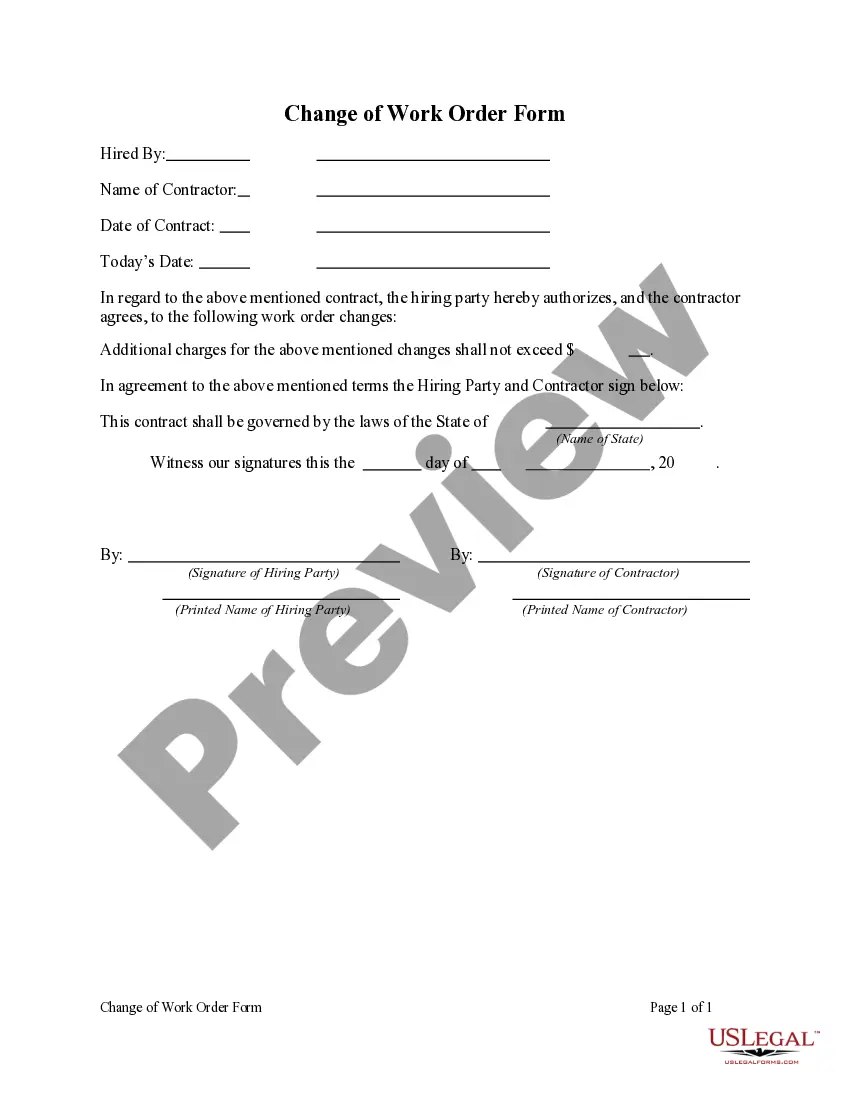
Change of Work Order Form
What this document covers
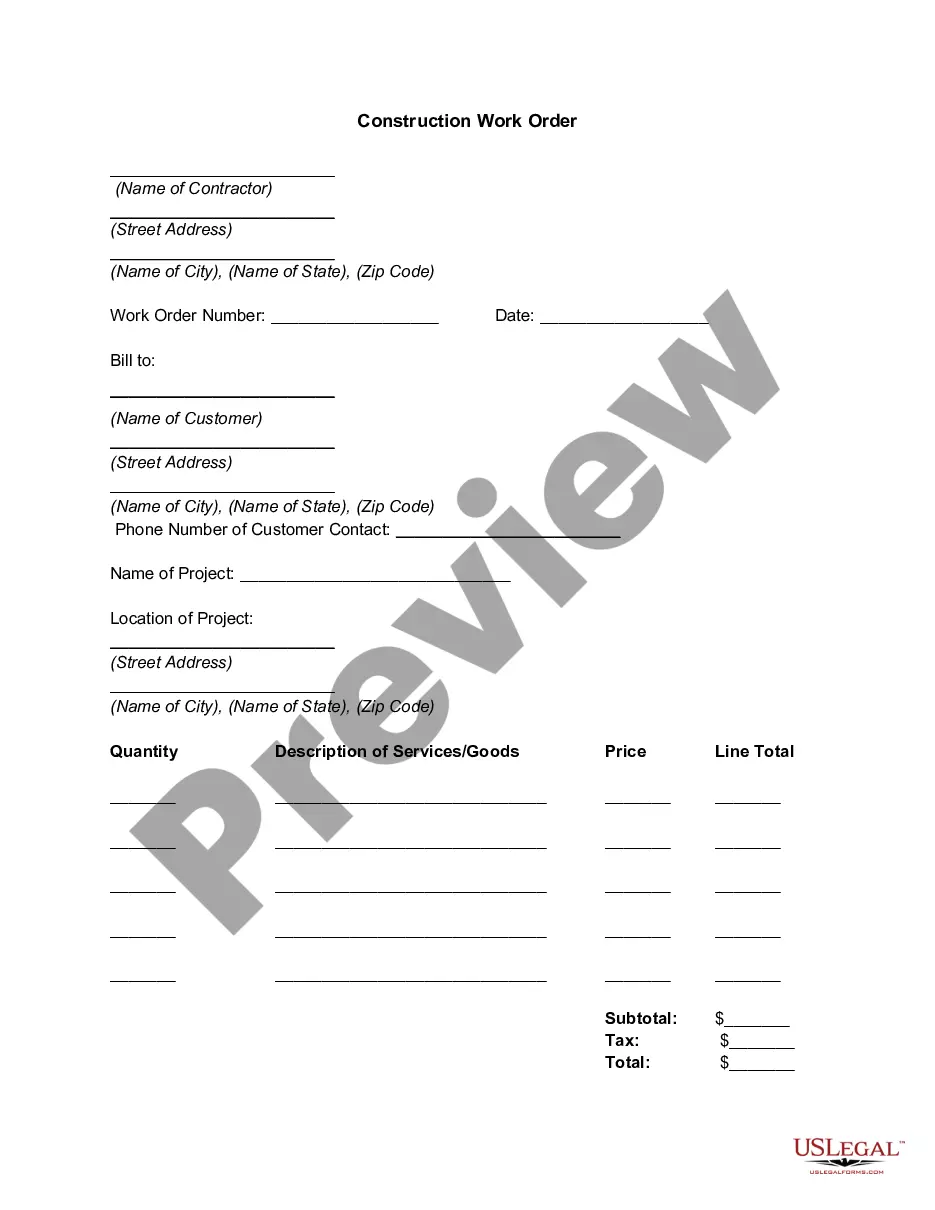
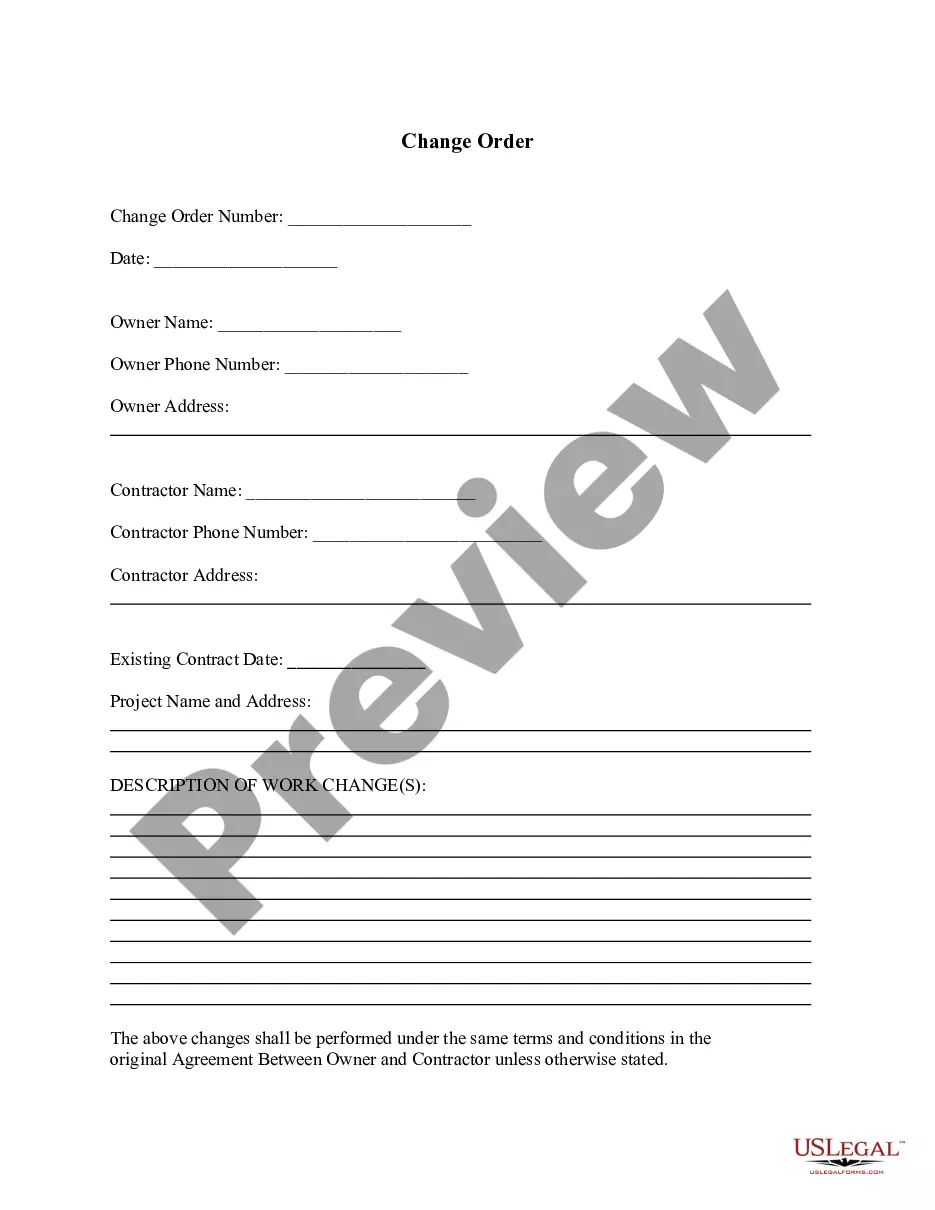
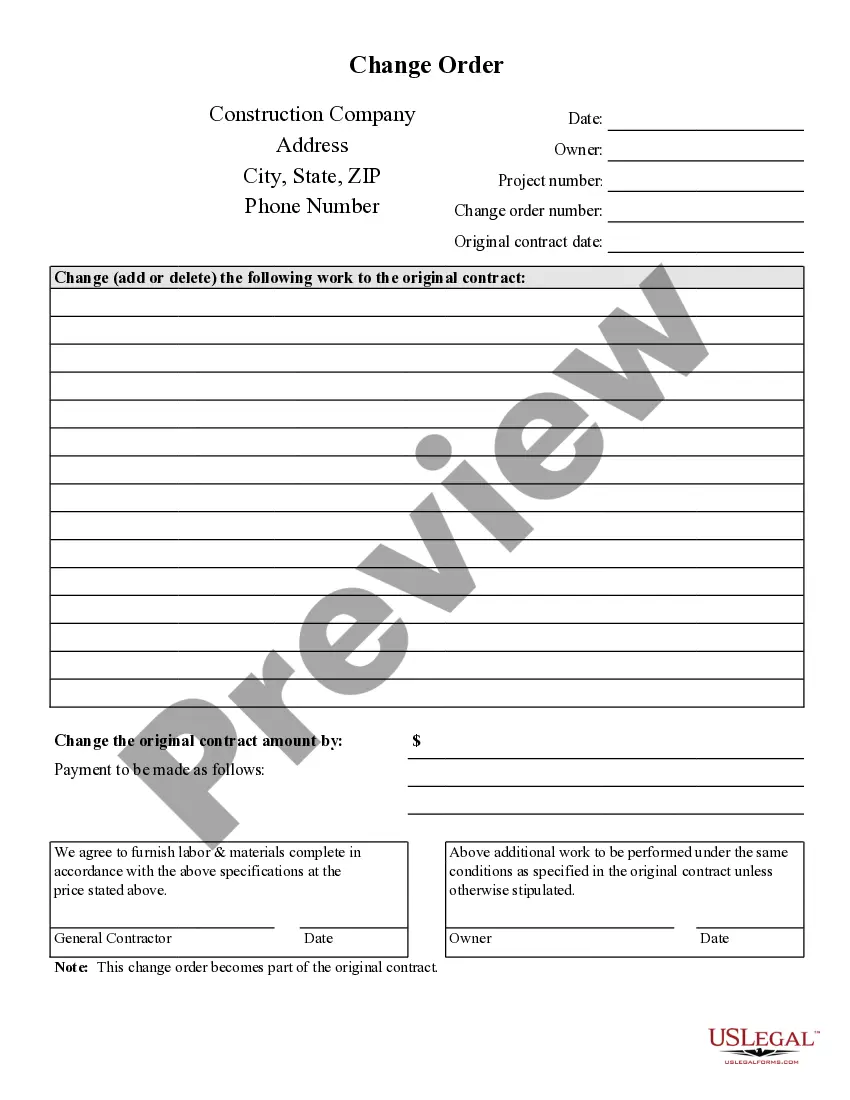
The Change of Work Order Form is a document that modifies an existing work order. Unlike a basic purchase order, this form contains detailed specifications about changes in the scope of work, pricing, or timelines for a project. It is essential for effectively communicating updates to both internal departments and external customers when modifications are necessary.
Form components explained
- Requestor information: Details about the individual or department initiating the change.
- Original work order reference: Identification of the work order being modified.
- Change description: Clear explanation of the modifications required.
- New terms: Adjusted pricing, timelines, or deliverables that reflect the change.
- Approval signatures: Required signatures from relevant parties to validate the changes.
When to use this document
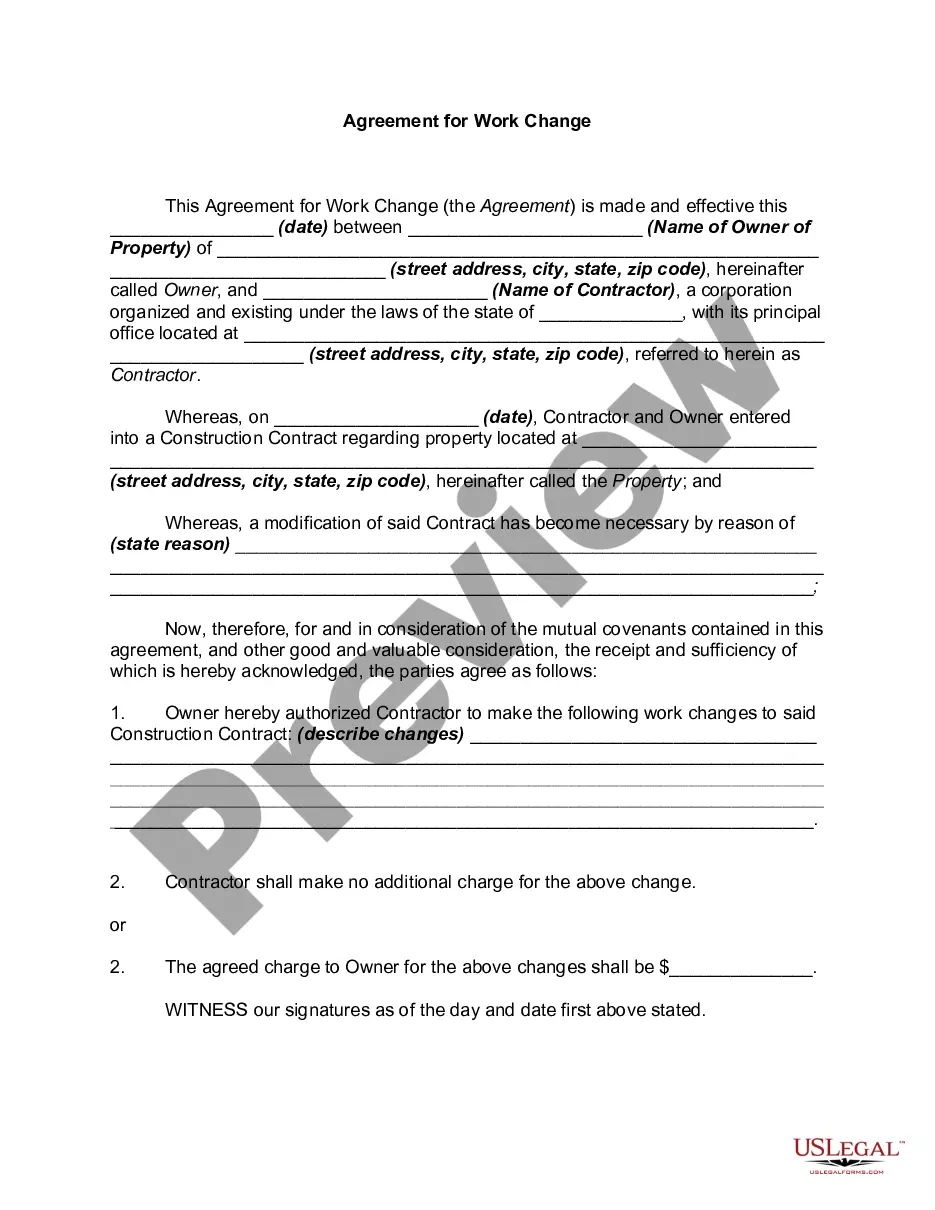
This form is used when there is a need to make alterations to an existing work order. For example, if a client requests additional work not included in the initial order or if there are changes in the project timeline, this form facilitates the necessary adjustments in an organized manner.
Who can use this document
- Project managers who need to manage changes to work orders or contracts.
- Accountants handling invoicing and payments related to altered work orders.
- Department heads coordinating internal departmental changes.
- Clients requesting modifications to existing services or deliverables.
How to prepare this document
- Identify the requestor by filling in their name and department.
- Reference the original work order number to link changes accurately.
- Clearly describe the changes being requested in the changes section.
- Specify any new terms, including altered pricing and timelines.
- Obtain necessary signatures to authorize the changes.
Does this form need to be notarized?
Notarization is generally not required for this form. However, certain states or situations might demand it. You can complete notarization online through US Legal Forms, powered by Notarize, using a verified video call available anytime.
Get your form ready online
Our built-in tools help you complete, sign, share, and store your documents in one place.
Make edits, fill in missing information, and update formatting in US Legal Forms—just like you would in MS Word.
Download a copy, print it, send it by email, or mail it via USPS—whatever works best for your next step.
Sign and collect signatures with our SignNow integration. Send to multiple recipients, set reminders, and more. Go Premium to unlock E-Sign.
If this form requires notarization, complete it online through a secure video call—no need to meet a notary in person or wait for an appointment.
We protect your documents and personal data by following strict security and privacy standards.

Make edits, fill in missing information, and update formatting in US Legal Forms—just like you would in MS Word.

Download a copy, print it, send it by email, or mail it via USPS—whatever works best for your next step.

Sign and collect signatures with our SignNow integration. Send to multiple recipients, set reminders, and more. Go Premium to unlock E-Sign.

If this form requires notarization, complete it online through a secure video call—no need to meet a notary in person or wait for an appointment.

We protect your documents and personal data by following strict security and privacy standards.
Avoid these common issues
- Failing to reference the correct original work order.
- Not providing sufficient detail in the change description.
- Omitting required signatures which may render the form invalid.
- Neglecting to update all relevant parties about the changes.
Benefits of using this form online
- Convenience of accessing and downloading at any time.
- Editable format allows for quick adjustments and modifications.
- Reliable templates created by licensed attorneys ensure compliance with legal requirements.
Quick recap
- The Change of Work Order Form is essential for formalizing amendments to existing work orders.
- Clear communication through this form helps prevent disputes.
- Both parties should review and approve the changes to ensure agreement.
Looking for another form?

Form popularity
FAQ
Change orders are often negotiated By submitting an aggressive price, when you need to discount your client, you're still profiting on the change order. Change Orders are often challenged They can be challenged because they believe the work is part of your contract.
The contractor prepares a change order proposal quoting a price for the extra work. Once the owner and contractor have agreed on scope, price, and schedule, a formal, written change order is prepared and signed by all parties. Then, the contractor proceeds to perform the changed work.
Establish a change order process up front. Provide a clear statement of work. Eliminate or minimize change orders resulting from incomplete design. Coordinate design among the project's various disciplines. Coordinate all project elements.
First, let's start with the fact that there is no law that says that you have to have changes or change orders in a construction contract.Contractors are not banks, yet they are routinely used as such by owners who order changes, but refuse to execute change orders, which can then be billed.
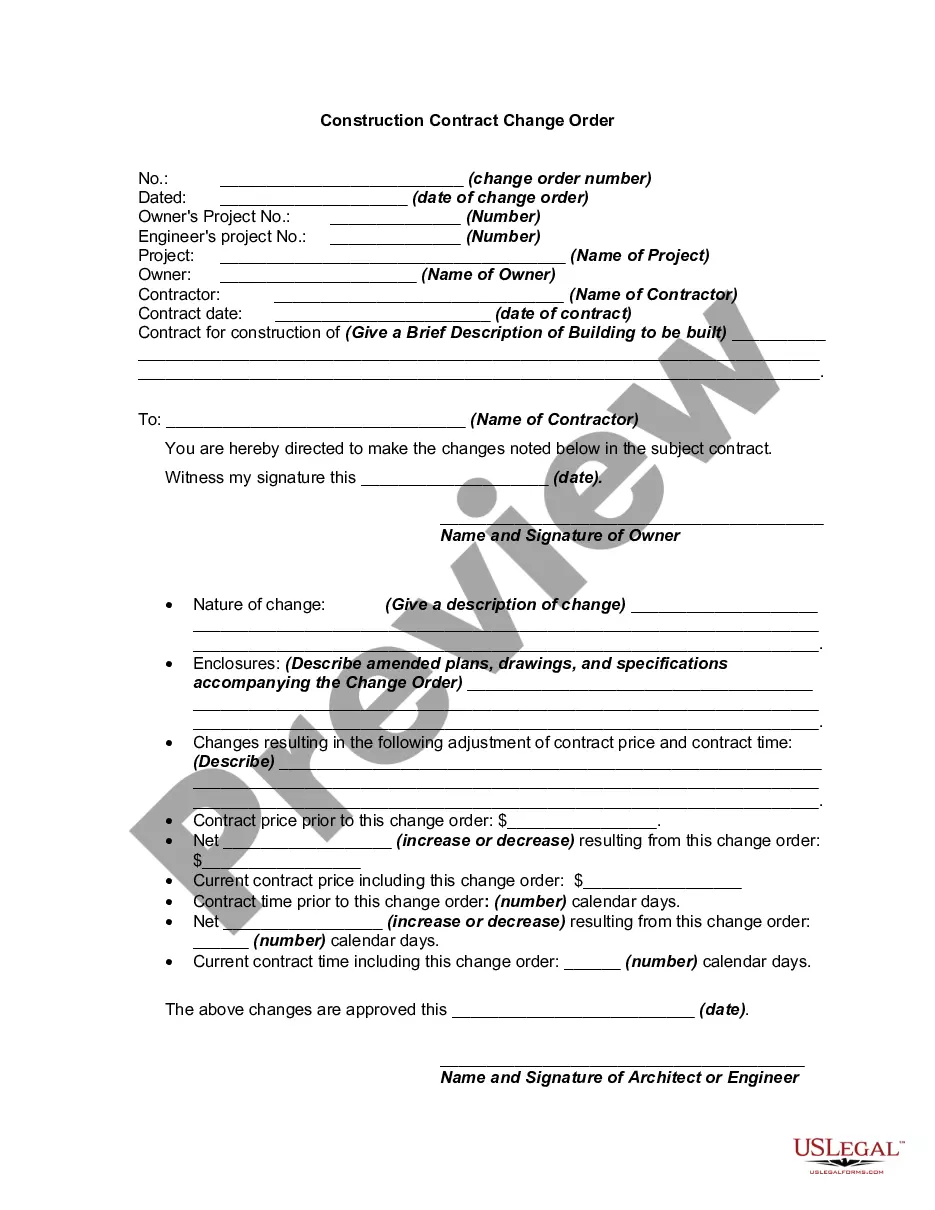
Project and contact information. The change order form should include: Dates of the change. Details of the change. Updated schedule. Cost of the change. Updated contract value. Match the payment application. Get it in writing and save it.
A change order is simply an addendum or amendment to the original construction contract and scope of work and can be initiated by the owner or the contractor.
The project name; The request number; The requestor; Description of the change; The reason for the change; The impact of the change; The proposed action to be taken; The business priority of the change;
A Change Order represents the mutual consensus between the parties on a change to the work, the price, the schedule, or some other term of the contract. As such, a change order must be written out and approved by all parties, which can take time, money, and patience to complete.
7.2. 1 " A change order is written instrument prepared by the architect and signed by the owner, contractor, and architect..."