Suit Against Architect for Malpractice Due to Negligent Design of Structure
About this form
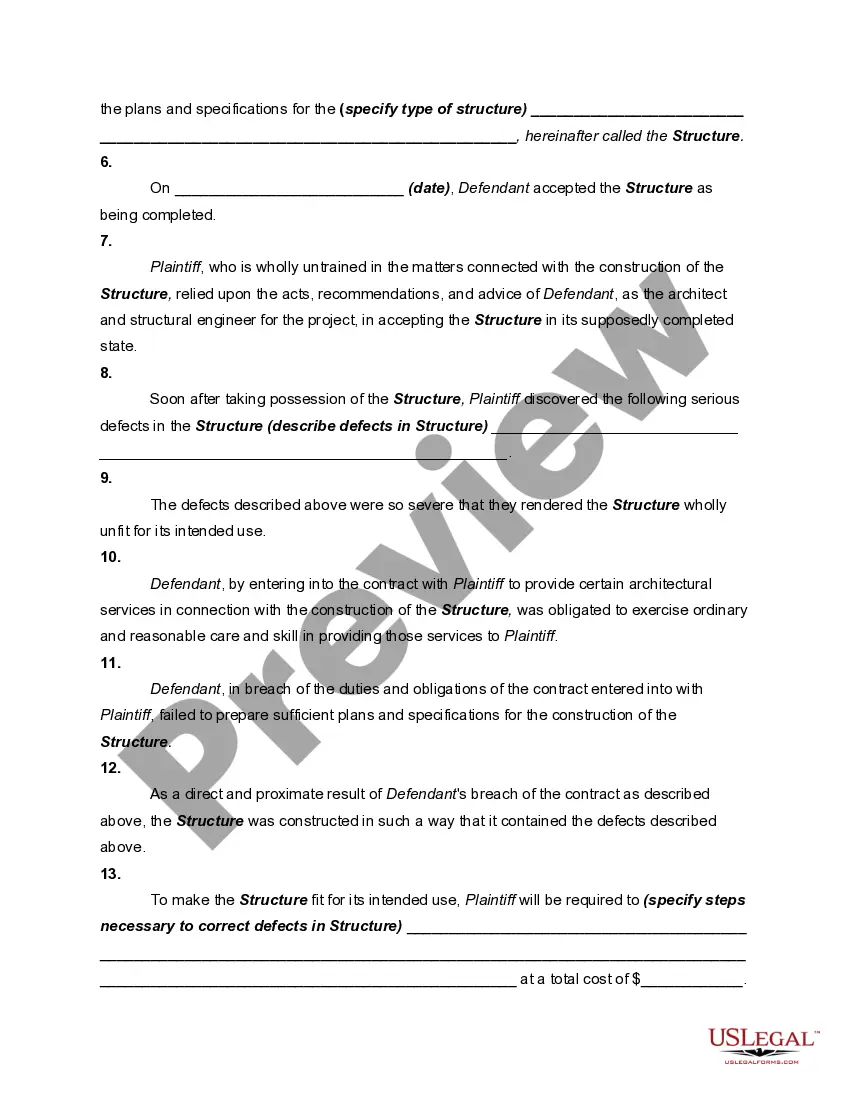
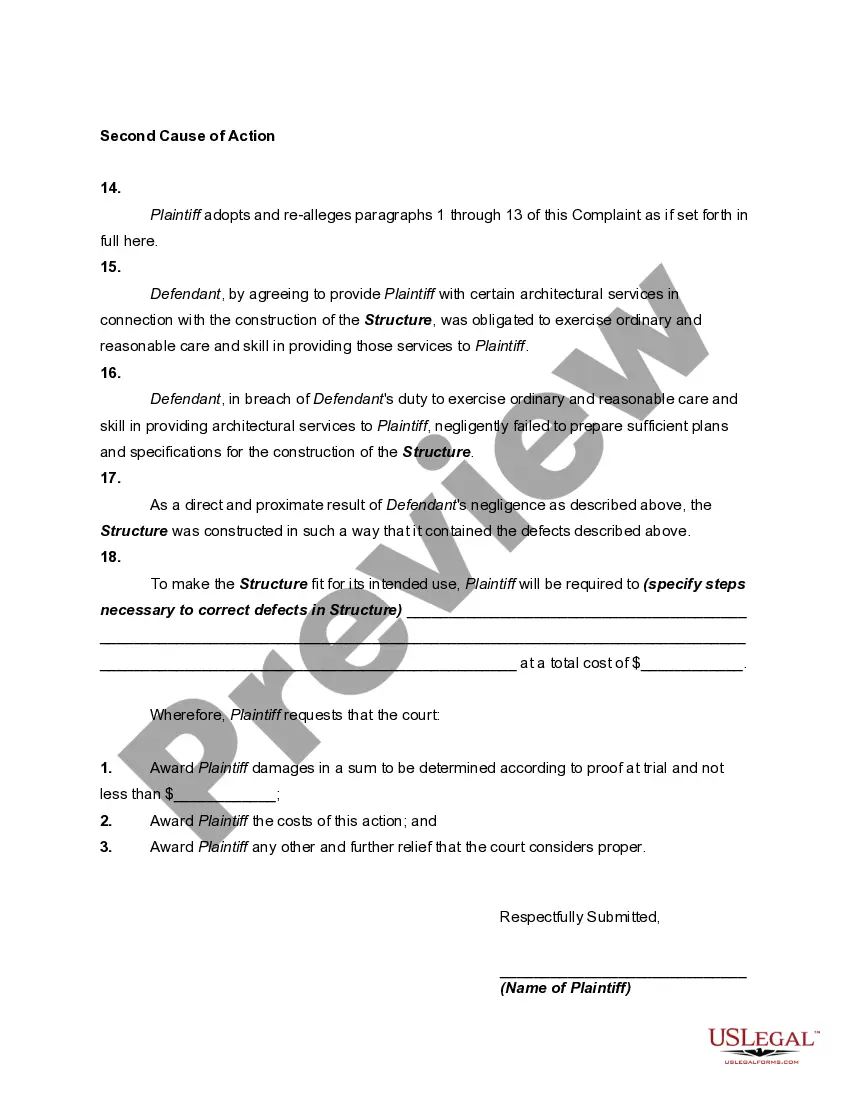
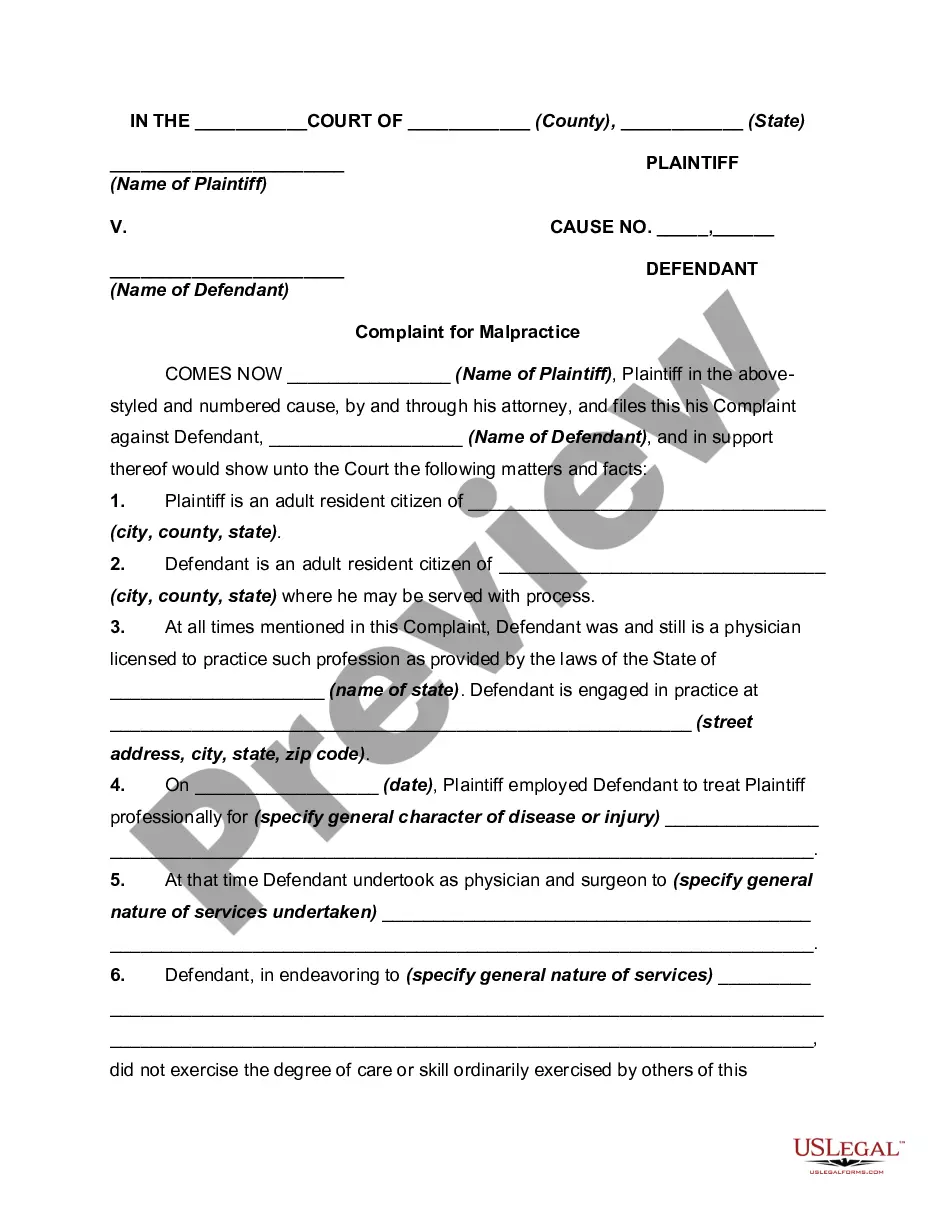
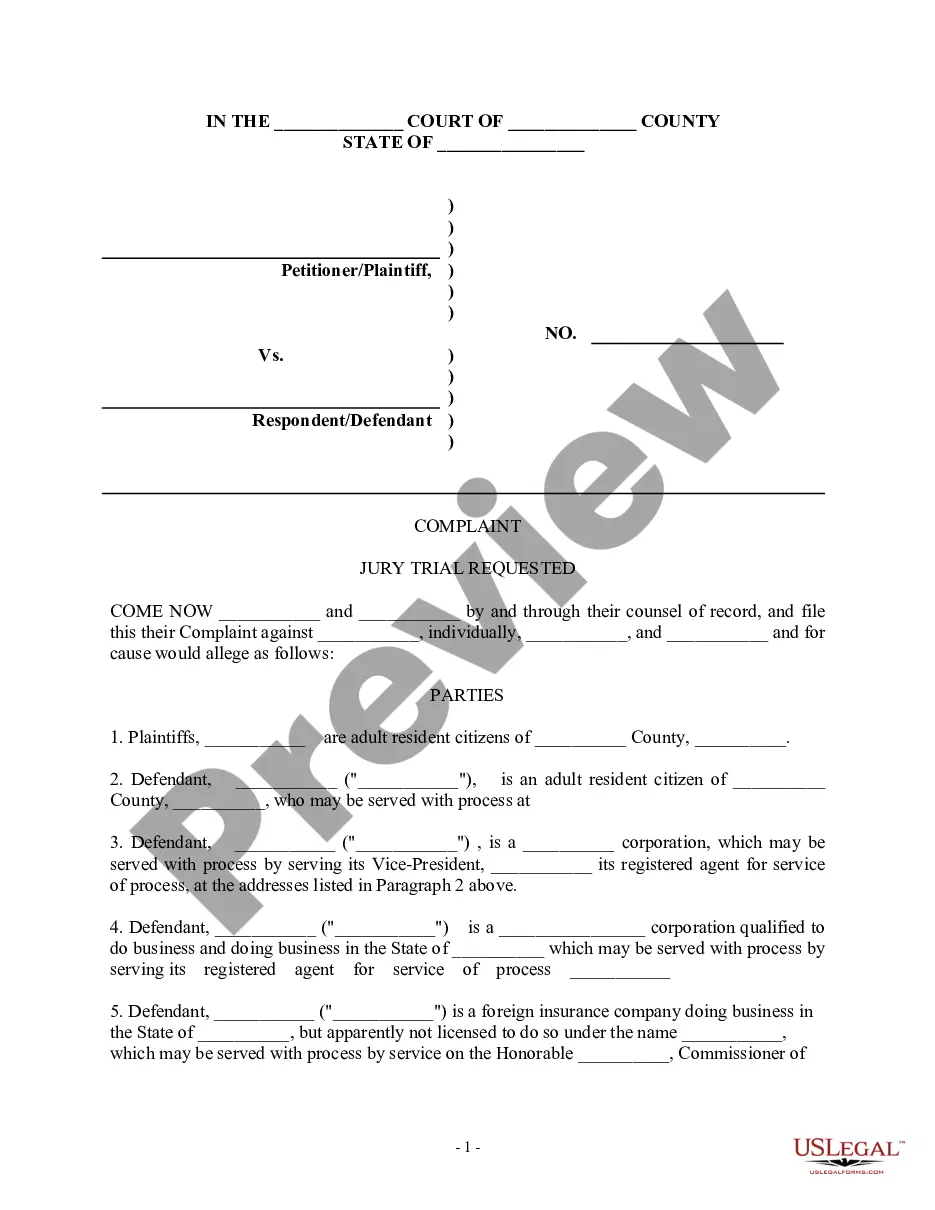
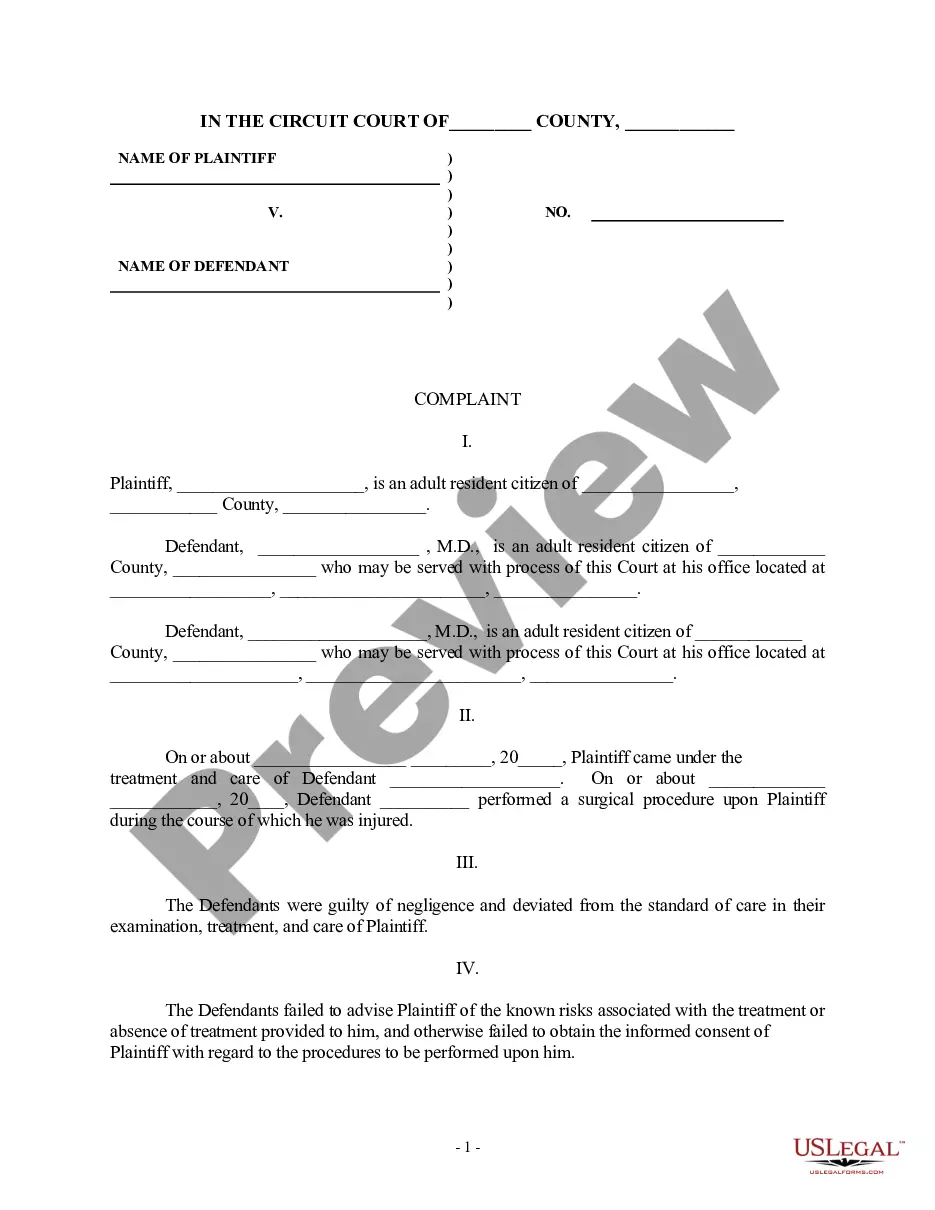
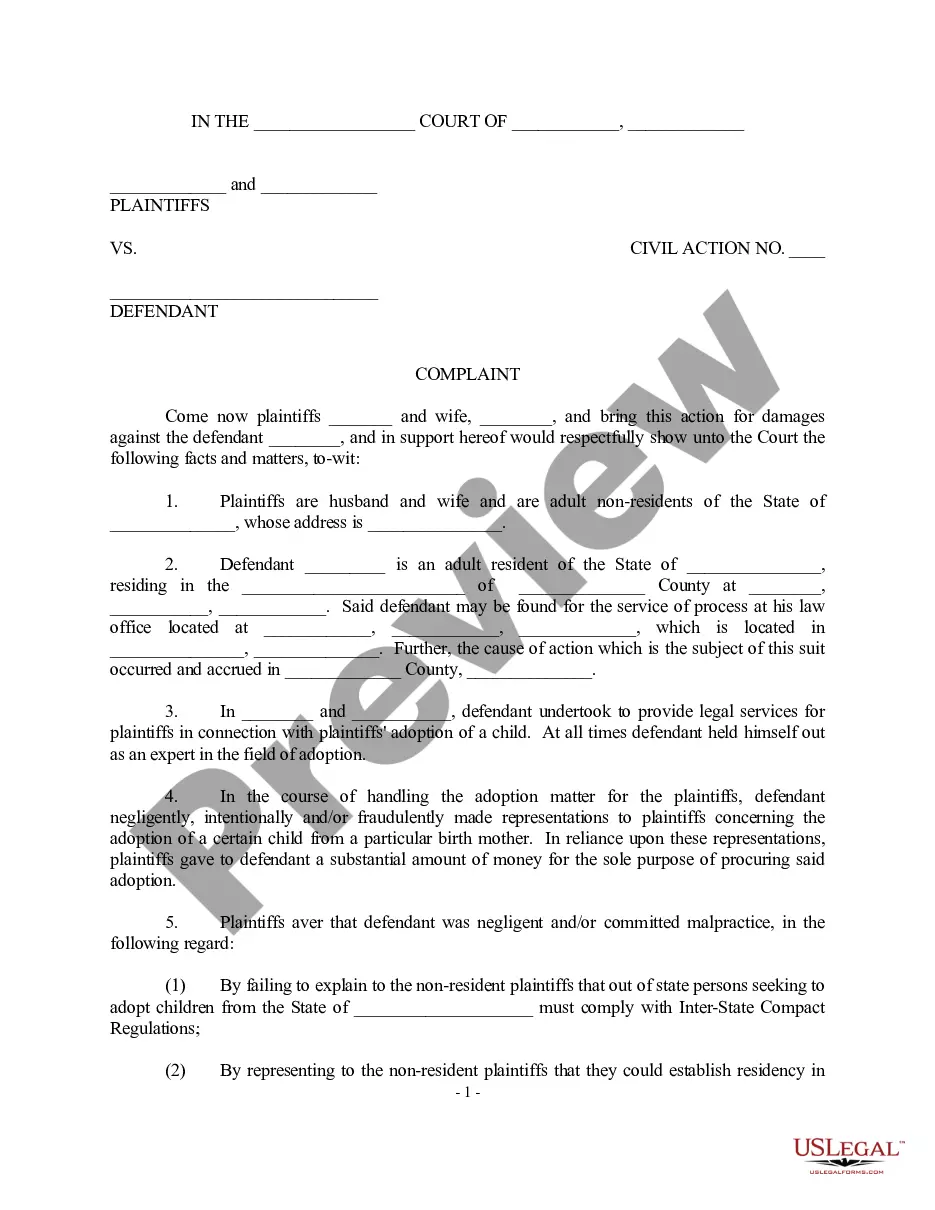
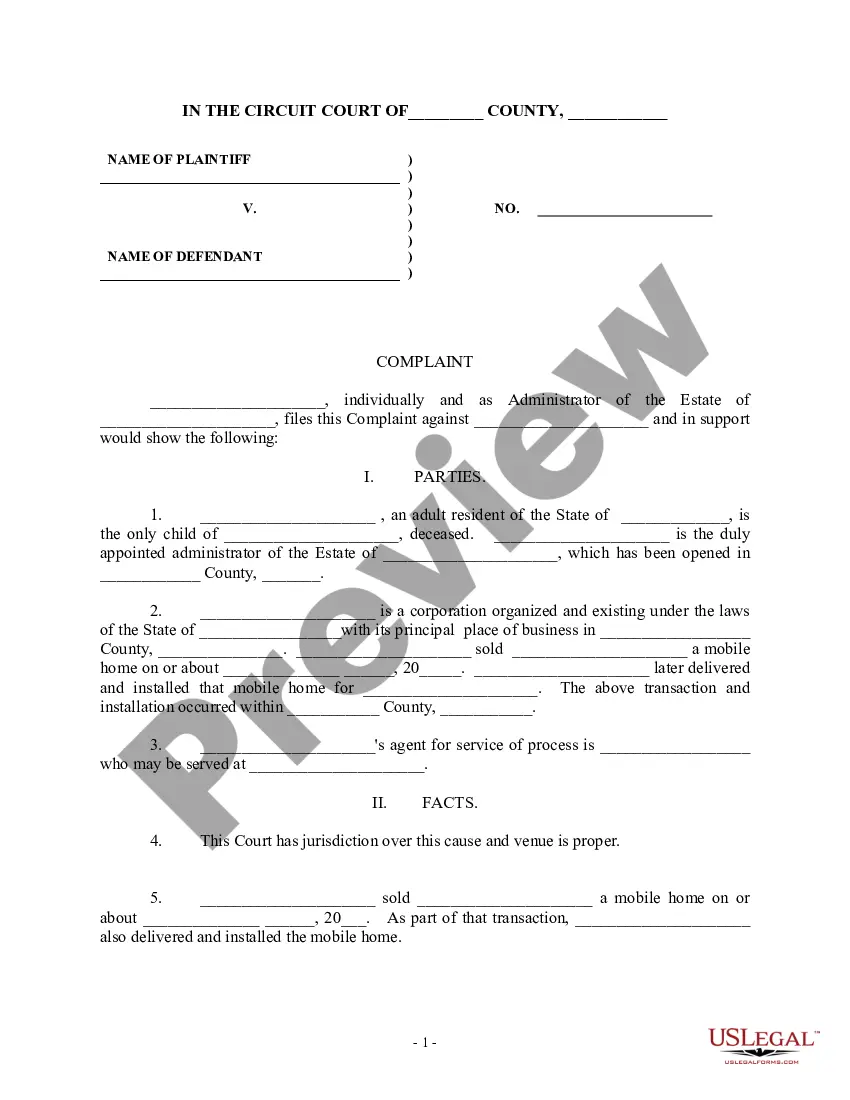
This form is a legal complaint to file a suit against an architect for malpractice resulting from negligent design of a structure. It outlines claims related to breaches of contract and negligence, differentiating it from other types of legal complaints by focusing specifically on architectural faults. This Suit Against Architect for Malpractice form is designed to initiate legal proceedings and secure damages for defects in design or execution of construction plans.
Key components of this form
- Plaintiff and Defendant identification fields
- Statement of facts and timeline of events
- Details about the contract and scope of work
- Identification and description of defects in the structure
- Claims of breach of contract and negligence
- Request for damages and costs associated with correcting the defects
When this form is needed
This form should be used when a party (the Plaintiff) has suffered issues related to a construction project due to negligent actions or omissions by an architect. This includes discovering serious defects in a completed structure, where the architect failed to exercise reasonable care and skill in their professional duties. Suitable scenarios include residential or commercial constructions that were found unfit for their intended use shortly after completion.
Intended users of this form
- Homeowners or property owners seeking redress from architects for design flaws
- Business owners experiencing issues with commercial structural designs
- Individuals not trained in construction seeking professional legal recourse
- Anyone who signed an architectural service contract and has identified serious defects post-construction
Steps to complete this form
- Identify and enter the names of both the Plaintiff and Defendant.
- Provide complete residential information for both parties.
- Specify the type of structure and the corresponding address based on the contract.
- Describe the defects in detail, supporting your claims for breach and negligence.
- Indicate the required steps and costs to rectify the defects related to the structure.
Notarization guidance
This form usually doesn’t need to be notarized. However, local laws or specific transactions may require it. Our online notarization service, powered by Notarize, lets you complete it remotely through a secure video session, available 24/7.
Get your form ready online
Our built-in tools help you complete, sign, share, and store your documents in one place.
Make edits, fill in missing information, and update formatting in US Legal Forms—just like you would in MS Word.
Download a copy, print it, send it by email, or mail it via USPS—whatever works best for your next step.
Sign and collect signatures with our SignNow integration. Send to multiple recipients, set reminders, and more. Go Premium to unlock E-Sign.
If this form requires notarization, complete it online through a secure video call—no need to meet a notary in person or wait for an appointment.
We protect your documents and personal data by following strict security and privacy standards.

Make edits, fill in missing information, and update formatting in US Legal Forms—just like you would in MS Word.

Download a copy, print it, send it by email, or mail it via USPS—whatever works best for your next step.

Sign and collect signatures with our SignNow integration. Send to multiple recipients, set reminders, and more. Go Premium to unlock E-Sign.

If this form requires notarization, complete it online through a secure video call—no need to meet a notary in person or wait for an appointment.

We protect your documents and personal data by following strict security and privacy standards.
Typical mistakes to avoid
- Failing to include all relevant details about the defects in the structure.
- Not providing a complete and accurate description of the parties involved.
- Neglecting to attach the contract to the complaint.
- Omitting required signatures or dates in the document.
Benefits of completing this form online
- Convenient access to the form for immediate download and use.
- Editable format allows for customization based on individual cases.
- Reliable, attorney-drafted content ensures legal compliance with federal and state laws.
Legal use & context
- This form can be used to file a formal complaint in civil court against an architect for negligence.
- It is important to file within the statute of limitations for architectural malpractice claims, which varies by state.
- The form incorporates notice pleading standards, allowing for more flexible presentation of claims.
Looking for another form?
Form popularity
FAQ
STANDARD FORM CONTRACT PROVISIONS.Production and coordination of all plans and specifications including all change orders.Technical accuracy of all documents and often reviews of contracts with subs.Specific design (not design criteria).Workability of the design.Code compliance.Interpretation of the documents.The Architect Responsibilities and Disputes Stimmel Law\nwww.stimmel-law.com > articles > architect-responsibilities-and-disputes
Many young architects are surprised to learn that an architect can be held liable for the negligence of contractors and others working on a project, or that negligence claims can be based on faulty cost estimates or delays in construction.
43 Does the contractor have a duty to draw attention to an error on the architect's drawing? Generally and in normal circumstances, the contractor has no liability for design and, therefore, no liability for the production of design drawings.
As licensed professionals, architects are always personally liable for their own negligent acts, errors and omissions. Therefore, if an architect is the sole owner of the corporation or LLC, there is no real benefit in the form of legal entity.
When a significant error or omission in the plans leads to extra costs, delays, and possibly a flawed building in the end, it is usually the architect's responsibility to make it right.
When an architect is unable to uphold the performance and safety standards outlined in their contract, developers can take legal action by either filing a claim for breach of contract or suing the architect for negligence. They may also combine both claims into one comprehensive construction lawsuit.
If, during construction, the general contractor finds fault with the plans, it may seek Request for Information and Change Orders, to shore up the perceived problems with the plans. Ultimately, the general contractor may sue the architect to recover damages it suffered in completing the project.
Making claims against architects You will need to prove you have suffered that loss because of the architect's negligence and show you would have been in a better financial position if it wasn't for that loss. If you are able to do this, then you should be able to claim for damages.