Application for Work or Employment - Clerical, Exempt, Executive, or Nonexempt Position
Overview of this form
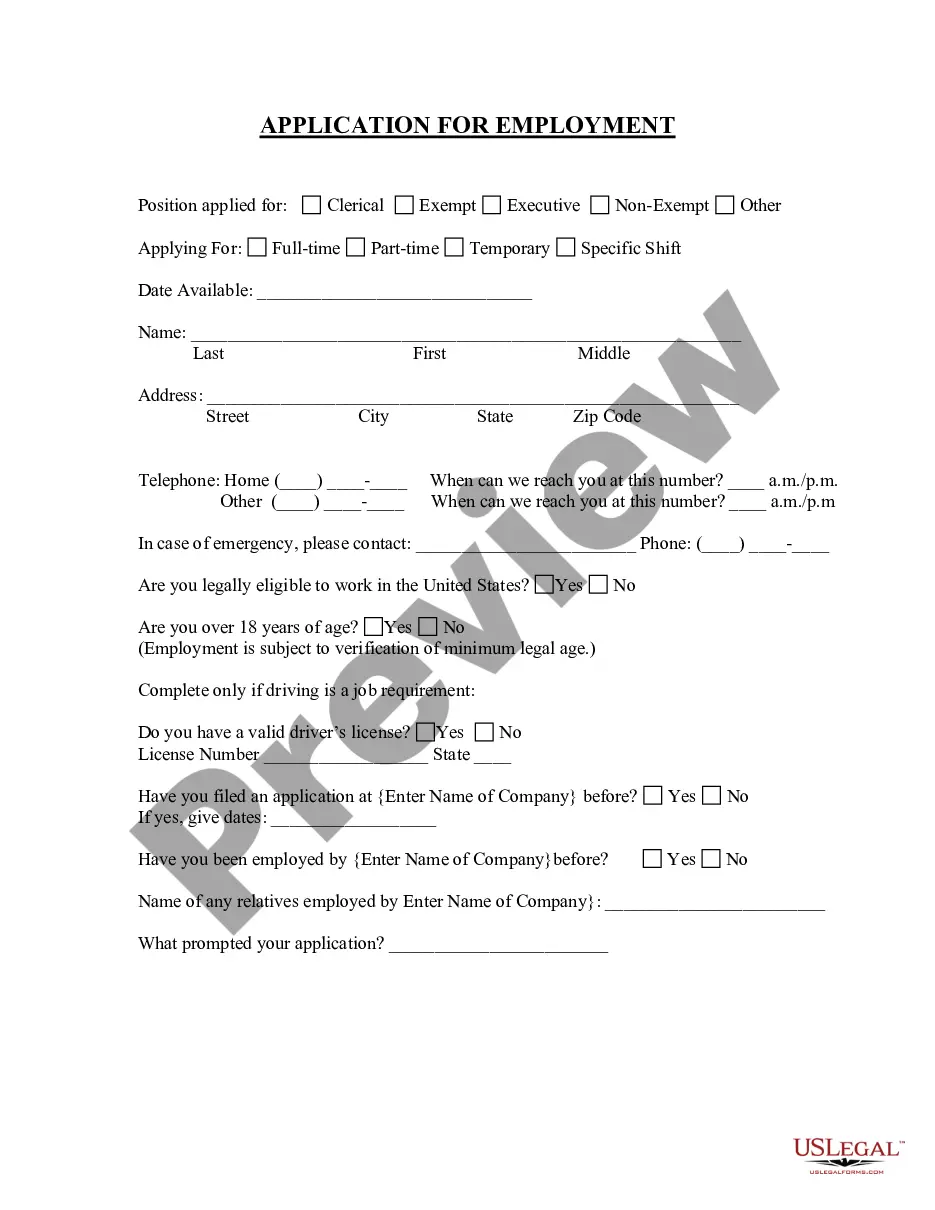
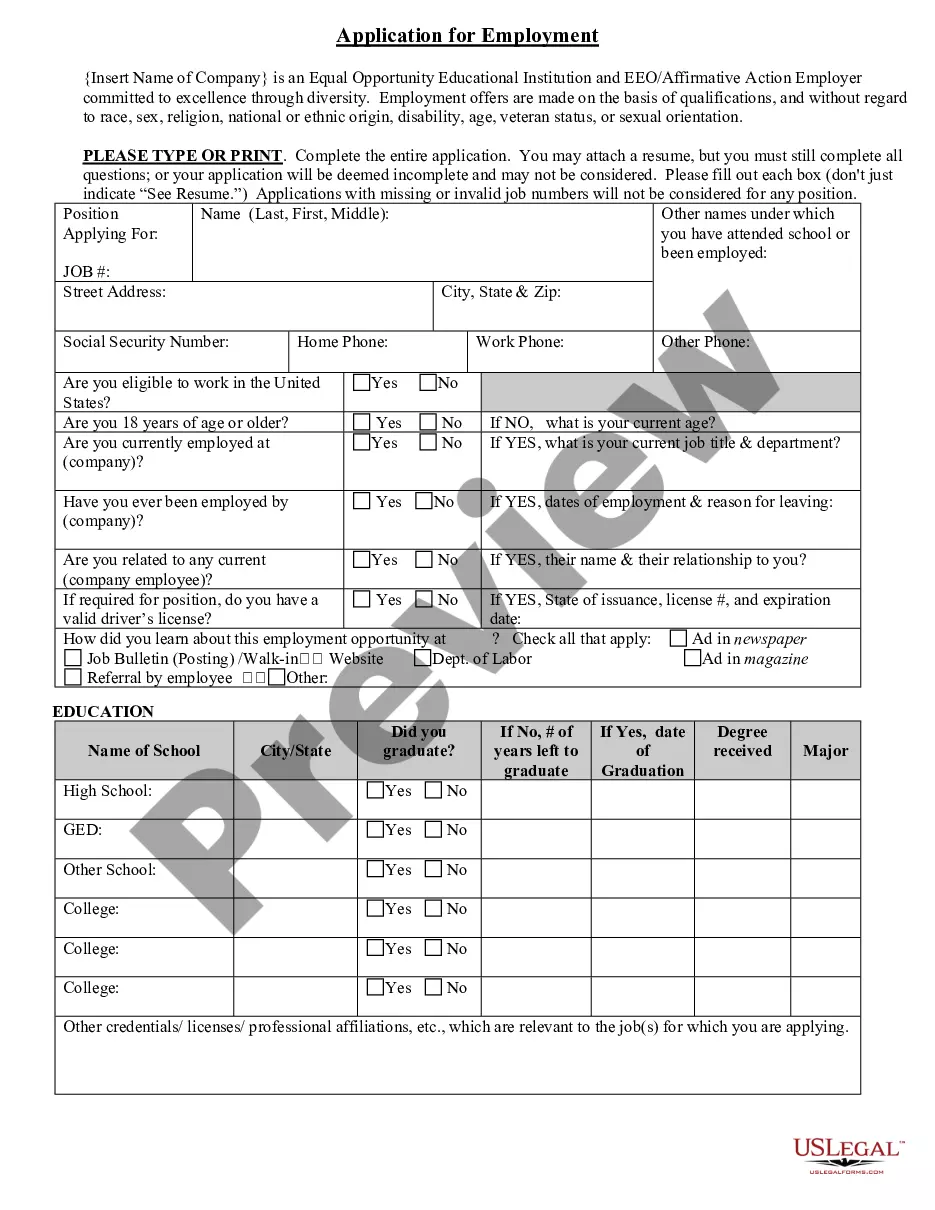
The Application for Work or Employment is designed for individuals seeking clerical, exempt, executive, or nonexempt positions. This form allows applicants to provide essential personal and professional information needed by employers to assess their suitability for various job roles.
Key parts of this document
- Position applied for: Select the desired employment type, including clerical, exempt, executive, and nonexempt roles.
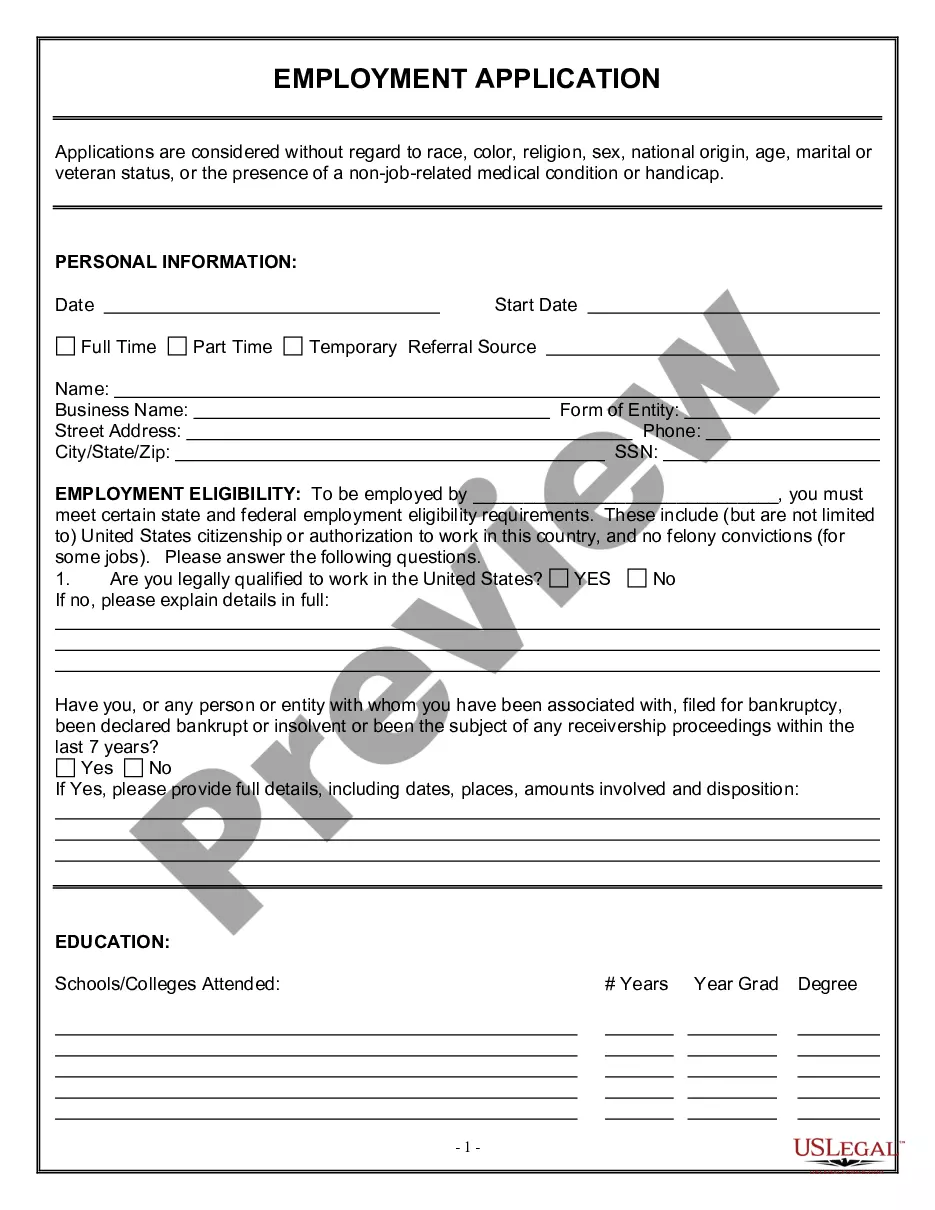
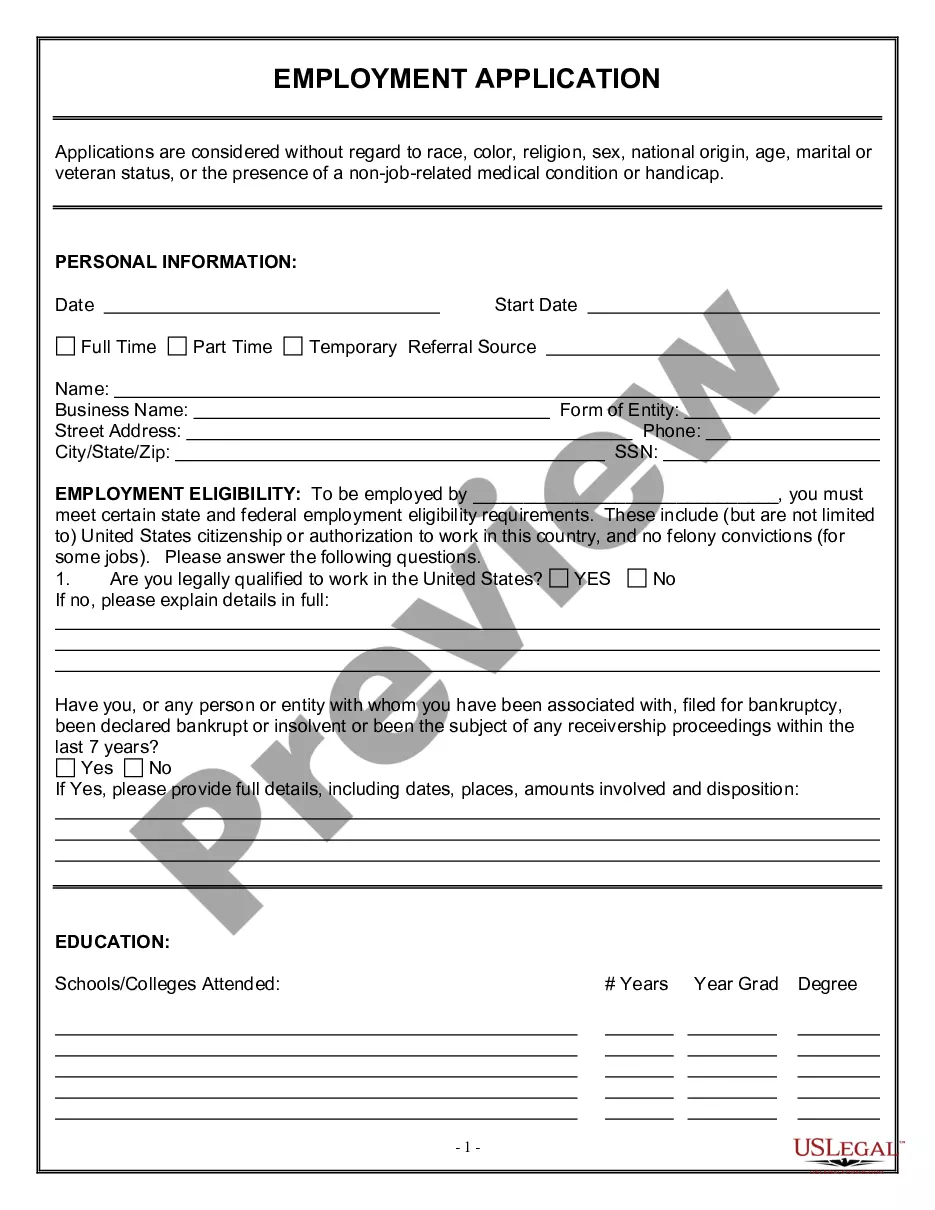
- Contact information: Provide personal details such as name, address, and telephone numbers.
- Work eligibility: Answer whether you are legally eligible to work in the United States and if you meet the age requirement.
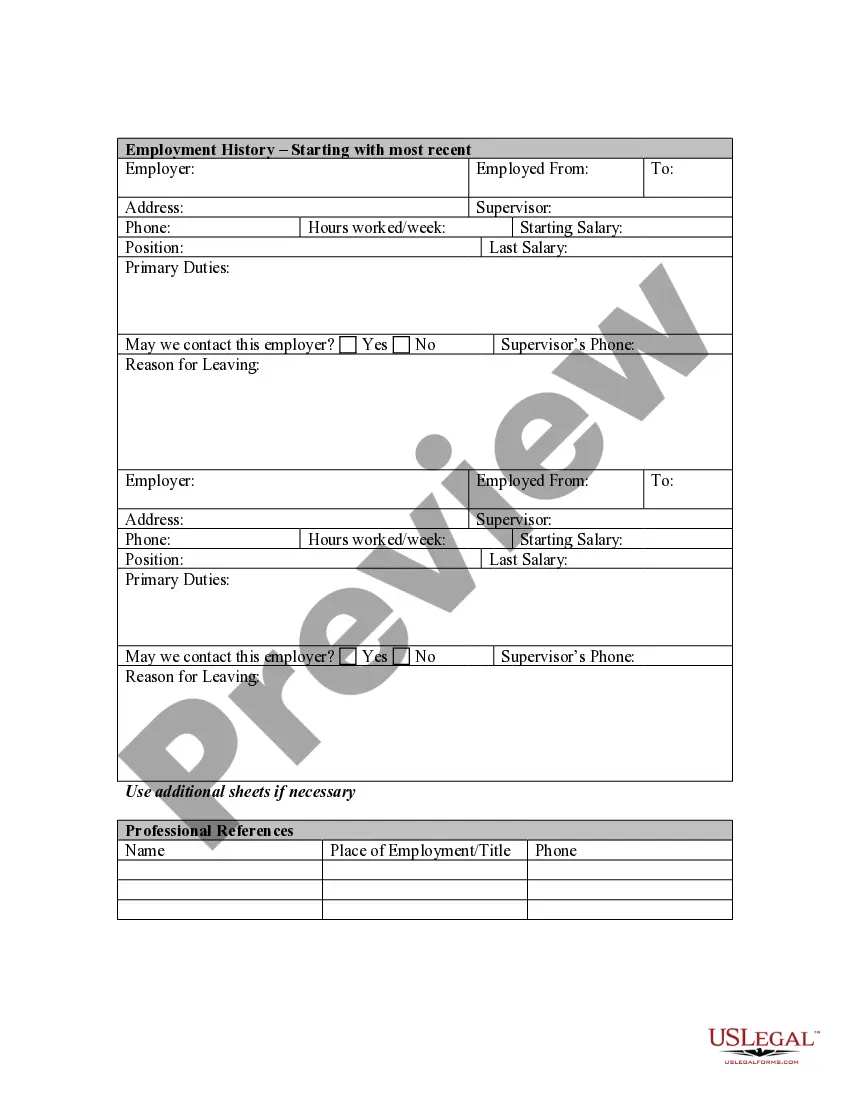
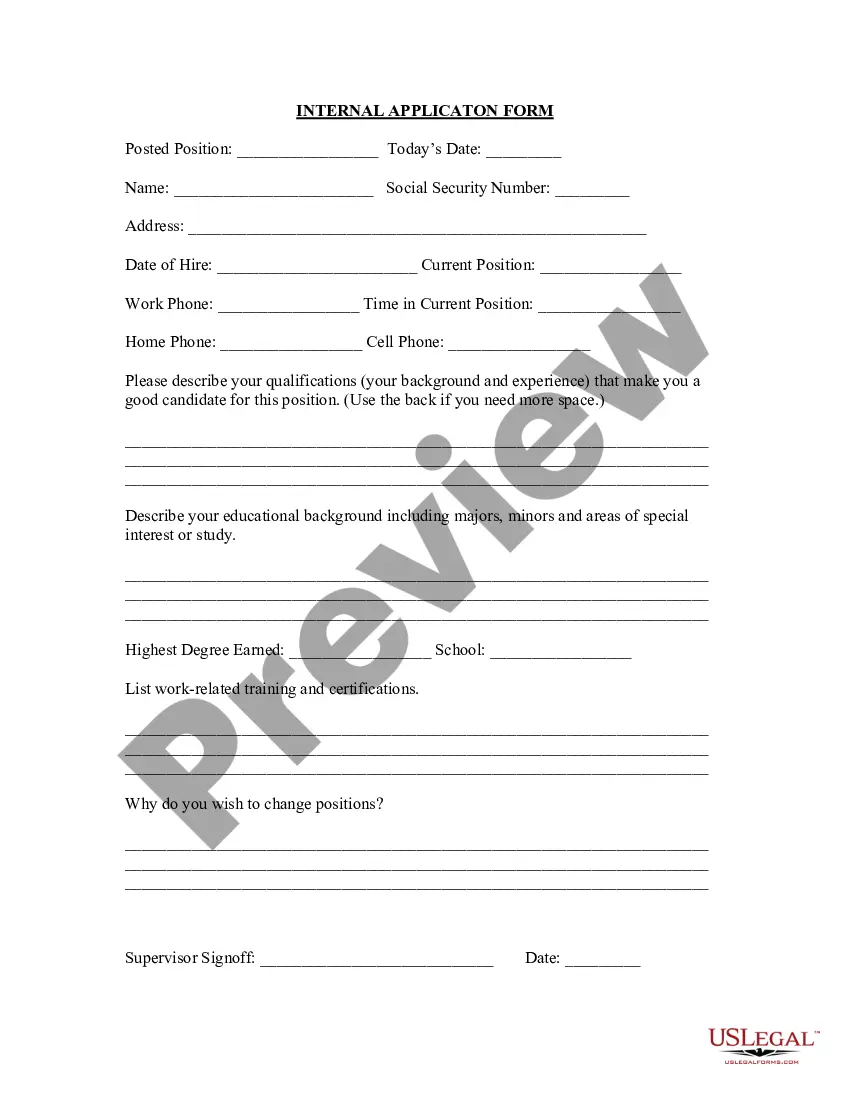
- Previous applications and employment history: Disclose any prior applications or employment with the company.
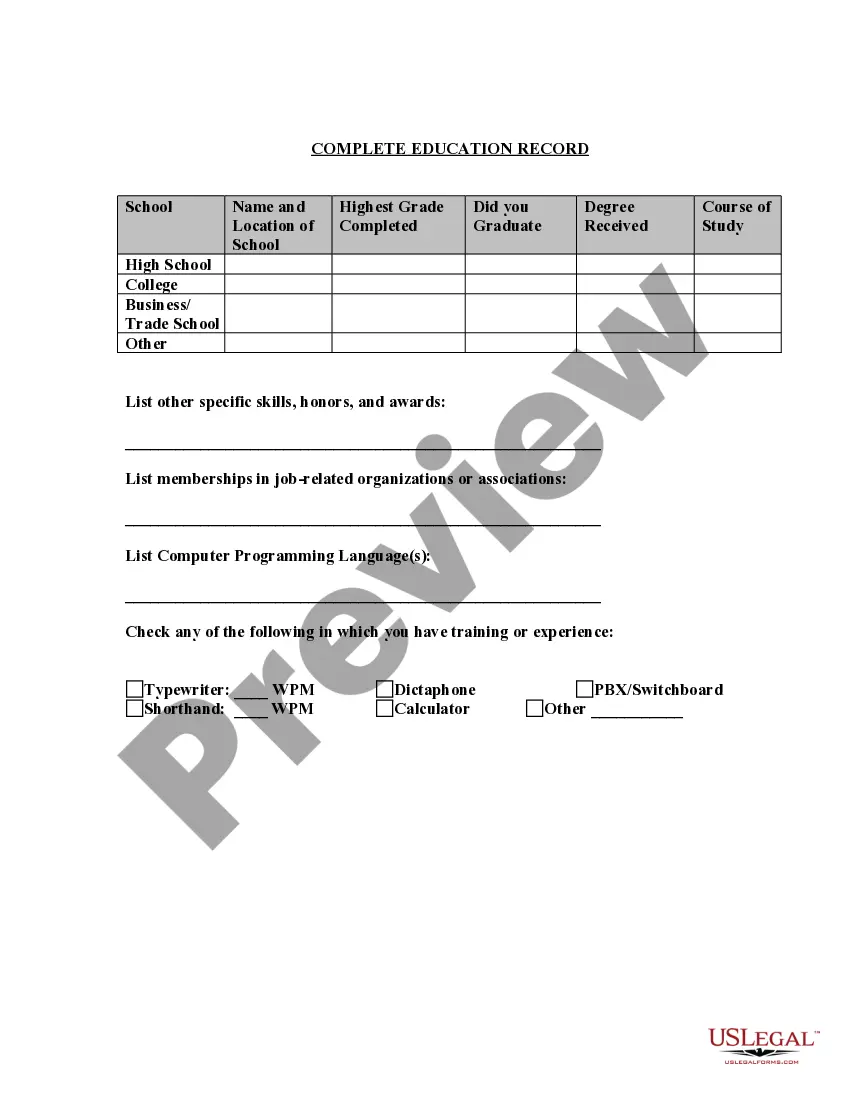
- Educational background: List education and any relevant training or experience related to the position.
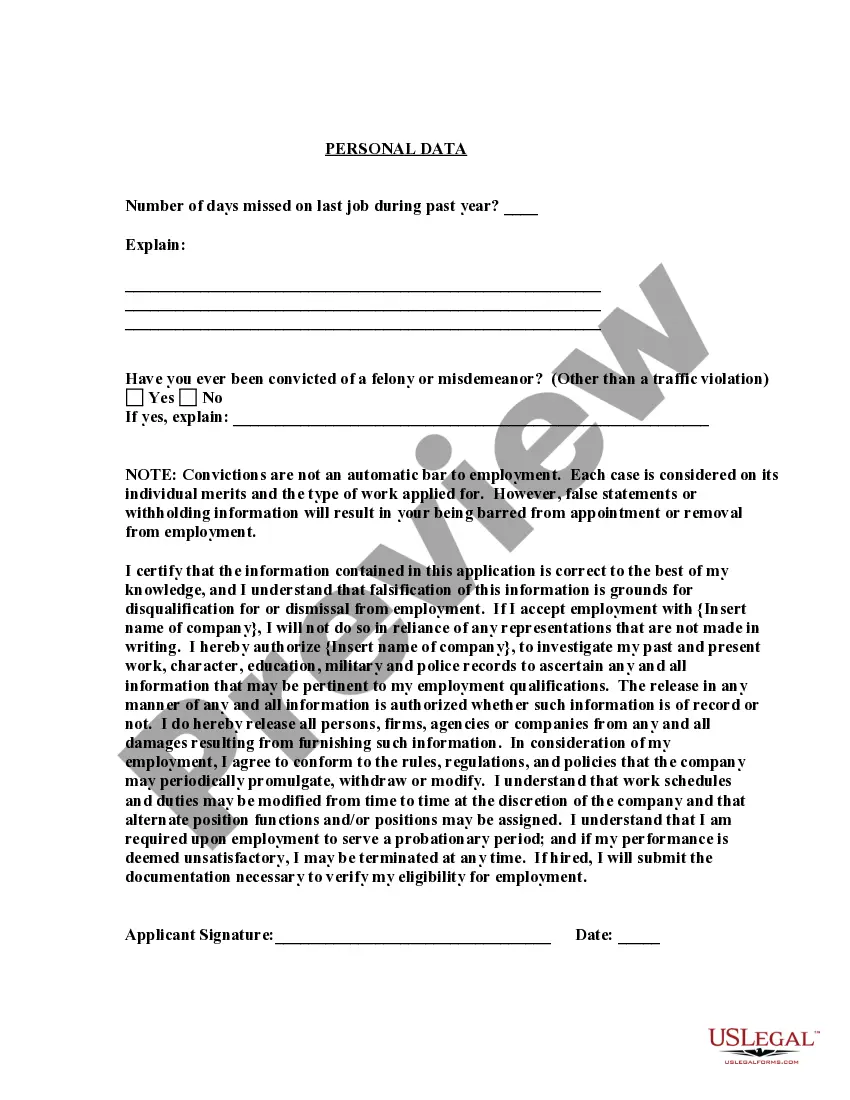
- Criminal history disclosure: Engage in a truthful disclosure regarding any felony or misdemeanor convictions.

Situations where this form applies
This form should be used when applying for job positions that fall within the clerical, exempt, executive, or nonexempt categories. It is ideal for job seekers looking to submit a formal application to potential employers in those sectors.
Who should use this form
- Individuals applying for clerical jobs.
- Job seekers interested in exempt or executive positions.
- Persons seeking nonexempt employment opportunities.
- Applicants who need to formally express their interest in working for a specific company.
Completing this form step by step
- Identify the position you are applying for by selecting from clerical, exempt, executive, or nonexempt options.
- Fill out your personal information, including name, address, and contact details.
- Confirm your eligibility to work in the U.S. and age requirement.
- Provide your educational background and any relevant skills or training.
- Answer questions regarding previous applications and any criminal history if applicable.
- Sign and date the application to certify that the information is accurate to the best of your knowledge.
Is notarization required?
This form usually doesn’t need to be notarized. However, local laws or specific transactions may require it. Our online notarization service, powered by Notarize, lets you complete it remotely through a secure video session, available 24/7.
Get your form ready online
Our built-in tools help you complete, sign, share, and store your documents in one place.
Make edits, fill in missing information, and update formatting in US Legal Forms—just like you would in MS Word.
Download a copy, print it, send it by email, or mail it via USPS—whatever works best for your next step.
Sign and collect signatures with our SignNow integration. Send to multiple recipients, set reminders, and more. Go Premium to unlock E-Sign.
If this form requires notarization, complete it online through a secure video call—no need to meet a notary in person or wait for an appointment.
We protect your documents and personal data by following strict security and privacy standards.

Make edits, fill in missing information, and update formatting in US Legal Forms—just like you would in MS Word.

Download a copy, print it, send it by email, or mail it via USPS—whatever works best for your next step.

Sign and collect signatures with our SignNow integration. Send to multiple recipients, set reminders, and more. Go Premium to unlock E-Sign.

If this form requires notarization, complete it online through a secure video call—no need to meet a notary in person or wait for an appointment.

We protect your documents and personal data by following strict security and privacy standards.
Common mistakes
- Failing to provide complete and accurate contact information.
- Neglecting to sign and date the application, rendering it invalid.
- Omitting details about early applications or employment history at the company.
- Providing false information, which can disqualify the applicant.
- Not checking for clarity and completeness before submitting the form.
Why complete this form online
- Convenient download and immediate access to a professionally drafted form.
- Editable format allows you to complete the form digitally before printing.
- Reliable, attorney-reviewed content ensures adherence to legal standards.
- Environmentally friendly option by minimizing paper usage.
- Access to updates and revisions in line with legal changes.
What to keep in mind
- The Application for Work or Employment is essential for various job applications.
- Accurate information is crucial to avoid disqualification.
- The form caters to multiple employment sectors and is accessible for online use.
- Be mindful of local laws when completing the application.
Looking for another form?

Form popularity
FAQ
In general, the office manager is often responsible for and credited with keeping the entire office running smoothly. Because of that, the position is often classified as exempt from overtime.
Salary level test. Employees who are paid less than $23,600 per year ($455 per week) are nonexempt. (Employees who earn more than $100,000 per year are almost certainly exempt.)
Managers generally are exempt from overtime compensation under state and federal wage and hour laws. However, it is important to remember that it is job duties and not job titles that determine whether or not an employee actually is exempt from this important source of increased compensation.
An exempt employee is not entitled overtime pay by the Fair Labor Standards Act (FLSA). These salaried employees receive the same amount of pay per pay period, even if they put in overtime hours. A nonexempt employee is eligible to be paid overtime for work in excess of 40 hours per week, per federal guidelines.
Further, the FLSA regulations clearly state that executive or administrative assistants will only qualify as exempt if they assist business owners or senior executives of large organizations. Thus, if the administrative employee is one of several assistants in the office performing general administrative duties and
Examples of non-exempt employees include contractors, freelancers, interns, servers, retail associates and similar jobs. Even if non-exempt employees earn more than the federal minimum wage, they still take direction from supervisors and do not have administrative or executive positions.
What Is a Non-Exempt Employee? Non-exempt employees are workers who are entitled to earn the federal minimum wage and qualify for overtime pay, which is calculated as one-and-a-half times their hourly rate, for every hour they work, above and beyond a standard 40-hour workweek.
The primary difference in status between exempt and non-exempt employees is their eligibility for overtime. Under federal law, that status is determined by the Fair Labor Standards Act (FLSA). Exempt employees are not entitled to overtime, while non-exempt employees are.
Employees who meet the thresholds of both the Duties and Salary tests are considered exempt from overtime pay or salaried. All other employees, with some exceptions listed below, are considered nonexempt, or eligible for overtime wages.