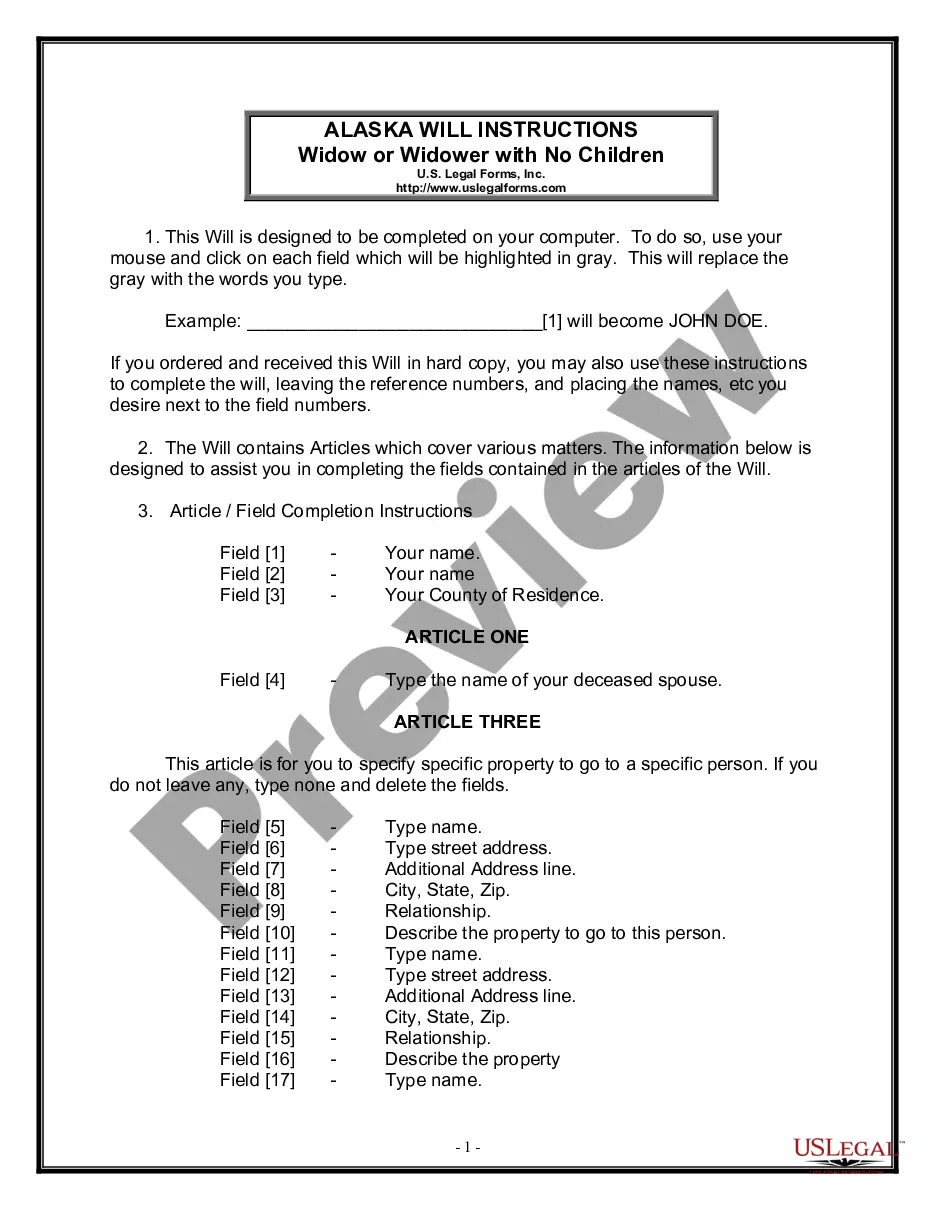
Registered Investment Bond
Overview of this form
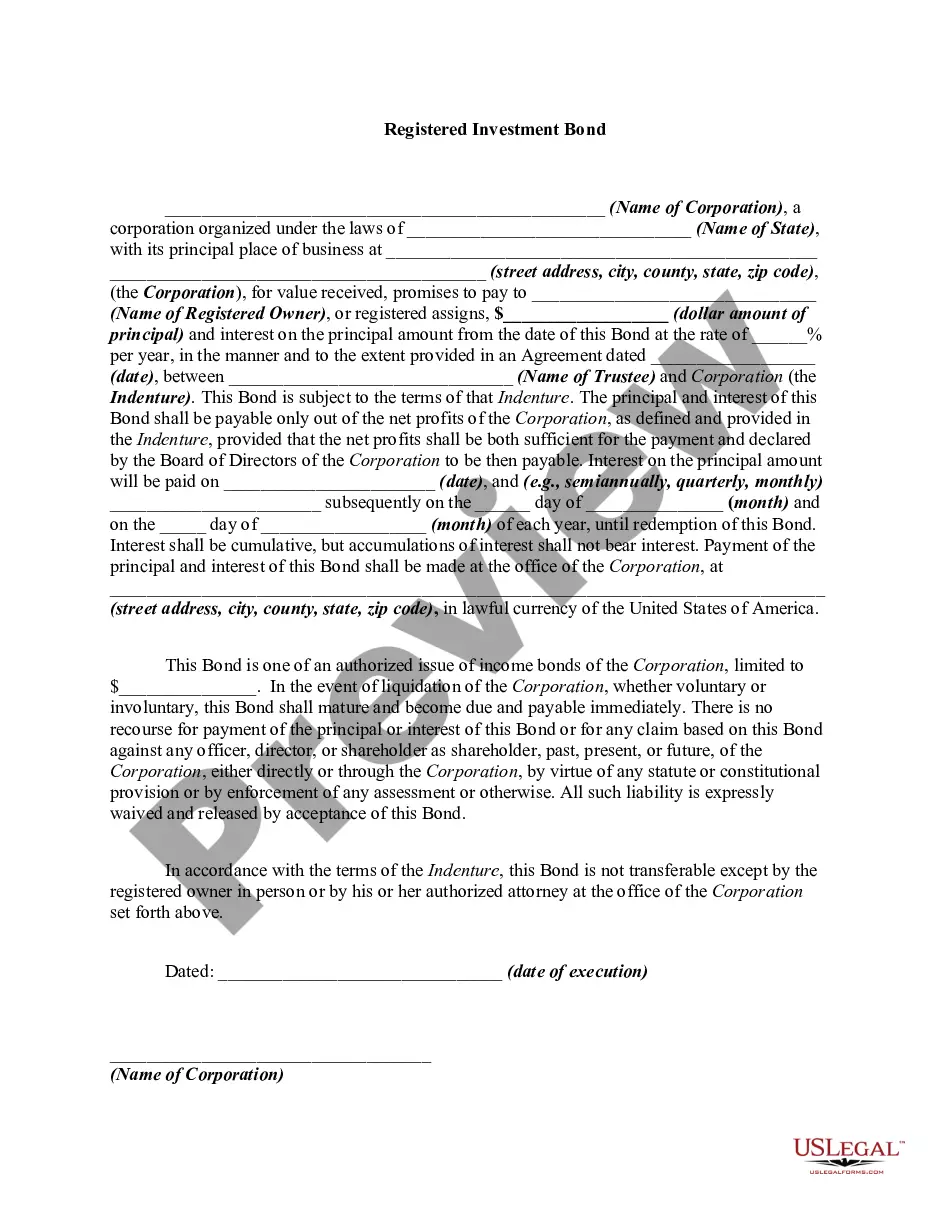
A registered investment bond is a financial instrument issued by a corporation that promises to repay a loan and may be secured by the corporation's assets. It establishes a creditor-debtor relationship between the bondholder and the issuing corporation. Unlike other bonds, a registered bond includes the owner's name printed on the certificate and can only be transferred with the owner's endorsement. This form provides the necessary legal framework for corporations to issue these bonds and to outline the obligations of payment to the bondholder.
Main sections of this form
- Name of the corporation issuing the bond.
- Name of the registered owner of the bond.
- Principal amount and interest rate of the bond.
- Payment terms, including interest payment dates.
- Conditions under which the bond matures, such as liquidation of the corporation.
- Transfer restrictions and endorsement requirements.

Common use cases
This form should be used when a corporation wishes to issue an investment bond to raise capital. It is applicable in scenarios where the corporation requires funding and is willing to secure the investment against corporate assets. Companies often use registered investment bonds when they want to provide investors with an assurance of payments, which can be particularly important for attracting potential investors.
Who can use this document
- Certain corporations looking to issue registered investment bonds.
- Investors or potential bondholders wanting to understand their rights and obligations.
- Corporate treasurers or financial officers responsible for managing corporate financing.
- Trustees involved in overseeing the bond issuance agreements.
Instructions for completing this form
- Identify and fill in the name of the corporation issuing the bond.
- Provide the registered owner's name.
- Specify the principal amount and annual interest rate.
- Include payment terms, including the frequency and dates of interest payments.
- Indicate the conditions for maturity and payment in the event of liquidation.
- Complete the date of execution and the corporate signatory information.
Does this document require notarization?
This form does not typically require notarization to be legally valid. However, some jurisdictions or document types may still require it. US Legal Forms provides secure online notarization powered by Notarize, available 24/7 for added convenience.
Get your form ready online
Our built-in tools help you complete, sign, share, and store your documents in one place.
Make edits, fill in missing information, and update formatting in US Legal Forms—just like you would in MS Word.
Download a copy, print it, send it by email, or mail it via USPS—whatever works best for your next step.
Sign and collect signatures with our SignNow integration. Send to multiple recipients, set reminders, and more. Go Premium to unlock E-Sign.
If this form requires notarization, complete it online through a secure video call—no need to meet a notary in person or wait for an appointment.
We protect your documents and personal data by following strict security and privacy standards.

Make edits, fill in missing information, and update formatting in US Legal Forms—just like you would in MS Word.

Download a copy, print it, send it by email, or mail it via USPS—whatever works best for your next step.

Sign and collect signatures with our SignNow integration. Send to multiple recipients, set reminders, and more. Go Premium to unlock E-Sign.

If this form requires notarization, complete it online through a secure video call—no need to meet a notary in person or wait for an appointment.

We protect your documents and personal data by following strict security and privacy standards.
Common mistakes to avoid
- Failing to include the correct name of the corporation or registered owner.
- Omitting important financial details, such as interest rate or payment terms.
- Not adhering to transfer restrictions outlined in the bond agreements.
- Using incorrect dates for maturity or interest payments.
Why use this form online
- Convenient access to legal templates that save time and reduce paperwork.
- Editable format allows customization to fit specific corporate needs.
- Reliable and up-to-date forms drafted by licensed attorneys.
Legal use & context
- This registered investment bond serves as a secure method for corporations to raise capital.
- Enforceability is subject to the terms outlined in the indenture agreement.
- Investors should be aware of the non-transferable nature of these bonds without proper endorsement.
Quick recap
- A registered investment bond guarantees repayment and may be secured by corporate assets.
- Proper completion of the bond form is crucial for legal validity and investor protection.
- Certain state laws may apply; compliance is necessary for enforceability.
Looking for another form?
Form popularity
FAQ
To redeem bearer bonds, mail the bond certificates to the bond agent who handles redemption on behalf of the bond issuer. You must include a completed Internal Revenue Service Form W-9 and a letter of instruction. The letter tells the bond agent who is to be paid and the address where the payment is to be sent.
If you have a bearer bond issued decades ago, or by a company that no longer exists, it may have no value as a monetary instrument but it could still have value as a collectible.
Interest is paid to the lawful owner of the bond. They are not registered in the name of the owners. They are registered in the name of the owners.
A registered bond is a debt instrument whose bondholder's information is kept on record with the issuing party. By archiving the owner's name, address, and other details, issuers ensure they're making the bond's coupon payments to the correct person.
Government Bonds. In general, fixed income securities are classified according to the length of time before maturity. Municipal Bonds. Municipal bonds are the next progression in terms of risk. Corporate Bonds. Zero Coupon Bonds. Bond Derivatives. Diversify your portfolio with fixed income securities.
There are many types of bonds, including government, corporate, municipal and mortgage bonds. Government bonds are generally the safest, while some corporate bonds are considered the most risky of the commonly known bond types. For investors, the biggest risks are credit risk and interest rate risk.
U.S. Treasury Bonds. Savings Bonds. Agency Bonds. Municipal Bonds. Corporate Bonds. Types of Bond-based Securities.
Bonds are a type of investment that results in an investor lending money to the bond issuer in exchange for interest payments. Bonds are one of the most important investments available for those who follow an income investing philosophy, hoping to live off the money generated by their portfolio.
Do bearer bonds still exist? While bearer bonds aren't issued in the U.S. any more, a few are still in circulation. If you can find them you can still collect the value, and in some cases interest. Besides buying or inheriting bearer bonds, you can get them in the foreign countries that still allow them to be issued.