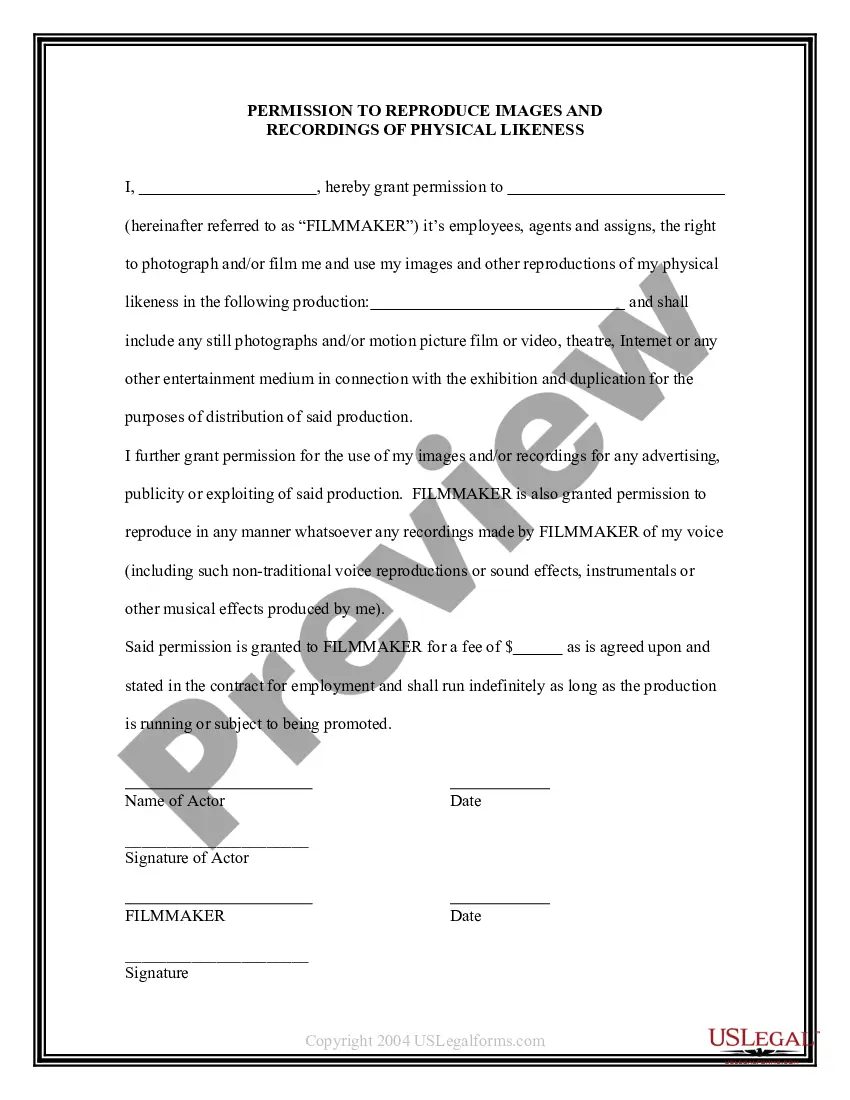
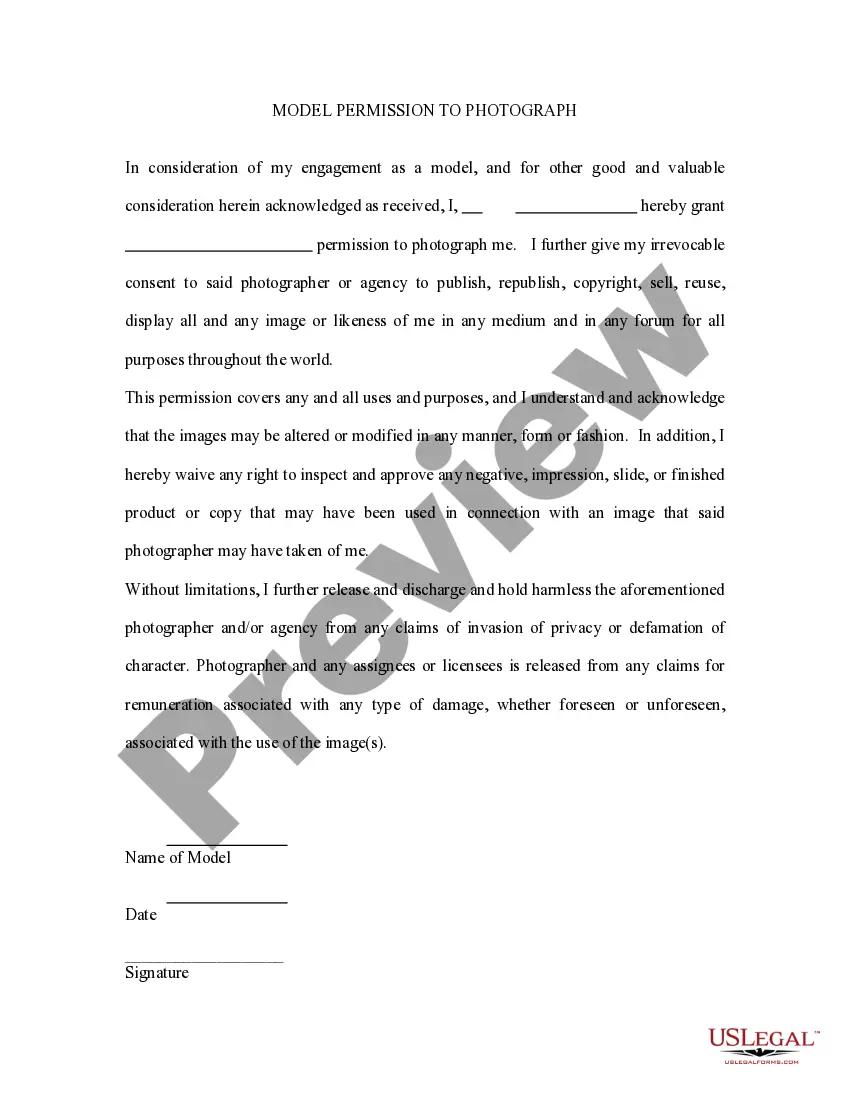
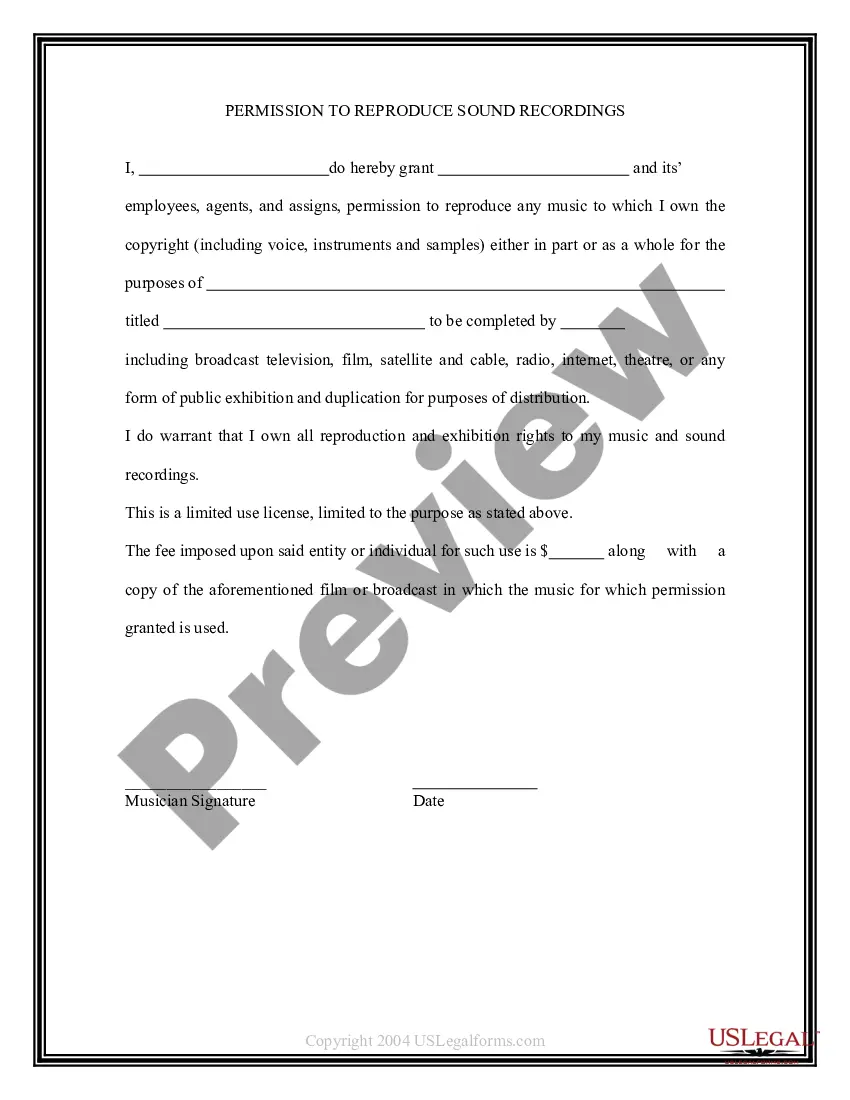
This is a form signed by an actor authorizing a filmmaker to use the actor's image or likeness in a movie production as well as for advertising and publicity reasons.
Texas Permission To Reproduce Images And Recordings Of Physical Likeness
State:
Multi-State
Control #:
US-PRM-25
Format:
Word;
Rich Text
Instant download
Description
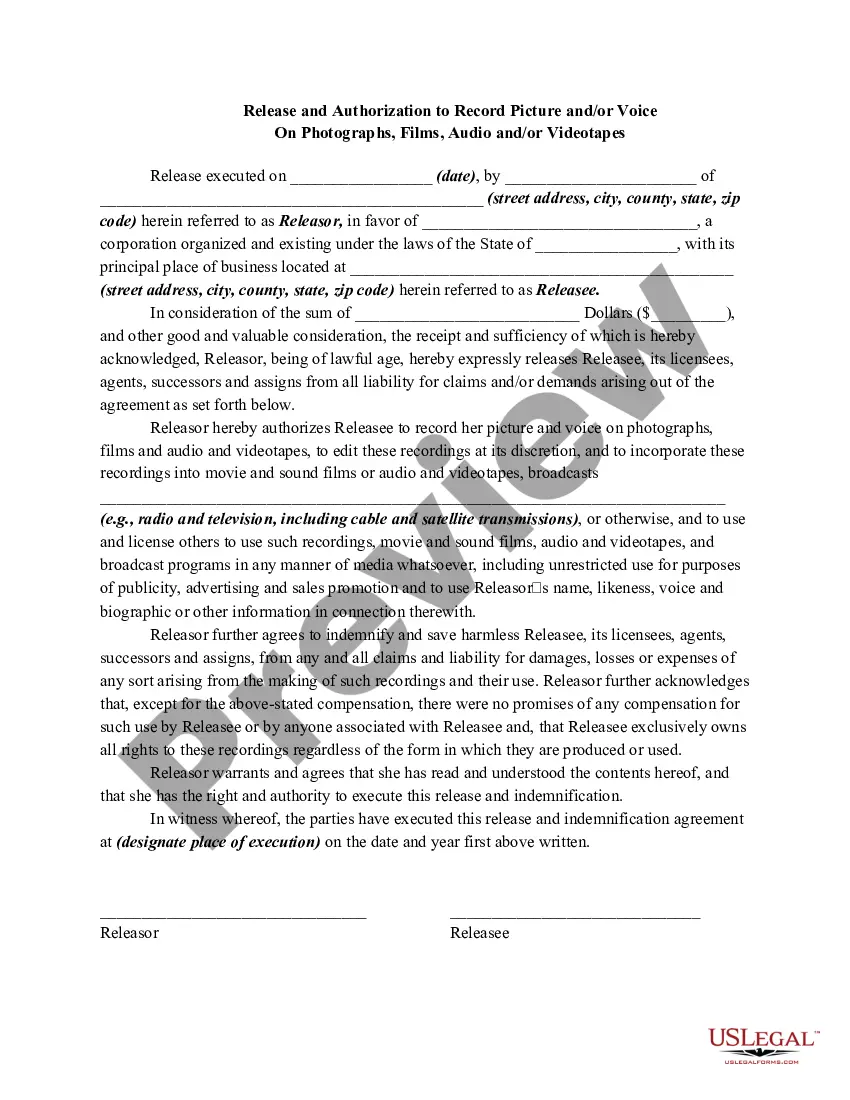
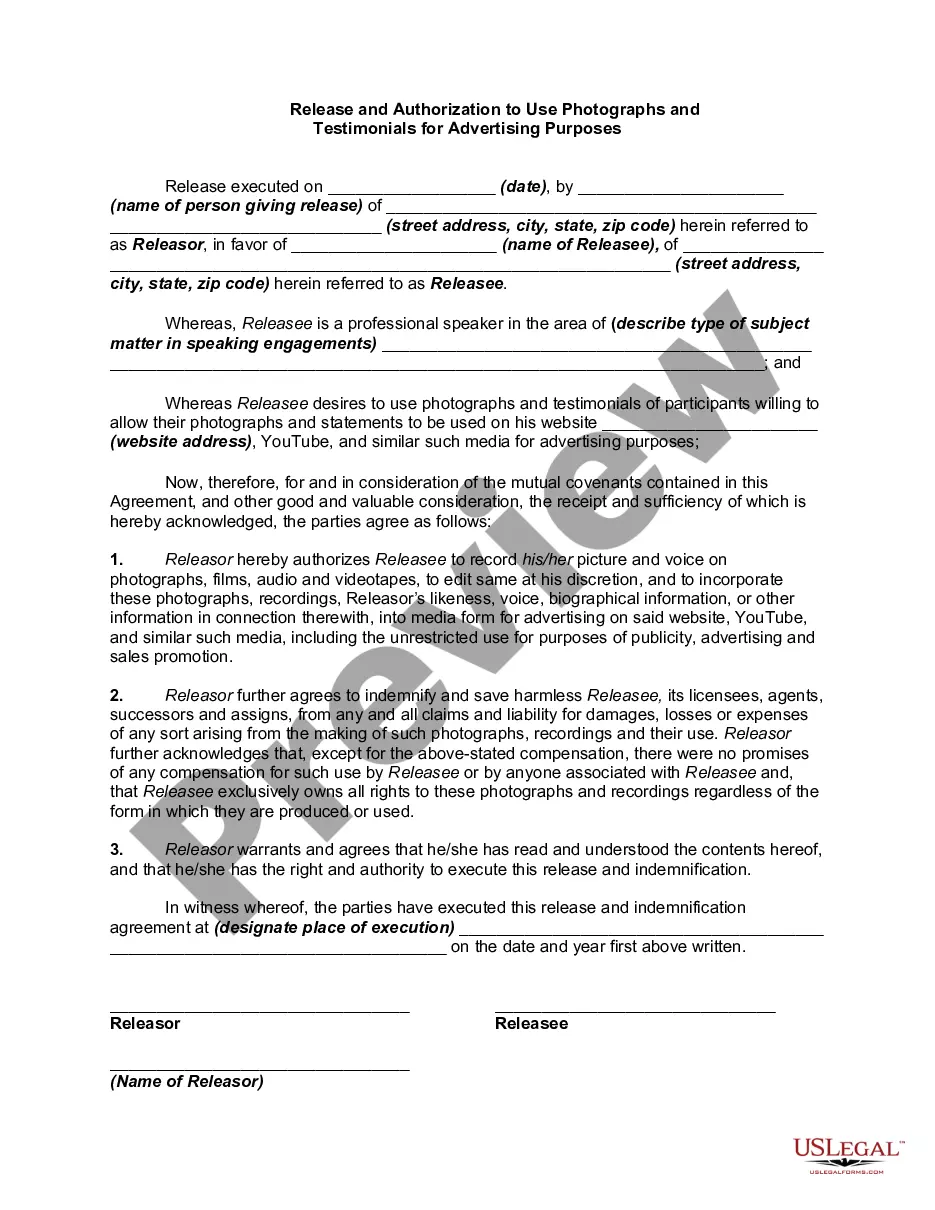
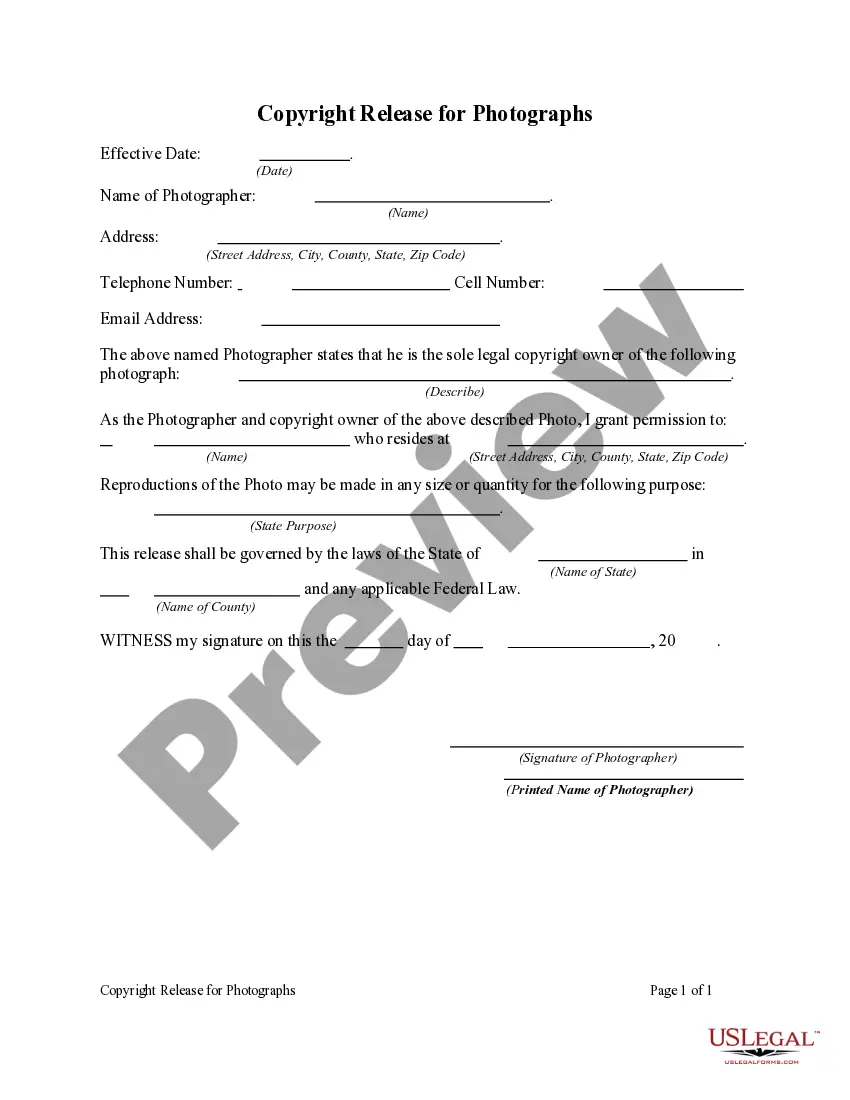


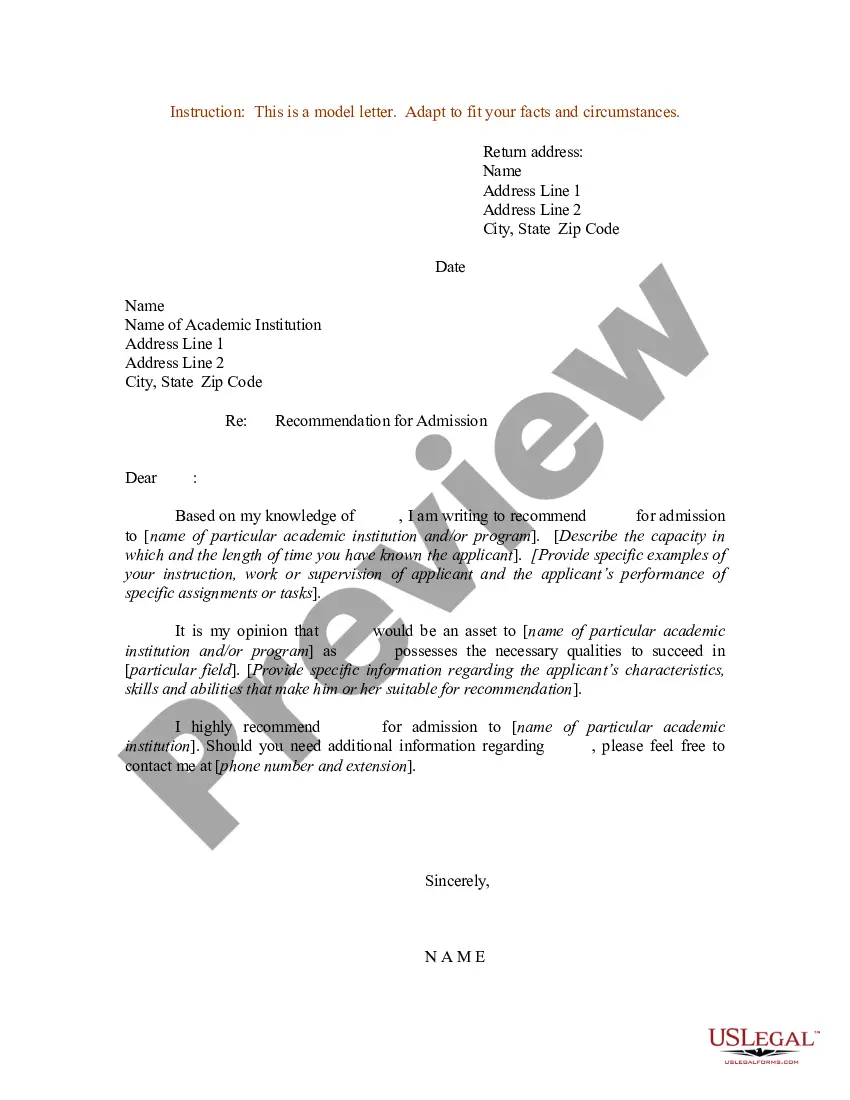

How to fill out Permission To Reproduce Images And Recordings Of Physical Likeness?
US Legal Forms - one of the most important collections of legal documents in America - offers a variety of legal document templates that you can download or print.
With the site, you can access thousands of forms for business and personal use, categorized by types, states, or keywords. You can find the latest versions of forms such as the Texas Permission To Reproduce Images And Recordings Of Physical Likeness in just minutes.
If you already have a monthly membership, Log In and download Texas Permission To Reproduce Images And Recordings Of Physical Likeness from your US Legal Forms collection. The Download button will appear on each document you view. You have access to all previously downloaded forms in the My documents section of your account.
Select the format and download the form onto your device.
Make modifications. Complete, edit, print, and sign the downloaded Texas Permission To Reproduce Images And Recordings Of Physical Likeness. Every template you add to your account has no expiration date and belongs to you permanently. So, if you wish to download or print another copy, just go to the My documents section and click on the form you need. Access the Texas Permission To Reproduce Images And Recordings Of Physical Likeness with US Legal Forms, the most extensive collection of legal document templates. Utilize thousands of professional and state-specific templates that meet your business or personal needs.
- Ensure you have selected the correct form for your city/state. Click the Preview button to review the form's content.
- Check the form summary to ensure you have chosen the right one.
- If the form does not meet your requirements, use the Search box at the top of the screen to find one that does.
- If you are satisfied with the form, confirm your choice by clicking the Purchase now button.
- Then, select the payment plan you want and provide your details to register for the account.
- Process the payment. Use your credit card or PayPal account to finalize the purchase.
Form popularity
FAQ
There is no doubt that, as the photographer, you own the copyright in any photos that you take (even if you never formally register them with the U.S. Copyright Office).
It is generally permissible for people to take photographs at any public place or any private place that they own or rent. Being present on someone else's private property generally requires the property owner's consent to take photos.
When an image has copyright protection, no one else can use the image without the owner giving permission. With these rules in place, you need to assume that there is copyright attached to any image you come across. Otherwise, you may face a court order, fines, or escalated legal action.
If you have ever taken a photo, then you are a copyright owner. You don't have to file anything, publish anything, or take any action to own or establish your copyright, it's automatic and immediate. When you make an image, you automatically become the owner of the copyright.
Specifically, California recognizes both common law and statutory rights. California Civil Code, Section 3344, provides that it is unlawful, for the purpose of advertising or selling, to knowingly use another's name, voice, signature, photograph, or likeness without that person's prior consent.
If you're in the image, nothing changes: the photographer is still creating an original work and thus getting the copyright. It doesn't matter whether it's a photo of you or a duck, the photographer owns it. Since the photographer owns the photo, you as the subject don't have any rights to it.
You can register just one photograph, or a whole body of published work. Visit the U.S. Copyright Office website to get started. It will cost you $35 to register a single work online, and $50 to register through the mail. The cost may vary depending on how many photos you're filing at once.
How to Write a Photo Release Form:Identify the releasor.Describe the photo, image, likeness, or video.Address any payment the model receives for the release.Address royalties.Address whether the model has the ability to revoke their authorization.The parties sign and date the release.
Answers: All false. Unless you have permission, you should not distribute, copy, display, or reuse someone else's photos for any product in which you or your company will benefit, including reports, proposals, presentations, social media, and web sites. The Fair Use doctrine does not apply to for-profit companies.
Who Owns the Copyright of a Photograph? Photos are considered intellectual property because they are the results of the photographer's creativity. That means that the photographer is the copyright owner unless a contract says otherwise. In some cases, the photographer's employer may be the owner.