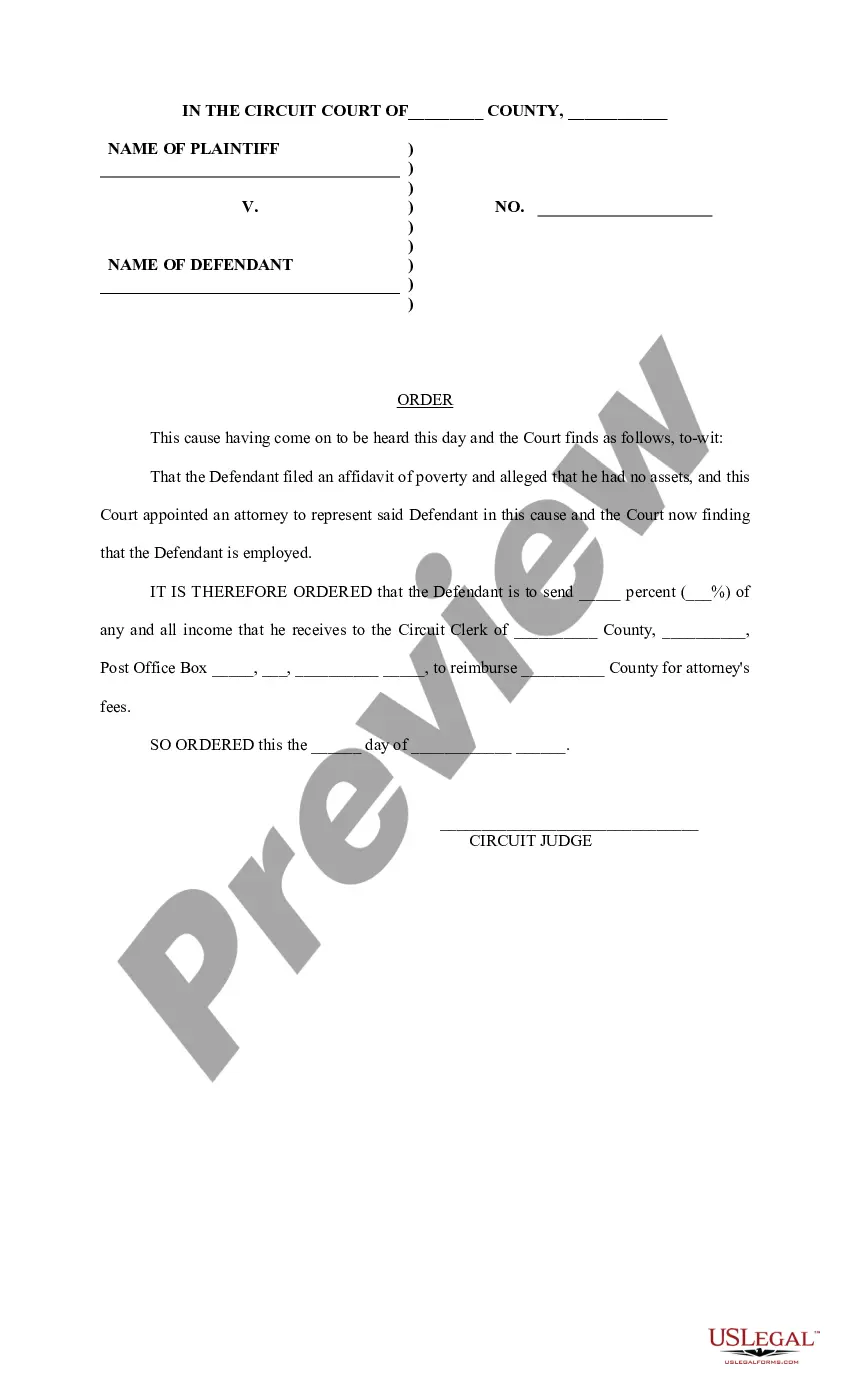
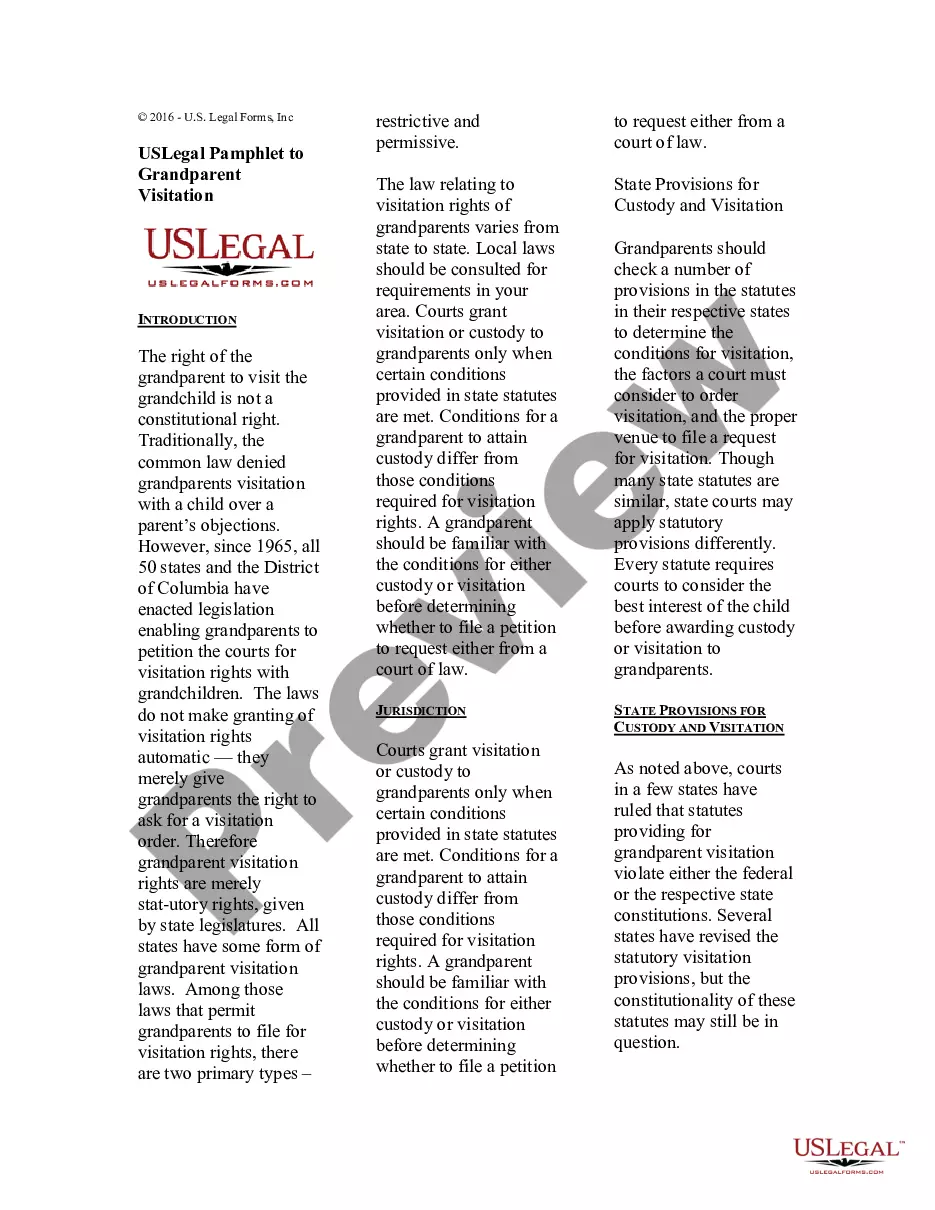
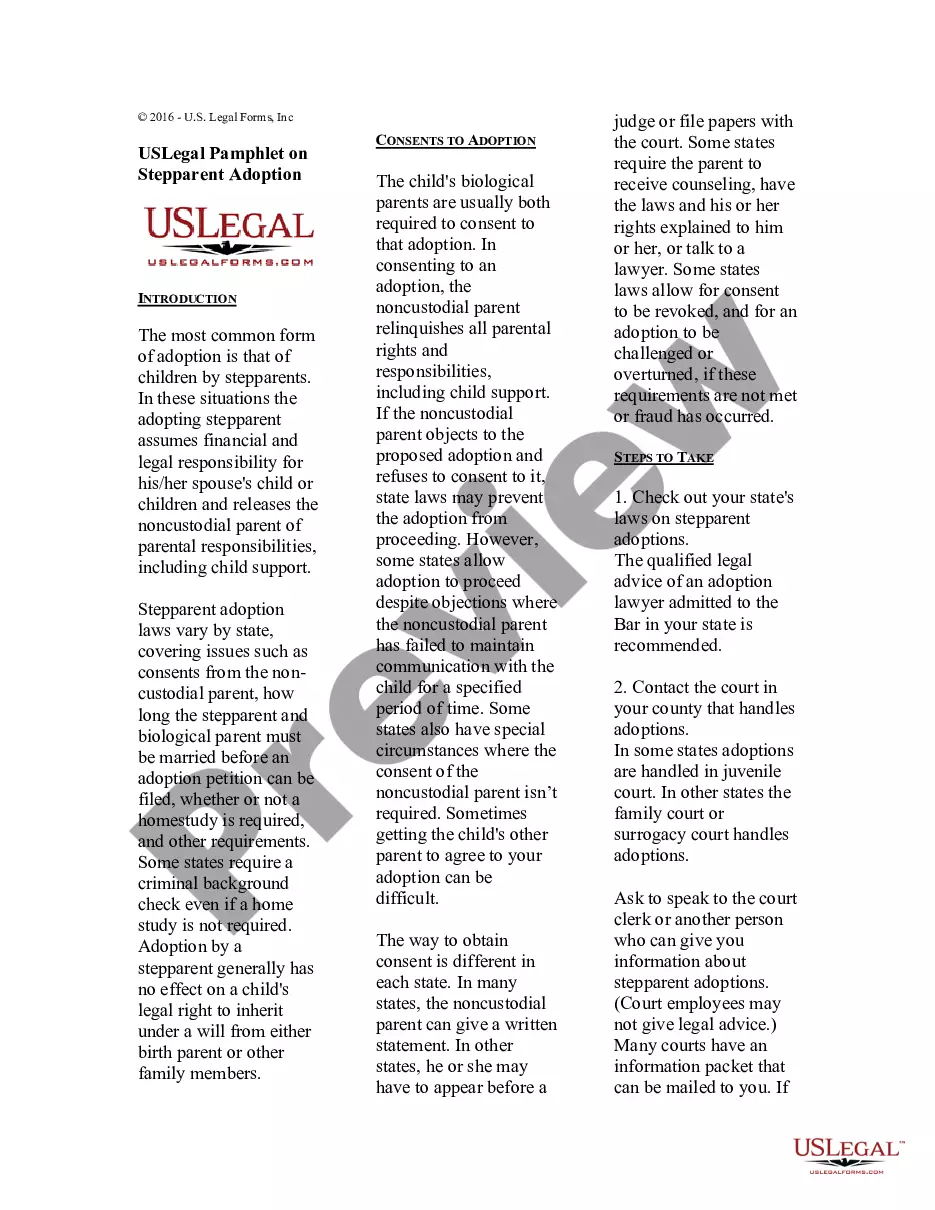
This pamphlet provides an overview of primary custody. Topics covered include what primary custody is, court evaluations, and how primary custody is chosen.
Texas USLegal Pamphlet on Primary Custody
State:
Multi-State
Control #:
US-PMPH-16
Format:
Word;
Rich Text
Instant download
Description
Free preview
Get your form ready online
Our built-in tools help you complete, sign, share, and store your documents in one place.
Built-in online Word editor
Make edits, fill in missing information, and update formatting in US Legal Forms—just like you would in MS Word.
Export easily
Download a copy, print it, send it by email, or mail it via USPS—whatever works best for your next step.
E-sign your document
Sign and collect signatures with our SignNow integration. Send to multiple recipients, set reminders, and more. Go Premium to unlock E-Sign.
Notarize online 24/7
If this form requires notarization, complete it online through a secure video call—no need to meet a notary in person or wait for an appointment.
Store your document securely
We protect your documents and personal data by following strict security and privacy standards.

Make edits, fill in missing information, and update formatting in US Legal Forms—just like you would in MS Word.

Download a copy, print it, send it by email, or mail it via USPS—whatever works best for your next step.

Sign and collect signatures with our SignNow integration. Send to multiple recipients, set reminders, and more. Go Premium to unlock E-Sign.

If this form requires notarization, complete it online through a secure video call—no need to meet a notary in person or wait for an appointment.

We protect your documents and personal data by following strict security and privacy standards.
Looking for another form?


How to fill out USLegal Pamphlet On Primary Custody?
You are able to invest hrs on the web searching for the lawful file format that meets the state and federal requirements you require. US Legal Forms offers thousands of lawful varieties which can be examined by experts. It is simple to download or print the Texas USLegal Pamphlet on Primary Custody from the support.
If you currently have a US Legal Forms account, you may log in and click the Down load option. Next, you may comprehensive, revise, print, or indicator the Texas USLegal Pamphlet on Primary Custody. Every single lawful file format you purchase is your own for a long time. To acquire another backup of any obtained type, check out the My Forms tab and click the corresponding option.
Should you use the US Legal Forms web site the very first time, adhere to the easy instructions under:
- First, make certain you have selected the best file format for that area/town that you pick. Read the type description to make sure you have selected the appropriate type. If readily available, take advantage of the Review option to look through the file format as well.
- If you wish to get another variation of the type, take advantage of the Search industry to obtain the format that meets your needs and requirements.
- After you have identified the format you desire, simply click Buy now to continue.
- Pick the costs plan you desire, type in your credentials, and sign up for a free account on US Legal Forms.
- Total the financial transaction. You can use your Visa or Mastercard or PayPal account to purchase the lawful type.
- Pick the formatting of the file and download it for your gadget.
- Make changes for your file if necessary. You are able to comprehensive, revise and indicator and print Texas USLegal Pamphlet on Primary Custody.
Down load and print thousands of file web templates while using US Legal Forms site, that offers the largest variety of lawful varieties. Use skilled and status-distinct web templates to deal with your business or specific requirements.
Form popularity
FAQ
Bottom Line: Texas will grant one parent ?full custody? ? or sole managing conservatorship ? if that parent can convince the court that doing so is in the child's best interests. But you will need to have a strong and effective argument to convince the court.
To get started, there are three primary steps to follow. Step One: Enlist in the Help of an Attorney. While it's possible to pursue custody without a lawyer, this is generally not recommended. ... Step Two: Fill out Forms and Prepare Documents. ... Step Three: Begin Collecting Evidence.
In Texas, there are two types of Texas child custody: sole and joint. Sole custody is when one parent is awarded full legal and physical custody of the children. Joint custody is when both parents share legal and physical custody of the children.
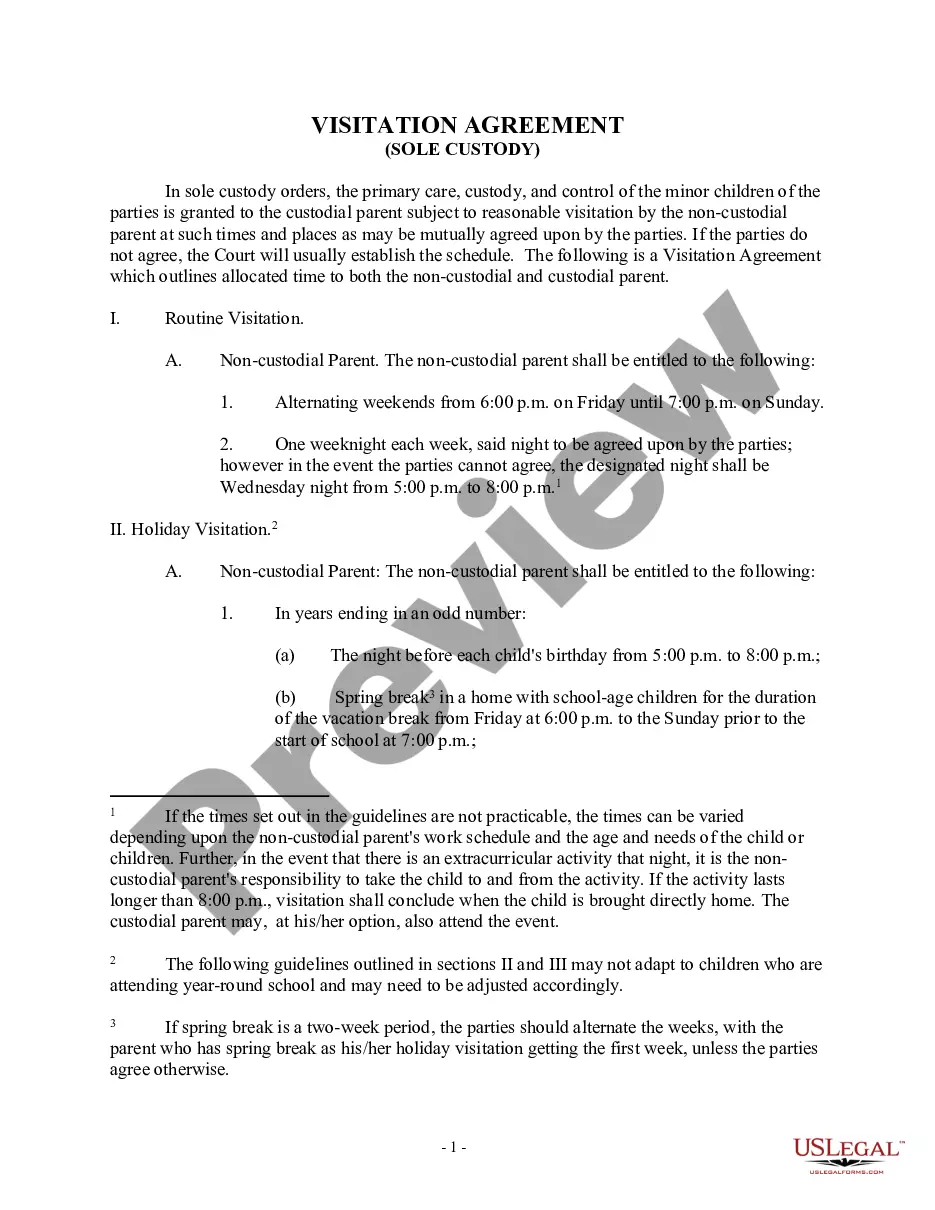
If the parents live within 100 miles of each other, the noncustodial parent has parenting time with the child every 1st, 3rd, and 5th weekend, one weeknight per week during the school year, about half of all holidays, and for an extended time during the summer.
Joint legal custody is the most common custody arrangement granted by courts. Why is that? One of the most significant advantages of joint custody is that a child will grow up with influence and input from both parents.
The following are three methods parents may use to come to an agreement without going to the courtroom: mutual agreement, mediation and collaborative divorce.
There are three different child custody or conservatorship options that will be considered by the Texas family court: joint, sole, and third party custody. In most cases, parents are awarded joint conservatorship unless there is a specific reason that it should not be done.