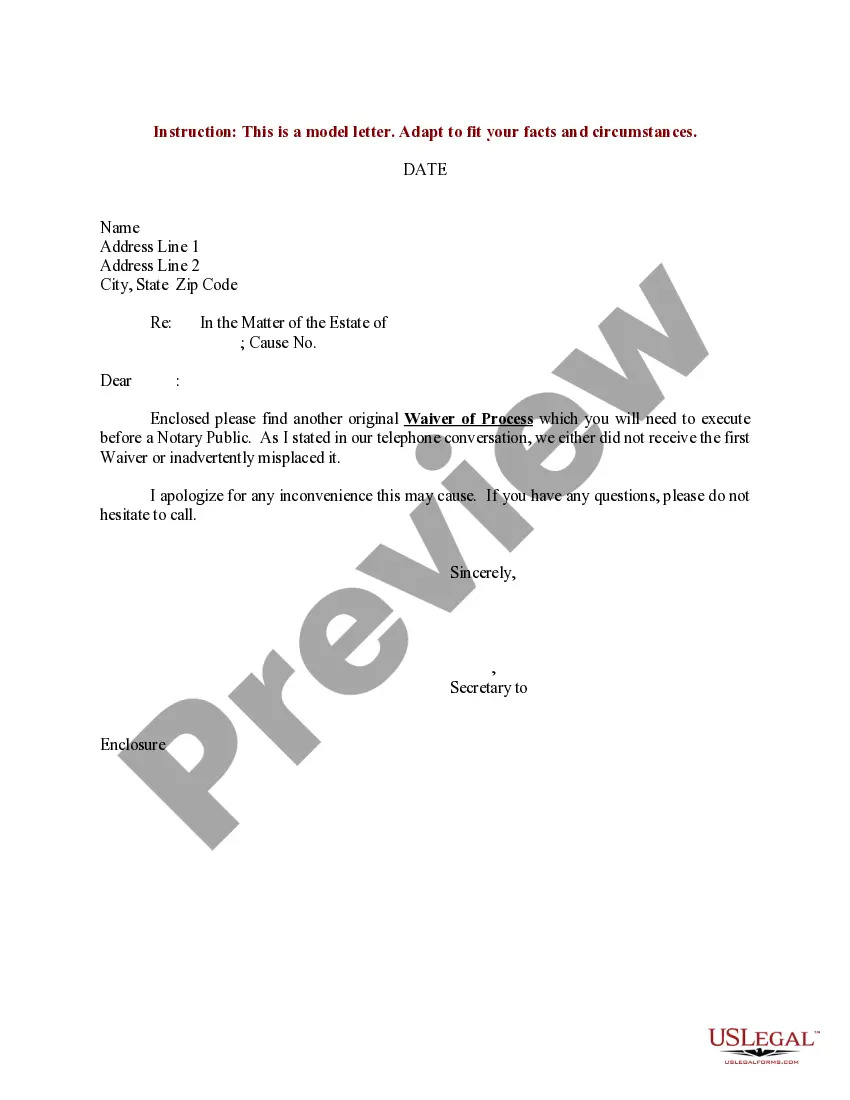
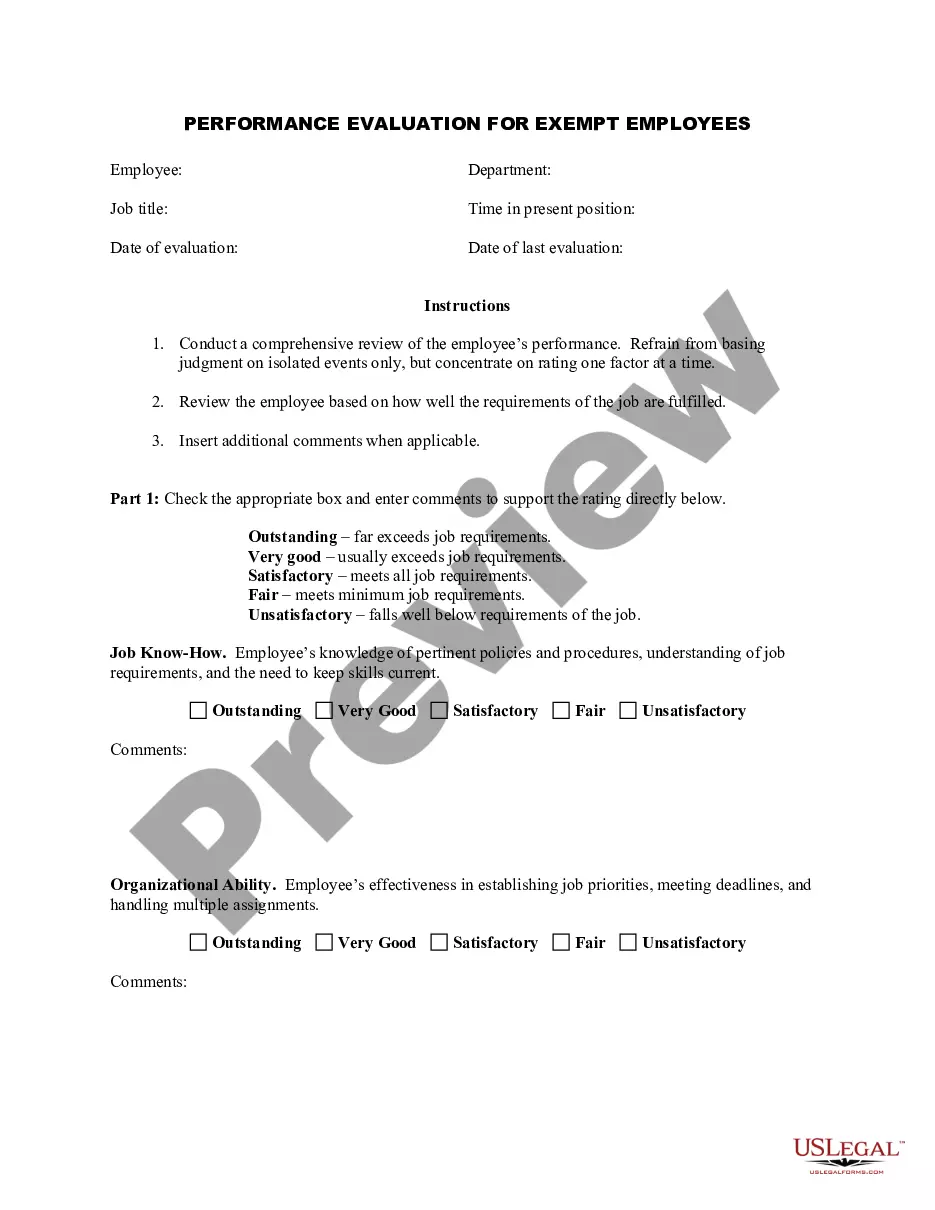
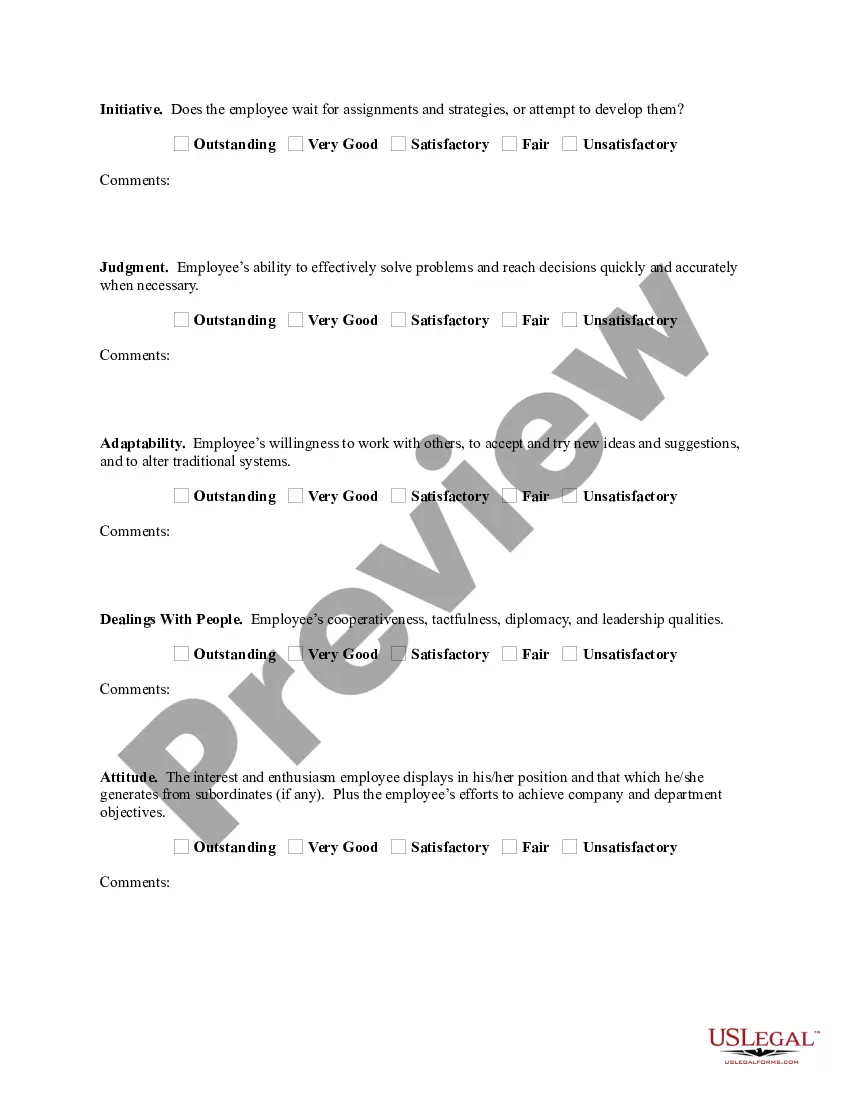
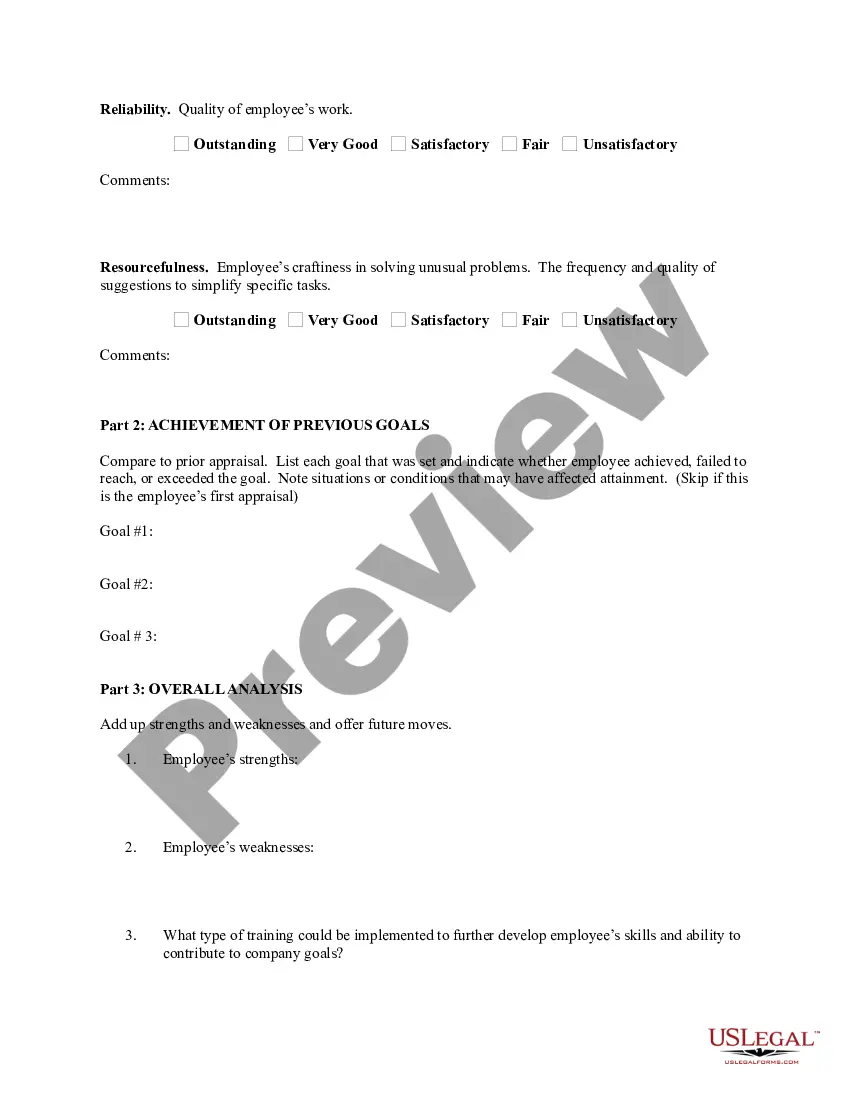
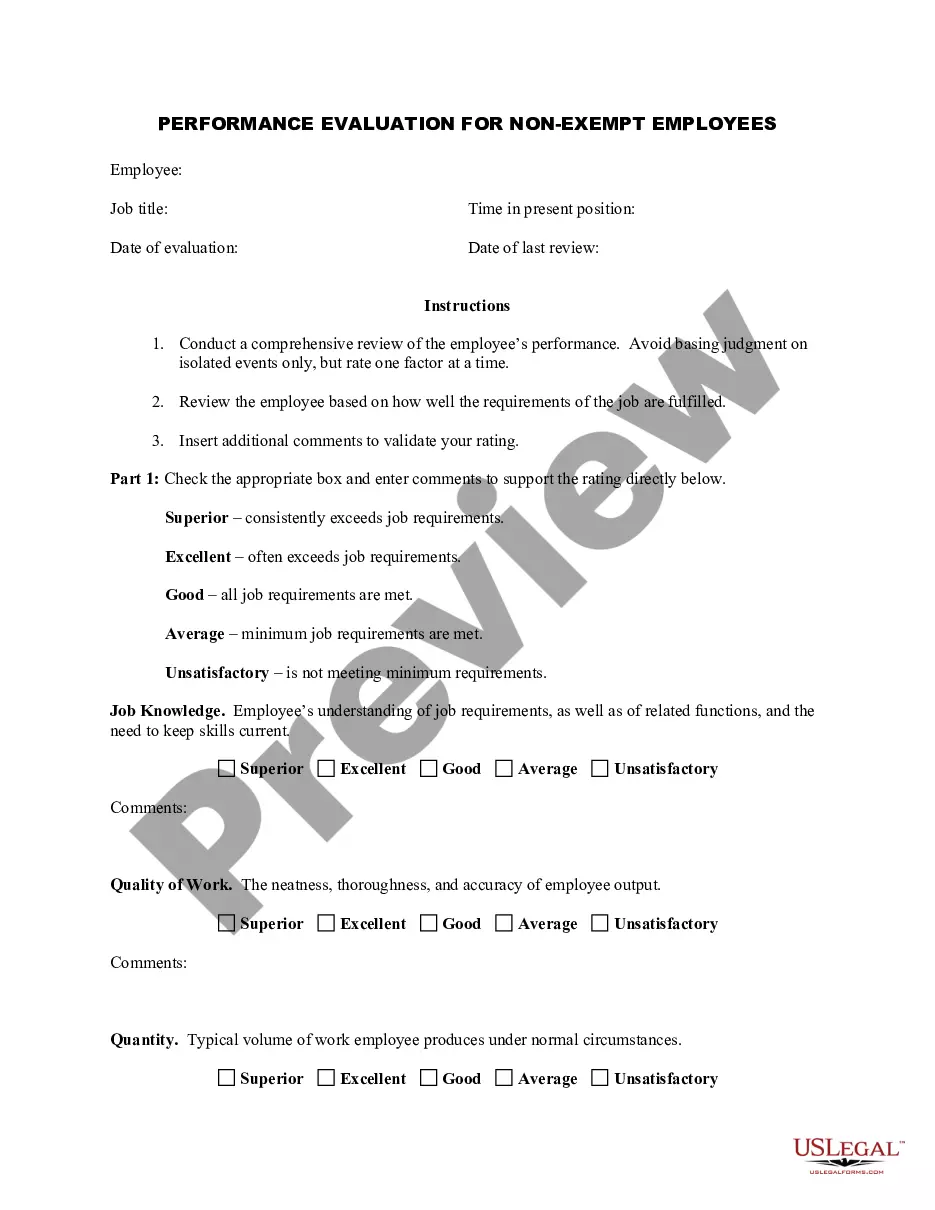
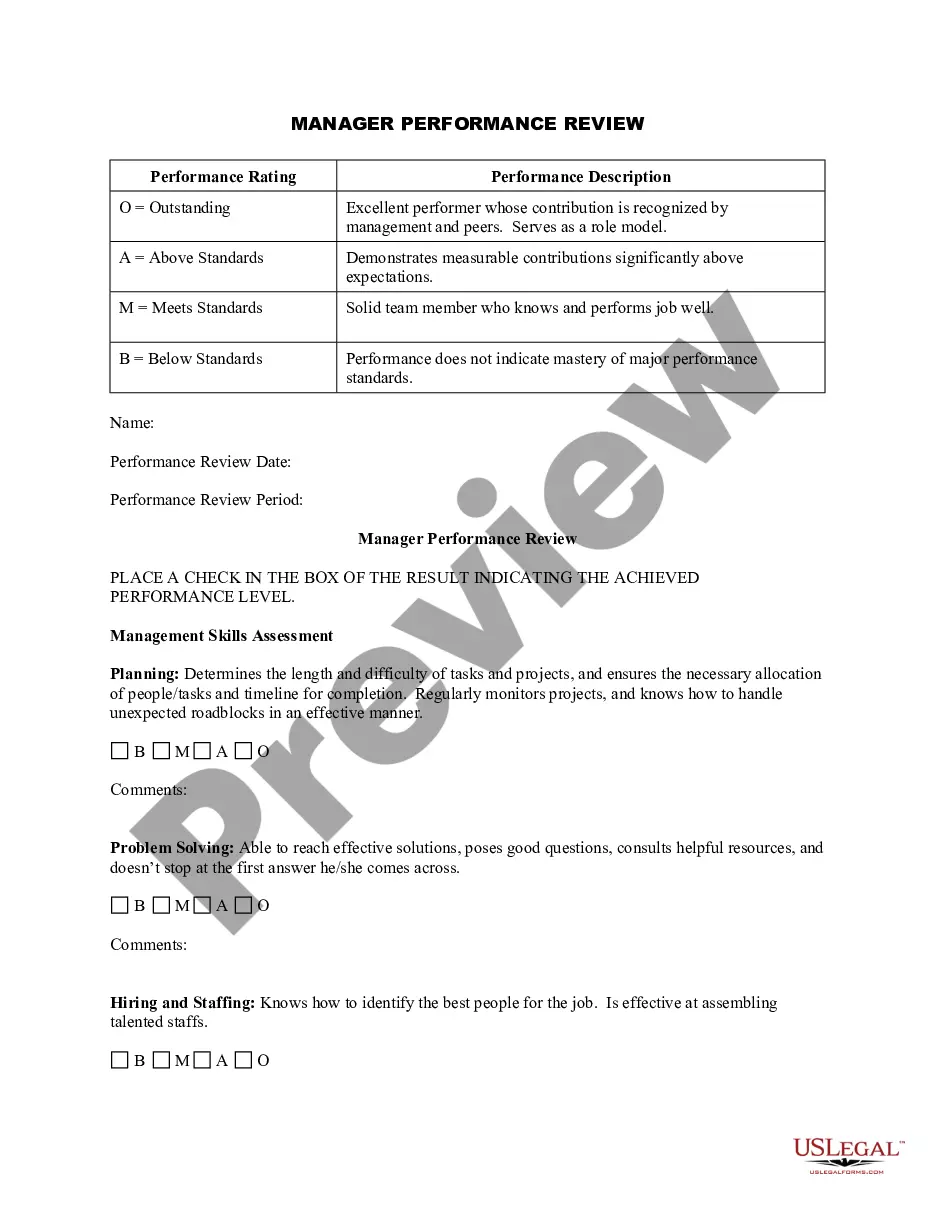
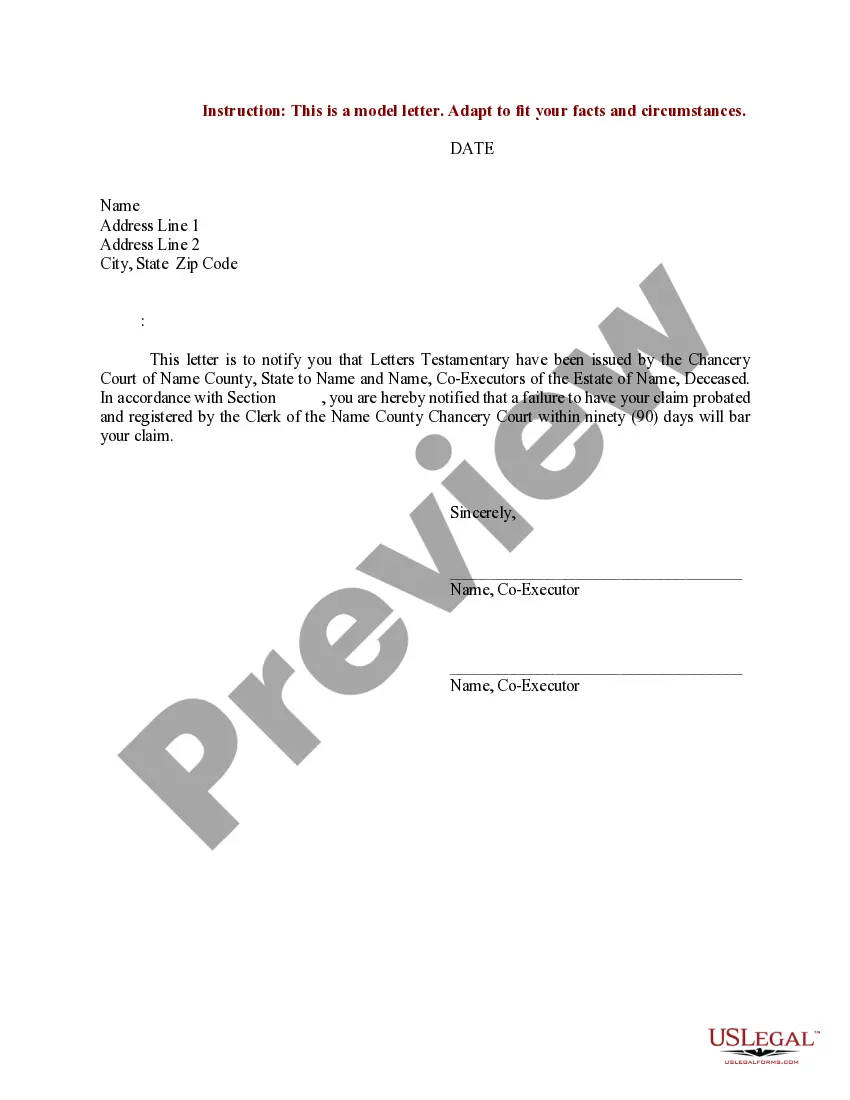
Texas Performance Evaluation for Exempt Employees
Description
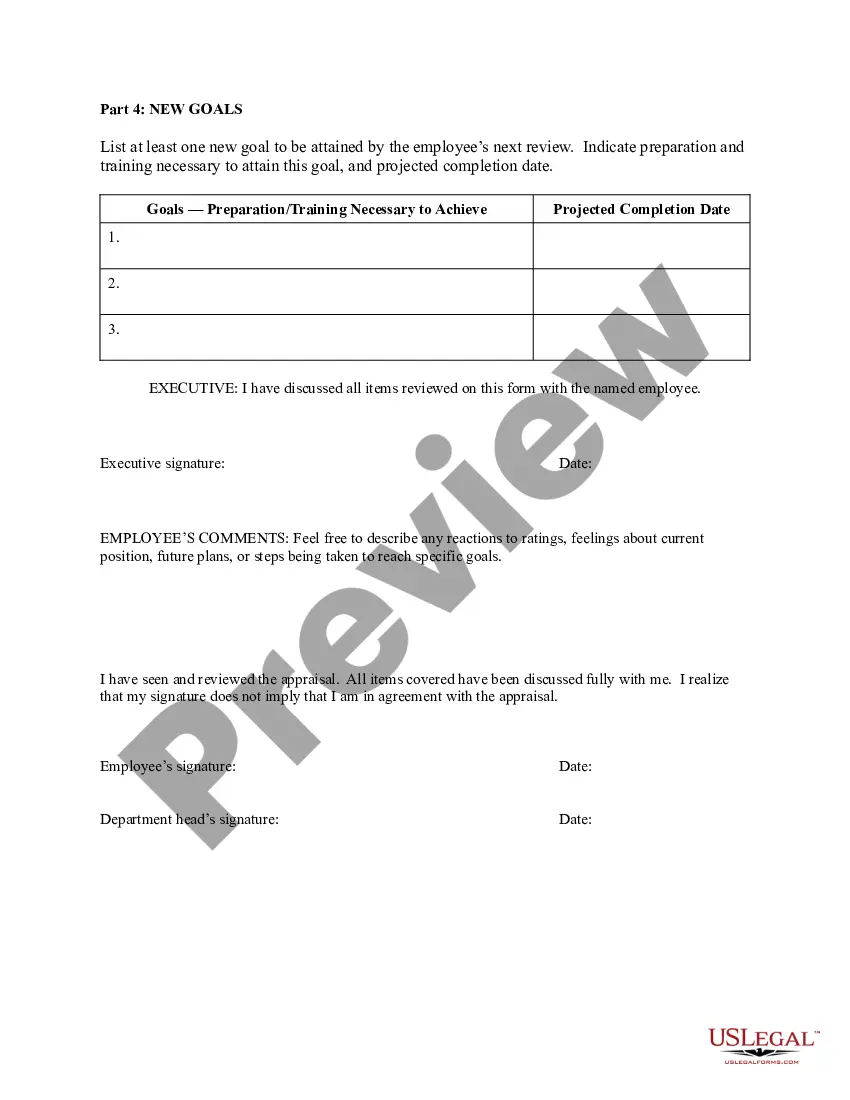
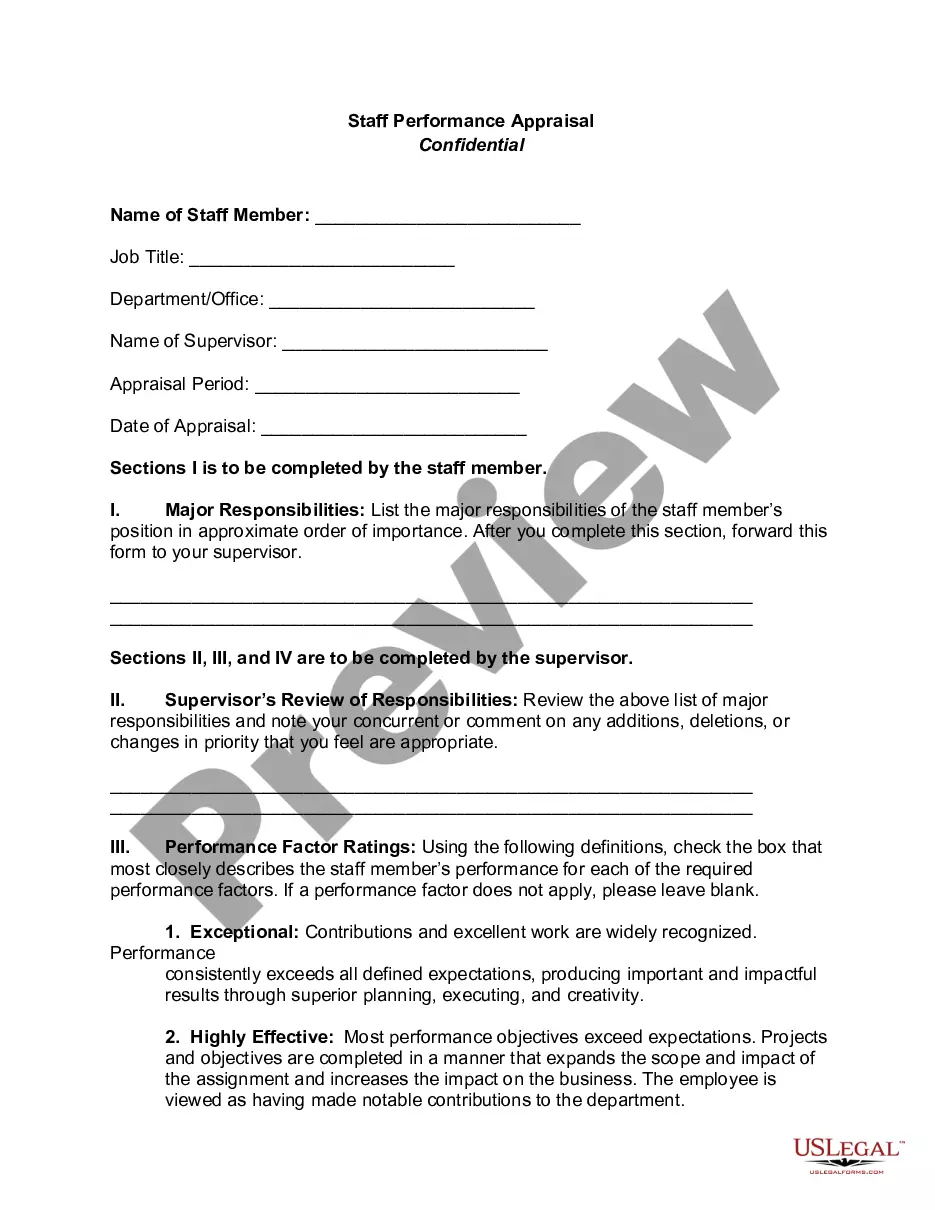
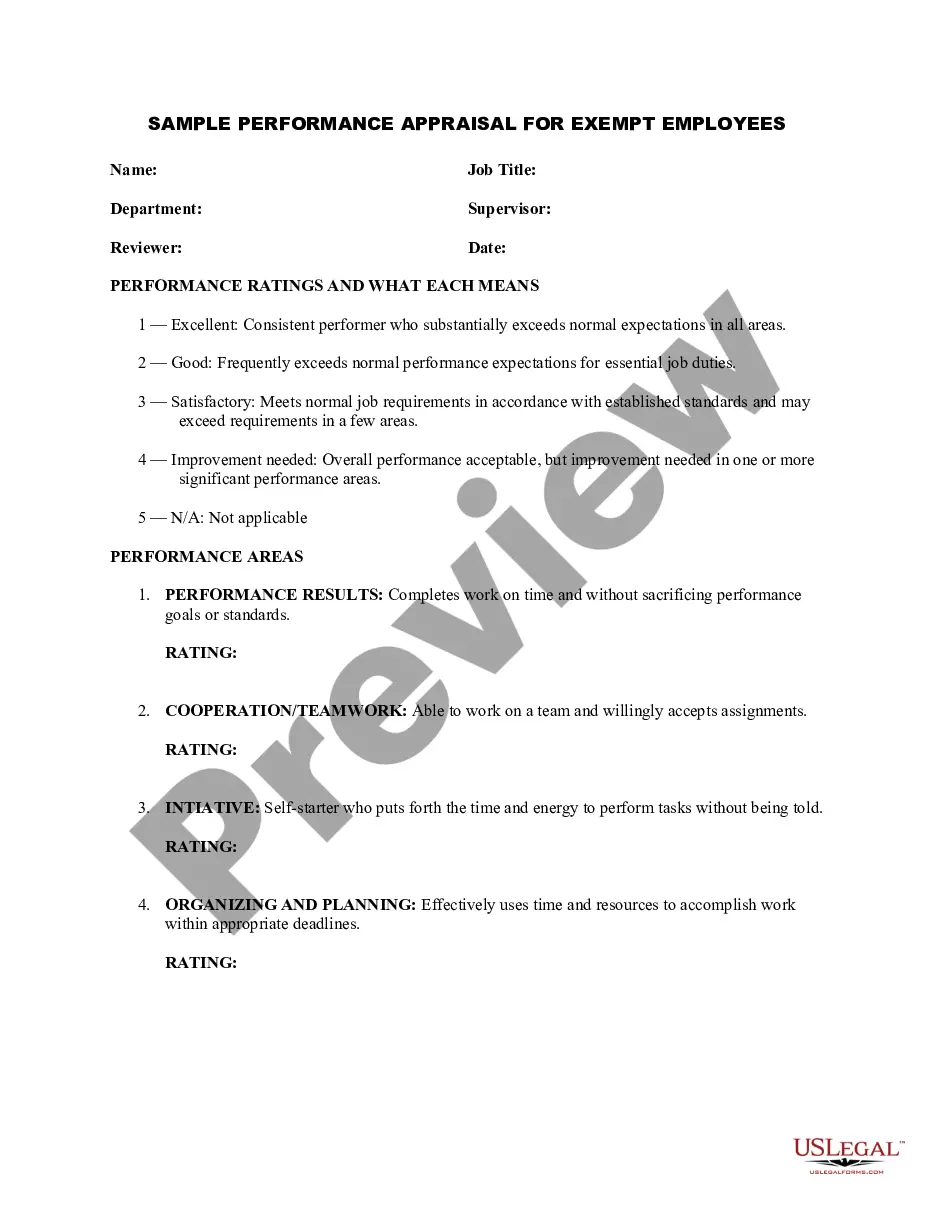
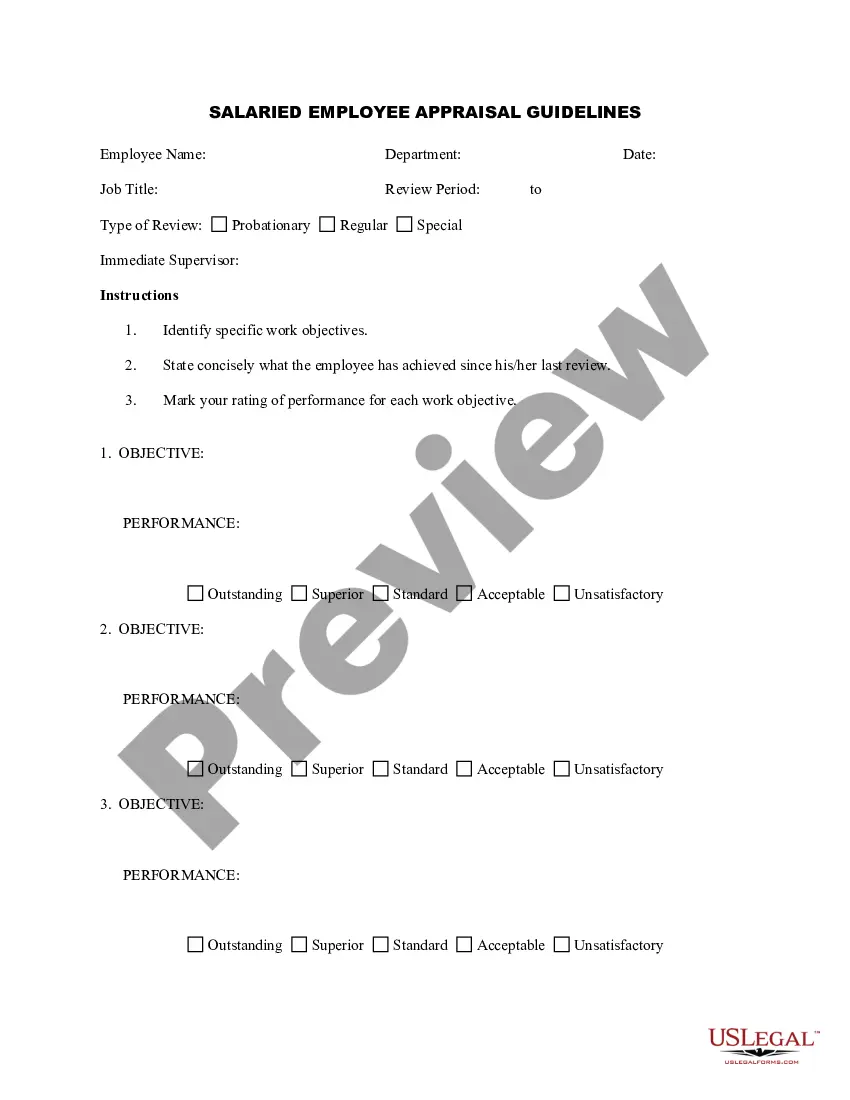
Get your form ready online
Our built-in tools help you complete, sign, share, and store your documents in one place.
Make edits, fill in missing information, and update formatting in US Legal Forms—just like you would in MS Word.
Download a copy, print it, send it by email, or mail it via USPS—whatever works best for your next step.
Sign and collect signatures with our SignNow integration. Send to multiple recipients, set reminders, and more. Go Premium to unlock E-Sign.
If this form requires notarization, complete it online through a secure video call—no need to meet a notary in person or wait for an appointment.
We protect your documents and personal data by following strict security and privacy standards.

Make edits, fill in missing information, and update formatting in US Legal Forms—just like you would in MS Word.

Download a copy, print it, send it by email, or mail it via USPS—whatever works best for your next step.

Sign and collect signatures with our SignNow integration. Send to multiple recipients, set reminders, and more. Go Premium to unlock E-Sign.

If this form requires notarization, complete it online through a secure video call—no need to meet a notary in person or wait for an appointment.

We protect your documents and personal data by following strict security and privacy standards.
Looking for another form?






How to fill out Performance Evaluation For Exempt Employees?
Selecting the correct legal document template can be a challenge.
Of course, there are numerous templates accessible online, but how can you find the legal form you require.
Visit the US Legal Forms website. This service offers a vast array of templates, including the Texas Performance Evaluation for Exempt Employees, which can be utilized for business and personal purposes.
First, ensure you have selected the correct form for your city/region. You can navigate through the form using the Preview button and review the form description to confirm it is suitable for you.
- All templates are reviewed by experts and comply with federal and state regulations.
- If you are already a registered user, Log In to your account and click on the Download button to get the Texas Performance Evaluation for Exempt Employees.
- Use your account to browse the legal forms you have previously purchased.
- Visit the My documents section of your account to obtain another copy of the document you need.
- If you are a new user of US Legal Forms, here are some simple steps you can follow.
Form popularity
FAQ
Quality of Work.Goals and Target Achievement.Level of Productivity.Initiative and Motivation.Teamwork and Leadership Skills.Ability to Problem Solve.Written and Verbal Communication Skills.Performance Self-Appraisal.
Performance evaluations benefit both employee and employer. It is a time to provide feedback, recognize quality performance and set expectations for future job performance. It is also a time to have candid conversations about performance that is lacking and how performance can be improved.
Under federal overtime law and Texas overtime law, salaried employees must receive overtime pay for hours worked over 40 in any workweek unless two specific requirements are met: (1) the salary exceeds $455 per workweek; and (2) the employee performs duties satisfying one of the narrowly-defined FLSA overtime
Appraisals should not be used to discriminate against employees on the basis of race, religion, age, gender, disability, marital status, pregnancy, or sexual preference. 3. Performance appraisal results should be fair, accurate and supported by evidence and examples.
Overtime Requirements Federal overtime laws and Texas overtime laws stipulate that salaried workers must be paid overtime pay for any hours worked beyond 40 in a work week.
Whilst there is no legal requirement to carry out appraisals, it is good practice to do so as they enable employers to monitor and feedback on all employees' performance (not just those who are underperforming). They can also be used to evaluate pay increases and bonuses.
Generally, an employee "must receive his full salary for any week in which he performs any work without regard to the number of days or hours worked". However, the regulation recognizes "the general rule that an employee need not be paid for any workweek in which he performs no work".
Your evaluation should focus on how well the employee performs their job, rather than their personality traits. When you make judgements about the employee's personality, they can feel attacked and the conversation can turn hostile.
The Fair Labor Standards Act (FLSA) does not require performance evaluations. Performance evaluations are generally a matter of agreement between an employer and employee (or the employee's representative).
Effective performance management systems typically include the following three broad elements: goal setting, performance review and a performance improvement process.