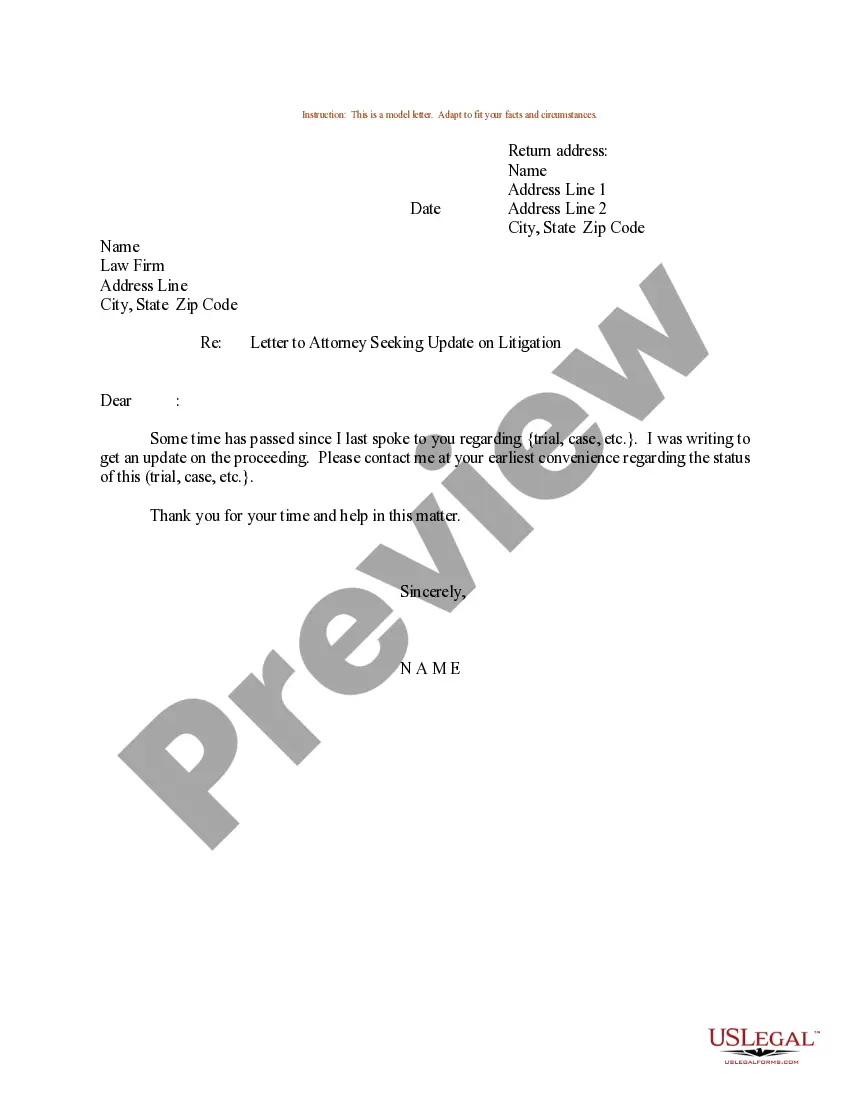
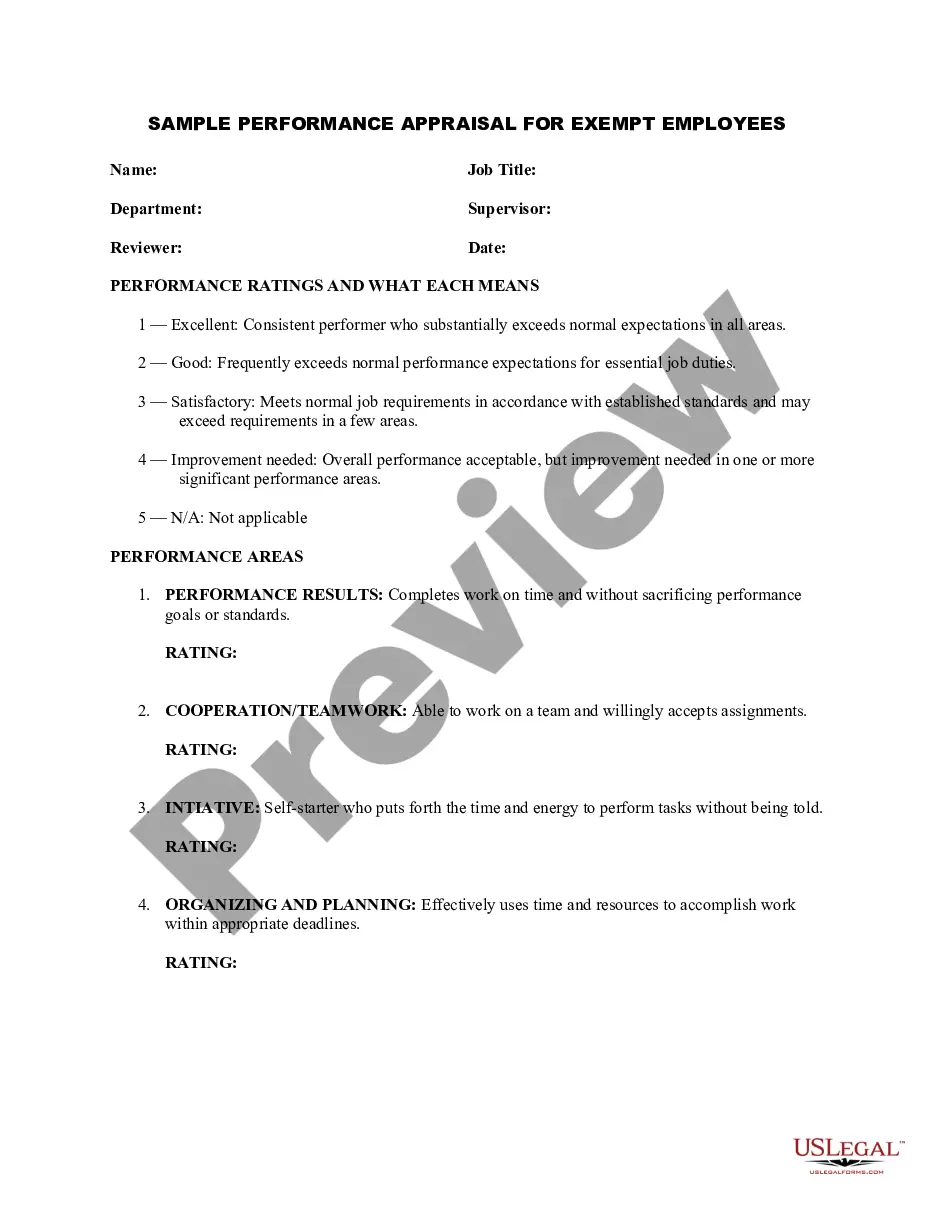
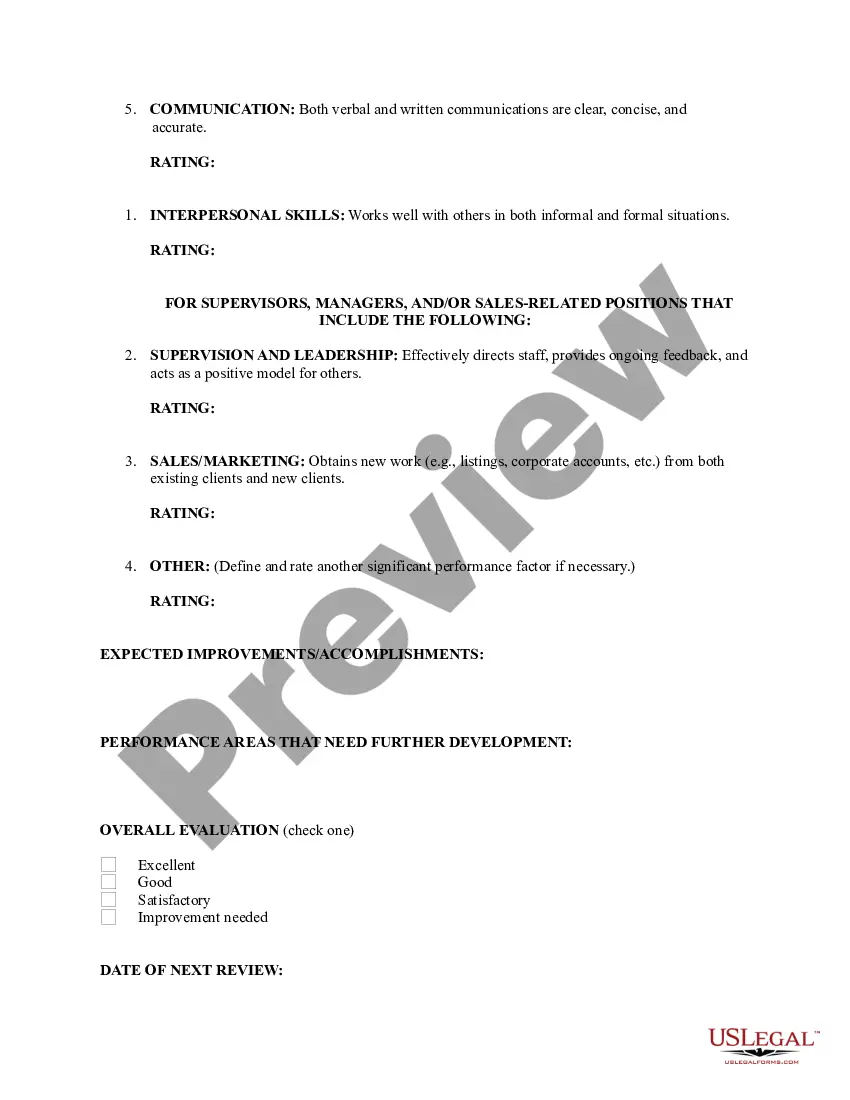
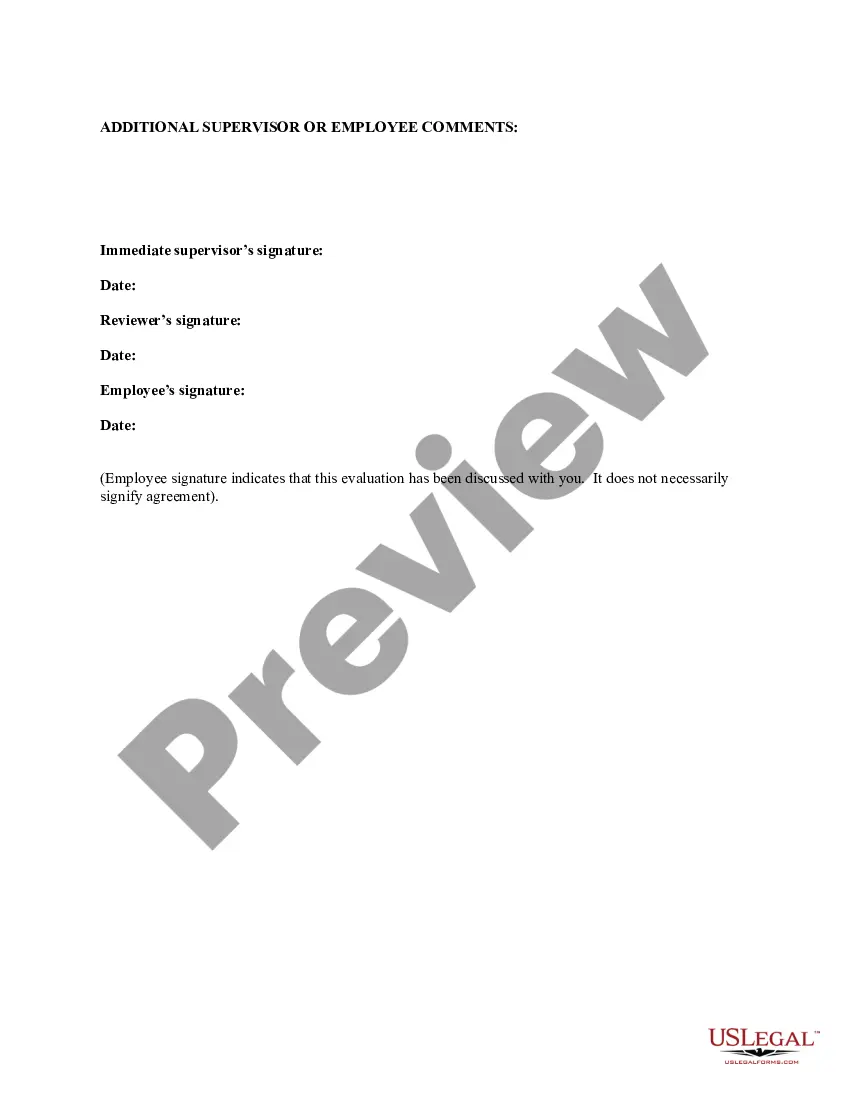
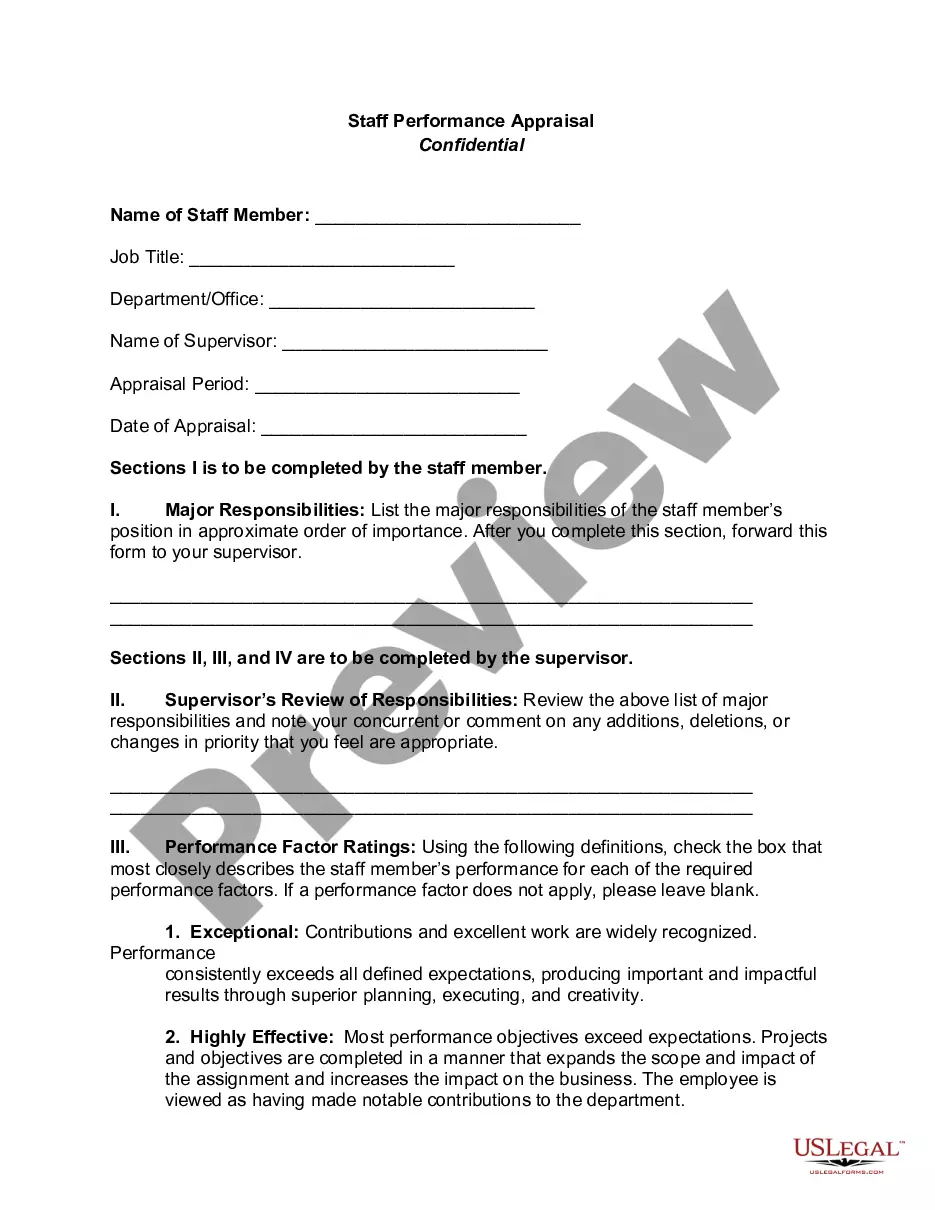
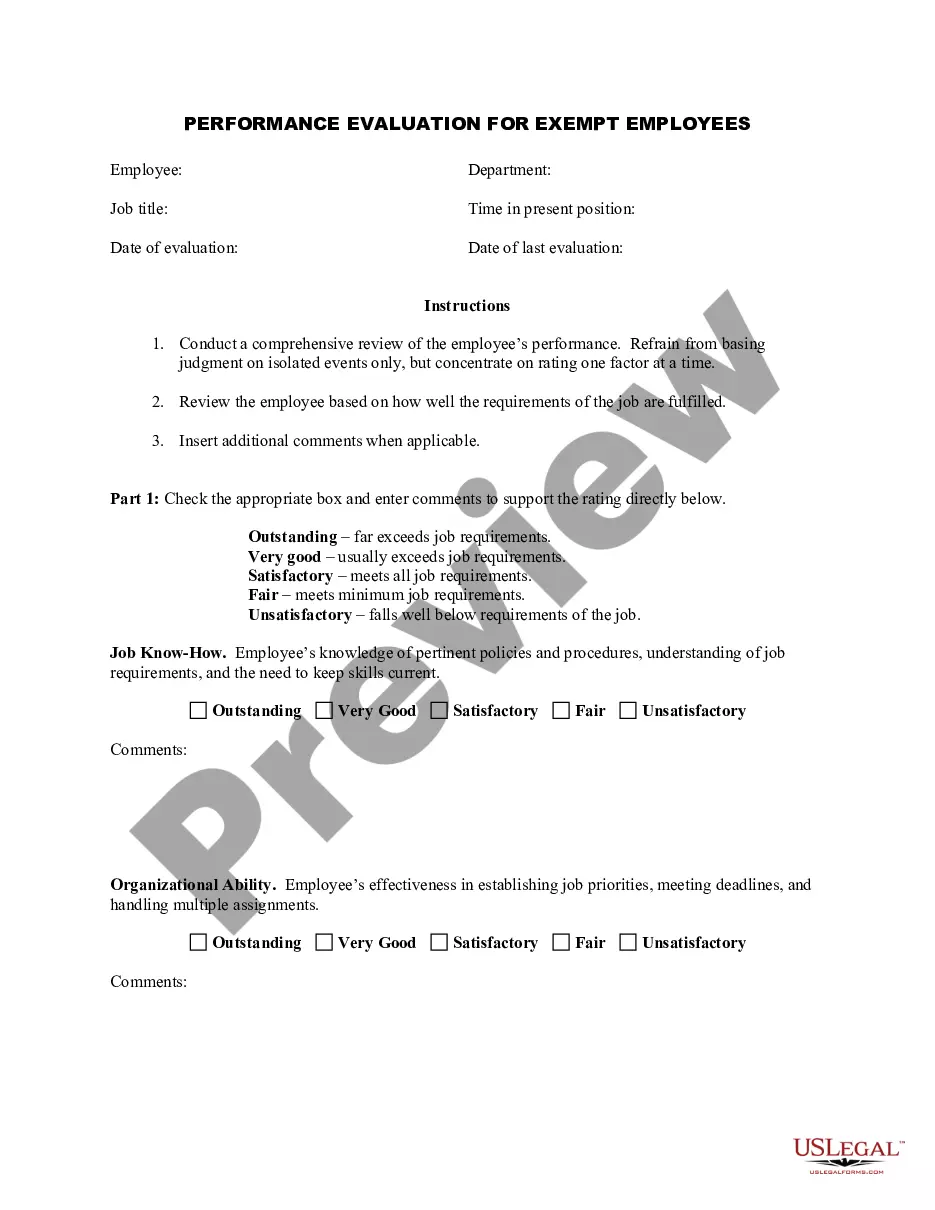
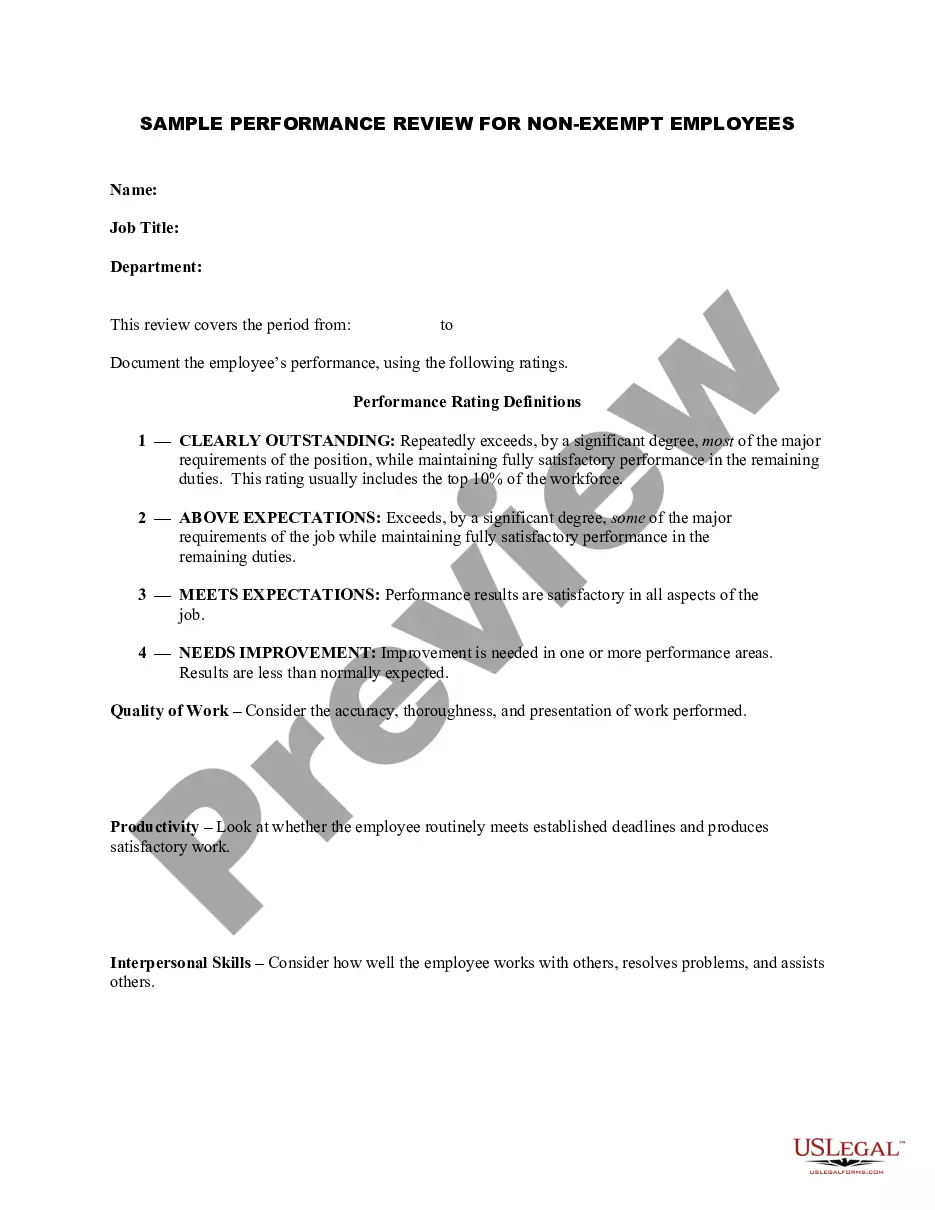
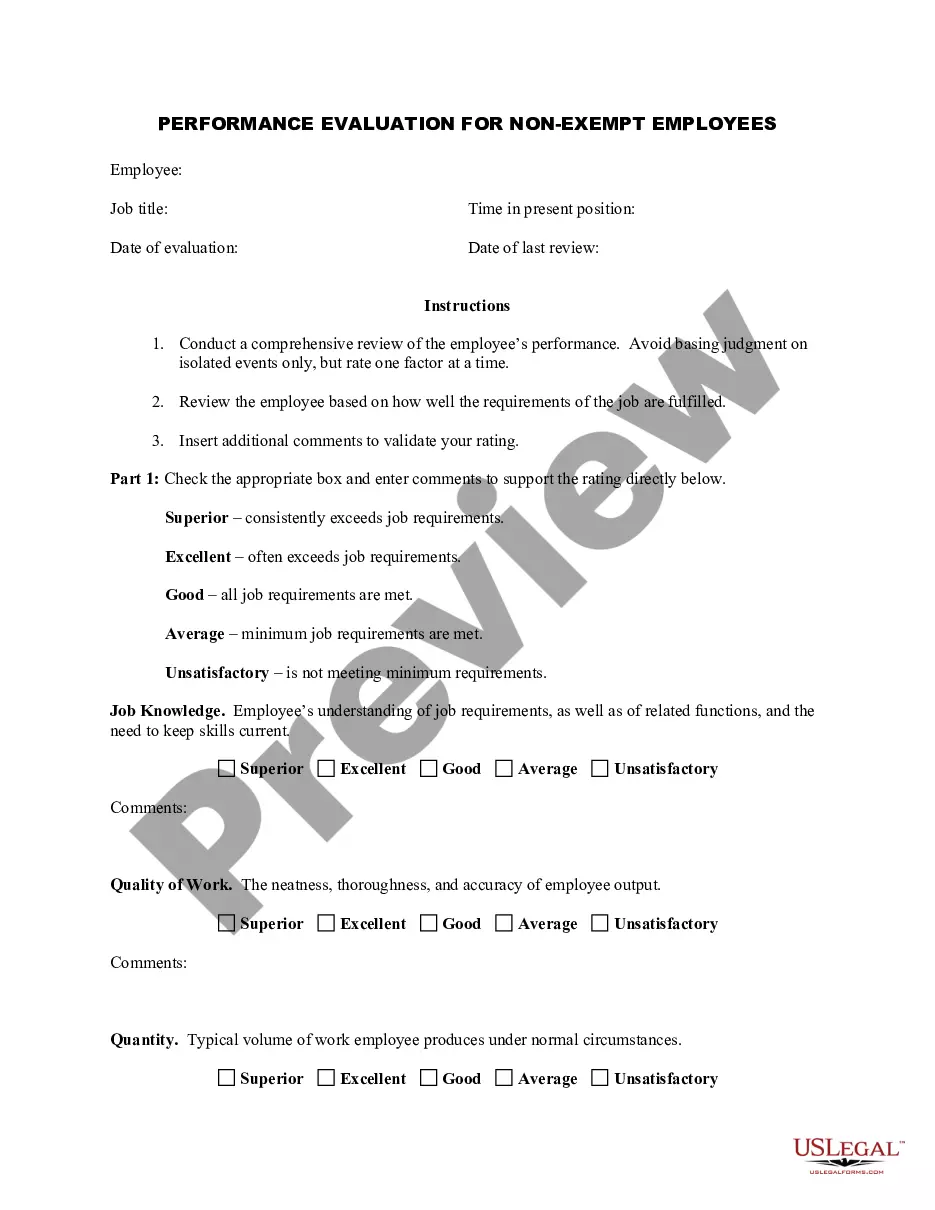
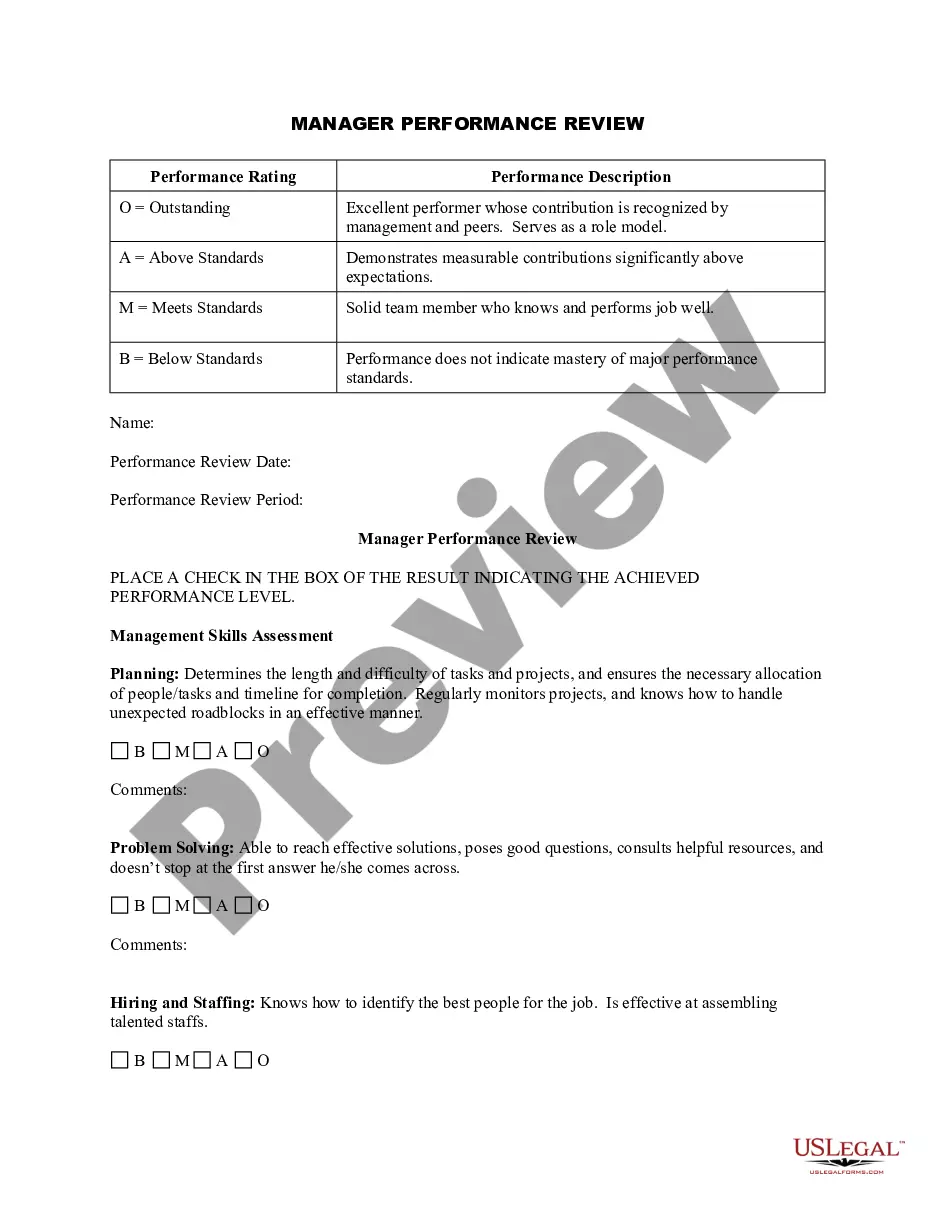
Texas Sample Performance Appraisal for Exempt Employees
Description
Get your form ready online
Our built-in tools help you complete, sign, share, and store your documents in one place.
Make edits, fill in missing information, and update formatting in US Legal Forms—just like you would in MS Word.
Download a copy, print it, send it by email, or mail it via USPS—whatever works best for your next step.
Sign and collect signatures with our SignNow integration. Send to multiple recipients, set reminders, and more. Go Premium to unlock E-Sign.
If this form requires notarization, complete it online through a secure video call—no need to meet a notary in person or wait for an appointment.
We protect your documents and personal data by following strict security and privacy standards.

Make edits, fill in missing information, and update formatting in US Legal Forms—just like you would in MS Word.

Download a copy, print it, send it by email, or mail it via USPS—whatever works best for your next step.

Sign and collect signatures with our SignNow integration. Send to multiple recipients, set reminders, and more. Go Premium to unlock E-Sign.

If this form requires notarization, complete it online through a secure video call—no need to meet a notary in person or wait for an appointment.

We protect your documents and personal data by following strict security and privacy standards.
Looking for another form?
How to fill out Sample Performance Appraisal For Exempt Employees?
US Legal Forms - one of the foremost collections of legal templates in the United States - offers a range of legal document templates you can download or create.
By utilizing the website, you will access a vast number of forms for business and personal purposes, sorted by categories, states, or keywords. You can find the latest versions of forms such as the Texas Sample Performance Appraisal for Exempt Employees in just moments.
If you currently have a monthly membership, Log In and retrieve the Texas Sample Performance Appraisal for Exempt Employees from the US Legal Forms collection. The Download button will appear on every form you view. You have access to all previously saved forms in the My documents section of your account.
Process the purchase. Use your credit card or PayPal account to complete the transaction.
Select the format and download the form to your device. Make modifications. Fill out, edit, and print and sign the saved Texas Sample Performance Appraisal for Exempt Employees. Each template you added to your account has no expiration date and belongs to you indefinitely. Therefore, if you wish to download or create another version, simply visit the My documents section and click on the form you need. Acquire access to the Texas Sample Performance Appraisal for Exempt Employees with US Legal Forms, one of the most extensive collections of legal document templates. Utilize a multitude of professional and state-specific templates that cater to your business or personal needs and requirements.
- Ensure you have selected the correct form for your specific area/place.
- Click the Preview button to review the content of the form.
- Check the form summary to confirm that you have chosen the appropriate form.
- If the form does not meet your requirements, use the Search field at the top of the screen to find one that does.
- If you are satisfied with the form, confirm your choice by clicking the Purchase now button.
- Then, select the pricing plan you prefer and provide your information to register for the account.
Form popularity
FAQ
Here are a few different types of appraisal methods:The 360-Degree Appraisal.General Performance Appraisal.Technological/Administrative Performance Appraisal.Manager Performance Appraisal.Employee Self-Assessment.Project Evaluation Review.Sales Performance Appraisal.
Here are some types of performance appraisals:Negotiated appraisal.Management by objective (MBO)Assessment center method.Self-appraisal.Peer reviews.Customer or client reviews.Behaviorally anchored rating scale (BARS)Human resource accounting method.
7 Best Practices for an Effective Employee Performance ReviewPrepare Beforehand.Use Tactful Communication.Provide Concrete Examples.Try 360 Degree Feedback.Put Performance Requirements In Your Employee Handbook.Make Performance Reviews an Ongoing Process.Track the Impact of Reviews.
Ratings Scale. A ratings scaleor grading systemis probably the most commonly used performance review method. This method is based on a set of employer-developed criteriawhich can include behaviors, traits, competencies, or completed projectsagainst which employees are judged.
It is possible to identify several common sources of error in performance appraisal systems. These include: (1) central tendency error, (2) strictness or leniency error, (3) halo effect, (4) recency error, and (5) personal biases.
Self-assessment: Individuals rate their job performance and behavior. Peer assessment: An individual's workgroup or coworkers rate their performance. 360-degree feedback assessment: Includes input from an individual, supervisor, and peers.
The most common types of appraisal are:straight ranking appraisals.grading.management by objective appraisals.trait-based appraisals.behaviour-based appraisals.360 reviews.
Extremes. Avoid using words like "always" and "never" in employee appraisals. Employees rarely "always" or "never" do something, whether it is positive or negative. Using extremes can leave you open to employees who want to argue and prove that they did what you accused them of "never" doing.
The three most common errors are: Not following up with the employee to check on progress (40.1 percent) Not wanting to hurt feelings or overrate so evaluations place all employees in the middle of the scale (40 percent) Focusing on the most recent performance rather than the entire review period (38.9 percent)
There are two primary purposes of performance appraisal: evaluative and developmental. The evaluative purpose is intended to inform people of their performance standing. The collected performance data are frequently used to reward high performance and to punish poor performance.