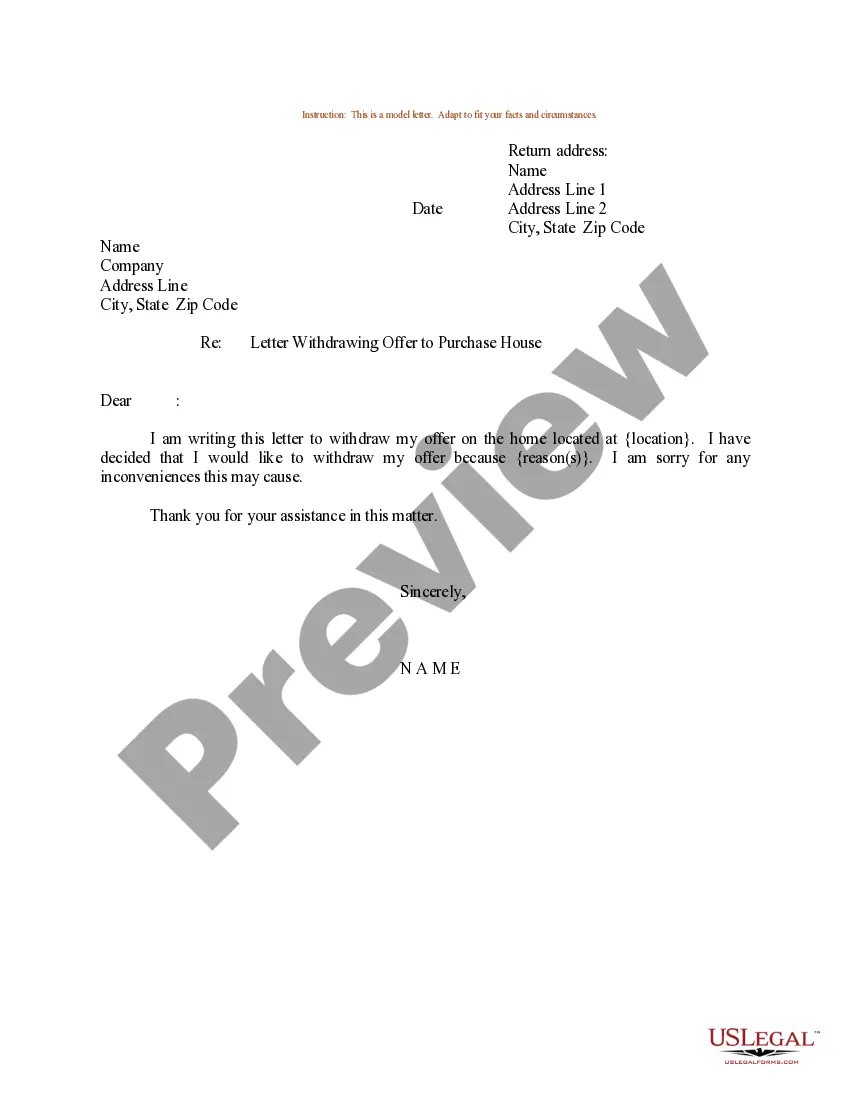
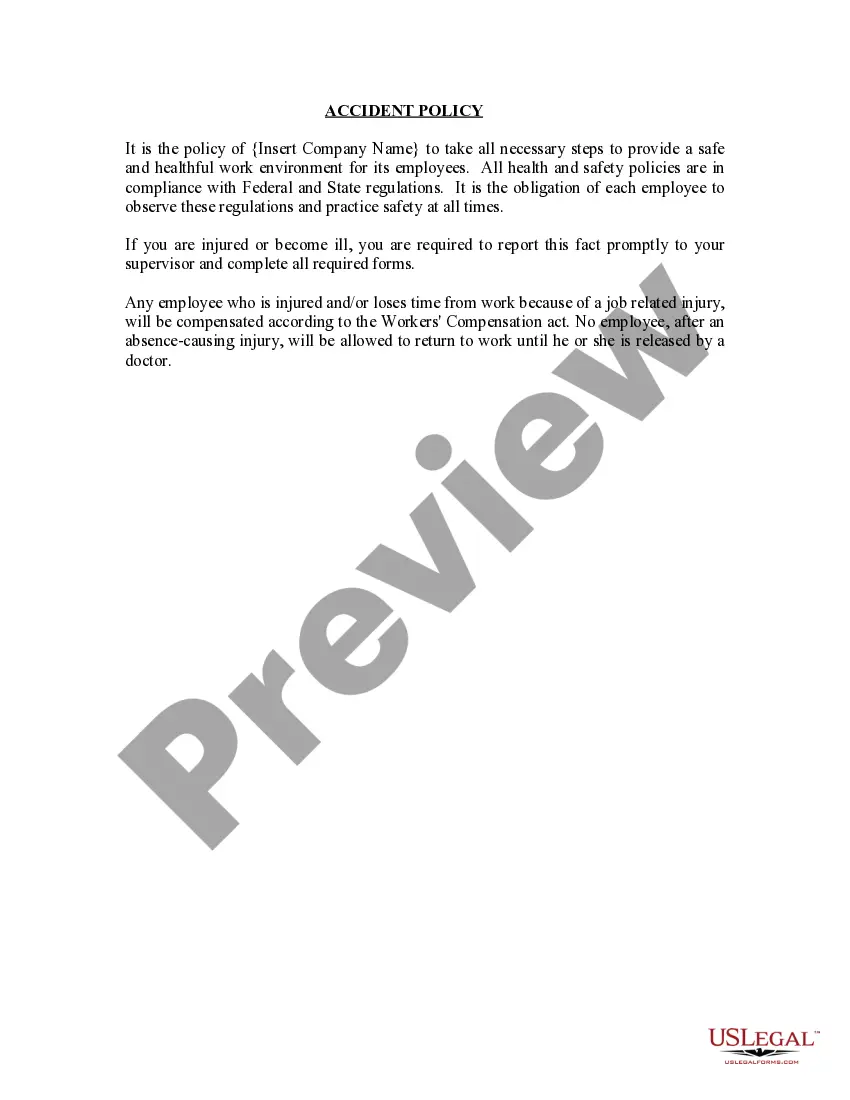
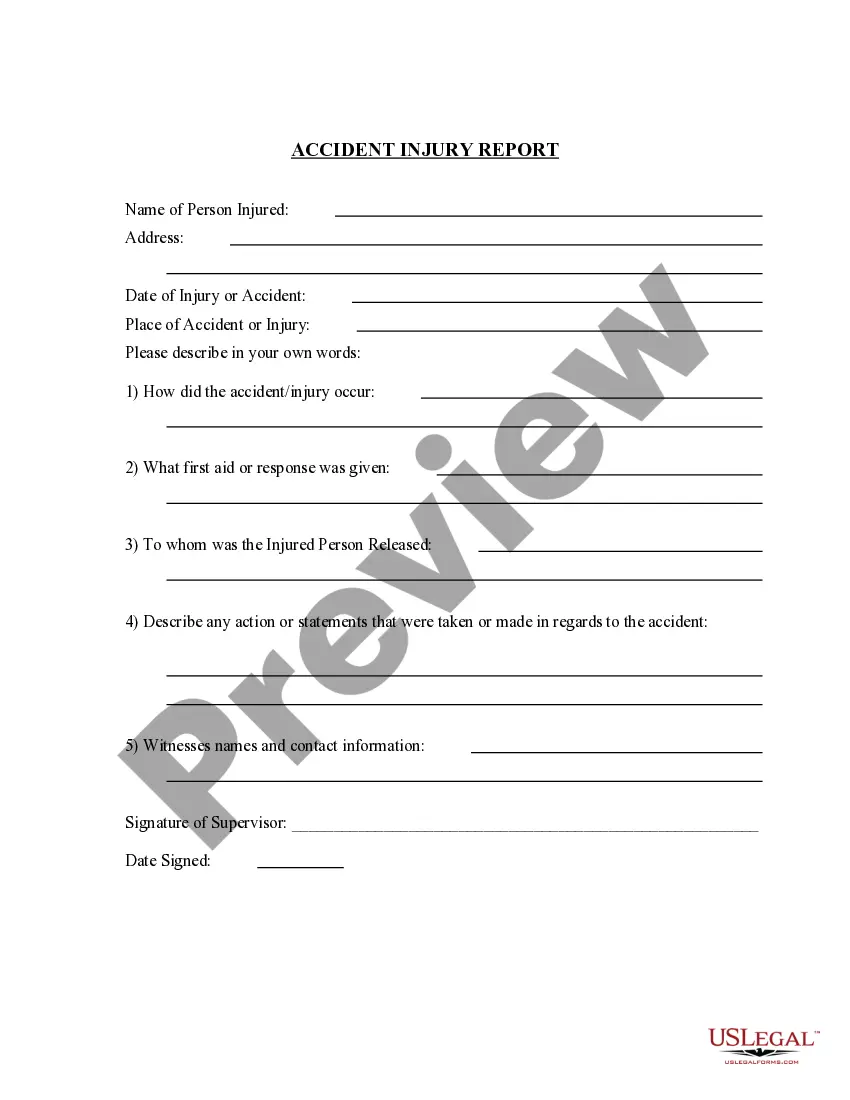
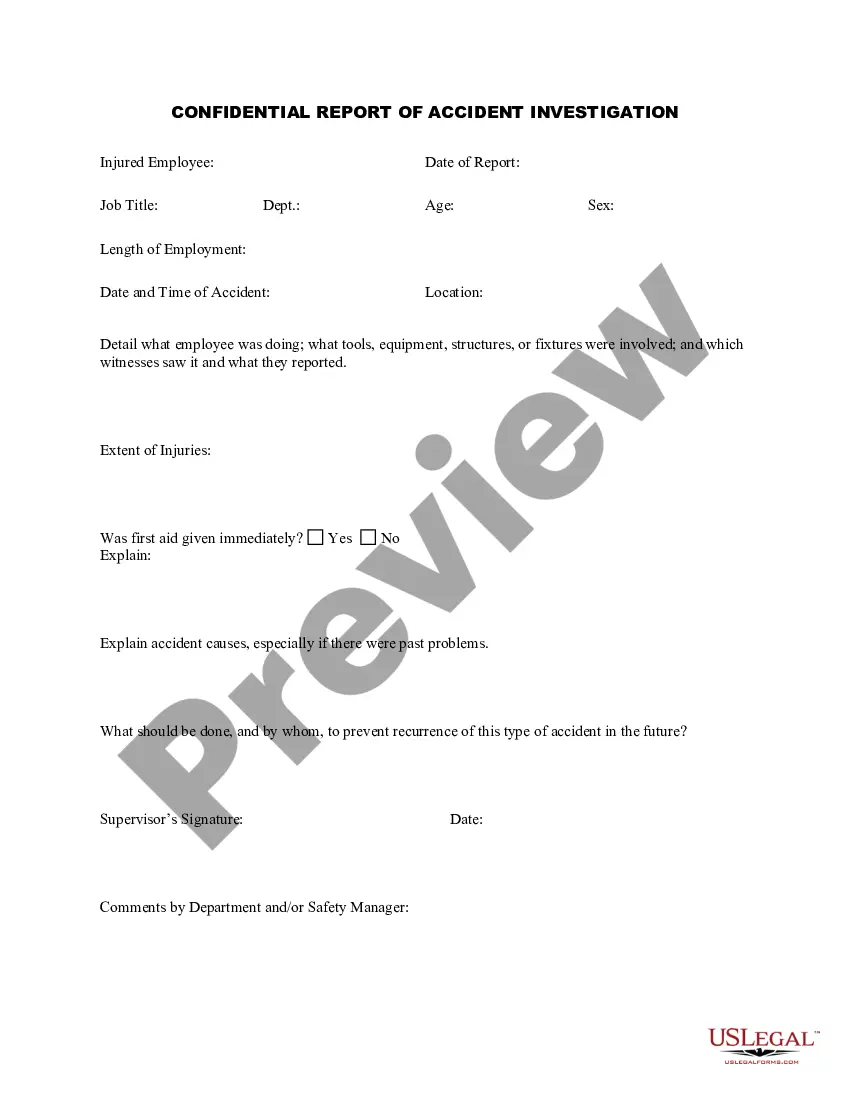
Texas Accident Policy
Description

Get your form ready online
Our built-in tools help you complete, sign, share, and store your documents in one place.
Make edits, fill in missing information, and update formatting in US Legal Forms—just like you would in MS Word.
Download a copy, print it, send it by email, or mail it via USPS—whatever works best for your next step.
Sign and collect signatures with our SignNow integration. Send to multiple recipients, set reminders, and more. Go Premium to unlock E-Sign.
If this form requires notarization, complete it online through a secure video call—no need to meet a notary in person or wait for an appointment.
We protect your documents and personal data by following strict security and privacy standards.

Make edits, fill in missing information, and update formatting in US Legal Forms—just like you would in MS Word.

Download a copy, print it, send it by email, or mail it via USPS—whatever works best for your next step.

Sign and collect signatures with our SignNow integration. Send to multiple recipients, set reminders, and more. Go Premium to unlock E-Sign.

If this form requires notarization, complete it online through a secure video call—no need to meet a notary in person or wait for an appointment.

We protect your documents and personal data by following strict security and privacy standards.
Looking for another form?

How to fill out Accident Policy?
If you need to finalize, download, or print valid document templates, utilize US Legal Forms, the largest repository of legal forms available online.
Employ the site's user-friendly and convenient search feature to locate the files you need.
Various templates for business and personal purposes are organized by type and jurisdiction, or keywords.
Step 4. Once you find the form you need, click the Purchase now button. Select your preferred pricing plan and enter your credentials to create an account.
Step 5. Complete the transaction. You can use your credit card or PayPal account to finalize the purchase.
- Use US Legal Forms to find the Texas Accident Policy with just a few clicks.
- If you are an existing US Legal Forms user, Log In to your account and click the Download button to obtain the Texas Accident Policy.
- You can also access forms you've previously downloaded in the My documents section of your account.
- If you're a new user of US Legal Forms, follow the guidelines below.
- Step 1. Confirm that you have selected the form for the correct city/state.
- Step 2. Utilize the Preview option to review the form’s details. Be sure to read the description.
- Step 3. If you are dissatisfied with the form, use the Search bar at the top of the screen to find other variations of the legal form template.
Form popularity
FAQ
In summary, after reporting the car accident to the police, you are required to: Ask if anyone is injured and if the driver and any other vehicle occupants have medical needs. Call a emergency medical service (EMS) for any other drivers and/or passengers to be transported to a safe place.
You are Usually Responsible: When you let someone drive your car, your auto insurance coverage kicks in to handle any claims. If the person you loan your vehicle to is determined to be at fault for an accident, then other parties may make a claim against your policy.
Insurance coverage attaches to the vehicle and its driver. Therefore, a car owner is NOT liable for any accident that a friend, family member, or other borrower causes while operating the owner's car.
Texas is an at-fault state when it comes to car accidents; specifically, it is a comparative fault jurisdiction. This means that any driver who is completely or partially at least 50 percent at fault for an accident has to take responsibility.
No, Texas is not a No Fault state. Texas is an at-fault state. This means that the person responsible for the accident is also responsible for paying for damages. Texas' auto laws allow injured accident victims the ability to hold liable parties accountable for the damages they caused.
The judge will use the legal definition of negligence in order to determine whether the defendant is at fault for your bodily injuries and damages. In he legal sense, negligence means failing to exercise the level of caution that any reasonable person would have exercised in the same situation.
In Texas, a car owner can be held liable for the damages caused by another driver when the owner allowed the driver to borrow the owner's vehicle. This is because insurance usually follows the vehicle instead of the driver.
No, Texas is not a No Fault state.Texas is an at-fault state. This means that the person responsible for the accident is also responsible for paying for damages. Texas' auto laws allow injured accident victims the ability to hold liable parties accountable for the damages they caused.
Texas is an at fault state. Texas is one of the 38 at-fault states, meaning that the party that is found to be at fault for the accident will be responsible for compensating the injured party for the amount he or she is responsible for.