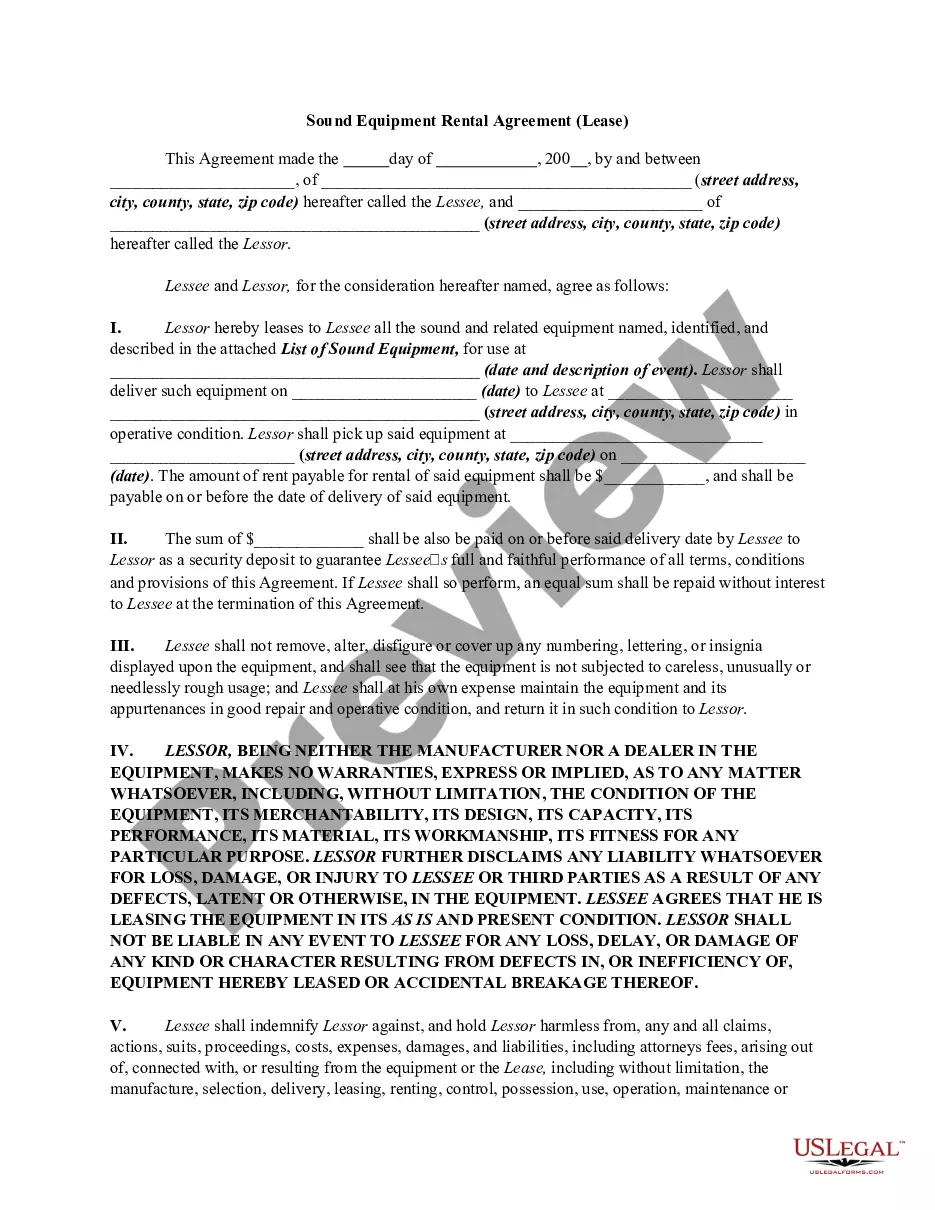
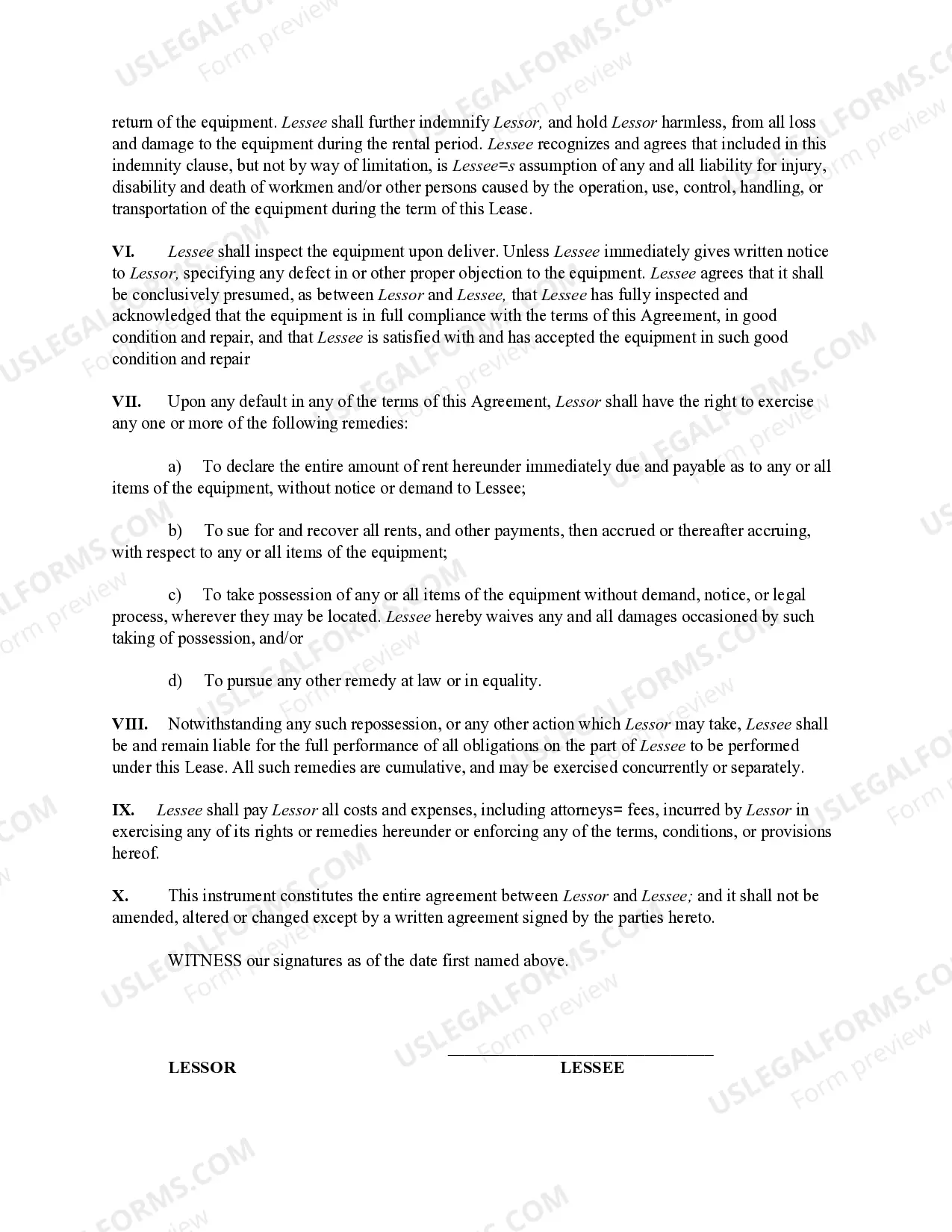
Texas Sound Equipment Rental Agreement - Lease
Description
Get your form ready online
Our built-in tools help you complete, sign, share, and store your documents in one place.
Make edits, fill in missing information, and update formatting in US Legal Forms—just like you would in MS Word.
Download a copy, print it, send it by email, or mail it via USPS—whatever works best for your next step.
Sign and collect signatures with our SignNow integration. Send to multiple recipients, set reminders, and more. Go Premium to unlock E-Sign.
If this form requires notarization, complete it online through a secure video call—no need to meet a notary in person or wait for an appointment.
We protect your documents and personal data by following strict security and privacy standards.

Make edits, fill in missing information, and update formatting in US Legal Forms—just like you would in MS Word.

Download a copy, print it, send it by email, or mail it via USPS—whatever works best for your next step.

Sign and collect signatures with our SignNow integration. Send to multiple recipients, set reminders, and more. Go Premium to unlock E-Sign.

If this form requires notarization, complete it online through a secure video call—no need to meet a notary in person or wait for an appointment.

We protect your documents and personal data by following strict security and privacy standards.
Looking for another form?
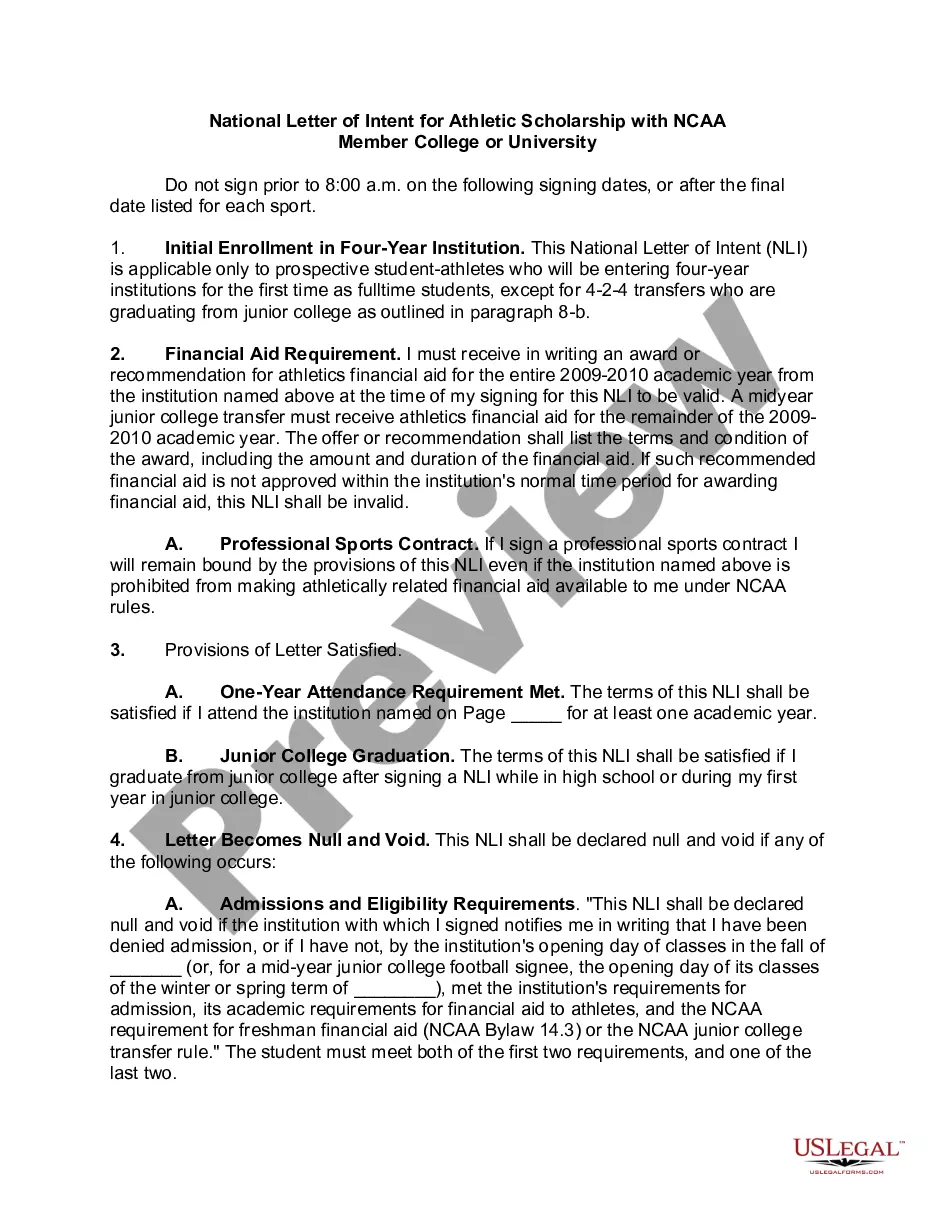
How to fill out Sound Equipment Rental Agreement - Lease?
US Legal Forms - one of the most extensive collections of legal documents in the United States - presents a broad array of legal file categories available for purchase or creation.
Through the website, you can discover numerous forms for business and individual purposes, organized by categories, recommendations, or keywords.
You can obtain the latest editions of documents such as the Texas Sound Equipment Rental Agreement - Lease in just minutes.
In case the document does not meet your needs, utilize the Search box at the top of the screen to find one that does.
If you are satisfied with the form, confirm your selection by clicking the Get now button. Then, choose the payment plan that suits you and provide your details to register for an account.
- If you already possess a membership, Log In to obtain the Texas Sound Equipment Rental Agreement - Lease from the US Legal Forms repository.
- The Download button will be visible on every document you view.
- You can access all previously downloaded forms in the My documents section of your account.
- If you are using US Legal Forms for the first time, here are straightforward steps to guide you.
- Ensure you have selected the correct document for your city/state.
- Click the Review button to view the content of the form.
Form popularity
FAQ
Equipment leasing often involves a longer-term commitment and typically includes lease-to-own options, whereas rental agreements are usually for shorter periods without ownership potential. When you enter into a Texas Sound Equipment Rental Agreement - Lease, you are primarily securing temporary access to equipment without the responsibilities that come with ownership. Understanding these differences can help you choose the right arrangement for your needs.
An asset lease agreement is a contract that allows a lessee to use an asset, like sound equipment, belonging to the lessor for a specified period. Essentially, it's a legal framework outlining the responsibilities of both parties, including payment terms and maintenance obligations. With a Texas Sound Equipment Rental Agreement - Lease, you establish clear terms for using equipment, ensuring transparency and mutual understanding.
Several factors can make a lease invalid in Texas, such as lack of essential elements like mutual consent, consideration, or lawful purpose. Additionally, if the lease does not comply with state laws, or if it involves fraudulent terms, it may be deemed unenforceable. A Texas Sound Equipment Rental Agreement - Lease must meet specific legal standards to protect both parties involved. Consider using resources like US Legal Forms to ensure your agreement is valid and enforceable.
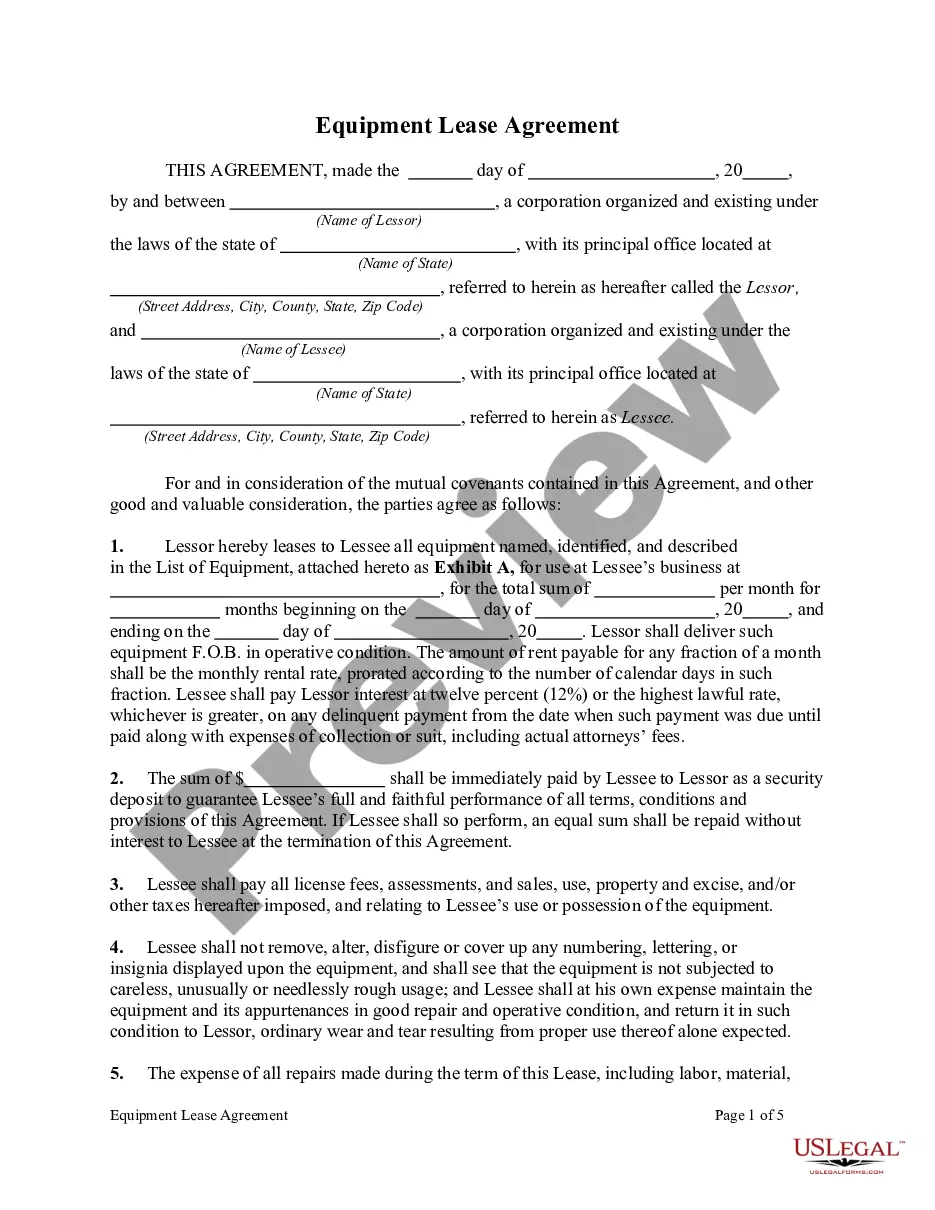
An equipment lease is a contract where one party (the lessor) allows another party (the lessee) to use equipment for a specified time. In a Texas Sound Equipment Rental Agreement - Lease, the lessee typically pays regular payments for the duration of the lease. This arrangement helps businesses access the equipment they need without the up-front costs of purchasing it outright. It's an effective solution for managing production budgets.
Not all equipment leases are operating leases, but many are classified as such. A Texas Sound Equipment Rental Agreement - Lease may be considered an operating lease if it is for a short duration and doesn't involve ownership transfer. Understanding the specific terms of your lease will clarify its classification. Be sure to read your agreement thoroughly.
Yes, you can get out of an equipment lease under certain conditions. If you wish to break a Texas Sound Equipment Rental Agreement - Lease, review the terms outlined in your contract. Often, there are penalties or fees for early termination. Consulting a legal professional can help clarify your options and ensure you follow the proper procedures.
To create a valid lease in Texas, you need essential elements like mutual agreement between parties, clear terms regarding the leased equipment, payment details, and a defined lease duration. It is also crucial to document these elements in writing to protect both parties. Using a detailed Texas Sound Equipment Rental Agreement - Lease ensures that every vital aspect is covered, providing security and clarity.
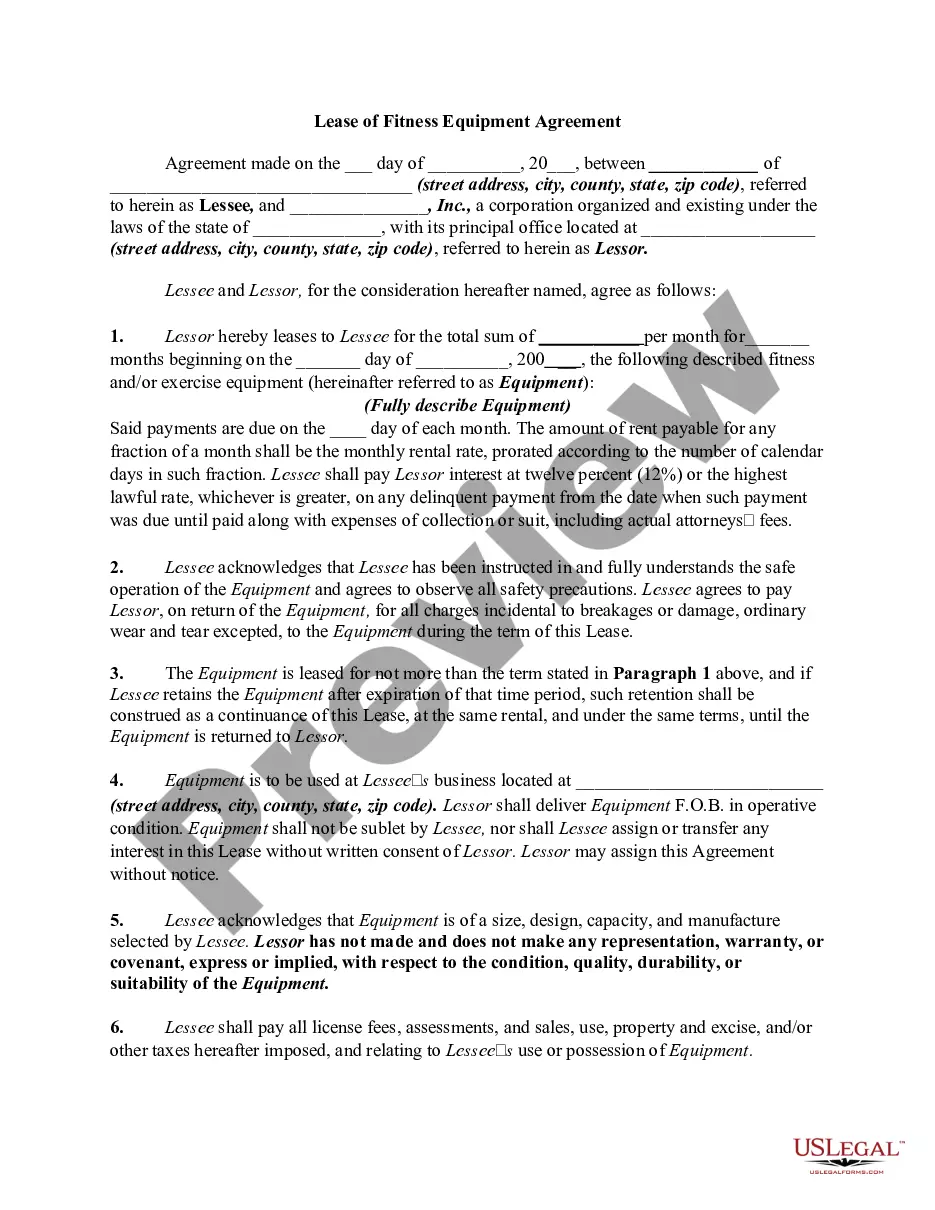
Equipment leasing is a financial arrangement where a business uses equipment owned by another party for a predetermined period in exchange for regular payments. This arrangement allows businesses to access essential tools without the upfront costs of purchasing equipment. Utilizing a Texas Sound Equipment Rental Agreement - Lease can provide a structured and effective way to manage equipment leasing.
Texas does not have a universal standard lease agreement since agreements can be tailored to meet the specific needs of both parties. However, many businesses utilize templates like the Texas Sound Equipment Rental Agreement - Lease to ensure compliance with state laws. Customizing these templates helps address unique equipment rental needs while maintaining legal robustness.
An equipment lease agreement is a legal document outlining the terms under which one party can use equipment owned by another. This agreement specifies details such as the lease duration, payment terms, and responsibilities of both parties. Through a Texas Sound Equipment Rental Agreement - Lease, you can ensure clarity regarding equipment use and responsibilities, minimizing potential disputes.