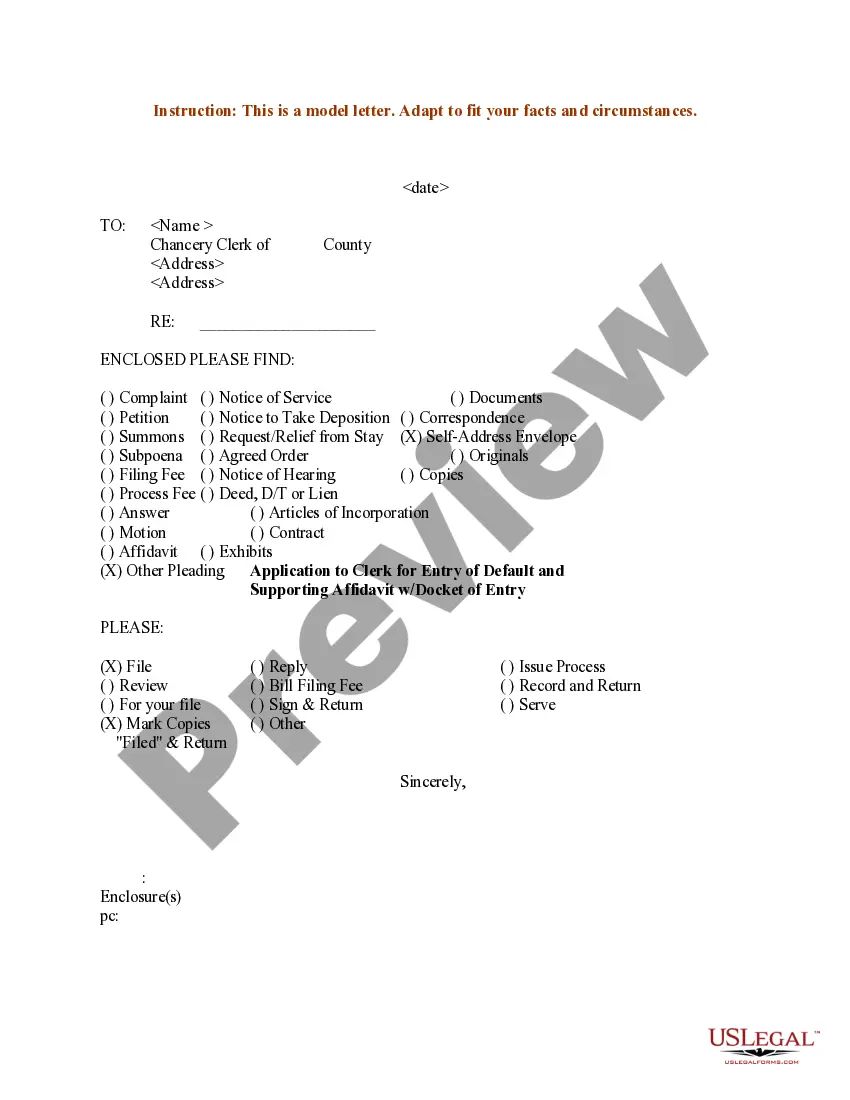
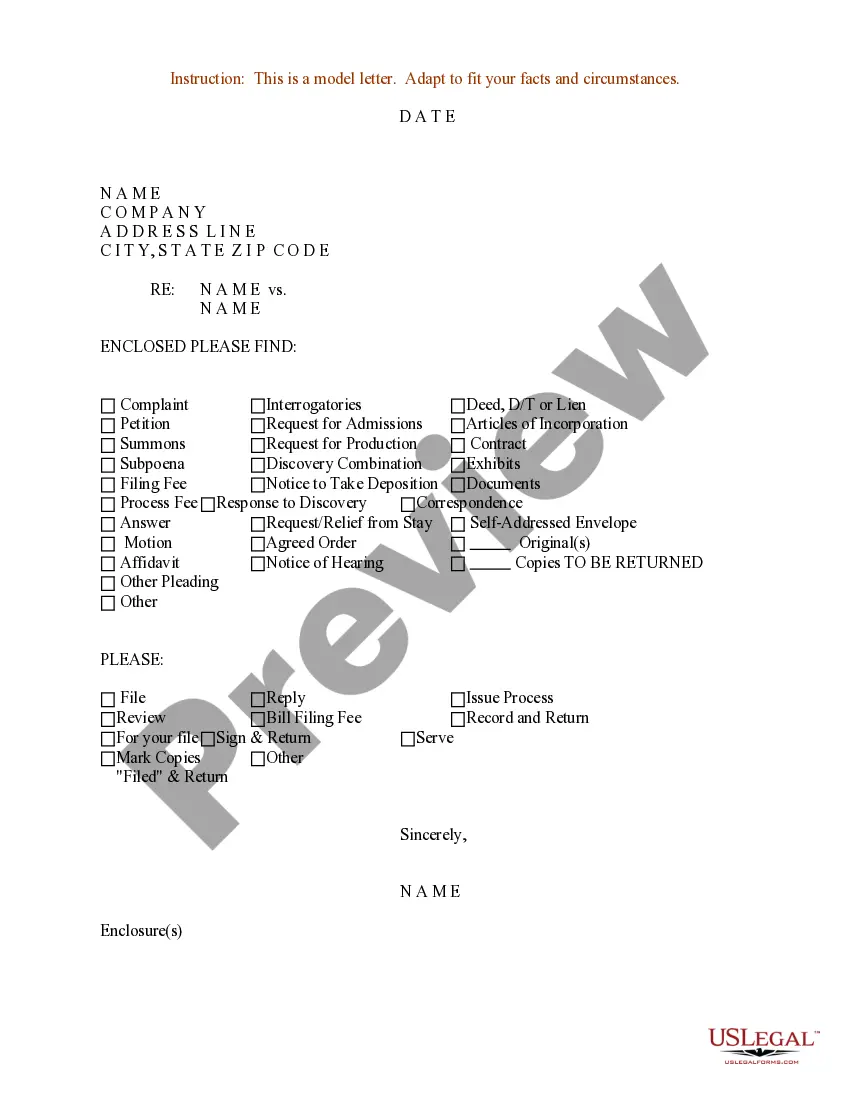
Texas Sample Letter to Chancery Clerk with Checklist for Enclosed Pleadings and Filing Instructions
Description


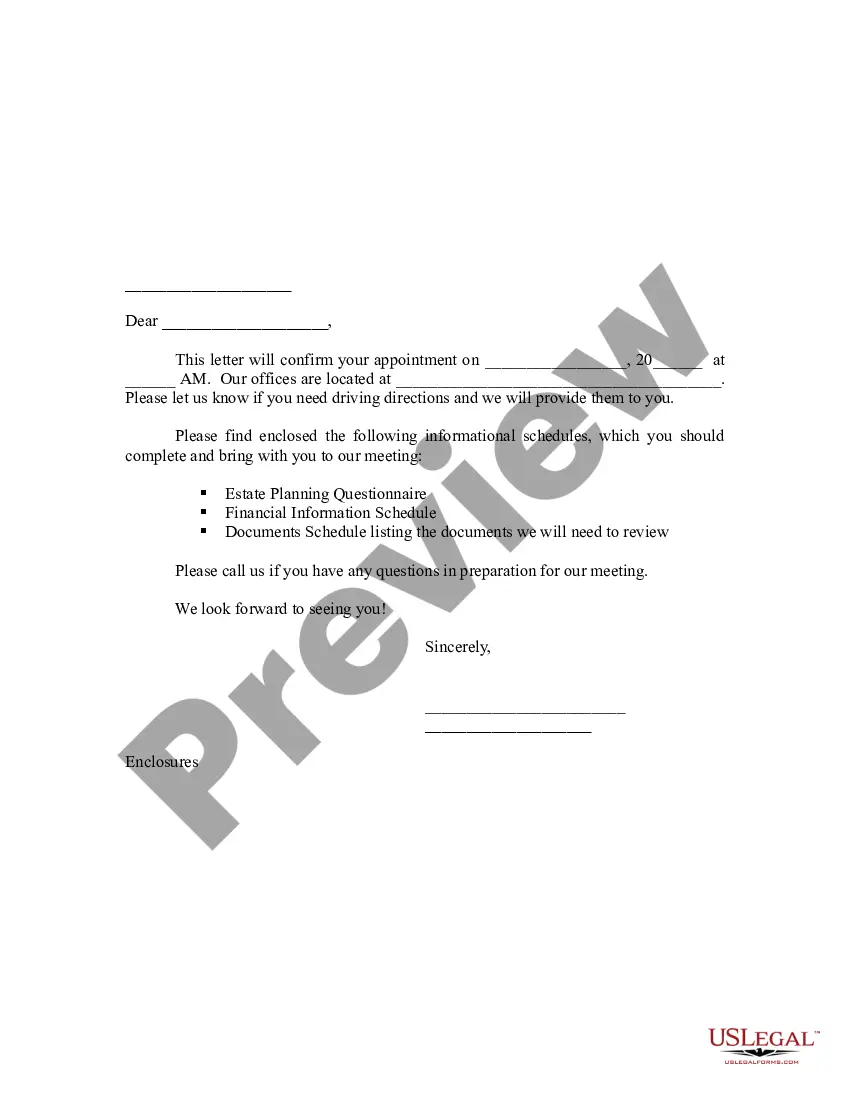
How to fill out Sample Letter To Chancery Clerk With Checklist For Enclosed Pleadings And Filing Instructions?
Are you in a location where you require paperwork for both business or particular purposes nearly every working day? There are numerous legitimate document templates available online, but finding ones you can trust is not straightforward.
US Legal Forms offers a vast array of document templates, such as the Texas Sample Letter to Chancery Clerk with Checklist for Enclosed Pleadings and Filing Instructions, which can be designed to meet state and federal requirements.
If you are already familiar with the US Legal Forms website and have an account, simply Log In. Then, you can download the Texas Sample Letter to Chancery Clerk with Checklist for Enclosed Pleadings and Filing Instructions template.
Choose a convenient document format and download your copy.
Access all the document templates you have purchased in the My documents section. You can obtain an additional copy of the Texas Sample Letter to Chancery Clerk with Checklist for Enclosed Pleadings and Filing Instructions at any time, if needed. Simply click the desired form to download or print the document template. Utilize US Legal Forms, one of the largest selections of legitimate forms, to save time and prevent errors. The service provides professionally crafted legal document templates that can be used for various purposes. Create an account on US Legal Forms and start simplifying your life.
- If you do not have an account and wish to start using US Legal Forms, follow these steps.
- Find the form you need and ensure it corresponds to the correct city/state.
- Use the Review button to examine the document.
- Read the description to confirm that you have selected the correct form.
- If the document is not what you are looking for, utilize the Search field to find the form that meets your needs and requirements.
- Once you locate the appropriate form, click Acquire now.
- Select the pricing plan you prefer, enter the required information to create your account, and pay for the transaction using your PayPal or credit card.
Form popularity
FAQ
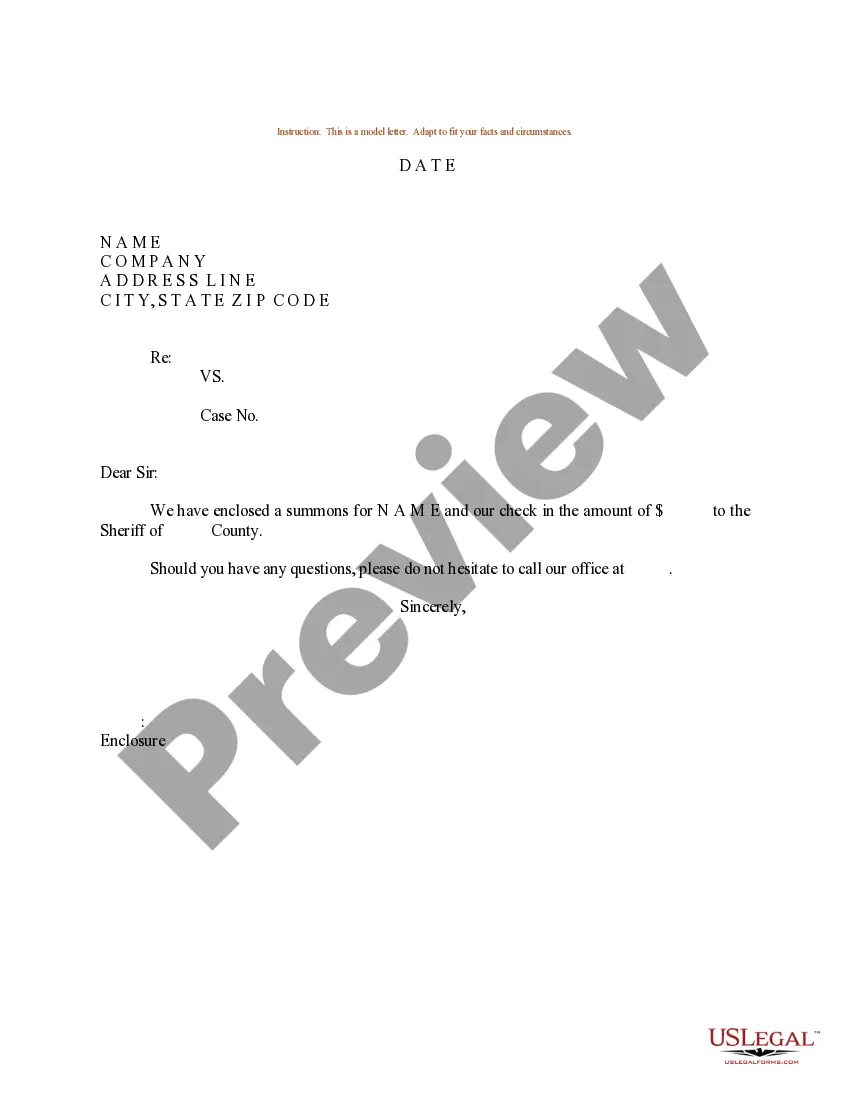
Writing a letter to the clerk of court involves a few simple steps. Start with your contact information and the date, followed by the clerk's contact details. Clearly state your request or the reason for your letter, and finish with a polite closing. Use the Texas Sample Letter to Chancery Clerk with Checklist for Enclosed Pleadings and Filing Instructions for a helpful template.
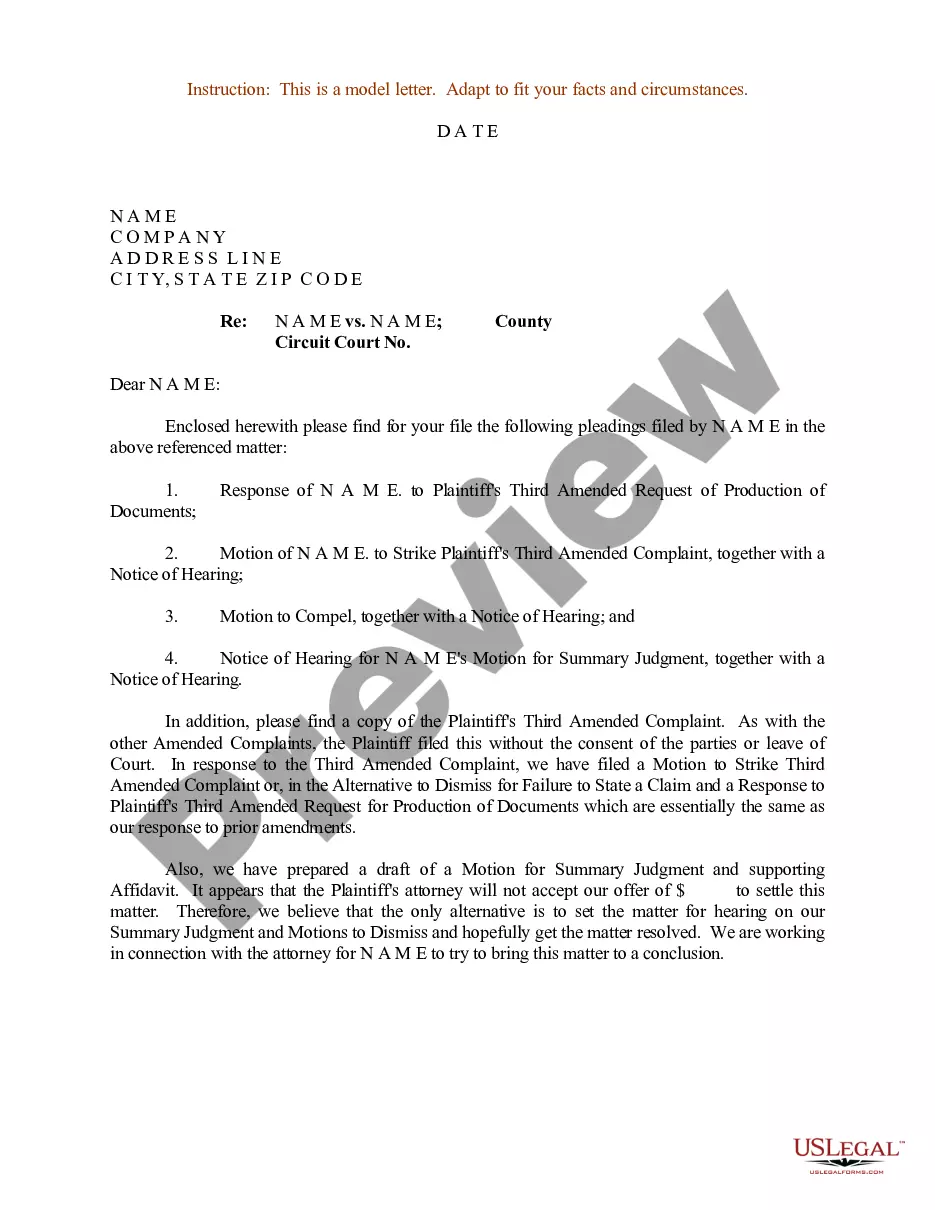
To write a letter to the clerk of courts, start with your name and address at the top, followed by the date and the clerk's address. Clearly express your purpose and include any necessary details or case numbers. For best practices, refer to the Texas Sample Letter to Chancery Clerk with Checklist for Enclosed Pleadings and Filing Instructions for a structured approach.
When addressing a letter to the local court, ensure you include the official name of the court and its complete address. Use the proper title for the judge, if known, and be respectful in your wording. Properly addressing your letter is essential for it to be taken seriously, and the Texas Sample Letter to Chancery Clerk with Checklist for Enclosed Pleadings and Filing Instructions can provide additional insights.
To write a formal letter to court, start with your contact information, followed by the date and the court's address. Clearly state your intentions or requests in a respectful tone. Always sign off with an appropriate closing. You can enhance your letter by utilizing the Texas Sample Letter to Chancery Clerk with Checklist for Enclosed Pleadings and Filing Instructions as a reference.
When writing a letter to the local court, begin by addressing the court properly with its name and address. Clearly explain the reason for your letter, ensuring you stay concise and to the point. It may also help to include any relevant case information. The Texas Sample Letter to Chancery Clerk with Checklist for Enclosed Pleadings and Filing Instructions can guide you through this process.
In Texas, the due order of pleadings typically starts with the plaintiff's petition, followed by the defendant's answer. Subsequent pleadings may include counterclaims, cross-claims, and replies. Understanding this order is crucial, and you can refer to the Texas Sample Letter to Chancery Clerk with Checklist for Enclosed Pleadings and Filing Instructions for more details on how to structure your documents.
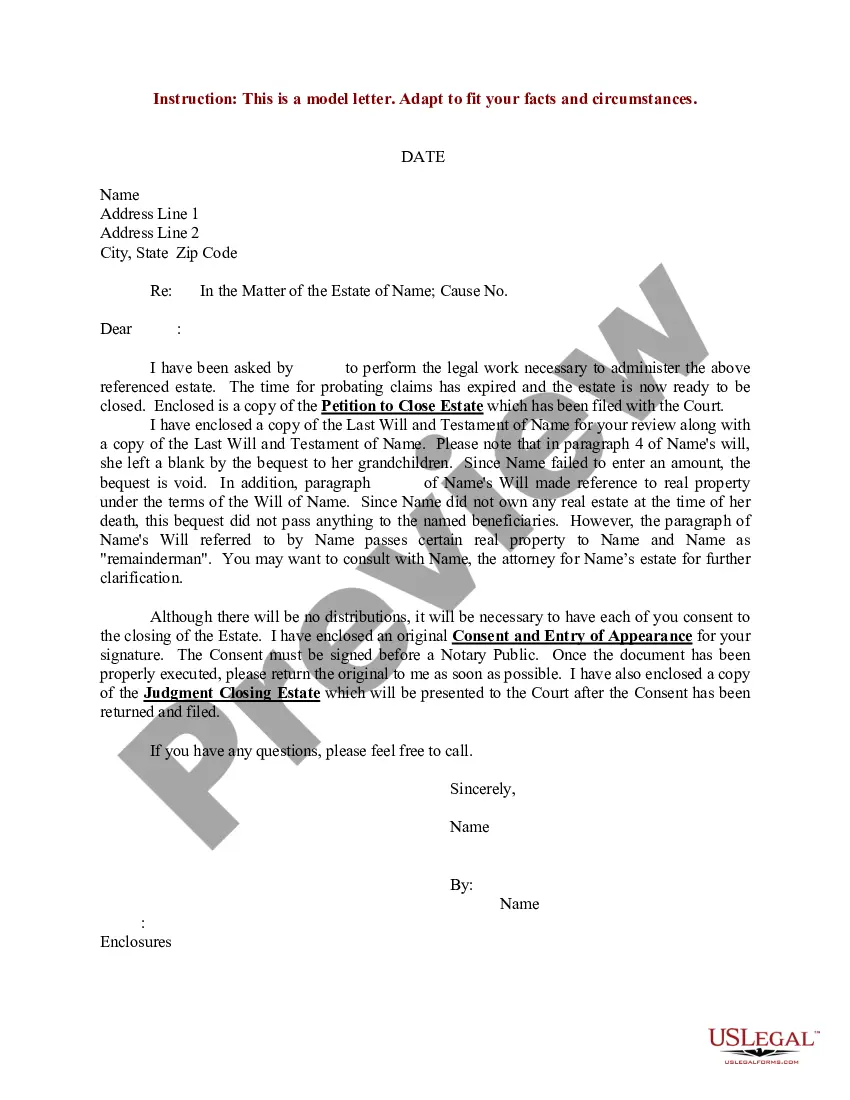
To properly write a letter to the court, begin with your name and address at the top, followed by the date. Then, include the court's name and address. Clearly state your purpose, reference the case number if applicable, and conclude with a respectful closing. For additional guidance, consider using the Texas Sample Letter to Chancery Clerk with Checklist for Enclosed Pleadings and Filing Instructions.