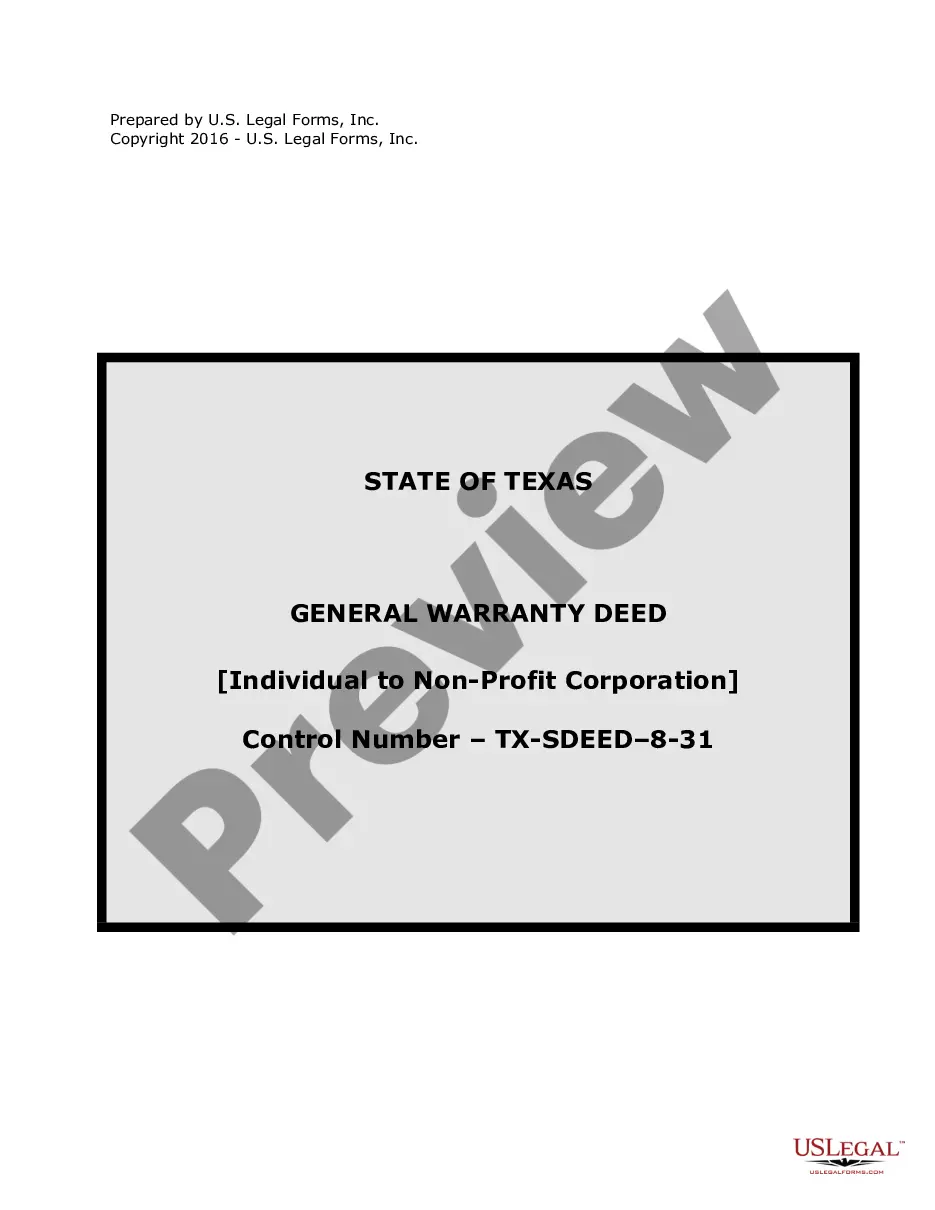
Texas General Warranty Deed for Individual to Nonprofit Corporation
What this document covers
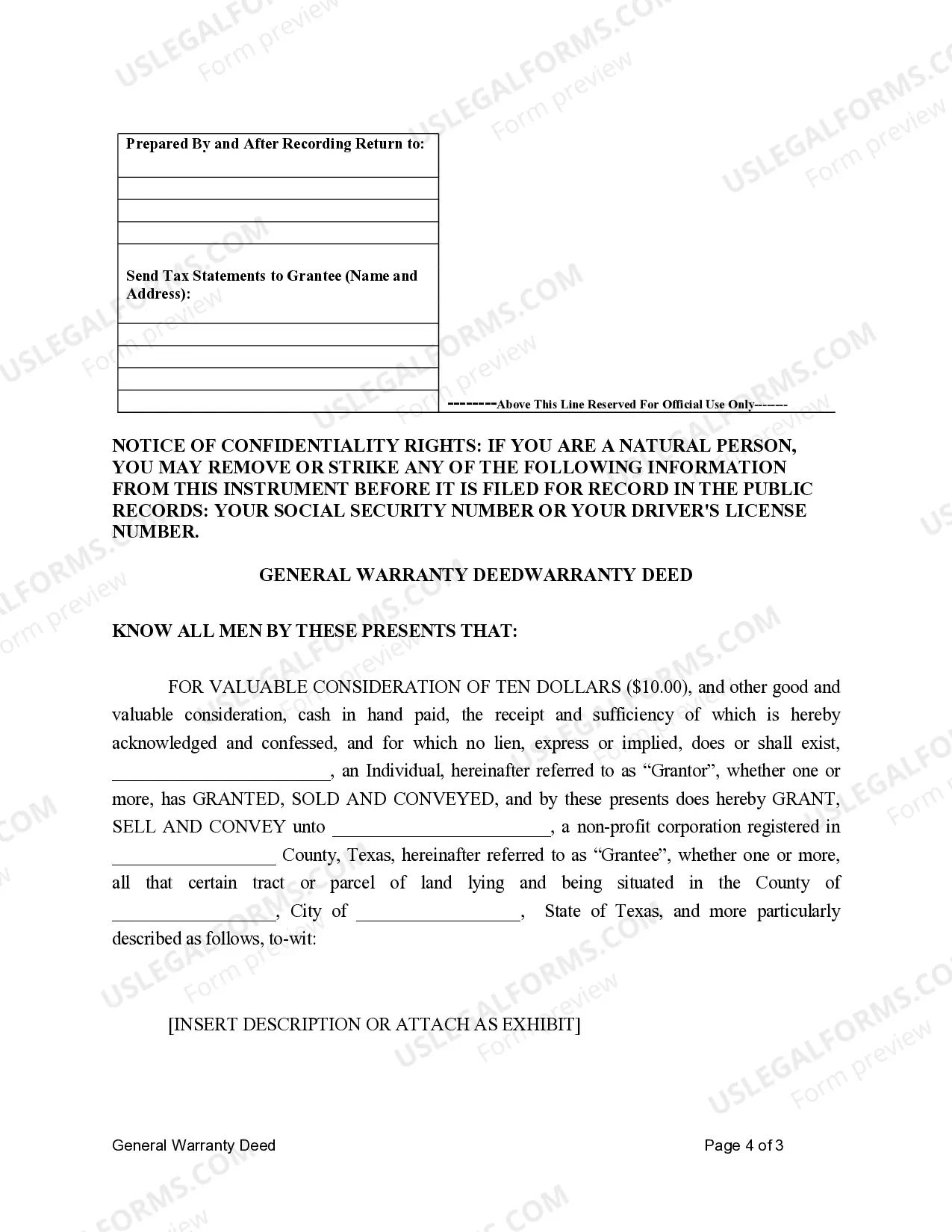
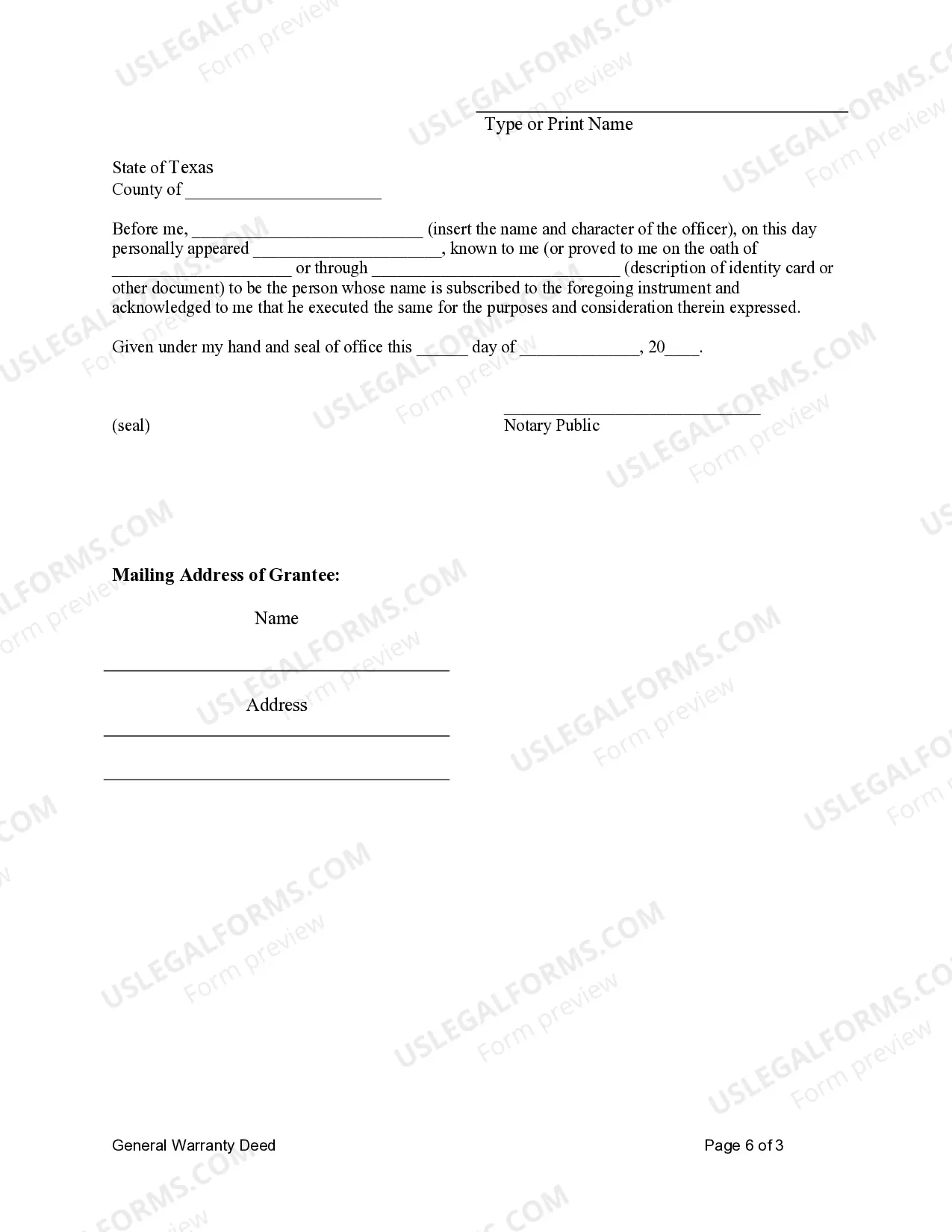
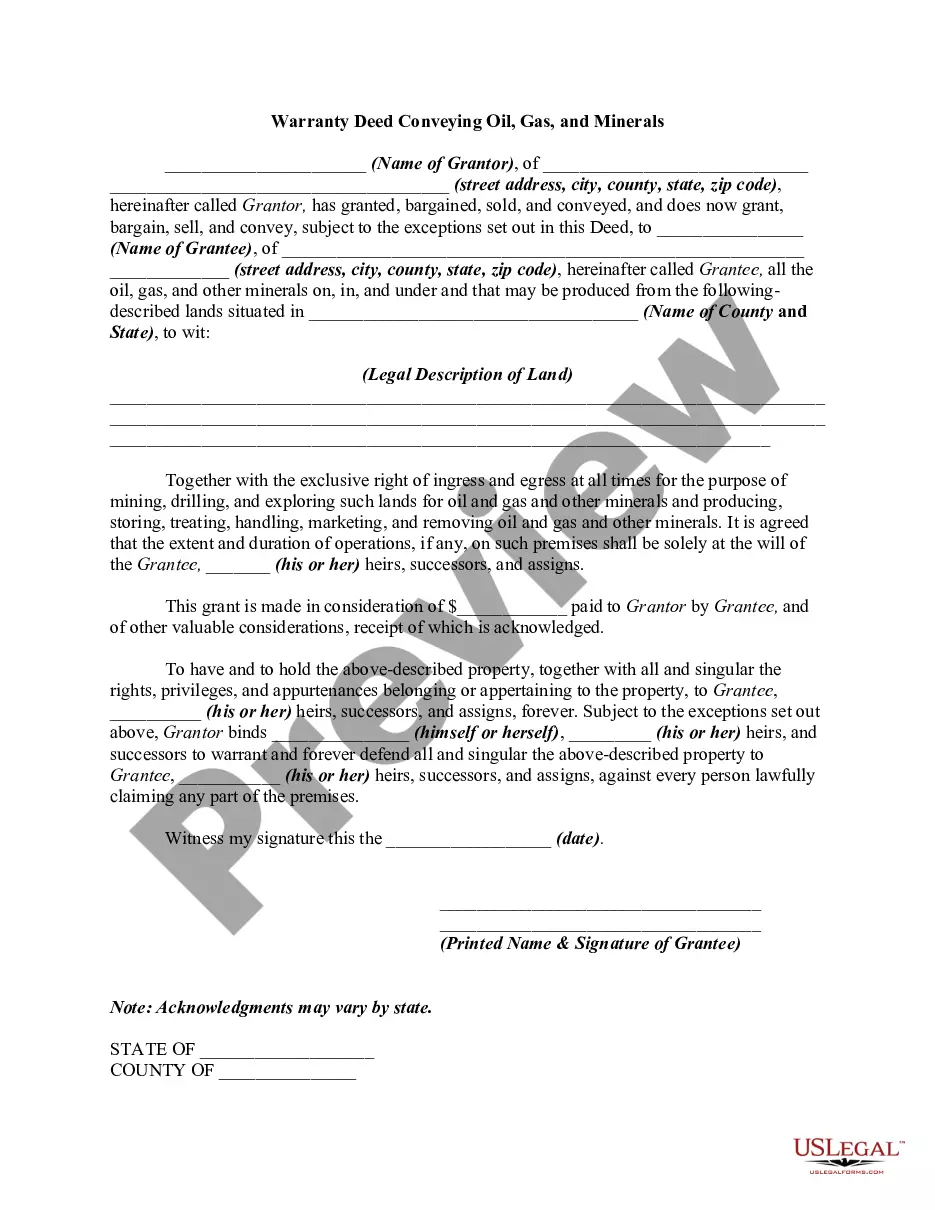
The General Warranty Deed for Individual to Nonprofit Corporation is a legal document that transfers ownership of real estate from an individual (the grantor) to a nonprofit corporation (the grantee). This type of deed provides a guarantee that the grantor holds clear title to the property and promises to defend that title against any claims. Unlike other types of deeds, such as quitclaim deeds that offer no guarantees, a warranty deed ensures the grantee that the property is free from liens or encumbrances, making it a safe option for transfers to nonprofit entities.
Key parts of this document
- Grantor and grantee names and addresses.
- Legal description of the property being conveyed.
- Statement of consideration (monetary value exchanged).
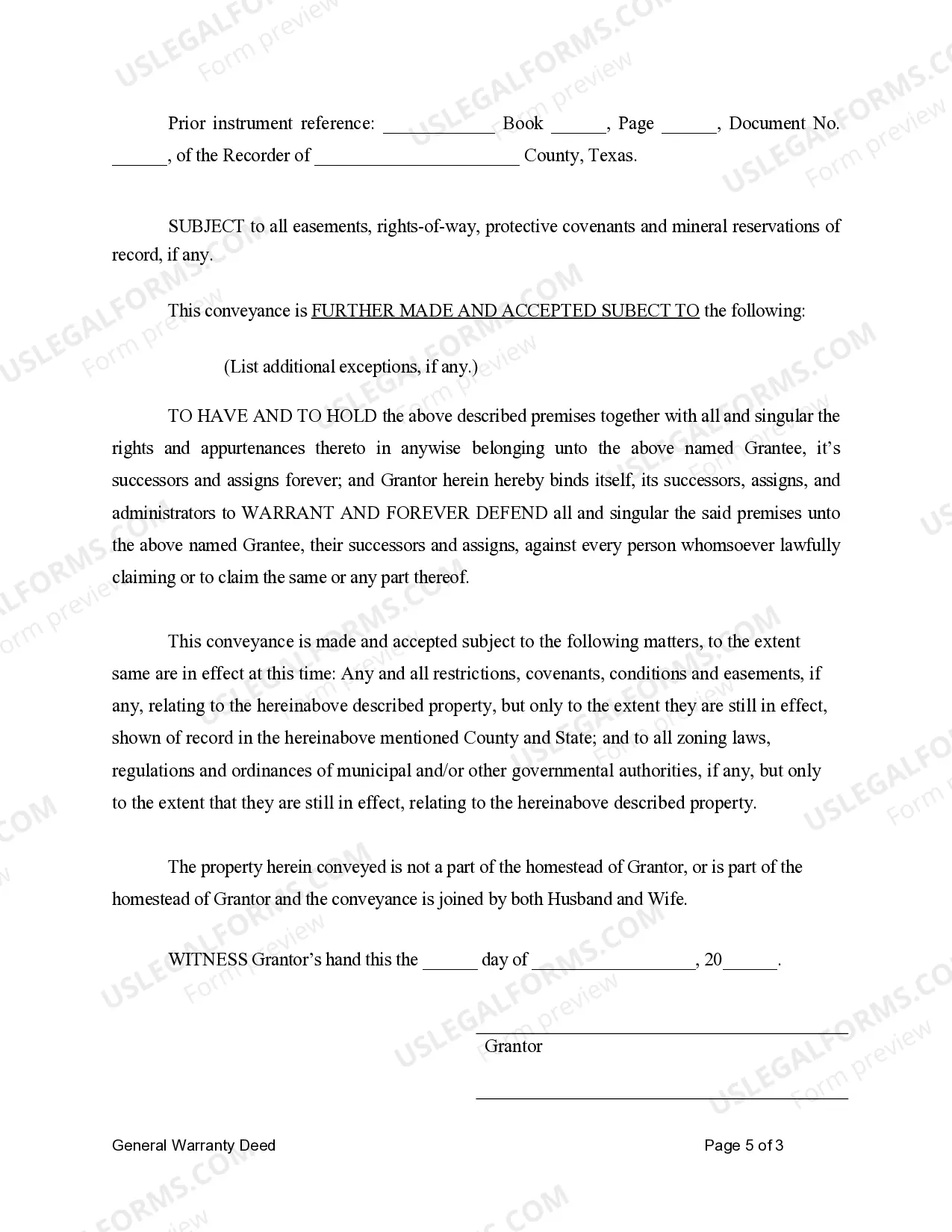
- Warranties provided by the grantor regarding title ownership.
- Signatures and date indicating agreement by the grantor.
When this form is needed
This form should be used when an individual wishes to transfer real property to a nonprofit corporation. It is commonly used in situations such as donating land or properties to charity or other nonprofit organizations, ensuring that the grantee receives full title rights and protection from future claims or disputes regarding the title.
Who should use this form
- Individuals looking to donate property to a nonprofit organization.
- Nonprofit organizations receiving property donations.
- Estate representatives transferring assets to a charity on behalf of an individual.
Instructions for completing this form
- Identify the parties: Fill in the full name and address of both the grantor and the grantee.
- Describe the property: Provide a detailed legal description of the property being transferred.
- State the consideration: Enter the monetary value being exchanged for the transfer, typically ten dollars for nominal transfers.
- Include warranty clause: This section will state the grantor's warranties concerning the title.
- Sign and date: Have the grantor sign and date the document to validate the transfer.
Notarization requirements for this form
This form must be notarized to be legally valid. US Legal Forms provides secure online notarization powered by Notarize, allowing you to complete the process through a verified video call.
Get your form ready online
Our built-in tools help you complete, sign, share, and store your documents in one place.
Make edits, fill in missing information, and update formatting in US Legal Forms—just like you would in MS Word.
Download a copy, print it, send it by email, or mail it via USPS—whatever works best for your next step.
Sign and collect signatures with our SignNow integration. Send to multiple recipients, set reminders, and more. Go Premium to unlock E-Sign.
If this form requires notarization, complete it online through a secure video call—no need to meet a notary in person or wait for an appointment.
We protect your documents and personal data by following strict security and privacy standards.

Make edits, fill in missing information, and update formatting in US Legal Forms—just like you would in MS Word.

Download a copy, print it, send it by email, or mail it via USPS—whatever works best for your next step.

Sign and collect signatures with our SignNow integration. Send to multiple recipients, set reminders, and more. Go Premium to unlock E-Sign.

If this form requires notarization, complete it online through a secure video call—no need to meet a notary in person or wait for an appointment.

We protect your documents and personal data by following strict security and privacy standards.
Typical mistakes to avoid
- Failing to provide a complete legal property description.
- Not signing the deed or having the signatures notarized as required.
- Omitting the statement of consideration, which could cause issues later.
- Using the wrong names for the parties involved in the deed.
Why complete this form online
- Convenience of downloading and completing the form at your own pace.
- Editability allows you to customize the document before printing.
- Reliability from a trusted source, ensuring the form meets legal standards in Texas.
Legal use & context
- The form legally transfers ownership of property from the grantor to the grantee.
- It protects the grantee against future claims or disputes over the property.
- Ensures compliance with Texas state law regarding property transfers.
Summary of main points
- This is a General Warranty Deed, ensuring clear title transfer to a nonprofit corporation.
- Completing the deed accurately is essential for legal protection.
- Notarization is required for validity, so plan accordingly.
- Proper documentation is vital for the transfer of property ownership.
Looking for another form?
Form popularity
FAQ
Fill out the "grantor" section of the warranty deed. The grantors are the givers, or current owners, of the property. Use the legal name of each grantor and insert current addresses after each grantor's name.
Write the county where the property is located on line provided next to the words "County of" beneath the words "The State of Texas." Write the name and address of the grantor on the lines provided after the words "Know all men by these presents, That I."
Find the most recent deed to the property. It is best to begin with a copy of the most recent deed to the property (the deed that transferred the property to the current grantor). Create a new deed. Sign and notarize the deed. File the documents in the county land records.
The name and address of the seller (called the grantor) The name and address of the buyer (called the grantee) A legal description of the property (found on the previous deed) A statement that the grantor is transferring the property to the grantee.
It's important to note that a warranty deed does not actually prove the grantor has ownership (a title search is the best way to prove that), but it is a promise by the grantor that they are transferring ownership and if it turns out they don't actually own the property, the grantor will be responsible for compensating
The deed must be presented to and accepted by the grantee, and it should be filed of record in the county clerk's office to put the public on notice of the transfer. Failure to file the deed can subject the property to future claims by other parties. Most commonly, a grantor provides a general warranty deed.
The answer is yes. Parties to a transaction are always free to prepare their own deeds. If you do so, be sure your deed measures up to your state's legal regulations, to help avert any legal challenge to the deed later.
Retrieve your original deed. Get the appropriate deed form. Draft the deed. Sign the deed before a notary. Record the deed with the county recorder. Obtain the new original deed.
A warranty deed guarantees that: The grantor is the rightful owner of the property and has the legal right to transfer the title.The title would withstand third-party claims to ownership of the property. The grantor will do anything to ensure the grantee's title to the property.