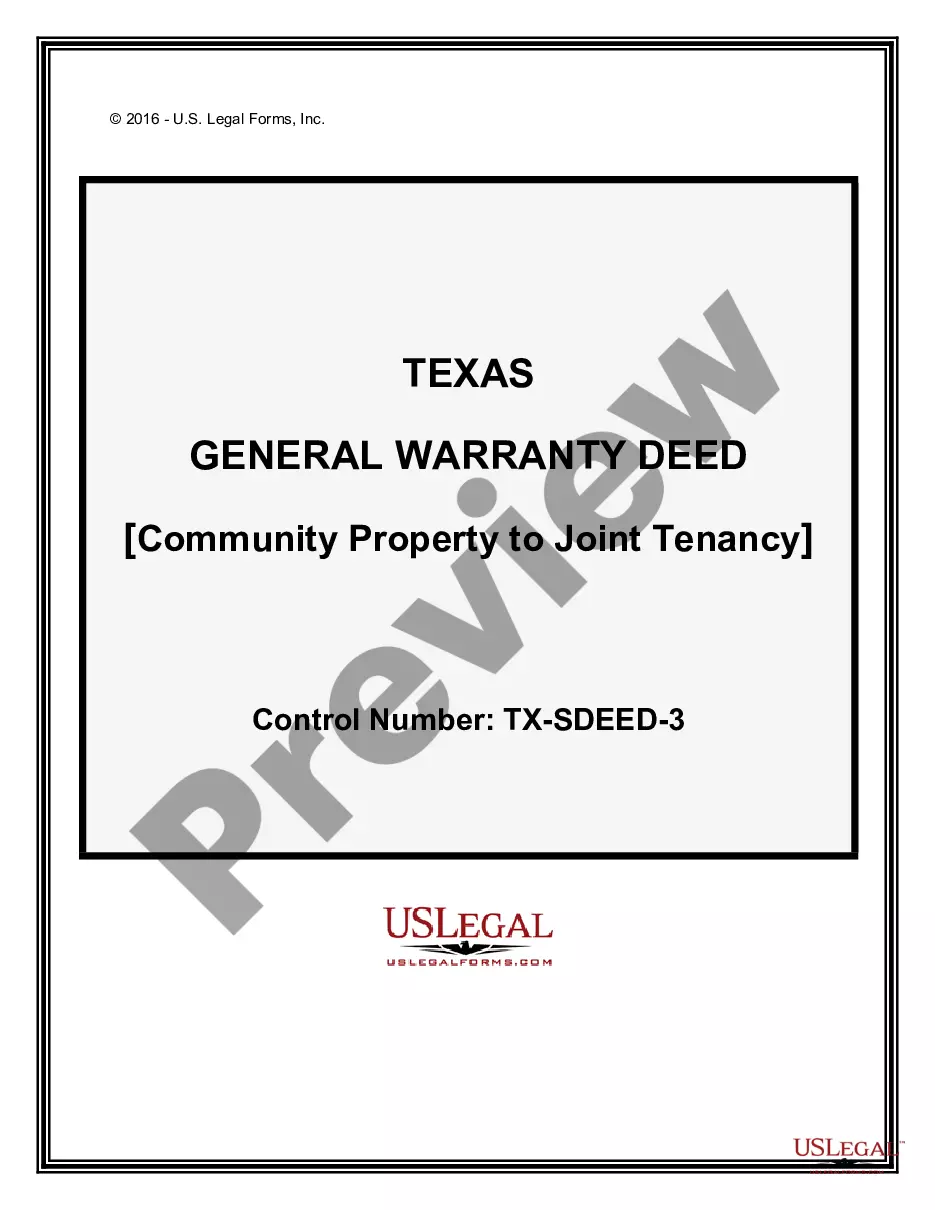
Texas Warranty Deed for Community Property to Joint Tenancy
Understanding this form
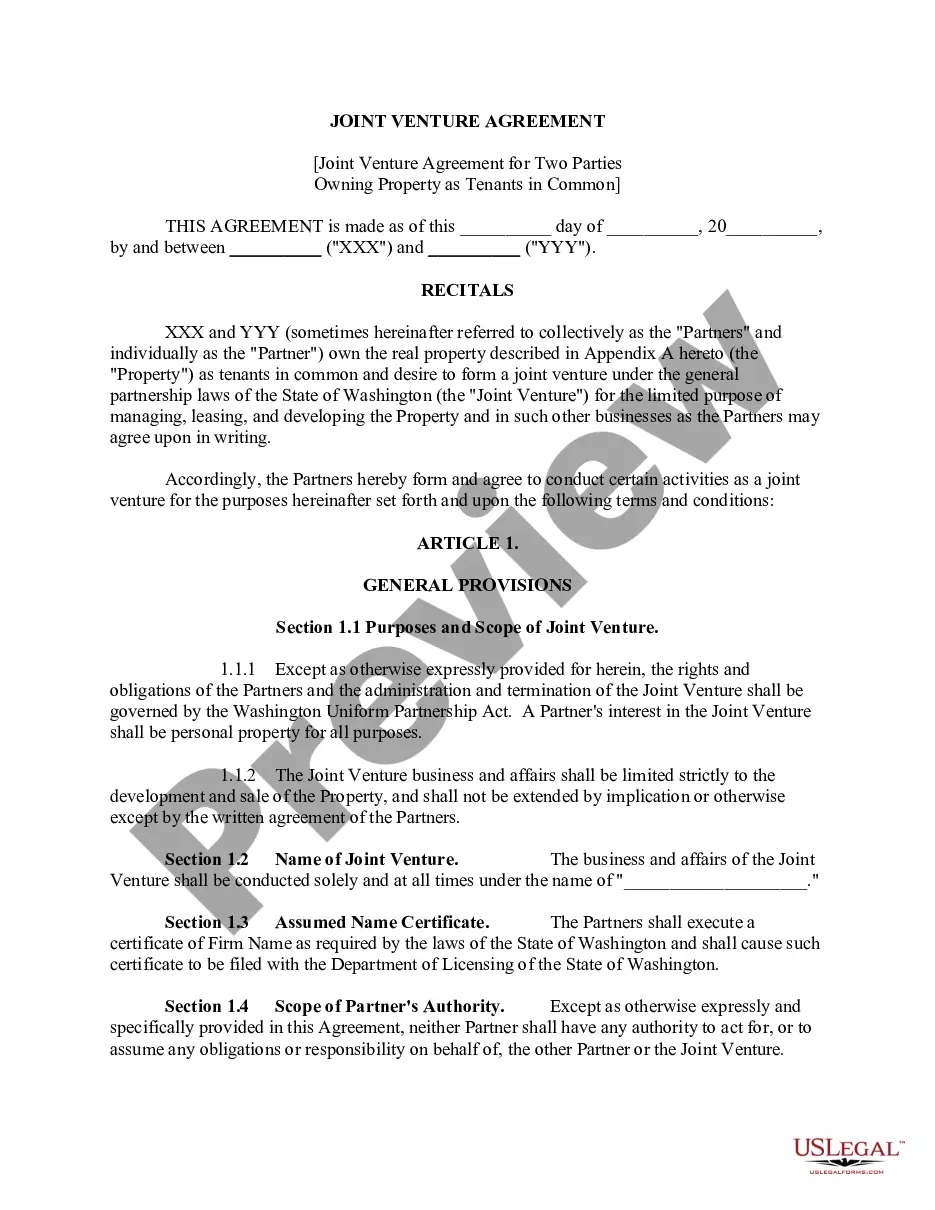
The Warranty Deed for Community Property to Joint Tenancy is a legal document that allows property owners to convert community property ownership into joint tenancy. This form is significant because it changes how the property will be transferred upon the death of one of the owners, enabling a right of survivorship, which avoids probate. Unlike a standard warranty deed that solely conveys property, this specific deed facilitates the transition of ownership between married individuals or partners into a joint tenancy arrangement, providing clear rights for surviving owners.
What’s included in this form
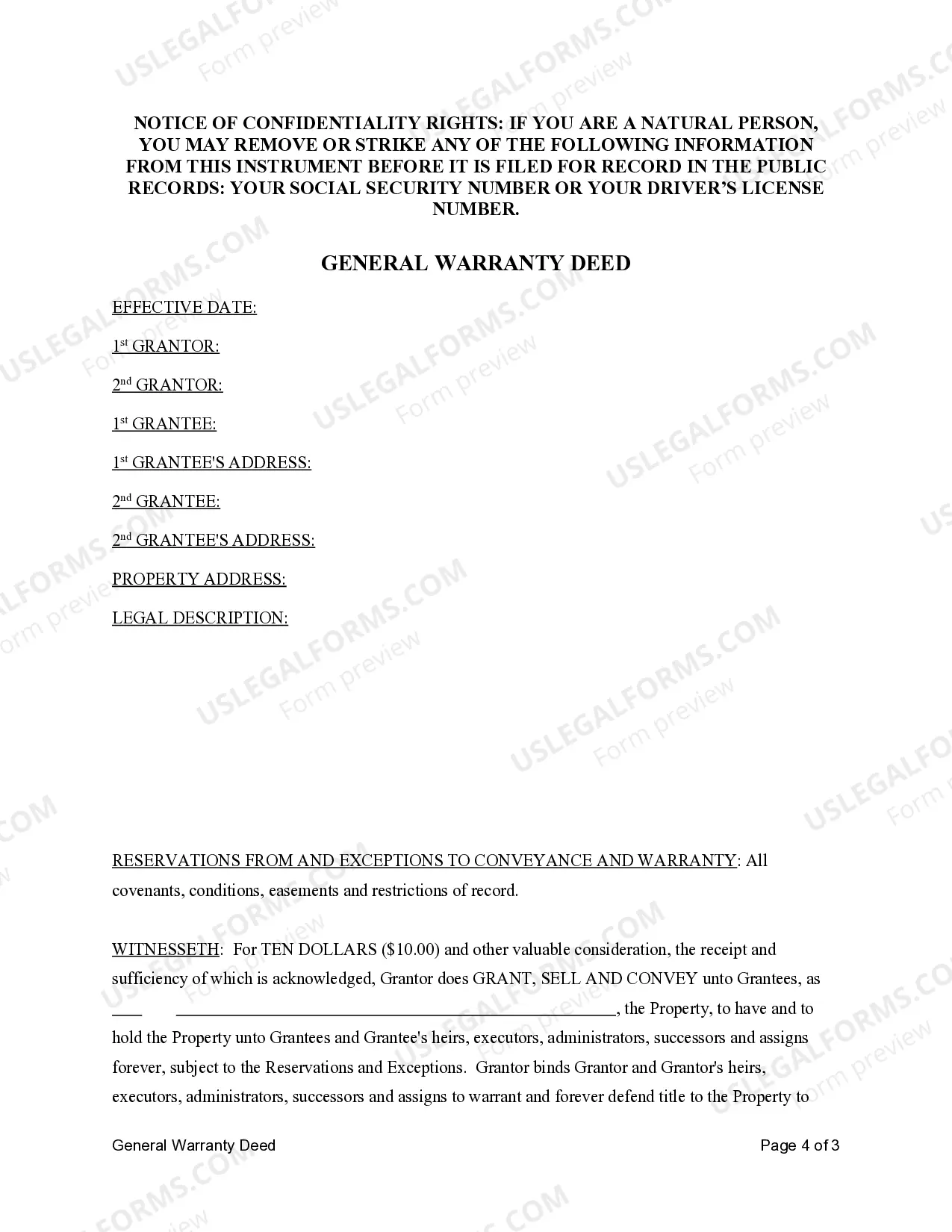
- Grantor and Grantee information fields
- Property description section
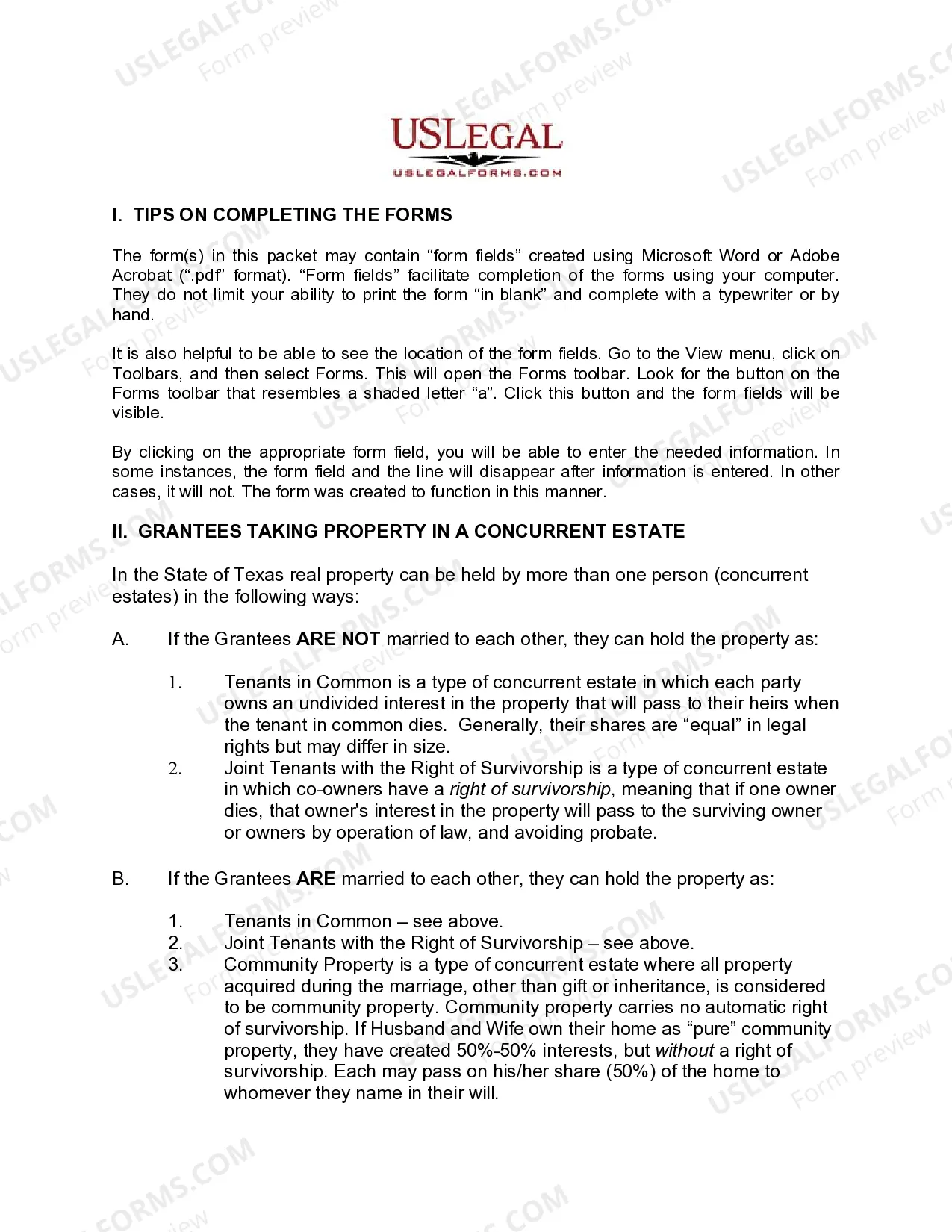
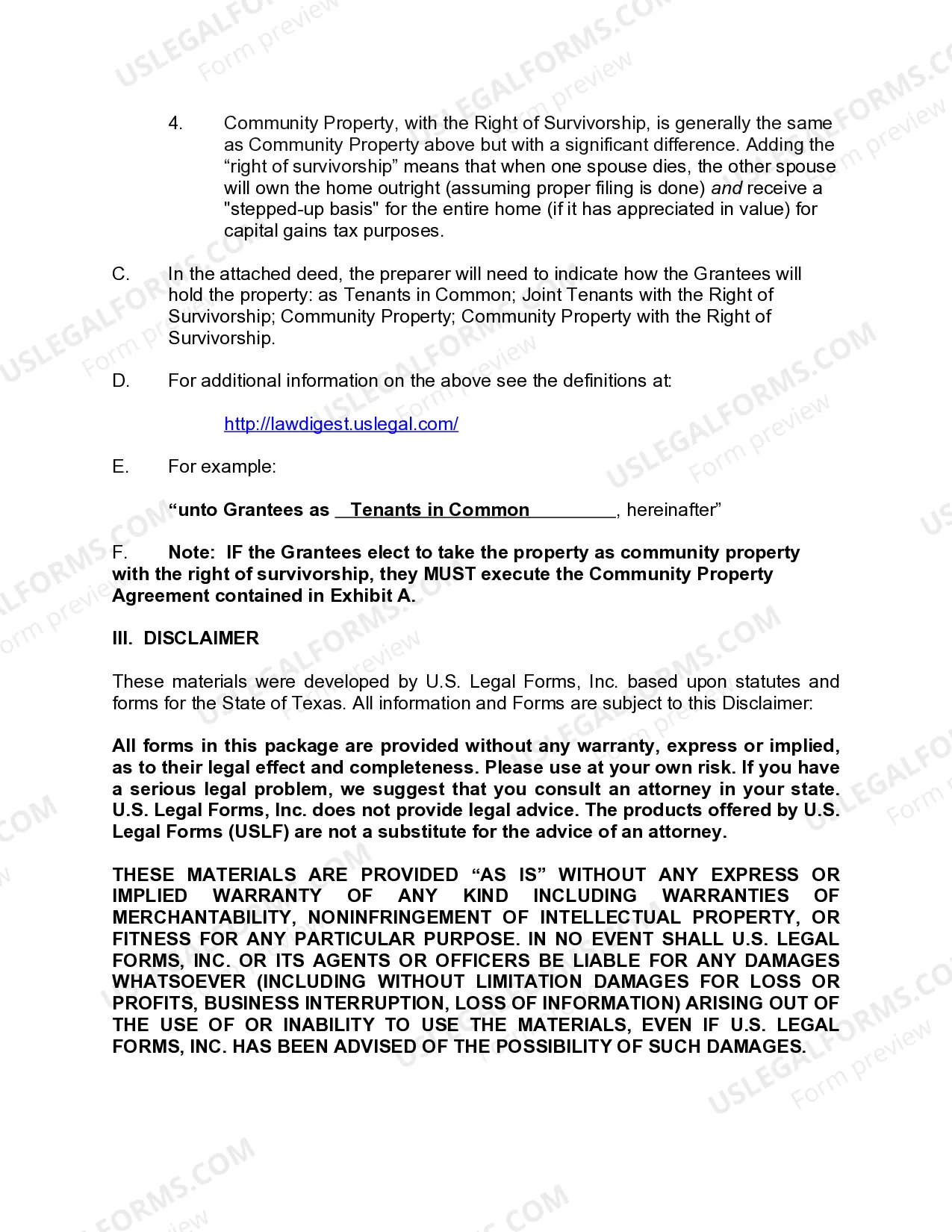
- Selection of property holding type: Tenants in Common, Joint Tenancy, Community Property, or Community Property with Right of Survivorship
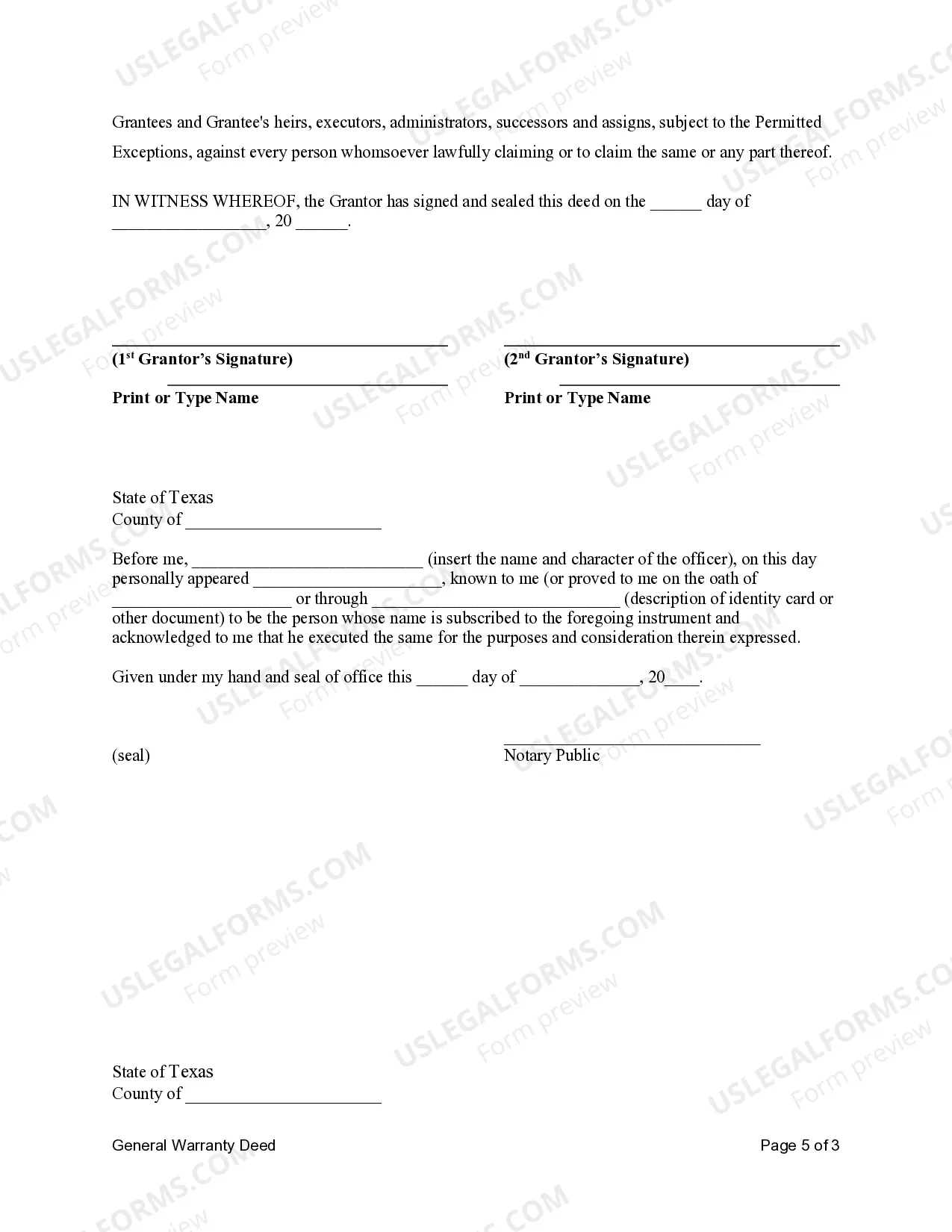
- Signatures and dates for legal execution




Situations where this form applies
This form is typically used when married couples or individuals who have shared property wish to change their property ownership from community property to joint tenancy. It's relevant during circumstances such as marriage, when consolidating estates, or when planning for the future to ensure that the surviving owner retains full ownership after one owner passes away.
Intended users of this form
- Married couples seeking to establish joint ownership
- Partners in a long-term relationship wanting to ensure rights of survivorship
- Individuals managing a community property estate
- Property owners looking to simplify the transfer of ownership upon death
Instructions for completing this form
- Identify the parties involved: list the full names of the Grantor(s) and Grantee(s).
- Provide a detailed description of the property being conveyed.
- Select the type of ownership arrangement you desire from the provided options.
- Fill in the date and ensure that all relevant parties sign the document.
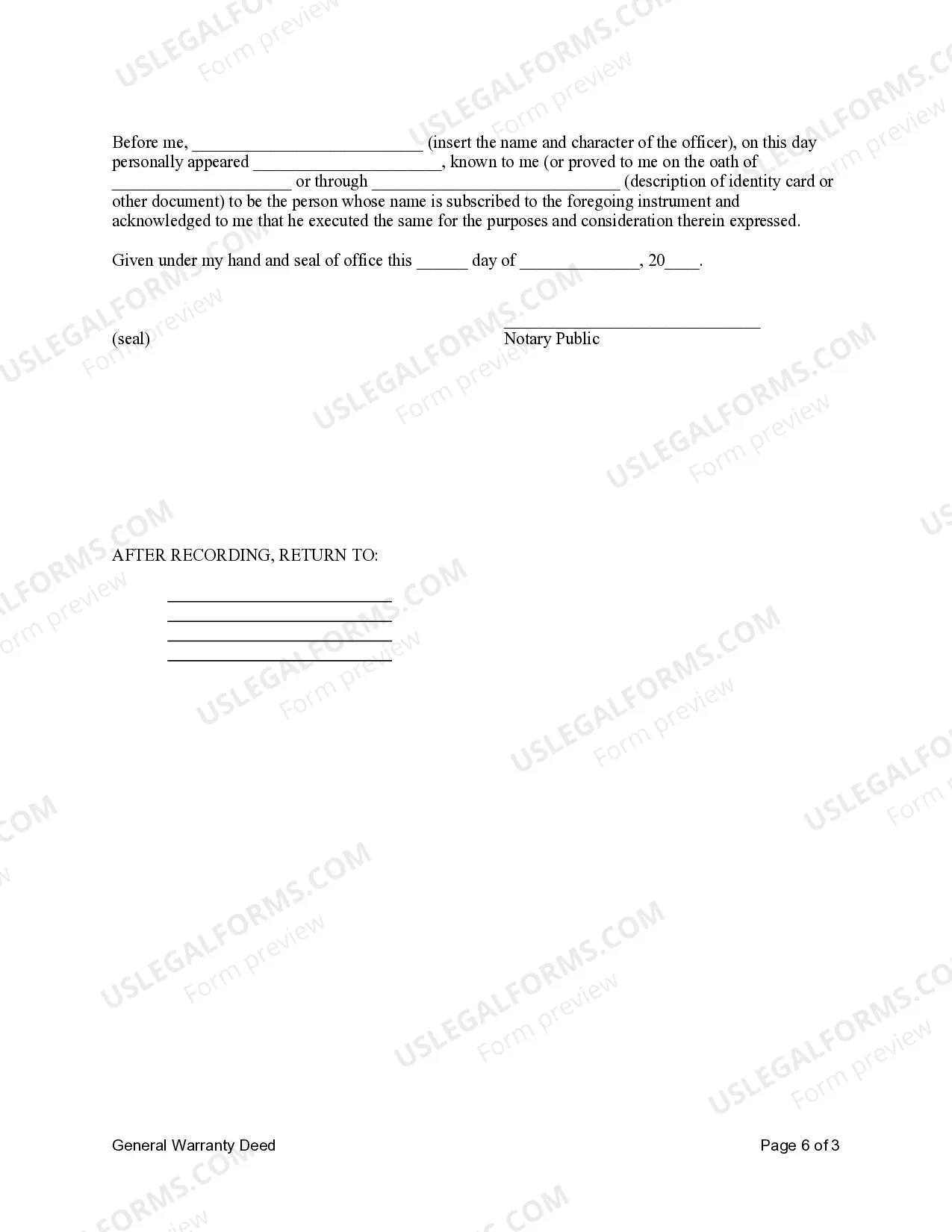
- Consider having the form notarized for added legal validity.
Does this document require notarization?
This form must be notarized to be legally valid. US Legal Forms provides secure online notarization powered by Notarize, allowing you to complete the process through a verified video call.
Get your form ready online
Our built-in tools help you complete, sign, share, and store your documents in one place.
Make edits, fill in missing information, and update formatting in US Legal Forms—just like you would in MS Word.
Download a copy, print it, send it by email, or mail it via USPS—whatever works best for your next step.
Sign and collect signatures with our SignNow integration. Send to multiple recipients, set reminders, and more. Go Premium to unlock E-Sign.
If this form requires notarization, complete it online through a secure video call—no need to meet a notary in person or wait for an appointment.
We protect your documents and personal data by following strict security and privacy standards.

Make edits, fill in missing information, and update formatting in US Legal Forms—just like you would in MS Word.

Download a copy, print it, send it by email, or mail it via USPS—whatever works best for your next step.

Sign and collect signatures with our SignNow integration. Send to multiple recipients, set reminders, and more. Go Premium to unlock E-Sign.

If this form requires notarization, complete it online through a secure video call—no need to meet a notary in person or wait for an appointment.

We protect your documents and personal data by following strict security and privacy standards.
Typical mistakes to avoid
- Failing to properly identify all parties involved in the deed.
- Incorrectly describing the property, leading to potential legal disputes.
- Neglecting to sign the form in the presence of a notary if required.
- Choosing the wrong type of ownership arrangement or not understanding their implications.
Benefits of using this form online
- Convenience of completing the form at home without needing to visit a lawyer.
- Editability, allowing you to make changes before finalizing the document.
- Reliable templates drafted by licensed attorneys based on state laws.
- Immediate download feature for quick access and filing.
Looking for another form?


Form popularity
FAQ
There are three common ways to title property between spouses. The 'joint tenant' approach is the least common and usually must include the language 'with right of survivorship and not as tenants in common. ' Spouses typically acquire title as tenants by the entireties, which only applies to spouses.
With a Survivorship Deed in place, when one of the parties in a joint tenancy dies, the other party (or parties) takes over the deceased party's interest in the property instead of it passing to the deceased's heirs or beneficiaries.
The deed specifies that the joint tenants own an equal amount of interest in the purchased property and are thus equally liable for it financially. Since the joint tenants have equal interest, the property cannot be sold without all parties' consent.
Unlike most states Texas does not automatically recognize joint tenancies as having a right of survivorship. Instead the parties must agree, in writing, to include a right of survivorship.
A tenancy by the entirety is different from the others because only a married couple that owns the property together may use this type of tenancy. In addition, a tenancy by the entirety only lasts as long as the couple is married. Not all states recognize tenancy by the entirety. Texas does not.
Like joint tenancy property, each spouse's interest in community property is equal during their marriage. Unlike joint tenancy, however, each spouse's one-half community property interest is subject to disposition by the deceased spouse's will.
What is Community Property? Community property is also a form of co-ownership, but is applicable only between husband and wife. Like joint tenancy property, each spouse's interest in community property is equal during their marriage.
In Texas, a married couple can agree in writing that all or part of their community property will go to the surviving spouse when one person dies. This is called a right of survivorship agreement. The right of survivorship agreement must be filed with the county court records where the couple lives.
Quite simply, with a joint tenancy each person has ownership of the complete property. If one owner dies, the property passes automatically to the remaining joint tenant(s). With this type of home ownership, no more than four people are permitted to share ownership of a property as joint tenants.