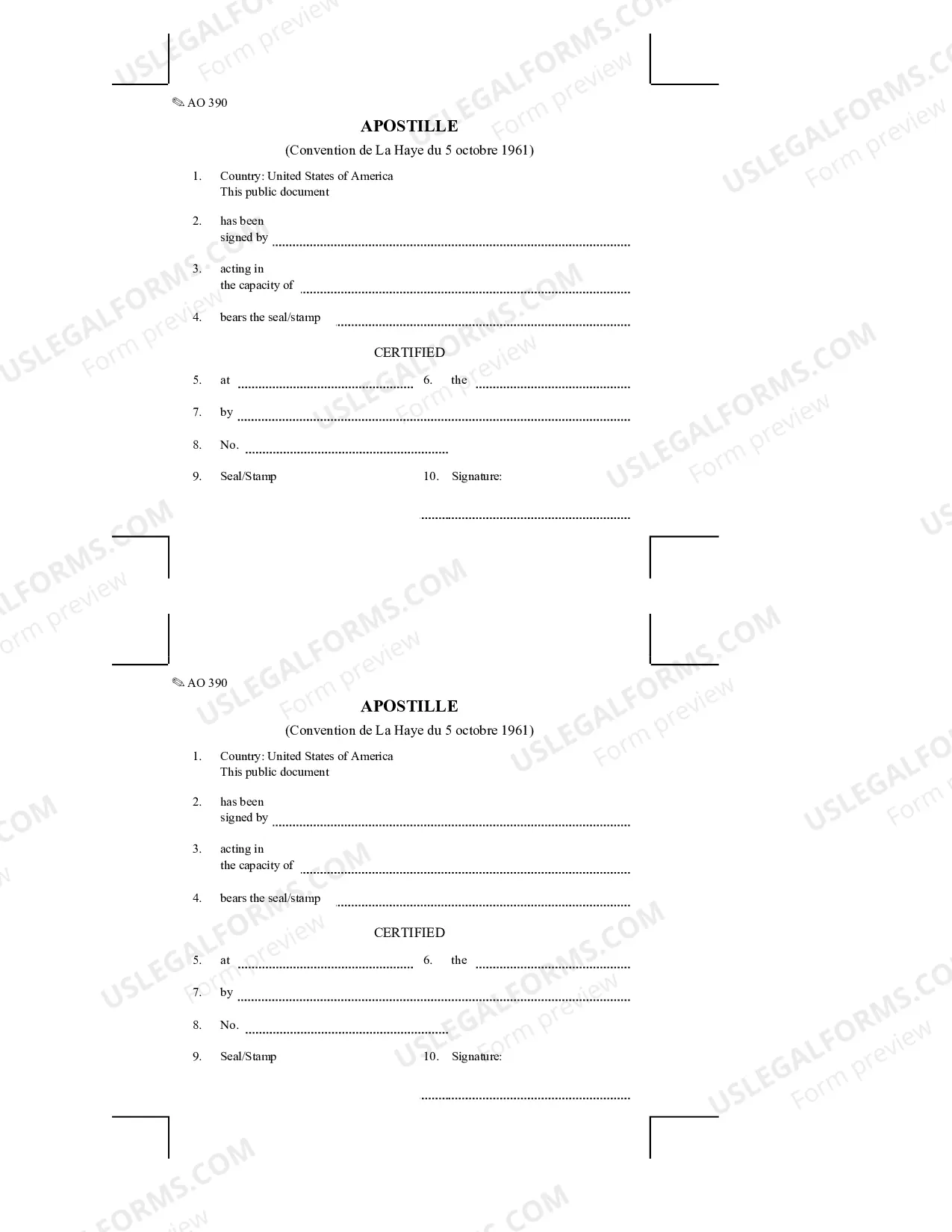
Texas Apostille (Convention de La Haye, 5 Octobre 1961)
Description
Get your form ready online
Our built-in tools help you complete, sign, share, and store your documents in one place.
Make edits, fill in missing information, and update formatting in US Legal Forms—just like you would in MS Word.
Download a copy, print it, send it by email, or mail it via USPS—whatever works best for your next step.
Sign and collect signatures with our SignNow integration. Send to multiple recipients, set reminders, and more. Go Premium to unlock E-Sign.
If this form requires notarization, complete it online through a secure video call—no need to meet a notary in person or wait for an appointment.
We protect your documents and personal data by following strict security and privacy standards.

Make edits, fill in missing information, and update formatting in US Legal Forms—just like you would in MS Word.

Download a copy, print it, send it by email, or mail it via USPS—whatever works best for your next step.

Sign and collect signatures with our SignNow integration. Send to multiple recipients, set reminders, and more. Go Premium to unlock E-Sign.

If this form requires notarization, complete it online through a secure video call—no need to meet a notary in person or wait for an appointment.

We protect your documents and personal data by following strict security and privacy standards.
Looking for another form?
How to fill out Texas Apostille (Convention De La Haye, 5 Octobre 1961)?
Coping with official paperwork requires attention, precision, and using well-drafted templates. US Legal Forms has been helping people across the country do just that for 25 years, so when you pick your Texas Apostille (Convention de La Haye, 5 Octobre 1961) template from our service, you can be sure it meets federal and state regulations.
Working with our service is simple and fast. To get the necessary document, all you’ll need is an account with a valid subscription. Here’s a brief guide for you to find your Texas Apostille (Convention de La Haye, 5 Octobre 1961) within minutes:
- Make sure to carefully look through the form content and its correspondence with general and legal requirements by previewing it or reading its description.
- Search for an alternative official blank if the previously opened one doesn’t match your situation or state regulations (the tab for that is on the top page corner).
- Log in to your account and download the Texas Apostille (Convention de La Haye, 5 Octobre 1961) in the format you need. If it’s your first experience with our website, click Buy now to proceed.
- Create an account, select your subscription plan, and pay with your credit card or PayPal account.
- Choose in what format you want to save your form and click Download. Print the blank or add it to a professional PDF editor to submit it electronically.
All documents are created for multi-usage, like the Texas Apostille (Convention de La Haye, 5 Octobre 1961) you see on this page. If you need them in the future, you can fill them out without re-payment - simply open the My Forms tab in your profile and complete your document whenever you need it. Try US Legal Forms and prepare your business and personal paperwork rapidly and in total legal compliance!
Form popularity
FAQ
12: Convention of 5 October 1961 Abolishing the Requirement of Legalisation for Foreign Public Documents. The present Convention shall apply to public documents which have been executed in the territory of one Contracting State and which have to be produced in the territory of another Contracting State.
It is an international treaty facilitating the circulation of public documents executed by one Contracting Party and which have to be produced in another.
The convention shortens the public document authentication process to a single formality i.e. issuance of an authentication certificate called as 'Apostille' by the designated authority of the country where the document was issued.
Apostilles authenticate the seals and signatures of officials on public documents such as birth certificates, court orders, or any other document issued by a federal agency or certified by a U.S. or foreign consul.
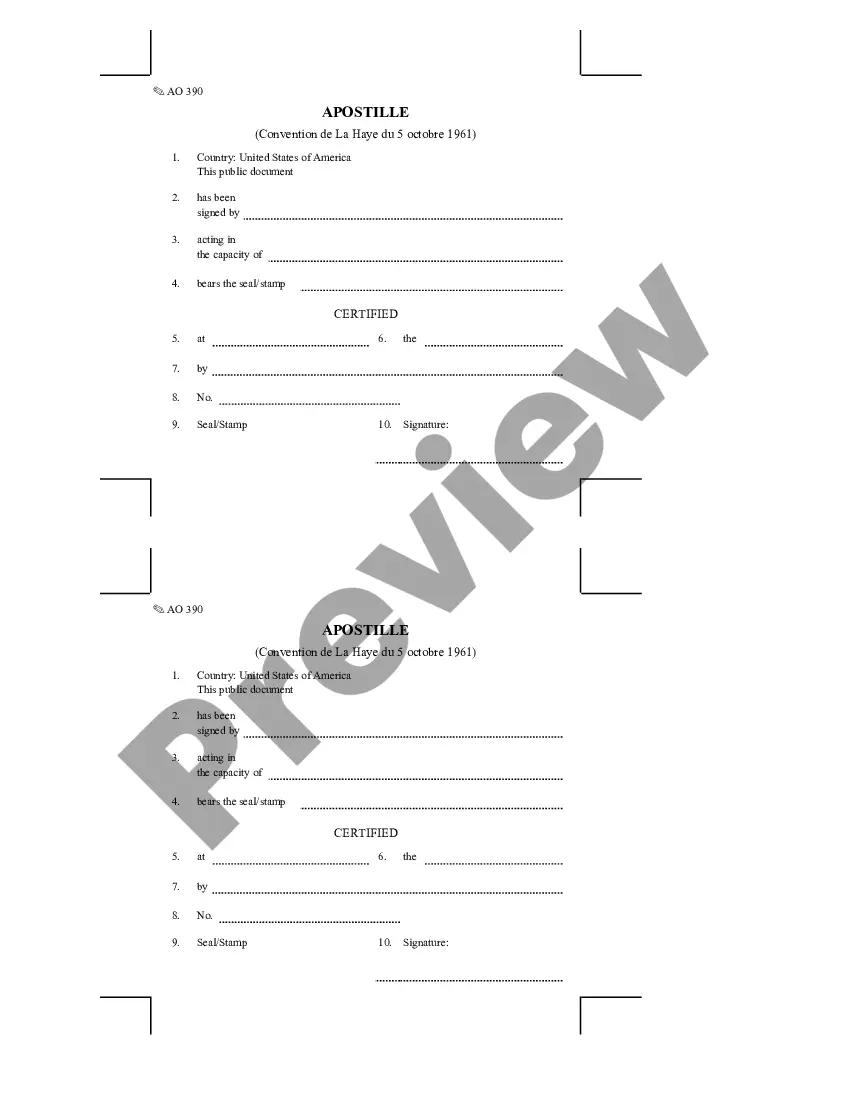
What is an Apostille? An Apostille is a form of certification set out in the 1961 Hague Convention, to which the United States became a subscriber in 1981. It is a form of numbered fields, which allows the data to be understood by the receiving country regardless of the official language of the issuing country.
The Convention of 5 October 1961 Abolishing the Requirement of Legalisation for Foreign Public Documents (HCCH 1961 Apostille Convention) facilitates the use of public documents abroad.
The purpose of the Convention is to abolish the traditional requirement of legalisation, replacing the often long and costly legalisation process with the issuance of a single Apostille certificate by a Competent Authority in the place where the document originates.
Since October 15, 1981, the United States has been part of the 1961 Hague Convention abolishing the Requirement of Legalization for Foreign Public Documents (Only). The Convention provides for the simplified certification of public (including notarized) documents to be used in countries that have joined the convention.