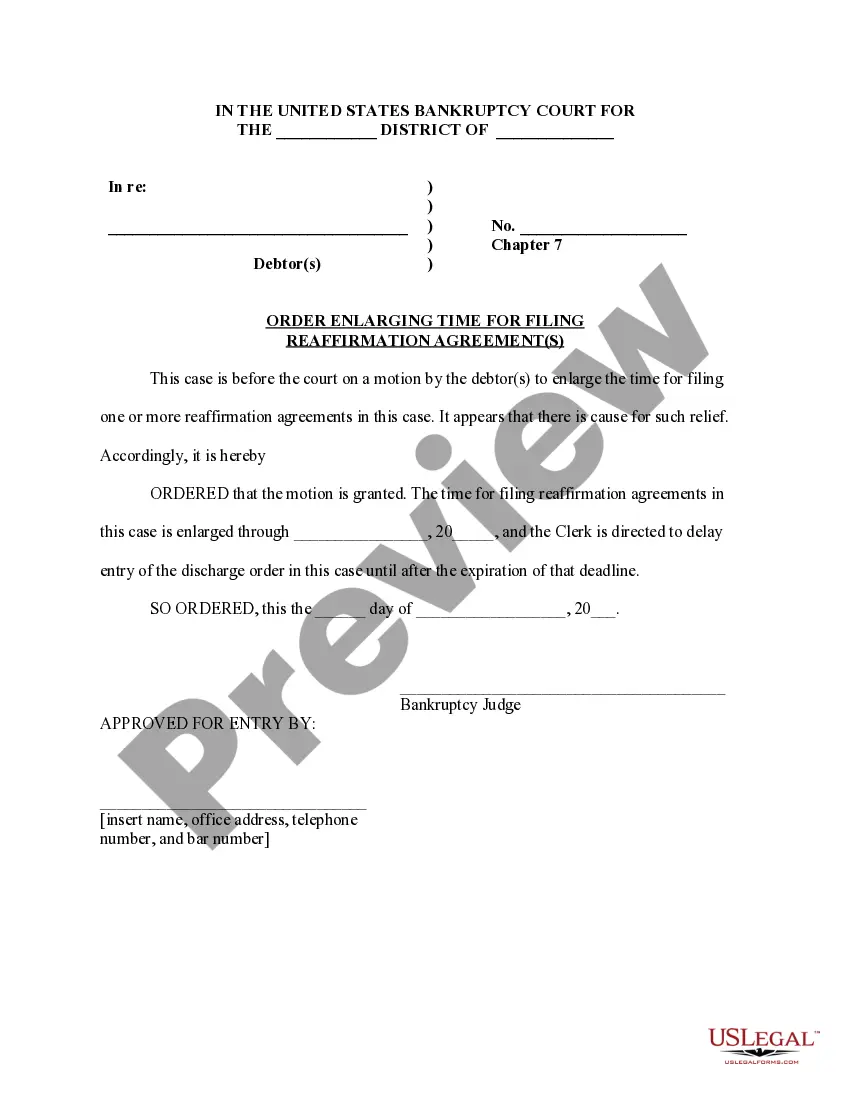
Texas Affidavit of Facts Concerning the Identity of Heirs
What this document covers
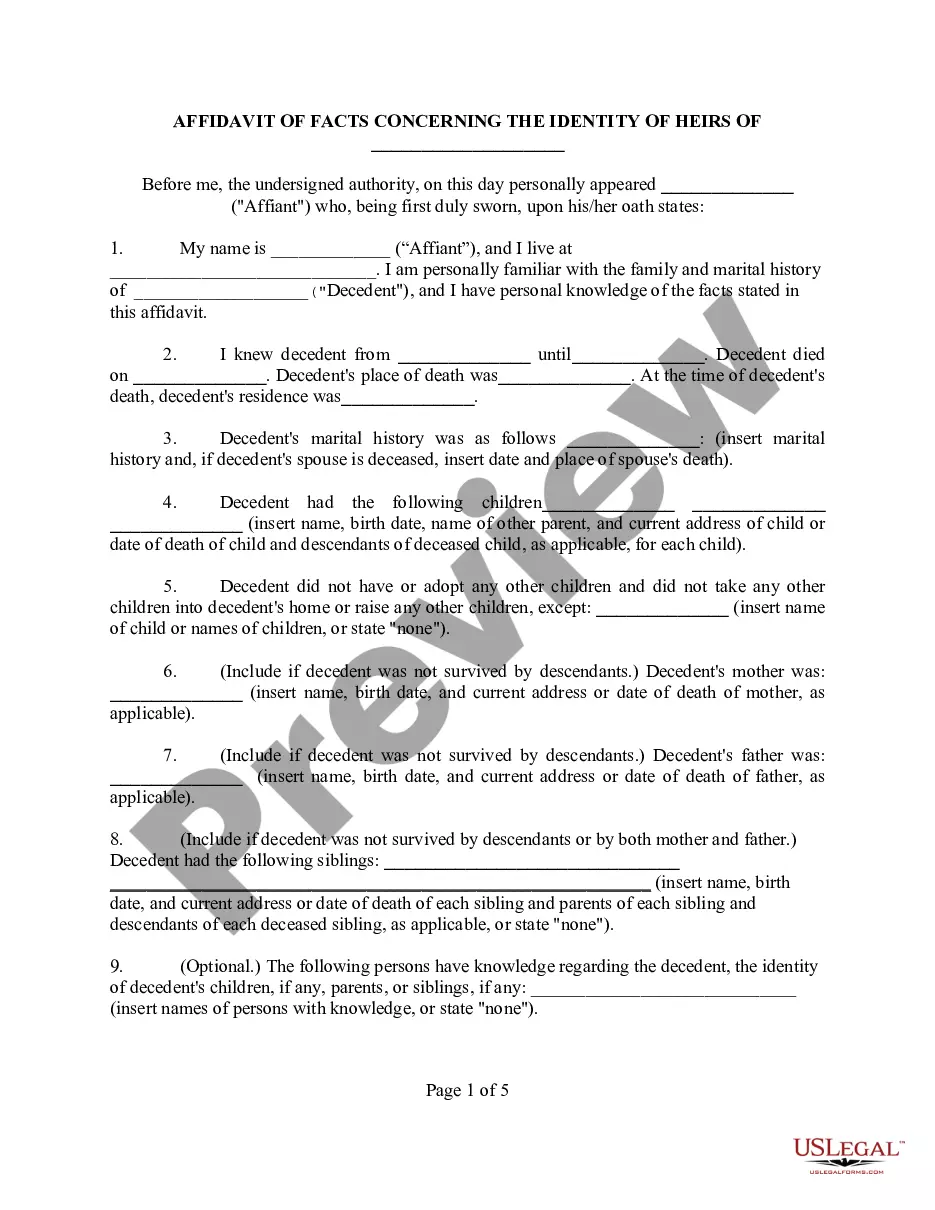
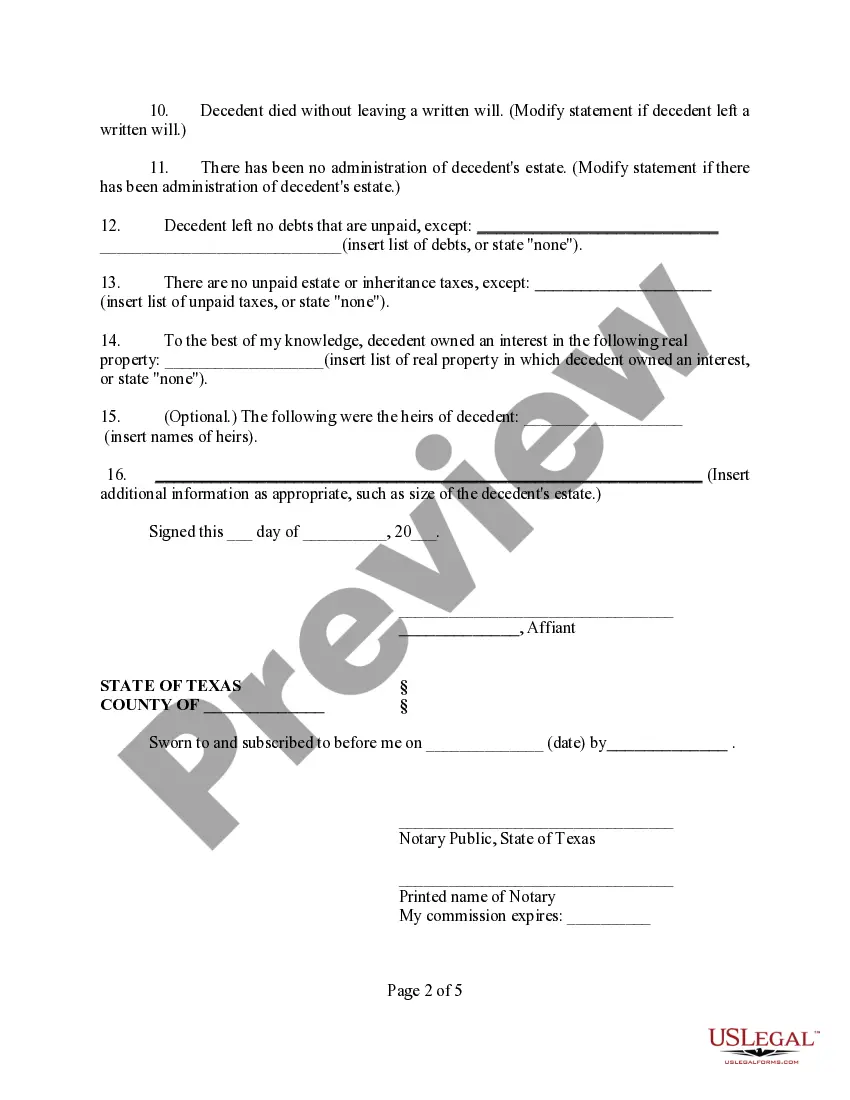
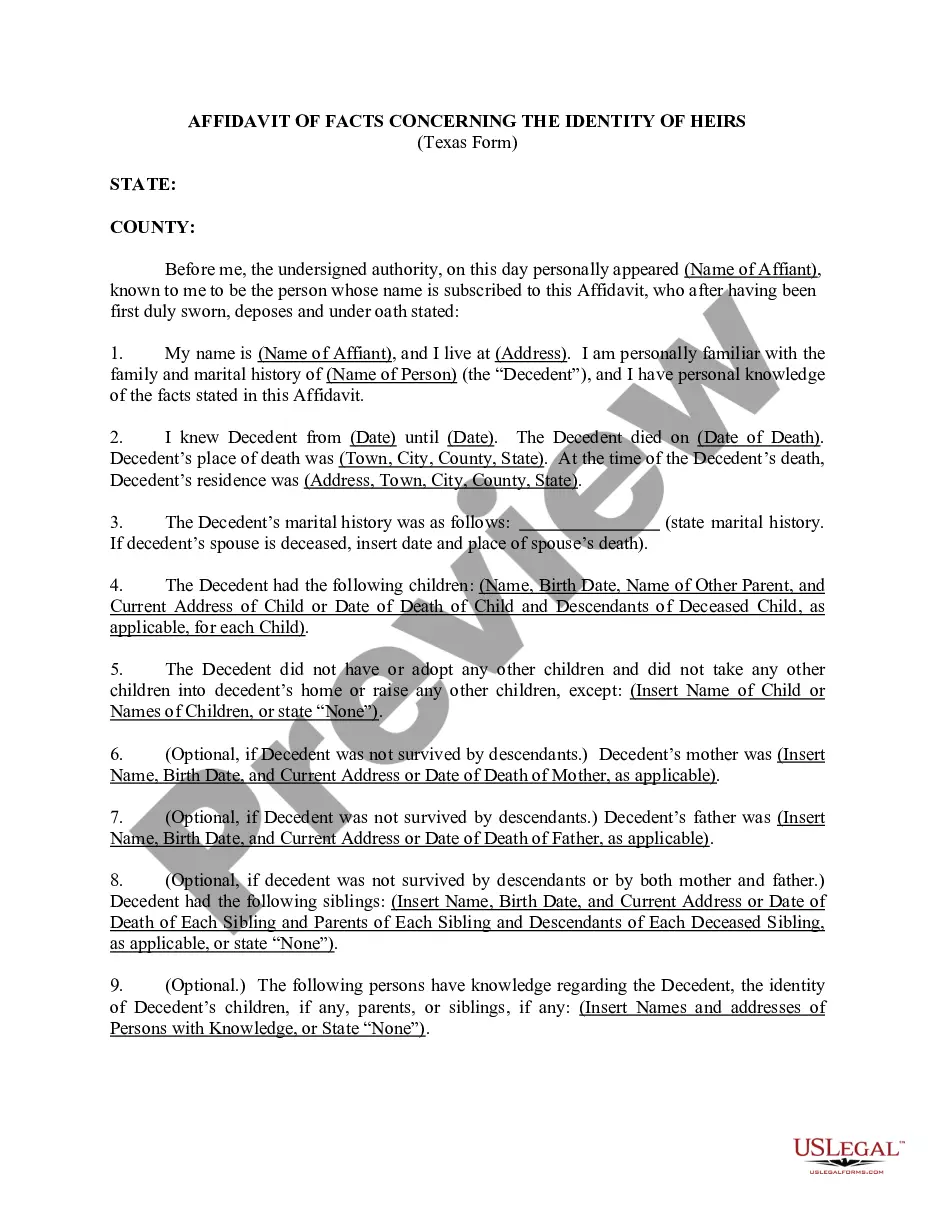
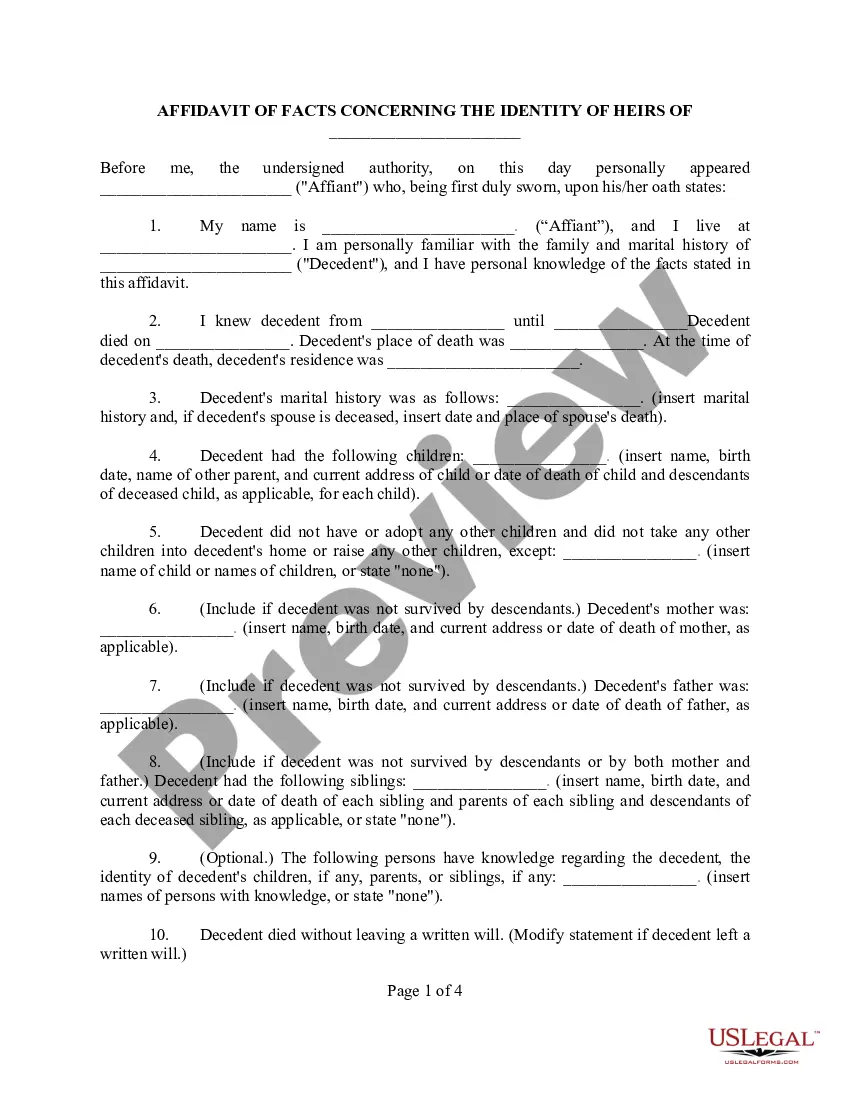
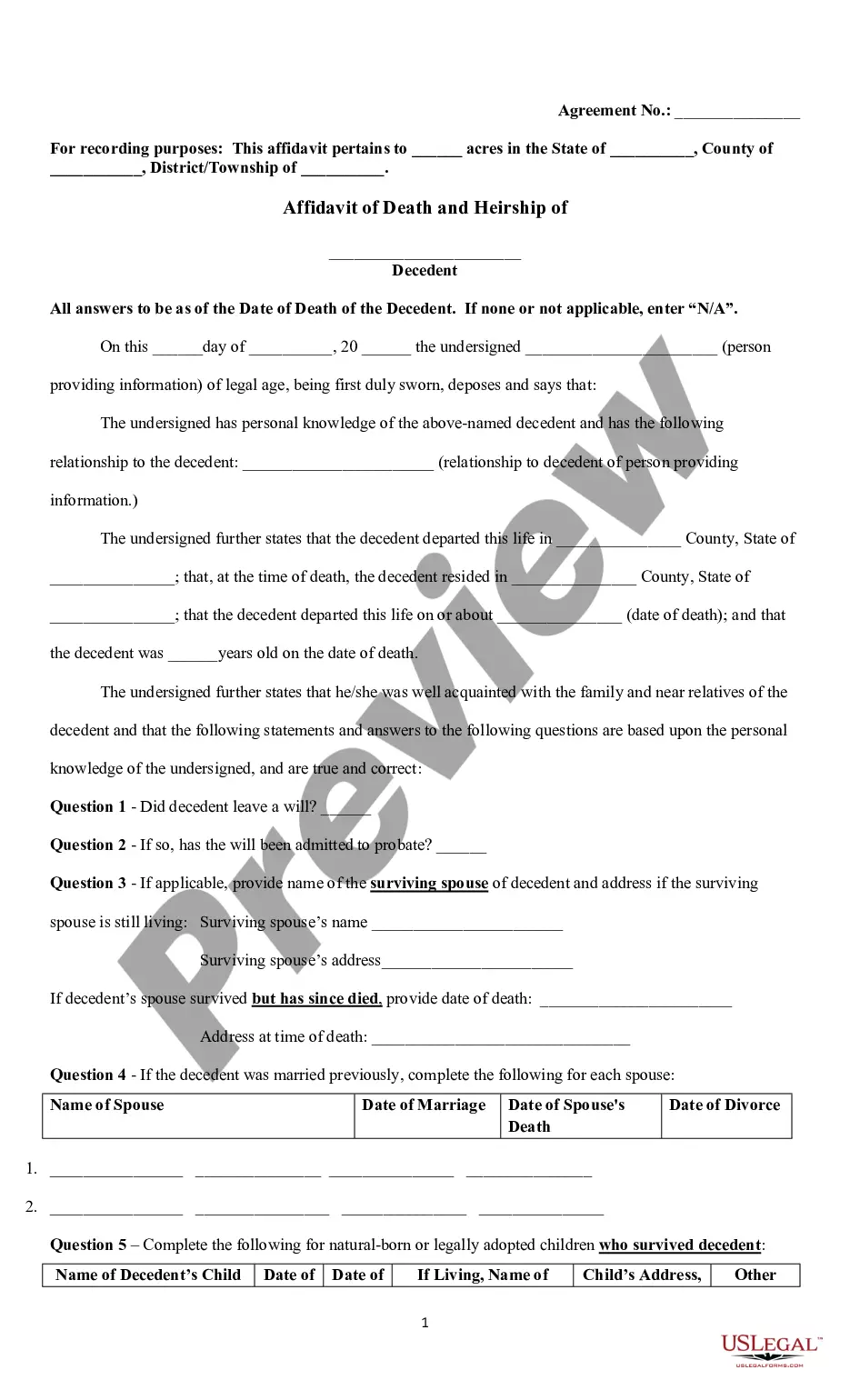
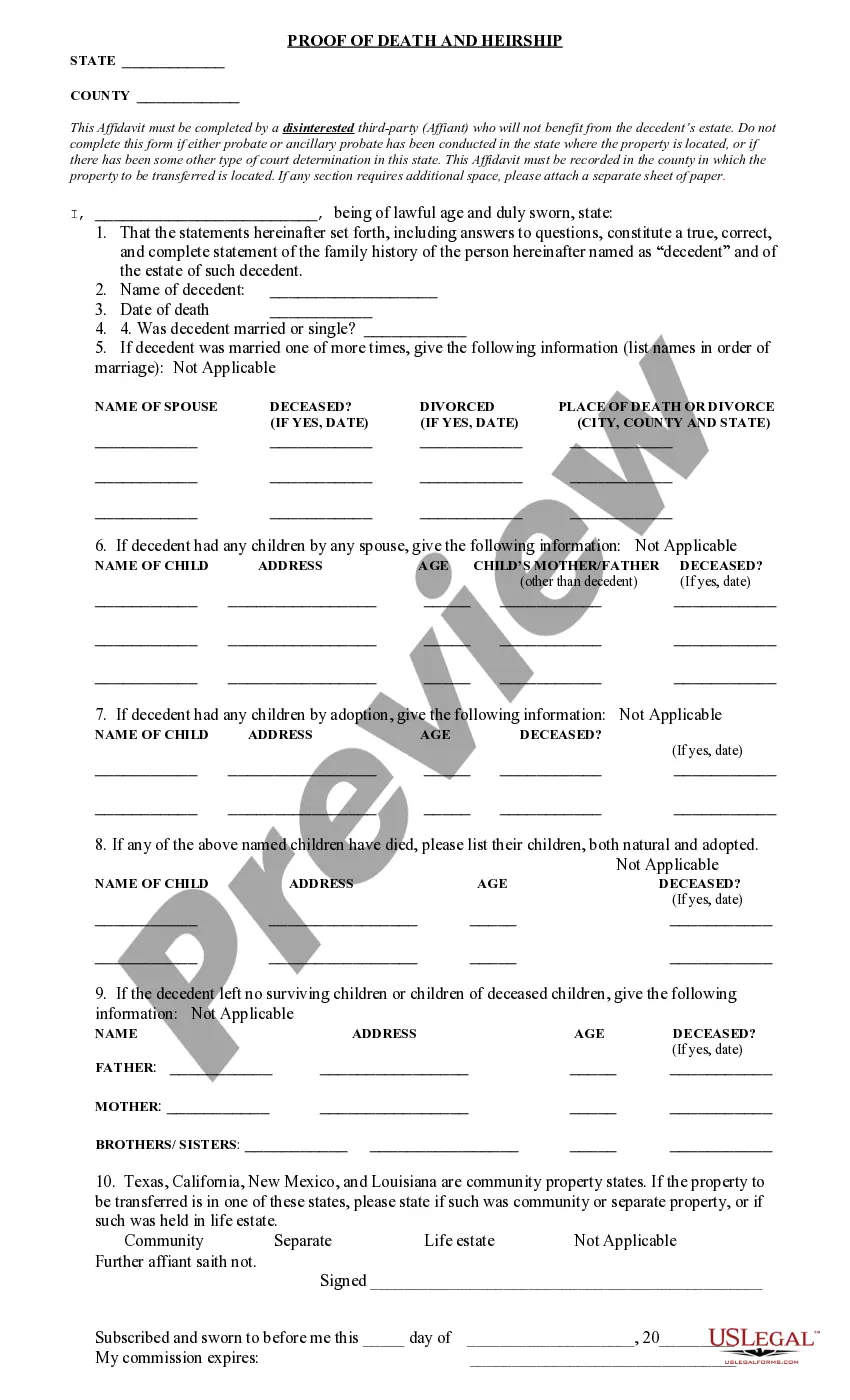
The Affidavit of Facts Concerning the Identity of Heirs is a legal document used to declare and verify the heirs of a deceased person for the purpose of probating their estate. This form serves as a sworn statement detailing the family and marital history of the deceased, distinguishing it from other estate-related documents. It plays a crucial role in ensuring a clear and accurate representation of the heirs during estate administration.
Key components of this form
- The affiantâs personal information and their relationship to the deceased.
- Details about the deceased, including their death date, place of death, and residence at the time of death.
- A comprehensive marital history of the deceased.
- Information about the deceased's children and siblings, if any.
- Statements regarding the existence or absence of a will and unpaid debts.
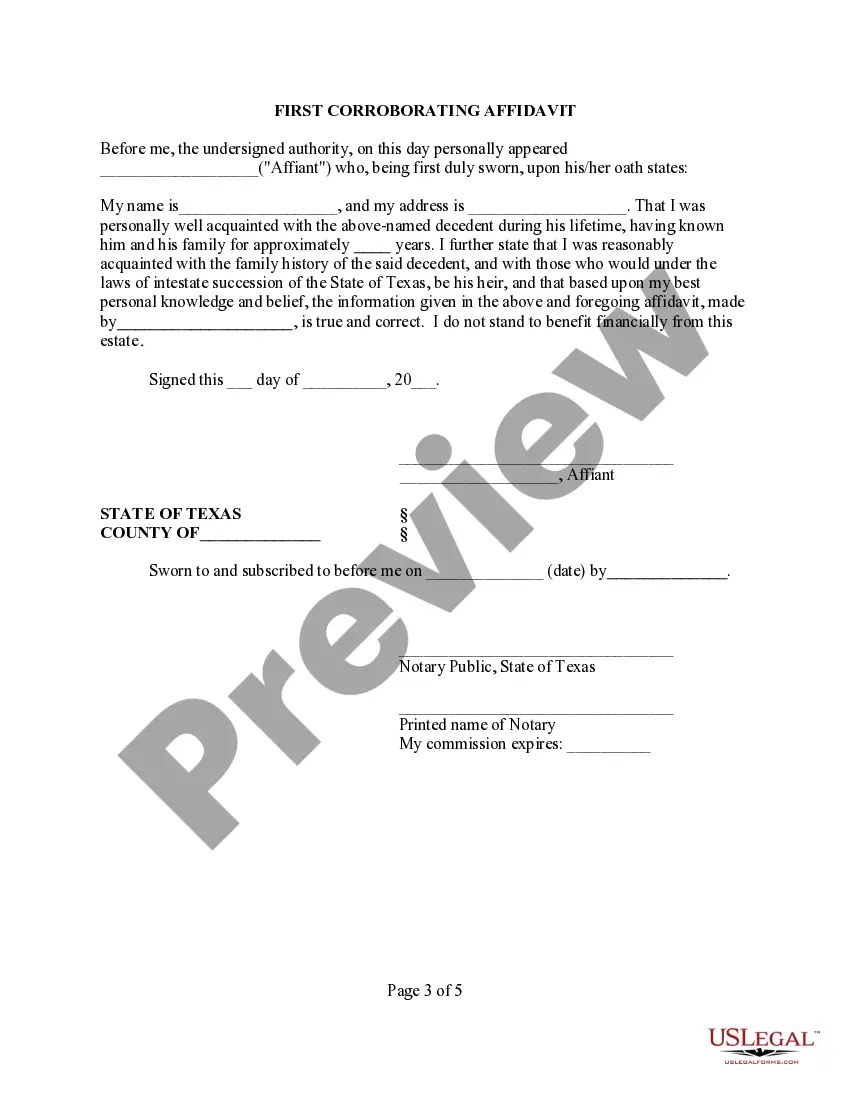
- Affiant's and corroborating affiantsâ signatures, along with notary verification.

When to use this document
This form is typically used when an individual is initiating the probate process for a deceased person who did not leave a will. It is essential to clarify the identity of heirs, particularly in cases where there may be disputes or confusion regarding familial relationships. The affidavit supports the probate application by providing verified information about the heirs, which is necessary for estate division and legal recognition.
Who this form is for
- Individuals responsible for administering the estate of a deceased person.
- Heirs or potential heirs seeking to assert their claim to a decedent's estate.
- Family members who have personal knowledge of the deceased's family and marital history.
How to complete this form
- Fill in the affiant's name and address, and confirm their relationship to the deceased.
- Provide dates and details about the deceased's life, including marital history and children.
- State whether the deceased left a will and list any existing debts or estate taxes.
- Include signatures from the affiant and any corroborating affiants, ensuring notarization is completed.
- Review all information for accuracy before submitting with the probate court.
Does this document require notarization?
Yes, this form must be notarized to be legally valid. The affiant's signature must be verified by a notary public, ensuring authenticity and compliance with legal requirements. US Legal Forms offers integrated online notarization services convenient for completing this step securely and efficiently.
Get your form ready online
Our built-in tools help you complete, sign, share, and store your documents in one place.
Make edits, fill in missing information, and update formatting in US Legal Forms—just like you would in MS Word.
Download a copy, print it, send it by email, or mail it via USPS—whatever works best for your next step.
Sign and collect signatures with our SignNow integration. Send to multiple recipients, set reminders, and more. Go Premium to unlock E-Sign.
If this form requires notarization, complete it online through a secure video call—no need to meet a notary in person or wait for an appointment.
We protect your documents and personal data by following strict security and privacy standards.

Make edits, fill in missing information, and update formatting in US Legal Forms—just like you would in MS Word.

Download a copy, print it, send it by email, or mail it via USPS—whatever works best for your next step.

Sign and collect signatures with our SignNow integration. Send to multiple recipients, set reminders, and more. Go Premium to unlock E-Sign.

If this form requires notarization, complete it online through a secure video call—no need to meet a notary in person or wait for an appointment.

We protect your documents and personal data by following strict security and privacy standards.
Typical mistakes to avoid
- Failing to include all necessary details about the deceased's marital history and children.
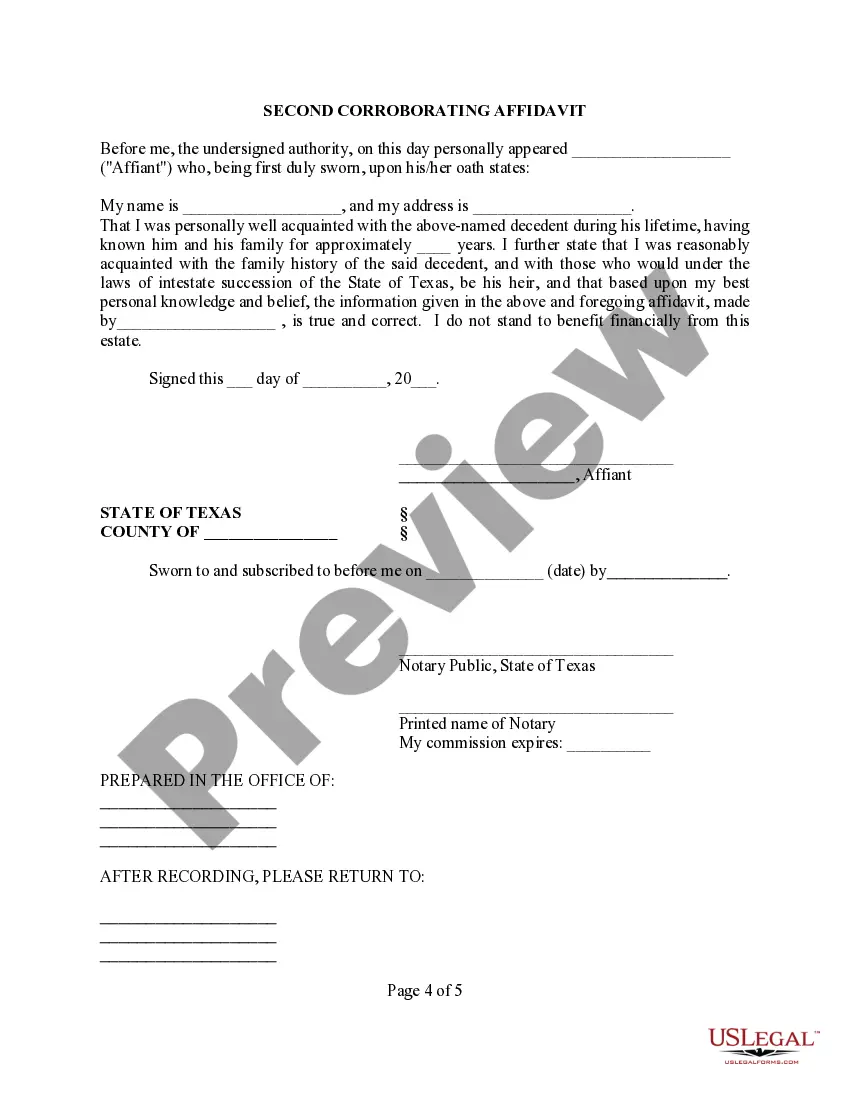
- Leaving out corroborating affidavits when required to validate the information.
- Not having the form notarized, which can invalidate the affidavit.
- Providing inaccurate or incomplete addresses for heirs or the deceased.
Key takeaways
- The affidavit confirms the identity of heirs and is necessary for probating an estate.
- Accurate completion is critical to avoid delays or disputes in estate administration.
- Notarization is required for the affidavit to be legally accepted.
- This form is specifically designed for use in Texas, aligning with state laws.
Looking for another form?

Form popularity
FAQ
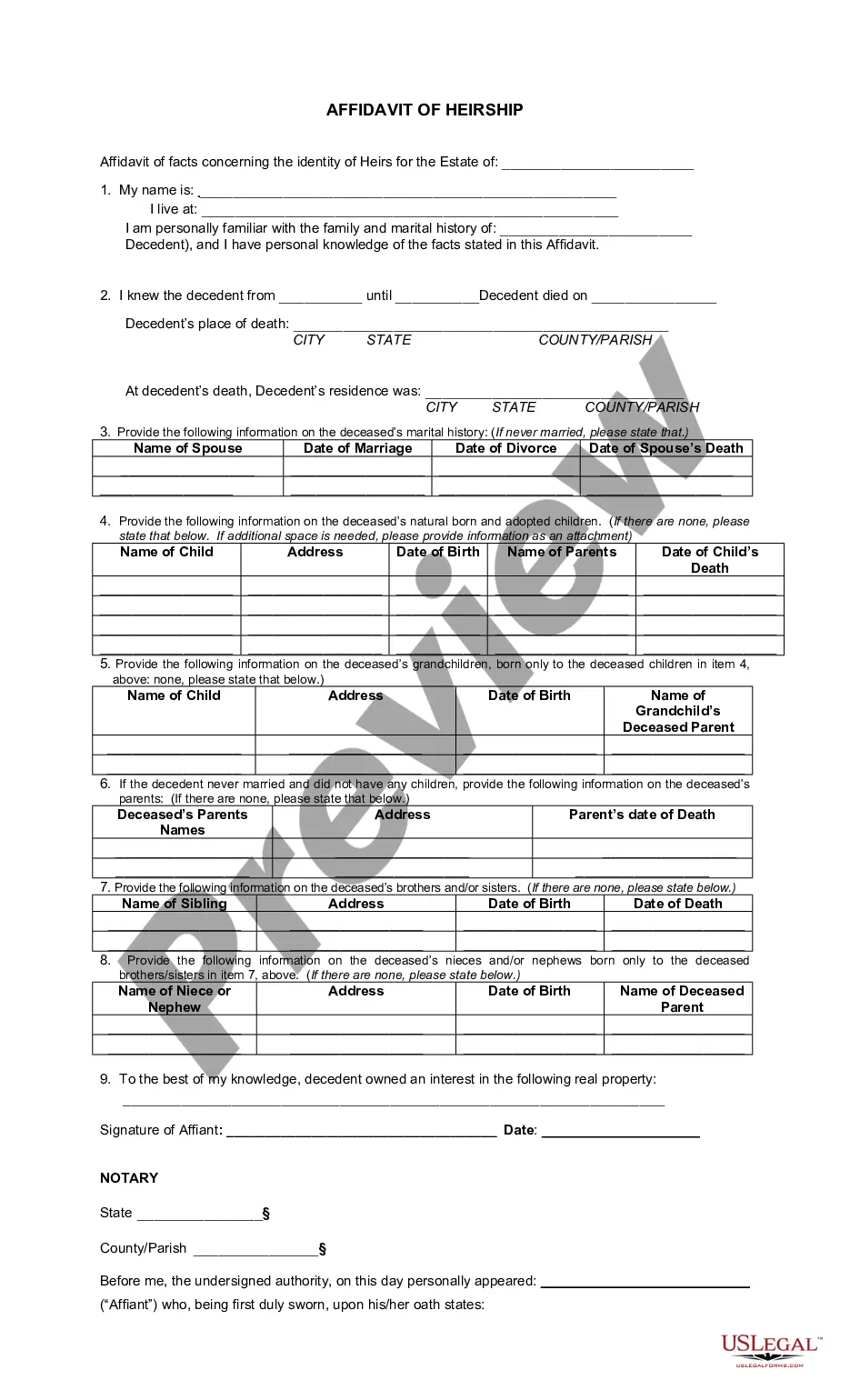
A properly prepared Texas Affidavit of Heirship must provide the following information: The deceased owner's full name, last address, date of birth and date and place of death. It should list all real estate owned by the deceased owner.
An affidavit of heirship is a document that can be used in some states to transfer ownership of property left by a deceased person to their family. This allows for property to be inherited without a will or a court proceeding.
An Affidavit of Heirship is a sworn statement, which lists all the decedent's known family members at the time of the decedent's death, and how they are related to the decedent.
In this situation, an heir can simply file what is called an affidavit of heirship with the court. You may find this form on your state court website or through the court clerk's office, or you may need to have an attorney or legal services firm create one for you.
Requirements for Affidavit of Heirships in Texas The affiant must be a person with personal knowledge of the family and marital history of the decedent. The affidavit must include the name and address of the affiant.
An affidavit is a sworn statement put in writing. When you use an affidavit, you're claiming that the information within the document is true and correct to the best of your knowledge. Like taking an oath in court, an affidavit is only valid when you make it voluntarily and without any coercion.
An Affidavit of Self-Adjudication is a written statement under oath by a sole heir (the ?affiant?) where he declares that he is the only heir of the deceased and is adjudicating the entire inheritance to himself.
Ing to the Code, heirs at law generally starts with my spouse, then my children, then my parents, then my siblings, then my nieces and nephews, and then my cousins.