Texas Affidavit of Facts Concerning the Identity of Heirs
About this form
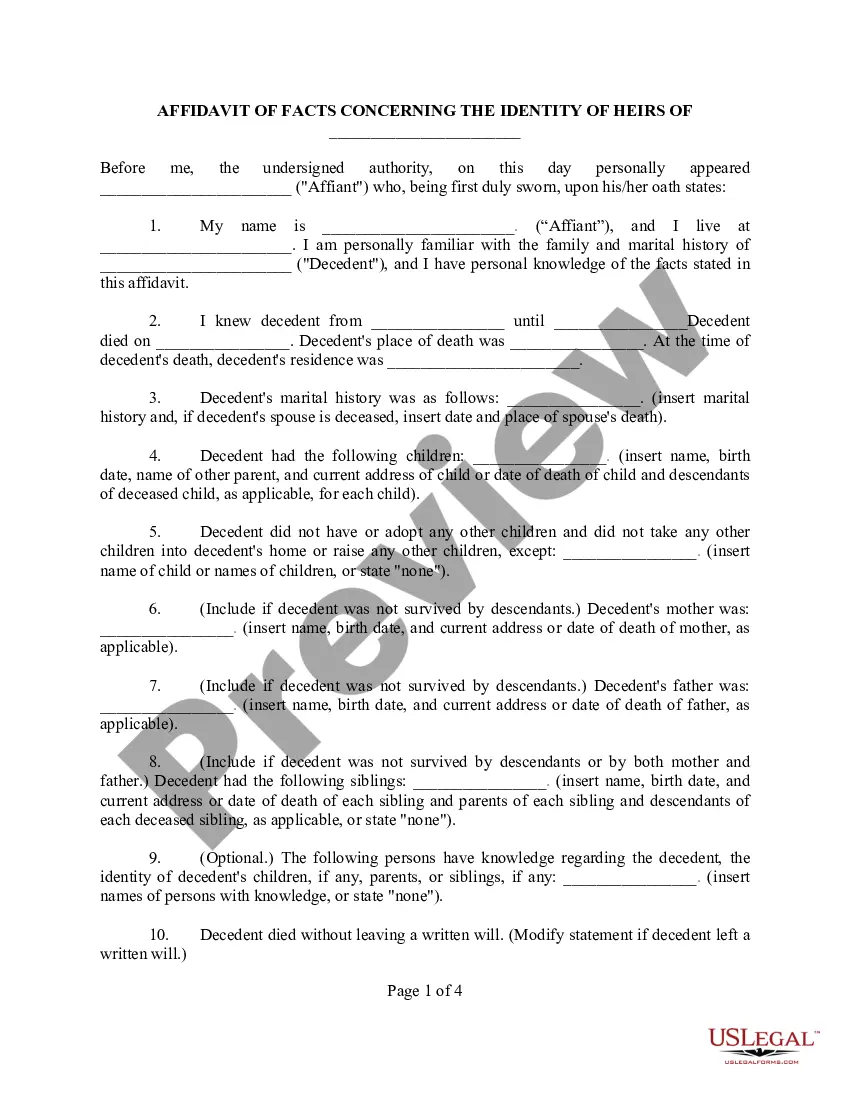
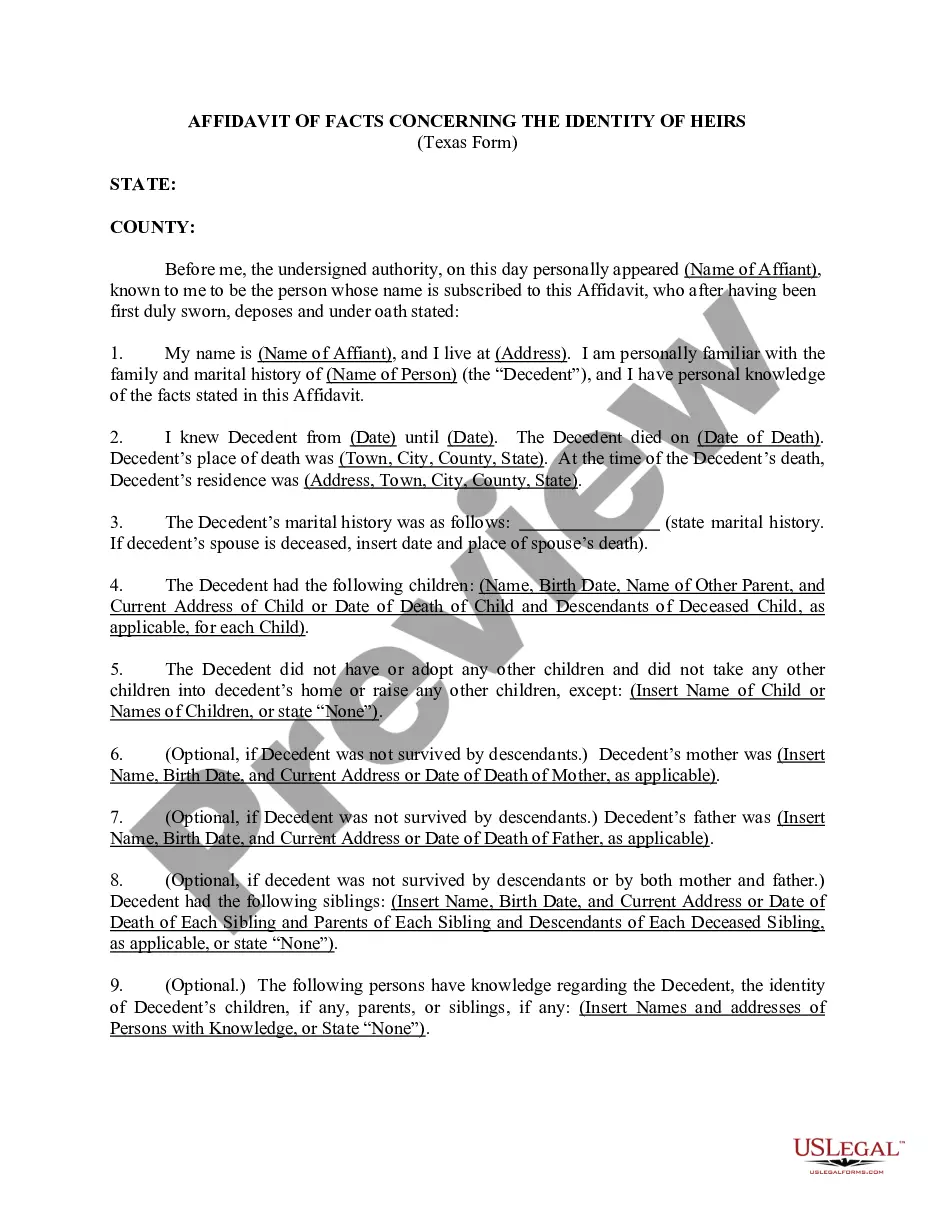
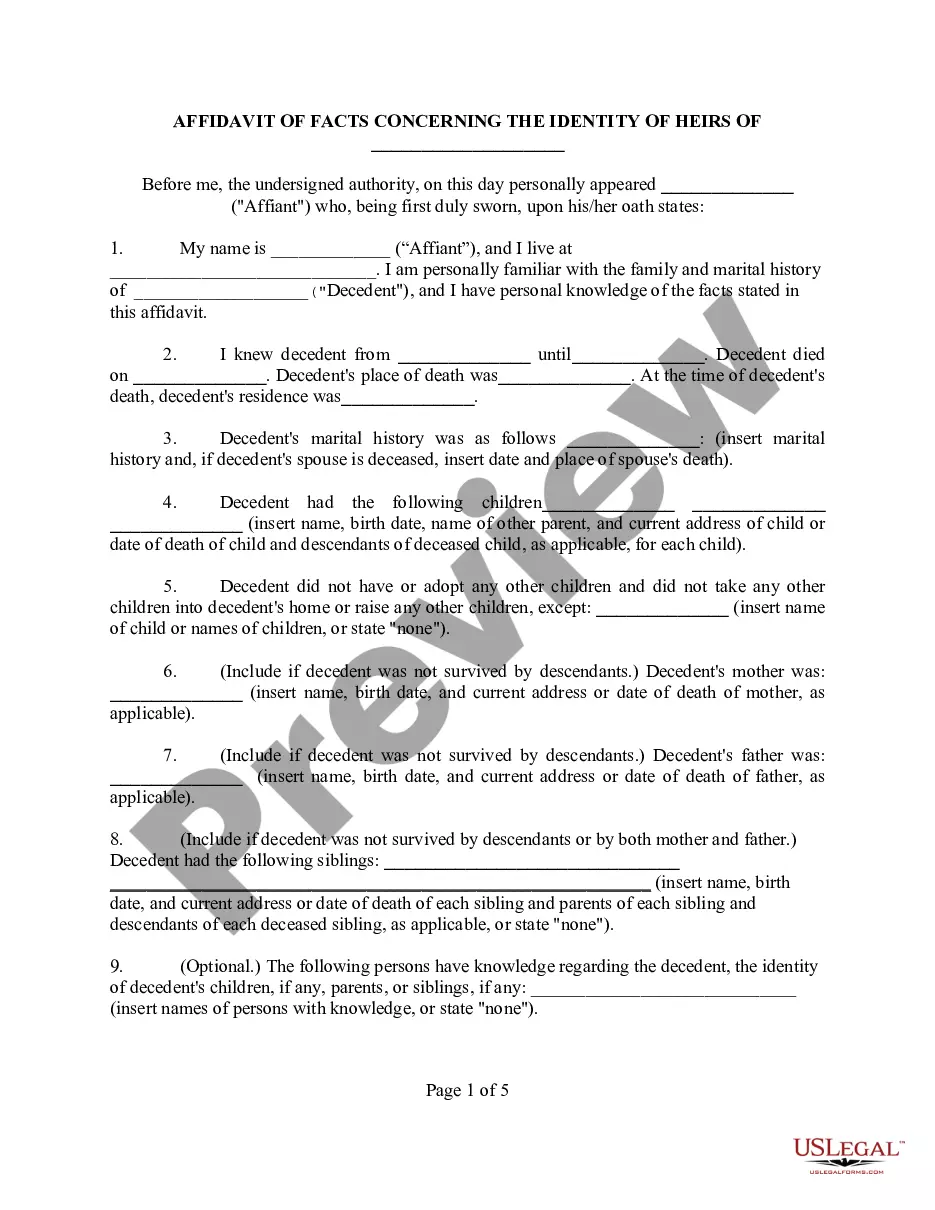
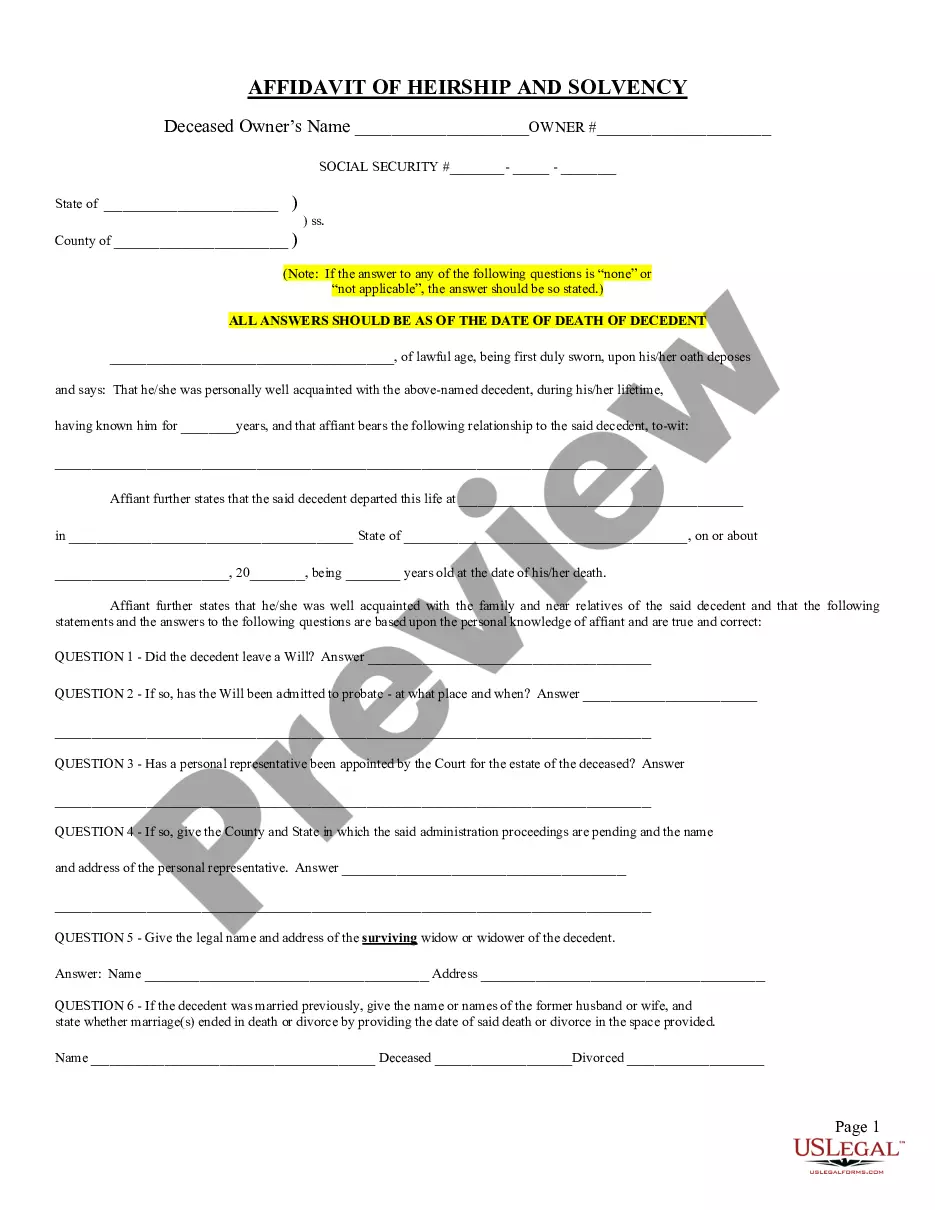
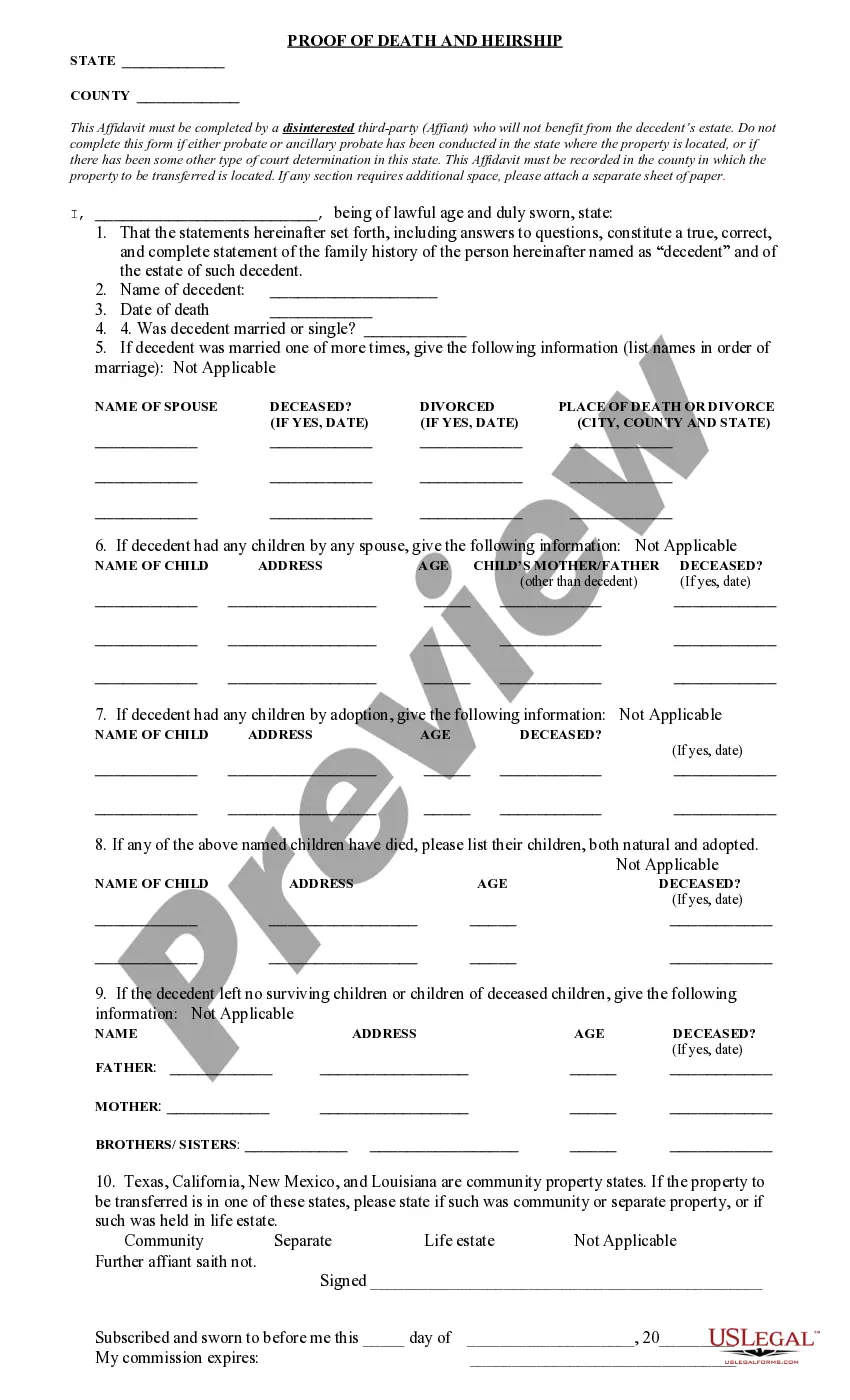
The Affidavit of Facts Concerning the Identity of Heirs is a legal document used to establish and verify the identities of individuals who are entitled to inherit from a deceased person. This affidavit not only lists the heirs but also includes pertinent information about the decedent's family background, marital history, and estate. It differs from other estate documents by focusing specifically on confirming the heirs' identities based on personal knowledge of the affiant, making it crucial especially in cases where no last will exists.
What’s included in this form
- A statement by the affiant confirming their personal familiarity with the decedent's family history.
- Details regarding the decedent's death, including dates and places.
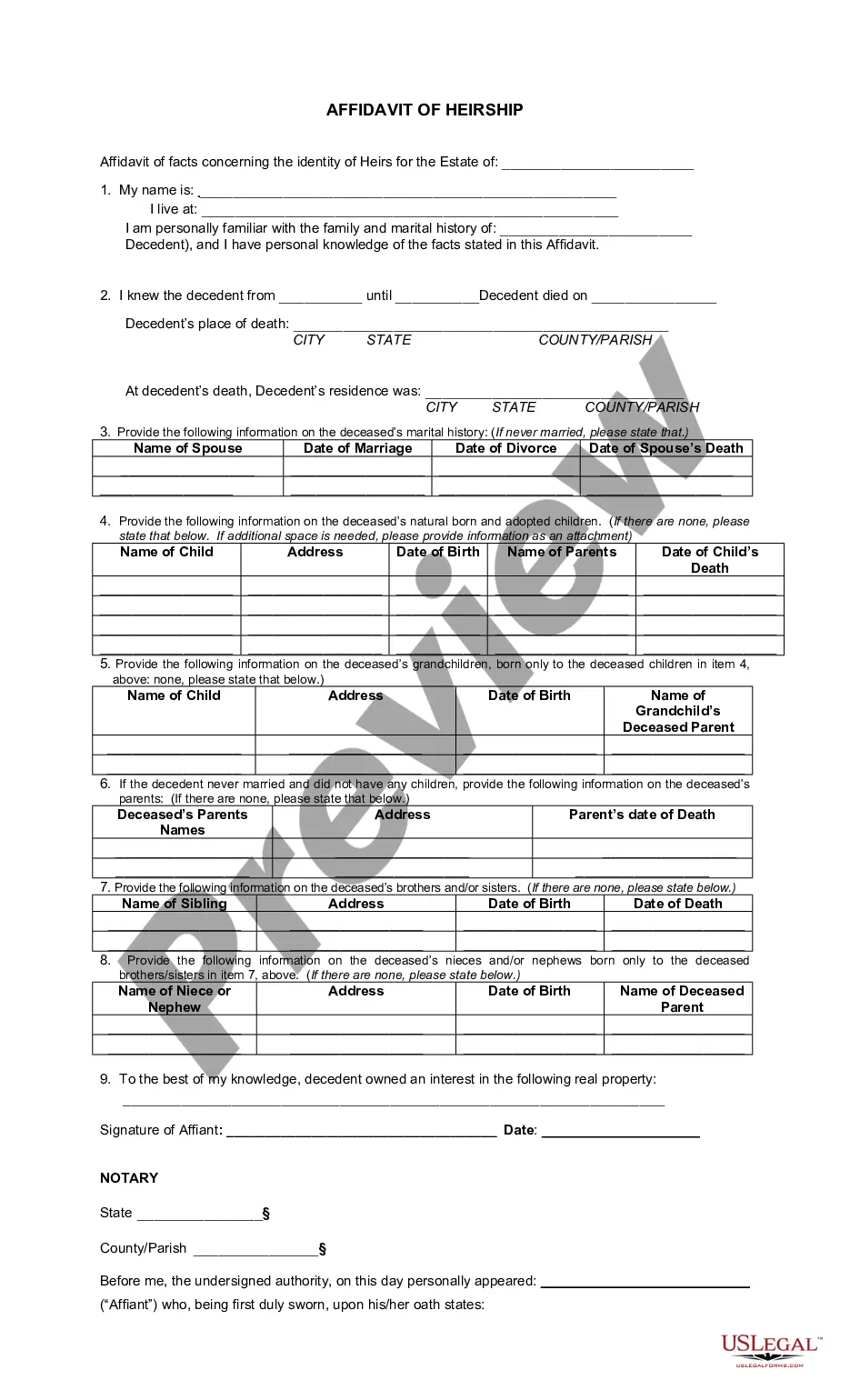
- Information on the decedent's marital history and all children, including their names and addresses.
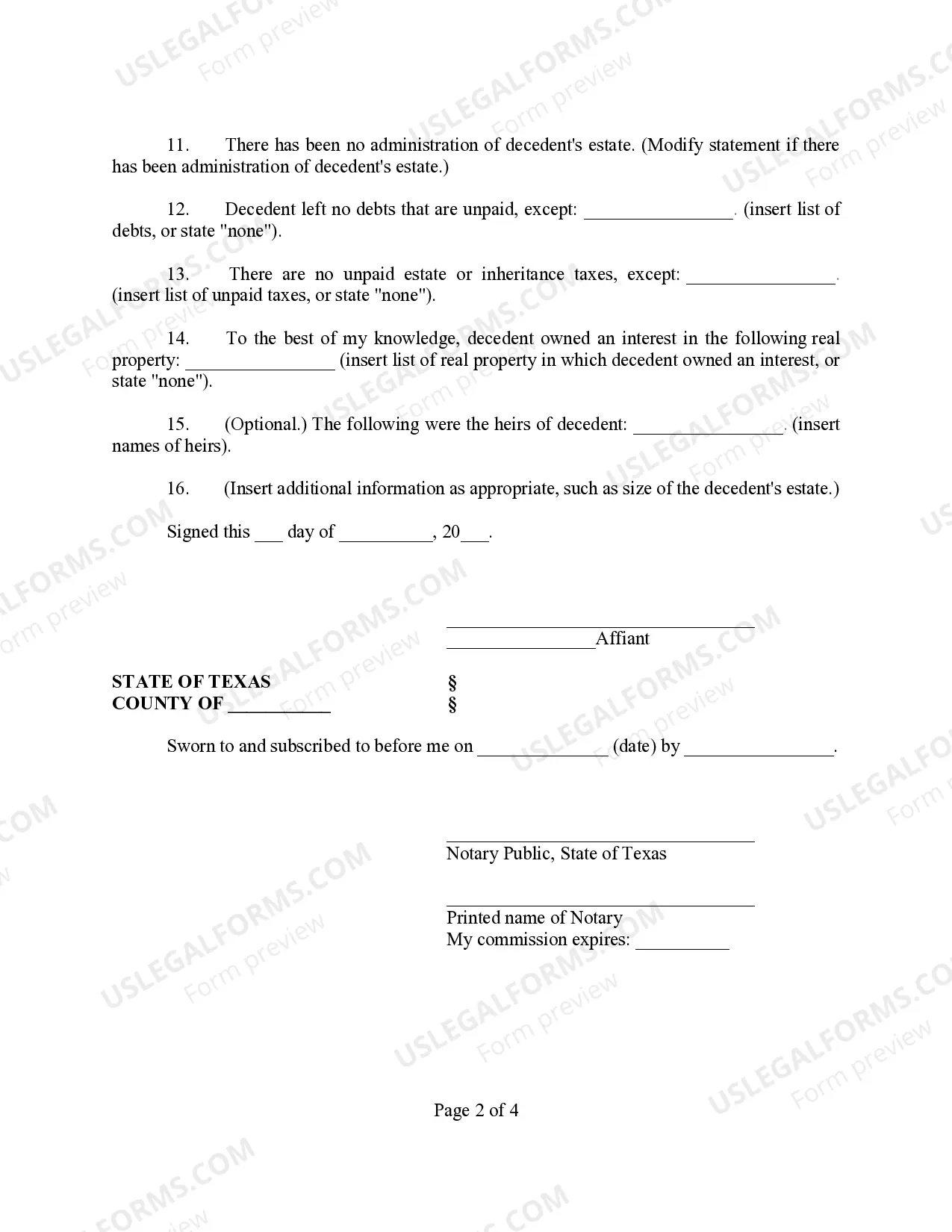
- Declarations regarding the decedent's debts and estate taxes, if any.
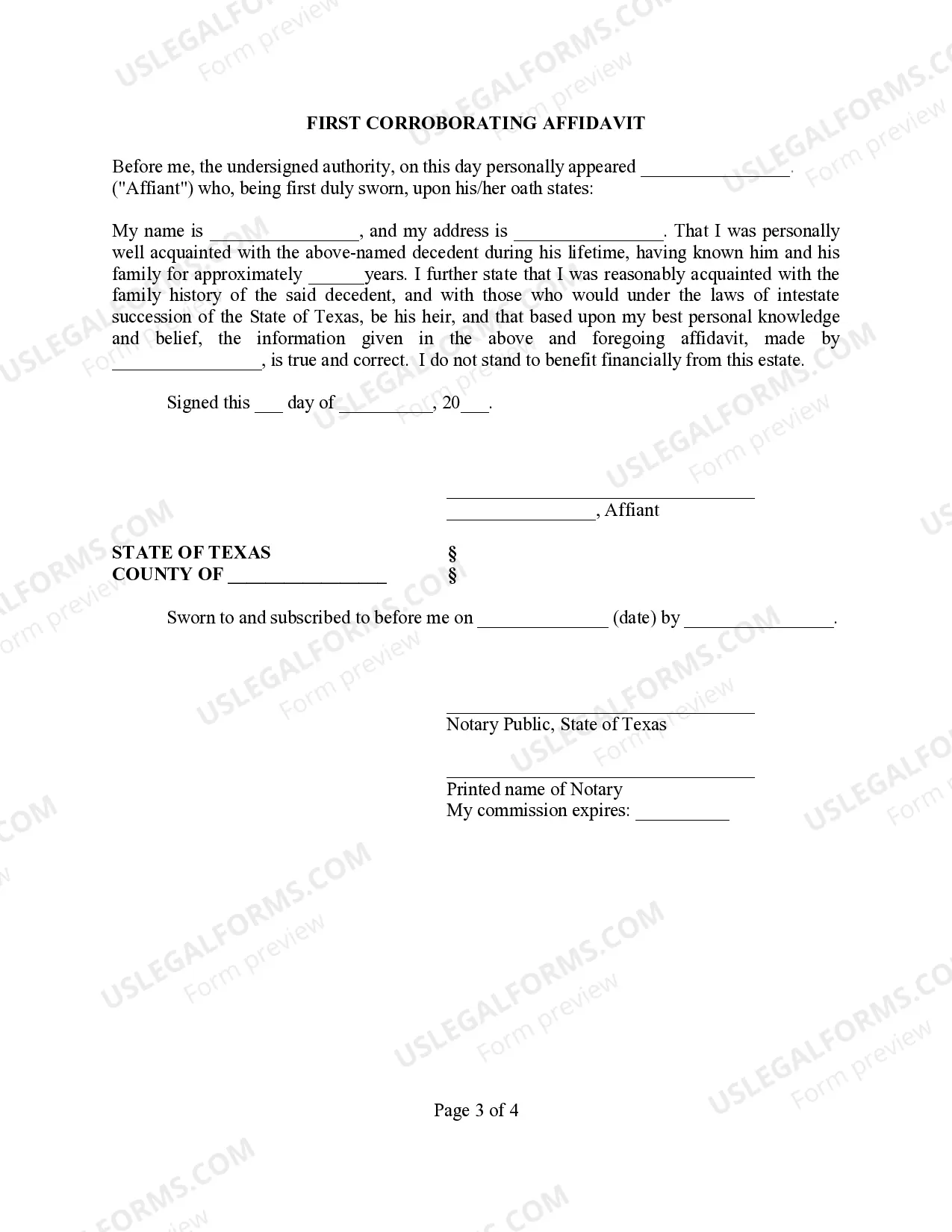
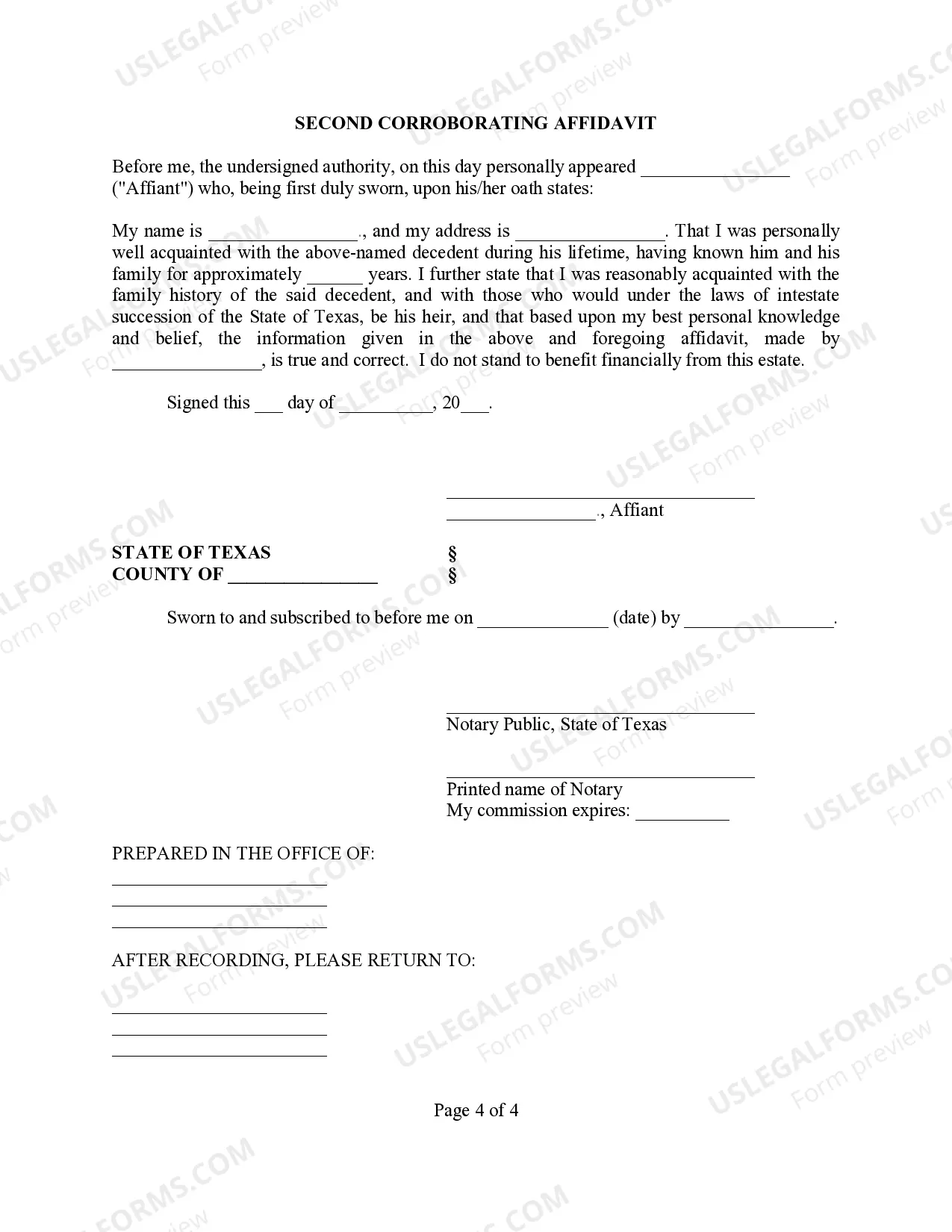
- Verification by corroborating affiants who provide additional confirmation of the information stated.
- Notarization section to validate the document legally.
Situations where this form applies
This form is typically used when an individual passes away without a will, and there is a need to identify and document the rightful heirs before the estate can be settled. It is also essential when there are disputes over inheritance, or when required by the probate court to establish the heirs in cases of intestate succession.
Who needs this form
- Individuals who are knowledgeable about the family history of a deceased person.
- Heirs or potential heirs who need to establish their claims to an estate.
- Legal representatives or executors managing an estate without an existing will.
- Corroborating witnesses who can attest to the decedent's family relationships.
Completing this form step by step
- Begin by identifying yourself as the affiant and providing your contact information.
- Document your relationship with the decedent, including important dates and details about their death.
- List the decedent's marital history and names of any children, indicating their current addresses.
- Include statements regarding any other potential heirs, debts, or estate taxes, ensuring completeness and accuracy.
- Secure notarization to validate the affidavit, ensuring all required signatures are present.
Notarization requirements for this form
Yes, this form must be notarized to be legally valid. US Legal Forms offers integrated online notarization, available 24/7, which provides secure video call options and ensures the document is legally equivalent to a traditional notarization without the need for travel.
Get your form ready online
Our built-in tools help you complete, sign, share, and store your documents in one place.
Make edits, fill in missing information, and update formatting in US Legal Forms—just like you would in MS Word.
Download a copy, print it, send it by email, or mail it via USPS—whatever works best for your next step.
Sign and collect signatures with our SignNow integration. Send to multiple recipients, set reminders, and more. Go Premium to unlock E-Sign.
If this form requires notarization, complete it online through a secure video call—no need to meet a notary in person or wait for an appointment.
We protect your documents and personal data by following strict security and privacy standards.

Make edits, fill in missing information, and update formatting in US Legal Forms—just like you would in MS Word.

Download a copy, print it, send it by email, or mail it via USPS—whatever works best for your next step.

Sign and collect signatures with our SignNow integration. Send to multiple recipients, set reminders, and more. Go Premium to unlock E-Sign.

If this form requires notarization, complete it online through a secure video call—no need to meet a notary in person or wait for an appointment.

We protect your documents and personal data by following strict security and privacy standards.
Mistakes to watch out for
- Providing incomplete information about the decedent's family or marital history.
- Failing to have the affidavit notarized, which may render it invalid.
- Not including corroborating affidavits when required to strengthen the claims.
- Overlooking previously deceased heirs or incorrect details about them.
Why complete this form online
- Access to professionally drafted templates that simplify the legal process.
- Convenient download and editing options to tailor the document to specific needs.
- Quick turnaround, eliminating the need for in-person consultations.
- Easy storage and retrieval for future reference, ensuring all legal documents are organized.
Looking for another form?
Form popularity
FAQ
Ing to the Code, heirs at law generally starts with my spouse, then my children, then my parents, then my siblings, then my nieces and nephews, and then my cousins.
A properly prepared Texas Affidavit of Heirship must provide the following information: The deceased owner's full name, last address, date of birth and date and place of death. It should list all real estate owned by the deceased owner.
Requirements for Affidavit of Heirships in Texas The affiant must be a person with personal knowledge of the family and marital history of the decedent. The affidavit must include the name and address of the affiant.
An affidavit of heirship is a document that can be used in some states to transfer ownership of property left by a deceased person to their family. This allows for property to be inherited without a will or a court proceeding.
An affidavit of heirship can be contested. This may be done by other heirs who disagree that you should receive the property or believe they should have been listed as an heir on the affidavit.
Create the affidavit of heirship. The affidavit must include specific information such as the name and address of the affiant, the decedent's name and date of death, marital history, and the names and addresses of the decedent's children and siblings. Sign the affidavit of heirship in front of a notary public.
If the deceased property owner had a Will stating who the property should be transferred to, the Will should be filed for Probate within 4 years of the date of death. The property may subsequently be transferred or sold by the Executor named in the Will ing to the wishes of the deceased owner.
A ballpark fee for preparation of the affidavit is between $750 for a very simple estate with few heirs to several thousand dollars for a more complicated estate with many heirs. The filing fees to record the affidavit in each county where the real property is located usually run about $50 to $75 in Texas.