Two or More Defendants-Rights Are Separate
What is this form?
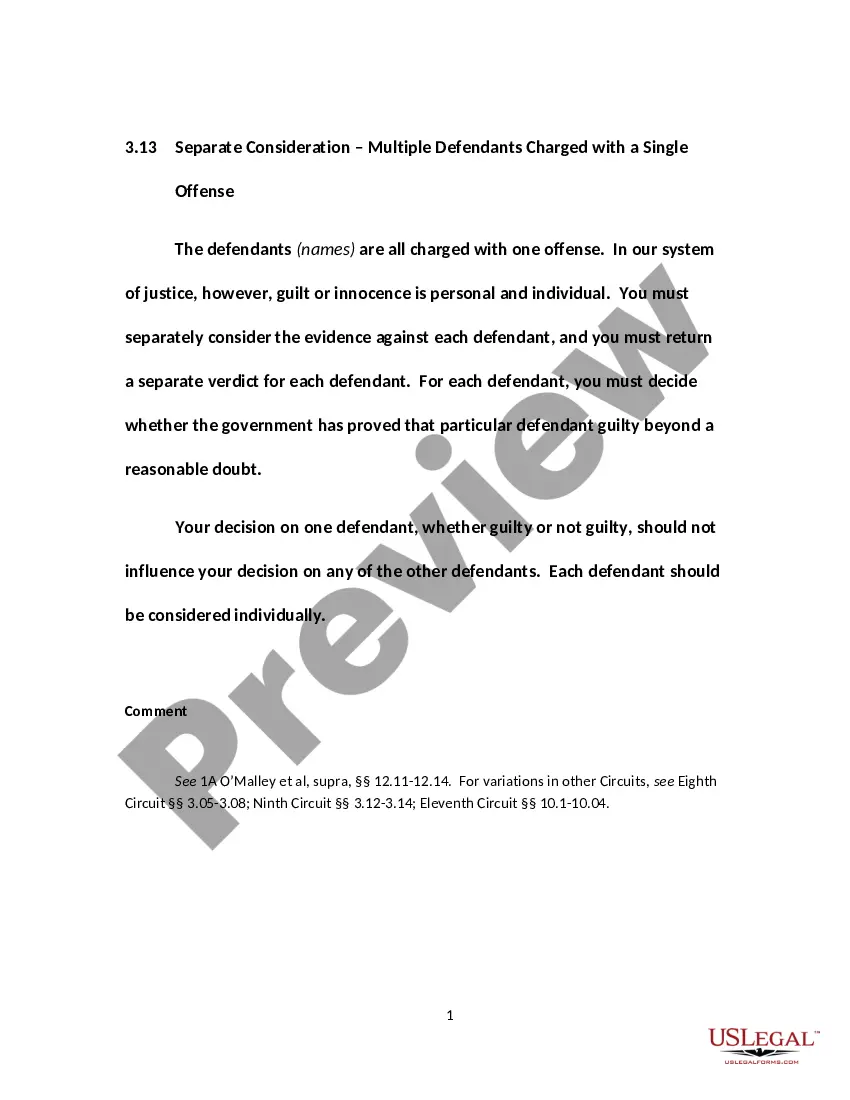
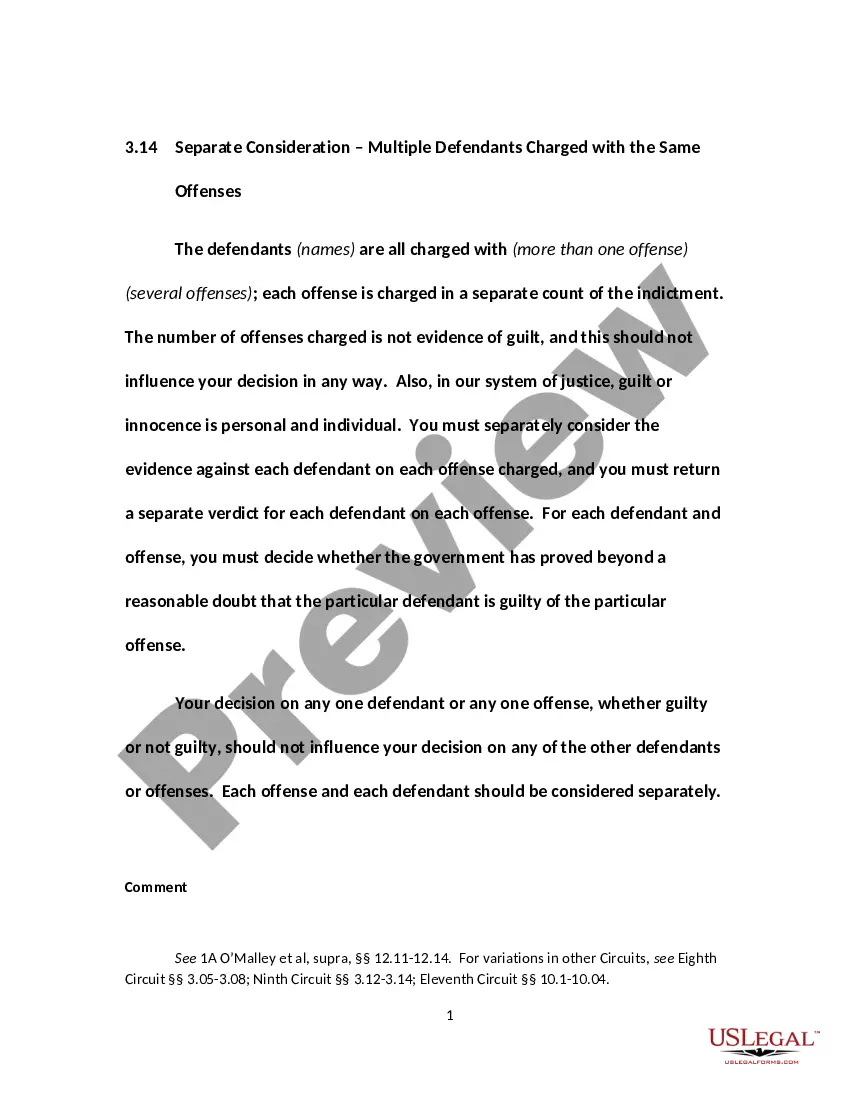
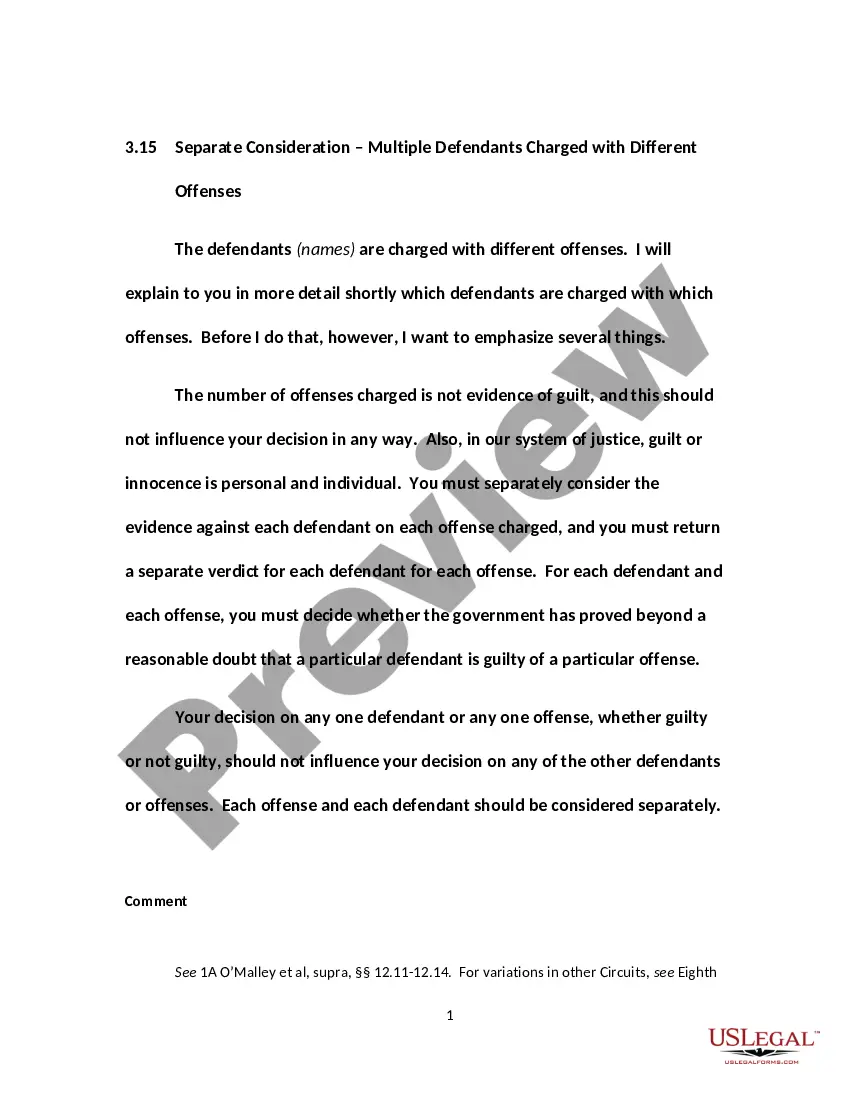
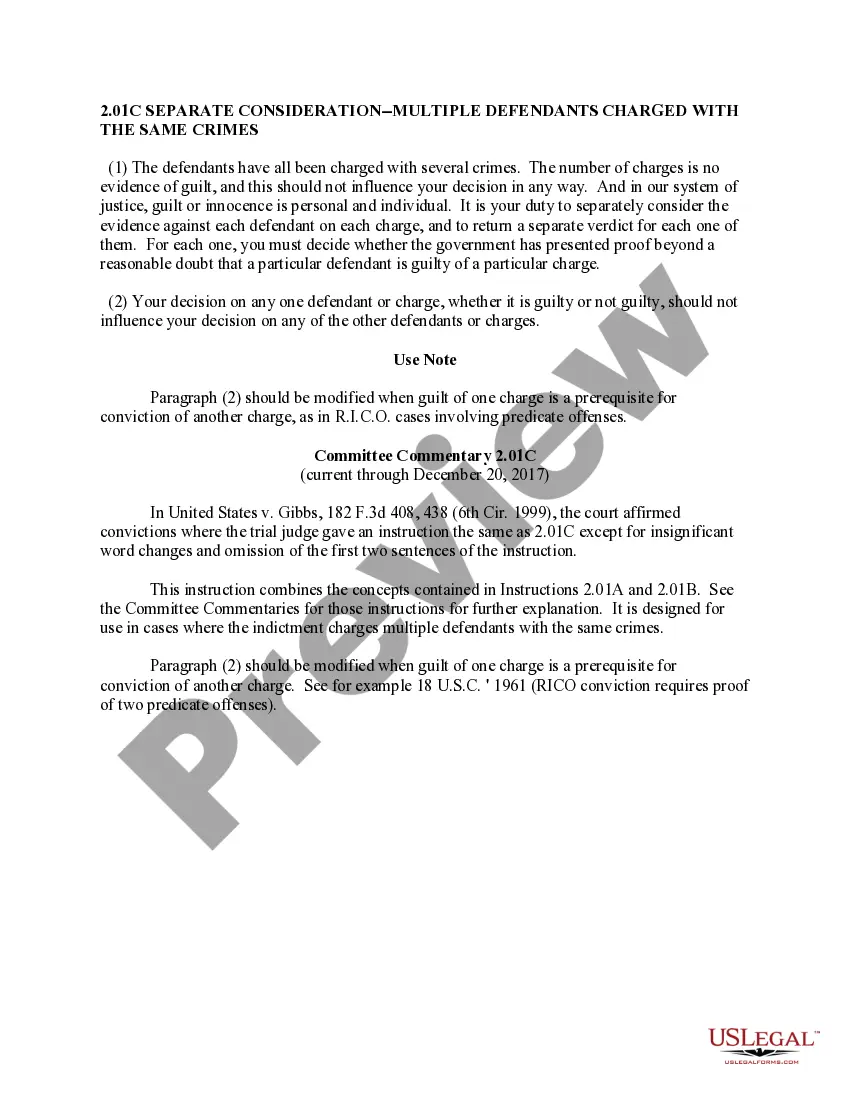
The Two or More Defendants-Rights Are Separate form is a legal document that addresses the rights and responsibilities of multiple defendants in a legal case. This form emphasizes that each defendant's rights are independent, ensuring that the actions or evidence related to one defendant do not affect the others. It is important for cases involving multiple parties to clarify these rights, differentiating it from forms that may handle joint defenses or common legal strategies.
Key parts of this document
- Section outlining the individual rights of each defendant
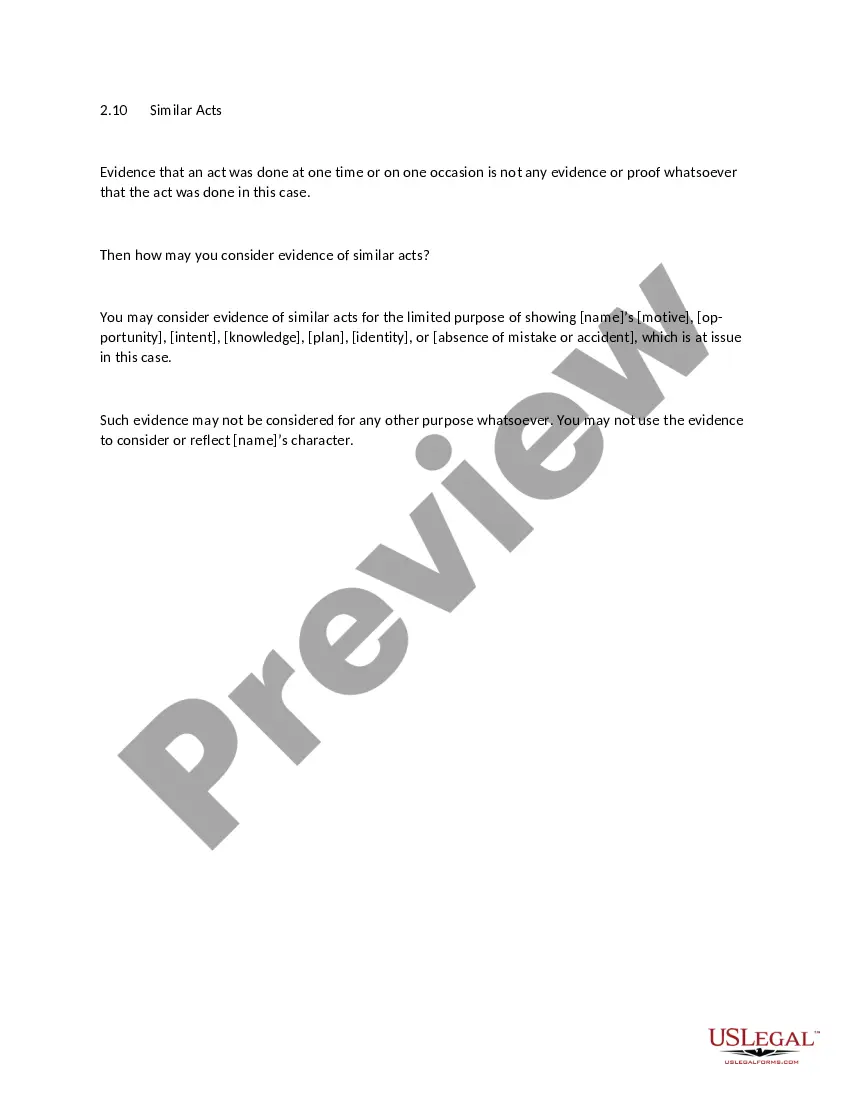
- Clauses addressing the admissibility of evidence related to similar acts
- Definitions of terms such as motive, intent, and opportunity
- Instructions on how to consider evidence without infringing on the rights of other defendants

When this form is needed
This form is used in legal situations where two or more defendants are involved in a case but have distinct rights and defenses. It is particularly relevant in criminal law cases, civil disputes, or any legal context where multiple parties may be implicated. Using this form helps clarify the legal standing of each defendant, ensuring that evidence or actions taken against one do not prejudice the others.
Who should use this form
- Attorneys representing defendants in multi-party legal cases
- Defendants who want to affirm their individual rights in court
- Legal teams in cases with potential conflicts between co-defendants
How to complete this form
- Identify all parties involved in the case and list the defendants clearly.
- Indicate the nature of the claims or charges against each defendant.
- Provide details that support each defendant's individual rights and any evidence relevant to their cases.
- Sign and date the form where required, ensuring all parties are aware of their rights.
- Review the completed document for accuracy before submission.
Notarization guidance
This form does not typically require notarization unless specified by local law. However, it's advisable to check the local regulations to ensure compliance with any specific requirements.
Get your form ready online
Our built-in tools help you complete, sign, share, and store your documents in one place.
Make edits, fill in missing information, and update formatting in US Legal Forms—just like you would in MS Word.
Download a copy, print it, send it by email, or mail it via USPS—whatever works best for your next step.
Sign and collect signatures with our SignNow integration. Send to multiple recipients, set reminders, and more. Go Premium to unlock E-Sign.
If this form requires notarization, complete it online through a secure video call—no need to meet a notary in person or wait for an appointment.
We protect your documents and personal data by following strict security and privacy standards.

Make edits, fill in missing information, and update formatting in US Legal Forms—just like you would in MS Word.

Download a copy, print it, send it by email, or mail it via USPS—whatever works best for your next step.

Sign and collect signatures with our SignNow integration. Send to multiple recipients, set reminders, and more. Go Premium to unlock E-Sign.

If this form requires notarization, complete it online through a secure video call—no need to meet a notary in person or wait for an appointment.

We protect your documents and personal data by following strict security and privacy standards.
Common mistakes to avoid
- Failing to clearly define the roles and rights of each defendant.
- Including irrelevant evidence that may confuse the individual cases.
- Not signing or dating the form, which can render it invalid.
Benefits of completing this form online
- Convenient access to professionally drafted legal templates.
- Editable forms that allow for customization to fit specific legal situations.
- Secure and reliable storage of legal documents for future reference.
Legal use & context
- Emphasizes the independence of defendants in cases involving multiple accused parties.
- Helps prevent situations where one defendant's standing may adversely affect another's case.
- Reduces the risk of misinformation being used against parties in court.
Looking for another form?





Form popularity
FAQ
The Sixth Amendment guarantees the rights of criminal defendants, including the right to a public trial without unnecessary delay, the right to a lawyer, the right to an impartial jury, and the right to know who your accusers are and the nature of the charges and evidence against you.
Yes. Generally, courts will make sure that all those involved in a drug incident will be prosecuted together. That means that you would typically find out who the co-defendants are in your case very early on. That can be important information.
A joint trial of codefendants (also known as "joinder") occurs when a judge merges the cases of two or more defendants. Joint trials happen when the issues in the defendants' cases overlap enough to make a single trial both fair and more efficient.
A judge in a criminal case may feel that it is appropriate to combine the cases of multiple defendants when their charges involve the same set of circumstances. This can help a judge streamline their calendar and resolve a case more efficiently.
When you're arrested with someone else that means you have a co-defendant. At your first appearance the judge is likely to tell you that you aren't allowed any contact with your co-defendant. That means you can't talk to one another or be around each other.
It can be difficult for an attorney to represent both codefendants competently and diligently as required. The American Bar Association advises against representing co-defendants, but there is no general law forbidding it.
It can be difficult for an attorney to represent both codefendants competently and diligently as required. The American Bar Association advises against representing co-defendants, but there is no general law forbidding it.
Criminal Cases with Co-Defendants When going through the legal process, they can either have separate trials or have them together, depending on the case.