Texas Notice of Hearing for Temporary Orders
Overview of this form
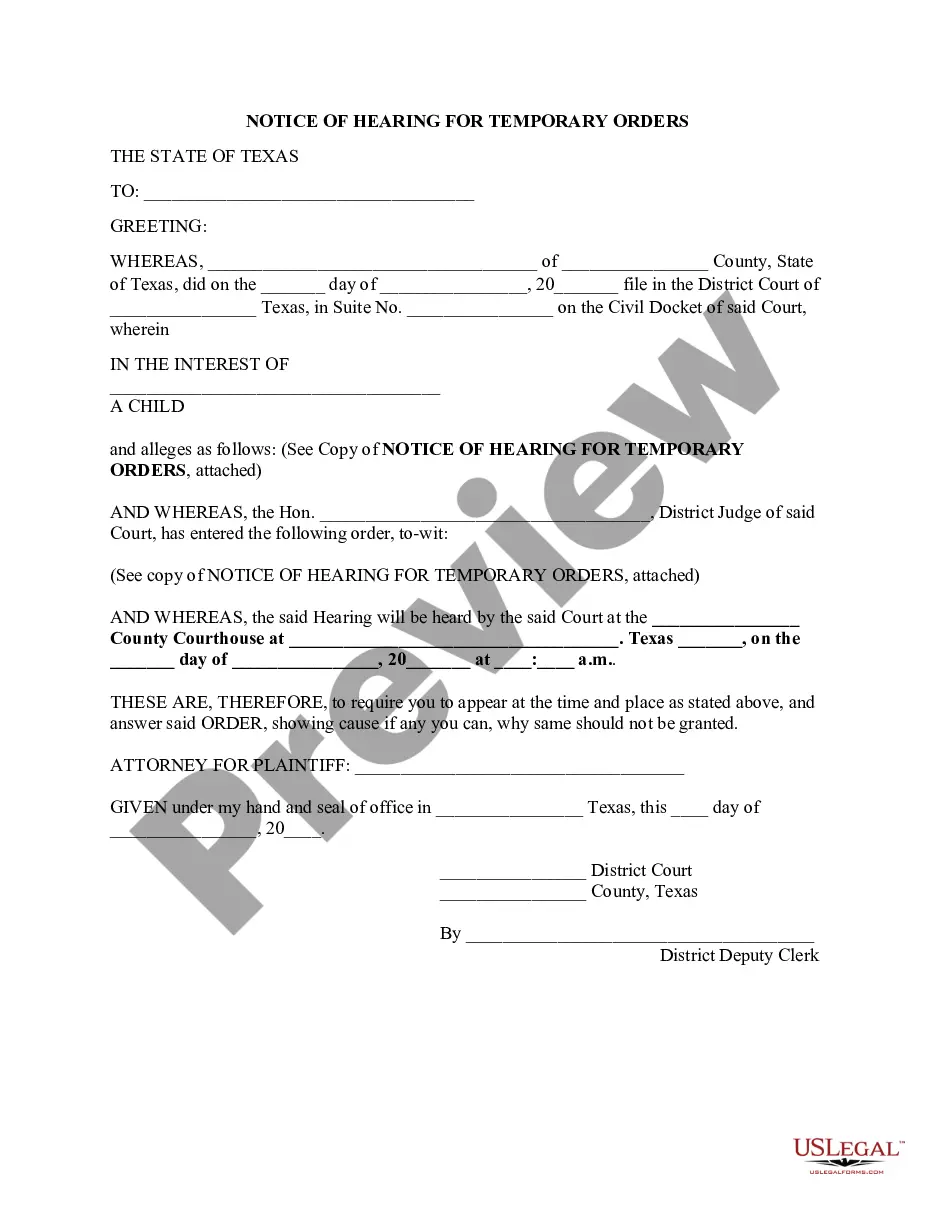
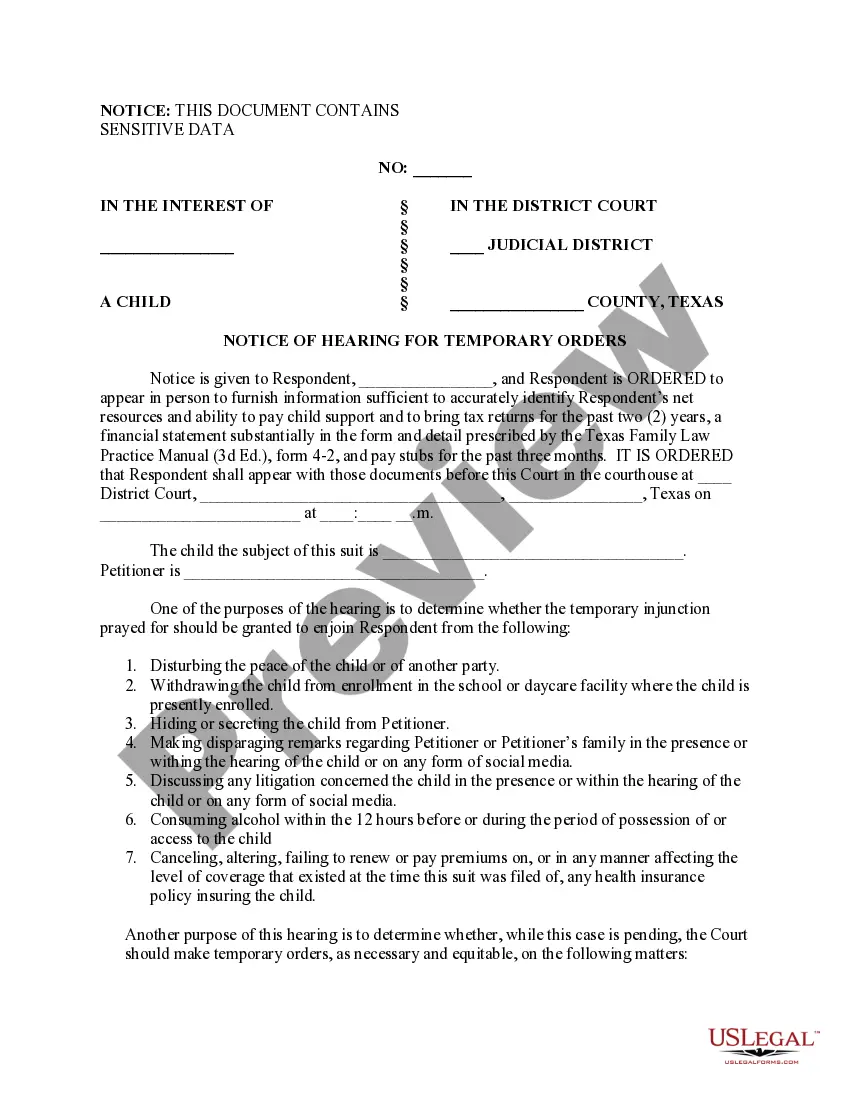
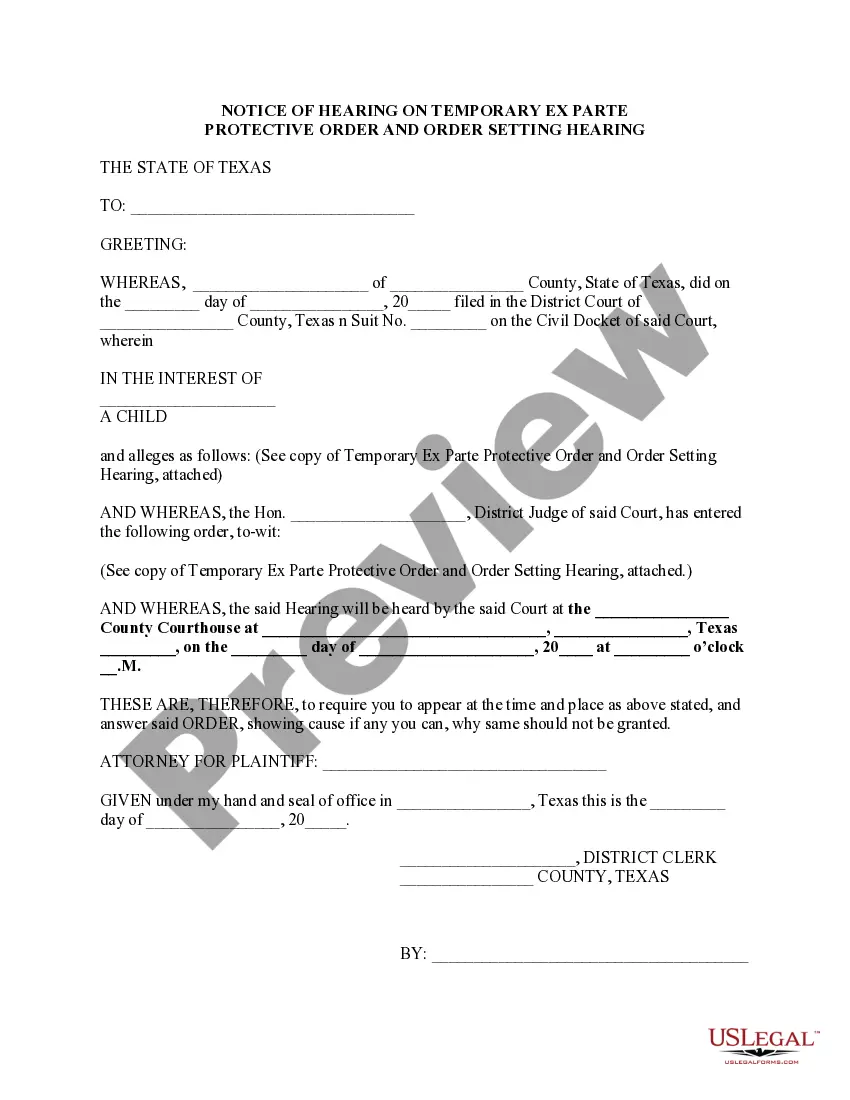
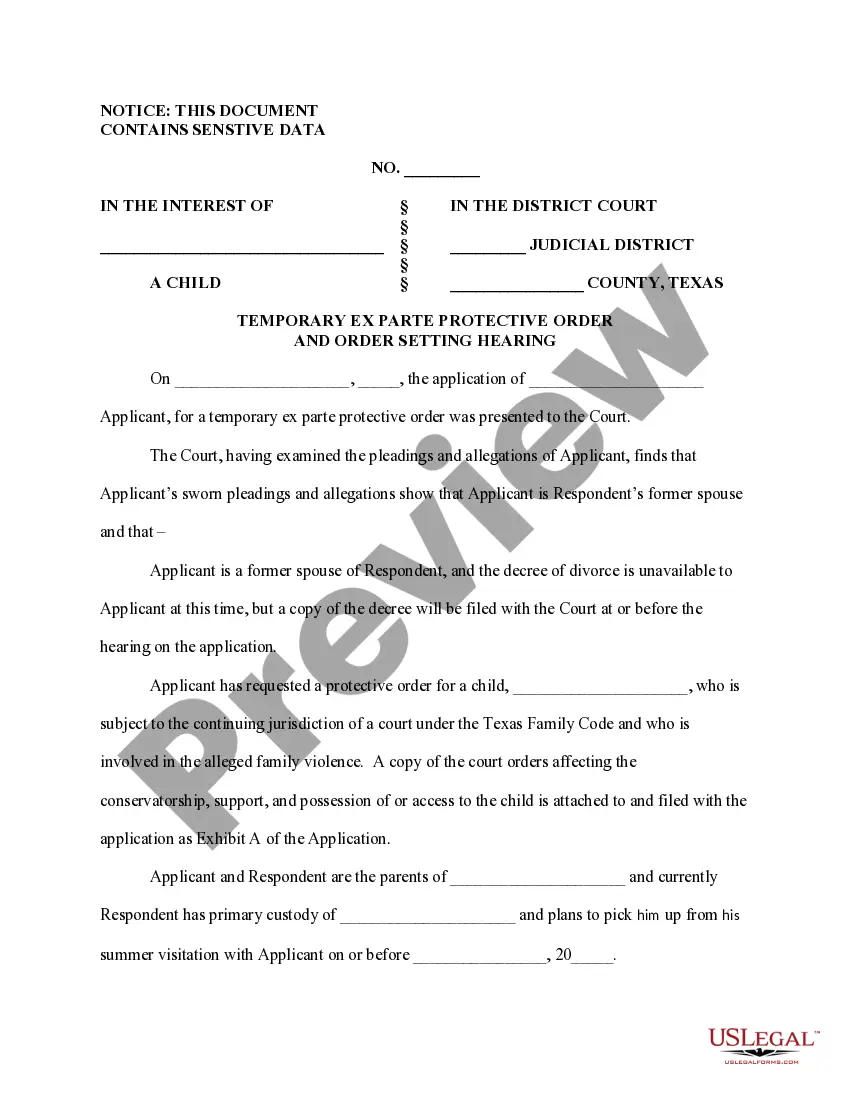
The Notice of Hearing for Temporary Orders is a legal document used in family law cases to notify the respondent of a scheduled court hearing regarding child support and other temporary issues related to a child. This form is specifically designed to ensure that the respondent attends the hearing in person to provide necessary financial information and documents, which will be used in determining child support obligations. It differs from other legal notices by specifically addressing temporary orders, which are urgent and temporary in nature while awaiting a final decision from the court.
What’s included in this form
- Notice to the respondent requiring them to appear in court.
- Details about the court, including the date, time, and location of the hearing.
- Instructions for the respondent on documents to bring, such as tax returns and financial statements.
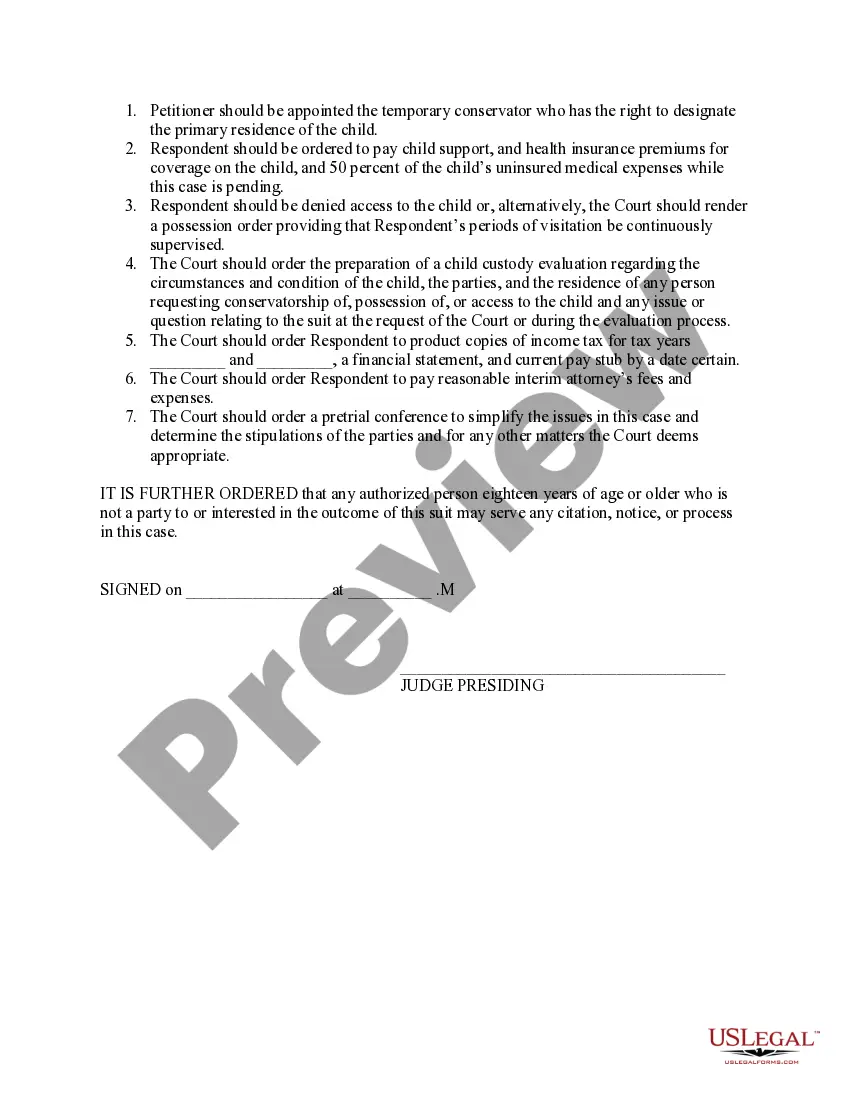
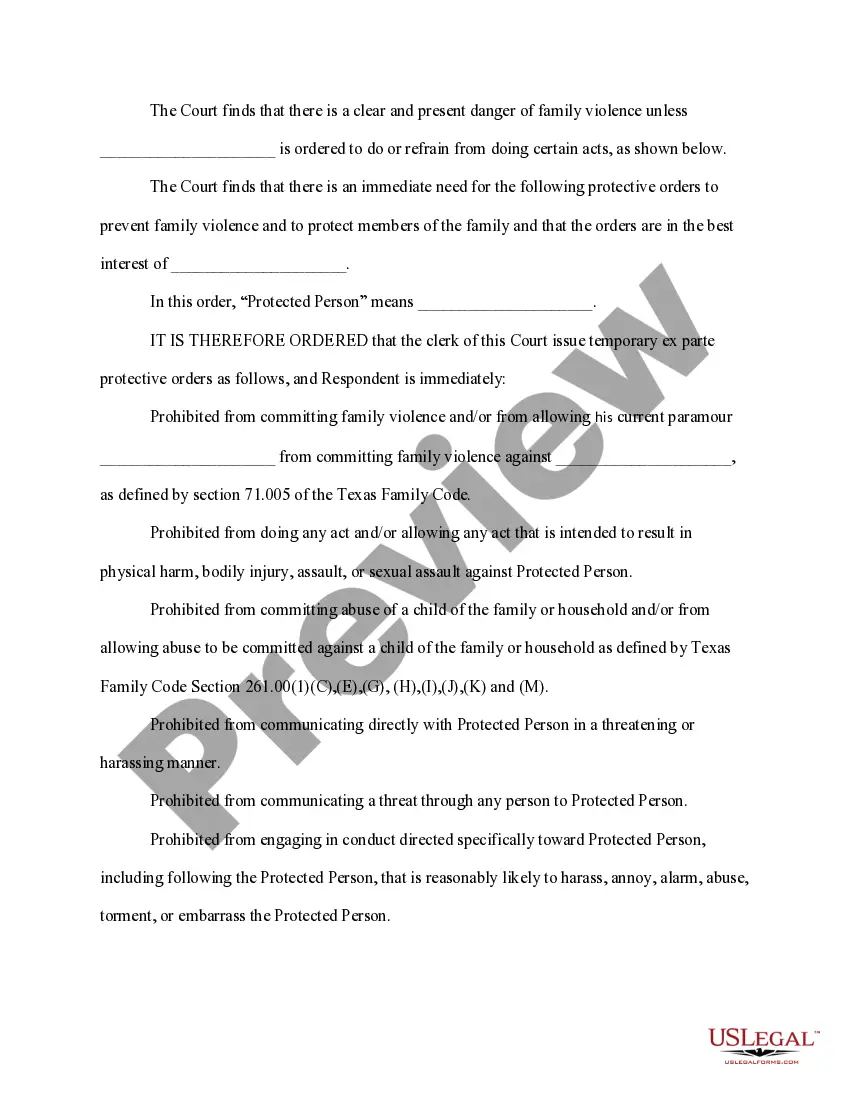
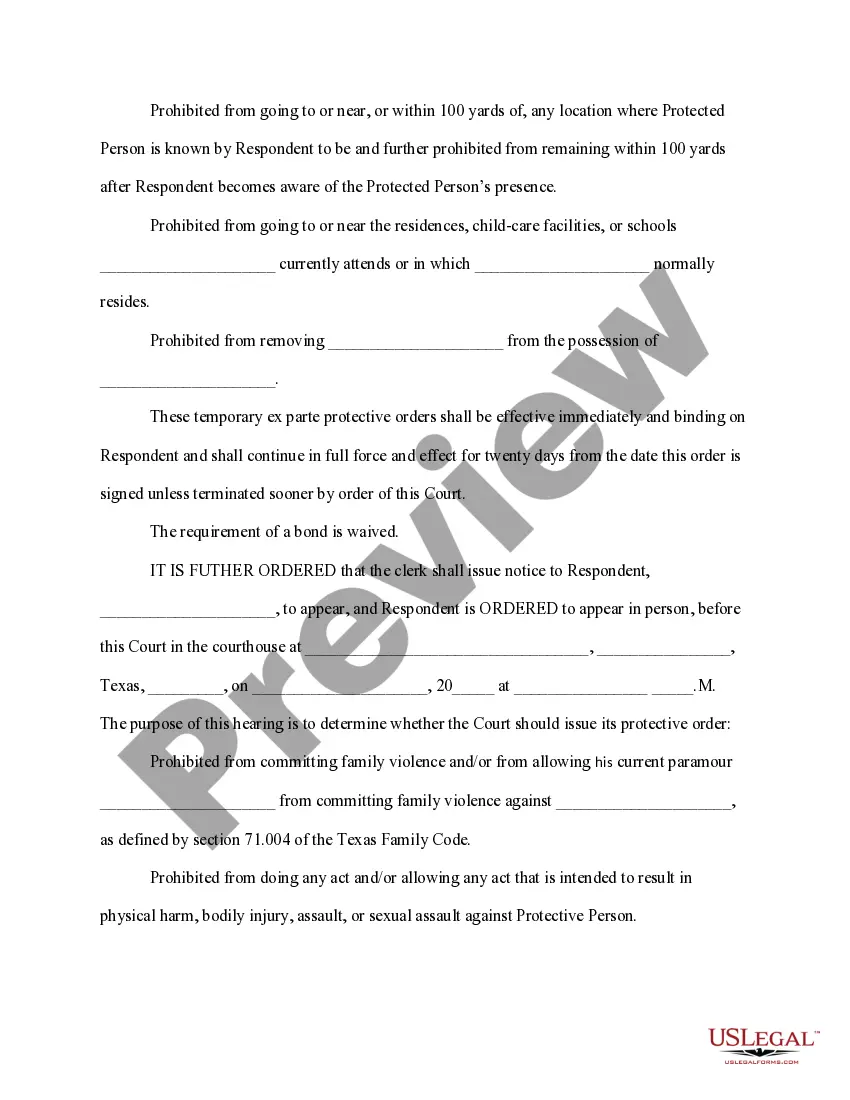
- Key issues the court will address regarding child support and related temporary orders during the hearing.
- Consequences if the respondent fails to appear at the scheduled hearing.

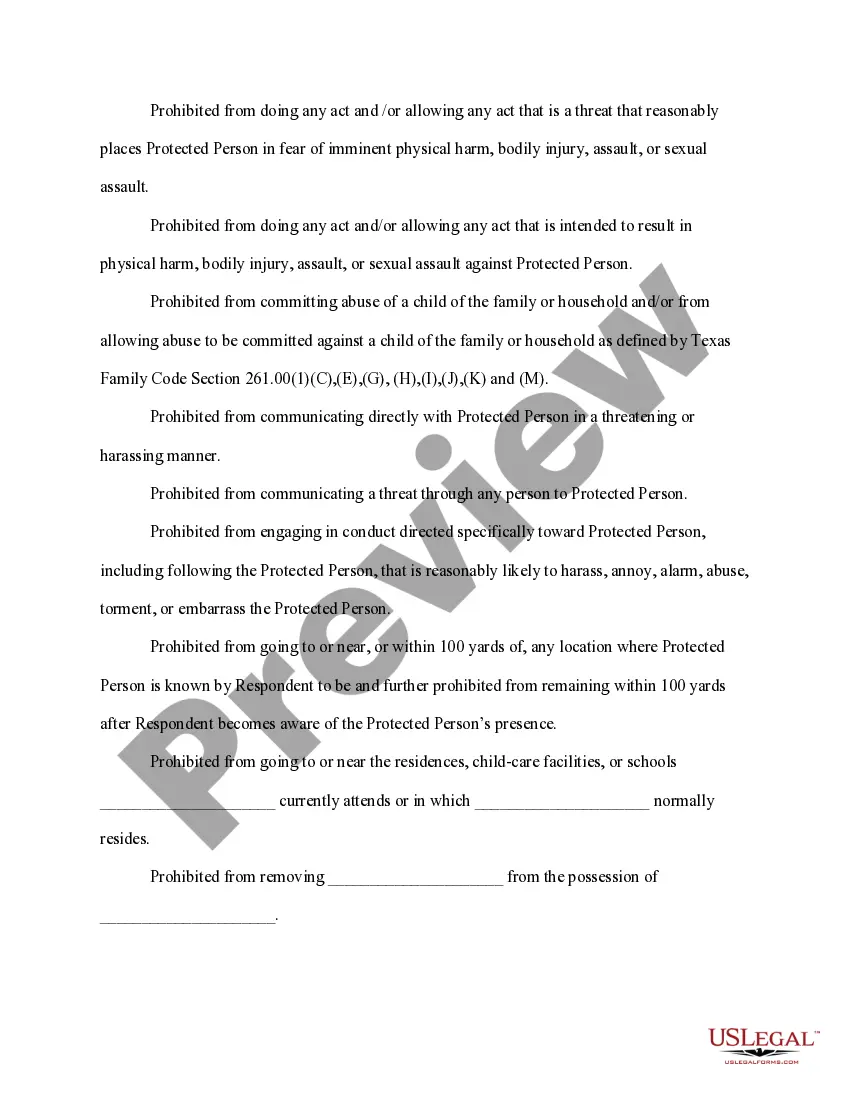
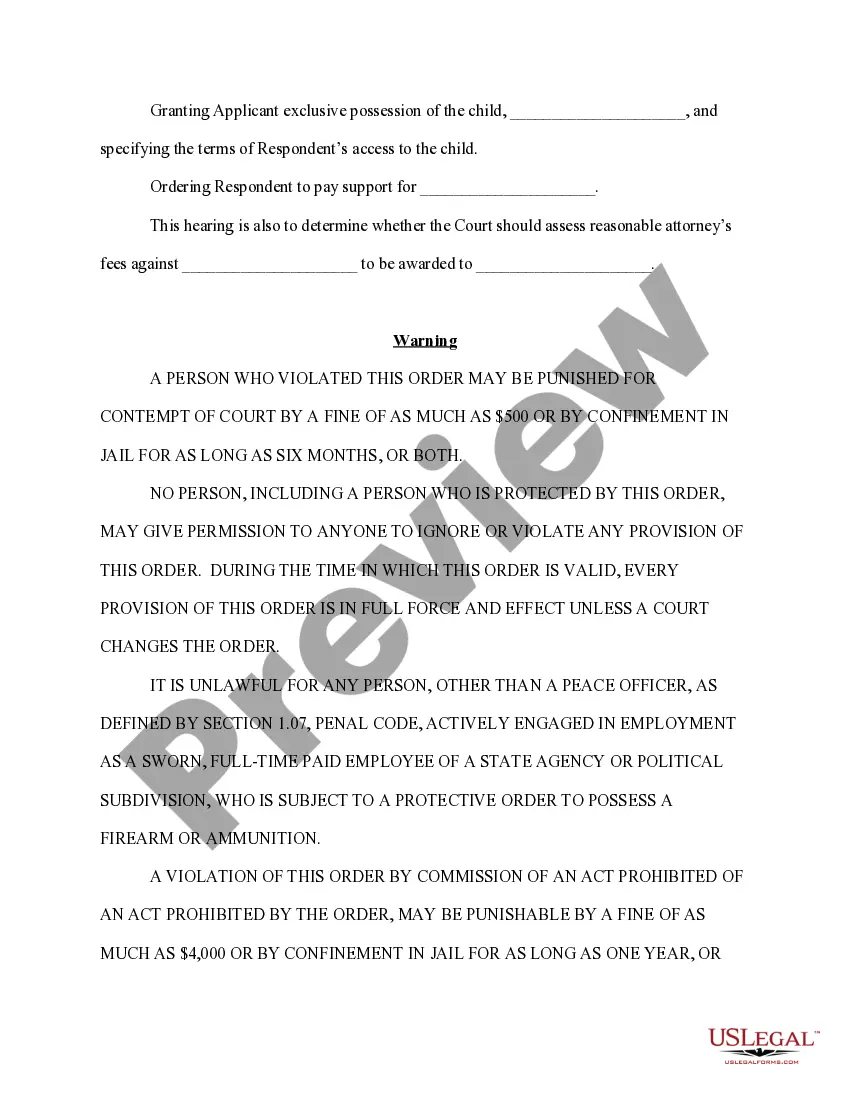

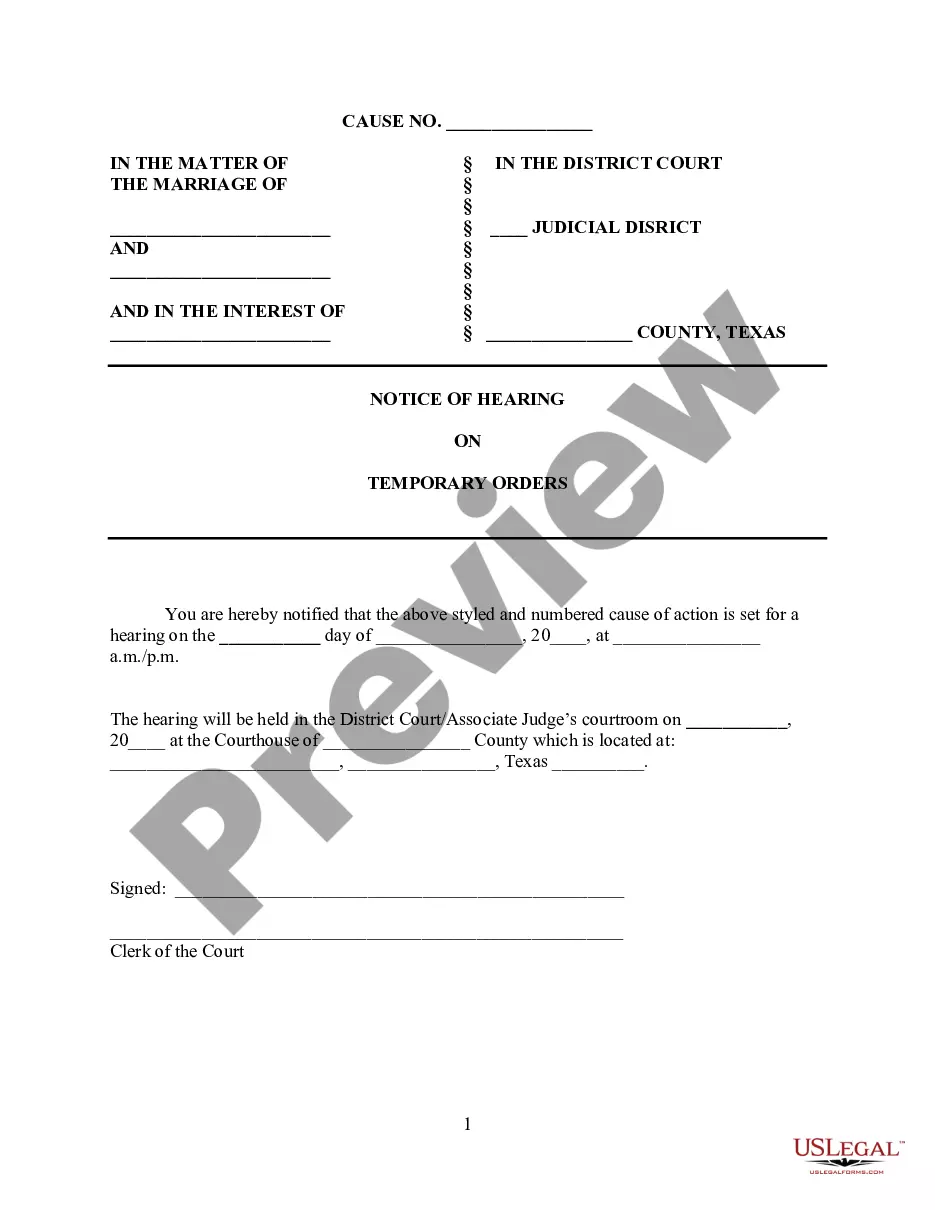
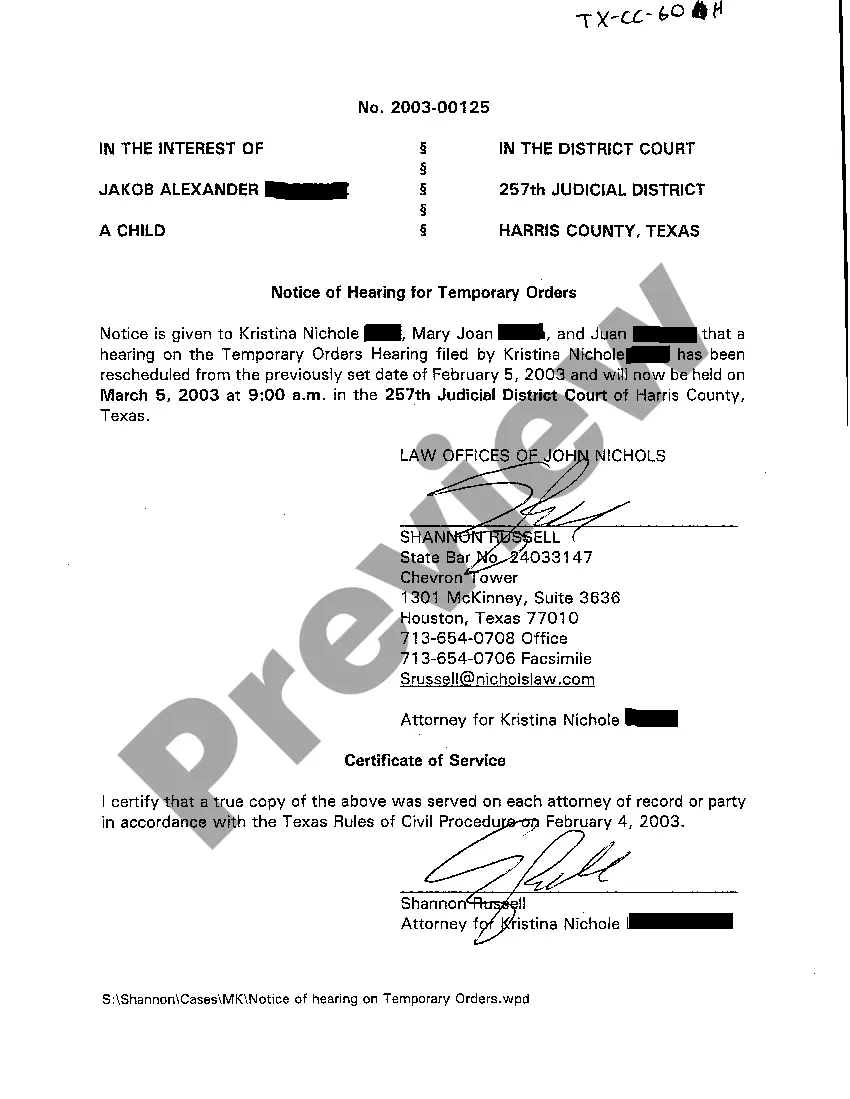
Situations where this form applies
This form should be used when a petitioner has filed for child support and needs to request temporary orders from the court. It is necessary when there is an immediate need to establish or modify child support arrangements while a case is ongoing. Use this form in situations where the financial circumstances of one or both parents must be presented to the court for urgent considerations regarding the childâs welfare.
Who needs this form
- Petitioners or plaintiffs seeking temporary child support orders during a divorce or custody case.
- Respondents who have been served with this notice and must prepare to attend the hearing.
- Attorneys representing either party in family law cases involving child support.
Completing this form step by step
- Fill in the names of the parties involved, including the respondent and childâs name.
- Provide the case number and details of the District Court where the case is filed.
- Specify the date, time, and location of the hearing.
- List the required documents the respondent must bring to the hearing.
- Ensure that the document is signed and dated by the district deputy clerk.
Does this form need to be notarized?
No, this form does not typically require notarization unless specified by local law.
Get your form ready online
Our built-in tools help you complete, sign, share, and store your documents in one place.
Make edits, fill in missing information, and update formatting in US Legal Forms—just like you would in MS Word.
Download a copy, print it, send it by email, or mail it via USPS—whatever works best for your next step.
Sign and collect signatures with our SignNow integration. Send to multiple recipients, set reminders, and more. Go Premium to unlock E-Sign.
If this form requires notarization, complete it online through a secure video call—no need to meet a notary in person or wait for an appointment.
We protect your documents and personal data by following strict security and privacy standards.

Make edits, fill in missing information, and update formatting in US Legal Forms—just like you would in MS Word.

Download a copy, print it, send it by email, or mail it via USPS—whatever works best for your next step.

Sign and collect signatures with our SignNow integration. Send to multiple recipients, set reminders, and more. Go Premium to unlock E-Sign.

If this form requires notarization, complete it online through a secure video call—no need to meet a notary in person or wait for an appointment.

We protect your documents and personal data by following strict security and privacy standards.
Mistakes to watch out for
- Failing to include all required details about the hearing, such as the date and time.
- Not providing sufficient information for the respondent to prepare for the hearing.
- Missing signatures or not notarizing the form if required.
- Submitting the form without first reviewing local court rules.
Why complete this form online
- Convenience of downloading and filling the form from home.
- Instant access to a legally valid document drafted by licensed attorneys.
- Ability to easily edit and customize the form as needed.
- Time-saving by avoiding office visits or waiting in line at a courthouse.
Legal use & context
- The notice functions as a legal requirement to ensure the respondent is aware of their obligation to appear in court.
- Failure to comply with the notice may result in a default judgment against the respondent.
- Temporary orders established using this form are enforceable until a final resolution is reached in the main custody or support case.
What to keep in mind
- The Notice of Hearing for Temporary Orders is essential for scheduling urgent child support hearings.
- Respondents must bring specific financial documentation to the hearing.
- Legal requirements may vary by state, but this form is designed for Texas use.
- Completing the form accurately is critical to avoid delays in court proceedings.
Looking for another form?

Form popularity
FAQ
Just about the absolute soonest, I would expect any family law case to get to a judge for a trial in Texas would be six months from when the case was filed. Most of the time, however, a trial would be held approximately 9 to 12 months after a divorce or child custody case is filed.
How to Win a Temporary Custody Hearing Write a detailed history about your marital relationship, which should include dates and facts that support your case. Do not forget to pick the pictures, videos and other visual aids that you will present before the court as evidence.
You'll need to prepare a motion for the temporary orders and TRO and an affidavit. In the affidavit, you should explain why you need the temporary order, specifically that the child's present circumstances will significantly impair their physical or emotional health. The affidavit must be notarized.
Temporary orders are a way to get an agreement about child custody and support in place while the process for the final order is in process. Temporary restraining orders and protective orders are emergency agreements meant to protect the safety of a child or ex-spouse.
In Texas, a TRO lasts for 14 days or until your temporary orders hearing, whichever is first. But what about after the hearing? If a set of temporary orders worked for all family members, then the court might choose to turn the temporary order into a permanent or final order to finalize the divorce.
Whether you are going through a divorce or child custody case a temporary orders hearing occurs typically within four weeks of the lawsuit having been filed.
Even though women tend to win most custody battles, getting there can be tough.
In Texas, a TRO lasts for 14 days or until your temporary orders hearing, whichever is first. But what about after the hearing? If a set of temporary orders worked for all family members, then the court might choose to turn the temporary order into a permanent or final order to finalize the divorce.