Texas Tax Indemnity and Debt Maintenance Agreement
What is this form?
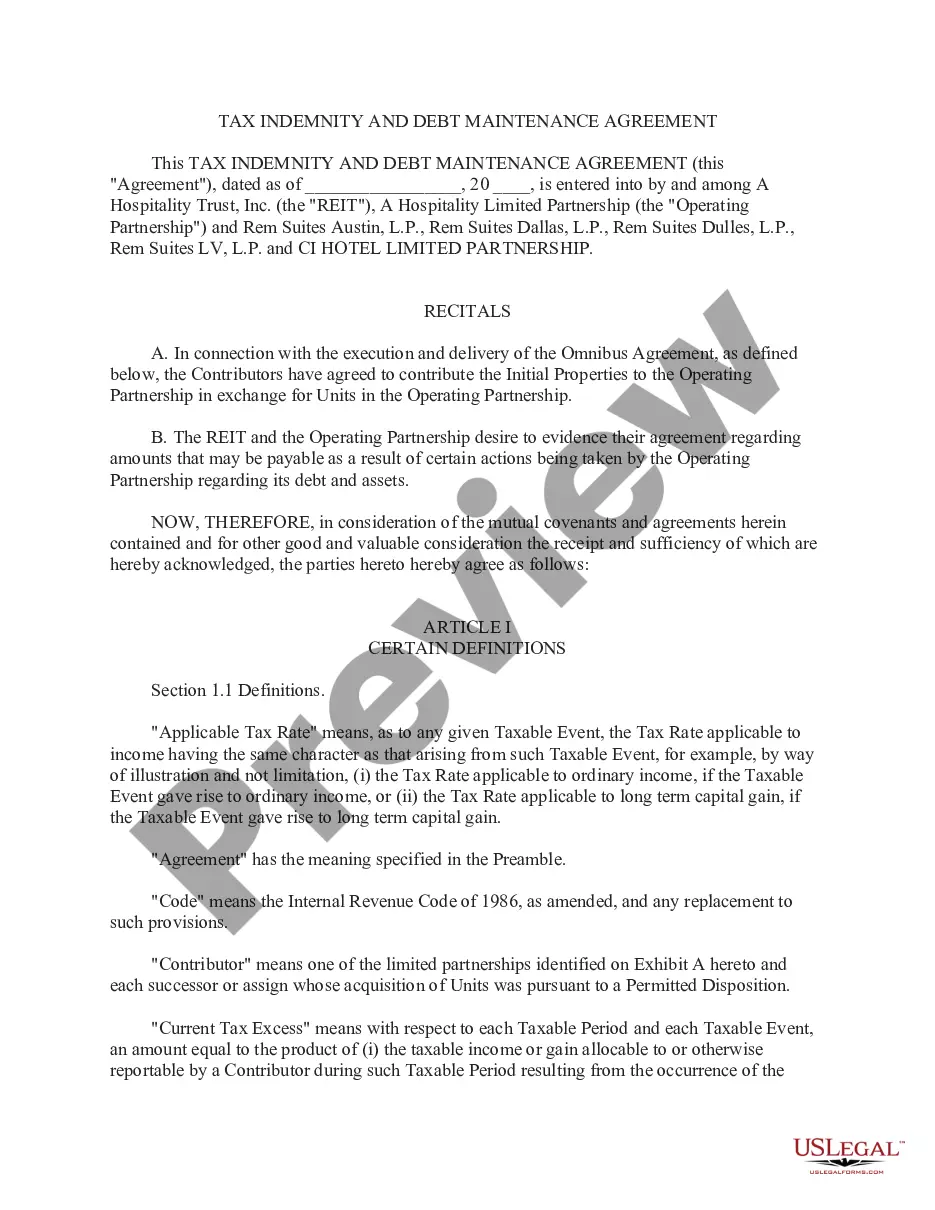
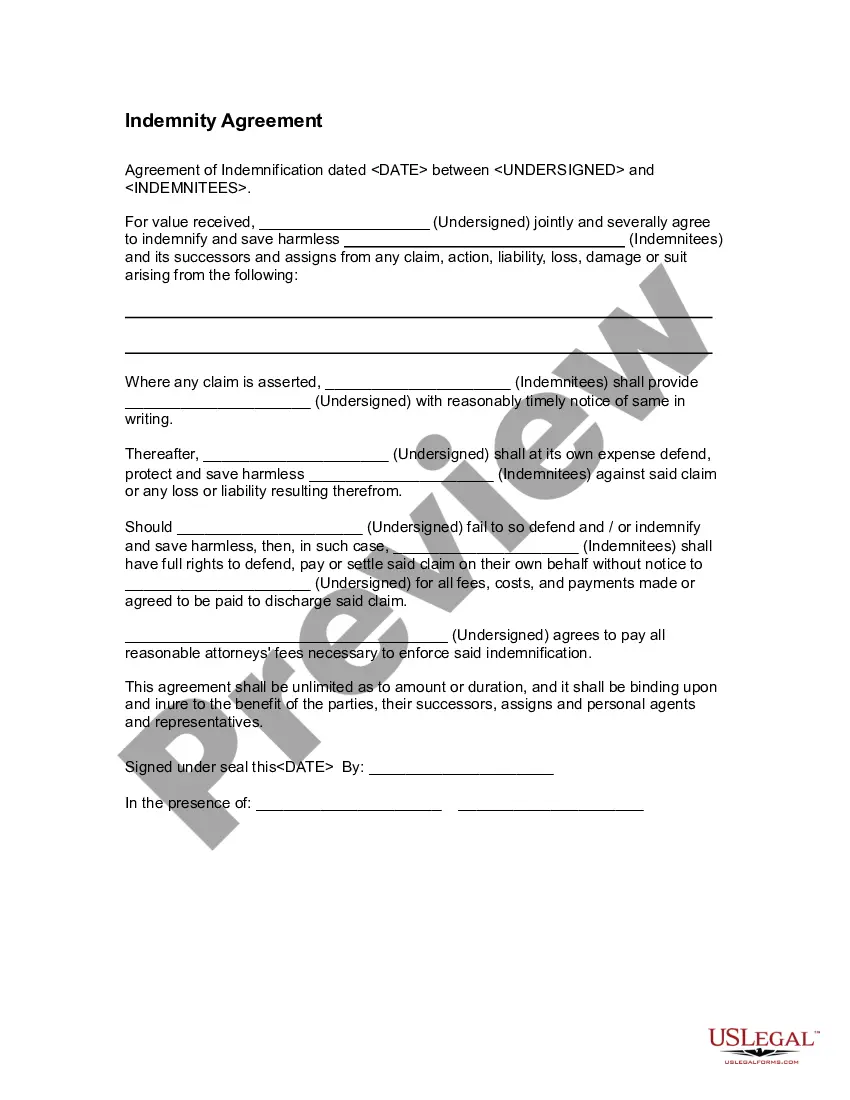
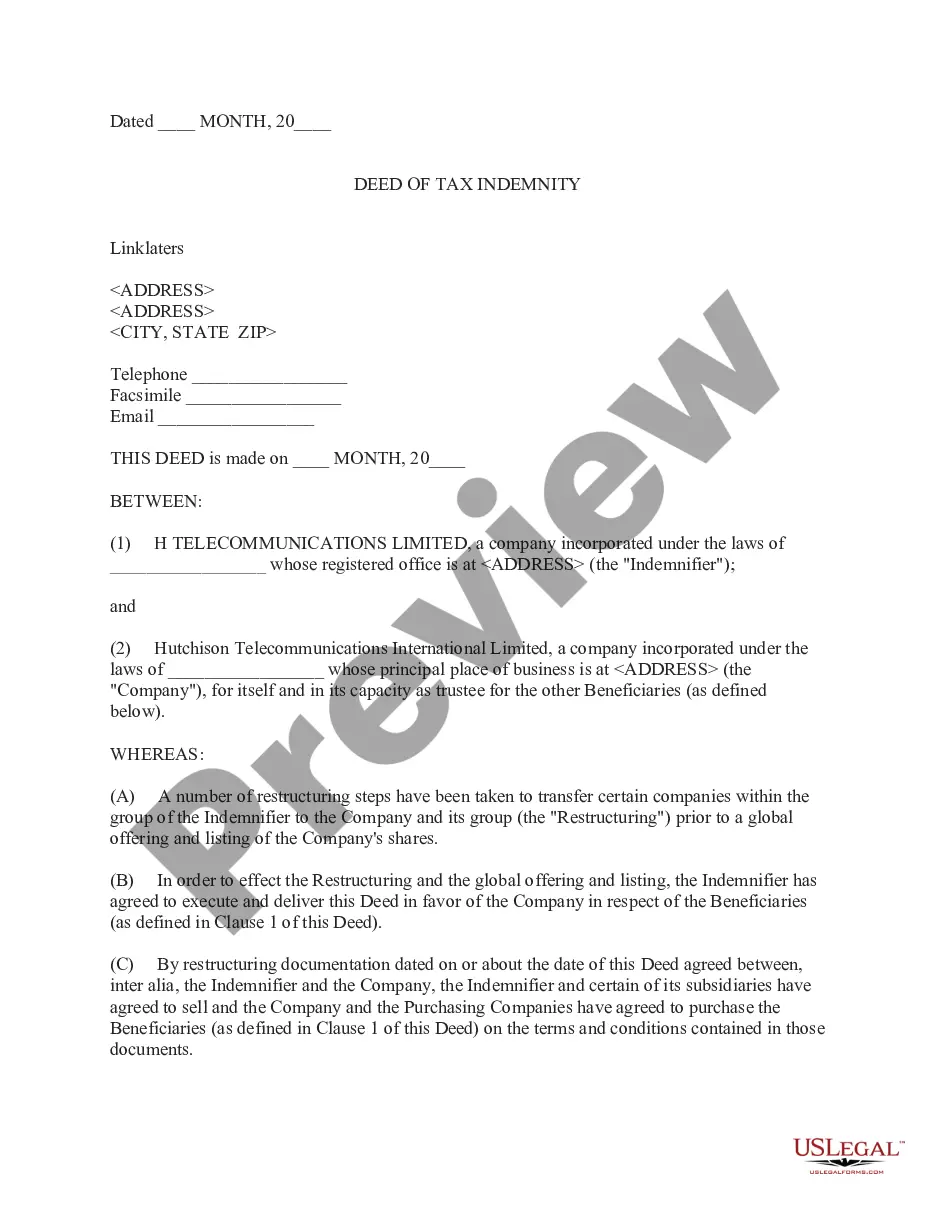
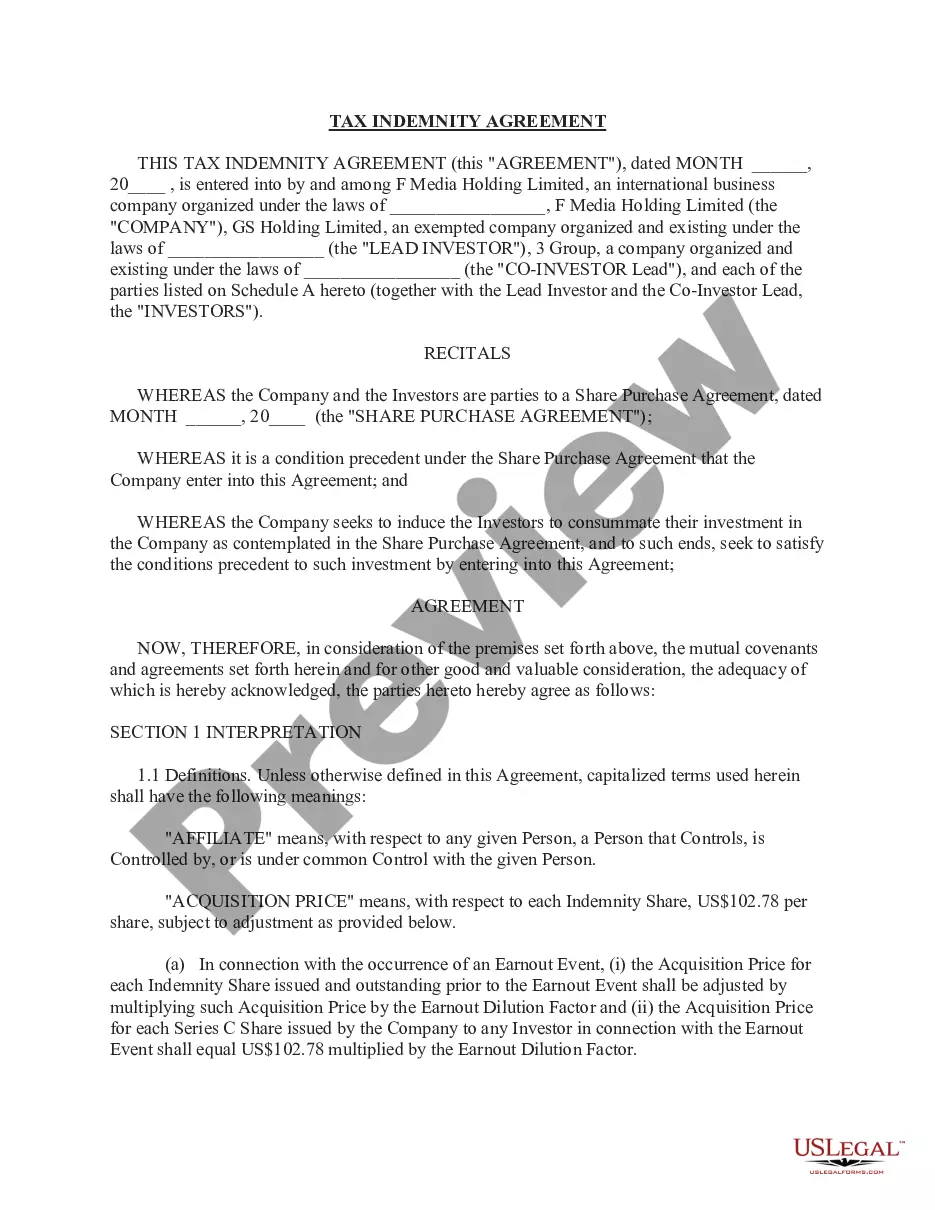
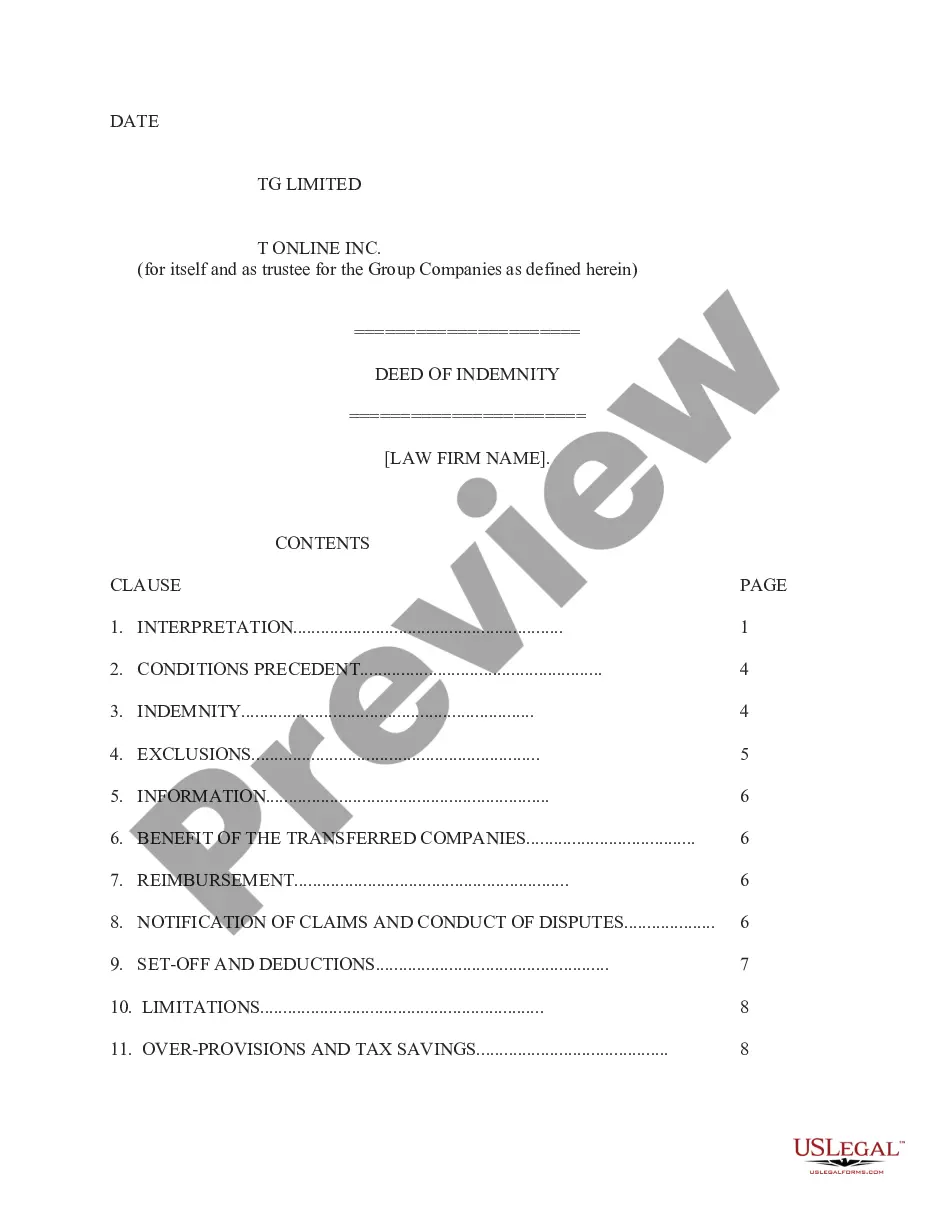
The Tax Indemnity and Debt Maintenance Agreement is a legal document used to establish indemnification between parties involved in a real estate investment trust (REIT) structure. This agreement outlines the responsibilities of the parties regarding tax liabilities that may arise from business transactions, including asset sales and debt management. Unlike other contracts, this specific agreement emphasizes the tax implications and financial obligations tied to income tax indemnifications, which may occur during complex corporate arrangements such as mergers or public offerings. It can be tailored to meet the specific needs of the parties involved.
Key components of this form
- Preamble: Introduces the parties involved and date of the agreement.
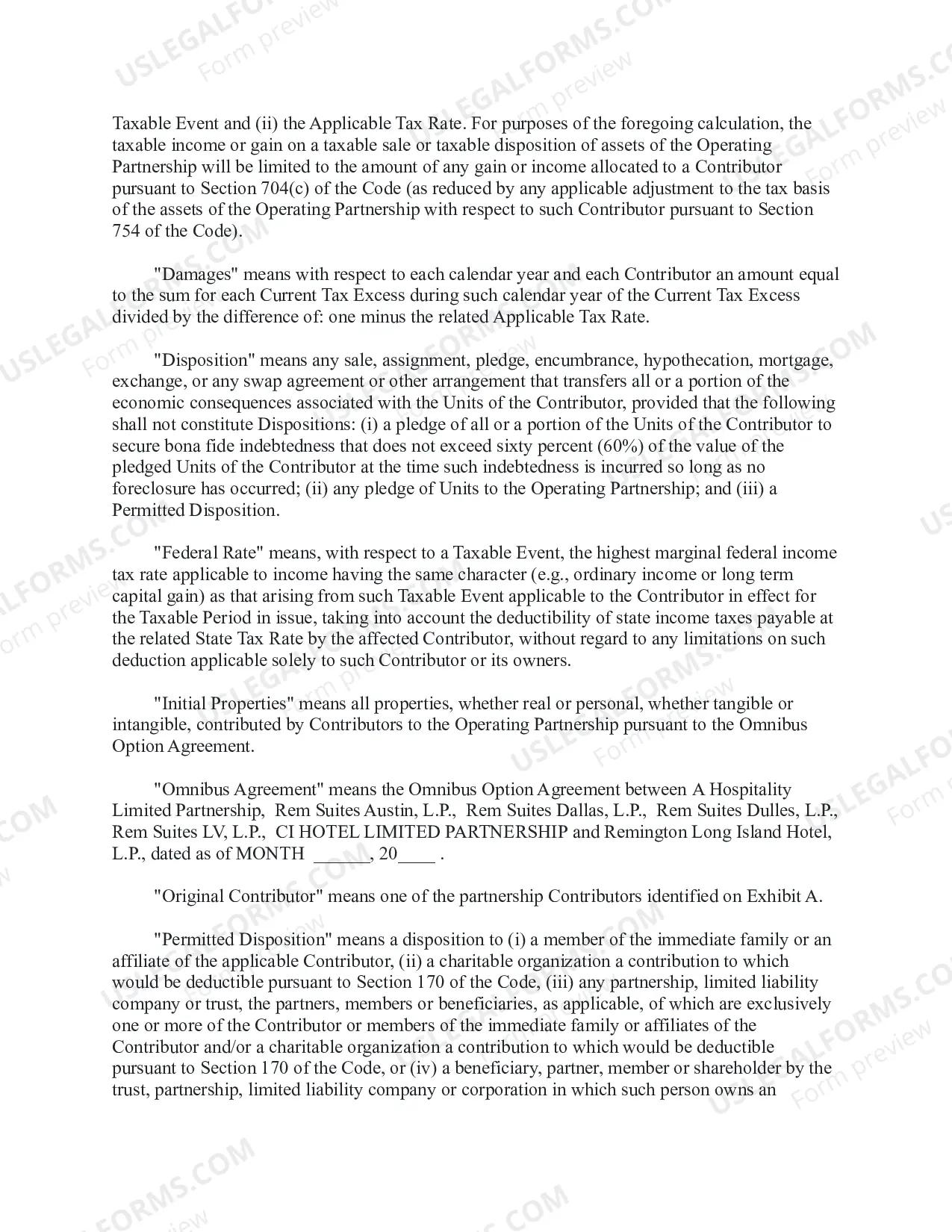
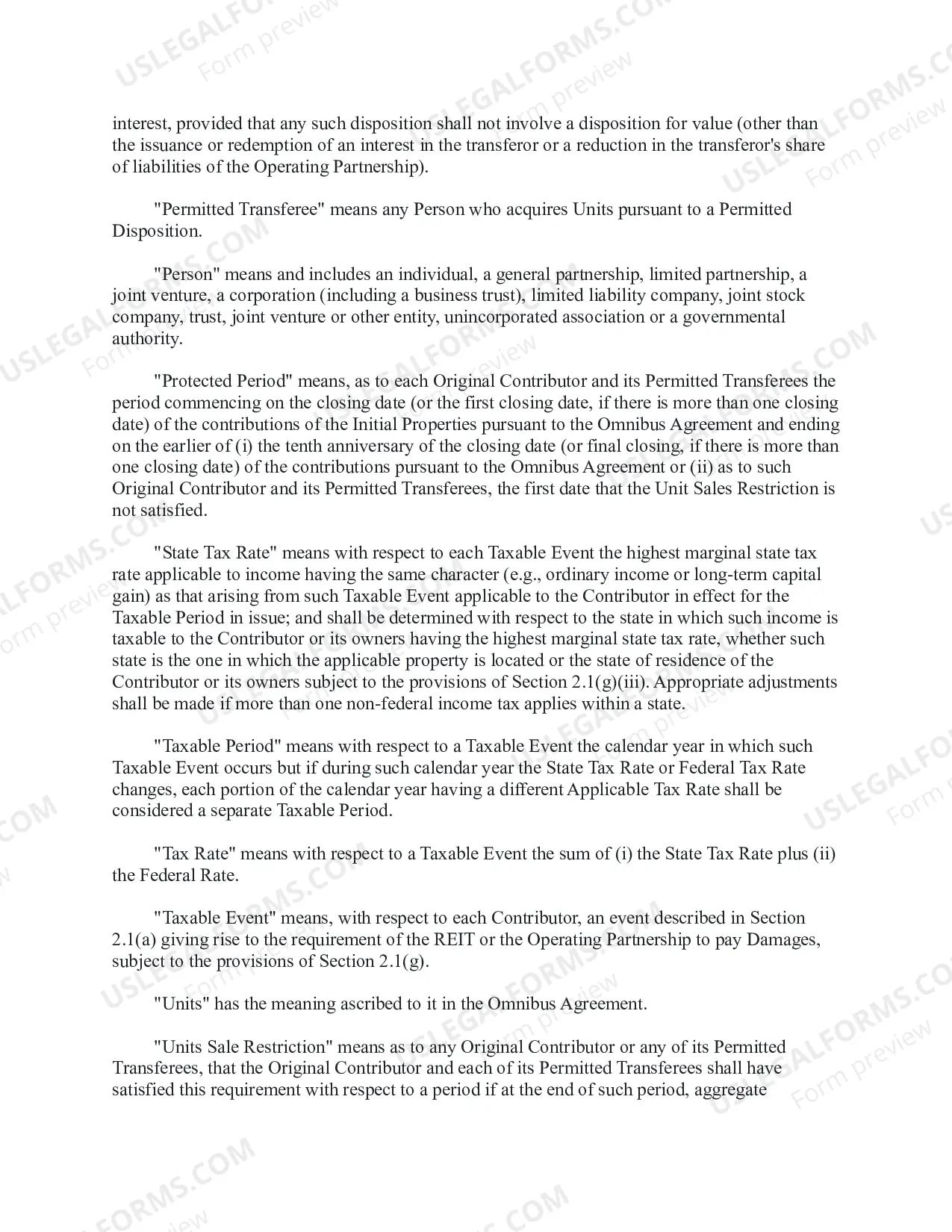
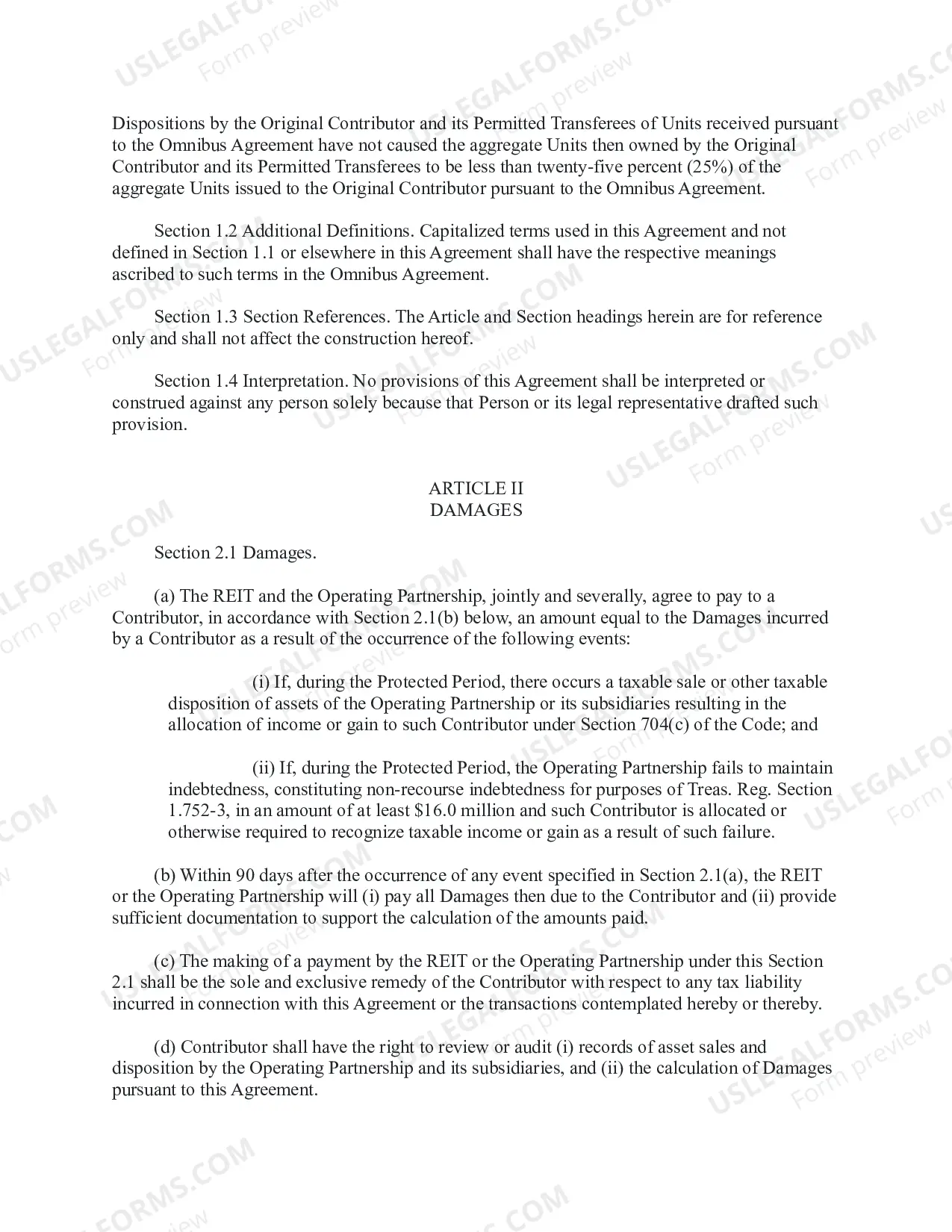
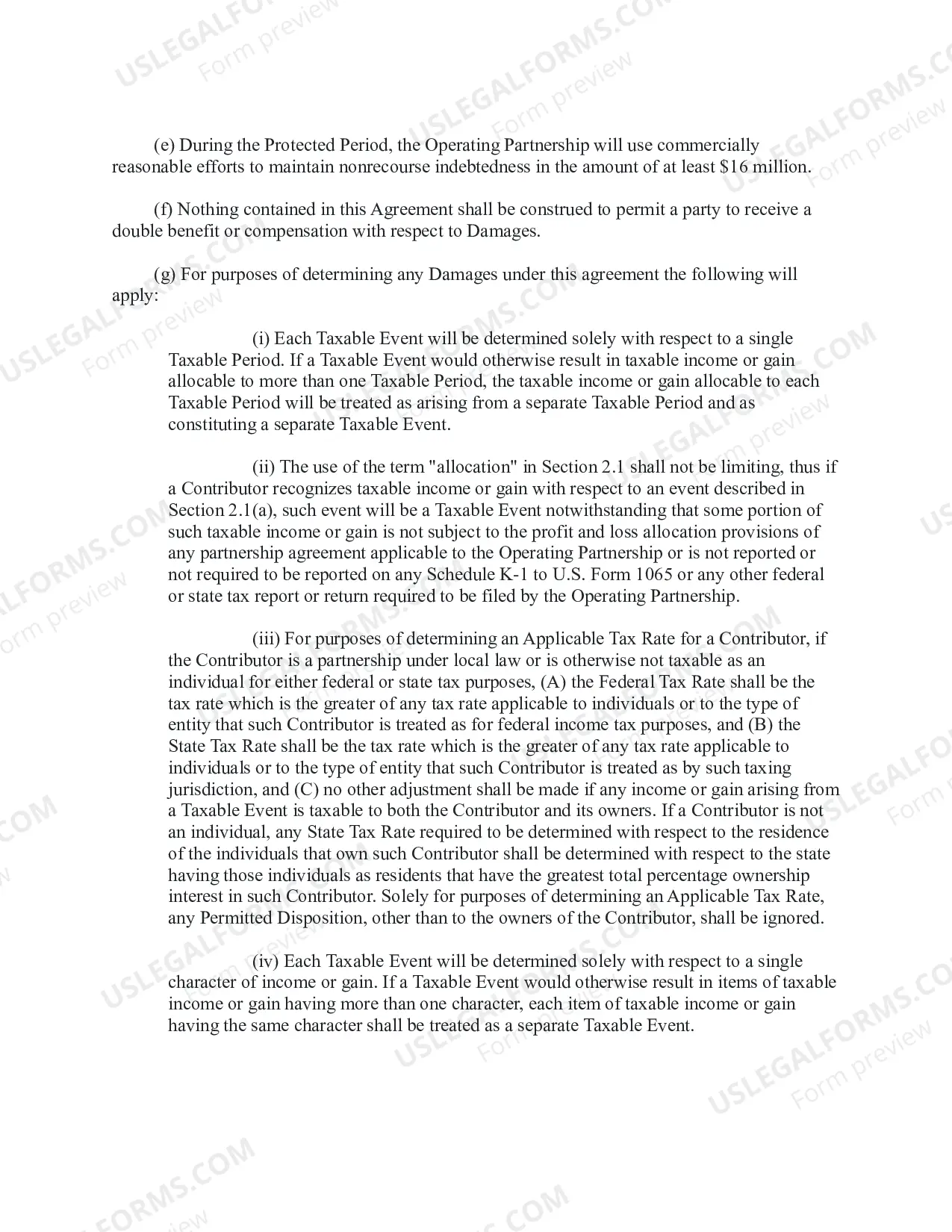
- Definitions: Clarifies key terms to avoid ambiguity, such as Taxable Event, Damages, and Applicable Tax Rate.
- Damages Section: Specifies conditions under which the contributor will be indemnified for tax liabilities incurred due to certain events.
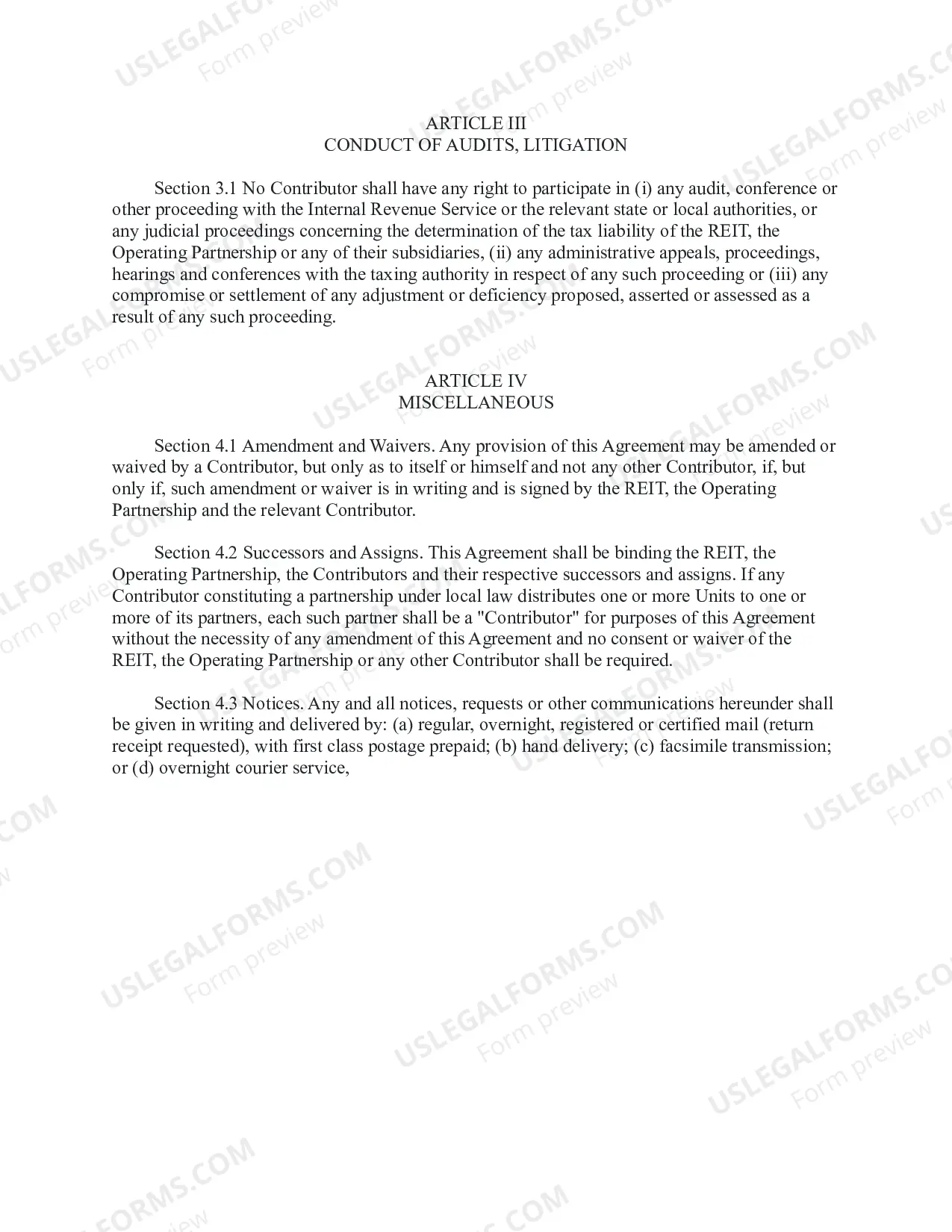
- Audit Rights: Provides the contributor rights to review transactions and determinations affecting tax liabilities.
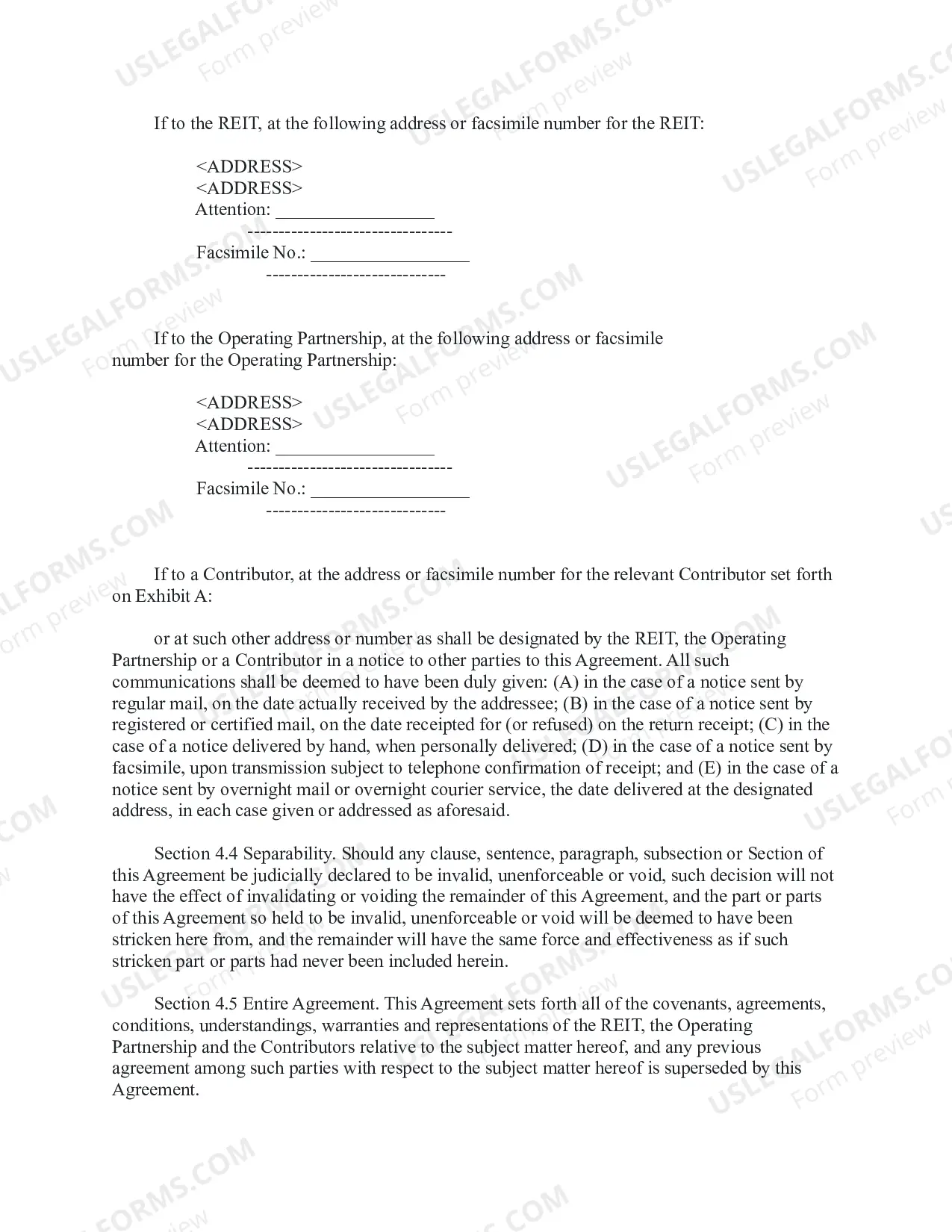
- Miscellaneous Provisions: Covers amendments, notifications, and legal governance of the agreement.
Situations where this form applies
This form is necessary when parties are entering a REIT structure or partnerships that anticipate potential tax liabilities from various financial activities, such as property asset sales or restructuring debt. It is also advisable in scenarios where contributors wish to safeguard against unexpected tax consequences stemming from their contributions to the partnership.
Who needs this form
- Real estate investment trusts (REITs) engaged in complex financial transactions.
- Partnerships or contributors looking to protect themselves from tax liabilities arising out of property transfers or asset management.
- Business legal teams managing corporate combinations, spin-offs, or IPOs with associated tax concerns.
Instructions for completing this form
- Identify and write down the names of the parties involved in the agreement.
- Clearly outline the specific tax liabilities for which indemnification will be provided.
- Define key terms indicated in the agreement to ensure mutual understanding.
- Fill out the date and execution details, ensuring all parties sign where necessary.
- Include any additional provisions that are pertinent to the specific agreement context.
Notarization requirements for this form
This form does not typically require notarization unless specified by local law. However, having it notarized can serve as an additional layer of authenticity for your records.
Get your form ready online
Our built-in tools help you complete, sign, share, and store your documents in one place.
Make edits, fill in missing information, and update formatting in US Legal Forms—just like you would in MS Word.
Download a copy, print it, send it by email, or mail it via USPS—whatever works best for your next step.
Sign and collect signatures with our SignNow integration. Send to multiple recipients, set reminders, and more. Go Premium to unlock E-Sign.
If this form requires notarization, complete it online through a secure video call—no need to meet a notary in person or wait for an appointment.
We protect your documents and personal data by following strict security and privacy standards.

Make edits, fill in missing information, and update formatting in US Legal Forms—just like you would in MS Word.

Download a copy, print it, send it by email, or mail it via USPS—whatever works best for your next step.

Sign and collect signatures with our SignNow integration. Send to multiple recipients, set reminders, and more. Go Premium to unlock E-Sign.

If this form requires notarization, complete it online through a secure video call—no need to meet a notary in person or wait for an appointment.

We protect your documents and personal data by following strict security and privacy standards.
Typical mistakes to avoid
- Failing to define critical terms clearly, leading to potential misunderstandings.
- Not specifying the exact nature of tax liabilities covered under the agreement.
- Overlooking the need for signatures from all parties involved, making the agreement void.
- Neglecting to review state-specific laws that might affect the agreement's enforceability.
Advantages of online completion
- Convenient access: Download and complete the form at your own pace.
- Editability: Easily customize the agreement to suit your specific circumstances.
- Reliability: Forms are drafted by licensed attorneys to ensure compliance with legal standards.
Looking for another form?
Form popularity
FAQ
Under Texas law, ?common-law indemnity is extremely rare and 'only a vestige of common law indemnity remains.
TEXAS ANTI-INDEMNITY ACT Prohibits and makes void broad form and intermediate form indemnity agreements (claims involving the sole or concurrent negligence of indemnitee) for construction projects, if the Act applies to your contract.
The Texas Constitution provides that the State cannot give, lend or pledge the credit of the State to any person, association or corporation, or make any grant of public monies to any person, association or corporation without express authority.
Anti-Indemnification Statute Exceptions Examples include: Indemnification of a party or third party for the death or bodily injury of an indemnitor's employee, or that of its agent or subcontractor (?action over claims?). Public works projects. Residential construction contracts.
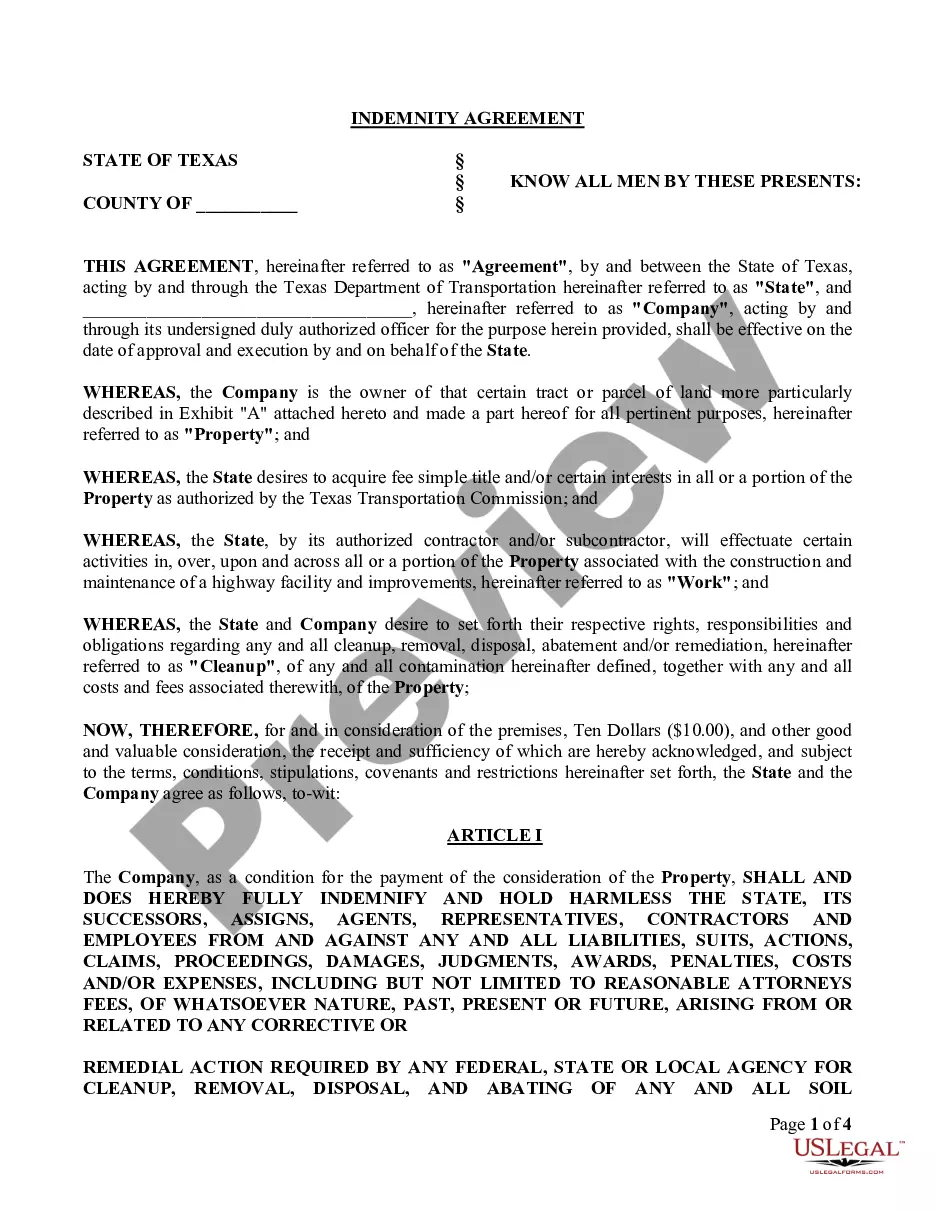
An indemnification agreement, also called an indemnity agreement, hold harmless agreement, waiver of liability, or release of liability, is a contract that provides a business or a company with protection against damages, loss, or other burdens.
Anti-indemnity statutes use public policy to limit the amount of indemnification a contract can require. States enacted them to fight an imbalance of negotiating power between upstream and downstream entities. They protect indemnitors from taking on more than their fair share of the risk.
Texas Insurance Code § 151.102 and Indemnity in Texas Indemnity clauses are contractual provisions that commit one party to compensate the other for losses arising out of a commercial contract.
Forty-five (45) states have enacted anti-indemnity statutes that limit or prohibit enforcing indemnification agreements in construction settings.