Texas Waiver of Citation
Overview of this form
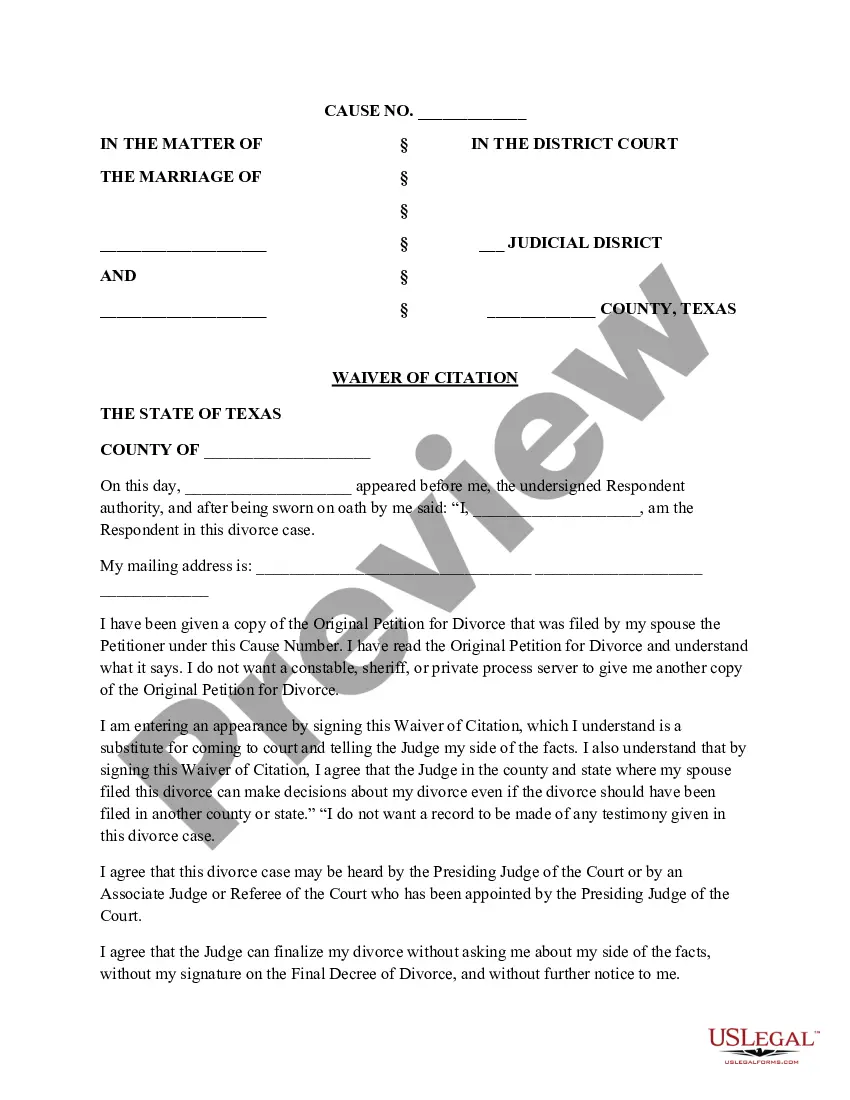
The Waiver of Citation is a legal document used in divorce proceedings. It allows the respondent to acknowledge receipt of the Original Petition for Divorce without the need for court appearance. By signing this form, the respondent agrees to let the judge finalize the divorce based on the petition alone, omitting the need for direct testimony or further notice.
What’s included in this form
- Identification of the respondents and petitioners involved in the divorce.
- Certification of receipt of the Original Petition for Divorce.
- Declaration of intent to waive formal citation and court appearance.
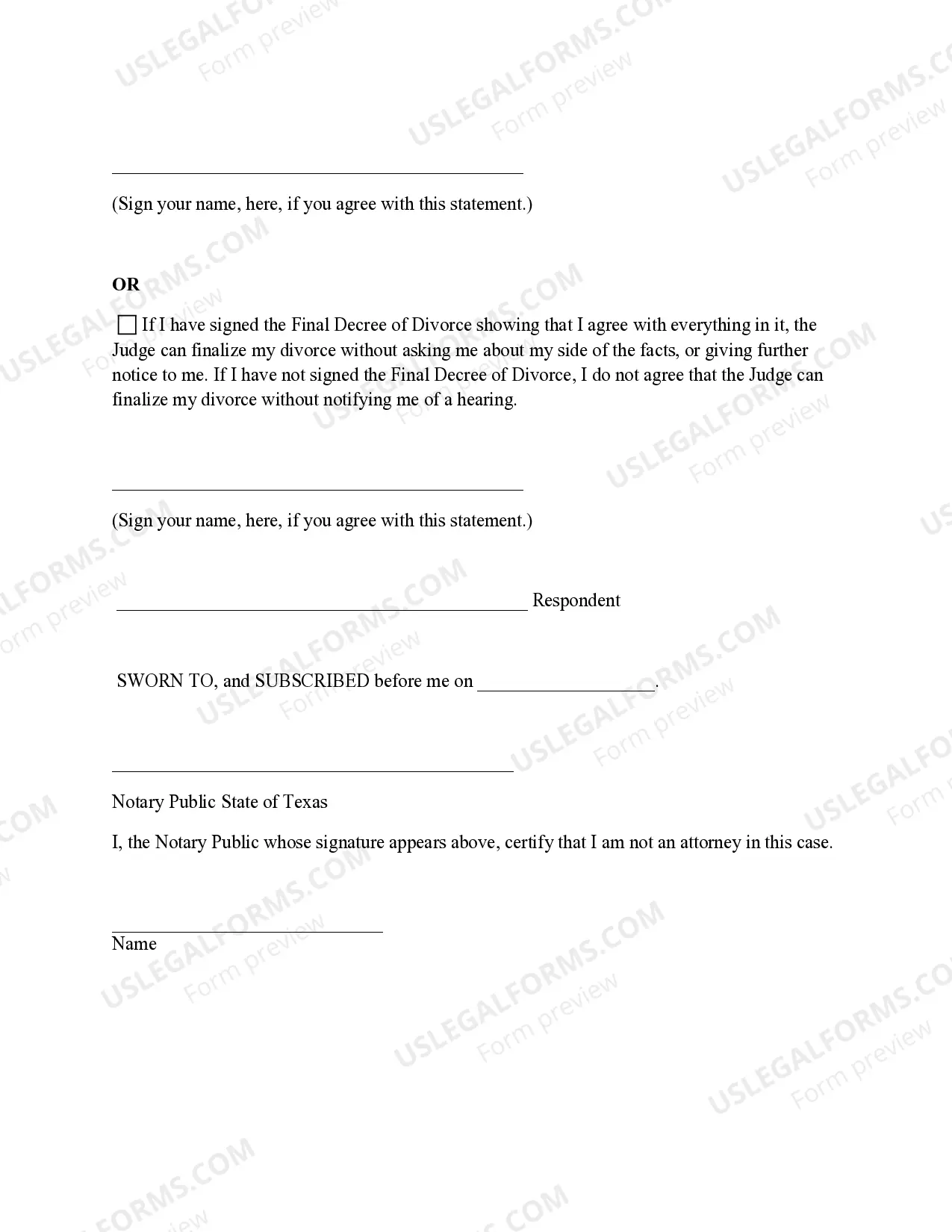
- Agreement regarding the finalization of the divorce without additional input.
- Signature of the respondent and notary public acknowledgment.
Situations where this form applies
This Waiver of Citation should be used when a respondent in a divorce case wishes to waive the right to receive formal service of the divorce petition. It is commonly employed when the respondent is aware of the divorce proceedings and prefers to avoid additional court appearances.
Intended users of this form
- Individuals who receive a divorce petition and wish to acknowledge it formally.
- Respondents who are aware of the divorce process and do not wish to contest it.
- Parties looking to expedite the divorce process and avoid unnecessary court appearances.
Completing this form step by step
- Fill in the cause number and the names of the parties involved in the divorce.
- Provide the mailing address of the respondent accurately.
- Read the Original Petition for Divorce carefully before acknowledging receipt.
- Sign the waiver to indicate agreement with the terms stated within.
- Have the form notarized to ensure legal validity of the document.
Is notarization required?
Yes, this form must be notarized to be legally valid. US Legal Forms provides integrated online notarization, allowing you to have your document notarized securely via video call, ensuring legality without the need to travel.
Get your form ready online
Our built-in tools help you complete, sign, share, and store your documents in one place.
Make edits, fill in missing information, and update formatting in US Legal Forms—just like you would in MS Word.
Download a copy, print it, send it by email, or mail it via USPS—whatever works best for your next step.
Sign and collect signatures with our SignNow integration. Send to multiple recipients, set reminders, and more. Go Premium to unlock E-Sign.
If this form requires notarization, complete it online through a secure video call—no need to meet a notary in person or wait for an appointment.
We protect your documents and personal data by following strict security and privacy standards.

Make edits, fill in missing information, and update formatting in US Legal Forms—just like you would in MS Word.

Download a copy, print it, send it by email, or mail it via USPS—whatever works best for your next step.

Sign and collect signatures with our SignNow integration. Send to multiple recipients, set reminders, and more. Go Premium to unlock E-Sign.

If this form requires notarization, complete it online through a secure video call—no need to meet a notary in person or wait for an appointment.

We protect your documents and personal data by following strict security and privacy standards.
Avoid these common issues
- Failing to sign the form, which renders it invalid.
- Not providing accurate details about the parties involved.
- Omitting notarization, which may be required for the document to be legally binding.
Benefits of completing this form online
- Convenient access for immediate downloading and printing.
- Editable fields allow users to customize the document easily.
- Reliable guidance from a form drafted by licensed attorneys ensures compliance with legal standards.
Looking for another form?

Form popularity
FAQ
The respondent must file the notarized waiver of service with the county clerk in the same county where the divorce was filed.
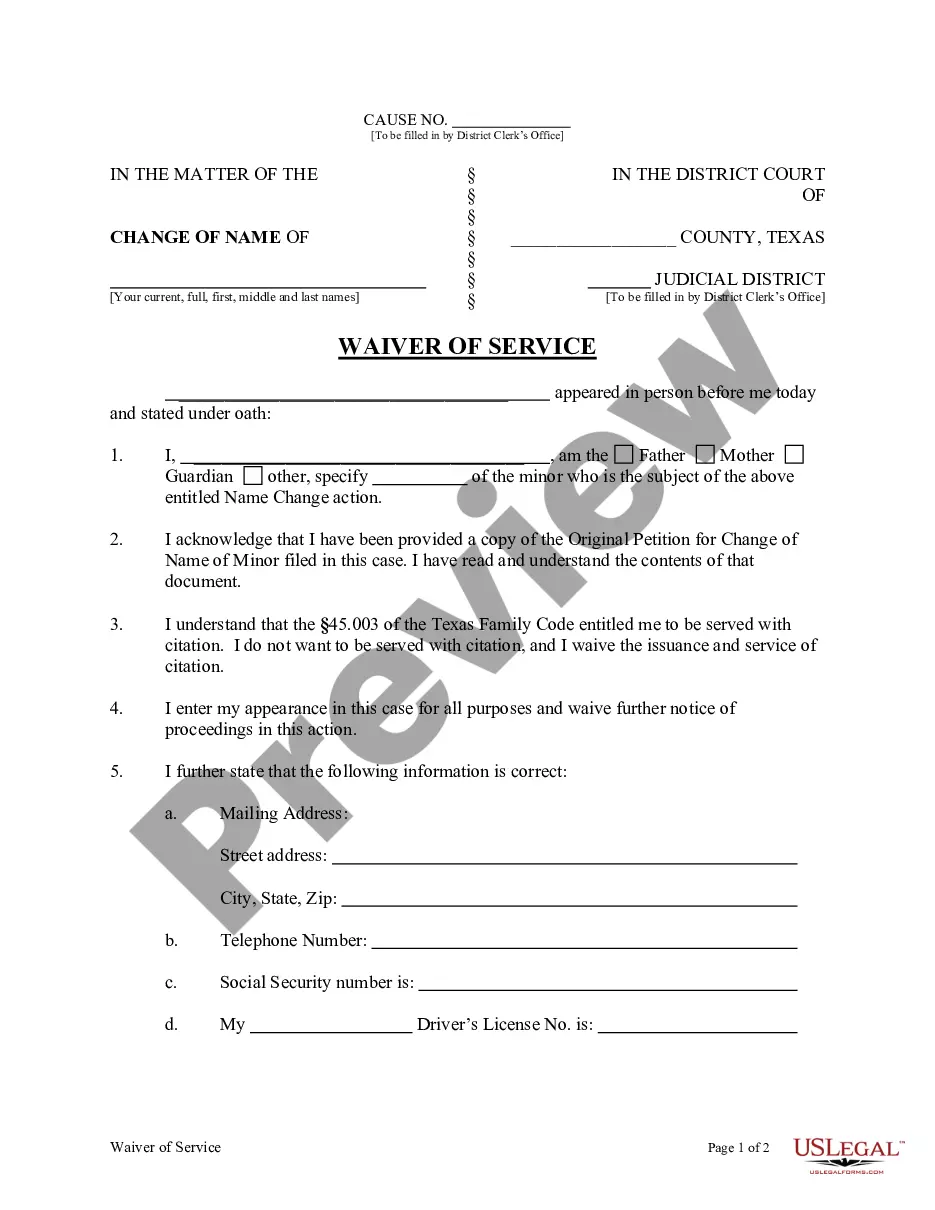
A spouse can waive their right to be personally served with a copy of the divorce lawsuit by signing a Waiver of Service. They do this by signing the waiver of service in the presence of a notary, notarized, and then filing it with the court.
A waiver uncontested agreed divorce or non-contested divorce are terms are used to describe when a husband and wife have an agreement and they do not contest the dissolution of their marriage.
This means that we will not be having a constable or private process server take the petition and citation and hand it to the person. Instead, the opposing party is acknowledging receipt of the petition, providing up-to-date contact information for the court, and saying that he does not need to be served.
Under Texas law, a waiver must be express and conspicuous. Express means that the waiver must expressly state that the person signing releases the other party from any claims for negligence.
"Service of process" or "service of citation" is a necessary step of any lawsuit. It is where someone is given formal notice that they have been sued. It is not enough just to tell someone that they have been sued. You need to follow the procedures listed in the Texas Rules of Civil Procedure.
In Texas, it is possible to divorce without appearing in Court or by just appearing one time to finalize the divorce. To achieve this, the divorce must be amicable, and both parties should be represented by skilled attorneys who help them to mediate their differences and arrive at amicable agreements.
File (turn in) your completed answer form with the court. To file online, go to E-File Texas and follow the instructions. And you can read TexasLawHelp's How to E-File. To file in person, take your answer (and copies) to the district clerk's office in the county where the plaintiff filed the case.