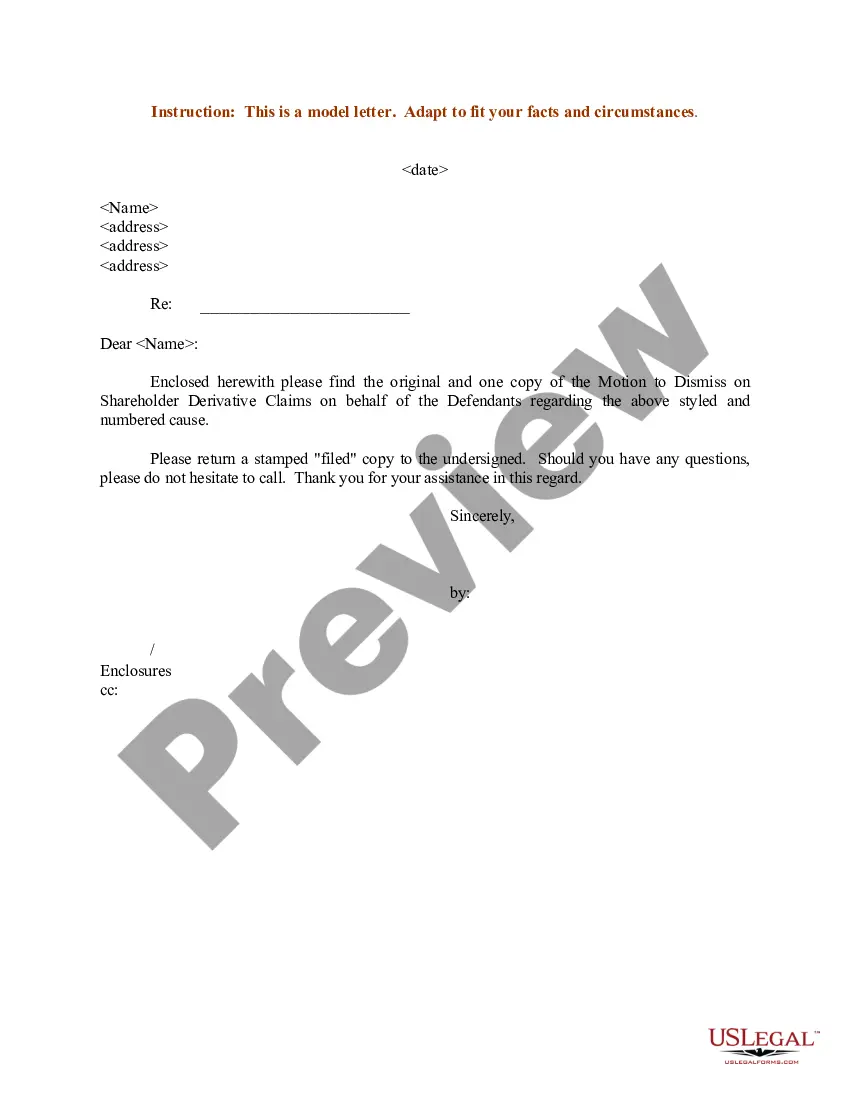
Sample Letter regarding Motion to Dismiss on Shareholder Derivative Claims
About this form
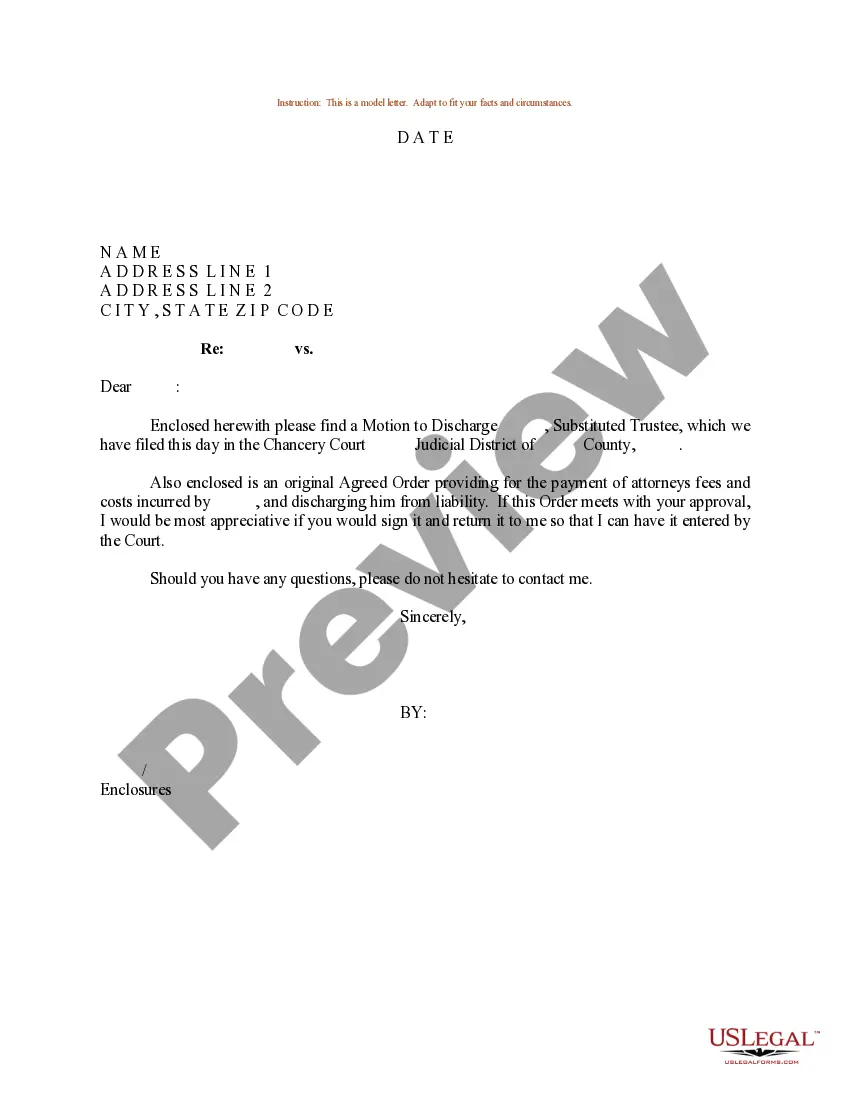
This Sample Letter regarding Motion to Dismiss on Shareholder Derivative Claims provides a template for formally notifying parties about a motion to dismiss such claims within a legal context. This form serves as a useful communication tool to accompany the official motion document, helping clarify the specific legal issue at hand. Unlike other legal forms, this letter specifically addresses shareholder derivative claims, making it applicable in scenarios involving corporate governance and shareholder actions.
What’s included in this form
- Date: The date the letter is composed.
- Recipient's Information: Name and address of the individual or entity receiving the letter.
- Subject Line: A clear subject line stating the nature of the correspondence.
- Enclosure Statement: Confirmation of the original motion and its copy accompanying the letter.
- Closing: Signature and printed name of the sender.
Situations where this form applies
This form is useful when a defendant in a legal case related to shareholder derivative claims wishes to formally communicate a motion to dismiss those claims. It can be utilized in various contexts, such as when a shareholder is attempting to hold officers or directors accountable for alleged wrongful acts, and the defendants believe that the claims lack merit and should be dismissed in court.
Who this form is for
- Defendants in a shareholder derivative lawsuit.
- Attorneys representing defendants in such legal actions.
- Corporate officers or directors who are facing derivative claims from shareholders.
Instructions for completing this form
- Enter the date at the top of the letter.
- Fill in the recipient's name and address accurately.
- Specify the subject line related to the motion to dismiss.
- Attach the original motion to dismiss and indicate the enclosure in the letter.
- Sign the letter and print your name beneath your signature.
Is notarization required?
This form usually doesn’t need to be notarized. However, local laws or specific transactions may require it. Our online notarization service, powered by Notarize, lets you complete it remotely through a secure video session, available 24/7.
Get your form ready online
Our built-in tools help you complete, sign, share, and store your documents in one place.
Make edits, fill in missing information, and update formatting in US Legal Forms—just like you would in MS Word.
Download a copy, print it, send it by email, or mail it via USPS—whatever works best for your next step.
Sign and collect signatures with our SignNow integration. Send to multiple recipients, set reminders, and more. Go Premium to unlock E-Sign.
If this form requires notarization, complete it online through a secure video call—no need to meet a notary in person or wait for an appointment.
We protect your documents and personal data by following strict security and privacy standards.

Make edits, fill in missing information, and update formatting in US Legal Forms—just like you would in MS Word.

Download a copy, print it, send it by email, or mail it via USPS—whatever works best for your next step.

Sign and collect signatures with our SignNow integration. Send to multiple recipients, set reminders, and more. Go Premium to unlock E-Sign.

If this form requires notarization, complete it online through a secure video call—no need to meet a notary in person or wait for an appointment.

We protect your documents and personal data by following strict security and privacy standards.
Mistakes to watch out for
- Failing to include all necessary attachments.
- Incorrectly addressing the recipient or using outdated contact information.
- Not clearly stating the purpose of the letter in the subject line.
Why use this form online
- Convenient access to a professionally drafted template tailored for specific legal needs.
- Editability allows for customization to suit individual circumstances.
- Reliable format ensuring compliance with legal standards.
Looking for another form?

Form popularity
FAQ
You do not have to file a response. However, you would be wise to do so as a motion to dsmiss , if granted, could end your suit. Motions to dimiss for failure to state a claim are rarely granted.
General format - each motion generally consists of a case caption, a title that briefly identifies the relief sought, a series of numbered paragraphs that explains -- in a logical way -- why you are entitled to that relief, a prayer for relief, a signature block, a certification that a copy of the motion was sent to
The first lines of your motion should state your name and role in the case, and what you are asking the judge to do. Traditionally, the first line begins "Comes now the defendant," followed by your name. Then you state that you're asking the court to dismiss the plaintiff's complaint.
The motion must include a separate "Notice of Motion" which includes a brief summary of the nature of the motion, the deadline for filing a response, and if there is a hearing, the date, time, and location of the hearing.
When a judge denies a defendant's motion to dismiss, the case will continue because defendant did not convince the judge to terminate the case.When students read a U.S. court decision where a judge denies a motion to dismiss, it may appear that the judge is ruling that the plaintiff won her case.
Ask the court for a motion date. Identify and fill out your motion forms. Serve and file your motion forms. Confirm that you will attend the motion. Go to your motion hearing. Receive the judge's decision.
In considering a motion to dismiss under Rule 12(b)(6), the court must accept all well-pled allegations in a complaint as true. Albright v. Oliver, 510 U.S. 266, 268 (1994). The court must construe all factual allegations in the light most favorable to the plaintiff.
A motion to dismiss (aka demurrer in some states) is a powerful litigation tool that can stop a lawsuit cold in its tracks. When granting a motion to dismiss, the judge essentially decides the case in the defendant's favor most often denying the plaintiff the opportunity to go to trial.