Texas Motion to Reduce Bond
Understanding this form
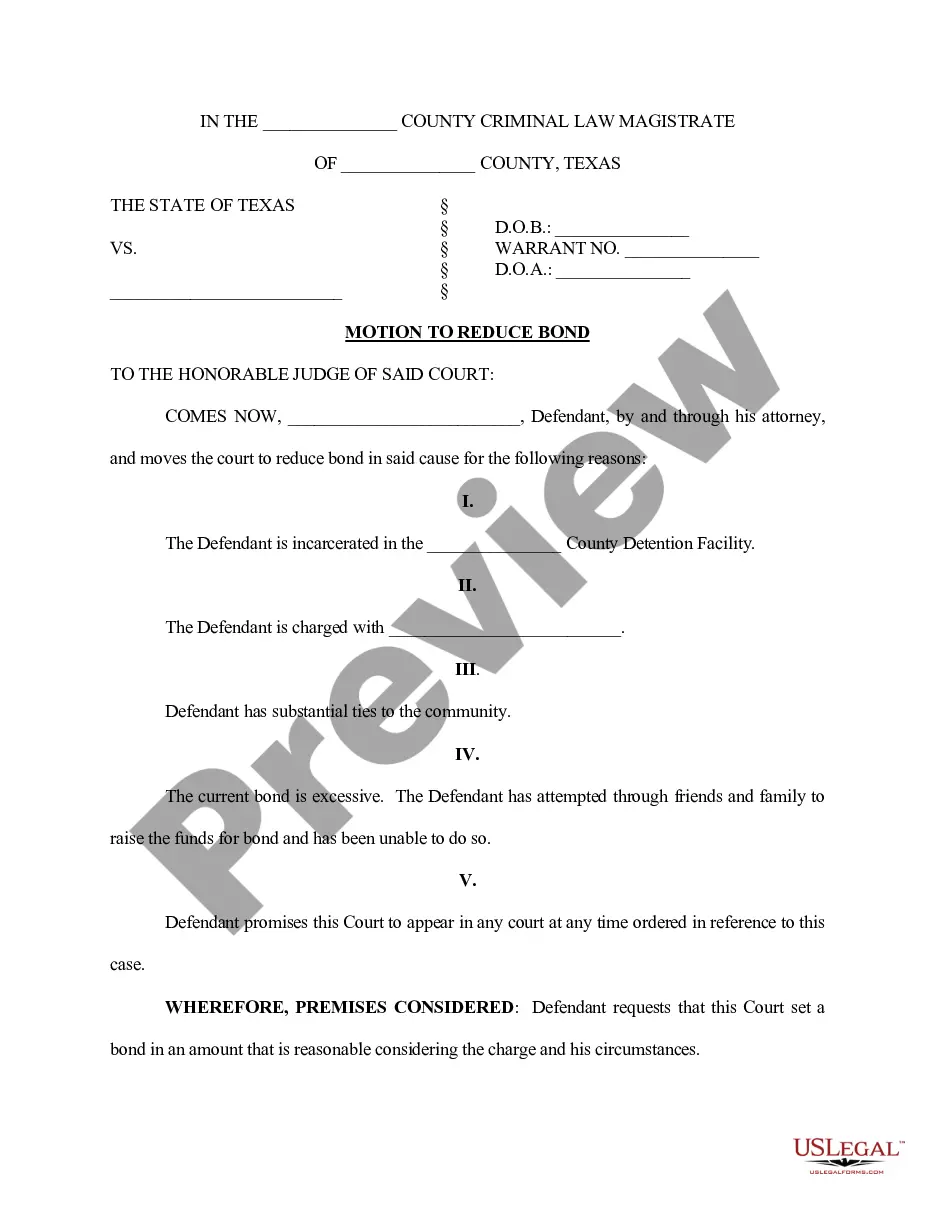
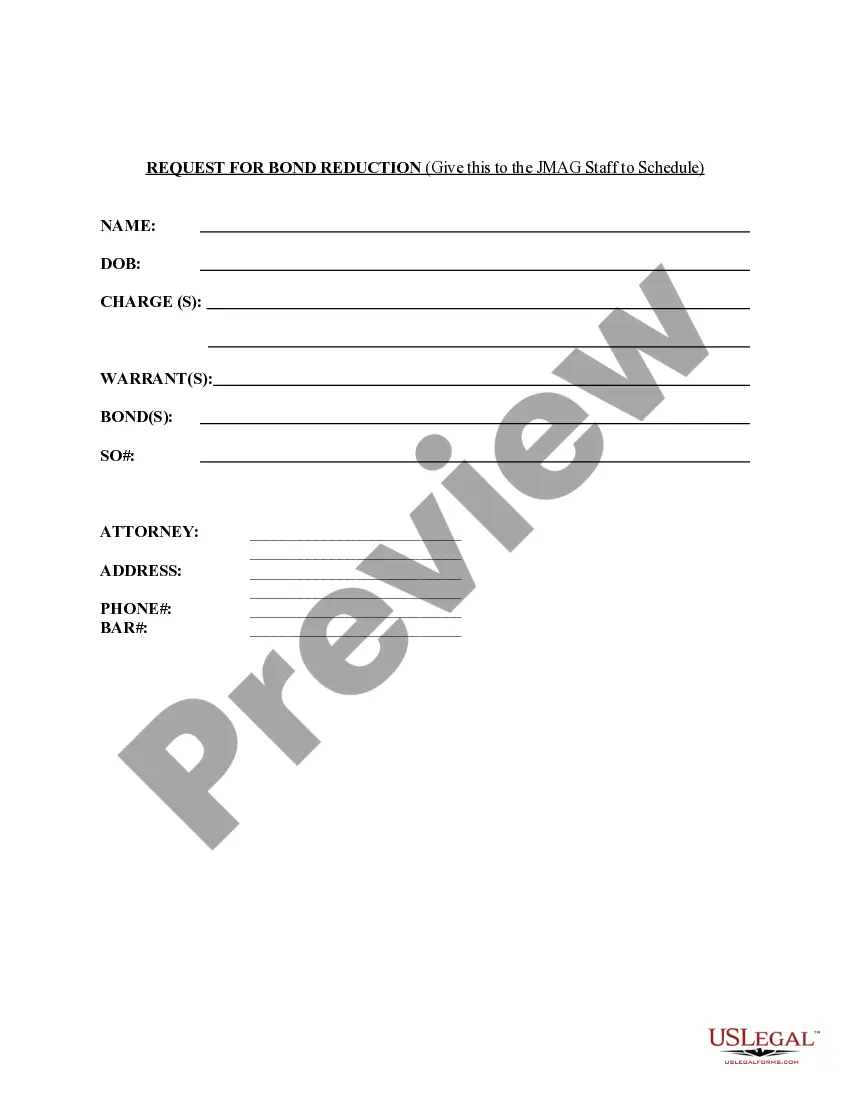
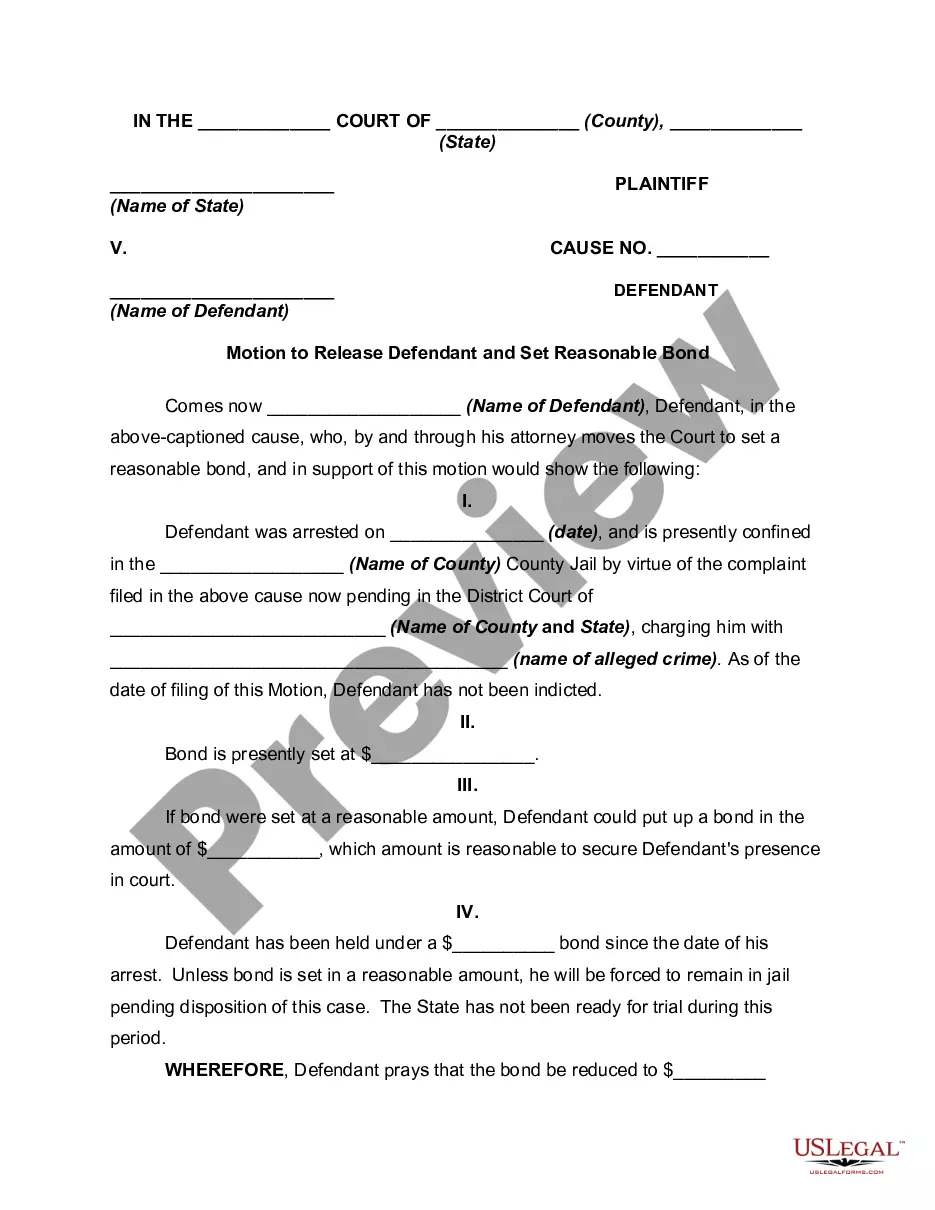
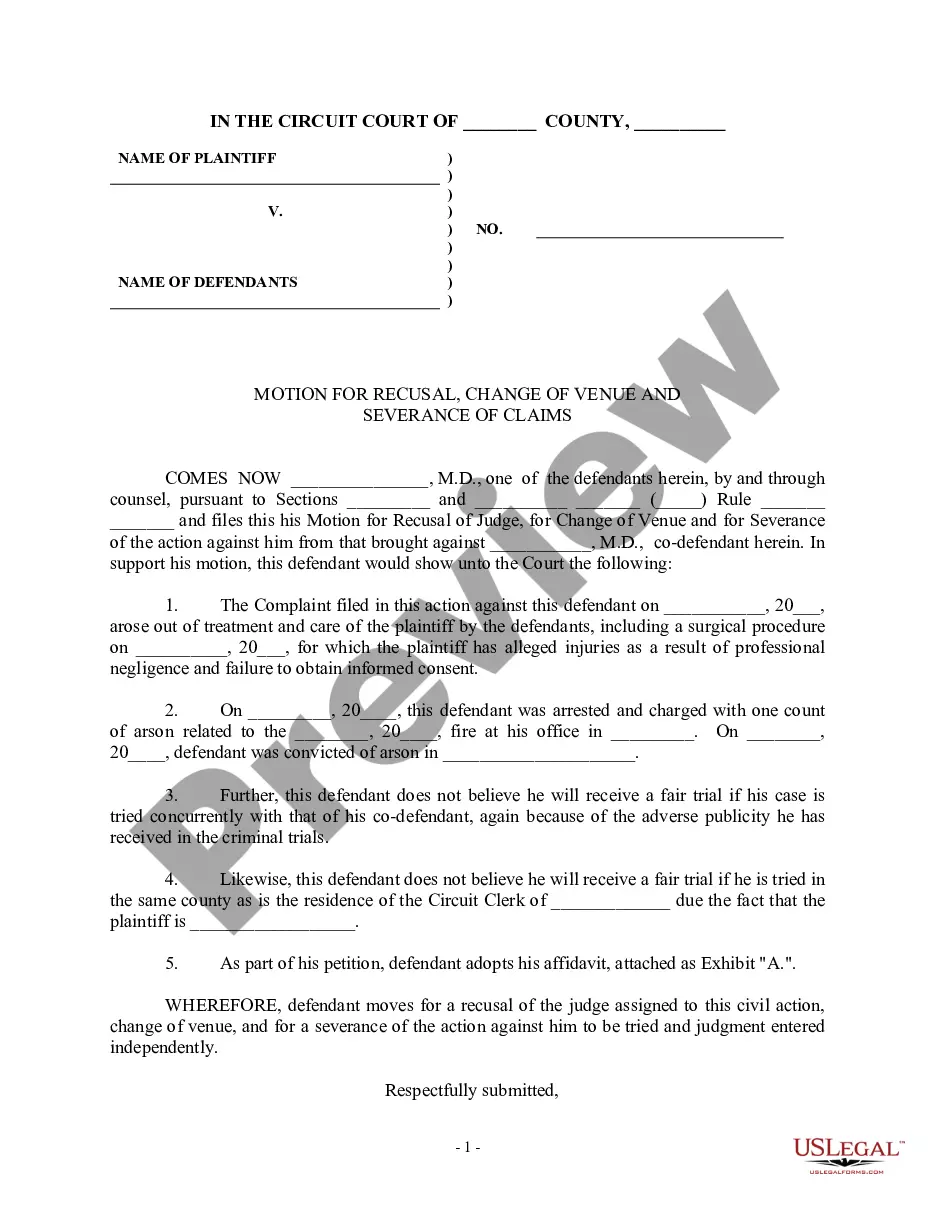
A Motion to Reduce Bond is a legal document filed by a defendant requesting the court to lower their bail amount. This motion is used when the defendant believes the current bond is excessive and is unable to post it, ensuring their ability to return to court for future proceedings. This form differs from bail applications, as it specifically seeks a reduction in an already set bond rather than requesting bail for the first time.
Key parts of this document
- Identifying information of the defendant, including name and date of birth.
- Details regarding current incarceration and charges against the defendant.
- Reasons supporting the request for a bond reduction, such as community ties and financial circumstances.
- A declaration of the defendant's promise to attend all court appearances.
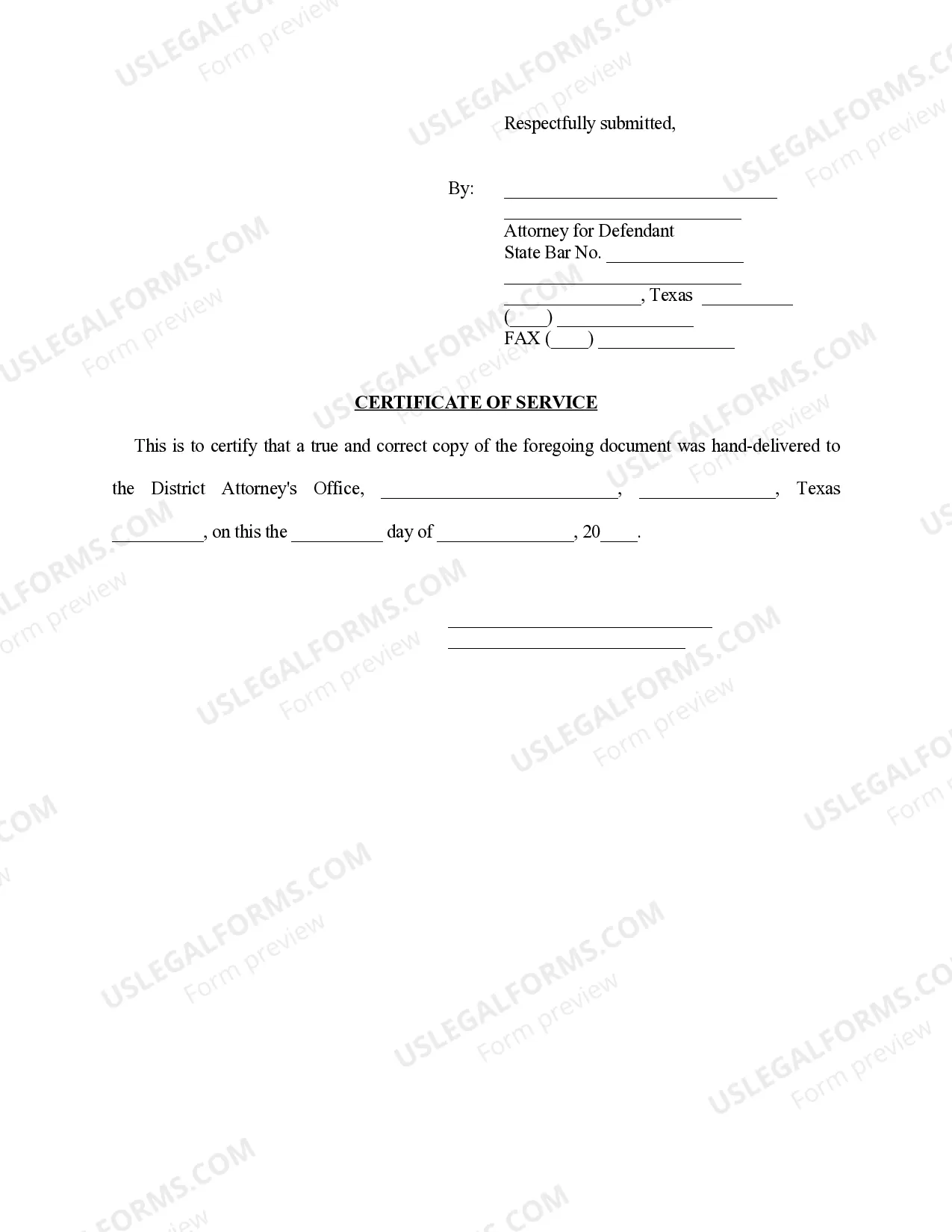
- Space for the attorney's information and signature.
- Certificate of service to confirm the motion was delivered to the appropriate authorities.
When to use this document
This form should be used when a defendant is currently detained and has been assigned a bond amount that they believe is unreasonably high. Situations might include instances where the defendant has insufficient funds to pay the bond, has strong community ties, or has no prior criminal record. It is particularly relevant in criminal cases where the defendant seeks to regain freedom while awaiting trial.
Who needs this form
- Individuals who are defendants in criminal cases.
- Defendants who are currently incarcerated and need to request a lower bond amount.
- Attorneys representing defendants who wish to file a motion on their behalf.
How to complete this form
- Fill in the defendant's identifying information, including full name and date of birth.
- Clearly state the charges against the defendant and their current incarceration details.
- Provide reasons for requesting a bond reduction, focusing on community ties and financial hardships.
- Sign the form as the attorney and include necessary contact information.
- Ensure the Certificate of Service is completed to verify that a copy of the motion was delivered to the District Attorney's Office.
Does this form need to be notarized?
This form does not typically require notarization unless specified by local law. It's important to verify any specific requirements with the court where the motion will be filed.
Get your form ready online
Our built-in tools help you complete, sign, share, and store your documents in one place.
Make edits, fill in missing information, and update formatting in US Legal Forms—just like you would in MS Word.
Download a copy, print it, send it by email, or mail it via USPS—whatever works best for your next step.
Sign and collect signatures with our SignNow integration. Send to multiple recipients, set reminders, and more. Go Premium to unlock E-Sign.
If this form requires notarization, complete it online through a secure video call—no need to meet a notary in person or wait for an appointment.
We protect your documents and personal data by following strict security and privacy standards.

Make edits, fill in missing information, and update formatting in US Legal Forms—just like you would in MS Word.

Download a copy, print it, send it by email, or mail it via USPS—whatever works best for your next step.

Sign and collect signatures with our SignNow integration. Send to multiple recipients, set reminders, and more. Go Premium to unlock E-Sign.

If this form requires notarization, complete it online through a secure video call—no need to meet a notary in person or wait for an appointment.

We protect your documents and personal data by following strict security and privacy standards.
Common mistakes to avoid
- Failing to provide sufficient details about community ties and financial status.
- Neglecting to sign and date the form properly.
- Omitting the Certificate of Service, which confirms delivery to the District Attorney's Office.
- Incorrectly filling out case details, such as warrant numbers or charges.
Why complete this form online
- Convenience of downloading and filling out the form from anywhere at any time.
- Editable fields allow for clearer and more accurate information input.
- Access to professionally drafted legal forms ensures compliance with state laws.
- Quickly service and share completed forms with relevant parties electronically.
Looking for another form?
Form popularity
FAQ
Should you violate one of the conditions, then your bail can be revoked. To modify these conditions, you need to file a motion with the court. In the motion, you identify the condition you want changed and explain why. After filing the motion, you may have to attend a hearing in front of a judge.
To secure a bail bond, the defendant (or a representative of the defendant) must pay a bail bondsman approximately 10% to 20% of the total amount of the bail.
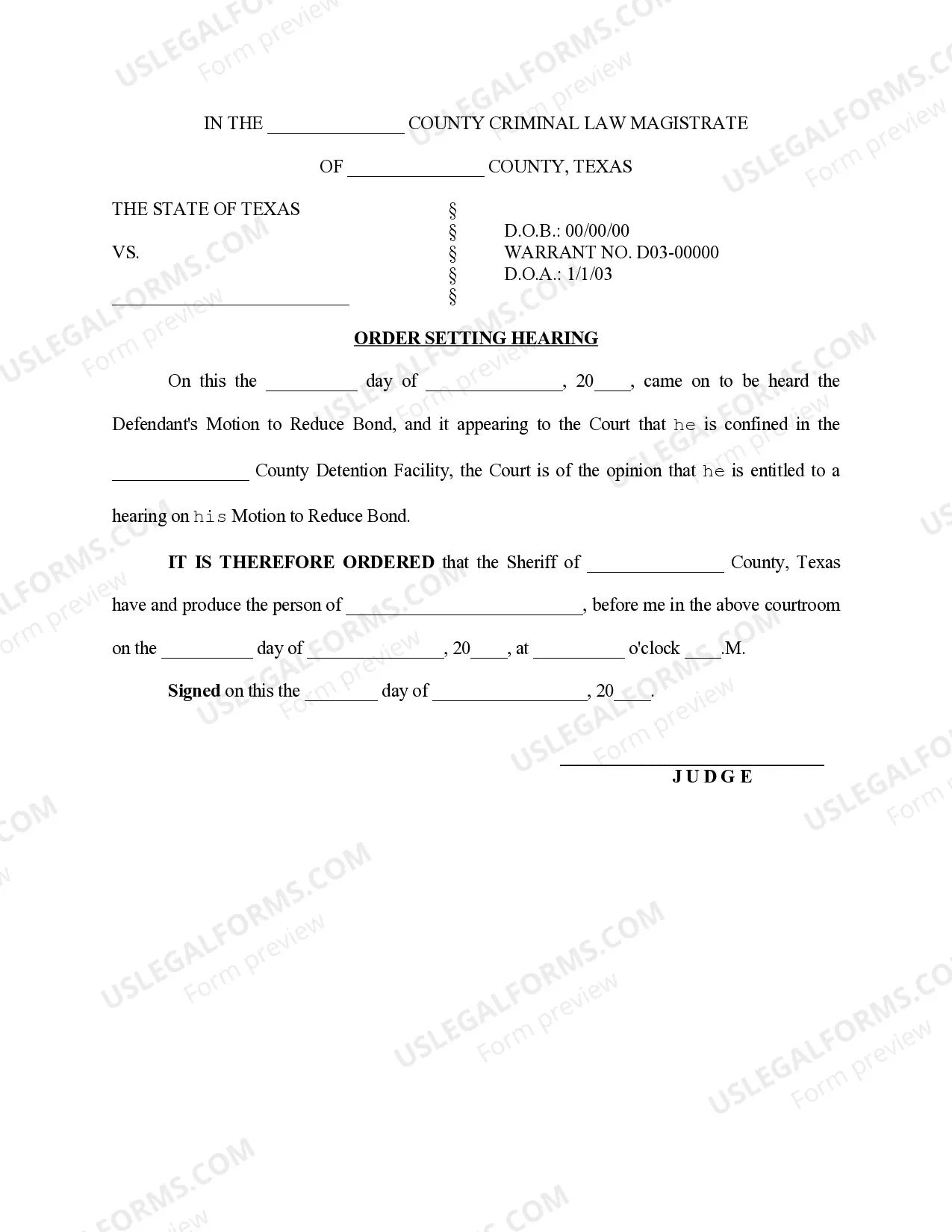
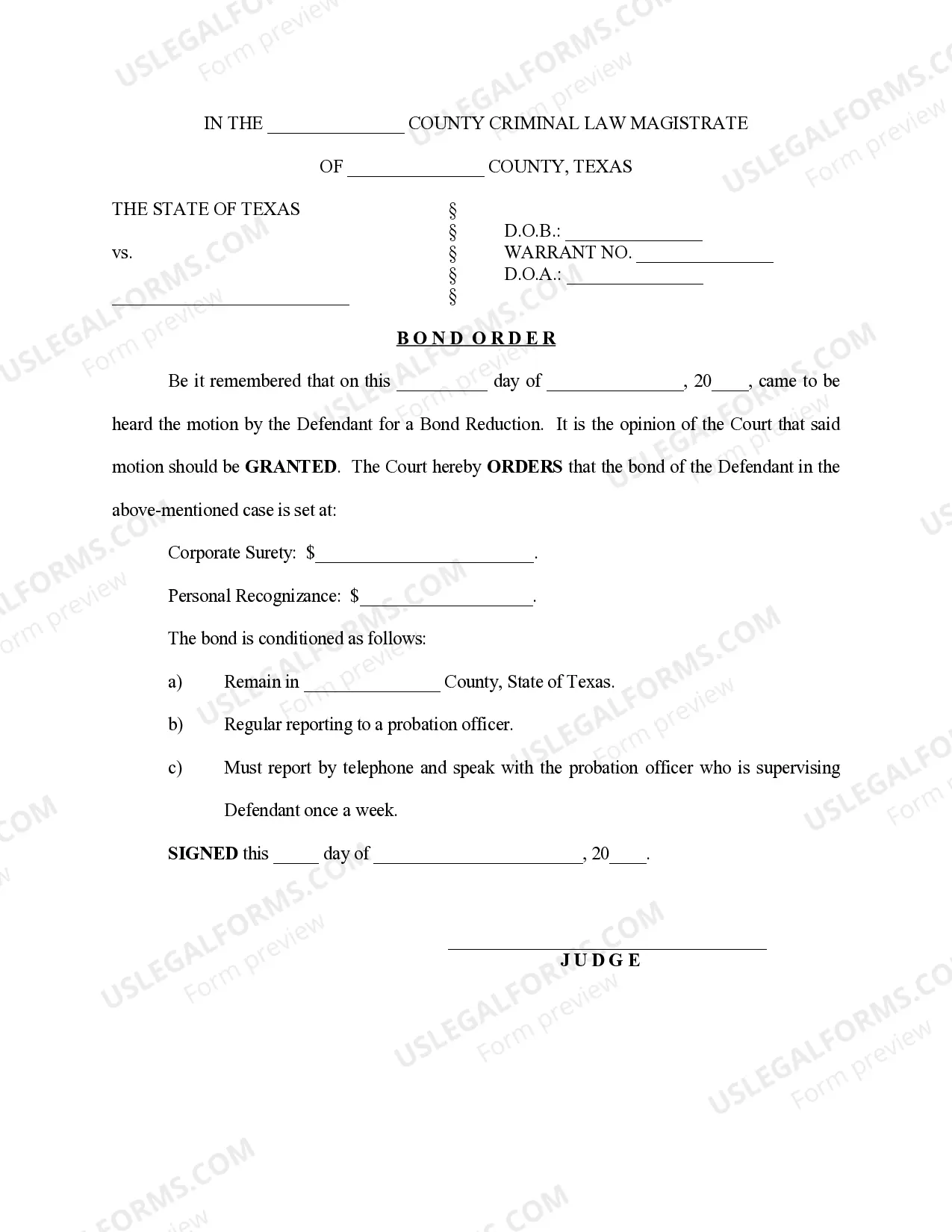
If you believe your bail is set too high, your attorney can petition for a bail reduction. A hearing will be scheduled, during which your attorney will remind the court of the unconstitutionality of excessive bail and explain why the bail set for you rises to this level.
If the prosecutor learns that the defendant is possibly in violation of their bond conditions, they can file a motion to revoke the bond. At that point, the court will set a bond revocation hearing, where both sides will have an opportunity to present evidence.
To modify these conditions, you need to file a motion with the court. In the motion, you identify the condition you want changed and explain why. After filing the motion, you may have to attend a hearing in front of a judge.
Bond Reduction Requirements and Hearing Texas requires a court to lower bail when a defendant has been held in jail for 90 days or more without an indictment. In exchange for a bond reduction, you can suggest certain conditions like electronic monitoring.
You will likely be remanded to the jail to await your trial date on the charges you were arrested on. Your violation of bond conditions forced the surety to forfeit the amount of bail it deposited on your behalf. The bail bond company will take action to get its money back.