Texas Non-Disclosure of Criminal Records Law
Description







How to fill out Texas Non-Disclosure Of Criminal Records Law?
Access to quality Texas Non-Disclosure of Criminal Records Law samples online with US Legal Forms. Steer clear of days of lost time looking the internet and lost money on files that aren’t up-to-date. US Legal Forms provides you with a solution to just that. Find above 85,000 state-specific authorized and tax templates that you could download and fill out in clicks within the Forms library.
To get the sample, log in to your account and then click Download. The document will be stored in two places: on the device and in the My Forms folder.
For individuals who don’t have a subscription yet, take a look at our how-guide listed below to make getting started simpler:
- See if the Texas Non-Disclosure of Criminal Records Law you’re looking at is appropriate for your state.
- See the form making use of the Preview function and read its description.
- Visit the subscription page by clicking on Buy Now button.
- Select the subscription plan to keep on to sign up.
- Pay out by card or PayPal to complete making an account.
- Choose a preferred format to save the document (.pdf or .docx).
Now you can open the Texas Non-Disclosure of Criminal Records Law template and fill it out online or print it out and do it yourself. Think about giving the file to your legal counsel to make certain everything is filled in properly. If you make a mistake, print and fill sample once again (once you’ve created an account every document you download is reusable). Create your US Legal Forms account now and access much more samples.
Form popularity
FAQ
How Much Will It Cost to Expunge My Criminal Record in Texas? As a general rule, it costs more to expunge a felony than a misdemeanor. The expungement of a felony will customarily cost a minimum of $1,000, but may cost upwards of $2,500 or even more. Misdemeanors can usually be expunged for $1,000 or less.
The felony charge was dropped or dismissed without action; You went to trial and were acquitted of the offense; You were convicted of the charge, but later found to be innocent by a court; or. You were pardoned of the offense.
If qualified, you can petition the court for expunction (often called expungement) as provided for in Section 55 of Texas Law on Criminal Procedure. You can do it yourself by completing and filing a petition before the court and wait for the pronouncement of the Judge.
Most people can file and successfully process their own Texas expungement forms without the assistance of a lawyer.If you have successfully completed deferred adjudication for a misdemeanor or felony, you may be eligible for a Texas expungement or Order for Nondisclosure.
In Texas, filing an expunction petition is a process that legally removes an offense off an individual's criminal history file. An expunction will force state agencies and private companies to remove references to your arrest in their electronic files and to destroy any hard files related to your arrest.
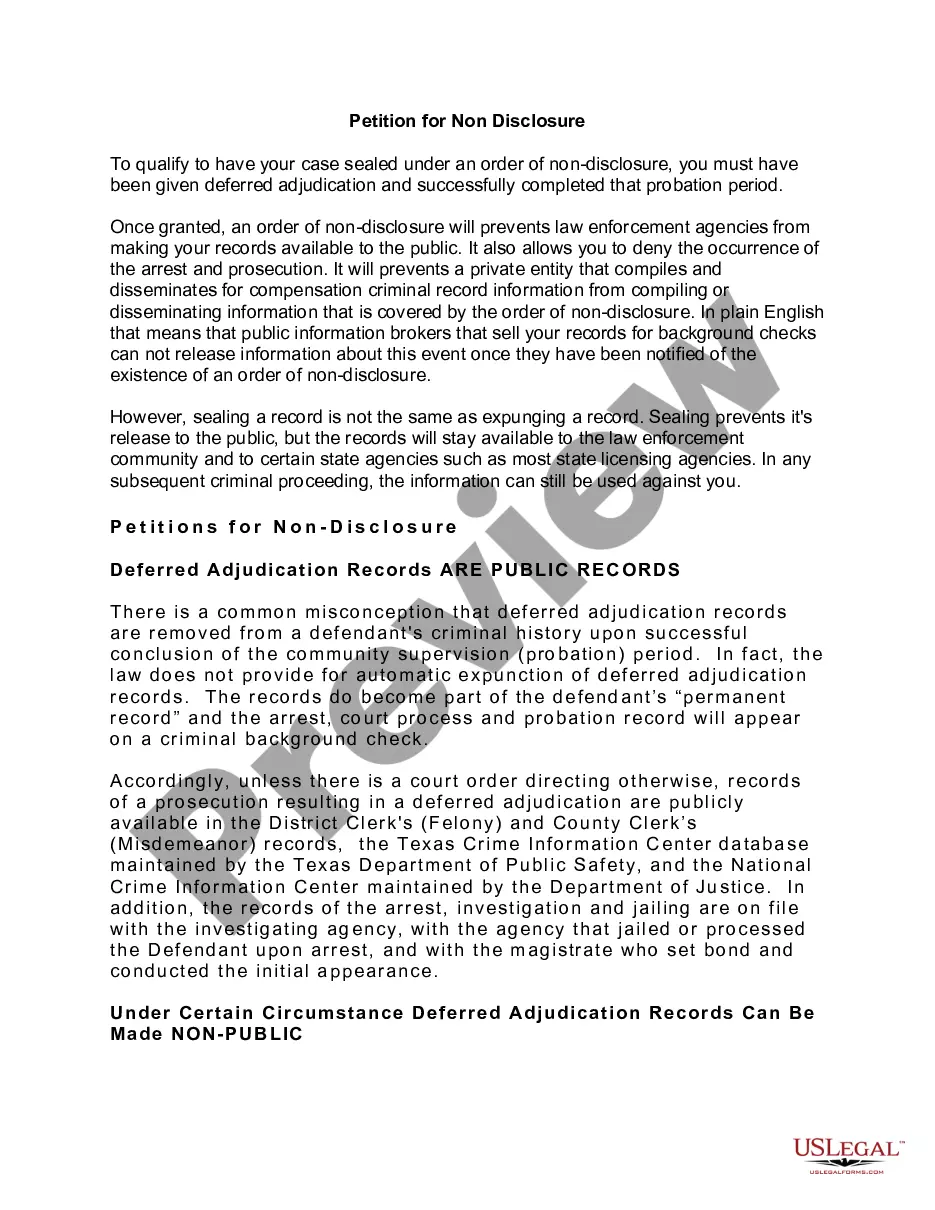
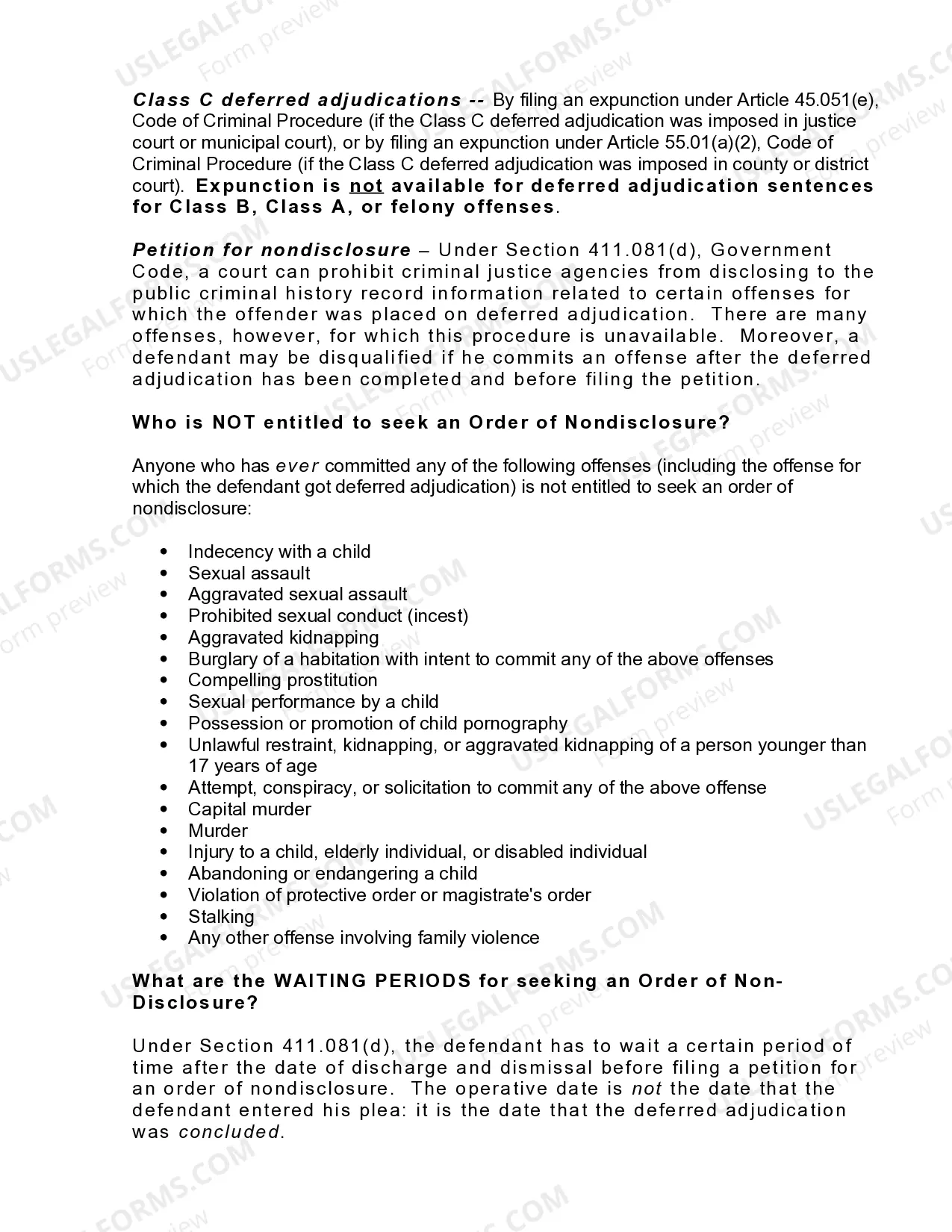
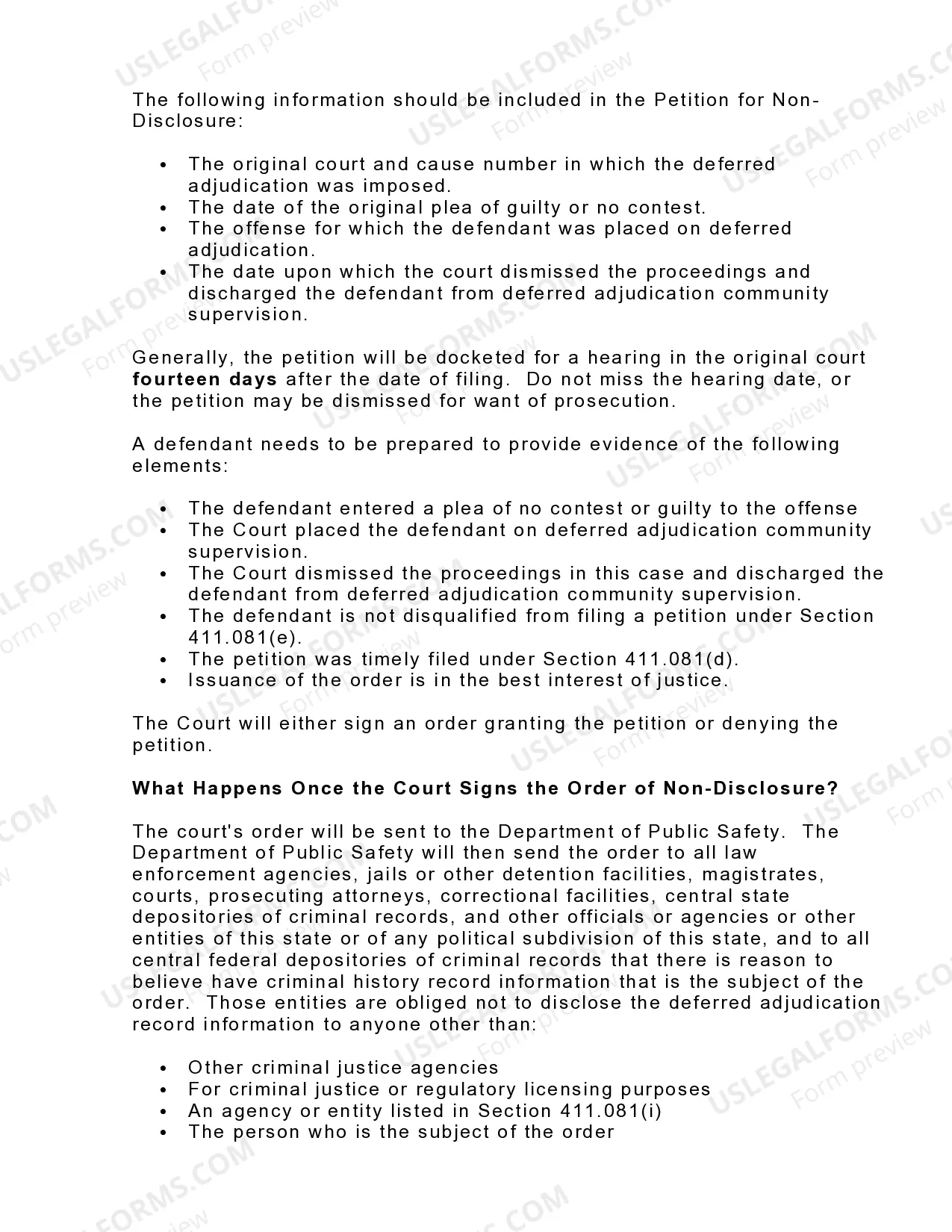
How do I obtain an Order of Nondisclosure? In order to obtain an order of nondisclosure, you must first file a petition for an order of nondisclosure with the proper court. The petition is to be filed with the clerk of the court that handled the offense for which you were placed on deferred adjudication.
You must have been arrested, you must not have been convicted or served probation, and the charge that you want to be expunged must have been a misdemeanor or a felony. If you meet these three requirements, expunction is an option you should absolutely consider before proceeding with your criminal case.
If qualified, you can petition the court for expunction (often called expungement) as provided for in Section 55 of Texas Law on Criminal Procedure. You can do it yourself by completing and filing a petition before the court and wait for the pronouncement of the Judge.