Texas Release and Indemnification Agreement
What is this form?
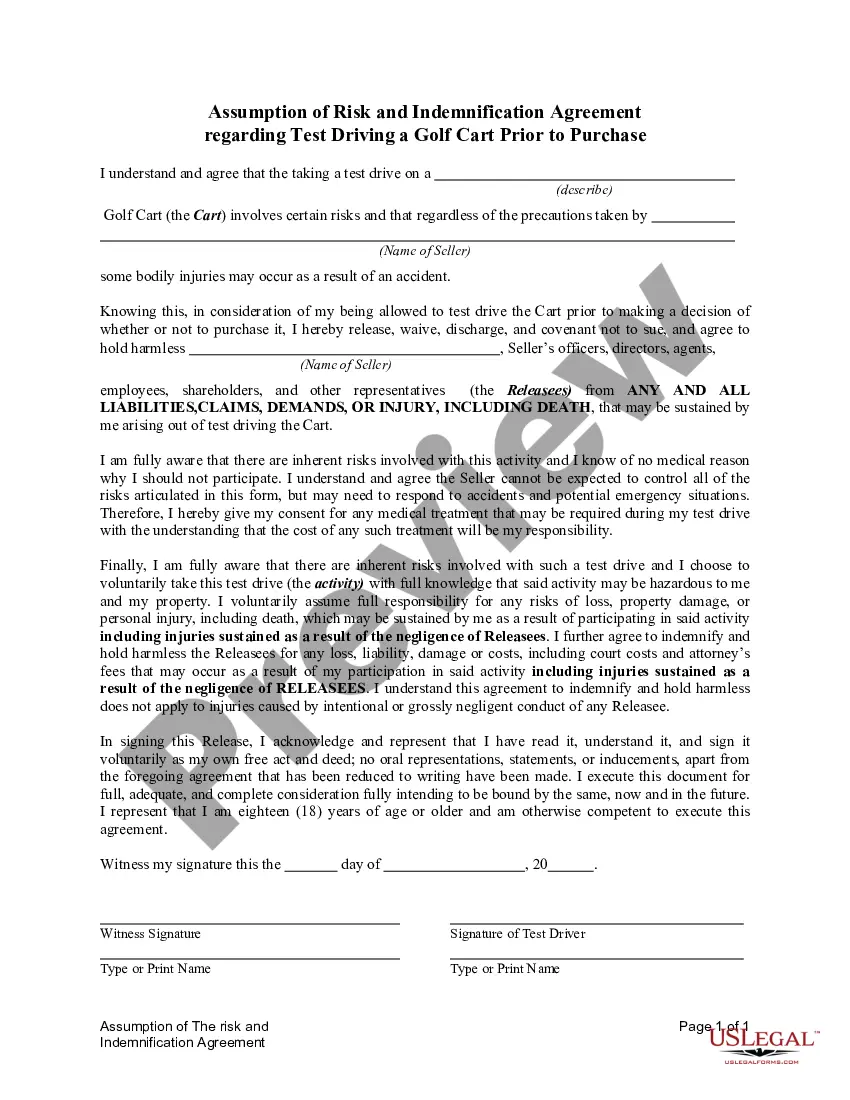
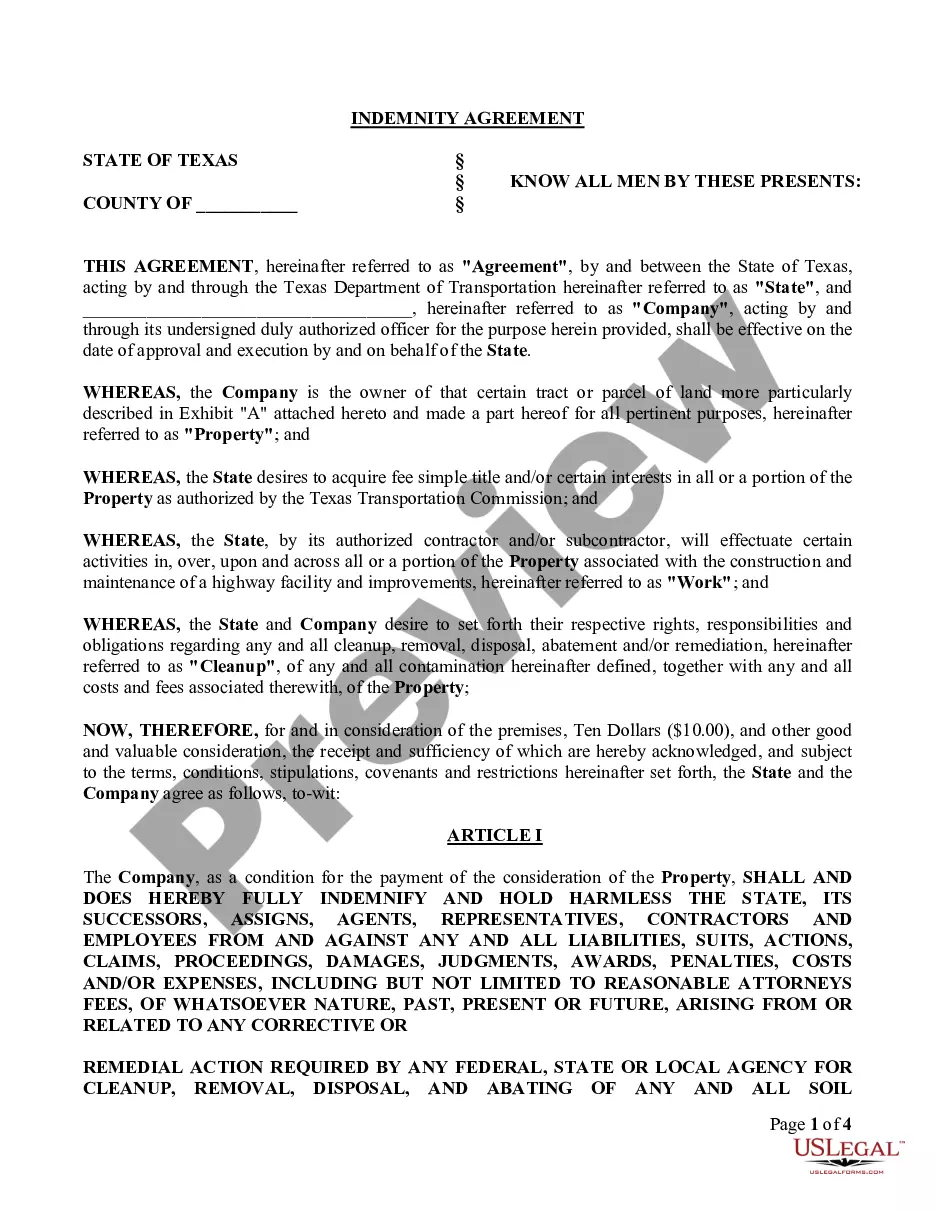
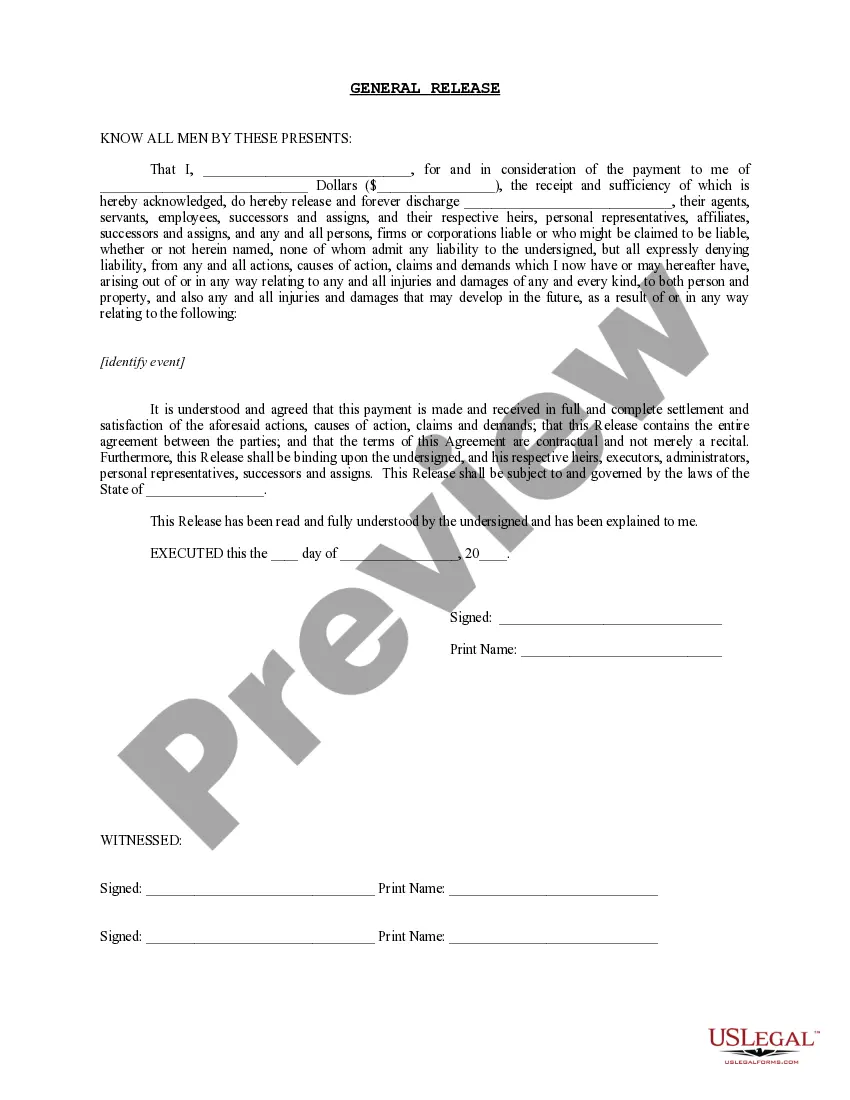
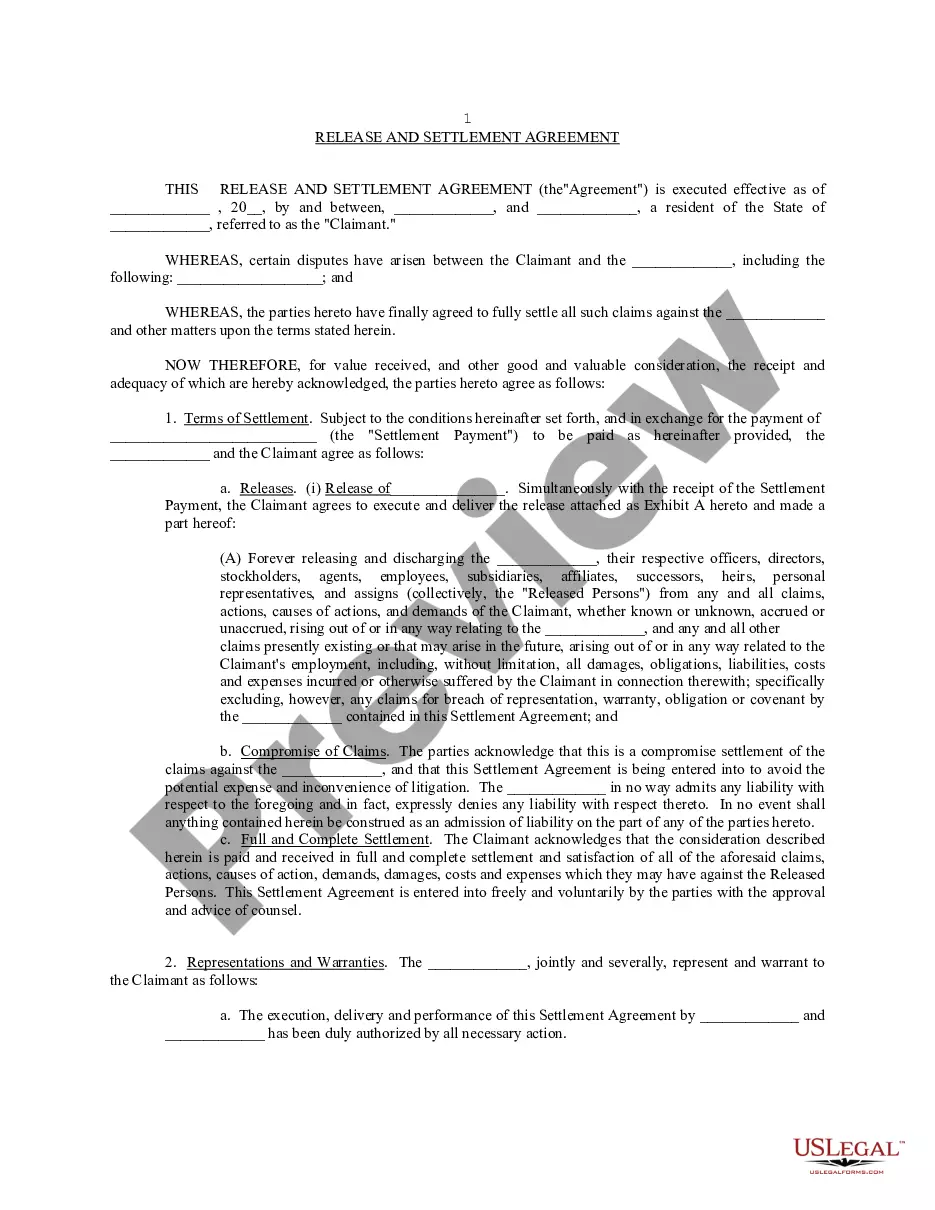
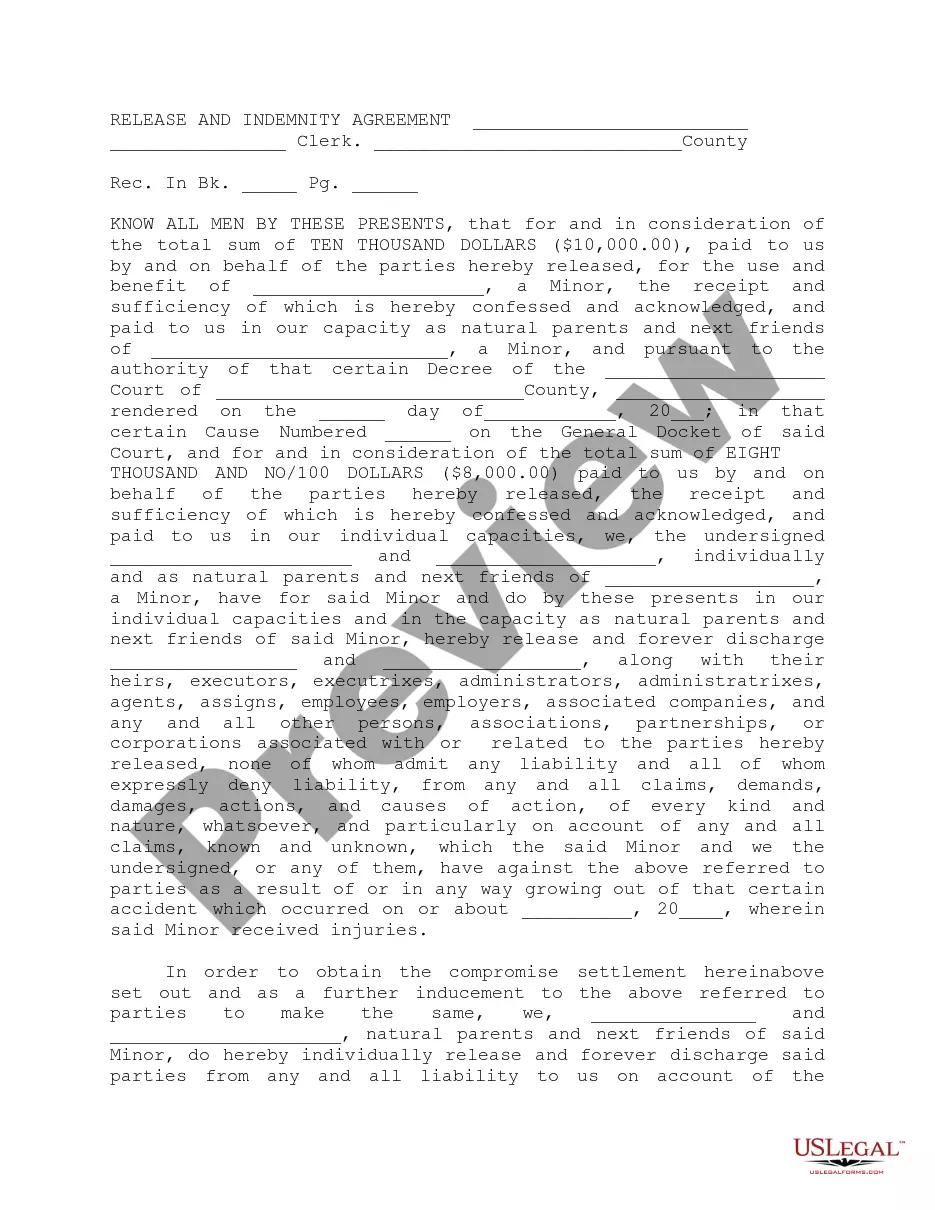
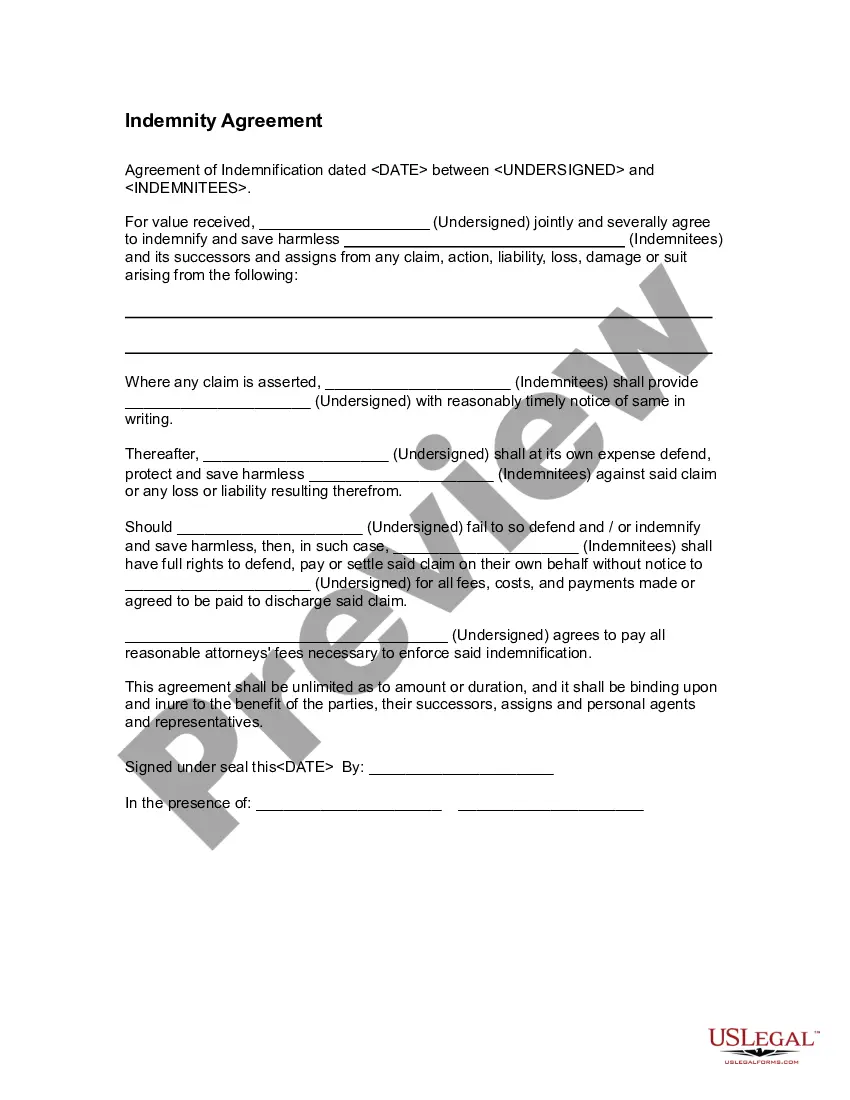
The Release and Indemnification Agreement is a legal document that allows one party to relinquish their right to hold another party liable for damages or injuries. This form is essential for activities that involve inherent risks, ensuring that participants acknowledge these risks and agree not to pursue legal action against the organizer. It differs from similar forms, such as liability waivers, by also including an indemnification clause, which protects the released party from any claims arising from the participant's actions.
Key parts of this document
- Participant's acknowledgment of inherent risks associated with the activity.
- Consent for medical treatment in case of an emergency during the activity.
- Assumption of liability for any injuries or damages incurred, including those due to negligence.
- Indemnification clause to protect the organizing party from any claims resulting from the activity.
- Exclusion of coverage for injuries caused by intentional or grossly negligent conduct of the released party.
When to use this form
This form is typically used when participating in activities that involve a risk of harm or injury, such as sports, recreational events, test drives, or other potentially hazardous undertakings. It is often required by event organizers or businesses to protect themselves from legal liability in case of accidents. Situations may include signing up for outdoor adventures, athletic competitions, or hands-on training exercises.
Who needs this form
- Individuals participating in high-risk activities.
- Event organizers, businesses, or service providers facilitating activities that involve inherent dangers.
- Participants wanting to protect themselves and the organizers from potential lawsuits.
How to complete this form
- Identify the parties involved, including the releasee and the participant.
- Review and acknowledge the inherent risks associated with the activity.
- Provide consent for medical treatment if necessary during the activity.
- Review and understand the indemnification obligations before signing.
- Sign and date the agreement in the designated spaces to confirm your acceptance of the terms.
Is notarization required?
This form does not typically require notarization unless specified by local law. Always check your local regulations to confirm whether notarization is needed for legal validity.
Get your form ready online
Our built-in tools help you complete, sign, share, and store your documents in one place.
Make edits, fill in missing information, and update formatting in US Legal Forms—just like you would in MS Word.
Download a copy, print it, send it by email, or mail it via USPS—whatever works best for your next step.
Sign and collect signatures with our SignNow integration. Send to multiple recipients, set reminders, and more. Go Premium to unlock E-Sign.
If this form requires notarization, complete it online through a secure video call—no need to meet a notary in person or wait for an appointment.
We protect your documents and personal data by following strict security and privacy standards.

Make edits, fill in missing information, and update formatting in US Legal Forms—just like you would in MS Word.

Download a copy, print it, send it by email, or mail it via USPS—whatever works best for your next step.

Sign and collect signatures with our SignNow integration. Send to multiple recipients, set reminders, and more. Go Premium to unlock E-Sign.

If this form requires notarization, complete it online through a secure video call—no need to meet a notary in person or wait for an appointment.

We protect your documents and personal data by following strict security and privacy standards.
Common mistakes to avoid
- Failing to fully read and understand the agreement before signing.
- Not disclosing pre-existing medical conditions that may affect participation.
- Assuming the document provides coverage for intentional misconduct.
- Overlooking the necessity of witnesses or signatures where required.
Why use this form online
- Convenience of accessing and completing the form from anywhere.
- Editability allows for customization to suit specific activities or risks.
- Reliability of having a legally drafted document by licensed attorneys.
Legal use & context
- This agreement is generally enforceable, provided that it is clear and unambiguous.
- Participants must voluntarily agree to the terms without coercion.
- The indemnification clause protects the releasee from specific types of claims.
- Be aware that terms may not absolve liability for gross negligence or willful misconduct.
Quick recap
- The Release and Indemnification Agreement is crucial for managing risk in potentially dangerous activities.
- Understand your rights and responsibilities before signing.
- Ensure the form is tailored to your specific activity and complies with local laws.
Looking for another form?
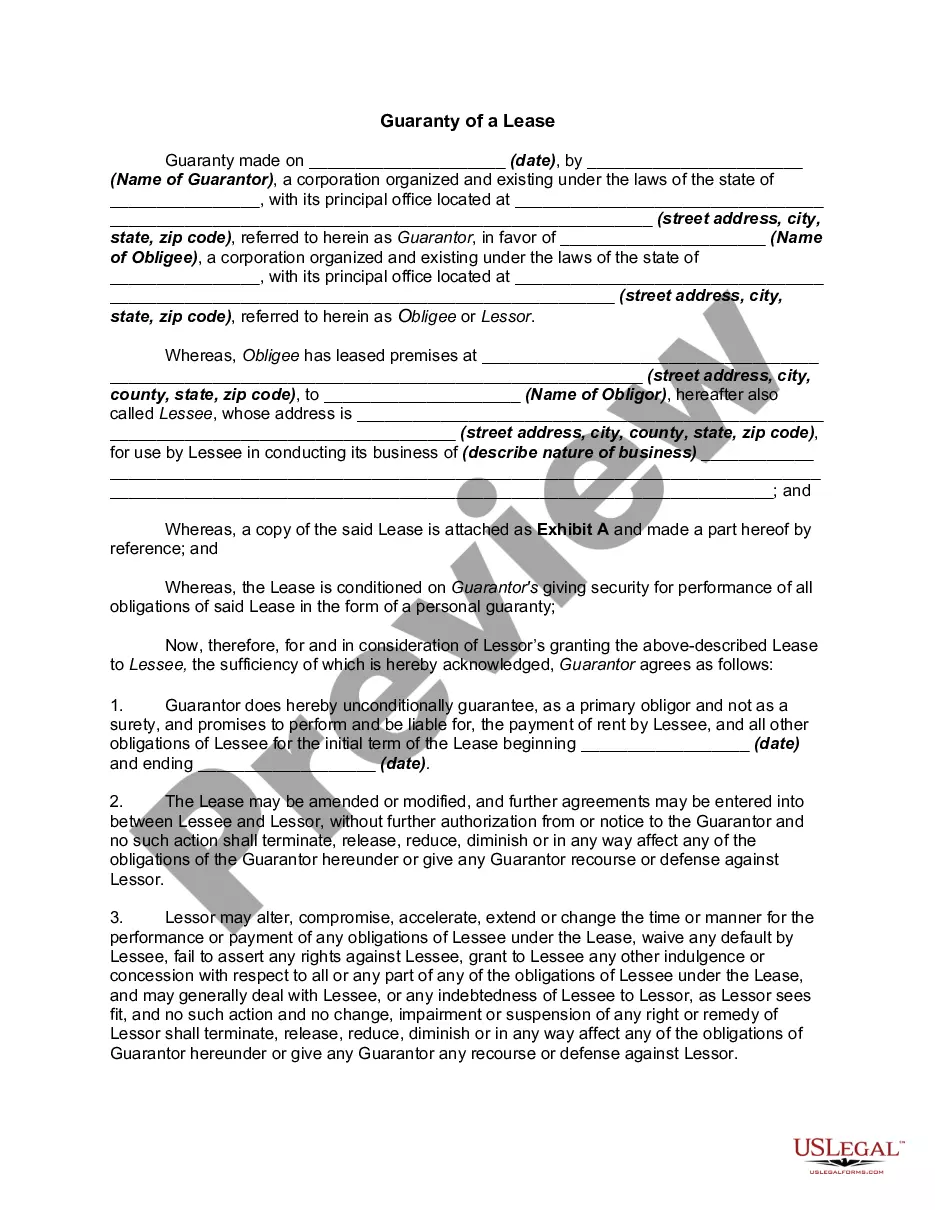
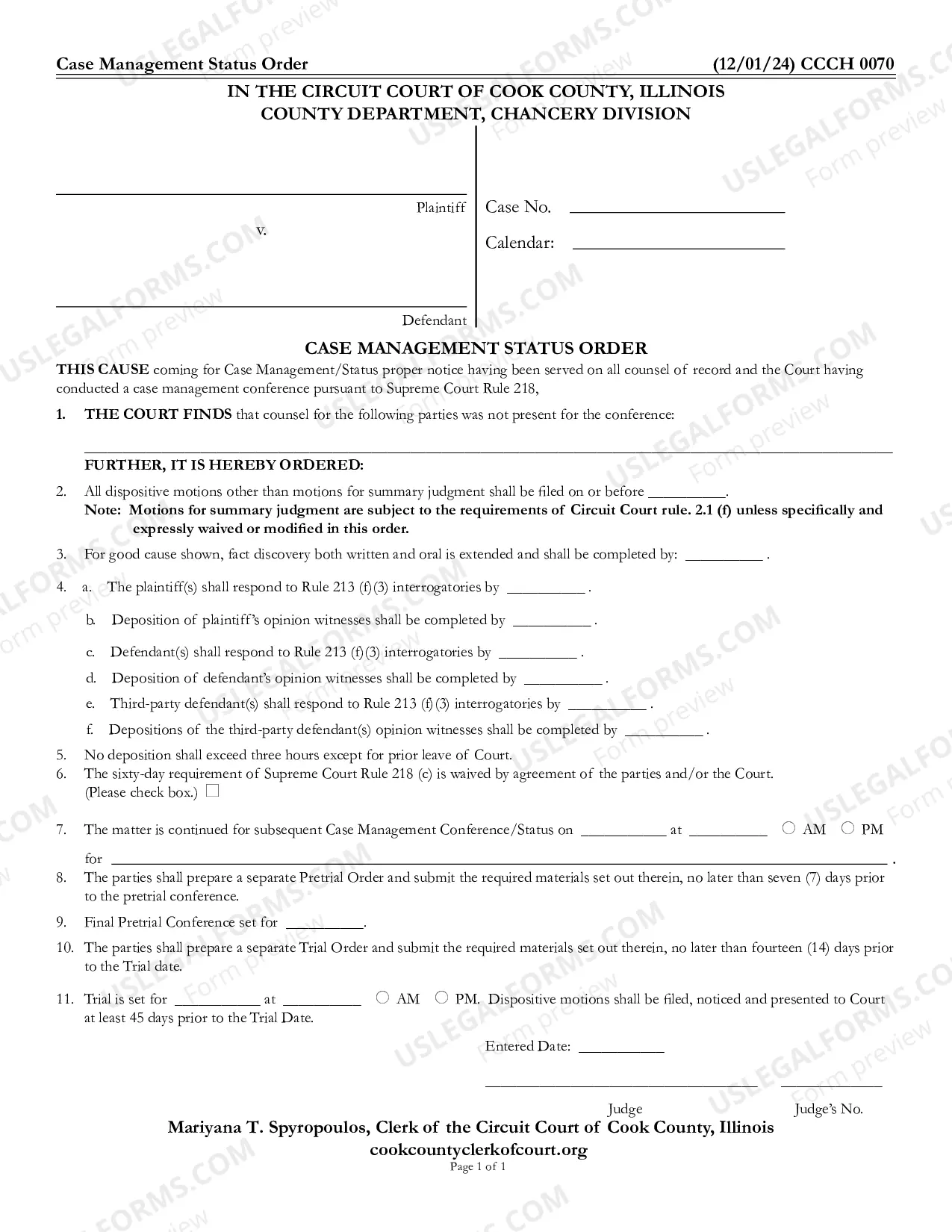
Form popularity
FAQ
One of the most commonly used forms within the DPS is form DL-14A, the Application for a New Drivers License. It's used when new drivers are ready to take the behind-the-wheel exam and finally become legal independent drivers in Texas.
U.S. Citizenship or, if you are not a U.S. Citizen, evidence of lawful presence. Texas Residency. Identity, and. Social Security Number. Evidence of Texas Vehicle Registration for each vehicle you own.
DL-14A - TEXAS DRIVER LICENSE OR IDENTIFICATION CARD APPLICATION. (ADULT - 17 YEARS 10 MONTHS OF AGE AND OLDER)
Complete the identification card application before arriving at your local office (This form is also available at all driver license offices). Make an appointment at a driver license office. Provide the following documentation to the license and permit specialist: Application for the issuance of an identification card.
You can get your ID from your local driver license office, which also issues ID cards. To apply for your ID, get an application online or in person. Then, collect documentation to prove that you're eligible to get a Texas ID.
You may also be able to renew your DL, CDL or ID online. You can also obtain your driver record, check you driving status and pay reinstatements. You may also conduct a DL or ID transaction by telephone or by mail.
A DL form is an application form that requires you to fill in your basic details on the basis of which your driving license will be produced.A driving license is your identity document that is issued by the regional transport office (RTO).
Bringing proof of identity documents, such as military ID, government-issued ID, or passport, along with two secondary pieces of ID that could include your Social Security card, birth certificate, or voter registration card. Paying the replacement license fee using cash, credit card, check, or money order.