Texas Postnuptial Property Agreement

What this document covers
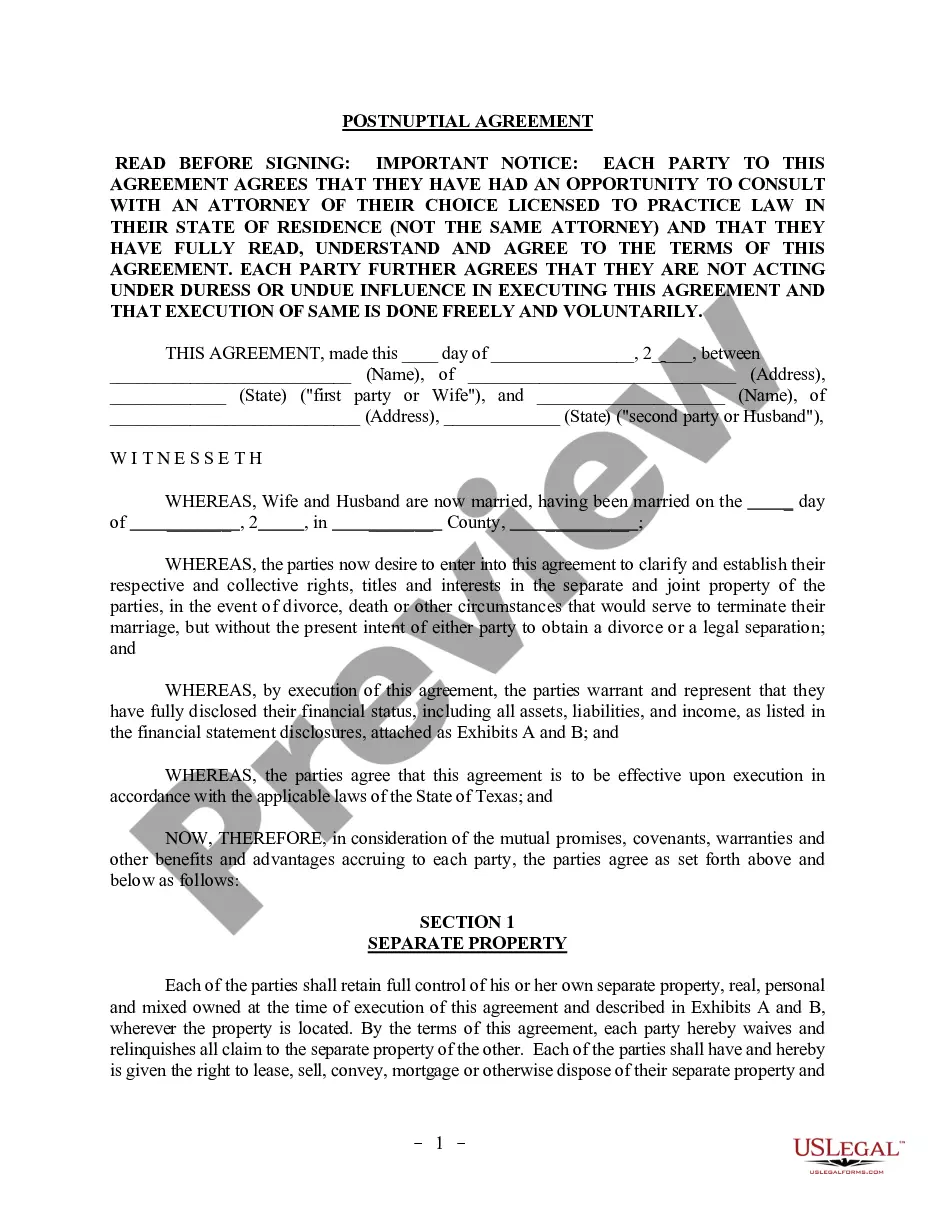
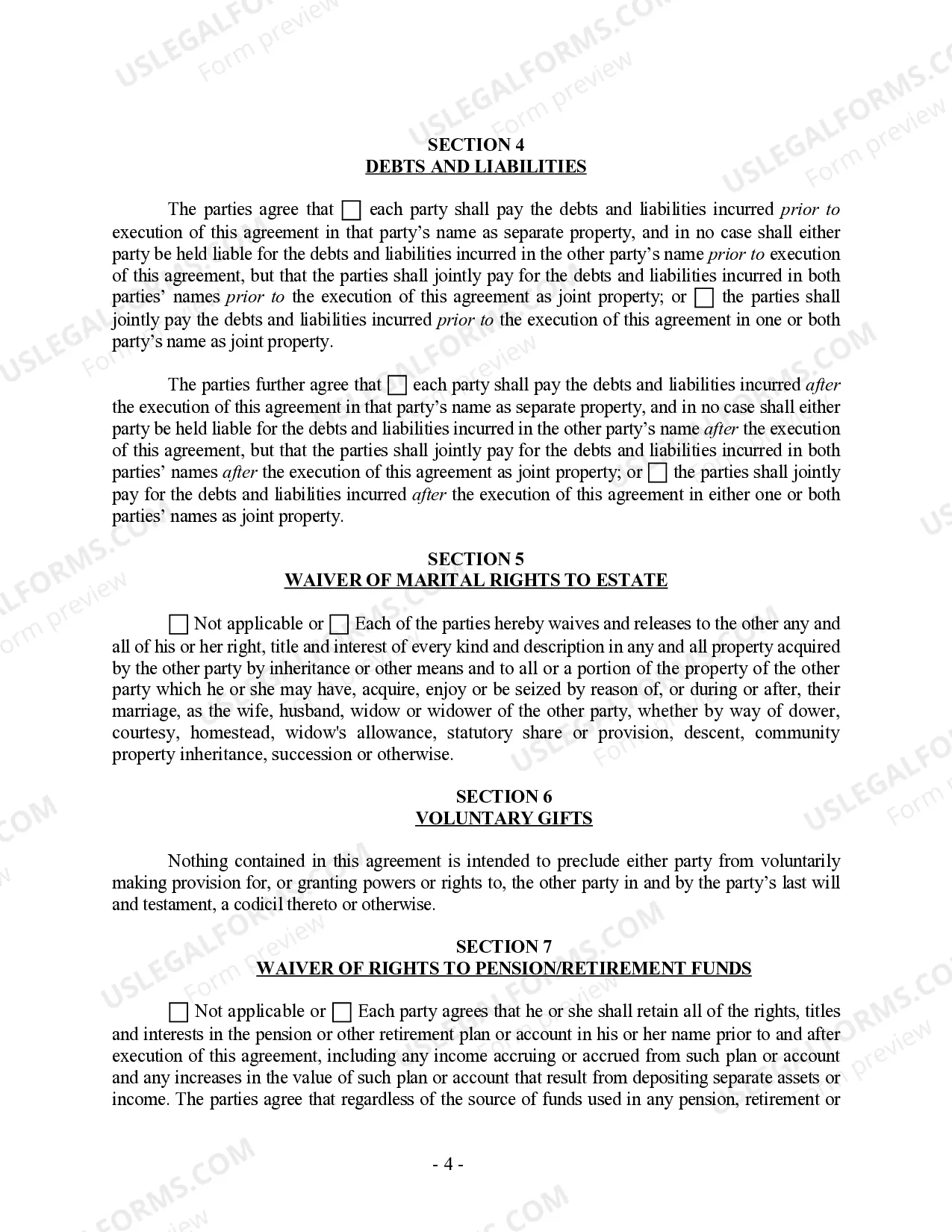
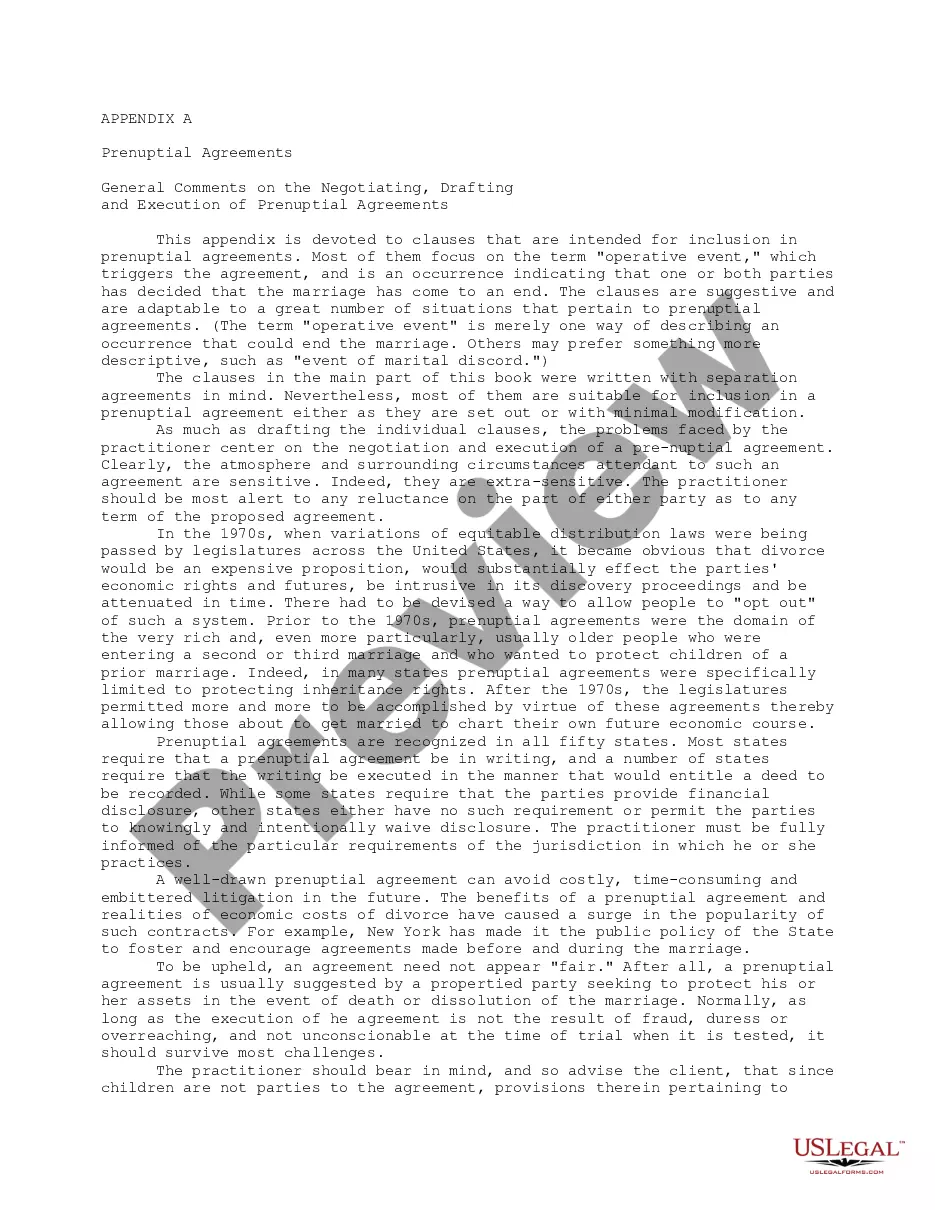
The Postnuptial Property Agreement is a legal document that outlines the rights and responsibilities of each spouse regarding their separate and joint property following marriage. Unlike a prenuptial agreement, which is established before marriage, this form is created after the marriage has taken place. It helps clarify ownership and property division in cases of separation, divorce, or death, ensuring that both parties understand their rights and obligations to each other's assets.
What’s included in this form
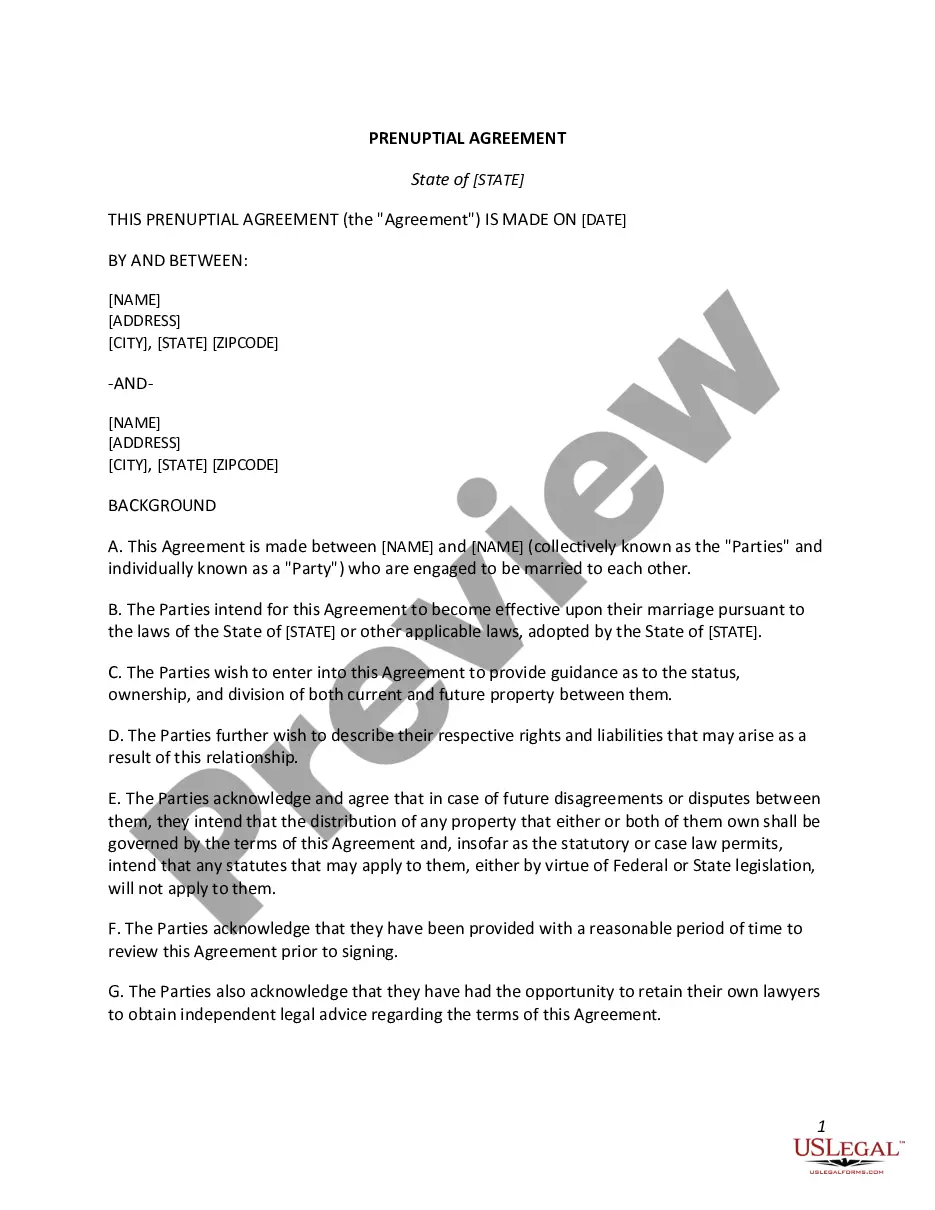
- Identification of the parties involved, including names and addresses.
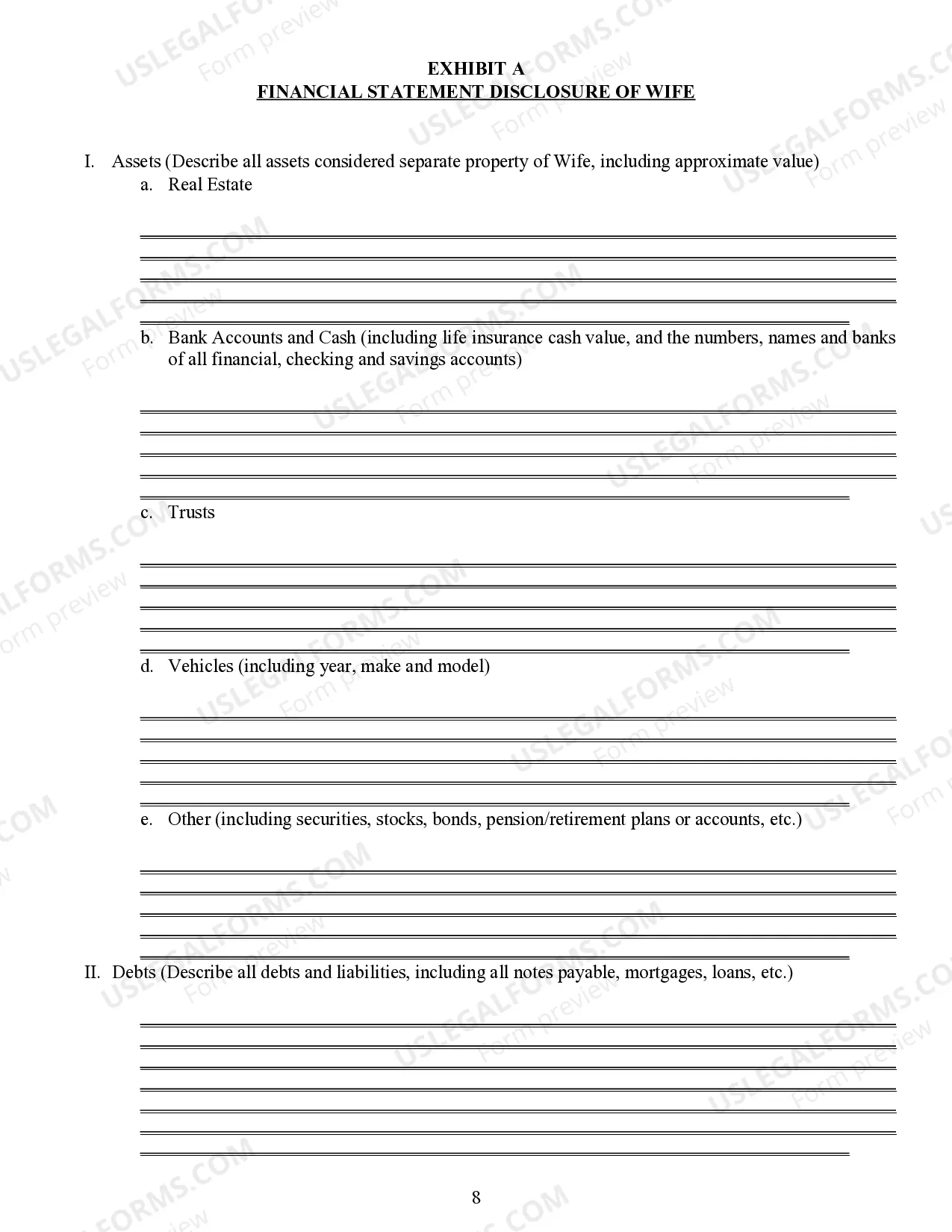
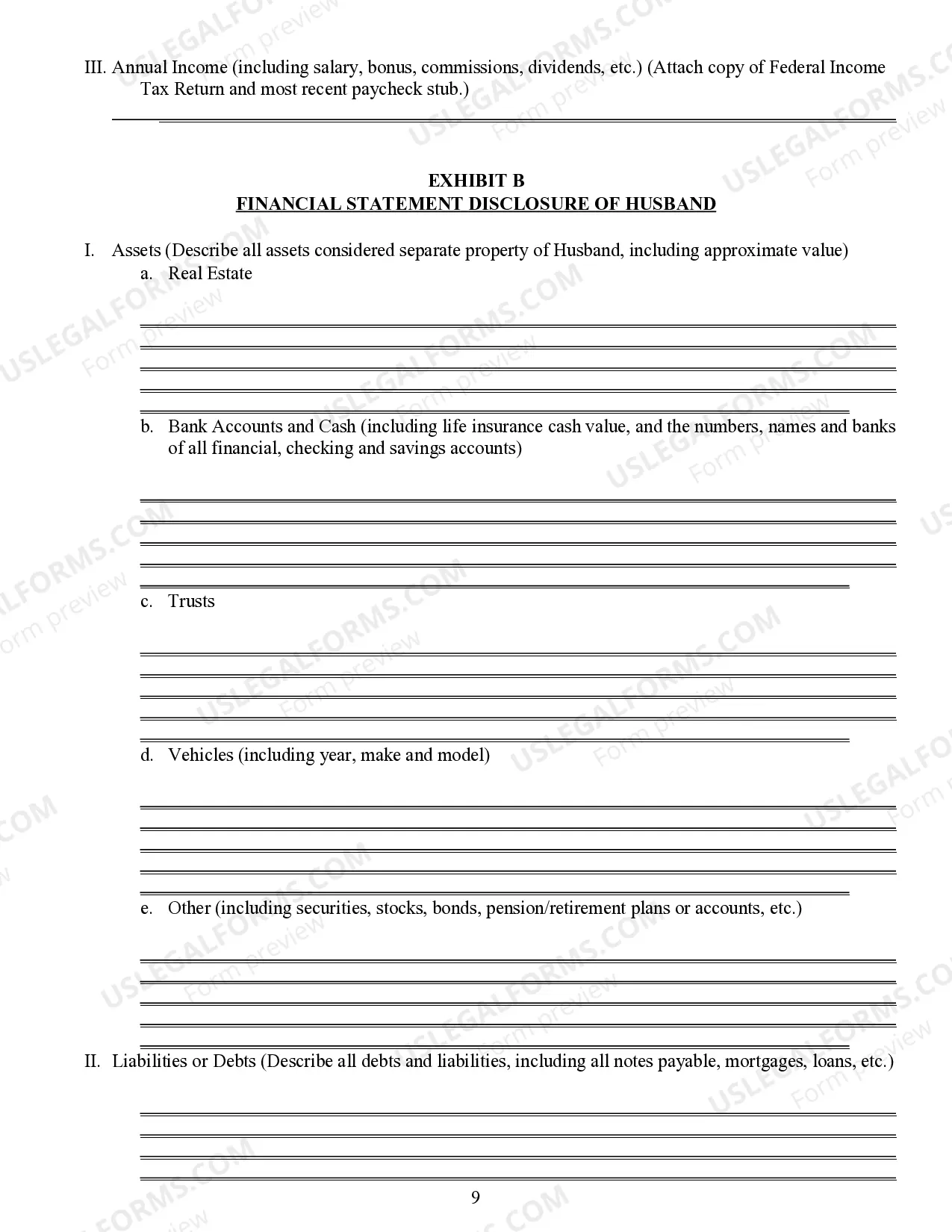
- Disclosure of each party's financial status and assets.
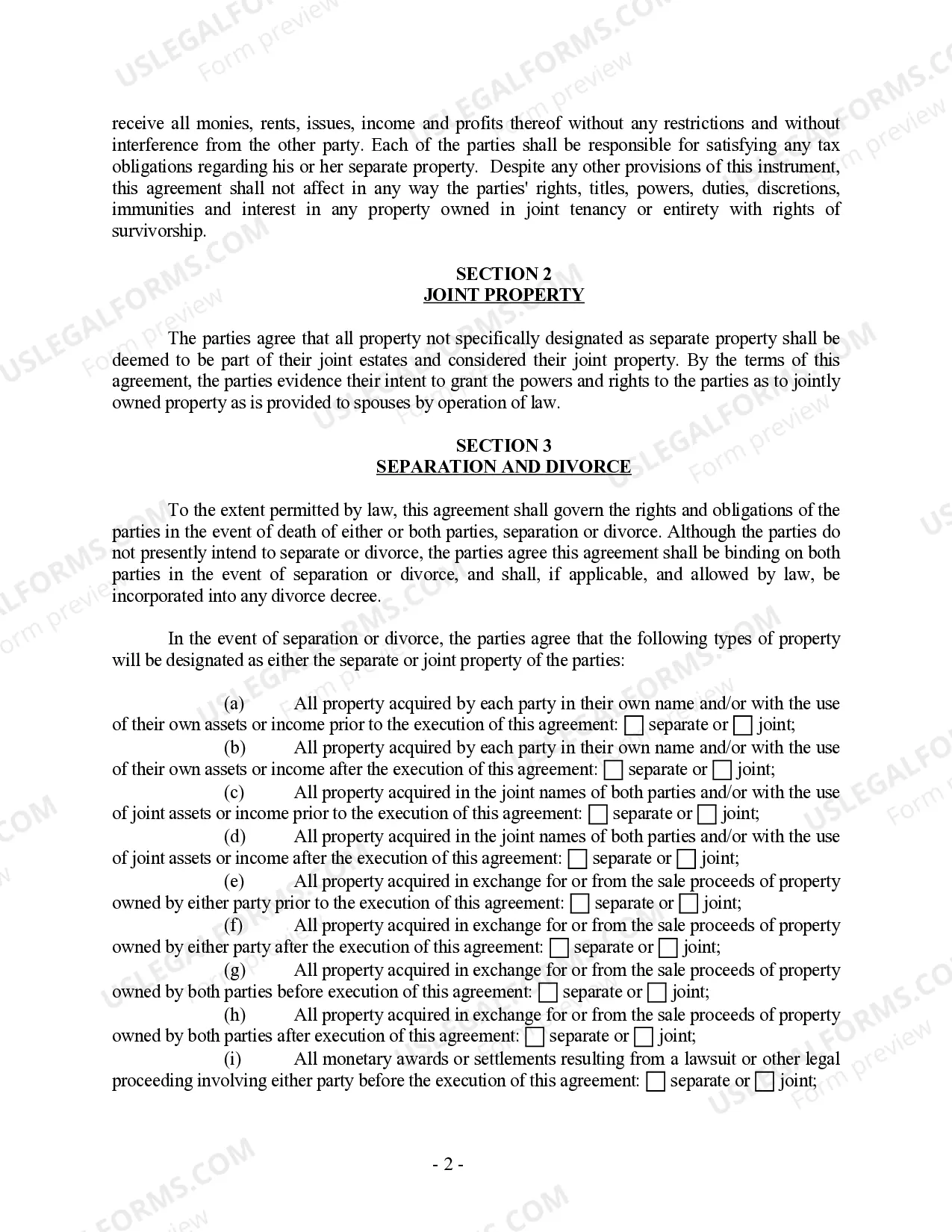
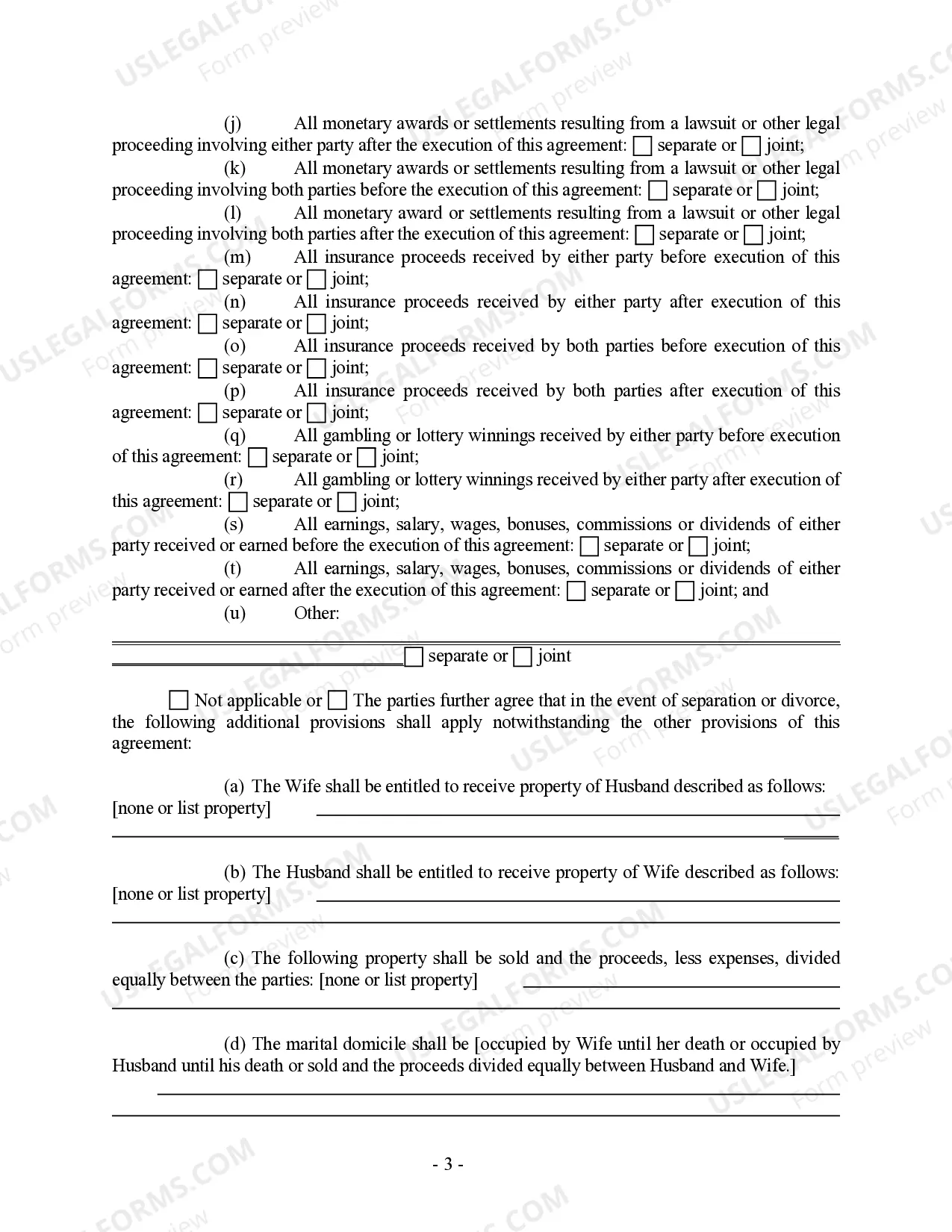
- Definition of separate and joint property.
- Provisions for property division in case of separation or divorce.
- Waivers of rights to each other's estates, including inheritance rights.
- Provisions for voluntary gifts and pension rights.
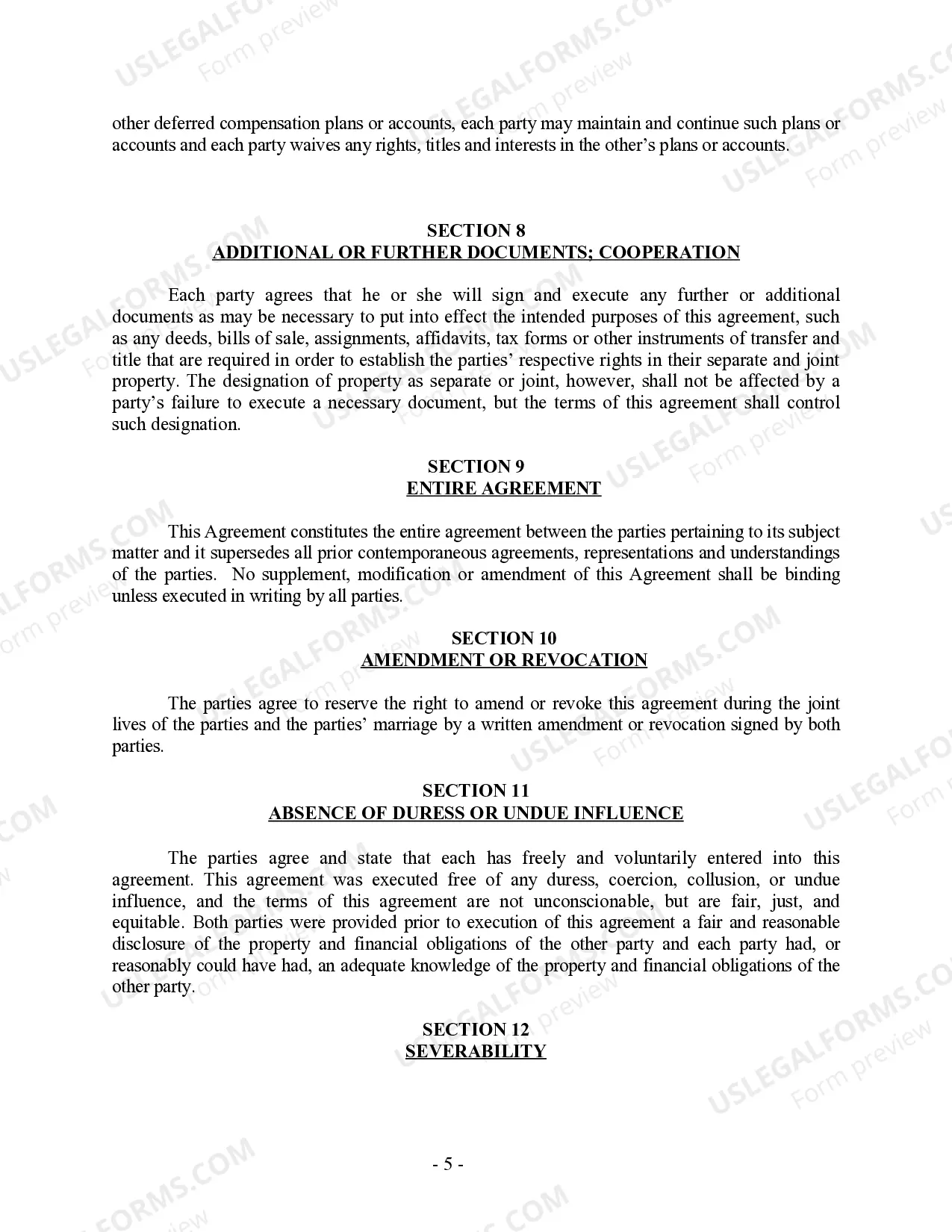
- Severability clause ensuring the rest of the agreement remains valid if a part is deemed invalid.
When to use this form
This form should be used when a married couple wants to establish clear agreements about their property ownership and rights. It is particularly useful when there are significant separate assets owned by either party, or if the couple wishes to clarify how their property will be treated in case of separation or divorce. It is also recommended for couples who wish to protect their individual assets while still allowing for joint ownership of certain properties.
Who can use this document
- Married couples who want to formalize their property rights.
- Individuals with significant separate assets before marriage.
- Couples entering second or subsequent marriages and seeking to protect previous assets.
- Spouses who want clarity regarding property division in the event of separation or divorce.
How to prepare this document
- Identify the parties involved by entering their names and addresses.
- Each party should disclose their financial status, including assets and liabilities.
- Clearly specify which properties are considered separate and which are joint.
- Define terms related to property division in case of separation or divorce.
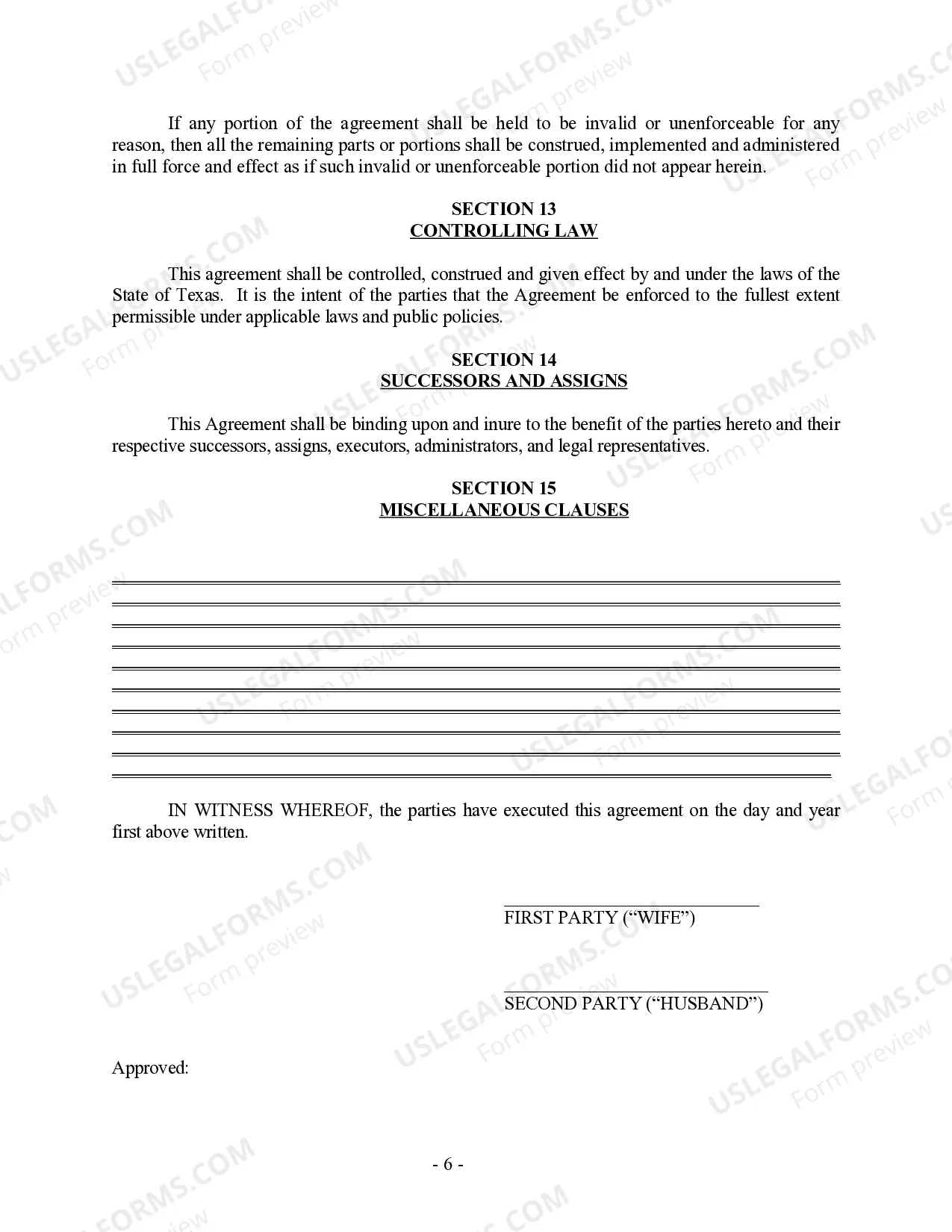
- Both parties should sign the document in the presence of a notary public.
Is notarization required?
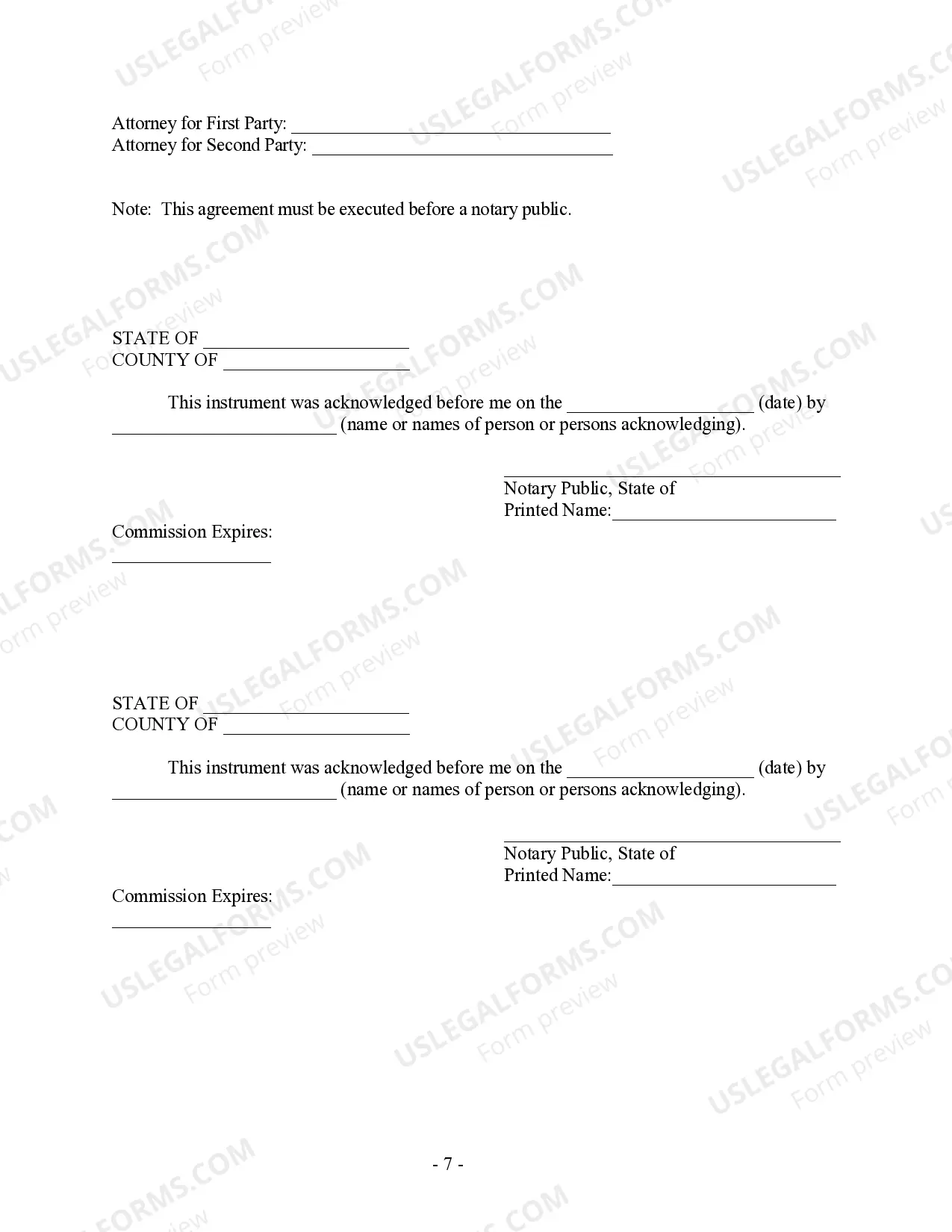
Notarization is required for this form to take effect. Our online notarization service, powered by Notarize, lets you verify and sign documents remotely through an encrypted video session, available 24/7.
Get your form ready online
Our built-in tools help you complete, sign, share, and store your documents in one place.
Make edits, fill in missing information, and update formatting in US Legal Forms—just like you would in MS Word.
Download a copy, print it, send it by email, or mail it via USPS—whatever works best for your next step.
Sign and collect signatures with our SignNow integration. Send to multiple recipients, set reminders, and more. Go Premium to unlock E-Sign.
If this form requires notarization, complete it online through a secure video call—no need to meet a notary in person or wait for an appointment.
We protect your documents and personal data by following strict security and privacy standards.

Make edits, fill in missing information, and update formatting in US Legal Forms—just like you would in MS Word.

Download a copy, print it, send it by email, or mail it via USPS—whatever works best for your next step.

Sign and collect signatures with our SignNow integration. Send to multiple recipients, set reminders, and more. Go Premium to unlock E-Sign.

If this form requires notarization, complete it online through a secure video call—no need to meet a notary in person or wait for an appointment.

We protect your documents and personal data by following strict security and privacy standards.
Typical mistakes to avoid
- Not fully disclosing financial information, which can lead to invalidation of the agreement.
- Neglecting to consult separate legal counsel, which is important for understanding rights.
- Failing to have the agreement notarized, compromising its enforceability.
Benefits of using this form online
- Convenience of completing the form at home without the need for an in-person appointment.
- Editable templates allow for customization to meet specific needs.
- Access to professionally drafted legal content ensures reliability and compliance.
Legal use & context
- This agreement is legally binding and serves to protect the rights of each party in property matters.
- It is enforceable in a court of law, provided it meets the relevant legal requirements.
- Misunderstanding the terms may lead to disputes during divorce or separation, highlighting the importance of thorough comprehension.
Main things to remember
- The Postnuptial Property Agreement clearly defines property rights for married couples.
- It effectively addresses potential future disputes related to property ownership.
- Notarization is required for enforceability, emphasizing the importance of formalizing the agreement.
Looking for another form?



Form popularity
FAQ
Attorneys will charge on average $1,000 for a simple postnuptial document and the costs can rise to around $3,000. Postnuptial agreements that are complicated in nature and require ongoing and prolonged negotiations and especially when substantial provisions and assets are involved, costs can start at around $10,000.
Postnuptial agreements must be in writing. Voluntary Both parties to a postnuptial agreement must have signed the agreement voluntarily and intentionally.Generally speaking, to make a postnuptial agreement valid, both parties' signatures need to be notarized.
Are Post-Nuptial Agreements Legally Binding? Post-Nuptial Agreements are usually legally binding and the position has been strengthened since 2008 following a Privy Council judgement.
The average cost of a prenup ranges from about $1,200 for low-cost, simple agreements to $10,000 for more complicated situations.
1. One (or Both) of You Are Wealthy. Divorce attorneys agree that postnups are must-haves for spouses who either enter the marriage with significant pre-marital assets or expect to inherit significant future assets.
In general, you should expect that a postnuptial agreement will receive scrutiny from the court before it decides to enforce the agreement. As your family law attorney would advise you, these agreements are not usually signed under the best of circumstances in the marriage.
Postnuptial agreements, also known as partition agreements, allow spouses to specify how they will divide their money and property in the event of a divorce. Texas is among the states that recognizes the legal enforceability of postnuptial agreements.
The main difference between the two is that a prenuptial agreement, often referred to as a prenup, is signed before the couple's marriage; a postnuptial agreement, often referred to as a postnup, is signed after the marriage.